Wyoming – Paleontologists continue to marvel at Ceratogaulus, a long-extinct rodent that once navigated the state’s ancient plains with two prominent horns protruding from its skull. This creature inhabited the region throughout the Miocene and Pliocene epochs, carving out a niche as a burrowing survivor. Resembling the folklore jackalope in its horned profile, Ceratogaulus stands out as one of the few horned mammals adapted for underground life in Earth’s vast history.
One of Earth’s Rarest Horned Burrowers Emerges
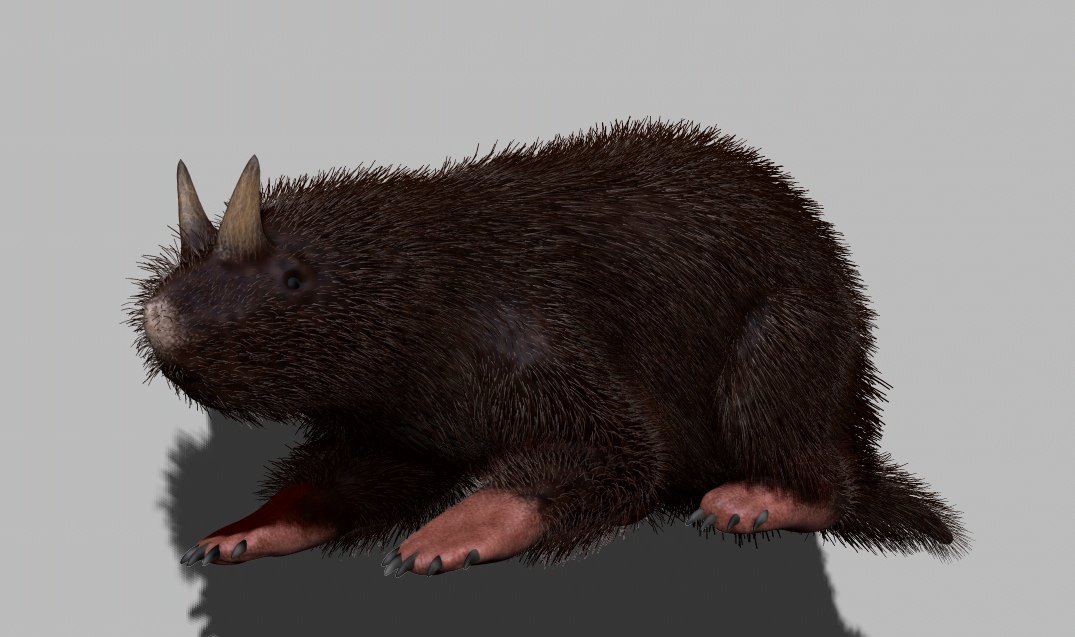
One of Earth’s Rarest Horned Burrowers Emerges (Image Credits: Upload.wikimedia.org)
Few animals in the fossil record combine burrowing prowess with head-mounted defenses quite like Ceratogaulus. This rodent developed large, paired horns that set it apart from its contemporaries, enabling it to thrive amid challenging prehistoric environments. Fossils reveal a body built for tunneling, yet equipped with structures typically seen in far larger herbivores.
Researchers first identified these remains in Wyoming’s sedimentary layers, where they preserved details of a life spent evading surface threats. The horns, solid and forward-curving, likely served multiple roles beyond mere ornamentation. Ceratogaulus persisted for more than eight million years, a testament to its effective adaptations in a predator-filled world.
Horns Tailored for Underground Survival
Ceratogaulus possessed a robust skull featuring two sizable horns, positioned above the eyes and nostrils. These bony projections grew to impressive lengths relative to the animal’s size, suggesting a deliberate evolutionary choice. Burrowing demanded powerful forelimbs and reinforced nasal passages to handle soil displacement, but the horns added an extra layer of protection.
Evidence from specimens indicates the horns strengthened during adulthood, possibly through continuous growth. This rodent measured about the length of a modern jackrabbit, with a stocky build suited to narrow tunnels. Its dental structure pointed to a diet of roots and tubers, sustaining long periods below ground.
Fending Off Snakes and Badgers in the Miocene
Predators posed constant dangers to surface-foraging burrowers, and Ceratogaulus countered them with its signature horns. Snakes, adept at invading burrows, likely met resistance from these sharp defenses during intrusions. Badgers, with their digging claws, represented another threat, prompting the rodent to rely on rapid retreats backed by horned blocks.
The Miocene landscape of Wyoming teemed with such foes, from agile reptiles to mustelids probing for prey. Ceratogaulus’s horns functioned as battering rams or barricades, deterring attacks in confined spaces. This strategy allowed generations to persist across epochs, outlasting many similar species.
A Timeline of Dominance Spanning Epochs
Ceratogaulus first appeared in the early Miocene, around 23 million years ago, and endured into the Pliocene until roughly 2.6 million years ago. Its fossils cluster in Wyoming’s badlands, where erosion exposed layers from these periods. The species’ longevity – over eight million years – highlights its resilience amid shifting climates and faunas.
| Epoch | Timeframe (Million Years Ago) | Ceratogaulus Presence |
|---|---|---|
| Miocene | 23–5.3 | Established and widespread |
| Pliocene | 5.3–2.6 | Continued thriving |
This extended reign underscores the horns’ role in a successful survival formula. No other burrowing mammal matched this horned profile, making Ceratogaulus a paleontological outlier.
Key Adaptations That Defined Ceratogaulus
- Paired horns: Large, curved bony structures for defense against burrow invaders.
- Burrowing physique: Strong limbs and reinforced skull for efficient digging.
- Longevity: Survived over eight million years across two epochs.
- Predator countermeasures: Effective against snakes and badgers in tight quarters.
- Wyoming habitat: Thrived in plains conducive to underground networks.
These traits combined to create a formidable package, rare even among ancient rodents.
Key Takeaways
- Ceratogaulus represents one of Earth’s only horned burrowing mammals.
- It defended itself primarily against snakes and badgers using its horns.
- The rodent’s fossils from Wyoming span the Miocene and Pliocene epochs.
Ceratogaulus reminds us of nature’s inventive solutions to survival challenges, bridging myth and reality in Wyoming’s fossil legacy. What fascinates you most about this ancient horned rodent? Share your thoughts in the comments.