
If you could step out of a time machine into the Triassic Period, you probably wouldn’t recognize Earth at first. The world you’d see would look raw and rebuilding, scarred by the worst mass extinction in the planet’s history, yet buzzing with strange new life that was just getting started. This was the age when the rules of the game reset, and entirely new kinds of animals seized their chance to grow big, powerful, and dominant.
When you hear the word “giant,” your mind might jump straight to Jurassic icons like Brachiosaurus or Cretaceous titans like T. rex, but the real story of gigantism begins earlier. In the Triassic, you watch the first true giants take shape: massive amphibians lurking in rivers, armored reptiles thundering across floodplains, and the early, awkward experiments that would eventually lead to the long-necked sauropods. To really understand how big dinosaurs later became, you’ve got to start here, in this restless, rebuilding world.
The World After Disaster: How the Triassic Reset the Planet
To understand why the Triassic gave rise to giants, you first need to picture how broken Earth was at the very beginning of this period. Just before the Triassic started, the end-Permian mass extinction wiped out the vast majority of species on land and in the oceans, leaving ecosystems almost empty and unbalanced. If you were there, you’d see open niches everywhere: fewer predators, fewer competitors, and entire habitats waiting for something, anything, to fill them.
That ecological vacuum gave survivors a rare and brutal kind of opportunity. With less competition holding you back, if you were a tough little reptile or amphibian that could handle harsh conditions, you suddenly had room to expand into new roles. Over millions of years, that freedom helped drive some lineages toward larger and larger bodies, because being big often meant you could intimidate rivals, travel farther for food, and survive tough seasons a bit better than the small fry.
A Supercontinent Built for Giants: Pangaea’s Extreme Landscapes
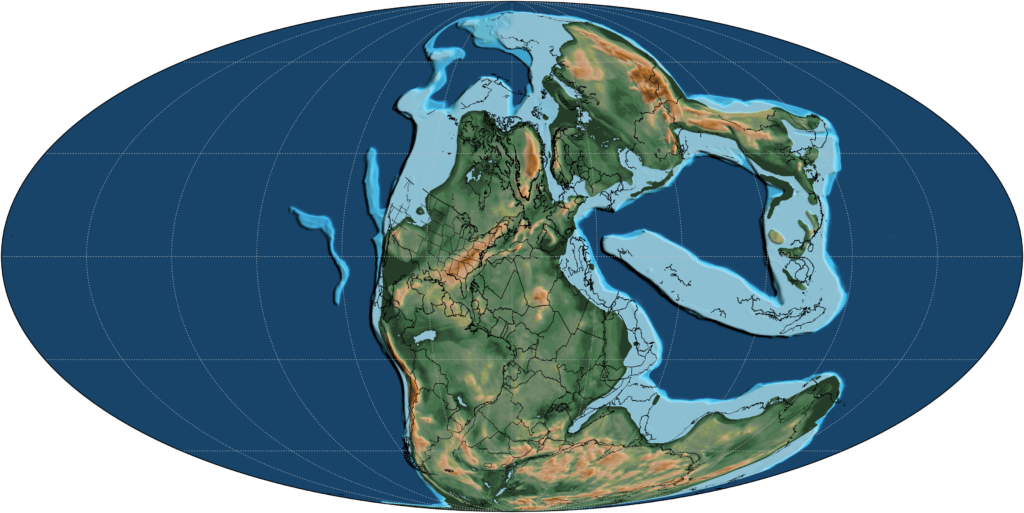
During the Triassic, you live on a world dominated by one colossal landmass: Pangaea. Instead of separate continents, there’s basically one mega-continent stretching almost from pole to pole, ringed by a global ocean. If you traveled across it, you’d pass blistering interior deserts, wide seasonal floodplains, and long mountain chains, with climates that swung from wet to bone-dry in a way that tested every creature’s limits.
Those wild environments favored animals that could move long distances, store energy, and shrug off extreme conditions. If you evolved a larger body, you could wander farther to find food and water, and your bulk helped buffer you against temperature swings and drought. On broad floodplains where vegetation grew in pulses, big herbivores could graze and browse across huge areas, while large predators shadowed their movements, turning Pangaea into a training ground for future giants.
The First Big Predators: When Archosaurs Took Over
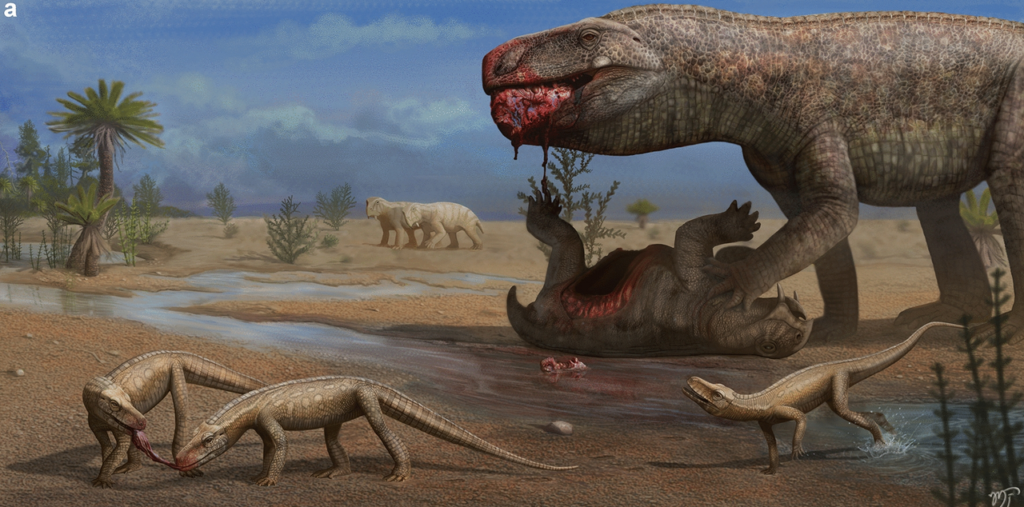
In the early and middle Triassic, if you were a land animal, your worst nightmare often came in the form of archosaurs, the group that eventually branches into dinosaurs, pterosaurs, and modern crocodiles. Long before famous dinosaurs took center stage, these early archosaurs and their close relatives were already pushing the limits of size and power. Some looked like massive, heavily built crocodile cousins roaming on land, with deep skulls and impressive teeth that marked them as serious top predators.
As these archosaurs grew larger, you’d see them reshaping food webs. Big predators force everything else around them to adapt: herbivores need better defenses, faster legs, or new behaviors just to survive. That escalating arms race nudges lineages toward larger bodies, thicker armor, and stronger muscles. You can think of the Triassic as the rehearsal period when the predator-prey game scaled up, proving that land ecosystems could support animals much larger than most that came before.
Not Just Dinosaurs: The Overlooked Triassic Giants
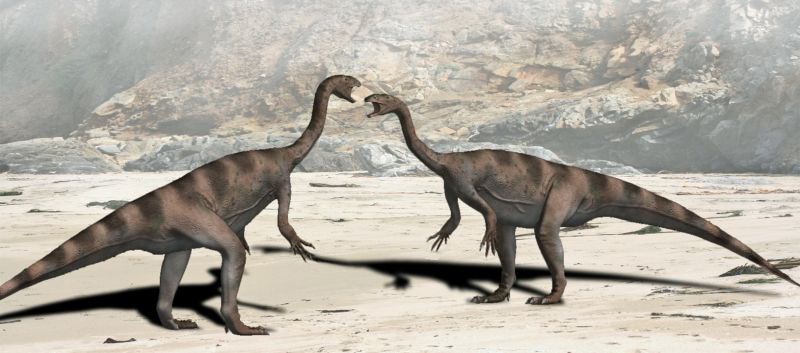
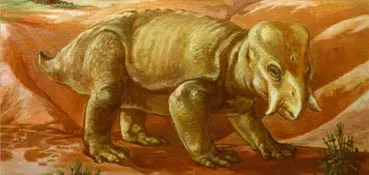
When you zoom in on the Triassic, you quickly realize that dinosaurs weren’t the only stars growing to impressive sizes. In rivers and lakes, you’d share the water with huge amphibians that looked a bit like oversized salamanders crossed with crocodiles, with broad, flat heads and powerful bodies. On land, you would meet massive, tank-like reptiles covered in armor plates, along with bulky, tusked plant-eaters that were distant relatives of mammals, all pushing the boundaries of what “large” meant for their time.
These animals show you that gigantism isn’t a dinosaur invention; it’s a broader evolutionary strategy that different groups can arrive at when conditions allow it. By watching these early giants, you’d see the same patterns repeat: bodies stretching longer, skulls thickening, limbs strengthening, and skeletons reinforcing to support extra weight. That shared pattern tells you that, whenever ecosystems become rich enough and stable enough, evolution starts to experiment with size on a grander scale.
The First Giant Dinosaurs: Sauropodomorphs Step Onto the Stage
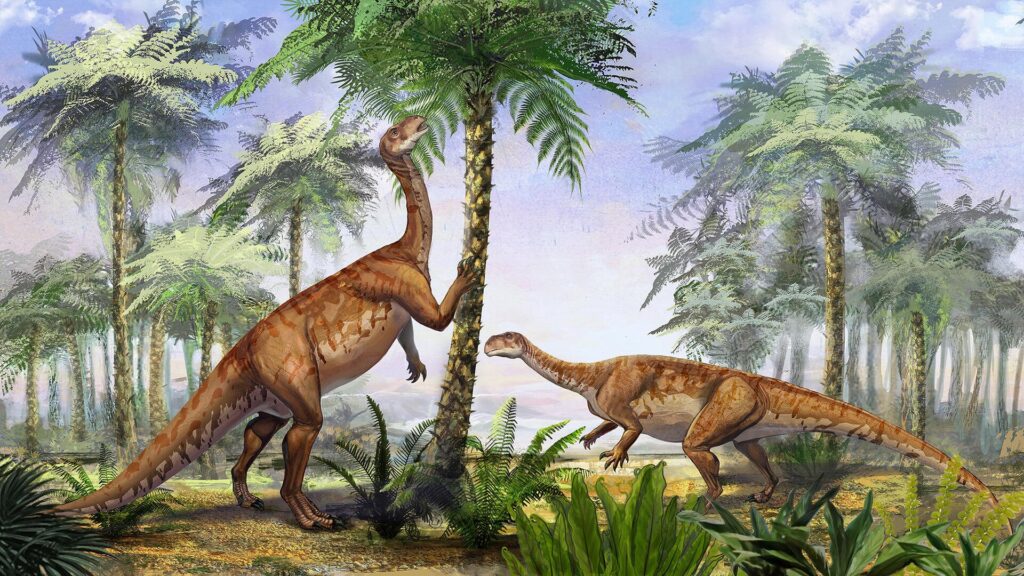
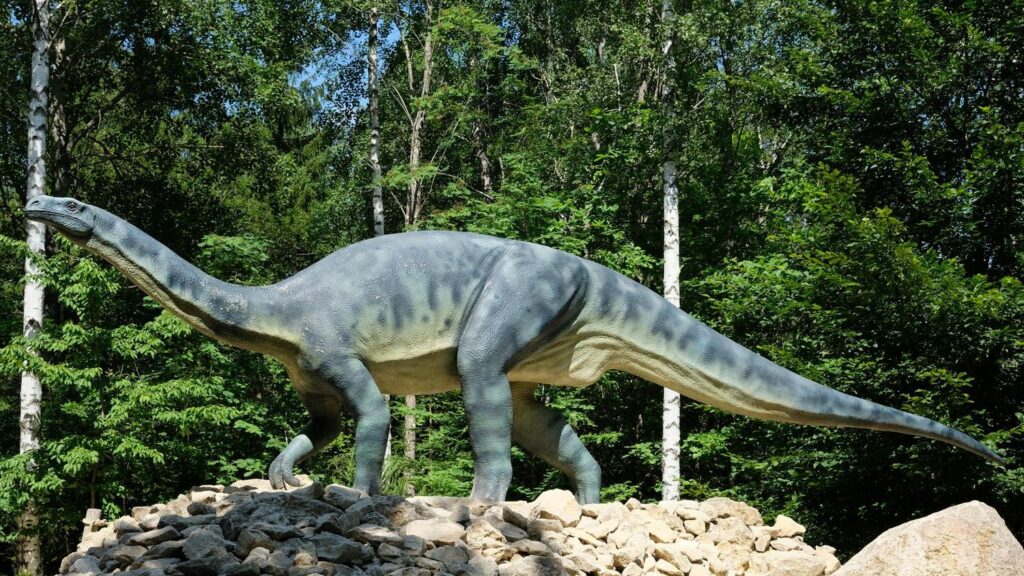
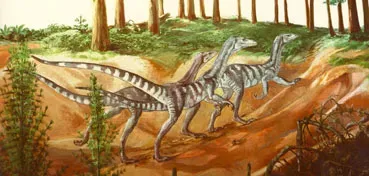
When you think of true giants, your mind probably lands on long-necked dinosaurs towering over forests, and their story really starts in the late Triassic. Early sauropodomorphs, the ancestors of the classic sauropods, begin relatively modest but quickly push into larger body sizes compared with most of their neighbors. As you watch them over time, their necks stretch longer, their torsos become more barrel-shaped, and their legs turn into thick, pillar-like supports suited for carrying serious weight.
Even though the truly colossal sauropods of the Jurassic come later, by the end of the Triassic you already see the blueprint for those titans taking shape. These early forms show you how a plant-eater can turn size into a winning strategy: a long neck to sweep wide feeding areas without moving much, a big gut to slowly process tough plants, and a sturdy frame to carry it all. Standing next to one in a Triassic forest, you’d realize that the age of small, lizard-like dinosaurs was already giving way to something far more imposing.
Why Getting Big Works: The Hidden Advantages of Gigantism
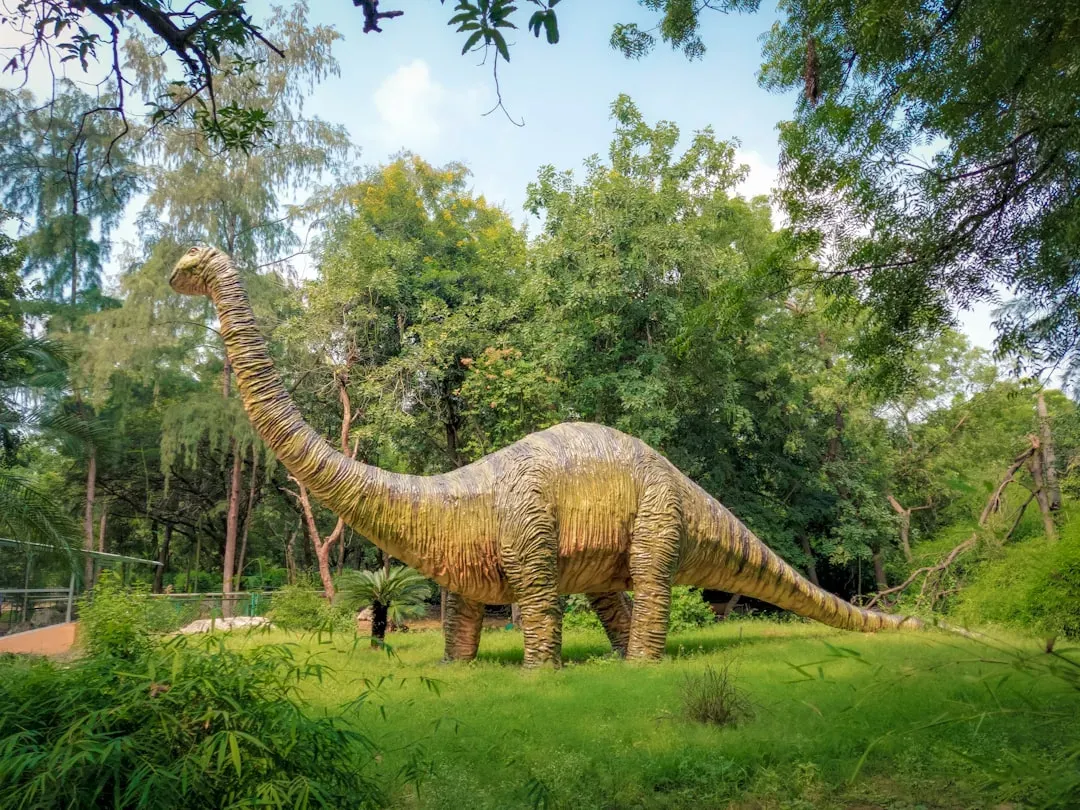
If you put yourself in the skin of a Triassic animal, the appeal of being large starts to make a lot of sense. A bigger body helps you deter many predators, because attacking you becomes risky, exhausting, or simply impossible for anything smaller. You can also store more fat and water, which buys you time during dry seasons or when food is scarce, a lifesaver on a planet with unpredictable climates and widespread drought-prone regions.
Size also changes how you move through your world. As a large herbivore, you can travel farther between feeding grounds, and your height might let you reach vegetation that others can’t touch. As a big predator, your stride covers more ground, and your power lets you tackle prey that smaller hunters could never manage. Of course, there are trade-offs: you need more food overall, you grow more slowly, and you may be less agile, but in stable, productive environments, those drawbacks are often outweighed by the safety and reach that size gives you.
The Seeds of Future Titans: How the Triassic Set Up the Jurassic
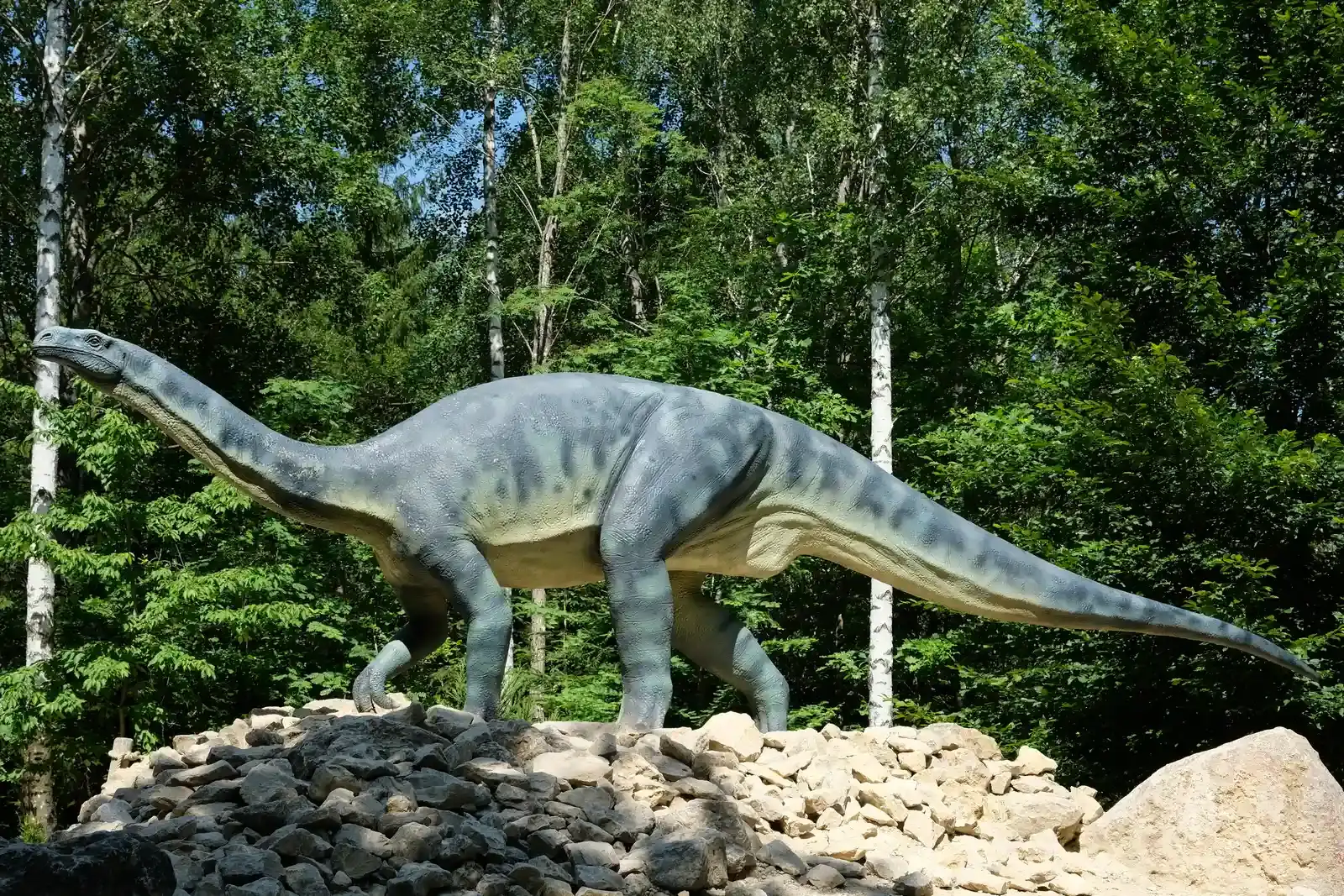
When you look at the Triassic in hindsight, you can see it as the prologue to the more famous dinosaur ages that follow. The first true giants that appear here test the limits of body design, metabolism, and growth in ways that later lineages will refine and amplify. Early sauropodomorphs, big archosaurs, and armored herbivores act like early drafts for the towering sauropods, massive carnivores, and complex ecosystems that explode in the Jurassic.
By the time the Triassic ends, you’ve already watched crucial experiments play out: upright walking that frees the limbs to support more weight, efficient lungs and circulation that help fuel larger bodies, and social or migratory behaviors that let herds exploit huge territories. When a later extinction event clears out some competitors at the Triassic–Jurassic boundary, dinosaurs that already carry these advantages are poised to take over. The giants of the Jurassic are not sudden miracles; they’re the next chapter in a story the Triassic has been writing all along.
What the Triassic Giants Teach You About Evolution and Survival
When you step back from the fossils and imagine these creatures as living animals, the Triassic giants tell you something powerful about how life responds to crisis. Out of the worst extinction in Earth’s history comes not just recovery, but a wave of innovation that includes some of the largest animals the planet had seen up to that point. Rather than collapsing for good, ecosystems rebuild themselves around new players, many of whom push into sizes their ancestors never reached.
For you, that story is a reminder that change, even catastrophic change, can open doors for unexpected forms of success. Gigantic amphibians, armored reptiles, and early long-necked dinosaurs are all signs that evolution rarely stands still; it keeps testing new solutions, especially when old systems fall apart. The next time you picture a towering sauropod or a massive predator, you can trace its roots back to this restless period and recognize that the road to greatness often runs through upheaval.
When you look at the Triassic with fresh eyes, you see more than just a bridge between earlier and later eras; you see the moment when Earth’s first true giants step onto the stage and change the script forever. Their rise tells you that size is not just a number on a scale, but a strategy born from crisis, opportunity, and adaptation. So the next time you imagine walking beneath a colossal dinosaur, will you remember that its story really began in a battered world learning how to start over?