Blacksburg, Virginia – A mangled dinosaur skull, unearthed over four decades ago and long overlooked, has revealed a new species of early meat-eating predator. Virginia Tech geosciences senior Simba Srivastava led the analysis that identified the fossil as belonging to one of the last survivors of the Herrerasauria family from the Triassic period’s close. This discovery, detailed in a recent scientific publication, offers fresh insights into dinosaur evolution just before a massive extinction reshaped life on Earth.
A Fossil Pulled from Obscurity
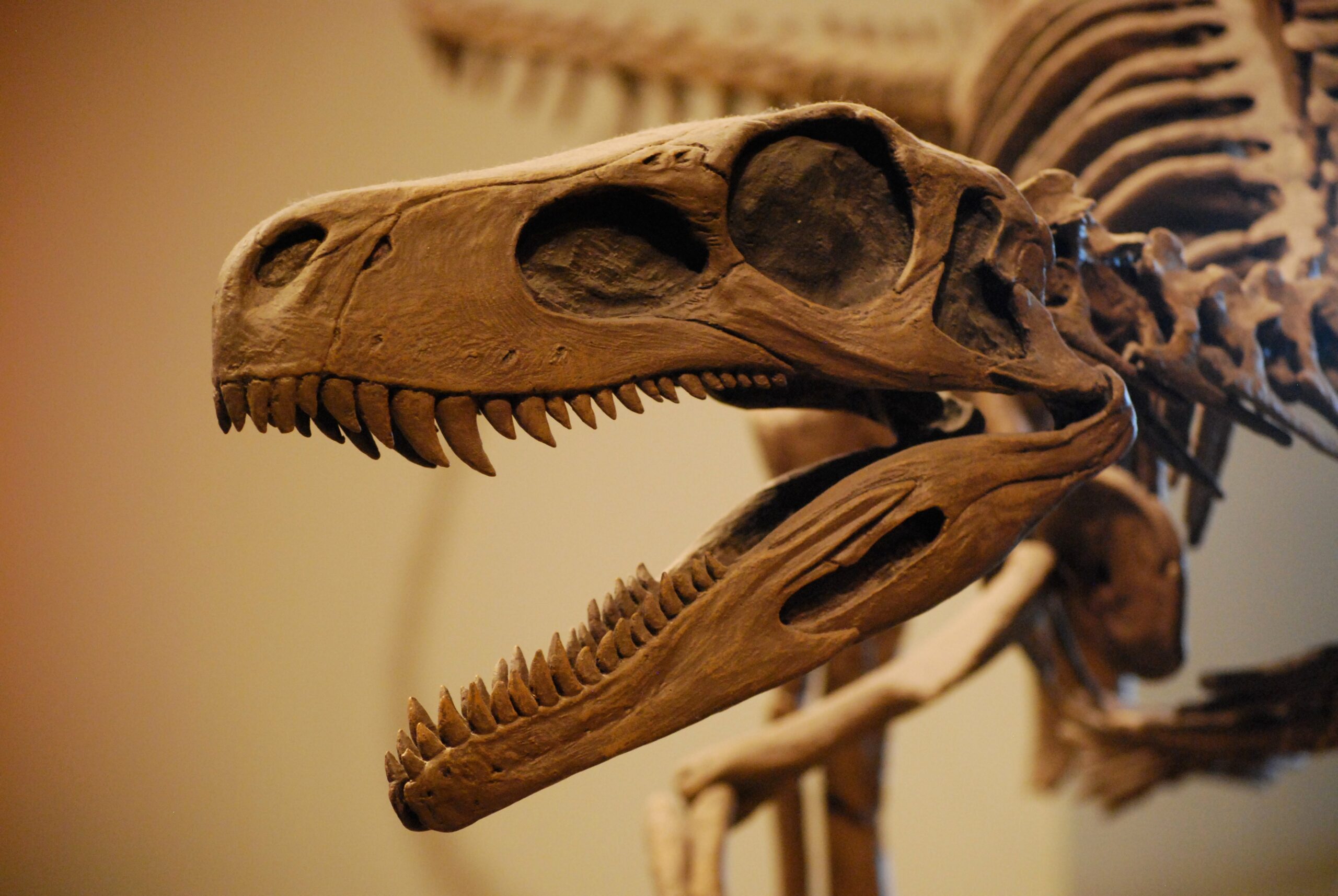
A Fossil Pulled from Obscurity (Image Credits: Upload.wikimedia.org)
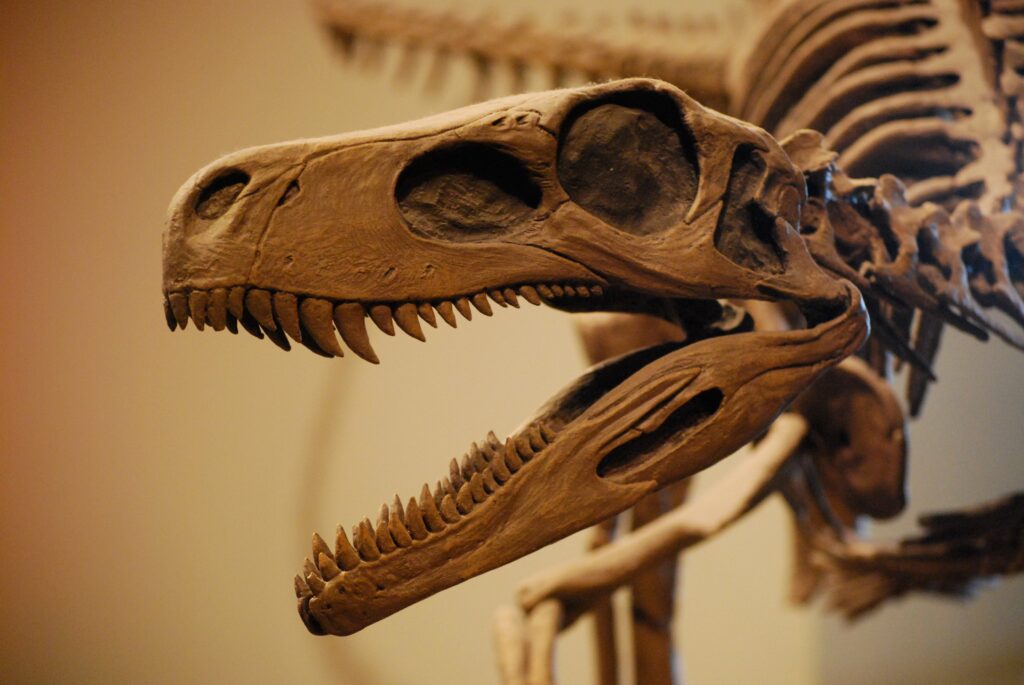
In 1982, a team from the Carnegie Museum of Natural History excavated the crushed skull at New Mexico’s Ghost Ranch, within the famous Coelophysis Quarry. The specimen, a lumpy and pockmarked remnant, languished in storage until geobiologist Sterling Nesbitt rediscovered it more than 30 years later. Nesbitt brought the fossil to Virginia Tech, where he and colleague Michelle Stocker enlisted Srivastava as a first-year student to tackle the challenging project.
Srivastava described the fossil bluntly: “This is a uniquely sucky specimen.” Despite its poor condition, the small skull—small enough to fit in one’s hands—held untapped potential. Over two years, the team committed to unlocking its secrets, marking a classic case of undergraduate drive turning a forgotten rock into a scientific milestone.
High-Tech Reconstruction Unlocks the Past
The researchers employed computed tomography (CT) scans to digitally disentangle the fossil’s flattened bones. This process allowed them to isolate individual elements and produce a 3D-printed model of the skull. Such advanced techniques transformed what might have been dismissed as worthless into a clear window on ancient anatomy.
The reconstruction exposed traits unseen in other early dinosaurs. Srivastava and his advisors published their findings on April 15, 2026, in Papers in Palaeontology (DOI: 10.1002/spp2.70069). Their work demonstrated how modern tools can revive even the most damaged specimens, emphasizing Virginia Tech’s commitment to hands-on student research.
Profile of Ptychotherates bucculentus
The new species, named Ptychotherates bucculentus, translates to “folded hunter with full cheeks” in Latin. This nod captures the dinosaur’s distinctive skull: massive cheekbones, a broad braincase, and a short, deep snout. One paleo-artist even dubbed its bizarre look the “Murder Muppet.”
Dating to the latest Norian or Rhaetian stages of the Late Triassic—roughly 205 to 201 million years ago—the predator predates Tyrannosaurus rex by more than three times. It belonged to Herrerasauria, among the earliest branches of carnivorous saurischians. Key features include:
- Prominent, inflated cheek regions unlike any prior herrerasaurian.
- A widened braincase suggesting unique sensory adaptations.
- A compact snout suited for precise biting.
- Overall small size, akin to a toddler in height based on related fossils.
These characteristics marked constant evolution within the group, challenging prior views of their uniformity.
Reshaping Dinosaur History
The fossil proves herrerasaurians persisted until the very end of the Triassic, far longer than previously documented. No similar specimens have surfaced elsewhere, positioning the American Southwest as their likely final refuge. This late survival implies the end-Triassic extinction—which eliminated rivals like crocodile and mammal ancestors—also claimed established dinosaur lineages like Herrerasauria.
Srivastava noted, “This specimen… is the only proof that any of these dinosaurs lived this long, lived in these latitudes, the only proof that they evolved to have this skull shape.” The event cleared the stage for dinosaurs to dominate the Jurassic, transitioning from supporting players to stars. Such revelations from a single fossil underscore the rarity of Late Triassic records and the role of young scientists in advancing knowledge.
This breakthrough reminds us that major discoveries often hide in plain sight, awaiting curious minds. As paleontology evolves with technology and fresh talent, more forgotten fossils may rewrite prehistory. What do you think about this tiny skull’s big impact? Tell us in the comments.
Key Takeaways
- A Virginia Tech student’s two-year project named Ptychotherates bucculentus, the last known herrerasaurian.
- CT scans and 3D printing revived a 1982 fossil ignored for decades.
- The find rethinks the end-Triassic extinction’s toll on early dinosaurs.