You probably think dinosaurs were as weird as prehistoric life gets, but once you step outside the classic T. rex and Triceratops line-up, things get far stranger. Across hundreds of millions of years, Earth produced creatures that look like someone mashed up a science-fiction sketchbook with a nature documentary. Some glided on giant skin wings, others filtered mud like vacuum cleaners, and a few looked like nightmares stitched out of spare parts.
As you walk through this list, you’ll see how often your mental image of “prehistoric animal” has been shaped by movies rather than reality. You’ll meet marine reptiles that weren’t actually dinosaurs, amphibians the size of cars, and birds with wingspans wider than a small plane. By the end, you may find dinosaurs almost… normal. Let’s jump into the strangest deep-time neighbors the dinosaurs ever had.
1. Tully Monster: The Prehistoric Question Mark
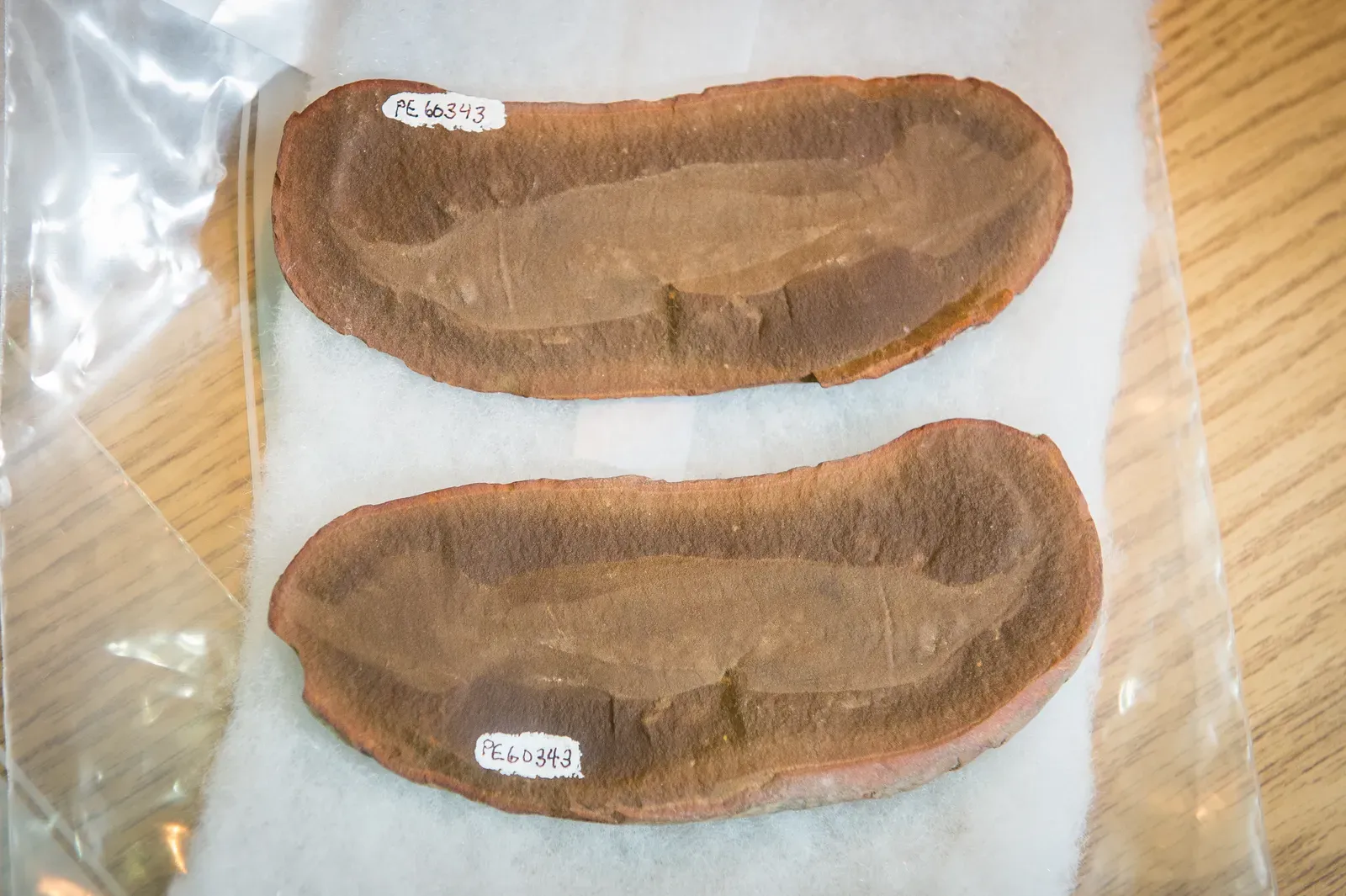
If you were handed a sketch of the Tully monster, you’d probably assume it was a joke. You’re looking at a soft-bodied creature with a torpedo-shaped body, a pair of weird fin-like structures on its sides, a tail fin at the back, and, most bizarrely, a long flexible snout ending in a claw-like mouth with teeth. Its eyes sat on the ends of a rigid bar that stretched across its head, like two marbles on a stick. This thing doesn’t look like it belongs to any animal group you know from your everyday life.
Discovered in the famous fossil beds of Mazon Creek in Illinois and living roughly about three hundred million years ago, the Tully monster has baffled scientists for decades. You’ll see it pop up in arguments over whether it was a vertebrate, maybe related to lampreys, or something outside the familiar animal line-up altogether. Part of why it’s so strange to you is that there is nothing alive today that really matches it, so your brain keeps trying to compare it to squids, worms, and eels, and never quite succeeds. It’s one of those creatures that remind you the history of life is not obligated to make visual sense.
2. Opabinia: Five Eyes and a Vacuum-Hose Face
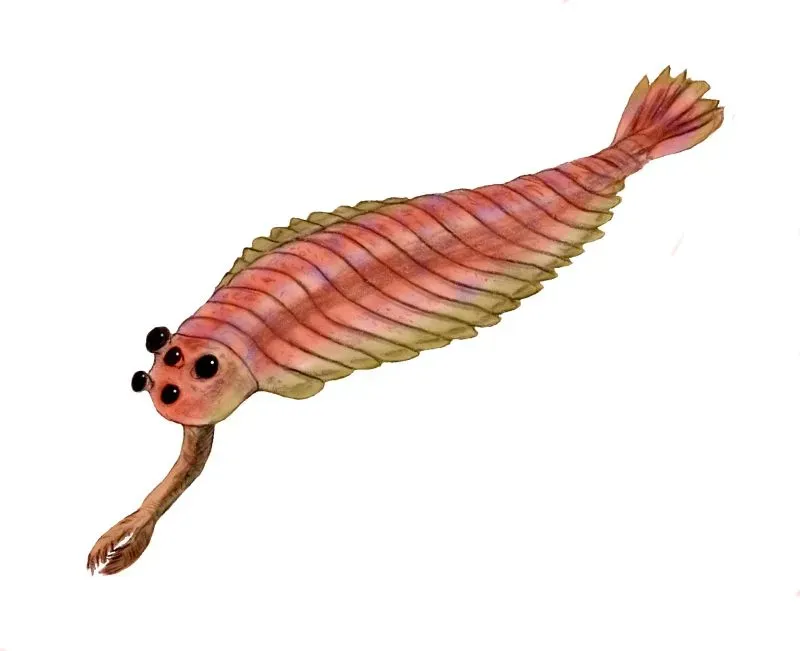
Imagine snorkeling in a shallow Cambrian sea more than five hundred million years ago and seeing a creature swim past with five eyes on short stalks and a long, flexible trunk ending in a pincer. That’s Opabinia. You’d probably freeze for a second, trying to decide if you’d just hallucinated a cross between a shrimp, a vacuum cleaner, and a security camera. Its soft, segmented body had lateral flaps for swimming and a fan-shaped tail, helping it glide just above the seafloor.
Opabinia likely used its trunk to grab food from the mud and pass it back to a mouth located under its head, in a position that feels wrong to you because you’re used to faces being more straightforward. When its fossils were first shown publicly in the twentieth century, early reconstructions were so odd that the audience reportedly laughed. If you compare it to modern animals, you’ll find fragments that feel familiar, but the overall design sits in that strange Cambrian experimentation phase where evolution was still “testing” body plans. Looking at Opabinia, you get a sense that life tried many options before settling on the standard blueprints you see around you today.
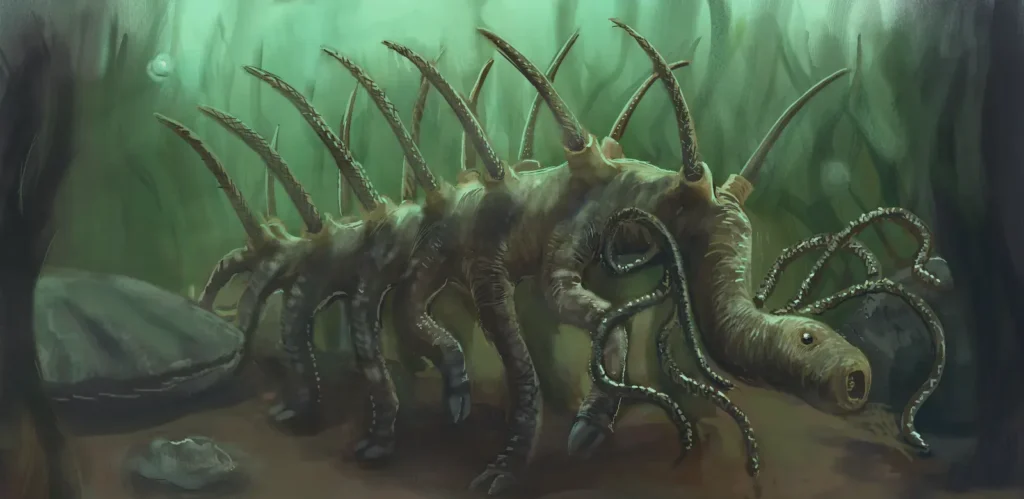
3. Hallucigenia: Upside-Down and Inside-Out
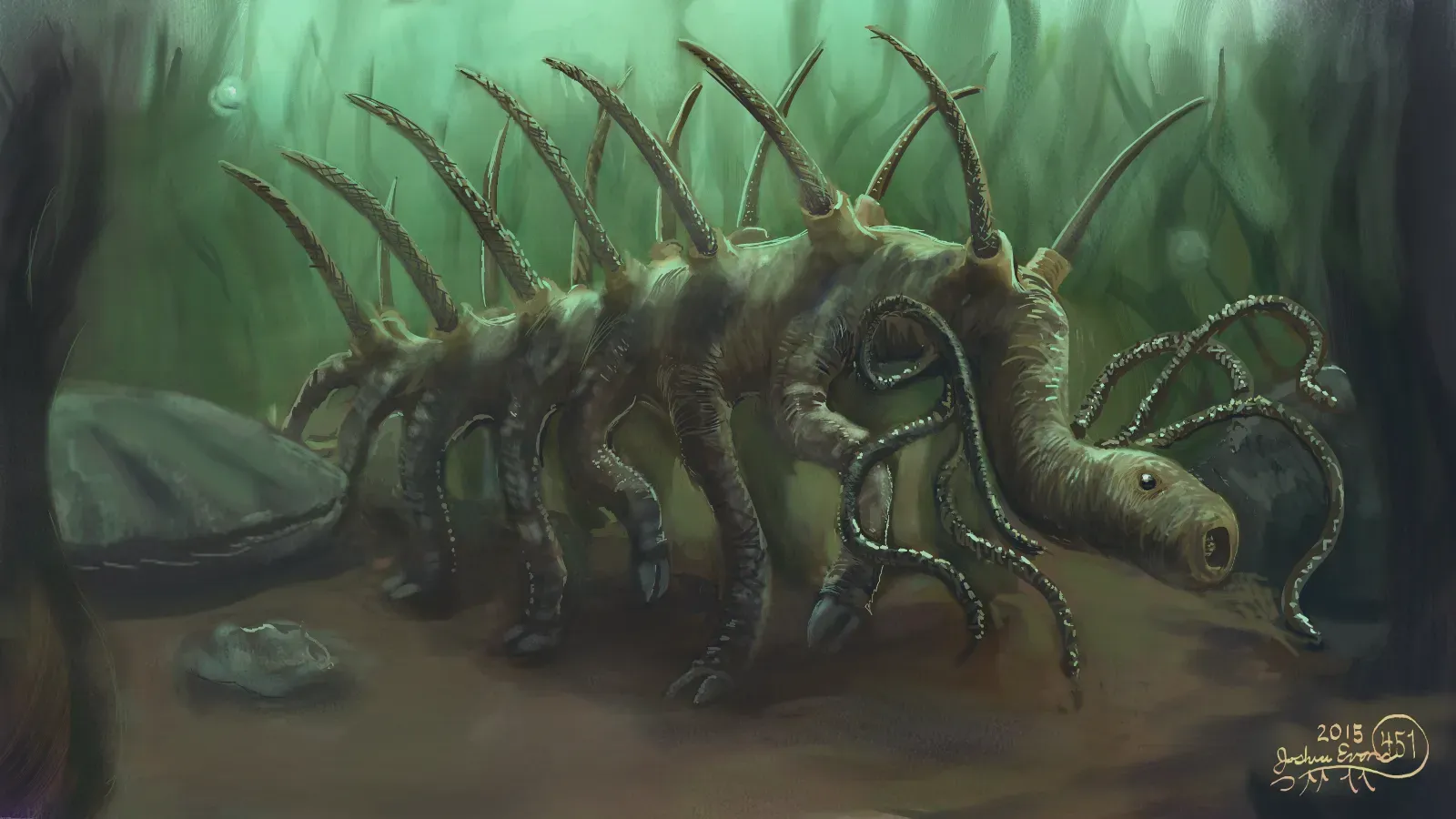
Hallucigenia lives up to the name you’d give something from a fever dream. When you picture it, think of a long, thin worm-like body, a series of stiff spines along one side, and soft, tube-like limbs ending in tiny claws on the other. For years, paleontologists couldn’t even agree on which way up it went, and early diagrams literally drew it upside-down, walking on its spines like stilts. If you had found that fossil on your own, you’d probably have turned it every possible direction before giving up.
Once scientists realized the clawed tubes were legs and the spines pointed upwards as defense, Hallucigenia finally made a bit more sense, though it still looks incredibly alien to your eyes. It was a small Cambrian animal, only a few centimeters long, yet it carries enormous weight in how you understand evolution. When you see its delicate claws and realize it’s related to modern velvet worms and arthropods, you get this eerie feeling that today’s familiar insects and spiders descend from creatures that looked much stranger than you might have imagined. It’s a quiet reminder that your sense of “normal animal” is just a snapshot in time.
4. Helicoprion: The Shark With a Buzzsaw Jaw
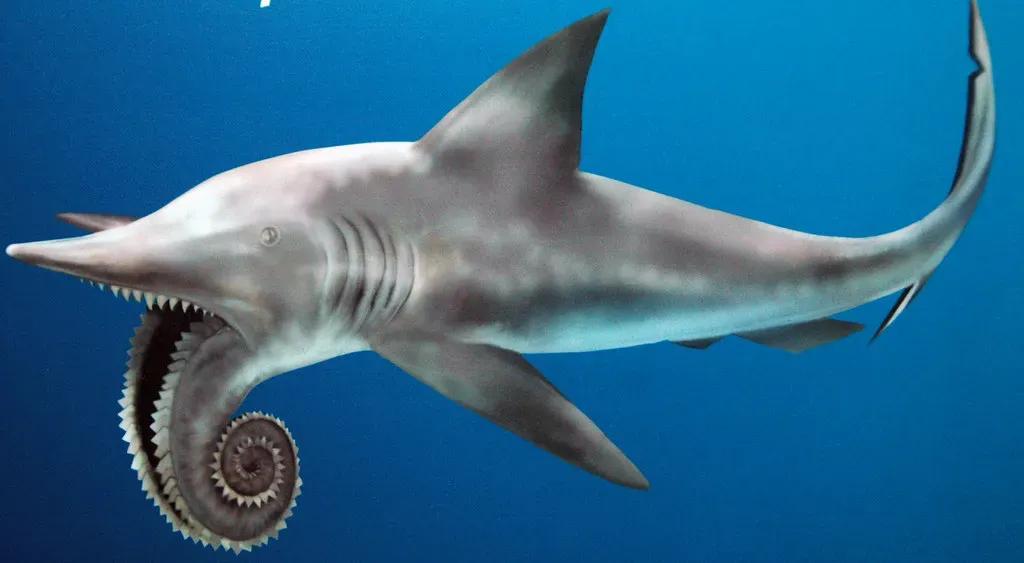
When you imagine a shark, you probably think of sleek bodies and rows of sharp teeth, but Helicoprion takes that mental picture and spins it like a circular saw. This ancient fish, living more than two hundred million years ago, had a spiral of teeth positioned in its lower jaw, forming what looks like a buzzsaw coiled under its face. For a long time, you would have seen wild reconstructions putting that spiral out in front like a bizarre weapon, simply because no one was sure how it fit in the mouth.
Modern studies suggest the tooth spiral sat deeper inside the lower jaw, rolling new teeth forward as old ones were worn down, a bit like a conveyor belt of blades. Imagine biting into soft-shelled prey and pulling back while that spiral slices through like a meat slicer. You’ll never see anything quite like that in living sharks, even though they do replace teeth constantly. Helicoprion shows you that prehistoric seas were full of experiments in how to build a predator, and not all of them would pass the “looks believable in a movie” test today.
5. Anomalocaris: The Cambrian Sea’s Alien Apex Predator
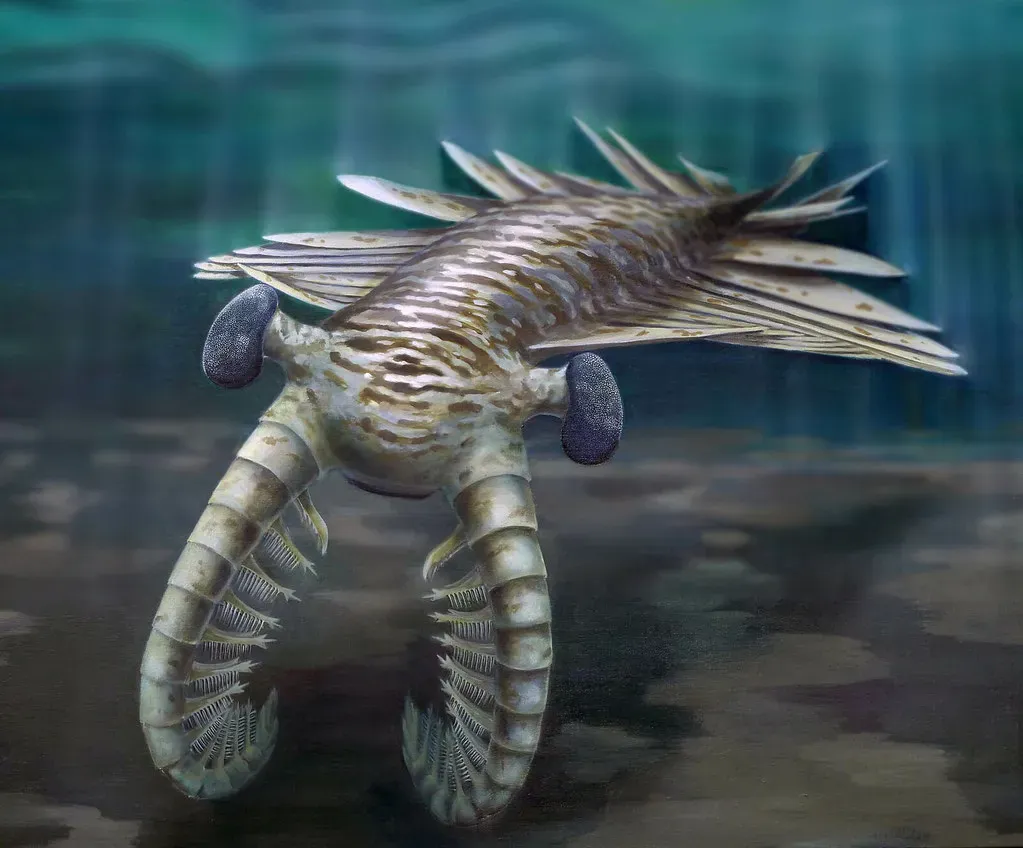
Before dinosaurs ever existed, the oceans already had terrifying top predators, and Anomalocaris was one of the most impressive. You can picture it as a large, shrimplike creature up to about the length of a small dog, with a segmented body, big lateral swimming flaps, and a pair of segmented, spiny appendages sticking out from the front of its head. These “arms” could curl inward to grab prey and bring it toward a circular mouth lined with hard plates that look disturbingly like a ring of teeth. If you were a trilobite, this was the last thing you wanted to see.
What makes Anomalocaris feel so strange to you is that it predates the more familiar fish-dominated seas and represents a very different kind of dominance. You’re used to thinking of vertebrates as the big, powerful hunters, but this animal shows you a world where arthropod-like creatures ruled the water column. When you see modern shrimp or mantis shrimp, you can catch a faint echo of that ancient design, though nothing alive today quite captures the same mixture of grace and nightmare. It reminds you that top predators have changed dramatically over time, and the things that once sat at the top of the food chain might look utterly alien now.
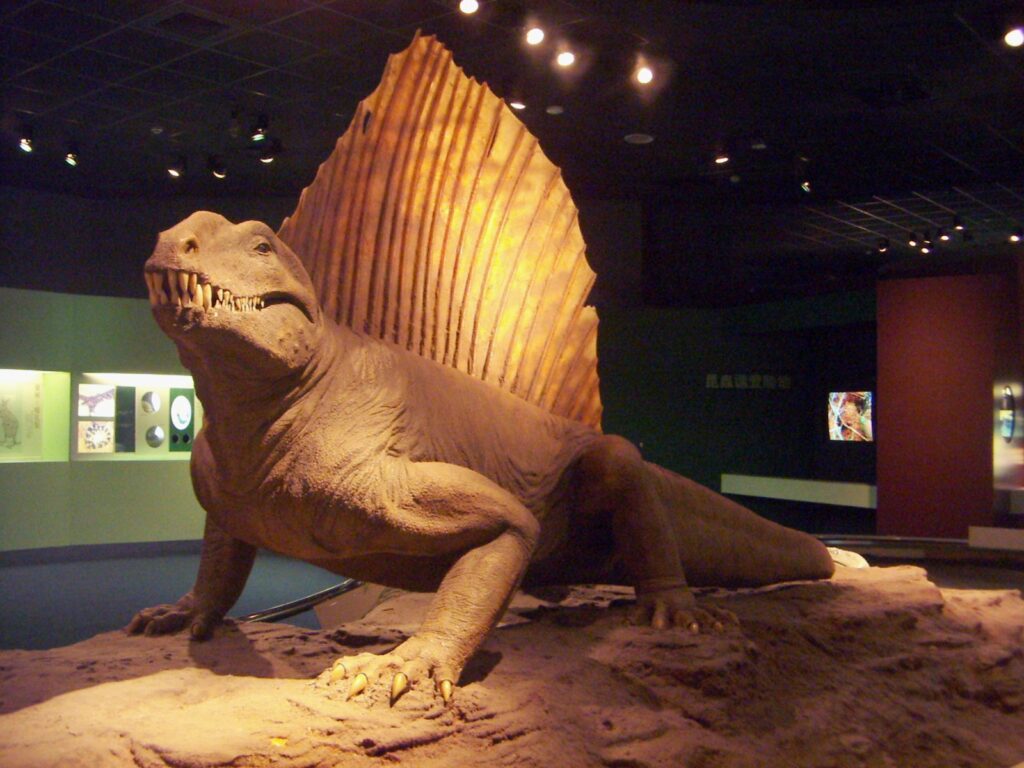
6. Dimetrodon: The Sail-Backed “Not-a-Dinosaur”
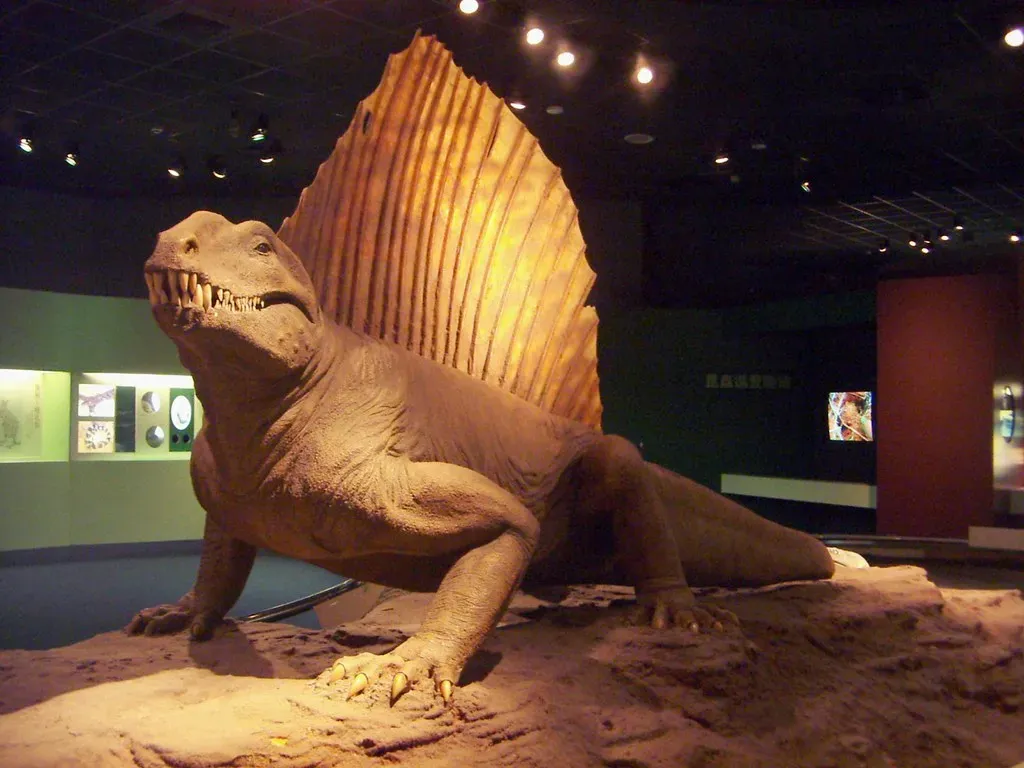
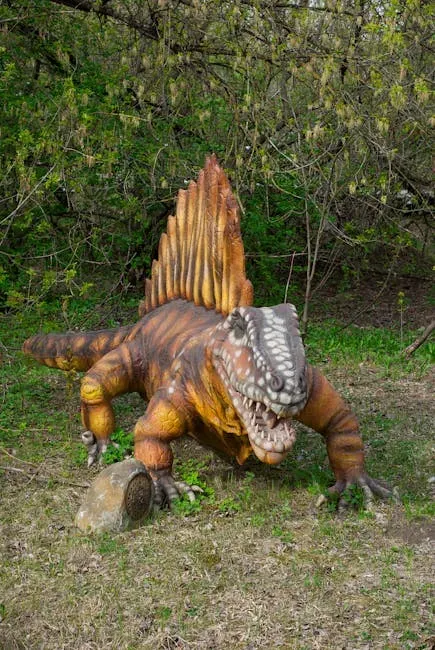
Dimetrodon is one of those creatures you might have seen as a plastic toy and automatically filed under “dinosaur,” but it lived tens of millions of years before dinosaurs ever appeared. You’re looking at a stocky, four-legged predator with a big head full of sharp, slightly curved teeth and a massive sail on its back formed by elongated vertebral spines covered in skin. That sail alone is enough to make it look bizarre, like a reptile wearing a billboard. Yet, despite appearances, Dimetrodon is more closely related to you than to any dinosaur.
The sail might have helped it regulate body temperature, allowing it to warm up faster in the morning or cool down more efficiently, though scientists still discuss additional possibilities like display or dominance. When you picture Dimetrodon basking by a swampy Permian river, raising and lowering that sail to catch the sun, it feels almost theatrical. You’re seeing a stage in the long story that leads from early mammal-like reptiles to modern mammals, including humans. The irony is that one of the most famously “dinosaur-looking” animals is actually part of your own distant family tree, just wearing an outrageous fashion statement on its back.
7. Ambulocetus: The Walking Whale
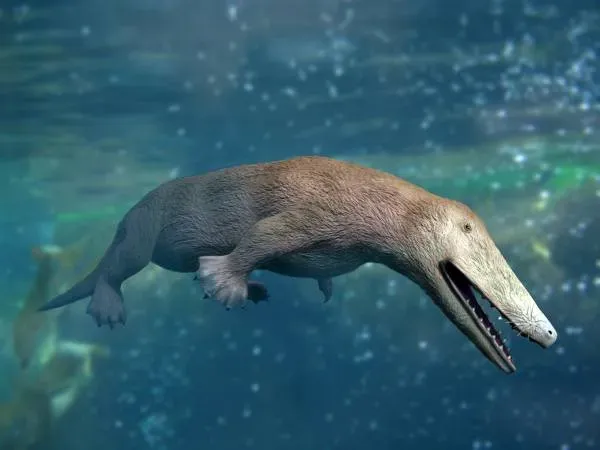
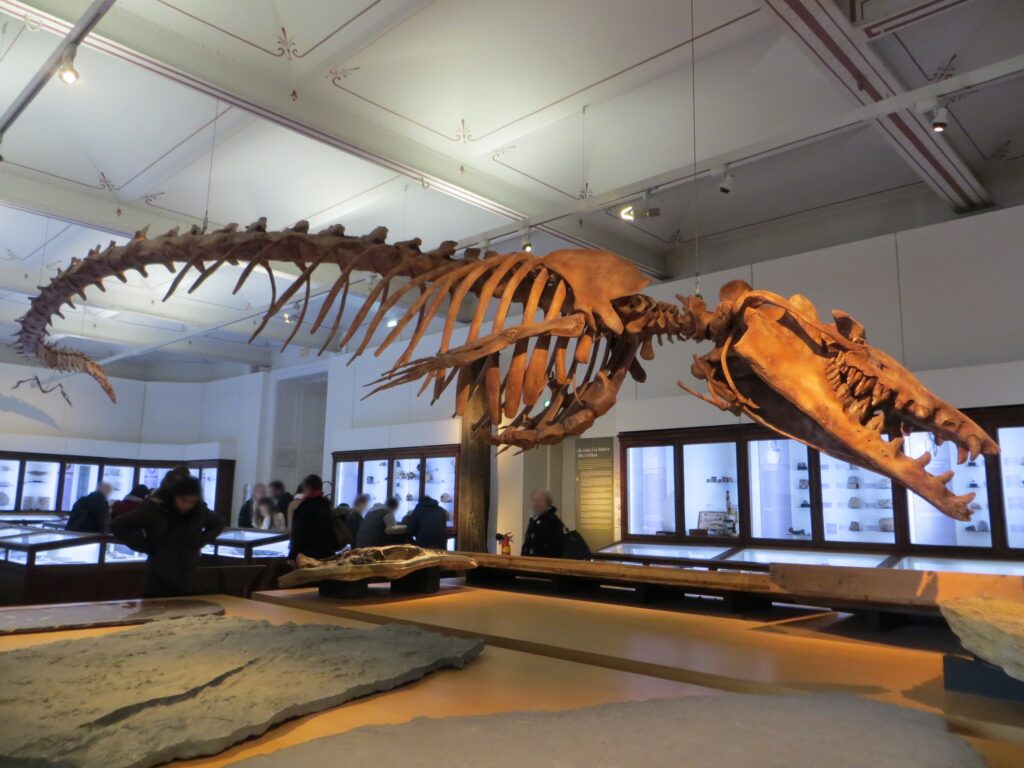
Whales seem perfectly at home in the ocean today, but Ambulocetus shows you a time when their ancestors still walked on land. Imagine something roughly crocodile-sized with robust legs, a long body, and a head that hints at both land mammal and early whale. Its name literally means “walking whale,” and that description fits: it could probably move on land with a somewhat awkward, loping walk and swim with powerful strokes of its limbs and spine. If you saw it today near a riverbank, you might struggle to decide if it was more like a giant otter or a very odd crocodile.
For you, Ambulocetus is fascinating because it freezes evolution in mid-transition. You can see how nostrils, limb structure, and spine flexibility were slowly shifting toward the fully aquatic lifestyle of modern whales. Instead of imagining evolution as a sudden leap from land mammal to blue whale, you get a concrete picture of the many small steps in between. That makes the story of whales feel more real and more dramatic, as if you’re watching a slow-motion escape from land into the open sea over millions of years. The strangeness of Ambulocetus comes from it not fitting neatly into your usual categories of “land” or “sea” animal.
8. Quetzalcoatlus: A Flying Reptile the Size of a Small Plane
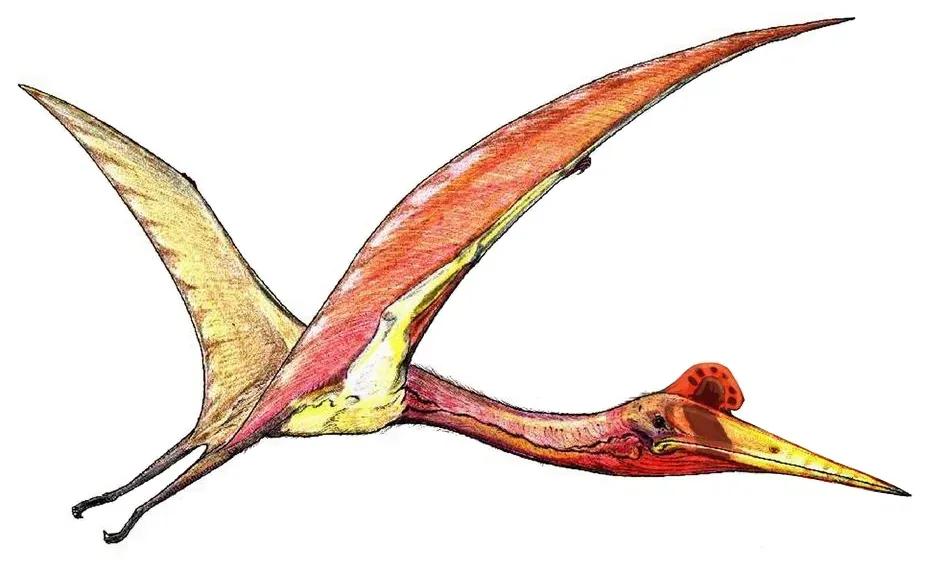
When you think of flying animals, you probably picture birds or bats, but Quetzalcoatlus blows past both of those in sheer size. This pterosaur had a wingspan that could rival a small aircraft, with some estimates putting it over ten meters across. Standing on the ground, it would have loomed over you like a giraffe with wings, supported by long, column-like forelimbs. Its head was massive, with a long, pointed beak and often a crest that made it even more imposing.
What makes Quetzalcoatlus feel so unreal is the idea of something that large actually managing flight. Yet its bones were hollow and lightweight, and its body was remarkably streamlined, all tuned by evolution for efficient soaring over long distances. You can imagine it gliding over Late Cretaceous landscapes, scanning for carcasses or small prey on the ground, then folding its wings and stalking forward on all fours like some enormous, stalking heron. When you compare this to modern birds, you realize your current skies are relatively modest. The age of reptiles genuinely filled the air with giants that your instincts still struggle to fully picture.
9. Therizinosaurus: The Giant Clawed Herbivore
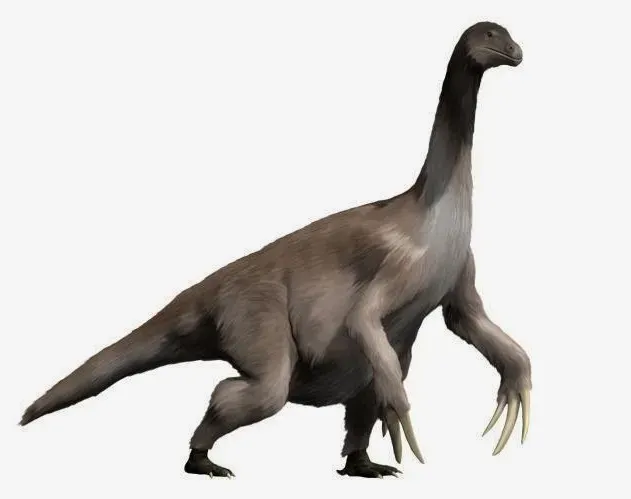
If you only saw the hands of Therizinosaurus, you’d probably assume you were looking at some horror-movie monster. Each hand carried enormous claws that could reach more than the length of your forearm, long and curved like scythes. You might expect a predator built around slashing and tearing flesh, but when you back up and look at the entire animal, you find a strange, pot-bellied, feathered dinosaur with a small head and a beak better suited to plants. It is as if someone gave a gentle herbivore the arms of a nightmare.
Scientists think Therizinosaurus used those claws to pull down branches, strip foliage, or defend itself from predators, turning what looks like a horror weapon into a very practical multipurpose tool. If you picture it standing in a Cretaceous forest, plucking leaves like a giant, feathered sloth-ostrich hybrid, you get a creature that definitely breaks your usual dinosaur stereotypes. For you, it underscores how misleading appearance can be: terrifying-looking anatomy does not always mean a bloodthirsty lifestyle. This dinosaur is a perfect reminder that evolution builds with what is available, even if the final result looks utterly unsettling at first glance.
10. Arthropleura: The Millipede as Long as a Car
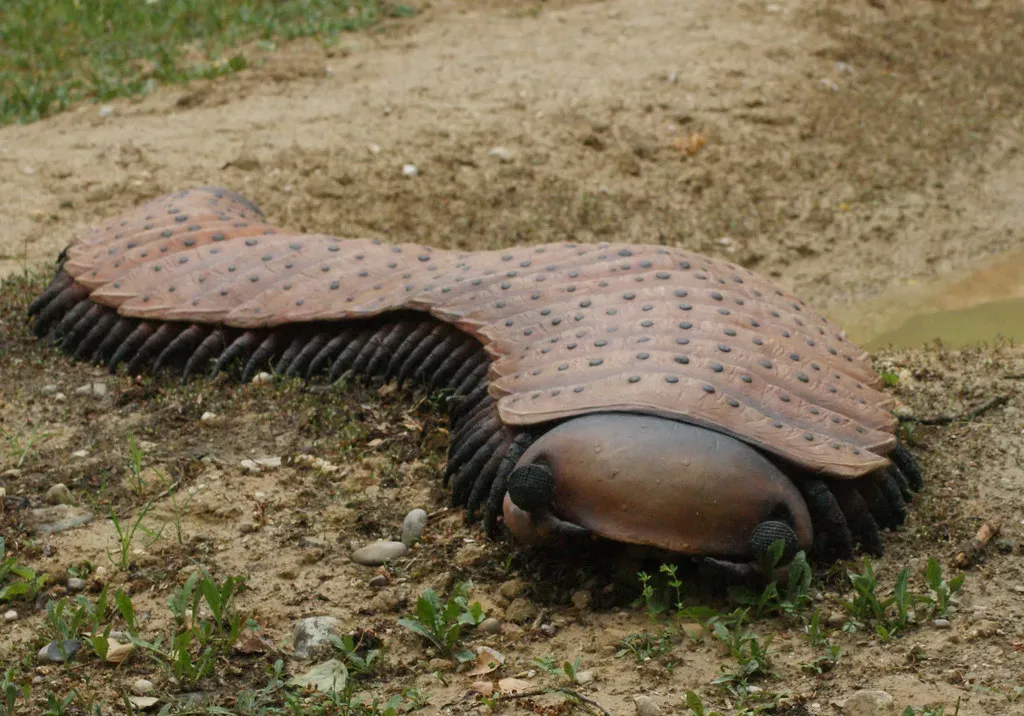
If modern millipedes already make you a bit uneasy, Arthropleura will probably sit at the top of your personal nightmare list. This ancient arthropod, living in lush Carboniferous forests, could stretch longer than a compact car, crawling across the forest floor with dozens of legs. You can imagine the sound of its armored plates rustling over fallen leaves as it moved, a kind of living train of segments and legs. Standing next to one, you’d feel incredibly small and probably very reluctant to get too close.
The comforting part, at least for you, is that Arthropleura seems to have been primarily herbivorous, feeding on decaying plant material and possibly soft vegetation. It thrived in a world with high oxygen levels and dense, swampy forests, conditions very different from what you see today. Its extreme size shows how different Earth’s atmosphere and ecosystems used to be, to the point where a giant millipede could carve out a stable niche. Thinking about Arthropleura makes you realize that even your fears of “big bugs” today are mild compared to what actually crawled around in prehistoric forests.
11. Dunkleosteus: The Armored Bite Machine
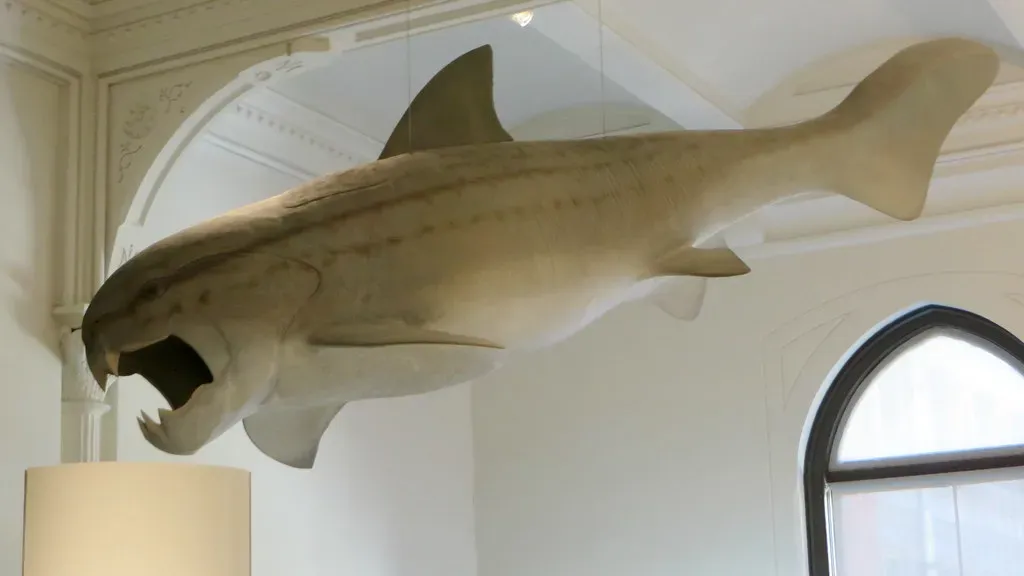
Dunkleosteus looks like it was built around the idea of pure bite power. Instead of traditional teeth, this massive fish had bony plates that formed sharp cutting edges, like a built-in pair of shears at the front of its skull. Its head and front body were wrapped in heavy armor, giving it a bulky, tank-like appearance. If you picture it lunging forward in ancient seas, jaws snapping open and shut with incredible force, you get a predator that feels both brutal and efficient.
Estimates suggest that Dunkleosteus had one of the most powerful bites of any fish that has ever lived, capable of crushing thick shells and armor. You can imagine it feeding on armored prey and other large marine animals, turning its mouth into a kind of industrial press. Unlike the sleek sharks you’re used to, this creature is all about raw, armored presence. Seeing it in your mind helps you understand that prehistoric ecosystems often favored sheer mechanical power, not just speed or stealth. It stands as a symbol of how terrifyingly effective evolution can be when it doubles down on a single function.
Conclusion: A Stranger Prehistoric World Than You Imagined
By now, you’ve stepped well beyond classic movie dinosaurs and into a stranger, more experimental world. You’ve met animals with buzzsaw jaws, five eyes, vacuum-hose faces, sails on their backs, and claws that look like they belong in a horror story but actually served peaceful purposes. When you look at this lineup, you start to realize that dinosaurs, impressive as they are, were just one chapter in a much larger and weirder saga. The deep past was full of anatomical experiments that make modern wildlife feel surprisingly conservative.
These creatures matter to you not just because they look bizarre, but because they show how flexible life really is. They bridge gaps between land and sea, between insects and crustaceans, between reptile-like ancestors and mammals like you. The more you learn about them, the more your idea of what is “normal” in nature stretches and softens, making room for possibilities you would never have guessed. When you imagine what might evolve millions of years from now, do you still expect it to look familiar, or are you ready to accept that the future might be just as strange as this forgotten past?