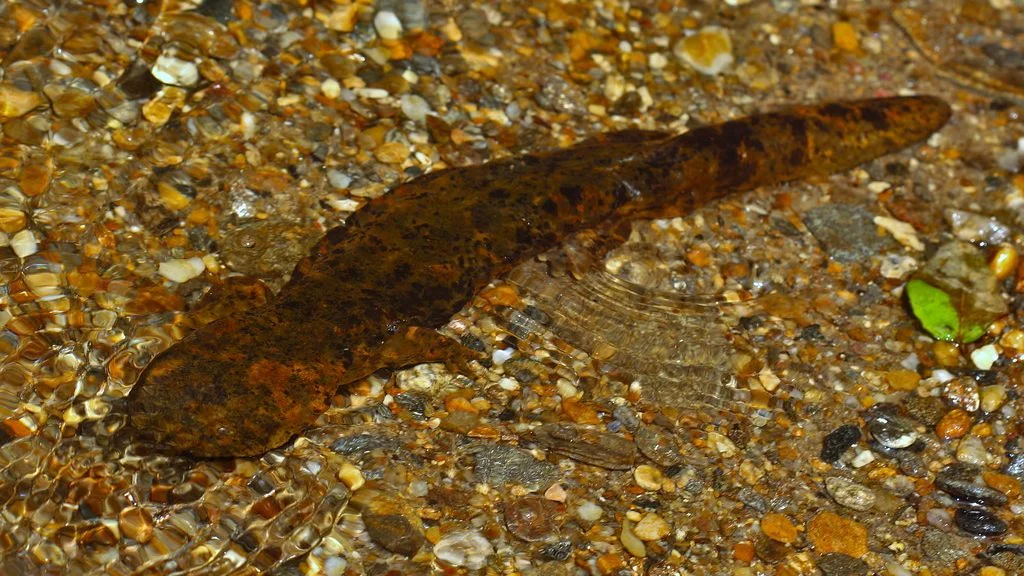
As Endangered Species Day approaches on May 15, 2026, attention turns to the hellbender, a giant salamander whose populations have plummeted across American rivers. These ancient amphibians, relics from over 150 million years of evolution, serve as vital indicators of stream health. Conservation groups highlight their plight to rally public support for habitat restoration and policy changes.
The Unique Biology of Hellbenders
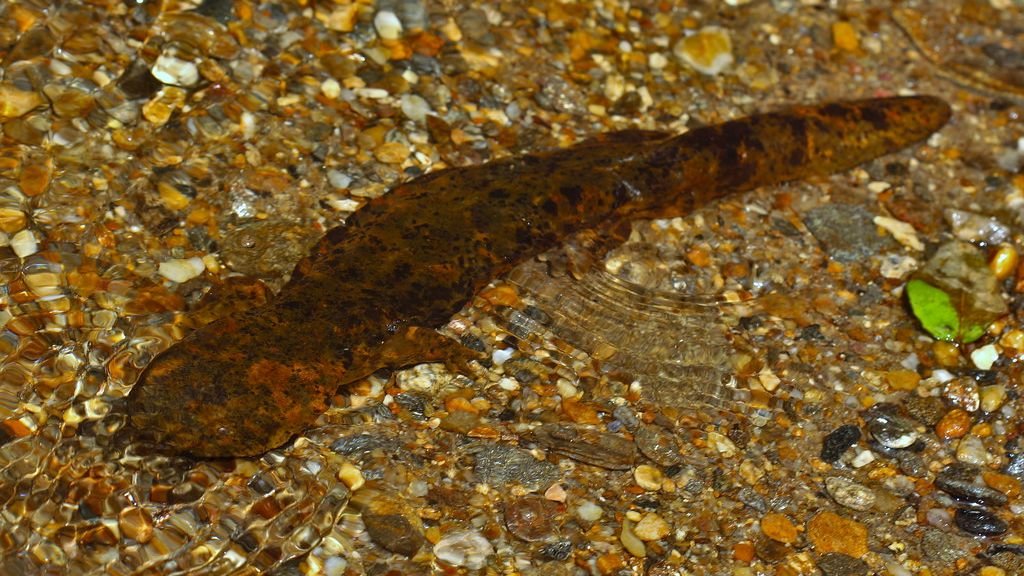
The Unique Biology of Hellbenders (Image Credits: Flickr)
Hellbenders belong to the genus Cryptobranchus, the only living members of their lineage. Fully aquatic throughout their lives, they grow up to 30 inches long and can live as long as 30 years. Their diet consists mainly of crayfish, snails, small fish, tadpoles, insects, and worms.
These salamanders breathe primarily through their wrinkled skin, which provides ample surface area for oxygen exchange underwater. Adults lack the external gills seen in relatives like mudpuppies, though juveniles possess them briefly. This adaptation suits their preference for cold, oxygen-rich streams with rocky bottoms. Nicknames such as “snot otter,” “devil dog,” and “lasagna lizard” reflect their distinctive, fleshy appearance.
Reproduction in Fragile River Habitats
Males select and prepare nesting sites under large flat rocks in the fall, clearing debris to form protective cavities. Females deposit 200 to 400 eggs in these dens, after which the male guards them vigilantly. Clean, cold, sediment-free water flowing through the nest proves essential for egg survival and development.
This reproductive strategy underscores hellbenders’ dependence on undisturbed streambeds. Any disruption to these sites threatens offspring viability. Their long evolutionary history as habitat specialists amplifies the stakes, as they thrive only in pristine conditions.
Subspecies Status and Population Losses
Two subspecies face severe declines: the eastern hellbender and the Ozark hellbender. The eastern variety, found across states including Alabama, Georgia, Indiana, Kentucky, Maryland, Mississippi, New York, North Carolina, Ohio, Pennsylvania, Tennessee, Virginia, and West Virginia, saw listing as endangered in Missouri in 2019. Federal listing under the Endangered Species Act has been proposed for its range.
The Ozark hellbender received federal endangered status in 2011 and now persists only in southern Missouri and northeastern Arkansas, a fraction of its former territory. U.S. Fish and Wildlife Service data indicate eastern populations have dropped more than 80 percent in parts of their historic range, with some areas experiencing functional extirpation. These losses signal broader freshwater ecosystem degradation.
Major Threats to Survival
Hellbenders confront multiple pressures, starting with habitat loss from sedimentation, pollution, and development. Dams fragment rivers, alter flows, and reduce oxygen levels critical for these sensitive creatures. Extreme events like Hurricane Helene exacerbated damage through flooding that silted streams.
Disease poses another risk, with chytridiomycosis and fungal infections documented in both subspecies. The illegal pet trade further depletes wild numbers. Even recreational activities harm them: stacking rocks for photos or fun destroys nests or crushes hidden individuals.
What matters now: Hellbenders’ decline reflects wider stream health issues, urging immediate habitat safeguards and disease prevention.
Conservation Initiatives and Public Involvement
Organizations like the National Wildlife Federation and its affiliates lead recovery efforts. In Arkansas, the Arkansas Wildlife Federation partners with the U.S. Fish and Wildlife Service and Arkansas Game and Fish Commission on monitoring in the Eleven Point River watershed. Programs such as the “Marvelous Misfits” campaign educate residents about Ozark hellbenders.
North Carolina Wildlife Federation advocates for eastern hellbender protections, submitting comments for Endangered Species Act listing and organizing stream cleanups and surveys at sites like New River State Park. Post-Hurricane Helene, groups aim to resume proactive work. Affiliates in West Virginia and elsewhere promote awareness and restoration.
- Avoid stacking or moving rocks in streams to preserve nesting sites.
- Practice “clean, drain, dry” for gear to curb disease spread.
- Reduce home runoff through native plants and limited fertilizers.
- Release any incidentally caught hellbenders gently and avoid handling.
- Join local cleanups or support the Recovering America’s Wildlife Act.
These steps, combined with policy advocacy, offer pathways to stabilize populations. Hellbenders’ persistence in select rivers demonstrates recovery potential where threats subside, providing a model for broader aquatic conservation.