If you grew up thinking prehistoric life was basically just a parade of T. rexes and Triceratops, you’re in for a seriously fun update. The ancient world was packed with strange, brilliant, and downright terrifying creatures that never technically counted as dinosaurs at all, yet could easily steal the show in any museum or movie.
In this article, you’re going to meet ten of those prehistoric oddballs and superstars. You’ll travel from the depths of warm ancient seas to massive primeval forests and even the icy edges of the last Ice Age. Along the way, you’ll see how wildly creative evolution can be, and you might even come away thinking: dinosaurs were cool, sure – but they definitely didn’t have a monopoly on amazing.
1. Dimetrodon – The Sail-Backed “Not-a-Dinosaur” You Keep Seeing on Dinosaur Posters
When you picture a classic “dinosaur” with a huge sail on its back, you’re probably picturing Dimetrodon without even realizing it. But here’s the twist: you’re actually looking at an early relative of mammals, which means it’s more closely related to you than to any dinosaur you know. Dimetrodon lived tens of millions of years before the first true dinosaurs appeared, roaming the Permian period long before the age of giants really kicked off.
That massive sail on its back wasn’t there just for style, either. You can think of it as a built-in climate control system, probably helping Dimetrodon warm up or cool down by soaking in or releasing heat, a huge advantage in the fluctuating Permian environment. Its skull and teeth also give you a glimpse of a more advanced predator, with sharp, differently shaped teeth hinting at the kind of specialization that would later show up in true mammals. Next time you see that sail-backed “dino” on a toy shelf, you’ll know you’re actually looking at an honorary cousin.
2. Plesiosaurus – The Long-Necked Marine Reptile Behind Lake Monster Legends
If you’ve ever heard stories about mysterious long-necked lake monsters, you’ve basically heard a recycled rumor about something like Plesiosaurus. This marine reptile cruised ancient oceans with a long, flexible neck, a stout body, and four powerful flippers that worked like underwater wings. It was not a dinosaur, but it did share the Mesozoic world with them, turning the seas into its personal hunting grounds while dinosaurs ruled the land.
You can imagine Plesiosaurus gliding through shallow coastal waters, using that long neck like a stealthy fishing rod to snap up fish and squid-like creatures before they even realized it was there. Those paddle-like limbs make it look almost graceful, a bit like a sea turtle crossed with a swan and then stretched into something out of a fantasy novel. When you hear people speculate about hidden marine monsters today, you’re really hearing the echo of a real creature that once owned the oceans.
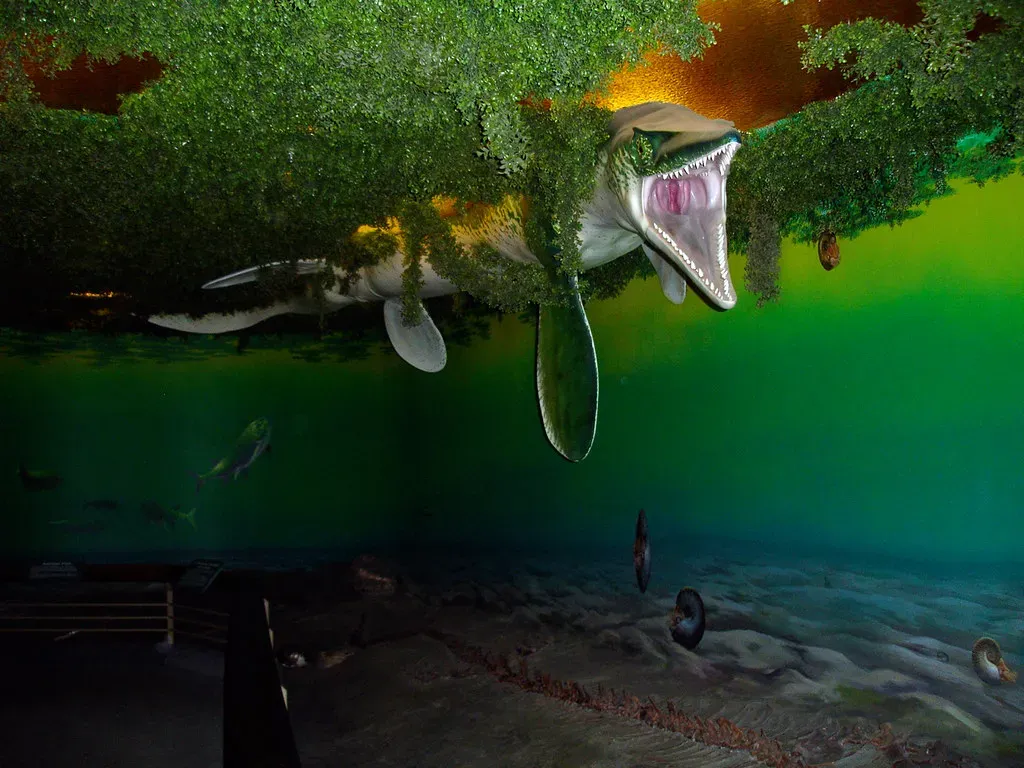
3. Mosasaurus – The Real Sea Monster That Would Have Made Sharks Nervous
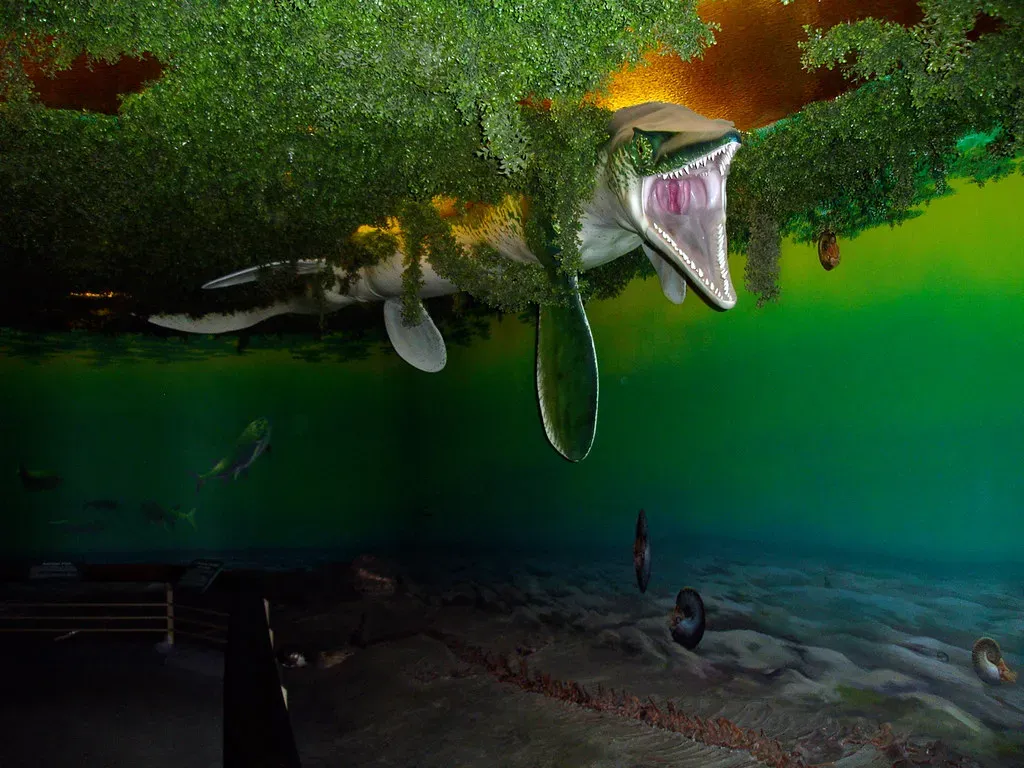
If Plesiosaurus feels elegant and mysterious, Mosasaurus is the blunt-force horror movie version of a marine reptile. Picture a massive, streamlined body, a powerful tail, and a head full of robust, conical teeth built to crush anything unlucky enough to be in its way. You’re not looking at a dinosaur or a giant fish; you’re looking at a marine lizard relative that turned the Late Cretaceous oceans into a very unforgiving place.
You can think of Mosasaurus as the top boss of its ecosystem, preying on fish, turtles, other marine reptiles, and probably anything else it could overpower. Its jaws and skull were adapted to grip and thrash prey, and its strong tail helped it rocket through the water with serious force. If you dropped a great white shark into its territory, you’d probably bet on Mosasaurus every time. Once you realize animals like this actually existed, it gets much easier to understand why ancient seas were some of the most dangerous neighborhoods on Earth.
4. Megalodon – The Giant Shark That Redefined “Apex Predator”
Even if you’re a little jaded about big prehistoric animals, Megalodon will probably still make your jaw drop. You’re looking at a shark so huge that a modern great white would feel like a scaled‑down model next to it. Estimates vary, but you’re still talking about a predator many times heavier than today’s largest sharks, with a bite force that pushed the limits of what bone and muscle can even do.
Imagine standing next to one of its teeth, which can be longer than your entire hand, and realizing that its mouth was lined with row after row of those blades. Megalodon spent its time patrolling ancient oceans, very likely targeting large marine mammals like early whales, ramming, biting, and disabling them with terrifying efficiency. You’ll never look at the ocean quite the same way again once you understand that, at one point, something like this really did cruise the open water. Somehow, your next beach trip feels a little more peaceful knowing it is long gone.
5. Pteranodon – The Sky-Soaring Reptile with a Head Crest and No Dinosaurs Needed
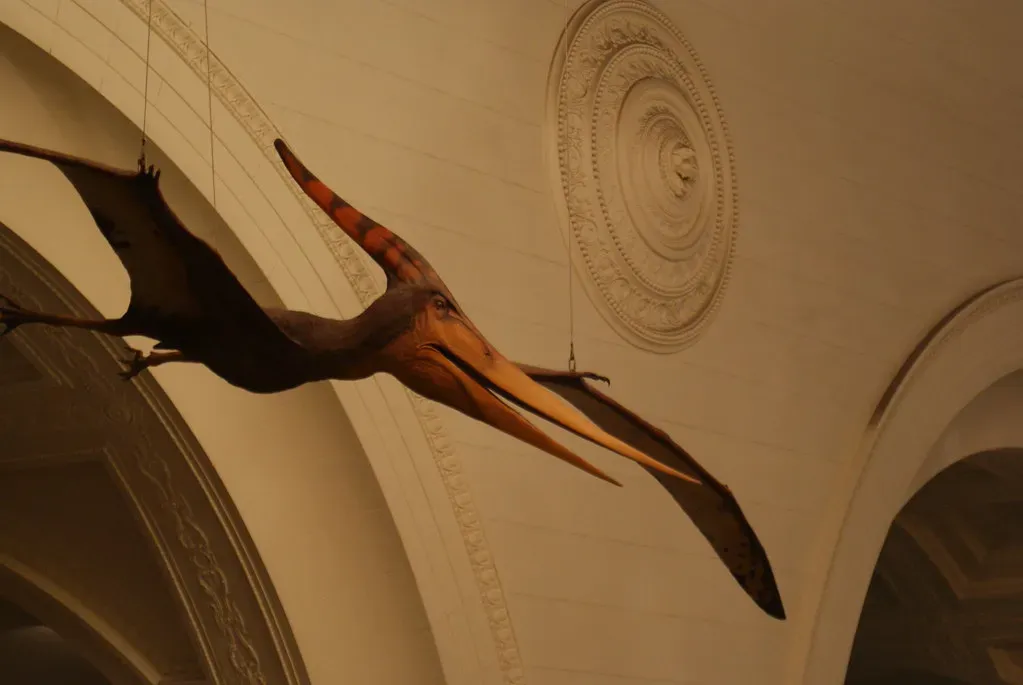
When you think of flying prehistoric creatures, your brain might lazily lump them in with dinosaurs, but pterosaurs like Pteranodon were their own separate branch of the reptile family tree. Pteranodon is especially striking because of its enormous wingspan and that long, backward-pointing crest on its skull that gives it such a distinctive profile. You can picture it catching warm air currents above ancient coastlines, almost like a gigantic seabird made of bone and membrane.
You would have seen Pteranodon swooping over the waves, likely fishing by skimming or diving to snatch prey from the surface. Its hollow bones and lightweight body made it a master glider, able to stay aloft for long periods without exhausting itself. Although it lived during the age of dinosaurs, it did its own thing in the sky, proving that prehistoric life was not just about what stomped on land. If you’ve ever watched a pelican glide low over the sea, you already have a small taste of what Pteranodon might have looked like in motion.
6. Dunkleosteus – The Armored Fish with a Guillotine for a Jaw
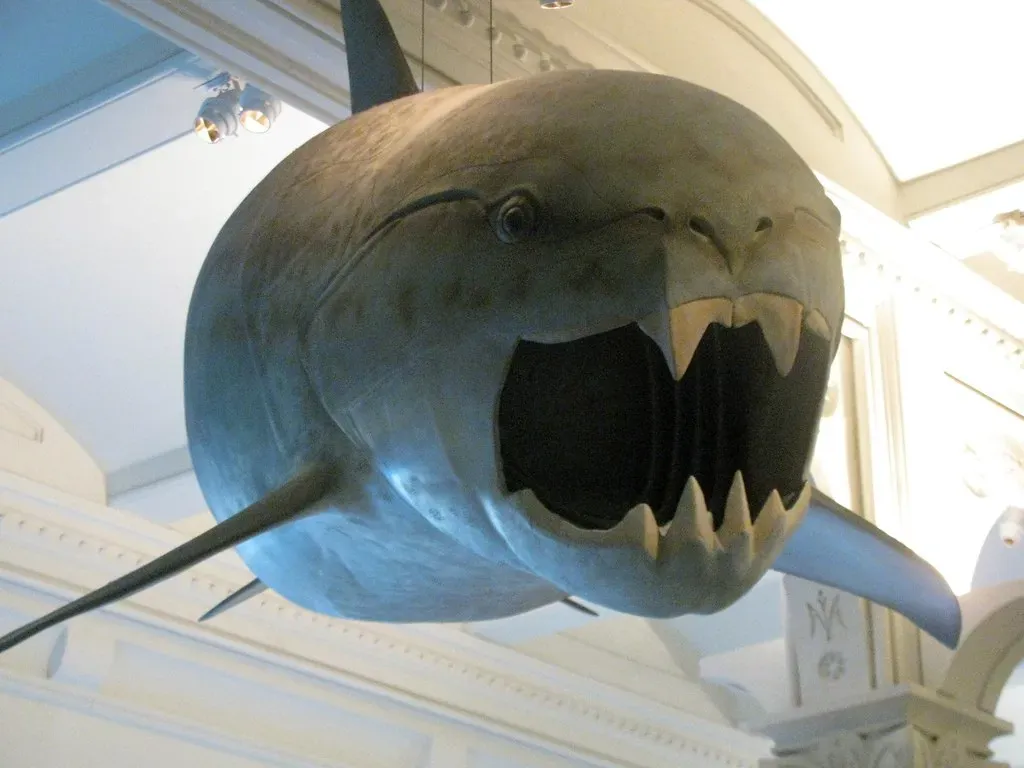
Long before dinosaurs or giant reptiles dominated the planet, the oceans hosted a terrifying armored fish called Dunkleosteus. Instead of teeth, it had bony plates that formed a crushing, shearing beak, like a built‑in guillotine that could slice through thick armor and bone. You’re dealing with a predator that lived during the Devonian period, often called the “Age of Fishes,” and Dunkleosteus sat comfortably at the top of that food chain.
You can imagine this creature lurking in deeper water, then lunging forward to snap down on prey with jaws that closed extremely fast and hit with immense force. Its body was front‑loaded with heavy armor near the head, giving it a brutal, tank‑like appearance, while the rest of its body was more streamlined for quick bursts of speed. If you were a smaller fish or anything soft‑bodied, this was your worst‑case scenario. Dunkleosteus shows you that, even in ancient oceans, nature was already experimenting with some very advanced ways to catch and dismantle a meal.
7. Arthropleura – The Giant Millipede That Owned the Forest Floor
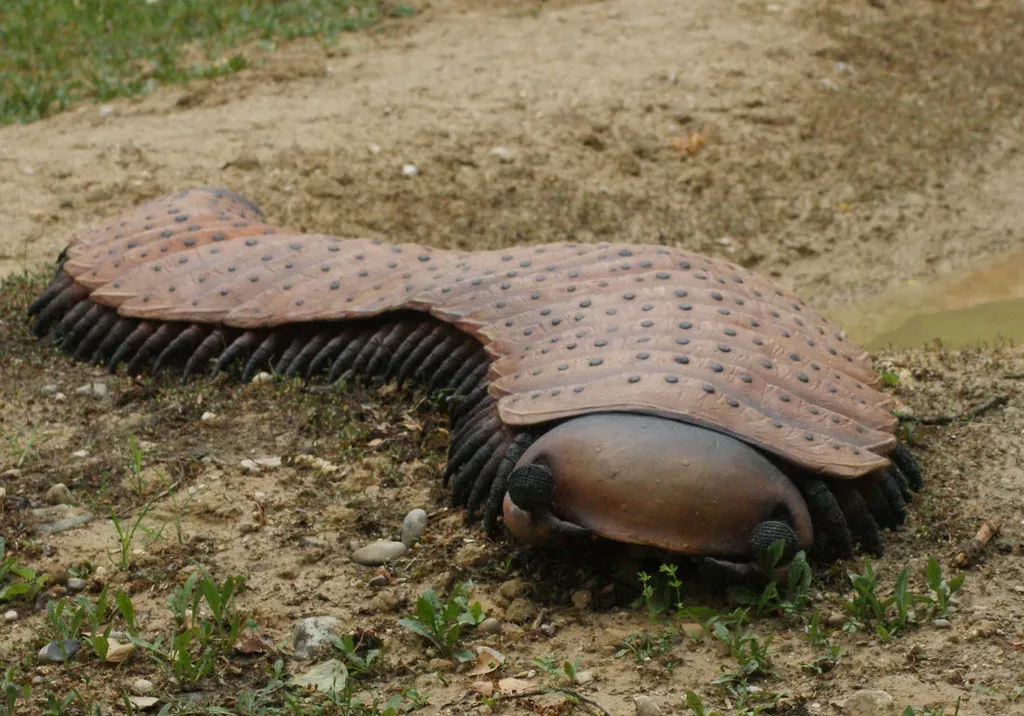
If modern centipedes already make your skin crawl a bit, Arthropleura will probably haunt your imagination. This was a massive, many‑segmented arthropod that could stretch several meters long, sliding across the forest floor of the Carboniferous period like a living train of armored plates. You’re not looking at an insect, but a relative of modern millipedes and centipedes that took full advantage of high oxygen levels and abundant plant life to grow far beyond today’s equivalents.
What makes Arthropleura so fascinating is that you can picture it navigating dense, swampy forests filled with towering ferns and giant clubmoss trees, feeding mostly on vegetation and rotting plant material. Instead of being a venomous predator, it may have spent its days munching on fallen leaves and debris, quietly shaping its habitat in the process. Seeing its broad trackways preserved in ancient rocks gives you a chilling sense of scale: you could have walked beside it and felt absolutely dwarfed. It proves that the ground beneath dinosaur feet had its own giants long before the famous reptiles took over.
8. Smilodon – The Iconic Saber-Toothed Cat of the Ice Age
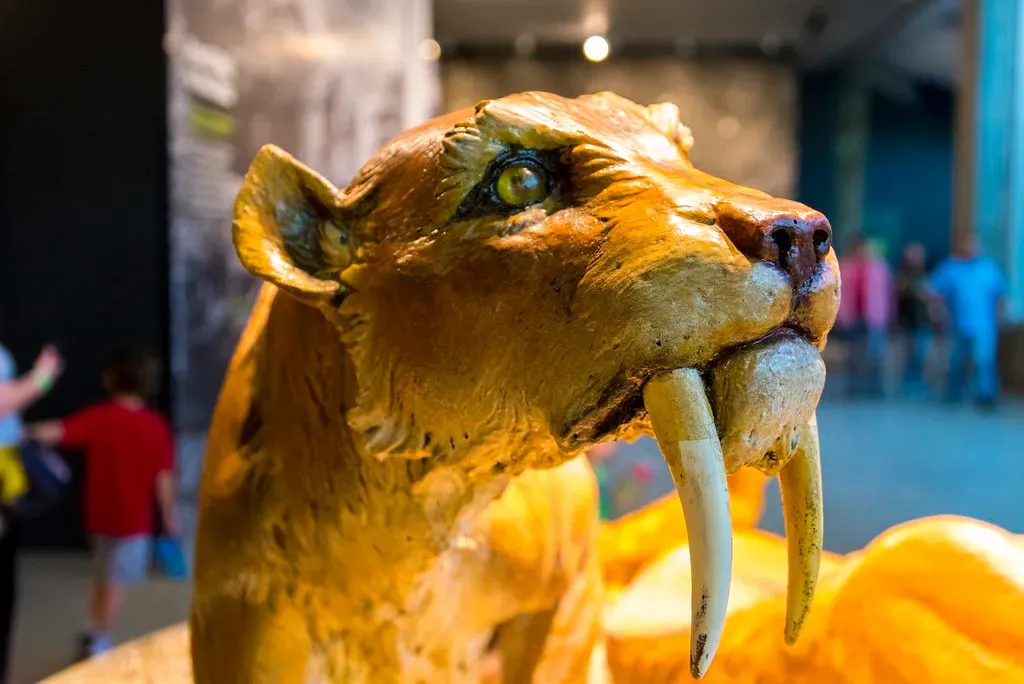
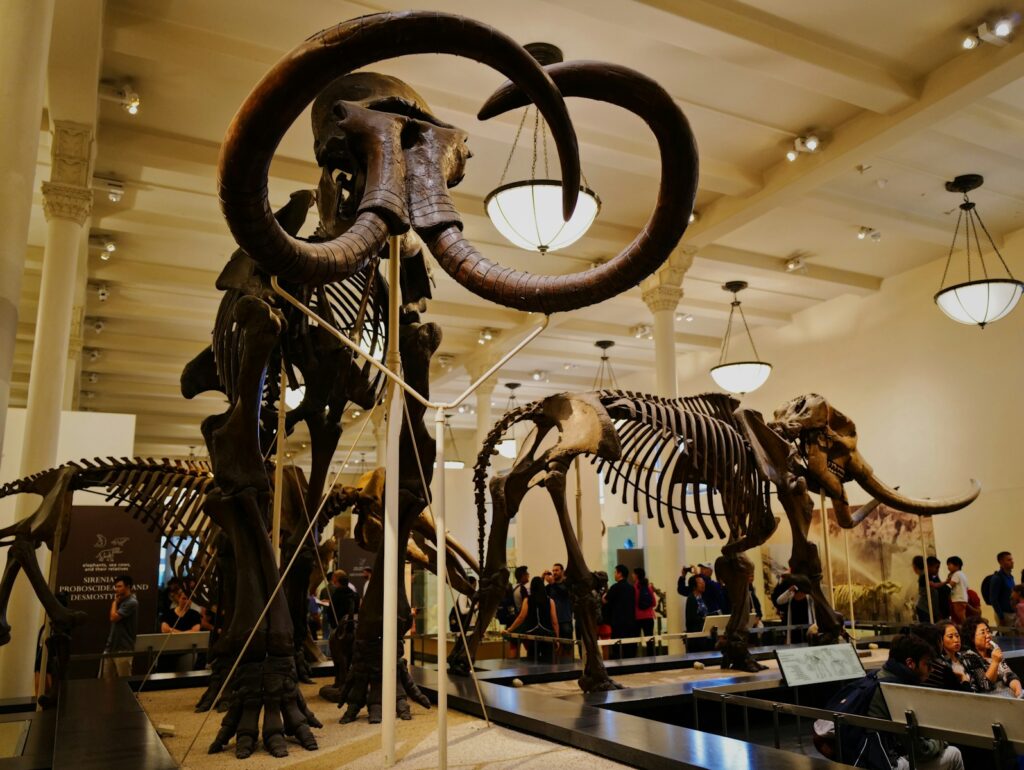
When you picture a saber-toothed predator staring you down with long, curved fangs, you’re picturing Smilodon, even if you don’t realize you know its name. This prehistoric big cat lived during the last Ice Age and is often found in association with other megafauna like mammoths and giant ground sloths. Those huge upper canine teeth were more than just for show; they were specialized weapons designed for precise, powerful killing bites to soft areas like the throat.
You can imagine Smilodon as stockier and more powerfully built than a modern lion, with robust forelimbs that helped it wrestle large prey to the ground. Instead of long chases, it may have relied more on ambush, using strength and surprise to bring down animals that were often bigger than itself. The idea that you share a planet whose recent history included such predators makes the modern world feel surprisingly tame. When you look at your house cat stretching on the couch, it is wild to think its distant relatives once carried weapons you could practically compare to daggers.
9. Megatherium – The Giant Ground Sloth That Turned Slow into Spectacular
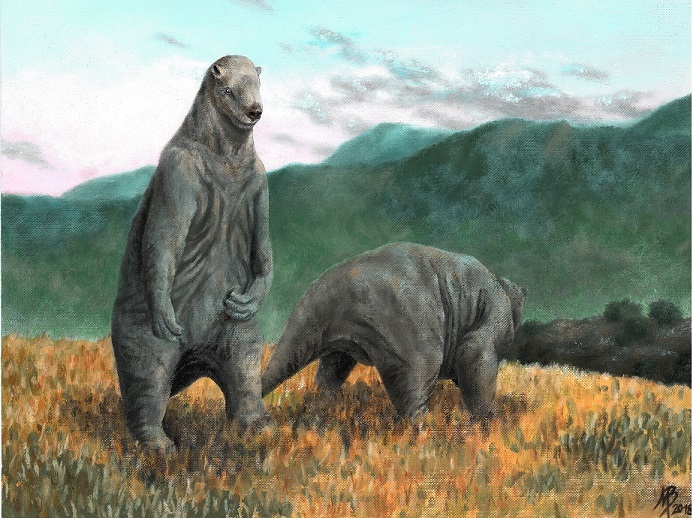
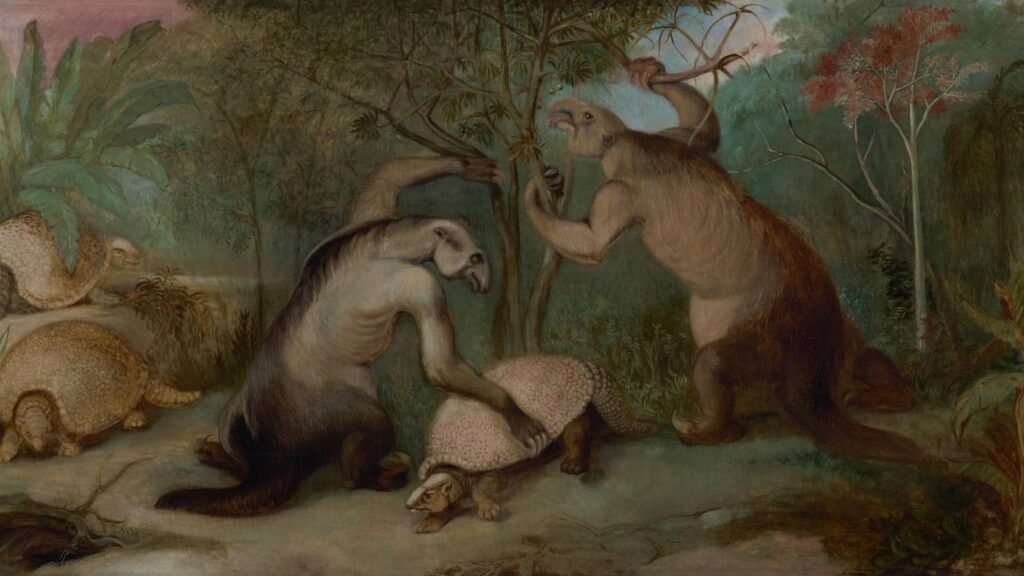
Sloths today feel like the quiet comedians of the animal world, but their prehistoric cousin Megatherium was more like a slow‑moving tank. This giant ground sloth could reach sizes comparable to a small elephant, walking on thick, pillar‑like legs and using massive claws both for defense and for pulling down branches. You can picture it rearing up on its hind legs to browse leaves high above, turning what looks like a lumbering herbivore into a towering presence.
Despite its size, Megatherium does not come across as a mindless brute when you look at its anatomy. Its strong forelimbs and flexible tongue likely made it a highly capable feeder, able to strip leaves and break branches with ease. If you had stood nearby, you might have felt relatively safe from direct aggression but still awed by the sheer bulk of this animal. It shows you that “slow” in nature doesn’t always mean small or weak; sometimes it just means confident enough not to rush.
10. Basilosaurus – The Early Whale That Looked More Like a Sea Serpent
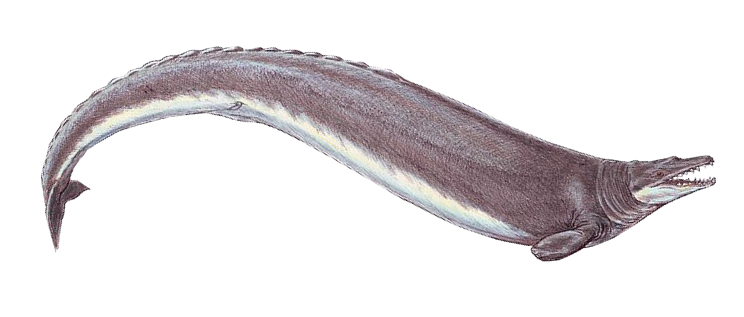
When you think “whale,” you probably picture a smooth, somewhat bulky body shape like a modern blue whale or orca, but Basilosaurus breaks that mental image completely. This early whale from the Eocene epoch had a long, slender, almost snake‑like body that could stretch well beyond what you’d expect from a typical marine mammal. You can think of it as a stage in whale evolution when these animals still carried the echoes of their land‑dwelling ancestors yet were fully committed to life in the ocean.
Basilosaurus had small, almost useless hind limbs tucked into its body, a fascinating clue that you are looking at a mammal still shedding its land‑based past. Its elongated body and sharp teeth suggest a fast, active predator feeding on fish and other marine animals. If you had seen it from a distance, you might have mistaken it for a gigantic reptilian sea serpent, only to learn later that it actually belonged to the same broad group of mammals as you. It is a powerful reminder that evolution does not move in neat, predictable steps; sometimes it passes through wonderfully strange designs on the way to something more familiar.
Conclusion – A Prehistoric World Far Bigger Than Dinosaurs
Once you step outside the dinosaur spotlight, you discover that prehistoric life is a crowded stage full of oddities, monsters, and quiet giants that can rival any T. rex for drama. From sail‑backed Dimetrodon and sky‑riding Pteranodon to armored Dunkleosteus and serpent‑shaped Basilosaurus, you’ve seen that amazing creatures ruled every corner of ancient Earth: land, sea, and sky. These animals remind you that evolution has spent hundreds of millions of years tinkering, experimenting, and sometimes going gloriously over the top.
The next time you walk into a museum or scroll past a “dinosaur” image online, you’ll know to look a little closer and ask what you are really seeing. You might spot a mammal relative masquerading as a dino, a giant arthropod that ruled the forest floor, or an early whale that looked nothing like the gentle giants we know today. In a way, exploring these non‑dinosaur creatures is like finding hidden bonus levels in a game you thought you had already beaten. Which of these prehistoric non‑dinosaurs surprised you the most, and which one would you least want to meet face to face?