
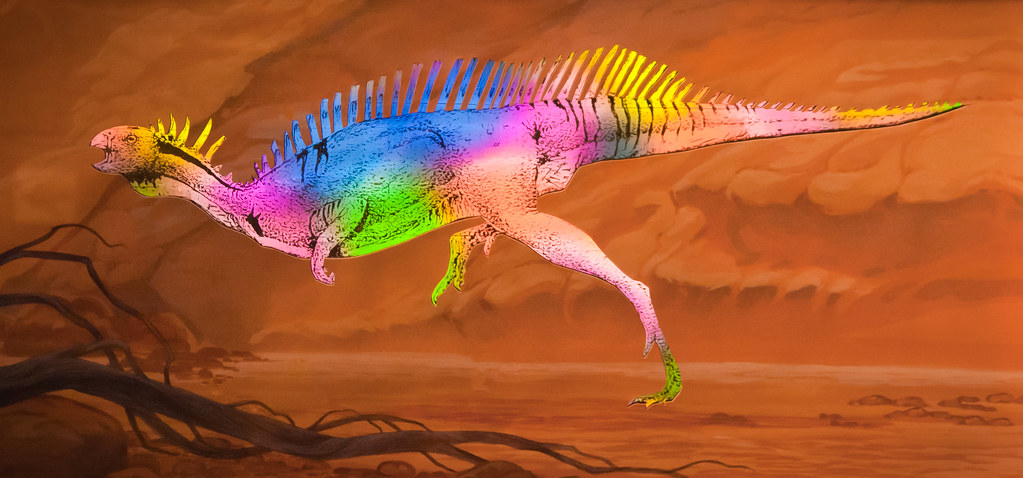
You probably grew up picturing dinosaurs as dull, mud-colored giants lumbering across a brown and gray world. For a long time, artists and filmmakers did too, mostly because nobody had any solid way to prove otherwise. Now, fossil chemistry and high-powered microscopes are quietly rewriting that mental picture, and it is far more colorful, patterned, and frankly stylish than most people ever imagined. Instead of a drab Jurassic landscape, you’re looking at something closer to a strange, ancient bird park: rusty-red predators, bandit-masked hunters, iridescent, crow-black gliders, and maybe even rainbow-sheened crests flashing through the undergrowth. The new evidence does not cover every dinosaur, and scientists are cautious about what they claim. But where the data are good, the colors are not guesses anymore – they are testable, repeatable findings pulled straight out of fossilized pigment cells.
How You Can “Read” Color From Stone
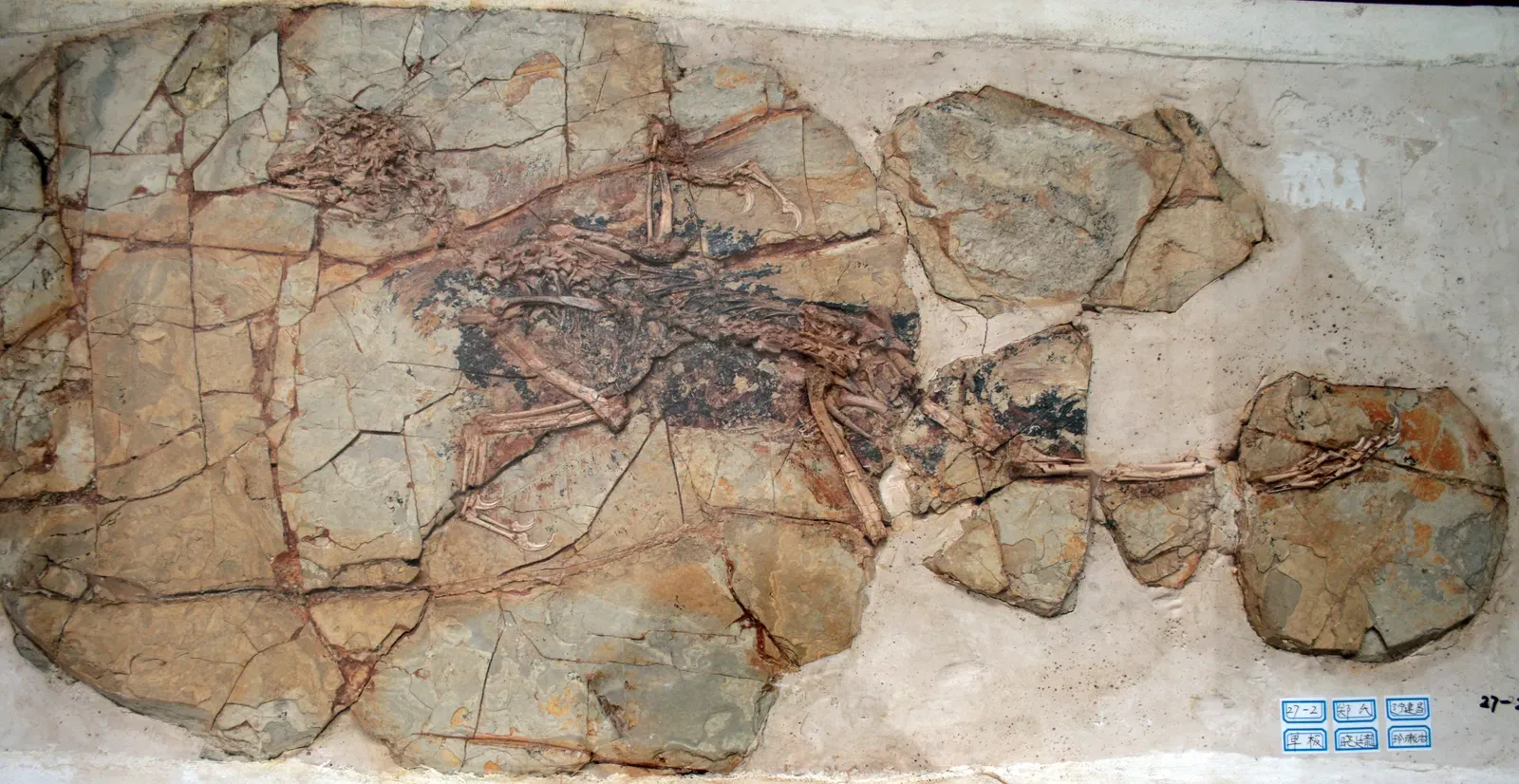
You might assume color just vanishes after millions of years underground, and for the most part, you’d be right. Soft tissues decay, pigments fade, and all you usually get is bone. But when you look at some exceptionally preserved fossils under an electron microscope, you find tiny, capsule-shaped structures called melanosomes – little pigment packages that, in life, helped produce blacks, browns, reds, and some iridescent effects. In modern birds, different melanosome shapes and arrangements correspond very reliably to specific color ranges, so when you see the same shapes preserved in fossil feathers, you suddenly have a code you can compare across 100 million years. You are not guessing at color from vibes or artistic taste; you’re matching fossil melanosomes to living analogues that you can actually measure. Long, sausage-like melanosomes usually point to darker, blackish tones, while rounder ones are tied to rusty reds and warm browns. In some feathered dinosaurs, those melanosomes are preserved in clear bands and patterns, letting you reconstruct not just the overall shade but stripes, masks, and countershading across the body. Once you see those patterns laid out in the data, it becomes very hard to go back to the old “all-gray dinosaur” stereotype.
The First Ginger Dinosaur With a Striped Tail
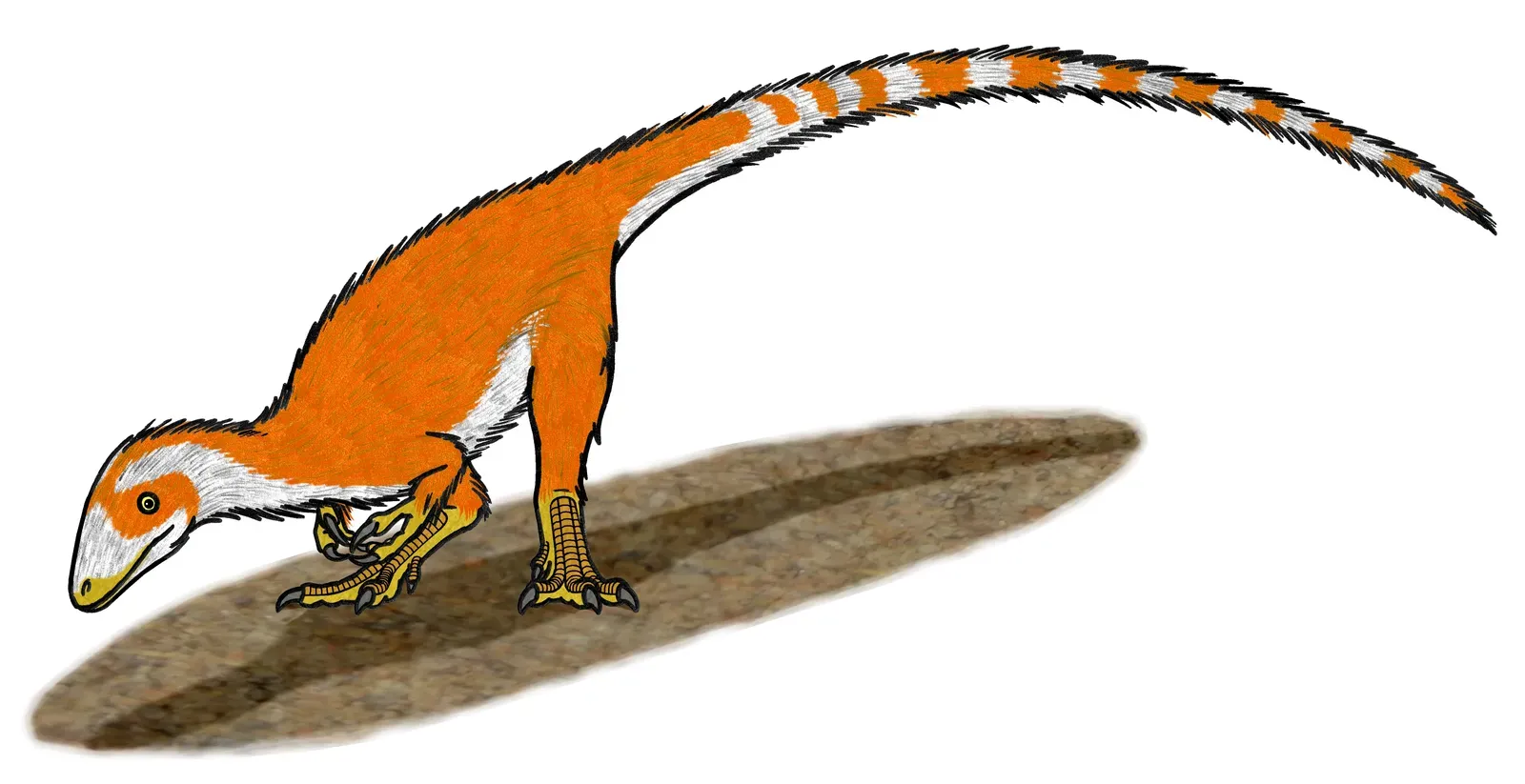
If you want a single fossil that flipped the script on dinosaur color, you should look at Sinosauropteryx, a small, feathered predator from Early Cretaceous China. When scientists examined its fuzzy body covering, they found melanosomes arranged in a way that matched reddish-brown pigments in modern birds, especially along the back and tail. In life, that suggests a warm, rusty coat rather than a lizard-like gray, and it turns Sinosauropteryx into something you might mentally file next to a fox instead of a crocodile. Add in those primitive feathers, and it suddenly feels a lot more like an overgrown, predatory sparrow than a movie monster. The real showstopper is the tail. Along its length, you see alternating bands of darker and lighter feathers, preserved clearly enough that researchers could map the pattern from base to tip. When you combine that with evidence of darker upper body and lighter belly – classic countershading used for camouflage – you end up with an animal that probably blended into its environment as well as a modern raccoon or small mammal hunter. You are not just learning the color; you are getting a peek into how that color helped this dinosaur hide, stalk, and survive.
Bandit Masks, Camouflage, and the Art of Not Being Eaten
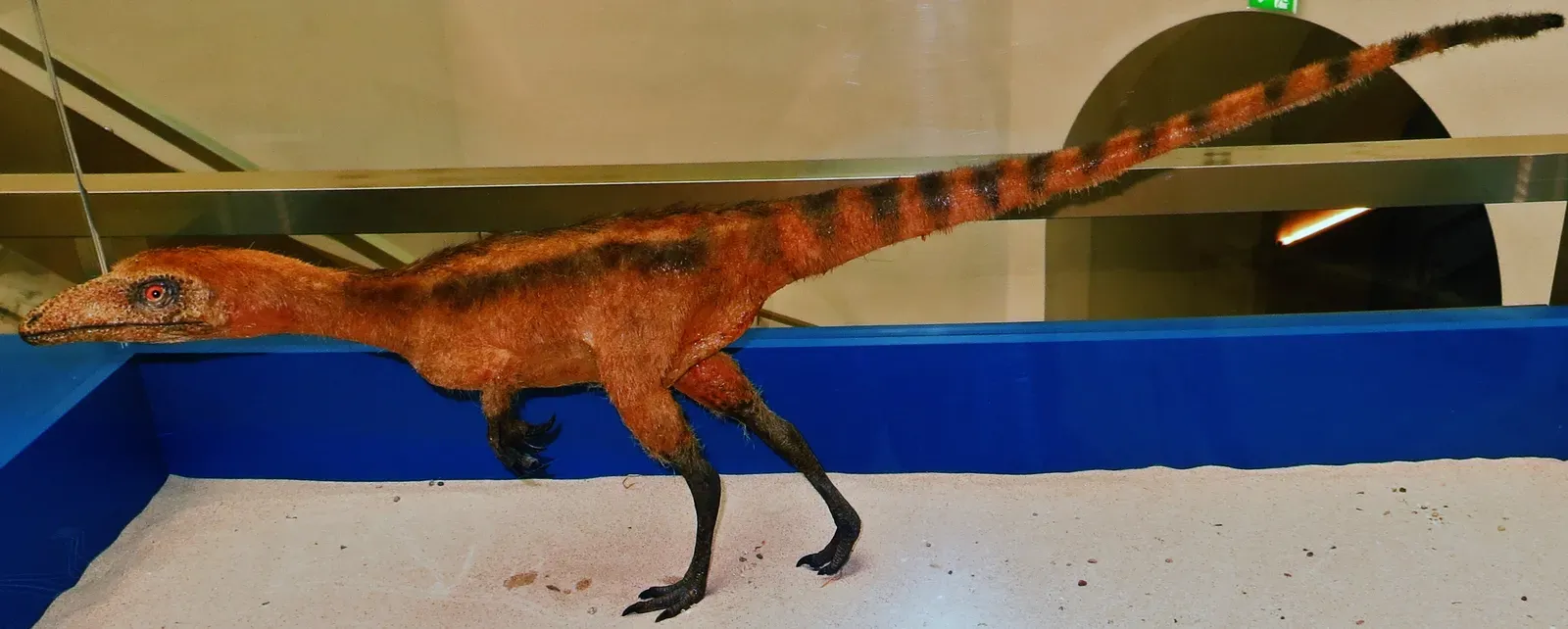
Once you start thinking in color, dinosaur behavior looks less abstract and more familiar. Some fossils of Sinosauropteryx show a dark stripe running across the eye region, a pattern you might recognize from a raccoon, a badger, or even some modern birds. That so‑called bandit mask can break up the outline of the head, disguise the position of the eye, and make it harder for predators or prey to lock onto your gaze. You have probably seen similar tricks in sports face paint or military camouflage; the principle is the same, just scaled back 125 million years. You also see careful use of darkness and light across the body, again echoing patterns that work extremely well today. A darker back and lighter belly help an animal blend into mixed lighting – shade above, brighter ground below – so you do not stand out as an obvious silhouette. When you read those color gradients in a fossil, you are seeing not just pretty patterns but survival strategies. You can imagine this small dinosaur moving through patchy forest light, its reddish back dissolving into shadows while its lighter underside blends with the sunlit ground, all while that striped tail maybe draws attention away from its more vulnerable head and torso.
Black, Iridescent “Crow Dinosaurs” in the Forest Canopy
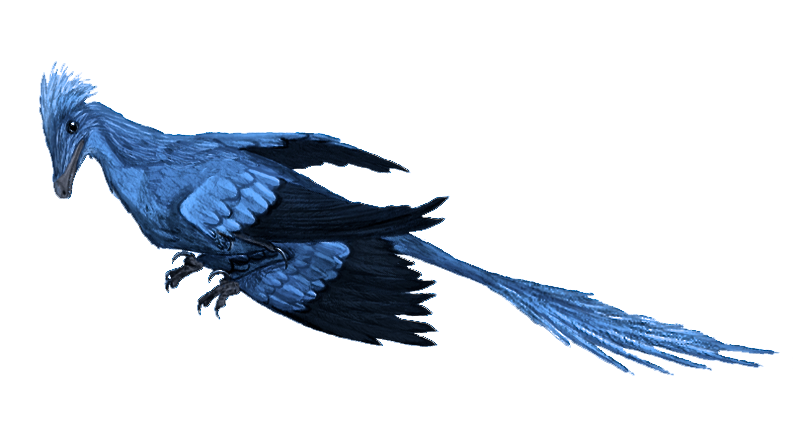
Some of the flashiest evidence for dinosaur color comes from small, feathered species like Microraptor, a four‑winged glider that lived in the early Cretaceous. When its feather impressions were examined in detail, the melanosomes turned out to be long, narrow, and stacked in layered arrays, very similar to those in modern iridescent birds such as starlings or crows. That arrangement is exactly what you need to produce shimmering, structural colors: light bouncing and interfering in such a way that feathers look glossy, blue‑black, or oil‑slick purple depending on the angle. In practical terms, you’re probably looking at something much closer to a shiny, black bird than a matte, charcoal animal. That discovery forces you to update how you picture small, tree‑dwelling dinosaurs. Instead of drab, mud‑colored climbers, you get a vision of sleek, crow‑like creatures gliding between branches, their plumage catching the light in quick flashes. Whether that iridescence was mostly for display, species recognition, or some combination of both is still being debated, but the signal is strong enough that you no longer need to hedge with vague artistic guesses. When you look at a reconstruction of Microraptor today and see that glossy black sheen, you are looking at a color choice backed by fossil microstructures, not just by an illustrator’s mood.
Rainbow Sheens and the Oldest Evidence of Shimmering Plumage
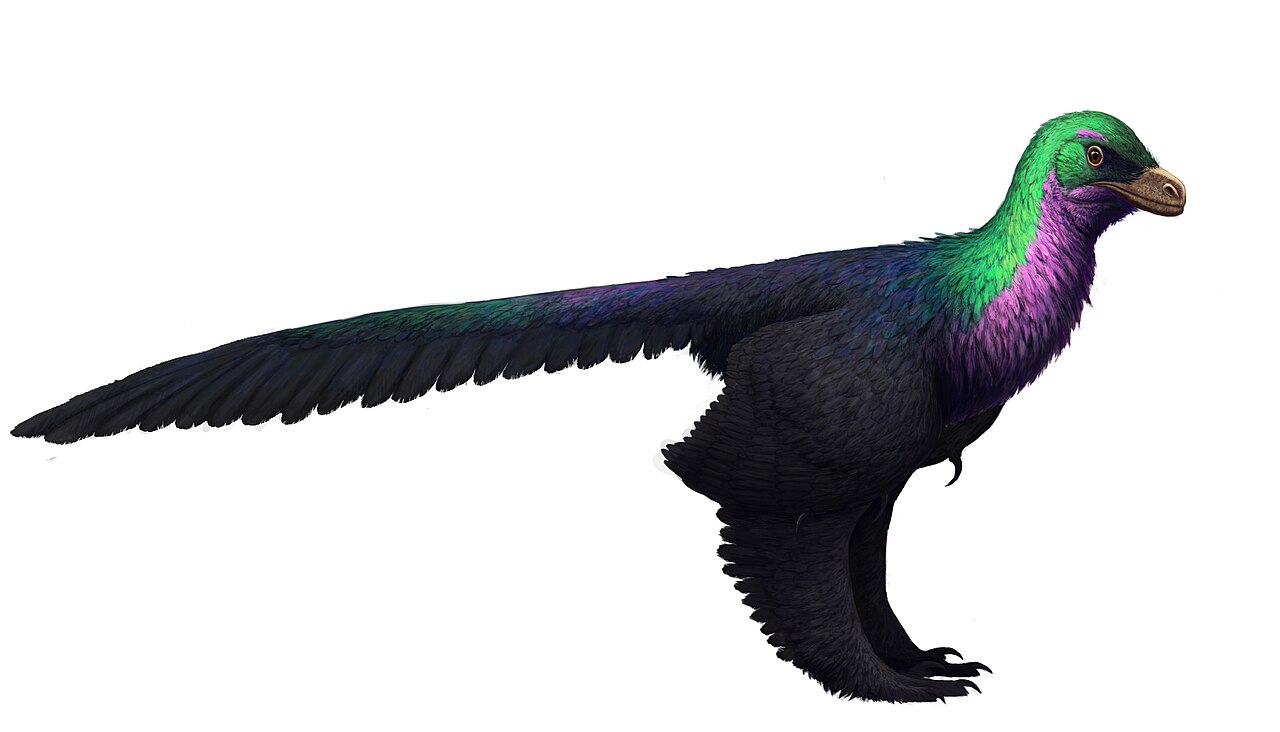
Another spectacular case is Caihong juji, a small, bird‑like dinosaur from Jurassic China whose name essentially nods to rainbows. When scientists studied its fossilized feathers, they found platelet‑like melanosomes that closely resemble those seen in living birds with bright, iridescent plumage. In modern species, similar structures create metallic greens, purples, and other shimmering colors you see in hummingbirds or glossy starlings. So when you hear that Caihong likely had a shiny, colorful crest and possibly iridescent patches on its body, that idea comes from direct comparisons between fossil microstructures and living birds, not from wild imagination. For you, this means the Jurassic landscape was not just filled with giant, brown bodies stomping around; it included small, flashy animals broadcasting color signals to rivals and potential mates. A crest that catches the morning sun, feathers that shift hue as the animal moves, and localized patches of shimmer all point toward display and communication as key parts of dinosaur life. You are effectively watching the early stages of the same visual drama you see in modern birds of paradise, only wired into a dinosaur body plan instead of a perching songbird’s frame.
Not Every Dinosaur Was a Walking Rainbow
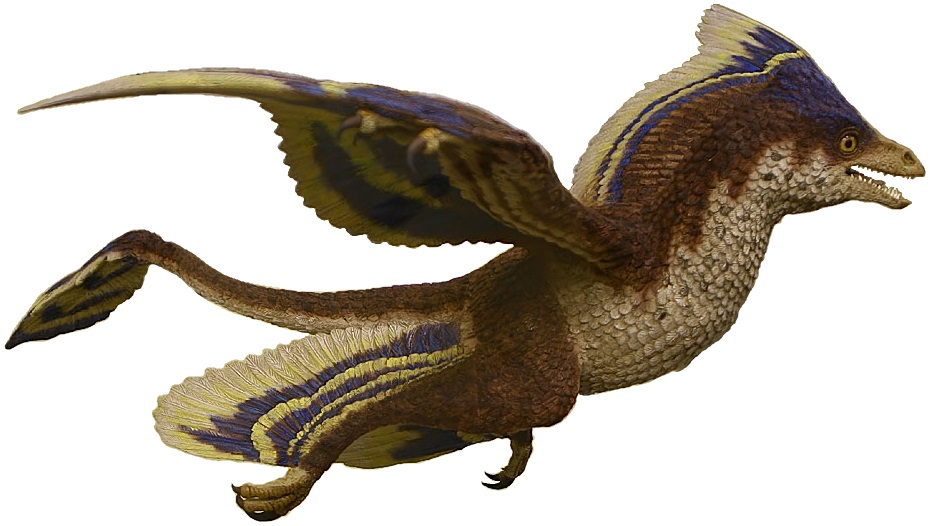
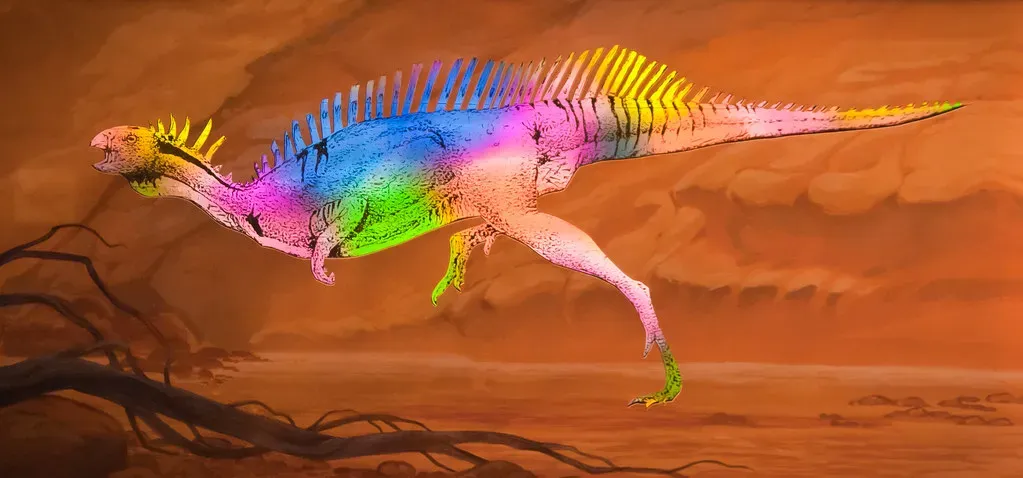
With all this talk of rainbows and iridescence, it is tempting to swing too far in the other direction and imagine every dinosaur as a parrot on steroids. The reality is more restrained and, honestly, more interesting. For many species – especially large, non‑feathered dinosaurs – you simply do not have enough preserved soft tissue or pigment structures to say much beyond cautious generalities. The fossil record currently favors smaller, feathered species from specific deposits where fine details can be preserved. That bias means your mental gallery of fully “color‑known” dinosaurs is still relatively small compared with the full tree of dinosaur life. Even when melanosomes are present, they mostly reveal information about melanin‑based colors: blacks, browns, reddish rusts, and some structural effects. Many bright yellows, greens, or blues in modern animals come from different pigments or from complex nanostructures that either do not preserve well or have not yet been confidently identified in fossils. So you need to resist the urge to fill in the gaps with certainty. For a lot of dinosaurs, you can safely imagine earthy tones, maybe with patterns or shading, based on parallels with today’s large reptiles and ground birds, but you cannot yet assign specific hues the way you can for Sinosauropteryx or Microraptor. In other words, the evidence is strong where it exists, but it is not universal.
What Dinosaur Colors Can (and Cannot) Tell You About Their Lives
Even with limited species, color evidence opens up a surprising window into dinosaur behavior and ecology. When you see countershading and careful banding, you can infer that camouflage mattered, suggesting a world of visual predators and prey locked in a constant arms race of hiding and detection. When you see iridescent plumage and flashy crests, you get hints of courtship displays, status signaling, and maybe even complex social interactions where being seen was just as important as staying hidden. Color becomes less of an artistic flourish and more of a biological tool that shaped who survived, who mated, and who blended into the background. At the same time, you have to stay humble about what color can really tell you. A black, iridescent dinosaur might have used its shine for mating displays, but it could also have gained benefits in thermoregulation or species recognition that you cannot fully reconstruct from fossils alone. A striped tail might distract predators, or it might signal something to members of the same species, or it might do both. You are piecing together behavior from static clues, so every interpretation needs to be grounded in modern animal comparisons and tested against as much data as possible. The beauty of these color discoveries is that they push dinosaur science into a more vivid, relatable space without freeing you from the hard work of evidence‑based reasoning.
In the end, the new paleontological evidence does not just add a splash of paint to your favorite dinosaurs; it changes how you think about them entirely. Instead of sluggish, gray reptiles, you are now looking at agile, visually sophisticated animals that used color the way many birds and mammals do today: to hide, to impress, to communicate, and to survive. The picture is still incomplete, and many species will probably remain color‑mysteries for a long time, but the ones you do know already prove that the dinosaur world was anything but dull. So the next time you imagine a tyrannosaur or a small feathered hunter darting through the ferns, are you still seeing brown and gray – or can you picture that ancient world shimmering with stripes, masks, and iridescent shine?