You probably grew up thinking Tyrannosaurus rex was the ultimate prehistoric nightmare. Giant teeth, massive skull, that thundering stomp through the Late Cretaceous – it feels like nothing could top it. But when you start looking beyond the movie posters and dig into the fossil record, you discover a darker truth: T. rex was just one monster in a whole planet of monsters.
Across hundreds of millions of years, Earth produced predators that were bigger, meaner, faster, or simply better adapted to killing than T. rex ever was. Some ruled the oceans like living submarines, others prowled ancient forests with sabre-like jaws, and a few were so large that even a tyrannosaur would have looked small standing next to them. As you walk through these five prehistoric killers, you may find your mental picture of “the scariest predator ever” changing in ways you did not expect.
Spinosaurus: The River Monster Bigger Than T-Rex
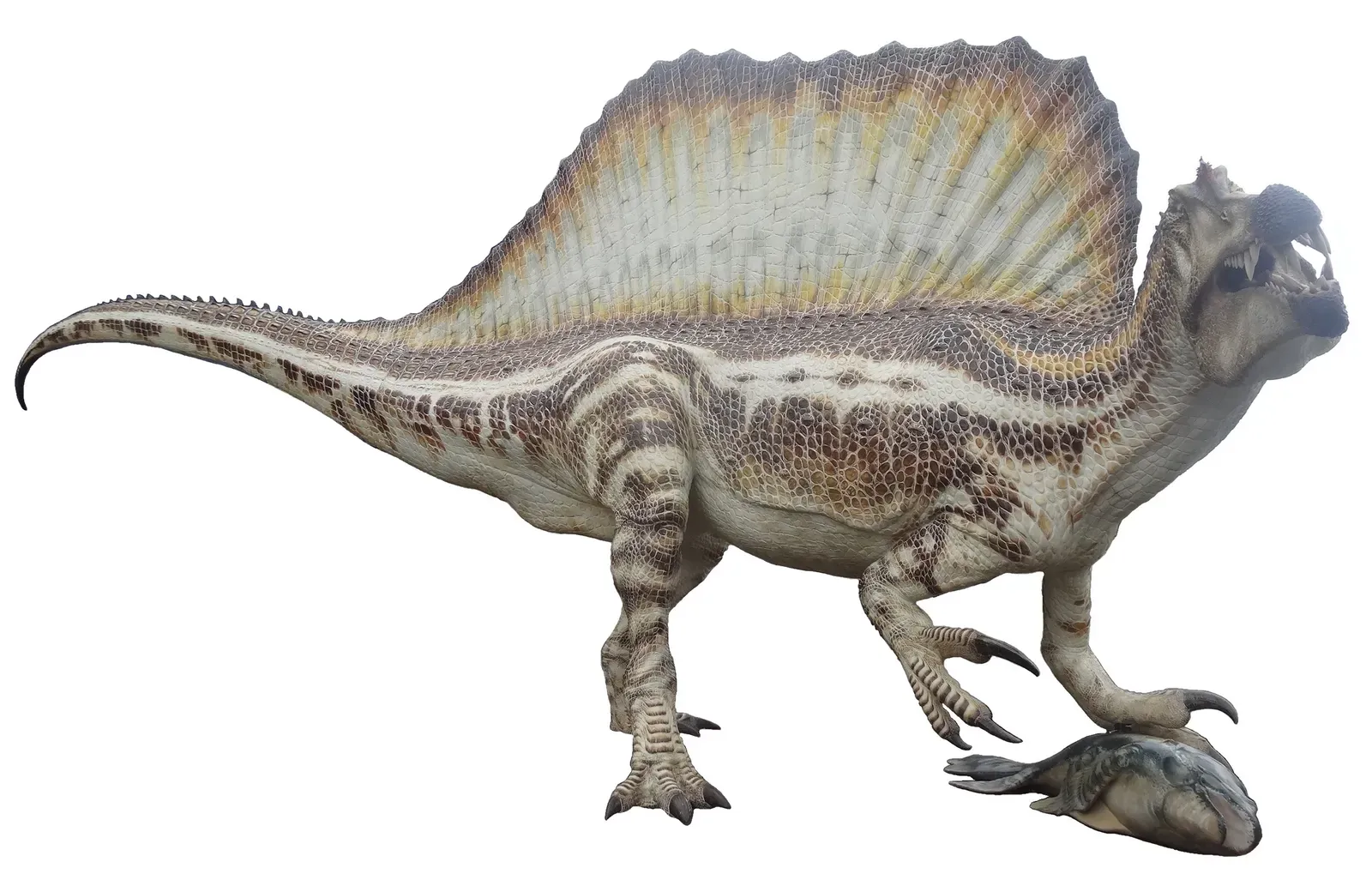
If you think T. rex is the boss because of size, Spinosaurus forces you to reset your scale. You are looking at a dinosaur that, based on current estimates, stretched roughly about fifteen meters from snout to tail, which puts it longer than T. rex by several entire human heights. Its skull alone looked more like an enormous crocodile than a classic theropod, packed with conical teeth that were built not for bone-crushing, but for piercing and gripping slippery prey. Instead of dominating plains, this predator turned rivers and coastal lagoons into its hunting grounds.
What makes Spinosaurus especially unnerving is how well adapted it was to a semi-aquatic lifestyle. Evidence from its bones suggests dense limb and tail structures that would have helped you stay submerged, a bit like the heavy bones in modern hippos that let them sink easily. Its long, paddle-like tail seems designed to push through water with powerful strokes, suggesting that if you were anywhere near its river, you would not be safe just because you were not on land. Imagine a creature larger than T. rex that hunts more like a crocodile mixed with a gigantic heron, stalking fish, lunging at anything near the shoreline, and vanishing back into murky water before you could even scream. Compared to that, T. rex almost feels predictable.
Megalodon: The Giant Shark That Ruled Ancient Seas
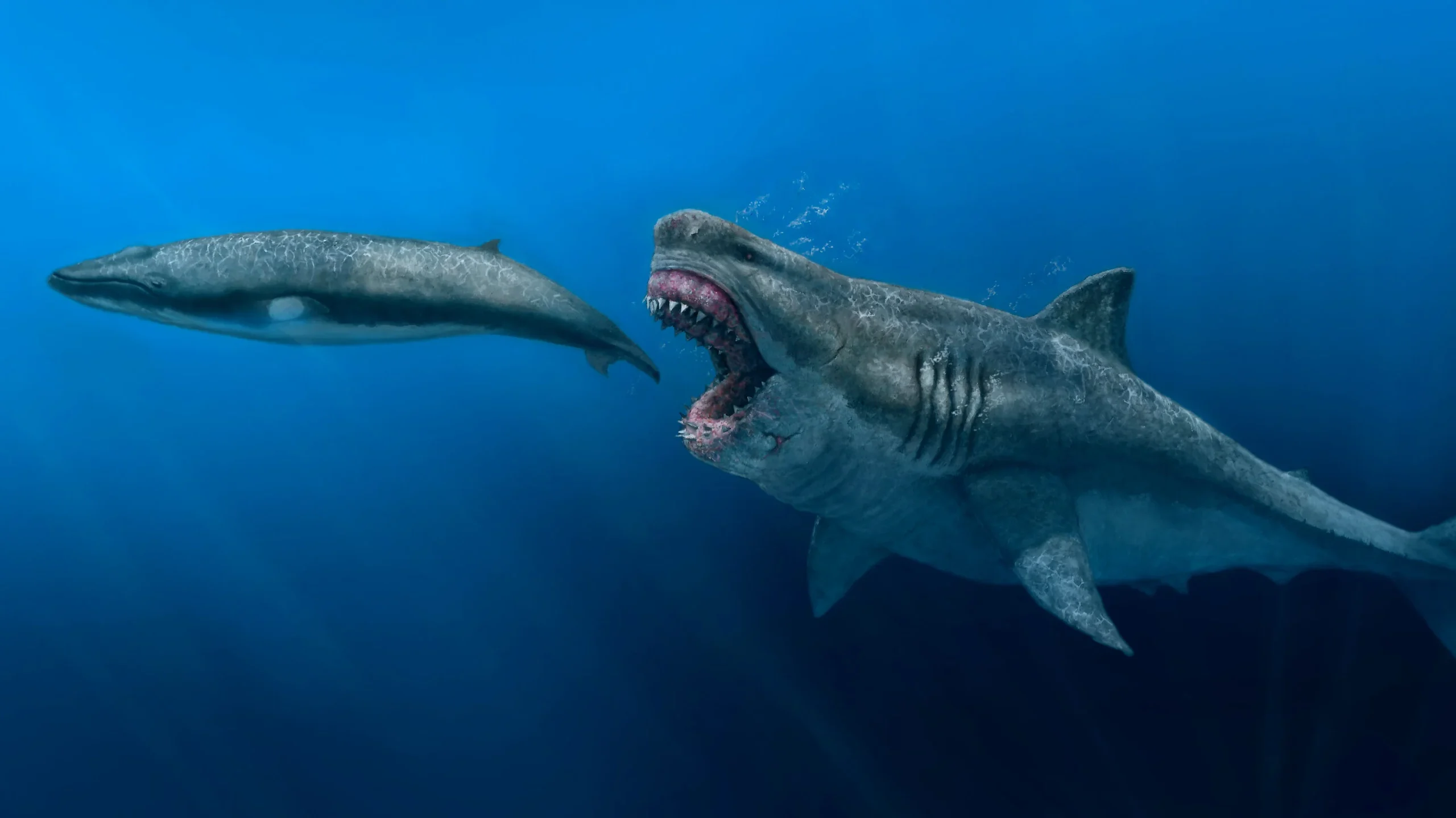
Now picture yourself in warm, shallow seas a few million years ago, long after the age of dinosaurs ended. You are swimming near the surface, and beneath you glides an animal that makes great white sharks look like toys. Megalodon, the colossal prehistoric shark, is estimated by many researchers to have reached body lengths of roughly about fifteen to eighteen meters, with a bite force that ranks among the strongest of any animal known from the fossil record. Its teeth, which you can still find today as fossils, are about the size of your hand, thick and triangular, perfect for sawing through bone and flesh.
Unlike T. rex, Megalodon did not just terrorize one continent; it haunted oceans around the world. You would not just worry about one territory – virtually any temperate or tropical coastline could have been its hunting zone. It likely targeted whales, seals, and massive fish, ambushing from below the way great whites do today, but on a scale that is hard to wrap your head around. Imagine an animal fast enough to ram a whale and strong enough to tear it apart – T. rex might have been terrifying on land, but Megalodon owned an entire global ecosystem of water, turning the sea itself into something you could never fully trust.
Mosasaurus: The Reptilian Torpedo of the Cretaceous Oceans
Before Megalodon, another marine killer turned the late Cretaceous seas into a death trap: Mosasaurus. If you grew up seeing it leap out of the water in movies, you already know it looked horrifying, but the real animal was every bit as savage. You can imagine a reptile more than fifteen meters long, with a thick, muscular body, powerful tail, and a skull lined with curved teeth that locked around prey like a cage. You are not dealing with a slow, lumbering beast; you are dealing with something built like a streamlined torpedo.
As a marine reptile, Mosasaurus combined the agility of a giant lizard with the hunting strategy of modern aquatic predators. It likely ambushed from below or the side, crushing fish, turtles, and even other marine reptiles in jaws powered by strong neck muscles. Some evidence points to it swallowing smaller prey whole, while ripping chunks out of larger animals. If you were dropped into a late Cretaceous ocean, T. rex would not be your biggest concern – it could not swim out to you. Mosasaurus, on the other hand, would patrol beneath you in deep blue water, invisible until the last second, turning the ocean into a three-dimensional hunting ground where you could be attacked from any direction.
Sarcosuchus: The Super-Croc That Would Hunt Your Dinosaurs
If you have ever watched a nature documentary where a crocodile explodes out of a river to grab a zebra, you already know that modern crocs are terrifying. Now scale that fear up until your brain starts to protest. Sarcosuchus, often nicknamed the “super-croc,” stretched to around twelve meters in length and weighed several tons, making it vastly larger than any living crocodile. Its long snout carried dozens of sharp teeth designed to grip and hold, and its heavily armored body turned it into a living tank hugging the water’s edge.
What sets Sarcosuchus apart is how it likely interacted with dinosaurs. You can imagine herds of herbivorous dinosaurs cautiously approaching rivers to drink while this reptilian monster lay motionless beneath the surface. Just as modern crocodiles ambush wildebeest, Sarcosuchus might have seized juvenile or even mid-sized dinosaurs, dragging them into the water with sheer brute force. In that environment, even a confident predator like T. rex would have to think twice before stepping too close to the wrong river system. You are not just dealing with predators on land or at sea; you are dealing with hidden jaws at every watering hole, turning basic survival tasks into daily gambles.
Gorgonopsids: Sabre-Toothed Killers Before the Dinosaurs
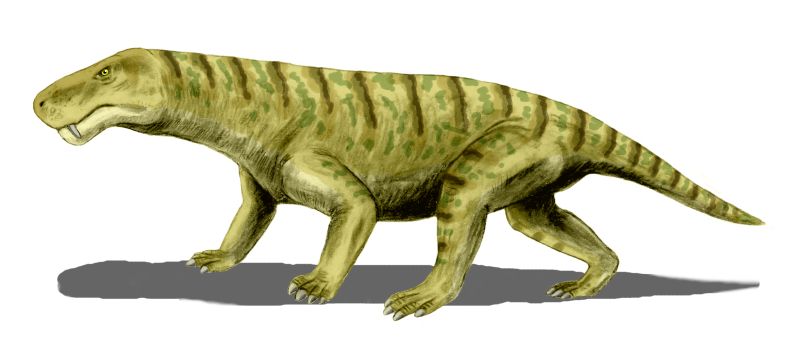
Long before dinosaurs evolved, the planet had already run one terrifying experiment in top-level predators: the gorgonopsids. You are stepping back more than two hundred and fifty million years into the late Permian, where these saber-toothed, mammal-like reptiles stalked ancient landscapes. Some of the largest forms, like Inostrancevia, reached around three to four meters in length, with huge canine teeth that jutted down like daggers from a powerful skull. These were not lumbering beasts; their limb structure suggests they moved more upright than many of their reptilian contemporaries, which would have helped them move quickly over land.
When you compare them mentally with T. rex, the difference in scale is obvious – they were smaller – but terror is not only about size. Gorgonopsids were the apex predators of their time, honed by evolution in an era when your mammal ancestors were tiny, vulnerable creatures hiding in the shadows. If you were placed in that world at human size, you would face a pack of agile, saber-toothed hunters with strong jaws and sharp senses, and no large herbivores to hide behind. In many ways, they represent an earlier prototype of the kind of large mammalian predators you know today, but with a more alien look, as if someone had fused a big cat with a reptilian nightmare and then set it loose on a world with no safety net.
Conclusion
When you line up these five predators against T. rex, you start to see how narrow your childhood picture of prehistoric danger really was. T. rex was formidable, but it lived in a specific time, on specific lands, under specific conditions. Spinosaurus ruled rivers as a semi-aquatic giant, Megalodon turned the oceans into a hunting ground for whales, Mosasaurus owned the late Cretaceous seas, Sarcosuchus transformed rivers into ambush zones, and gorgonopsids dominated the land long before any dinosaur took its first step. Each of them ruled a different world, and in each of those worlds, you would have felt just as small and just as helpless.
So the next time you hear T. rex described as the ultimate prehistoric killer, you can smile a little and remember the rest of the roster. Your planet has been a stage for monsters far stranger and sometimes more terrifying than that famous tyrant lizard. Knowing that, you start to see Earth’s history not as a straight line toward you, but as a series of lost worlds, each with its own ruling nightmare. If you had to pick, which of these five would you least want to meet in the wild?