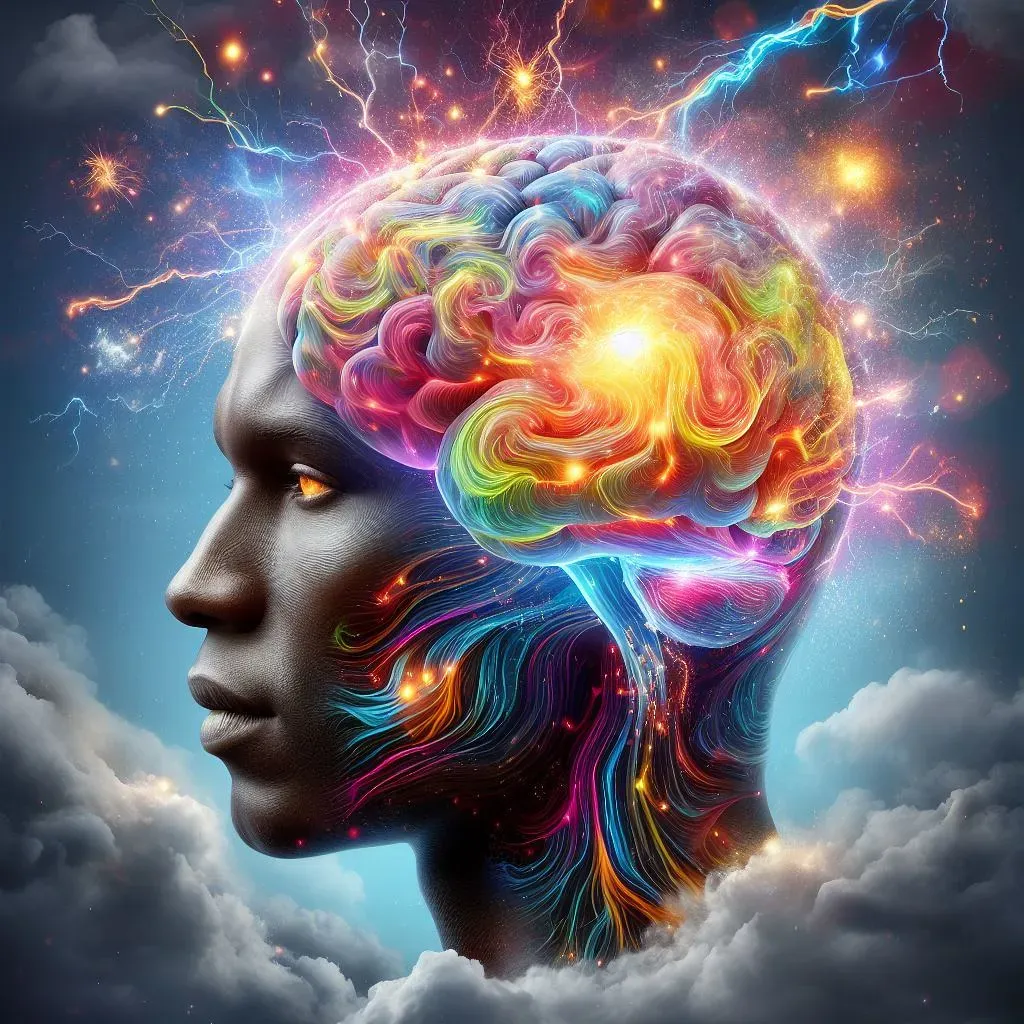
You probably do not wake up in the morning thinking about natural selection when you make coffee, pick an outfit, or scroll your phone. Yet every that zips through your mind is running on hardware sculpted by millions of years of evolution. Your fears, your snap judgments, your sense of fairness, even that nagging voice that tells you to fit in with the group all have deep roots in survival and reproduction. When you start to see your thinking as an evolutionary toolkit, a lot of your daily reactions suddenly make more sense.
This does not mean you are “stuck” with caveperson thinking. It means you are carrying around an ancient operating system that you can learn to understand and, at times, override. As you explore how evolution shaped , you begin to notice where your brain is trying to keep you alive in a world that no longer exists. That awareness can be powerful: instead of feeling broken or irrational, you see that your mind is doing exactly what it was built to do – only now you get to choose when to follow it, and when to gently push back.
Your Brain as a Survival Machine, Not a Truth Machine
If you think your mind evolved to see the world clearly and objectively, you are giving it way too much credit. From an evolutionary point of view, your brain is not optimized for truth, it is optimized for survival. If misreading a rustle in the grass as a predator kept your ancestors alive more often than it hurt them, that bias got passed down to you, even if it makes you anxious today. You carry a mind that would rather be safe and wrong than calm and dead.
This is why you often jump to conclusions, assume the worst, or see patterns where none exist. Your brain leans toward fast, efficient guesses instead of slow, precise analysis, because in the ancestral environment speed mattered more than accuracy. Once you see this, you stop asking why you are so “irrational” and instead ask a more useful question: in what environment was this way of thinking actually an advantage for survival, and is it helping you now?
The Fast-and-Slow Thinking You Inherited
You experience evolution’s fingerprints every time you make a snap decision. Your mind runs on at least two broad modes: a fast, automatic, emotional system and a slower, deliberate, reflective one. The fast system, which you feel as instinct or gut reaction, is the older layer. It helped your ancestors react quickly to threats, opportunities, and social cues without stopping to analyze every detail. When you instantly judge a face, feel uneasy in a dark alley, or reach for your phone out of habit, you are firing this ancient circuit.
The slower system, which you tap when you do math, plan a project, or reason through a dilemma, came later. It is more flexible and powerful, but it is also energy-hungry and tiring, so you do not use it unless you have to. Evolution essentially made you a cognitive hybrid: a creature who runs on fast, automatic defaults most of the time and only boots up the ful, effortful mode when the situation demands it. Your daily life is a constant negotiation between those two layers of .
Why You Fear Some Things More Than Others

You might tell yourself you are afraid of modern dangers – car accidents, cybercrime, financial collapse – but your body often disagrees. It still reacts more strongly to ancient threats like heights, snakes, spiders, or being watched and judged by others. Those were the things that could get your ancestors killed or exiled from the group, so your nervous system evolved to overreact to them. That is why your heart can race at a tiny spider while staying oddly calm about habits that are statistically far riskier.
This mismatch between modern risks and ancient wiring can be frustrating, but it is also predictable once you see the pattern. Your fear circuitry did not evolve to track actuarial tables; it evolved to avoid specific, recurring dangers in small, tightly knit communities. When you feel “irrational” fear, you are often feeling rational fear for a different world. Knowing this lets you approach your anxiety with more compassion and more strategy: you can thank your brain for trying to protect you, then update it with new information through gradual exposure and practice.
The Social Brain: How Group Living Shaped Your s
You are far more social than you might guess from your calendar or your phone contacts. Your brain evolved inside small, interdependent groups where your survival depended on reading others, tracking alliances, and avoiding conflict with the wrong person. Because of that, a huge chunk of your mental bandwidth is quietly devoted to social thinking: who likes you, who does not, who is trustworthy, who is high status, and what everyone might be saying about you when you are not around.
This social specialization affects everything from your memory to your emotions. You remember faces better than random shapes, you obsess over status comparisons, and you feel real pain when you are rejected or excluded. That is not just drama; your nervous system treats social exile as a survival-level problem. When you worry about fitting in at work, or replay an awkward conversation from last week, you are using mental tools that once helped your ancestors navigate the politics of a small tribe where reputation could mean life or death.
Pattern-Seeking and Story-Making as Evolutionary Tools
Your mind is a pattern-detecting machine that never shuts off. You search for cause and effect everywhere: in the weather, your relationships, your health, your luck. Evolution rewarded that habit because seeing connections – between clouds and storms, plants and illness, tracks and predators – meant better chances of survival. Even when you are wrong, like when you see faces in clouds or meaning in random coincidences, you are running a mental program that once helped chart a dangerous world.
You also do not stop at patterns; you turn them into stories. You build little narratives about why someone said what they did, why your boss sent that short email, or why your friend did not text back. Those stories help you predict behavior and plan your next move, but they can also lock you into mistaken assumptions. When you catch yourself weaving a dramatic narrative from a few scraps of data, you are seeing an evolutionary skill in action. The trick today is using that storytelling power to test possibilities instead of clinging to the first explanation you invent.
Innate Moral Intuitions and Your Sense of Fairness

You might think your sense of right and wrong came entirely from parents, teachers, or religion, but evolution gave you a starting template. Even very young children show a basic sense of fairness, caring, and outrage at cheating, long before they can explain why. In ancestral groups, individuals who cared about others, punished freeloaders, and rewarded cooperation helped their communities survive and thrive. Over many generations, that social environment favored brains wired with moral emotions like guilt, shame, empathy, and indignation.
That does not mean your moral code is hardwired or unchangeable, but it does mean you are not a blank slate. When you feel a gut-level reaction to unfairness or cruelty, you are tapping into emotions that once kept groups from falling apart. Nowadays, those same intuitions can fuel everything from charity work to online outrage. Understanding the evolutionary roots behind them helps you step back and ask whether a particular moral reaction is about genuine harm, group loyalty, or a clash of cultural norms – and whether your response fits the situation.
Why You Overvalue Now and Undervalue Later

If you have ever struggled with procrastination, impulse spending, or unhealthy habits, you have felt one of evolution’s biggest pushes: favoring the present over the future. Your ancestors lived in environments where food could spoil, danger was unpredictable, and long-term guarantees were rare. In that context, grabbing a sure reward today often beat waiting for a hypothetical reward tomorrow. Your brain still leans toward immediate payoff, even though your modern life demands long-term planning, saving, and patience.
This bias shows up in countless little ways. You promise yourself you will start a new routine next week, only to cave when today’s temptations show up. You know logically that your future self would love you for exercising, investing, or studying, but the emotional weight of those distant benefits feels light compared to the pleasure, comfort, or relief you can get right now. When you see this as an evolved pattern rather than a personal failing, you can design your life to work with your wiring – by making long-term rewards more vivid and short-term temptations a bit harder to reach.
Language, Imagination, and the Power to Time-Travel in Your Head
One of the most remarkable evolutionary shifts in your thinking is your capacity for language and imagination. These abilities let you replay the past, simulate the future, and share ideas that are not physically present. For your ancestors, that meant passing on survival knowledge, coordinating hunts, warning about dangers, and strengthening bonds with shared stories. For you, it means you can discuss abstractions like justice, meaning, and identity, or plan your life five, ten, or twenty years ahead.
This mental time-travel is a blessing and a burden. It allows you to learn from mistakes without repeating them and to build complex tools, institutions, and cultures. But it also gives you the power to worry endlessly, ruminate over old hurts, and catastrophize about events that may never happen. Your evolved gift for imagination can easily turn against you. The more you notice that tendency, the more you can choose when to use this power for designing better futures rather than endlessly reliving old fears.
Cognitive Biases: Hidden Shortcuts with Ancient Origins
Your mind comes loaded with shortcuts that were good enough for survival but are often flawed for modern reasoning. You tend to favor information that confirms what you already believe, rely heavily on first impressions, and cling to familiar options even when better ones exist. These patterns – often called cognitive biases – helped your ancestors make quick decisions with limited information. When you had to decide fast whether to trust a stranger, eat a new plant, or follow a leader, these imperfect rules of thumb usually worked well enough.
Today, though, those same shortcuts can mislead you in complex fields like finance, politics, health, and relationships. You might ignore warning signs because you are invested in a belief, or you might overreact to vivid stories while overlooking dull but important data. Recognizing that these biases are not moral failures but evolutionary leftovers can shift your attitude from self-blame to curiosity. You can start to notice your brain’s favorite shortcuts and build habits – like slowing down, seeking disconfirming evidence, or asking others for input – that gently correct them.
Conclusion: Using an Ancient Mind in a Modern World
When you look at your s through an evolutionary lens, a lot of your inner life stops feeling mysterious. Your fears, your snap judgments, your craving for belonging, and your struggle with long-term goals are not random quirks; they are the echoes of countless generations who had to survive, cooperate, and compete. You are carrying an ancient toolkit into a world of smartphones, cities, and algorithms, and of course there will be glitches and mismatches along the way.
The hopeful part is that evolution also gave you the capacity for reflection. You can notice your biases, question your instincts, and design environments that help your better intentions win more often. You do not have to declare war on your evolved mind; you can treat it like an old friend who sometimes overreacts and sometimes saves you. As you go through your day, you might quietly ask yourself: which part of my evolutionary past is speaking right now – and is this a moment to obey it, or to gently prove it wrong?