New research uncovers ‘missing’ braincase and skull of shark-toothed dinosaur – Image for illustrative purposes only (Image credits: Unsplash)
Nakhon Ratchasima, Thailand – Researchers have matched two long-held fossils to the skull of Siamraptor suwati, a massive carnivorous dinosaur known for its shark-like teeth. The braincase and partial skull roof, unearthed in northeastern Thailand, provide unprecedented glimpses into the predator’s anatomy.[1][2] Discovered through a combination of careful analysis and serendipity, these pieces bridge key gaps in understanding one of Southeast Asia’s top ancient hunters from about 120 million years ago.
Chance Placement Sparks Breakthrough Identification
The fossils originated from the Ban Saphan Hin locality in the Khok Kruat Formation, part of Thailand’s Khorat Group. One braincase specimen appeared before 2007, while the partial skull roof surfaced that year, both collected by the Japan-Thailand Dinosaur Project. For years, their exact links remained unclear, described only as belonging to a large theropod.[1]
In 2023, lead researcher Soki Hattori recounted how the identification clicked into place. “The skull roof specimen was accidentally placed alongside the braincase, which made it clear that it belonged to the same species,” Hattori noted. Further confirmation came from shared unique features, like a wedge-shaped frontoparietal suture and two deep frontal pits, tying them definitively to Siamraptor suwati. The findings appeared in a peer-reviewed paper published April 29, 2026, in PLOS One.[2]
Siamraptor Emerges as Evolutionary Bridge
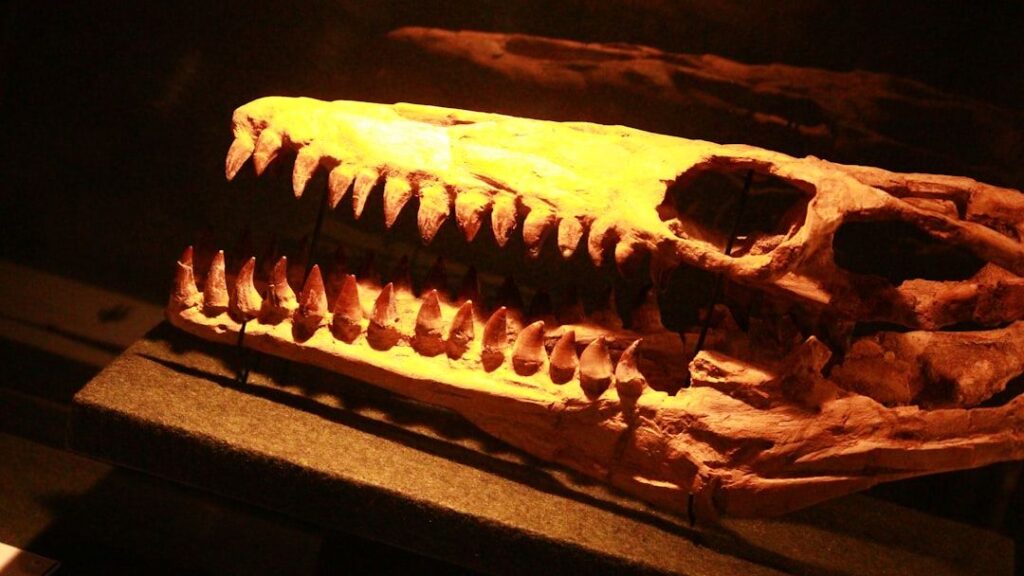
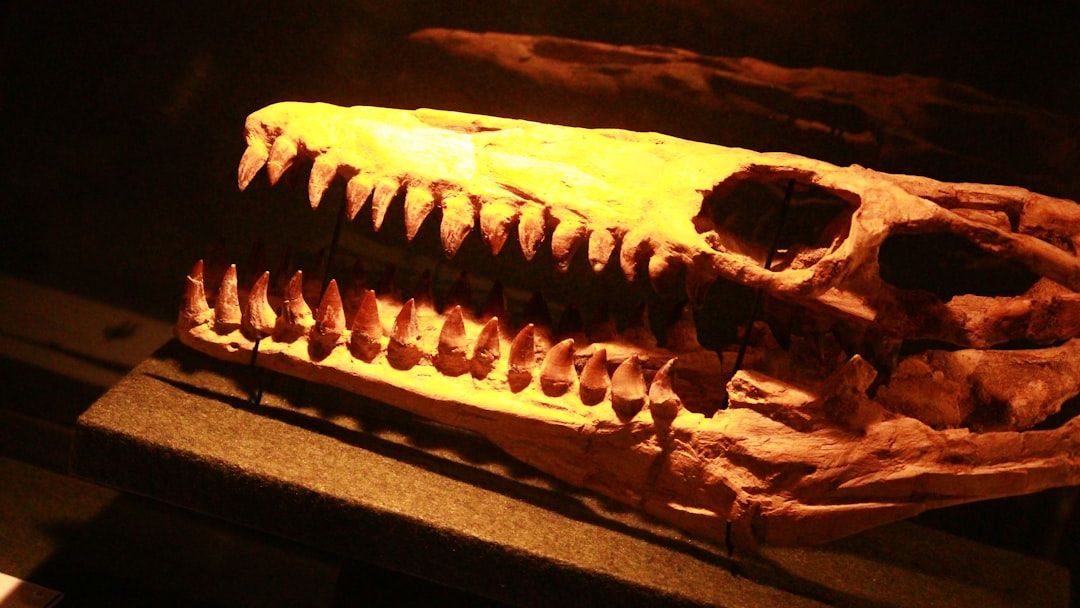
Siamraptor suwati debuted in scientific literature in 2019, based on partial remains including vertebrae, limb bones, and teeth from the same formation. This carcharodontosaurid measured roughly 8 meters long and wielded serrated, shark-like teeth suited for slicing flesh. As the first of its kind identified in Southeast Asia, it stood out among relatives like Giganotosaurus and Carcharodontosaurus.[1]
Evolutionary biologist Mike Lee highlighted its pivotal role. “It links the Allosaurus with the Carcharodontosaurus,” he explained, pointing to its intermediate traits: an Allosaurus-like skeleton paired with prominent shark teeth akin to the later giant. At around 120 million years old, Siamraptor represents a basal member of the group, splitting off early in their lineage and helping refine the dinosaur family tree.[1]
Braincase Unlocks Secrets of Senses and Stance
Advanced CT scanning revealed intricate details within the braincase, allowing reconstruction of an endocast – a mold of the brain cavity. The structure showed a typical low profile for carcharodontosaurians, with heart-shaped olfactory bulbs and a triangular inner ear. Semicircular canals indicated the dinosaur likely held its head elevated, snout angled slightly upward for balance.[2]
External features pointed to robust neck muscles. “The external morphology of the braincase indicates that it became more robust, with enlarged attachment areas for neck muscles,” Hattori observed. These adaptations supported a heavy skull in a top predator. Paleontologist Phil Bell stressed the rarity: skulls often shatter post-mortem, making such intact braincases vital for insights into smell, equilibrium, and cognition.[1]
Key Revelations from the Braincase:
- Obtuse occipitofrontal angle for upturned head posture.
- Tall nuchal crest anchoring powerful neck muscles.
- Partially roofed supratemporal fossa, a carcharodontosaurian hallmark.
- Endocast volume around 124 milliliters, reflecting advanced sensory regions.
Filling Gaps in a Fragmentary Record
While Siamraptor’s forelimbs remain enigmatic – known from just one finger bone – and anterior skull parts are absent, these fossils solidify its place. They confirm synapomorphies like a tall nuchal crest and fused parietals, distinguishing it from closer relatives. Phylogenetic studies positioned it as the earliest-branching carcharodontosaurian, retaining primitive traits lost in later giants.[2]
This discovery underscores Thailand’s rich fossil beds and the value of revisiting collections. As Bell put it, “New discoveries that unquestionably belong to those species are really vital.” Ongoing excavations promise more pieces to this predatory puzzle.