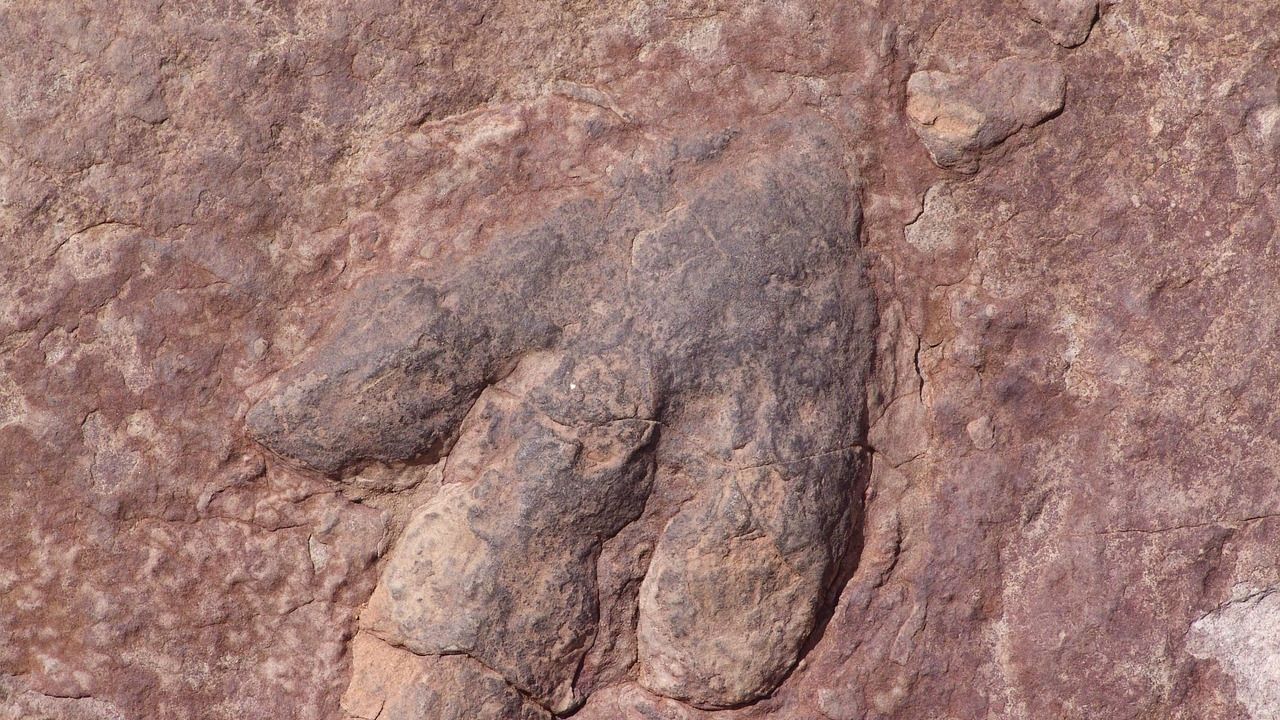
Dinosaur footprints uncovered by tides may rewrite South Africa’s fossil record – Image for illustrative purposes only (Image credits: Pixabay)
Knysna, South Africa — Amateur fossil hunters scanning a rocky shoreline faced a narrow window of opportunity as ocean tides receded, revealing faint impressions in the stone that could extend the story of dinosaurs on the continent. These tracks, preserved in a coastal rock formation, challenge long-held views on when the last dinosaurs roamed southern Africa’s shores. For local researchers and enthusiasts, the find underscores the value of everyday coastal walks in uncovering pieces of prehistory.[1][2]
A Fleeting Glimpse at Low Tide
Early in 2025, a team led by ichnologists from Nelson Mandela University’s African Centre for Coastal Palaeoscience visited a remote stretch near Knysna in South Africa’s Western Cape province. They targeted a small exposure of the Brenton Formation, a geological unit spanning no more than 40 meters long and five meters wide. Much of the site lies submerged under seawater during high tides twice each day, limiting access to brief low-tide periods.[1]
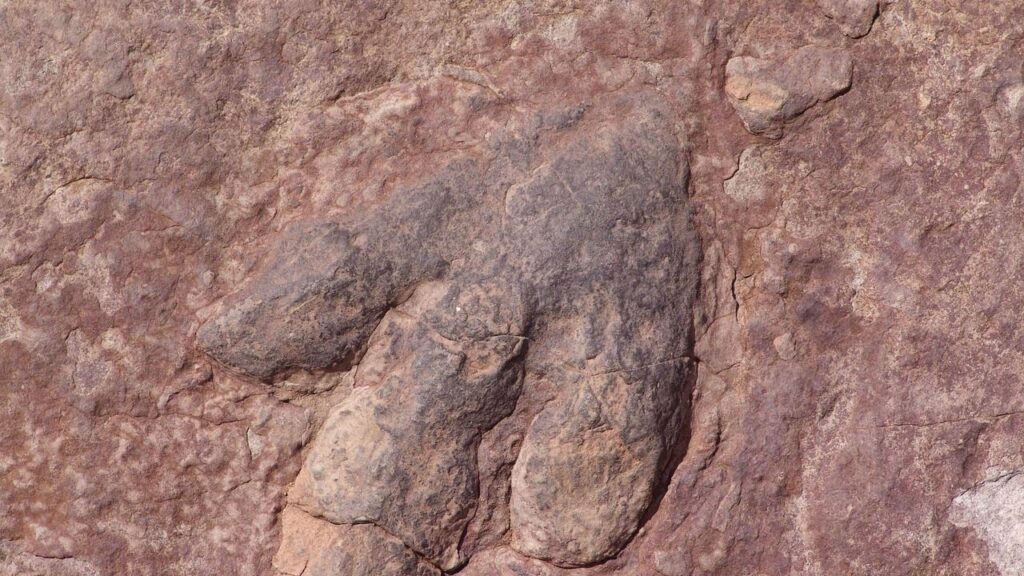
Linda Helm spotted the first probable tracks during this visit. The group documented more than two dozen impressions across rock surfaces and low cliffs rising up to five meters. Some appeared as subtle pressure marks where ancient feet compressed soft mud before it hardened, while others showed in profile within layered sediments. The site’s intertidal position today mirrors the muddy coastal plains or river channels that likely existed 132 million years ago.[2]
Placing the Tracks in Deep Time
Geologists dated the Brenton Formation rocks to the early Cretaceous period, roughly 132 million years old. This estimate stems from the formation’s position within rift basins that formed as the supercontinent Gondwana began to break apart. Volcanic lava flows around 182 million years ago had largely buried older inland sites like the Karoo Basin, leaving a perceived gap in the dinosaur record.[1]
These footprints fill that void as the youngest known dinosaur tracks in southern Africa, surpassing previous records by about 50 million years. They represent only the second confirmed Cretaceous track site in the country and the second in the Western Cape. A prior discovery in the nearby Robberg Formation yielded tracks dated to 140 million years old, reported in 2025.[3]
Clues to Ancient Foot Traffic
Interpreting the tracks proved challenging due to erosion and subtle preservation, but patterns emerged. Several narrow, three-toed prints pointed to theropods, the group that includes mostly carnivorous, bipedal dinosaurs. Wider three-toed impressions hinted at ornithopods, plant-eating bipeds common in the Cretaceous.[2]
Larger, rounded depressions lacked clear toes, suggesting possible sauropods—massive, long-necked herbivores that walked on four legs. Researchers cautioned against firm identifications, noting the tracks’ imperfect state. As Charles Helm and colleagues wrote in their study published in the South African Journal of Science, “Our intention has not been to present impeccable examples of dinosaur tracks, but rather to emphasise that these are in all probability the youngest dinosaur tracks thus far identified in southern Africa.”[2]
| Track Feature | Possible Dinosaur Type | Characteristics |
|---|---|---|
| Narrow, three-toed | Theropod | Bipedal, likely carnivorous |
| Wider three-toed | Ornithopod | Bipedal herbivore |
| Rounded impressions | Sauropod? | Quadrupedal, uncertain due to erosion |
Shifting Perspectives on a Sparse Record
Southern Africa’s dinosaur fossil history has long focused on Triassic and Jurassic remains from the Karoo, with few traces from the Cretaceous. Scattered bones, like a theropod tooth found by a 13-year-old boy near Knysna in 2017, hinted at later activity, but tracks now provide direct evidence of movement. The Brenton site’s discovery suggests dinosaurs thrived in coastal environments even as inland areas fossilized under lava.[1]
This pushes back the end of dinosaur presence in the region, previously thought limited after Jurassic times. It aligns with isolated finds in formations like Kirkwood, painting a picture of persistent life amid continental drift.
- Confirms Cretaceous dinosaurs beyond Karoo lava coverage.
- Highlights coastal basins as key preservation zones.
- Encourages surveys of similar exposures in Western and Eastern Cape provinces.
Paths Forward for Fossil Hunters
With non-marine Cretaceous rocks dotting South Africa’s southern coast, experts anticipate more revelations. Targeted low-tide searches could yield additional tracks, bones, or traces from other vertebrates. For communities near Knysna, these finds boost local pride in a landscape still yielding ancient secrets.
Though the tracks fade under each incoming tide, their documentation ensures a lasting mark on paleontology. Researchers now ponder how widespread such coastal dinosaur activity truly was, leaving room for future tides to tell more of the tale.[1][2]