You probably picture the Iron Age as a world of warriors in heavy helmets and blacksmiths hammering away in smoky forges. That image is not entirely wrong, but it leaves out the real secret: you are looking at an era where a few simple tools completely rewired how people farmed, fought, built, traded, and even ruled. Iron was not just a new metal; it was a new way of thinking about strength, efficiency, and control.
When you follow the trail of these tools, you start to see how ordinary objects – plow blades, nails, chisels – quietly shaped the rise and fall of kingdoms. Instead of focusing only on kings and battles, you can look at the hammer in a smith’s hand, the tip of a spear, or the iron ring on a wagon wheel and realize that these were the real levers of history. Once you see that, it is hard to look at your own everyday tools the same way again.
1. The Iron Plowshare: Turning Soil Into Power
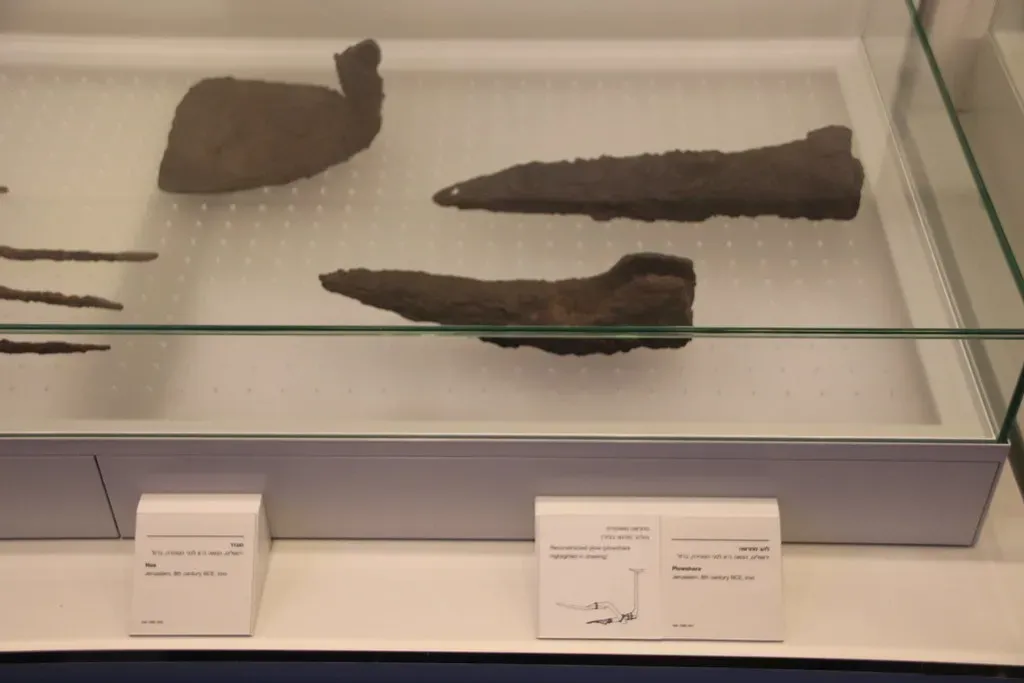
If you want to understand why Iron Age societies grew larger and more complex, you start in the fields, not on the battlefield. With iron plowshares, you could cut deeper into heavy, stubborn soils that wooden or bronze tools simply could not handle. That meant you could bring previously marginal land into production, grow more food per person, and sustain bigger populations with fewer full-time farmers.
You can imagine how this changes daily life: instead of spending all day wrestling with a wooden plow that keeps snagging and splintering, you guide an iron-tipped plow that slices cleanly, turns richer furrows, and lasts longer before wearing down. Iron is harder and can be sharpened to a finer edge, so you are not constantly replacing broken tips. Over time, that extra reliability frees people to specialize – some become traders, soldiers, priests, or craftsmen – because the land finally produces more than just enough to survive.
2. Iron Axes and Adzes: Clearing Forests, Building Worlds
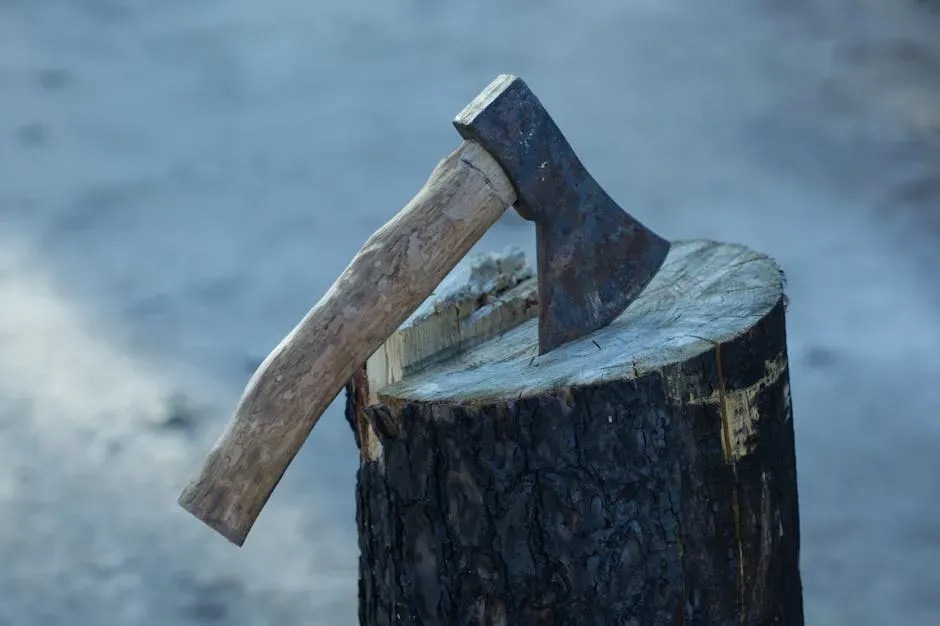
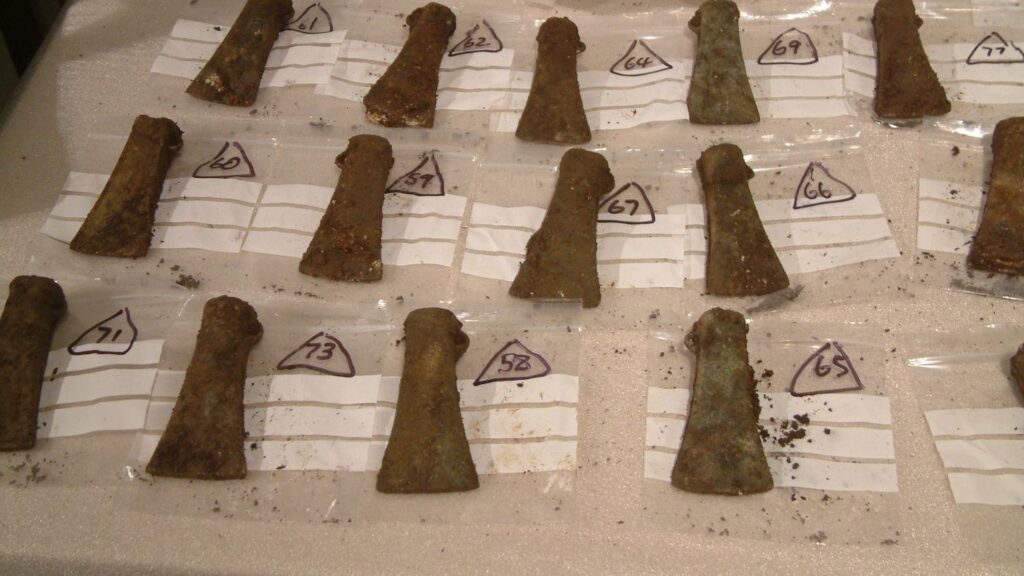
When you hold an iron axe in your mind’s eye, you are really seeing the key that unlocked vast forests. With a good iron axe or adze, you could fell trees faster, cut through dense trunks that would have defeated a stone blade, and shape timber far more precisely. That changes everything from how quickly you can clear new farmland to how sturdily you can build houses, boats, bridges, and palisades.
Picture yourself in a forested valley before iron tools arrive: clearing land is a backbreaking, slow-motion battle with the trees. Once iron axes appear, you can clear more space in a season than your grandparents might have managed in years. You also gain the ability to shape beams, planks, and joints in a more controlled way, which means larger roofs, sturdier carts, better docks, and more reliable fortifications. The forest stops being an almost permanent barrier and starts becoming a stockpile of raw material you can exploit.
3. Iron Swords and Spears: Redrawing the Map of War
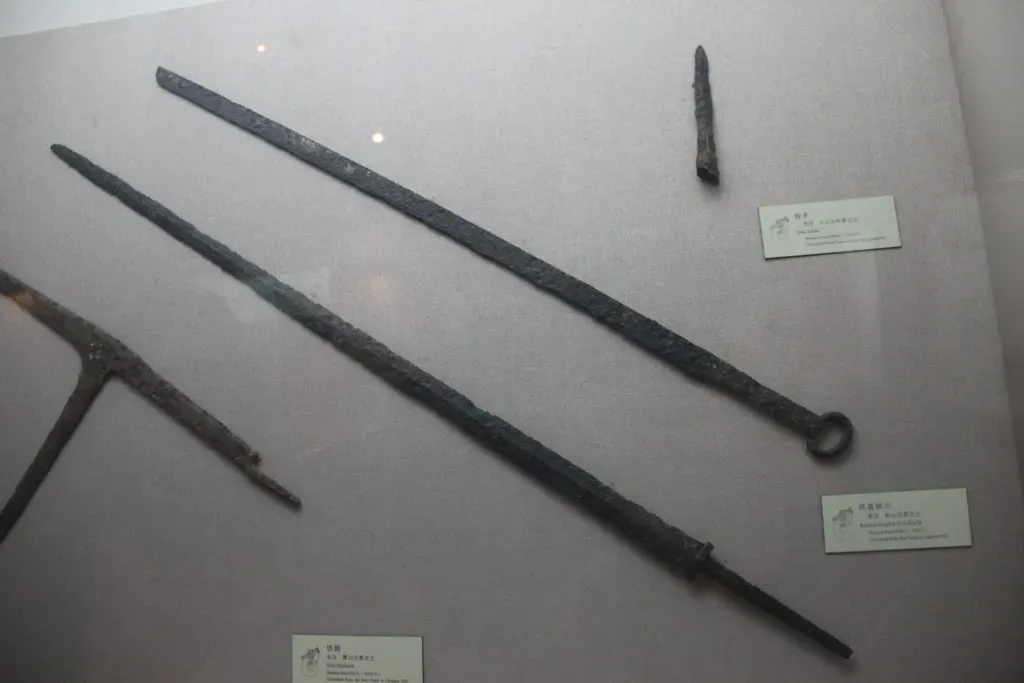
When you step onto an Iron Age battlefield in your imagination, the first thing you notice is how much depends on the quality of a blade. Iron swords and spearheads, once smiths learned to refine and harden the metal properly, could hold sharper edges and take more punishment than most bronze weapons. If you are a soldier, that means your sword is less likely to bend, nick, or snap at the worst possible moment.
This shift does not just make single warriors more dangerous; it lets entire armies scale up. Iron ore is more common and widely distributed than copper and tin, which bronze depends on. So if your community can mine and smelt iron, you do not have to rely as heavily on distant trade networks to arm your fighters. That gives you the option to field larger, more consistently equipped forces, reshaping regional power balances. The spear with an iron head in your hand is not just a weapon; it is a sign that warfare has become more organized, more lethal, and more accessible to many societies at once.
4. Iron Hoes, Sickles, and Knives: Quiet Tools of Agricultural Revolution
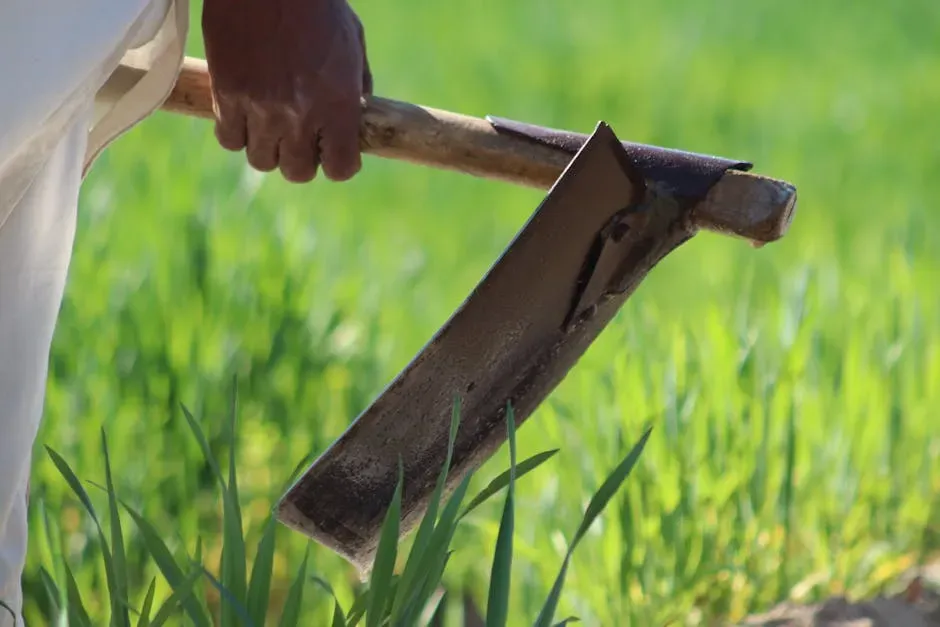
Not every revolutionary tool looks dramatic. When you pick up an iron hoe, sickle, or knife, you are holding the everyday hardware that made high-yield farming truly practical. Iron hoes cut deeper into packed soil and break up clods more easily, so you can prepare seedbeds more thoroughly and quicker. Iron sickles grip and slice stalks cleanly, which helps you harvest grain more efficiently and with less wasted effort.
Imagine the rhythm of your work changing: instead of fighting your tools all day, you move faster and with more control. You can weed more effectively, harvest larger fields, and process crops with fewer broken implements. That seemingly small boost in speed and reliability stacks up season after season. It means more secure food supplies, room for population growth, and a cushion against poor harvests. You may not brag about your iron knife the way a warrior boasts about a sword, but your community’s survival quietly depends on it.
5. Iron Nails, Fastenings, and Carpentry Tools: Building Bigger and Stronger
When you think of iron, you might jump straight to weapons, but some of the most transformative uses show up in construction. With iron nails, clamps, and brackets, you can join beams, planks, and frames in more secure and versatile ways than wooden pegs alone can manage. Add iron chisels, augers, and saws, and you suddenly have the means to shape wood and stone with far more precision.
Put that into a real scene: you are helping raise a new hall or warehouse. Instead of relying mostly on friction, rope, and clever joinery, you drive iron nails into key joints, use iron tools to cut clean mortises, and bore accurate holes. The result is a structure that can be taller, wider, and longer lasting. The same logic scales to ships, wagons, and defensive works. Iron lets you push the limits of what you can safely span, stack, and support, so your built environment slowly grows more ambitious – more like an engineered system and less like a collection of improvised shelters.
6. Blacksmith’s Tools: The Hidden Engines Behind Every Innovation
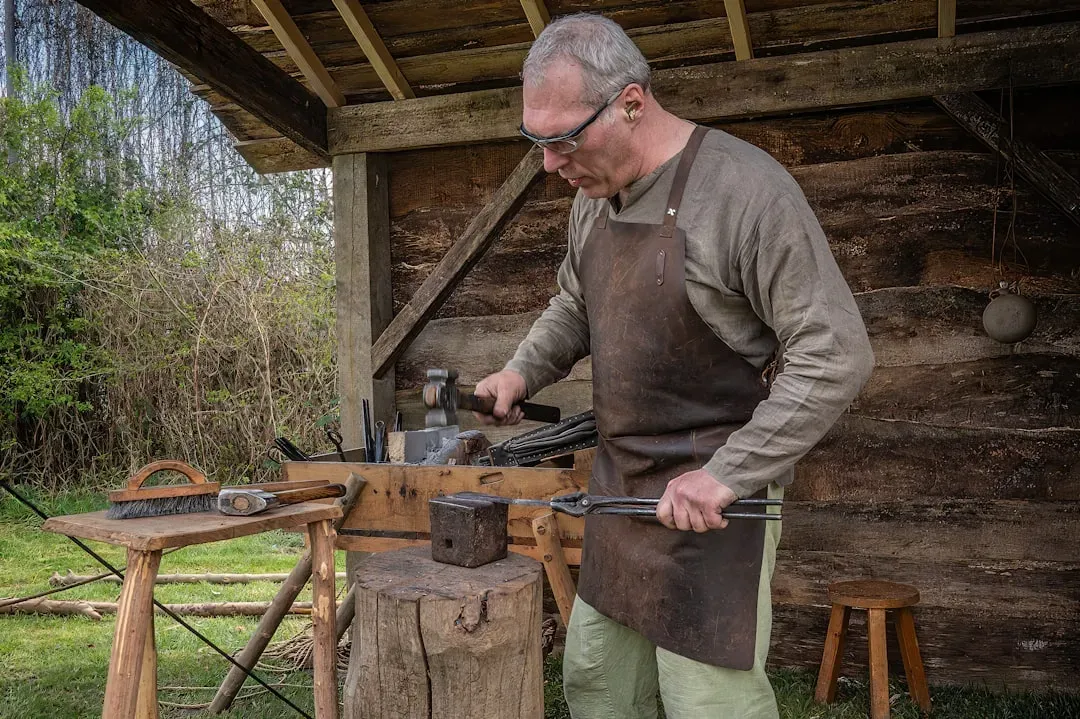
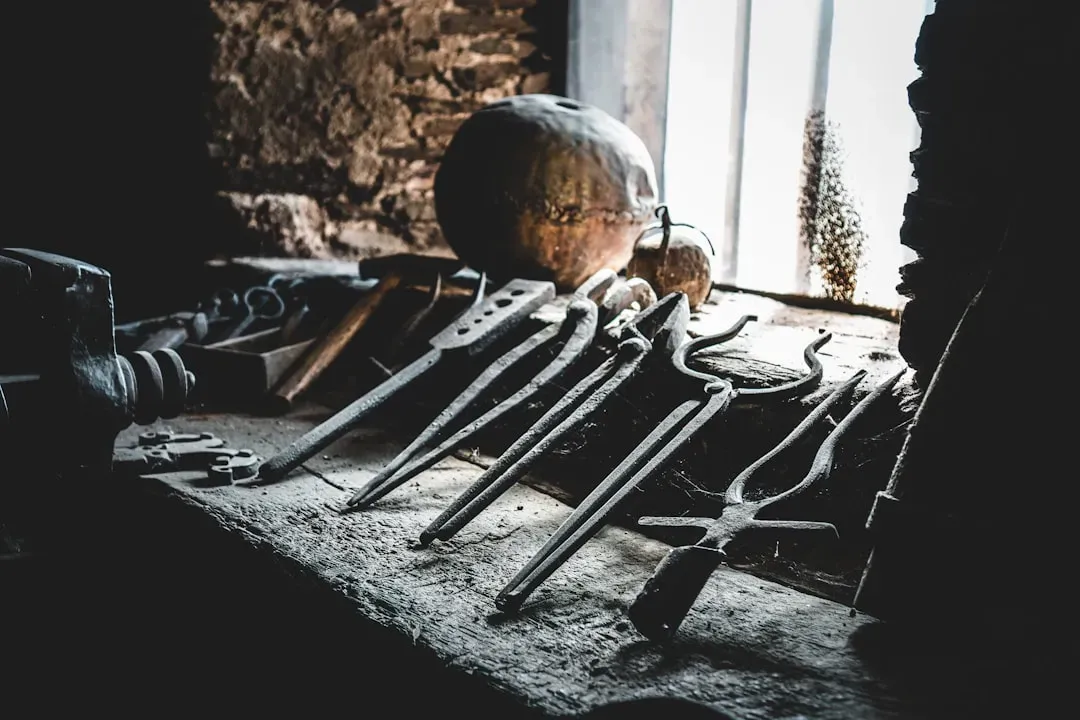
If you want to find the real heart of the Iron Age, you walk away from the fields and fortresses and step into the forge. The most revolutionary “tools” are actually the blacksmith’s own implements: iron tongs, hammers, punches, chisels, and specially shaped anvils. These let a skilled smith control temperature, grip, and force far more precisely, so iron can be heated, shaped, and hardened into almost anything your community needs.
Once you picture yourself as that smith, you see how every improvement multiplies. Better tongs mean you can hold smaller or more complex pieces. More refined hammers and anvils mean you can thin a blade edge, curve a horseshoe, or punch holes for rivets with repeatable accuracy. Over time, you are not just repairing tools; you are inventing new ones, refining techniques, and passing on specialized knowledge. In a way, each village forge becomes a little research and development center, where experimentation with iron slowly upgrades the entire toolkit of your society.
Conclusion: How Simple Tools Quietly Forged Vast Civilizations
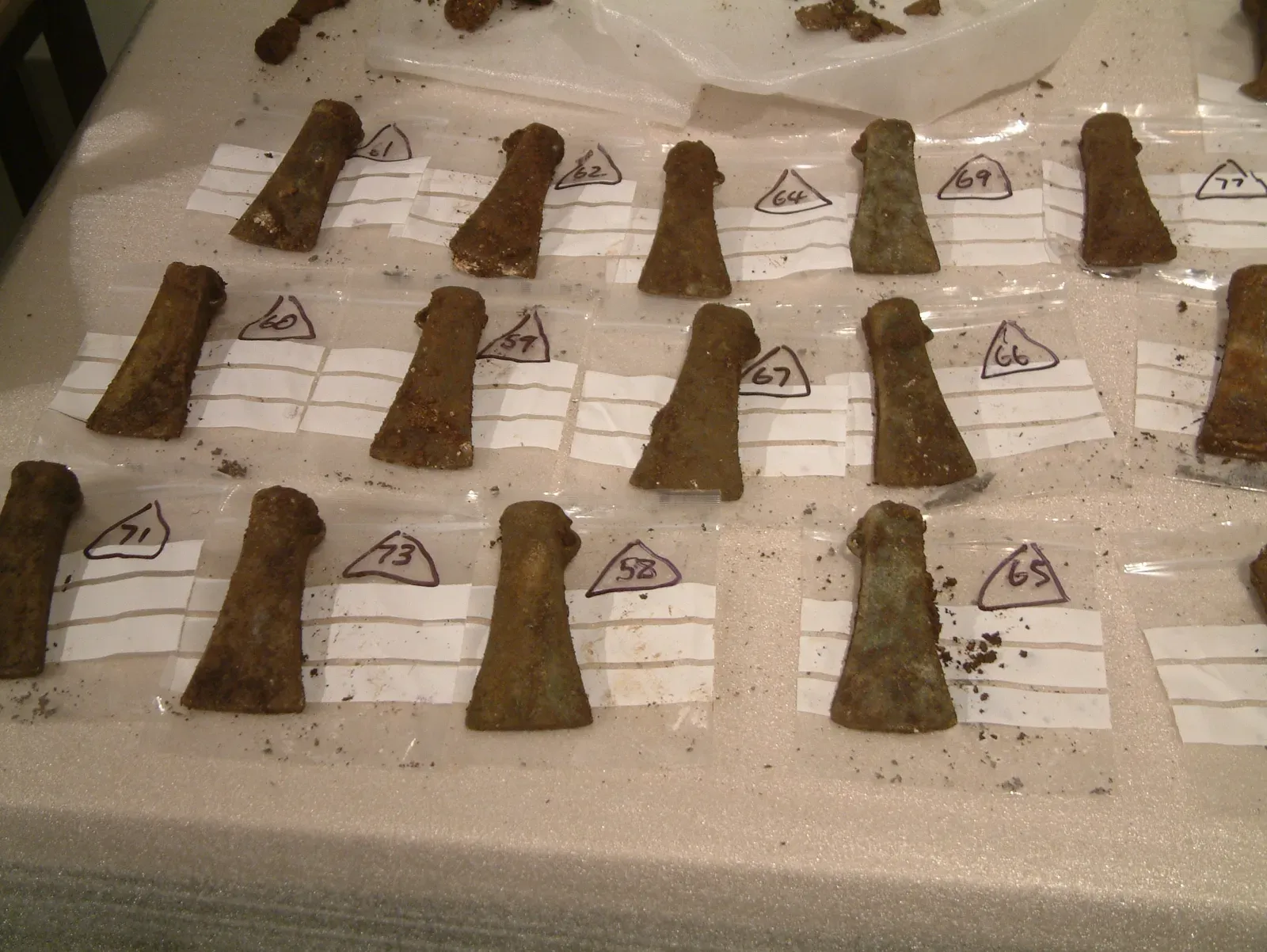
When you pull back and look at the Iron Age as a whole, you stop seeing it as just a chapter of epic battles and start recognizing it as a story about everyday problem solving. You relied on iron plowshares to feed growing communities, iron axes to open up forests, iron blades to defend territory, and iron nails and tools to build infrastructure that actually lasted. None of these objects is glamorous on its own, yet together they underpin the rise of larger, more connected, and more complex civilizations.
The real secret for you today is that the same pattern repeats in your own world. Behind every skyscraper, smartphone, highway, or ship, you still find a quiet revolution of tools and materials that made it possible. If a sharpened iron edge could redraw ancient maps and rewrite social roles, what might the “ordinary” tools in your hands be quietly reshaping right now – and are you paying enough attention to them?