
You live in a universe that looks calm at first glance: a quiet night sky, a soft band of Milky Way light, a few twinkling stars. But just behind that peaceful surface, reality is doing things that tear up the rulebook, stretch your intuition, and leave even the best physicists shrugging and saying, “We’re not sure yet.” You are, quite literally, standing in the middle of a mystery that spans billions of light‑years in every direction.
When you zoom out far enough, you discover that some of the most important ingredients of the cosmos are things you can’t see, can’t touch, and do not yet understand. You rely on them to explain how galaxies hold together, why the universe is expanding the way it does, and even why there’s anything at all instead of nothing. In the next sections, you’ll walk through six of the strangest cosmic phenomena known today – things that stubbornly refuse to fit neatly inside our current scientific theories, and that might, one day, force you to rewrite everything you thought you knew about reality.
1. Dark Matter: The Invisible Glue Holding Galaxies Together
If you could magically turn off every star, planet, and gas cloud in the universe, you’d still be left with most of its mass. That missing mass is what you call dark matter, and you only know it exists because of what it does to the things you can see. When astronomers measure how fast stars orbit around galaxies, they find that those stars are moving far too quickly to be held in place by visible matter alone. By all rights, the outer parts of galaxies should fly apart like sparks from a grinding wheel, but they do not.
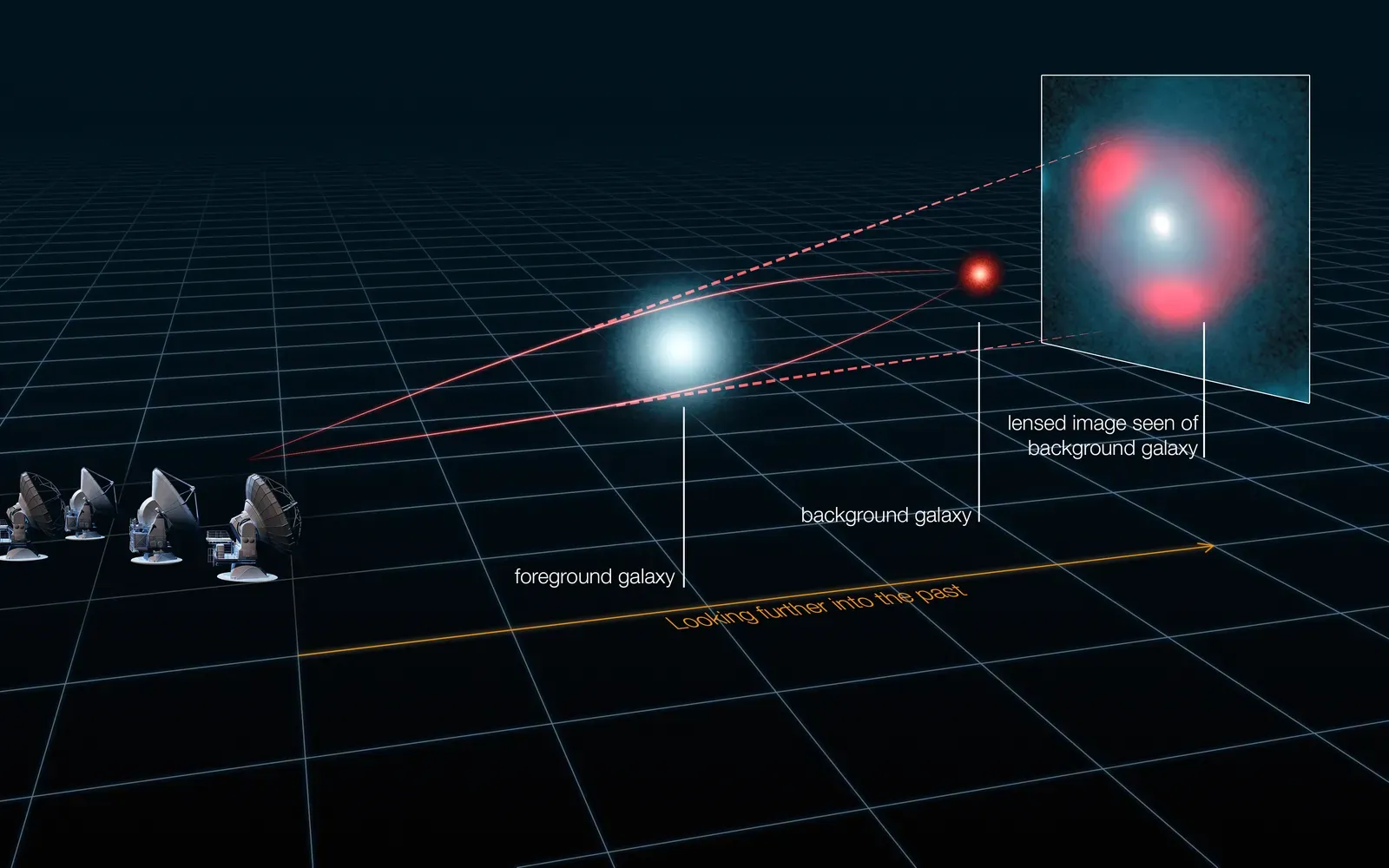
To make sense of that, you’re almost forced to accept that some unseen substance, far more abundant than ordinary matter, acts like a gravitational scaffolding. You can map where it seems to be by watching how it bends light from background galaxies, an effect known as gravitational lensing. Yet, after decades of searching with underground detectors, particle colliders, and space telescopes, you still have not directly caught a single dark matter particle. You might be dealing with exotic new particles, or you might be facing something even more radical – that your theory of gravity itself needs a rewrite.
2. Dark Energy: The Mysterious Force Accelerating the Universe
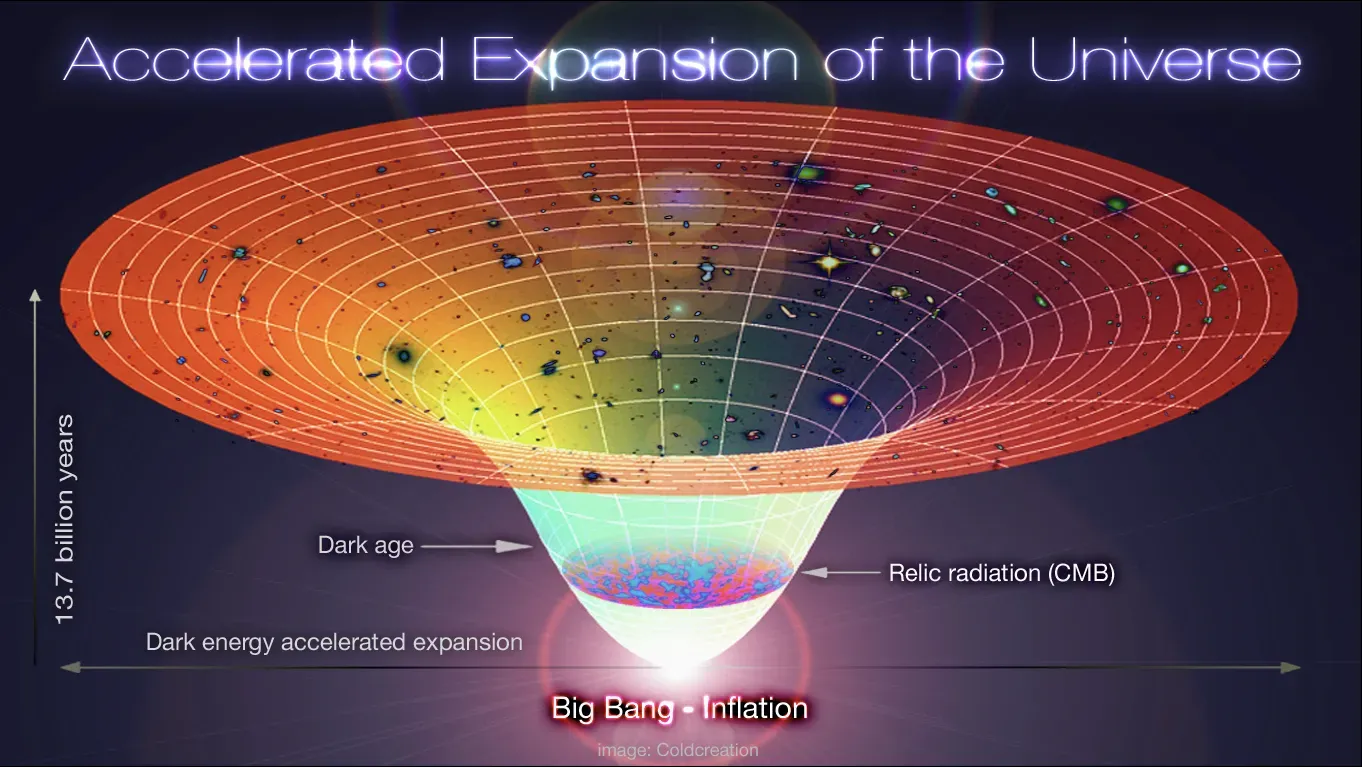
As strange as dark matter is, dark energy is even more unsettling. In the late twentieth century, when astronomers measured distant exploding stars to track how the universe expanded over time, they expected to see that expansion slowing down under gravity’s pull. Instead, you see the opposite: the expansion is speeding up, as if some hidden pressure is pushing space itself apart. To account for this, you’re forced to introduce dark energy, a kind of energy associated with empty space that seems to make up the majority of the universe’s total content.
The trouble is that your best theories of fundamental physics wildly overshoot the amount of dark energy you observe in reality – by an almost absurd factor. That mismatch is so extreme that some physicists consider it one of the biggest unsolved problems in all of science. You might be missing an entire layer of physics, or perhaps you’re misreading what gravity does on the largest scales. Until you understand why the universe is accelerating, you cannot fully answer even the simplest questions, like how the cosmos will ultimately end.
3. Fast Radio Bursts: Millisecond Flashes from the Deep Unknown
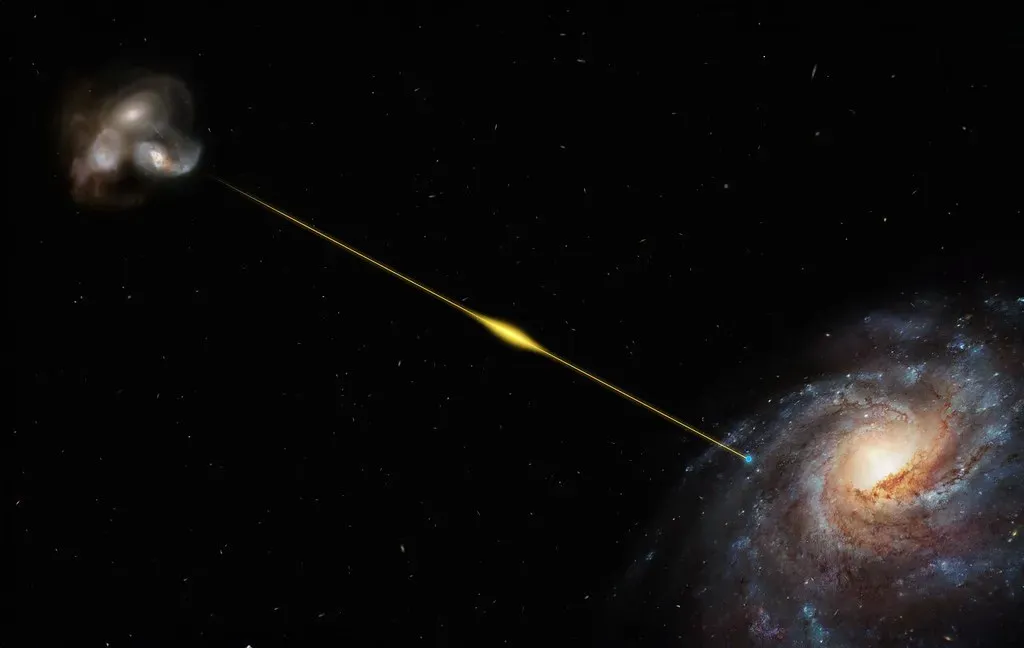
Imagine listening to the universe with a giant radio ear and suddenly hearing an incredibly loud, sharp “click” that lasts less than the blink of an eye. That is more or less what you encounter with fast radio bursts – powerful flashes of radio waves coming from far beyond your galaxy, each one lasting only a few thousandths of a second. In that tiny moment, a single burst can release as much energy as your sun emits over days or even weeks, yet you still have no universally accepted explanation for what is producing them.
Some bursts repeat, others do not, and they come from all over the sky, which makes the mystery deeper. You’ve linked a few to galaxies and even to regions that might host young, highly magnetized neutron stars, but the full story is far from clear. You may be witnessing bizarre magnetic reconnection events, collisions, or even something no one has thought of yet. For now, you’re stuck with a set of clues that feel like pieces from different jigsaw puzzles, and the picture that emerges depends on which ones you decide to trust.
4. Black Holes and the Information Paradox
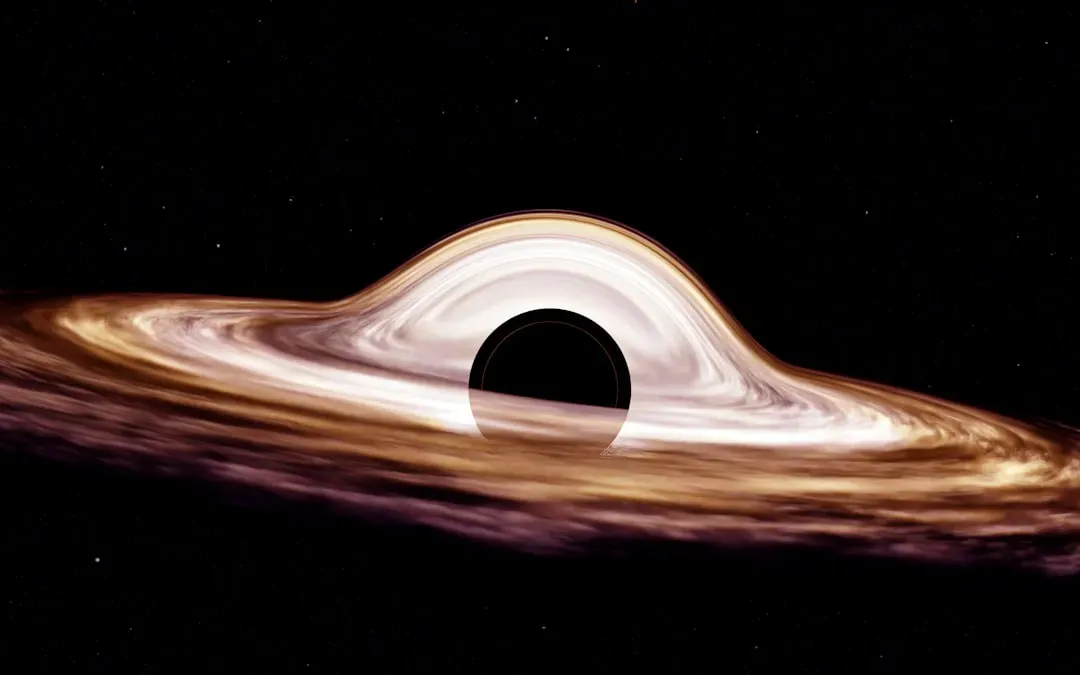
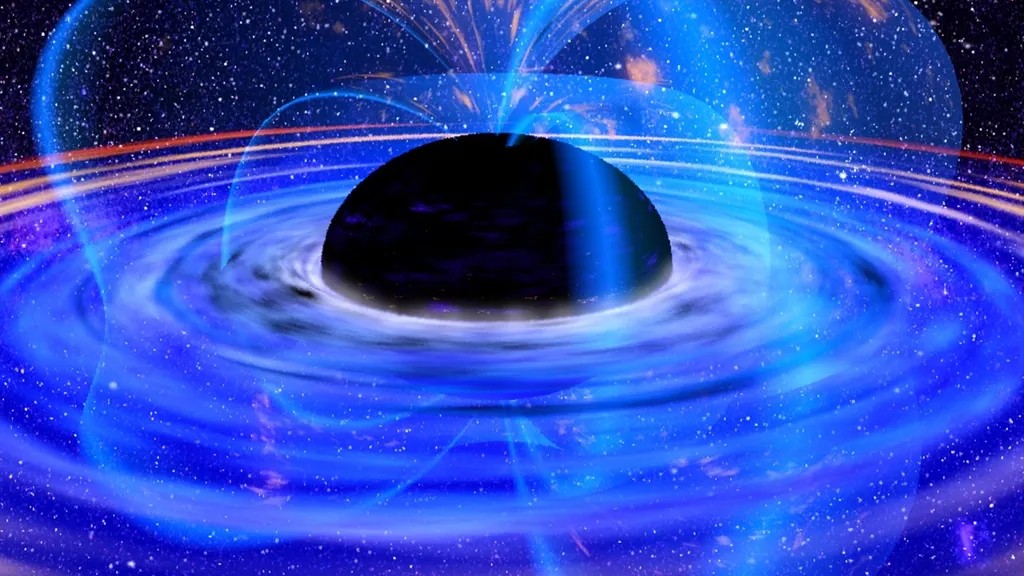
On paper, a black hole sounds brutally simple: cram enough mass into a small enough region, and gravity becomes so strong that nothing, not even light, can escape. In practice, though, black holes force you into one of the strangest intellectual corners in physics. According to quantum theory, information about the physical state of a system should never be completely destroyed. But when matter falls into a black hole and the black hole slowly evaporates through a quantum process known as Hawking radiation, you’re left wondering where that information goes.
This creates the infamous black hole information paradox, where your two best theories – general relativity and quantum mechanics – seem to flatly disagree about what happens at the edge of a black hole. Over the years, you’ve explored ideas like holographic principles, quantum hair, and even the possibility that the event horizon might not be what it seems. Yet, none of these ideas has delivered a final, testable answer. Until you figure this out, you’re essentially admitting that your understanding of space, time, and quantum reality breaks down right where things get most interesting.
5. The Baryon Asymmetry: Why Anything Exists Instead of Perfect Nothing

When you trace the universe back to its earliest instants, your best models say that matter and antimatter should have been created in almost perfect balance. Every particle of matter has a counterpart of antimatter, and when the two meet, they annihilate in a flash of energy. If nature played fair, you ought to be living in a universe filled mostly with light, with almost no matter left over to build stars, planets, and people. Yet, when you look around, you see a cosmos made overwhelmingly of matter, with only tiny traces of antimatter appearing in high‑energy events.
To explain this imbalance, you search for subtle differences in how matter and antimatter behave, differences that could have tilted the scales in the early universe. Experiments in particle accelerators have revealed small violations of perfect symmetry, but not nearly enough to account for the amount of matter you see today. In a sense, your own existence is a cosmic hint that some crucial piece of physics is missing. The fact that you can even ask why there is something rather than nothing is a daily reminder that the universe has not revealed all of its rules yet.
6. The Cosmic Censorship and Fine-Tuning Puzzles
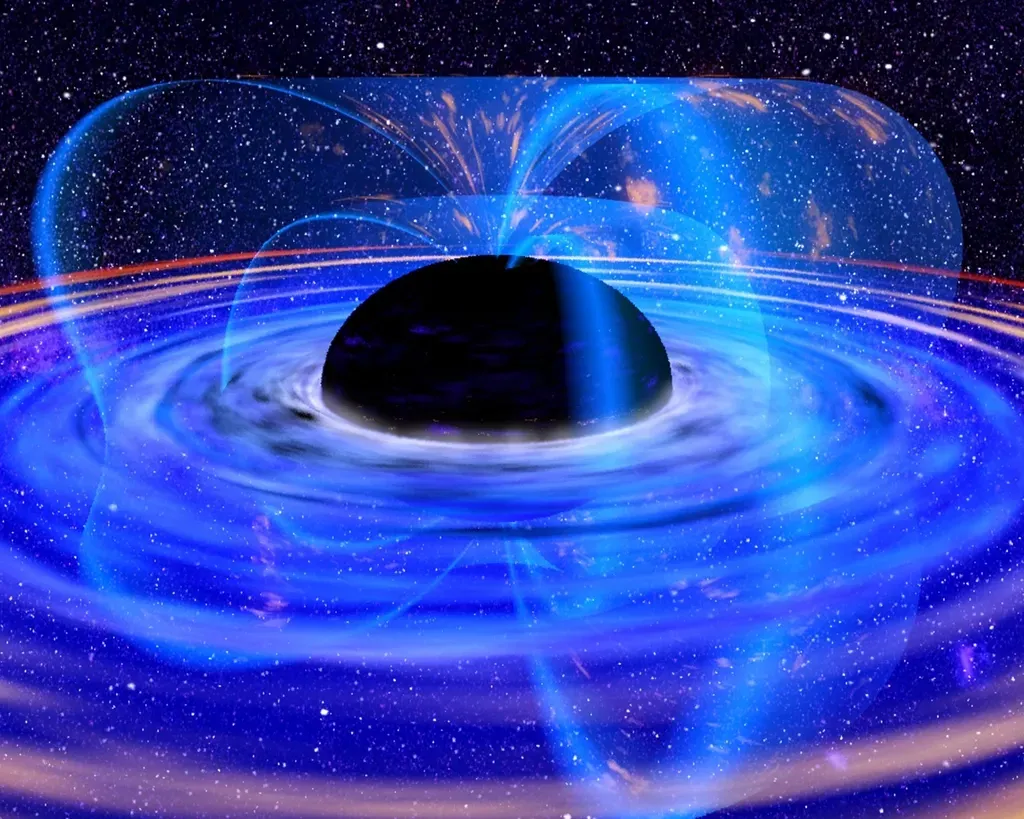
When you solve Einstein’s equations for gravity, you often run into something deeply unsettling: singularities, places where quantities like density or curvature shoot to infinity and your equations simply stop making sense. To keep reality from becoming too wild, some physicists have proposed that nature hides these singularities behind event horizons, a rough idea known as cosmic censorship. The problem is that you do not yet have a solid proof that this always happens, and some theoretical scenarios suggest that naked singularities – visible breakdowns of spacetime – might be possible.
On top of that, you’re confronted with the eerie fine‑tuning of the universe’s basic numbers. The strengths of forces, the masses of particles, and the initial conditions after the Big Bang all seem to fall into an incredibly narrow range that allows complex structures, and ultimately life, to exist. If you tweak some of these values even a little, you get a universe that looks sterile or collapses too quickly. You can invoke ideas like a multiverse or deep underlying principles, but right now, you’re mostly staring at a cosmic combination lock that just happens to be set exactly right and trying to work out whether that’s a clue or a coincidence.
When you put all of these puzzles side by side – dark matter, dark energy, explosive radio bursts, paradoxical black holes, the matter–antimatter imbalance, and the unsettling fine‑tuning of physical laws – you start to see a pattern. Your current theories, as successful as they are in many ways, look increasingly like a first draft rather than a finished story. You can navigate the solar system, build electronics, and map galaxies, but you still do not understand most of what the universe is made of or why its rules look the way they do.
In a strange way, that ignorance is good news for you. It means there are still frontier questions left that a curious mind can seriously grapple with, even without a lab coat or a particle accelerator. The next breakthrough might not just tweak a few equations; it could change how you think about space, time, and your own place in the cosmos. As you look up at the night sky, knowing how much you do not yet know, you might quietly wonder: which of these mysteries would you most want to see solved in your lifetime?