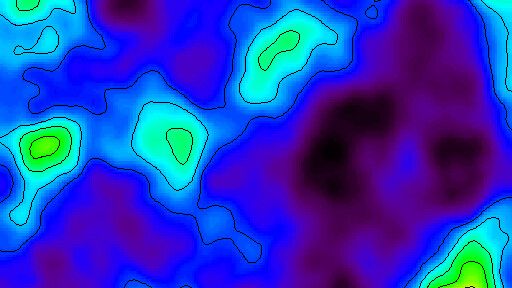
If you could switch off every star, every planet, every glowing galaxy in the universe, you might think there would be almost nothing left. But that feeling is wildly misleading. Most of what actually shapes the universe is already invisible to your eyes and your instruments, quietly pulling, pushing, and stretching space itself while you stare at the tiny fraction that shines.
That is the strange reality behind dark matter and dark energy. You live in a cosmos where the familiar stuff – the atoms in your body, the Sun, the Earth, your coffee mug – makes up only a tiny sliver of everything that exists. Once you see how much of the universe is hidden, you can never really look at a starry sky in the same way again.
The Shocking Cosmic Budget You Never See
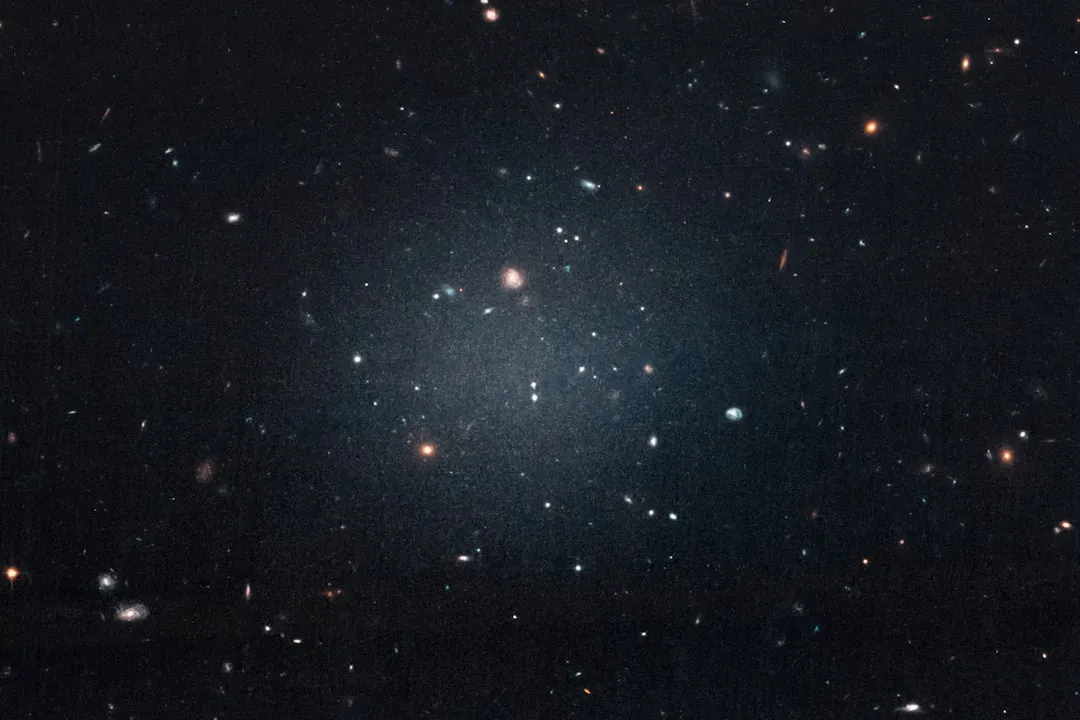
When you hear that almost all of the universe is invisible, it sounds like the setup to a science fiction story, but it is just standard cosmology in the twenty‑first century. If you add up all the normal matter – the atoms in gas clouds, planets, stars, dust, and intergalactic plasma – you only get a small minority share of the cosmic pie. The rest is dominated by dark matter and dark energy, two components you never see directly yet absolutely rely on to explain what telescopes observe.
You can think of this like looking at an iceberg from a boat: what you see above the water is gorgeous and detailed, but it is only a hint of the enormous structure below the surface that actually keeps it afloat. In the same way, the visible universe you love in photographs from big observatories is resting on a deep, unseen foundation. Once you accept that most of reality does not interact with light the way you expect, the universe becomes far more mysterious – and far more exciting to explore.
How You Know Something Invisible Is There
So how do you, as a curious observer on one small planet, know dark matter is there if you cannot touch it or see it? The answer is that you watch what gravity does. When you look at how fast stars orbit in the outer parts of galaxies, they move as if there is far more mass present than the glowing stars and gas can account for. Instead of slowing down at the edges like planets in your solar system, the rotation stays stubbornly high, as though an invisible halo of mass is holding everything together.
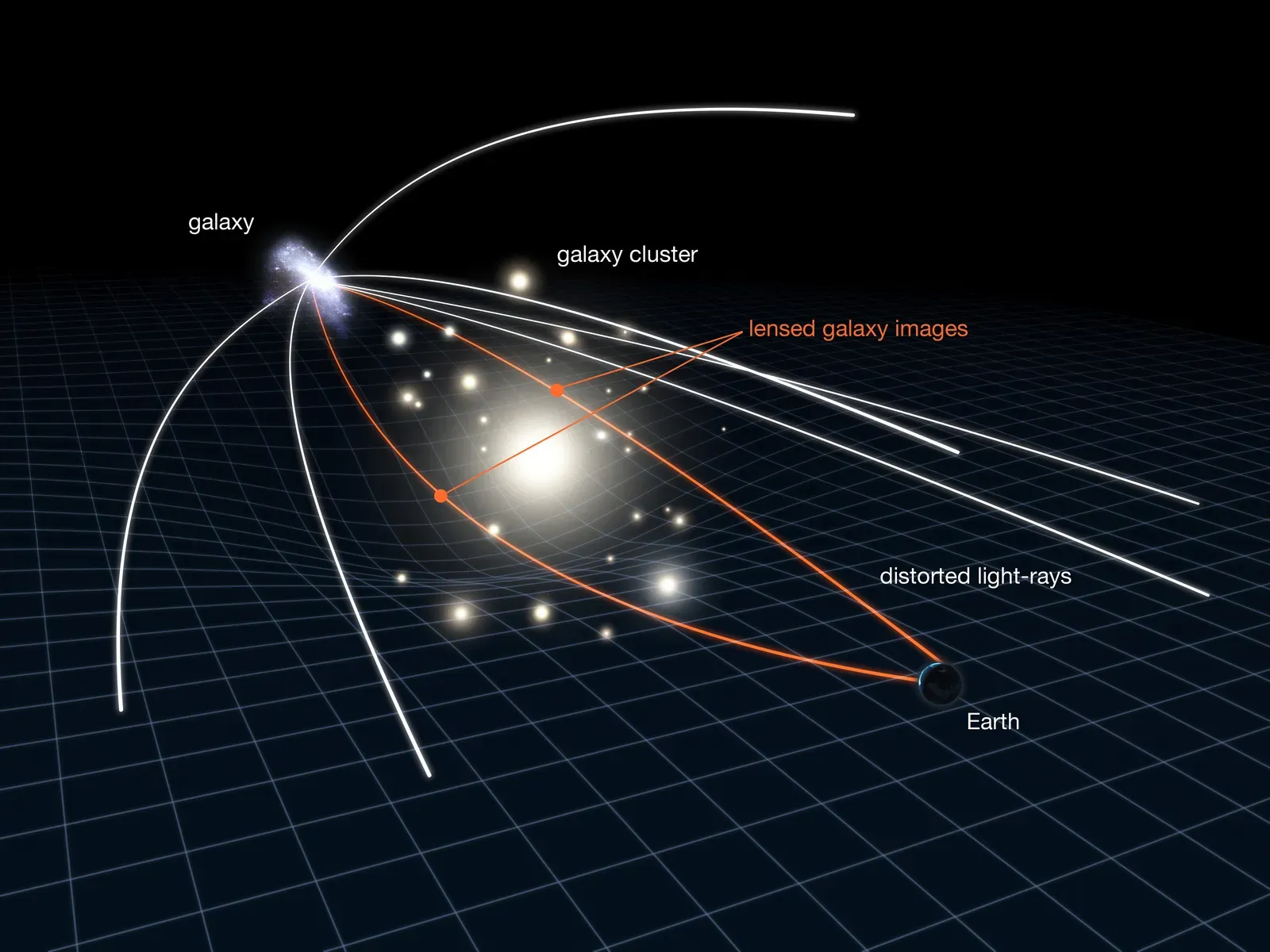
You also see this hidden mass when galaxy clusters bend light from more distant galaxies, a phenomenon called gravitational lensing. You can literally map where the mass must be by how it distorts the background light, and you find sprawling clumps of matter that do not show up in ordinary images. It is like seeing the outline of a ghost in how it tugs on the curtains, even though your eyes never catch its shape directly. Those gravitational fingerprints are your strongest clues that dark matter is real, not just a mathematical trick.
What Dark Matter Might Be Made Of (And What It Is Not)
At this point you might wonder whether dark matter is just regular stuff that happens not to shine, like cold rocks or drifting planets. Astronomers asked the same question, and the evidence tells you that cannot possibly explain the whole story. There simply are not enough faint stars, rogue planets, or black holes to account for the tremendous mass needed to hold galaxies and clusters together in the way you observe.
Instead, you are pushed toward the idea that dark matter is made of some kind of unfamiliar particle, different from the protons, neutrons, and electrons that build you and everything you touch. Experiments buried deep underground, detectors in space, and massive particle accelerators have spent years trying to catch these hypothetical particles interacting, even in the faintest way, with normal matter. So far, they have only set tighter limits, which is frustrating but also oddly thrilling: you are clearly bumping up against something genuinely new, a kind of matter that so far reveals itself only through the way it curves space and anchors cosmic structures.
Dark Matter’s Role in Building the Cosmic Web
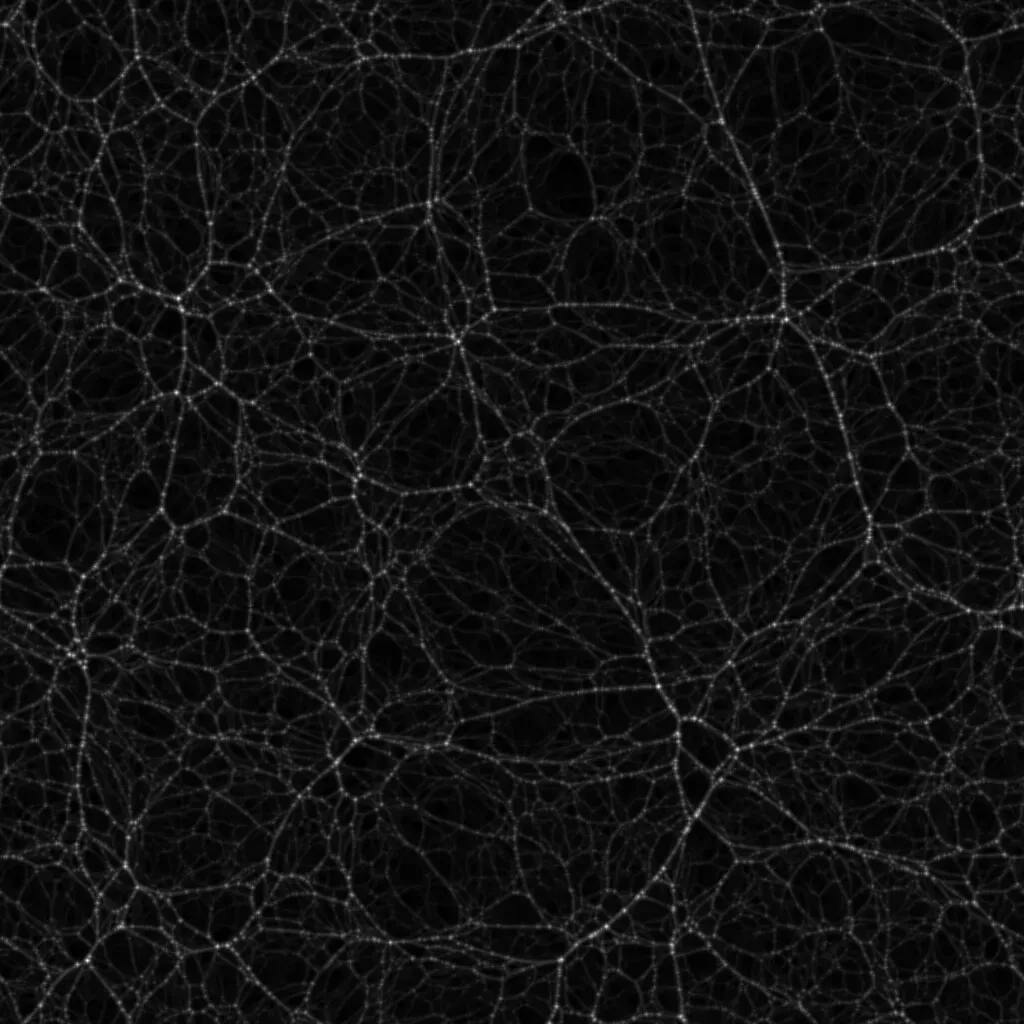
To appreciate dark matter, you need to see it not just as extra mass, but as the scaffolding of the universe. In the early cosmos, tiny fluctuations in the density of dark matter started to grow under their own gravity, long before stars and galaxies lit up. As time passed, gas fell into those dark matter wells, cooled, and eventually formed the galaxies you see. Without that invisible framework, the universe might still be a fairly smooth fog instead of a rich tapestry of galaxies and clusters.
On the largest scales, dark matter weaves a structure known as the cosmic web: enormous filaments and nodes where galaxies gather, separated by vast cosmic voids that are relatively empty. When you look at maps of galaxy positions from large surveys, what you are really seeing is a glowing outline of where the dark matter has piled up. Your visible universe is effectively tracing lines drawn by an invisible pen, turning an otherwise abstract concept into something you can actually picture.
Dark Energy: The Force Making Space Speed Up

If dark matter is the glue that pulls structures together, dark energy is the strange influence that pushes the universe apart faster and faster. You would expect gravity to slowly slow down the cosmic expansion over billions of years, like a ball tossed upward that eventually loses speed. But when you examine distant exploding stars and other cosmic markers, you find that the expansion is not decelerating overall – it is accelerating, as if something is adding a gentle but persistent outward pressure to space itself.
This is where dark energy comes in, not as a substance you can bottle but as a property of space that resists being pulled together. You can imagine stretching a rubber sheet that somehow wants to stretch even more the farther apart its points get. The more the universe expands, the more dominant this effect becomes compared with gravity on very large scales. Dark energy does not tear galaxies or solar systems apart, but over huge distances it slowly takes over the cosmic story, making the future of the universe very different from what you might have guessed just by looking at the stars overhead.
What Dark Energy Might Be – And Why It Is So Hard to Pin Down
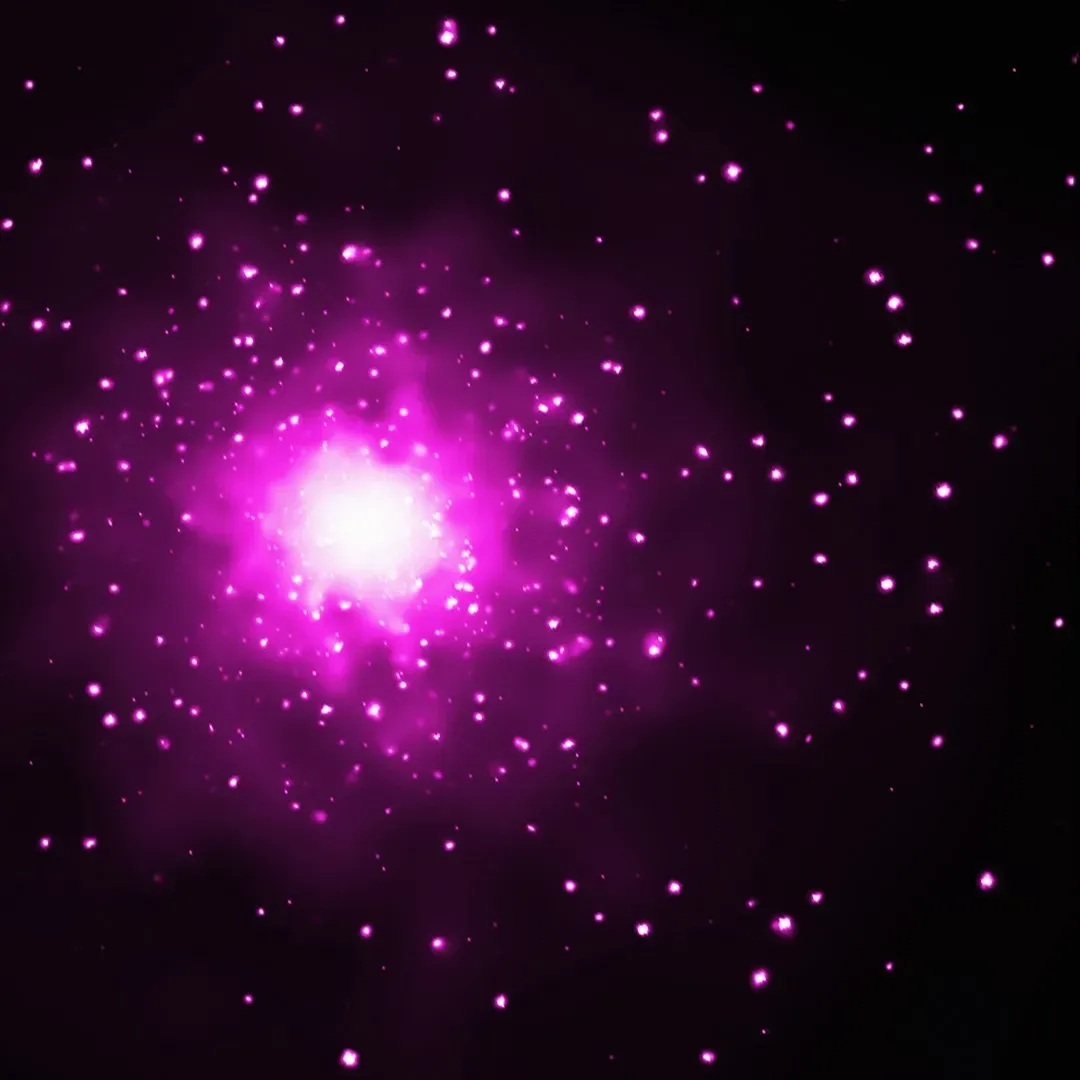
When you dig into dark energy, you quickly discover that it is less like a neat textbook chapter and more like a list of open questions. One widely discussed idea is that dark energy is simply a constant energy density built into empty space, sometimes linked to a concept from Einstein’s equations known as the cosmological constant. In that picture, every bit of vacuum has a tiny, fixed amount of energy, and as space grows, so does the total effect, steadily driving acceleration.
Another possibility is that dark energy changes over time, acting more like a dynamic field that evolves as the universe expands. This opens the door to all kinds of models, some of which try to connect dark energy to new physics you have not measured directly yet. The trouble is that right now, your observations are remarkably well described by the simplest version, which makes it hard to justify more exotic explanations without stronger evidence. You are in that tantalizing zone where your data scream that something profound is happening but whisper almost nothing about the underlying mechanism.
How These Invisible Forces Shape the Fate of the Universe
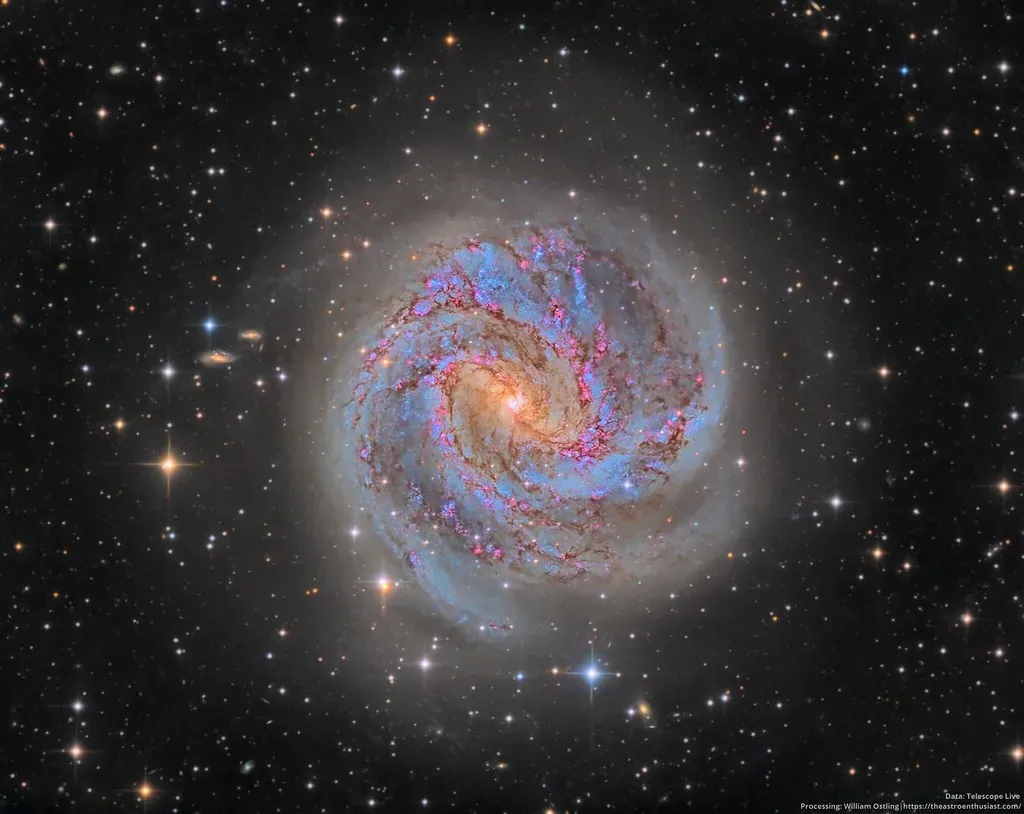
Once you accept dark matter and dark energy as central actors, the fate of the universe stops being a vague philosophical question and turns into a calculation dominated by their tug‑of‑war. Dark matter pulls, forming ever larger structures as gravity collects matter into galaxies and clusters. Dark energy pushes, driving space to expand more rapidly and gradually separating those structures on the grandest scales. You are living through an era when both influences matter, but dark energy is on track to dominate more and more as time goes on.
In the most widely supported scenarios, this leads to a future where galaxy clusters themselves drift out of one another’s observable reach, and distant galaxies fade beyond your cosmic horizon as space between you and them stretches faster than light can bridge the gap. Local structures like your own galaxy and its neighbors are held together by gravity and not torn apart, but the wider universe becomes increasingly isolated and dark from any one vantage point. It is a strangely lonely vision: a cosmos rich in hidden ingredients, yet leaving future observers in remote epochs with a much emptier‑looking sky.
Why Dark Matter and Dark Energy Matter to You
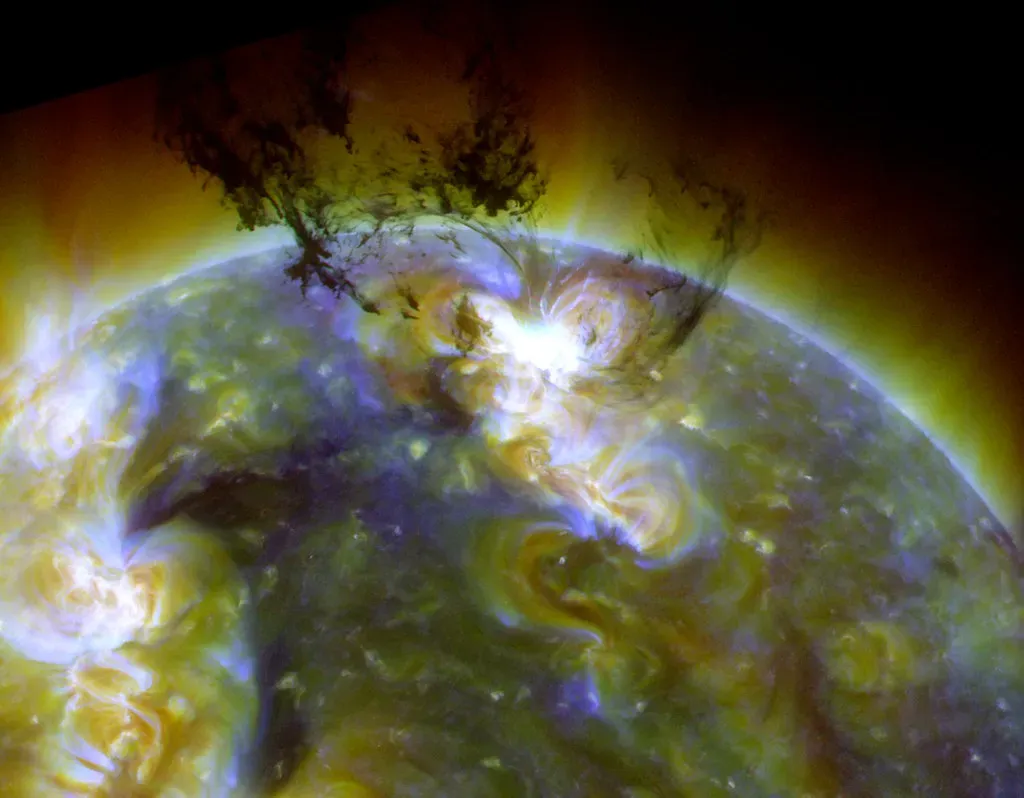
It is tempting to treat dark matter and dark energy as abstract curiosities, the kind of things only cosmologists have to lose sleep over. But if you care about questions like why galaxies exist, how the universe began, and what its long‑term story looks like, you are already entangled with these invisible components. Every time you see a deep‑field image full of galaxies, you are looking at a scene carefully sculpted by dark matter’s invisible gravity wells and dark energy’s quiet push on the fabric of space.
On a more personal level, there is something humbling and oddly comforting about realizing that your everyday experience sits on top of a reality you only partly understand. You are part of a species that has managed, from a small rock orbiting an average star, to infer the presence of vast, unseen forces shaping the entire cosmos. That is not just a scientific fact; it is a reminder of how far curiosity and careful measurement can take you, even when most of what you are studying refuses to show its face.
In the end, dark matter and dark energy are powerful invitations for you to keep asking better questions. They tell you that the universe is not yet a solved puzzle, no matter how polished your diagrams or how precise your instruments become. As you watch new telescopes rise, new surveys map the sky, and new theories fight for survival, you are witnessing a story still very much in progress. are also steering your imagination, pushing you to explore what lies beyond the thin slice of reality your eyes can see – and what could be more human than that?