
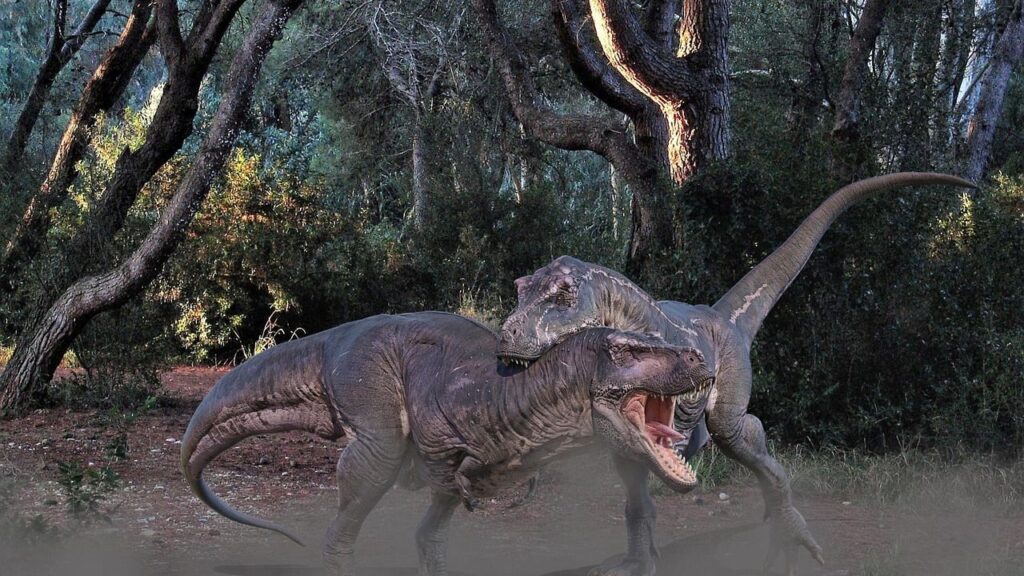
If you grew up imagining dinosaurs locked in dramatic combat, you might be surprised to learn that scientists have actually found hard evidence of some of those clashes. Not movie scenes, not wild guesses, but real bite marks, broken bones, and even dinosaurs literally locked together in death. When you start looking at the fossils this way, they stop being dusty bones and suddenly feel like snapshots of violent moments that really happened.
As you walk through these discoveries, you’re not just reading about toothy monsters; you’re following detectives who read scars on skeletons the way you might read a crime scene. You’ll see who probably hunted whom, where ambushes went wrong, and how some of the most famous dinosaurs were not invincible at all. By the end, you might find yourself picking sides in battles that ended more than sixty million years ago.
The Velociraptor and Protoceratops Locked in Combat
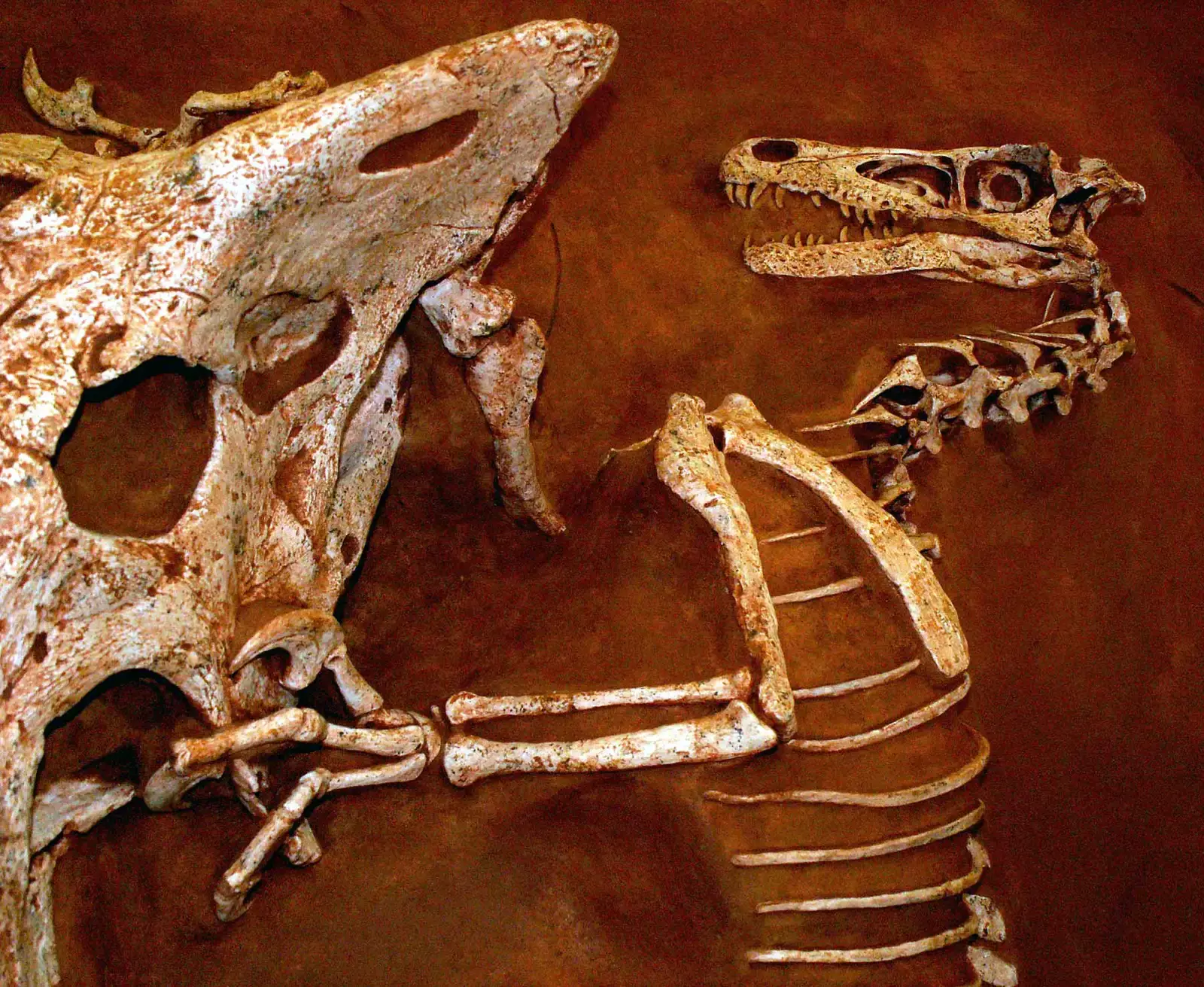
You actually have one of the clearest dinosaur fight scenes ever discovered in the form of a Velociraptor and a Protoceratops literally frozen in combat. In this fossil, you see the Velociraptor’s sickle-shaped killing claw buried into the Protoceratops’ neck area, while the beaked herbivore has its jaws clamped around the raptor’s arm. You’re not looking at a guess; you’re staring at two animals that clearly died mid-struggle, probably buried suddenly by a collapsing sand dune or a violent storm.
When you picture it in your mind, you can almost feel the chaos of those final seconds: sand flying, claws slashing, jaws grinding down in desperation. This fossil helps you understand that Velociraptor was not a giant movie monster but a smaller, agile predator willing to take serious risks to bring down tough prey. Protoceratops was no helpless victim either; it had a strong build and a powerful beak that could injure or even kill an attacker. In this case, you’re seeing a battle with no clear winner, just mutual destruction preserved for tens of millions of years.
Tyrannosaurus rex Biting Other T. rex
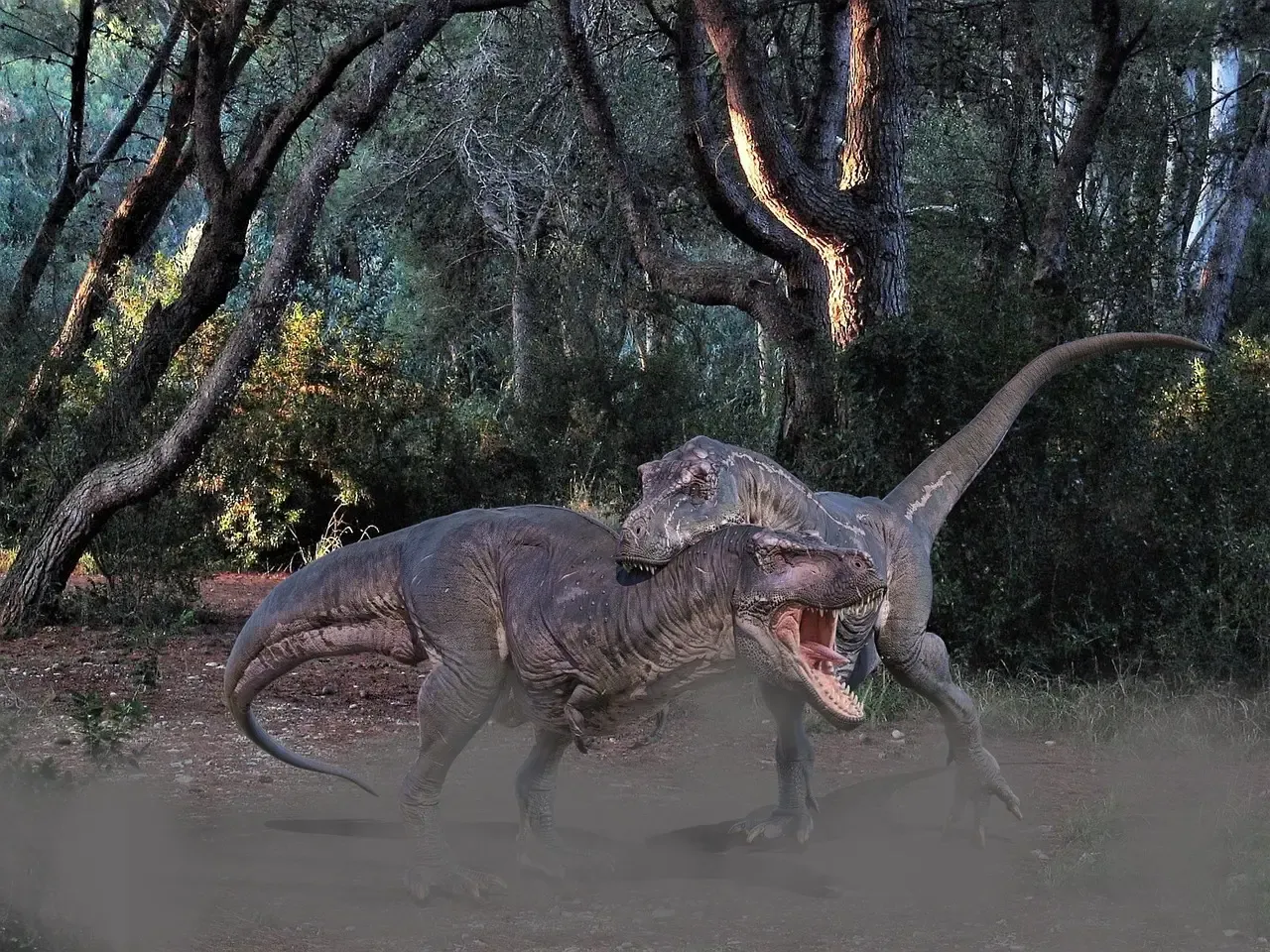
You might imagine Tyrannosaurus rex only terrorizing smaller dinosaurs, but when you look closely at certain T. rex skulls and bones, you find healed bite marks that match the teeth of another T. rex. That means you’re not just dealing with a predator of other species; you’re also seeing an animal that fought its own kind, and some of those victims actually survived long enough for their bones to start healing. You can read these bite marks like battle scars from territorial fights, dominance struggles, or clashes over food and mates.
When you stand in front of one of these skulls in a museum, you’re seeing an animal that lived through a brutal face-off with another giant predator as strong as itself. You can imagine two T. rex squaring off, roaring, lunging, and slamming into each other like living bulldozers with bone-crushing jaws. The surviving animal walks away bearing permanent reminders of that showdown etched into its skull and ribs. You’re not looking at a movie villain here; you’re looking at a real creature that lived a life full of violence, risk, and survival against enemies just as dangerous as it was.
Allosaurus vs. Stegosaurus: The Plates and the Thagomizer
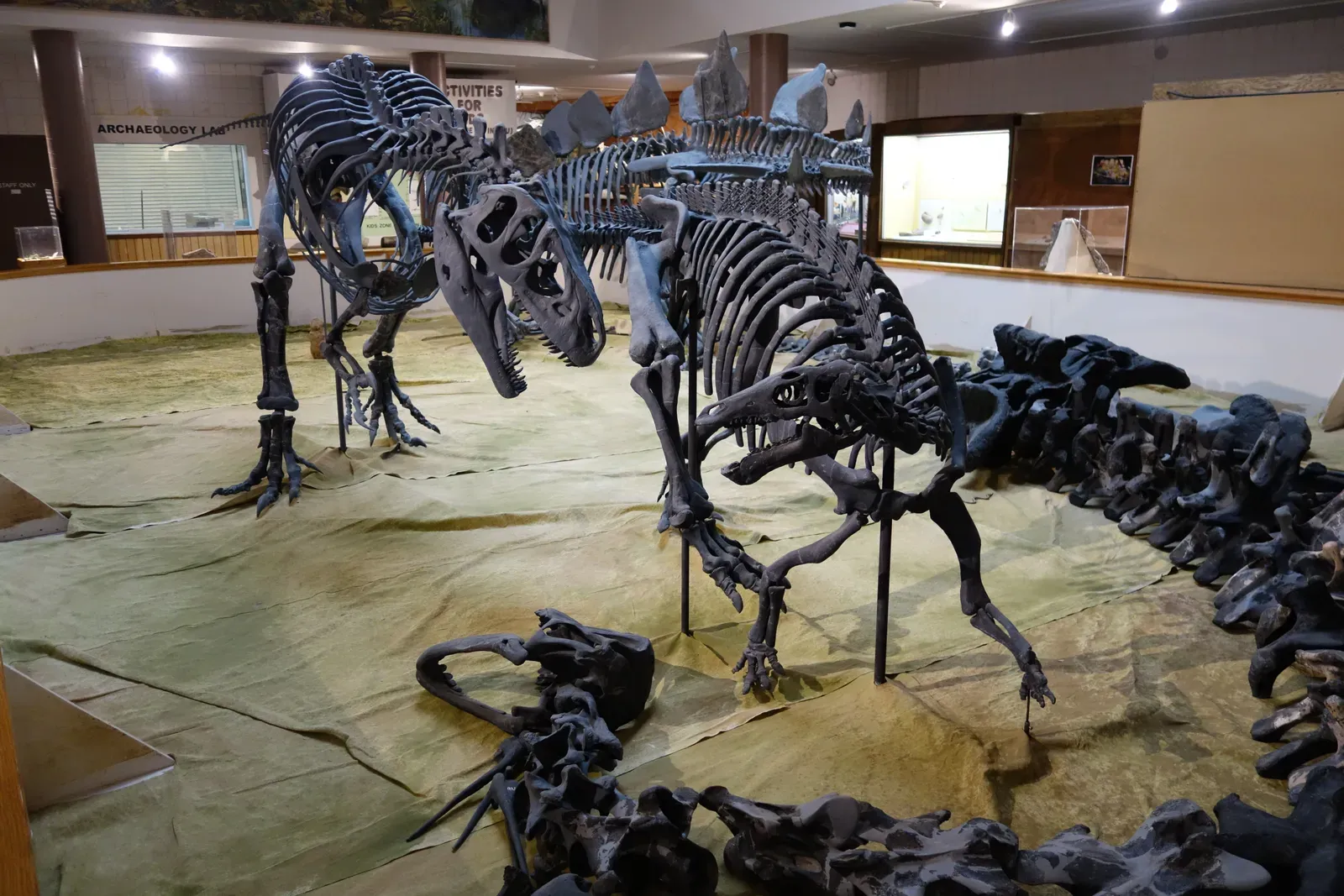
When you think of Stegosaurus, you might picture a gentle leaf-eater with big plates along its back, but scientists have found evidence that this dinosaur fought back ferociously against predators like Allosaurus. Certain Allosaurus bones show deep puncture wounds that match the shape and spacing of Stegosaurus tail spikes, often nicknamed the “thagomizer.” You’re seeing more than just random damage; you’re looking at injuries that strongly suggest a predator got too close to the wrong end of a heavily armed herbivore.
On the flip side, some Stegosaurus bones bear damage and bite marks that fit the jaws and teeth of large theropods such as Allosaurus. That tells you that the battle did not always go in favor of the plant-eater. You can picture a dramatic scene where an Allosaurus charges in, aiming for the neck or flanks, while Stegosaurus swings its spiked tail with the force of a sledgehammer. Sometimes the hunter walks away crippled or dead; other times the defender becomes the meal. Those scars on fossil bones are the only reason you can reconstruct this deadly back-and-forth.
Triceratops vs. Tyrannosaurus rex: Horns Against Jaws
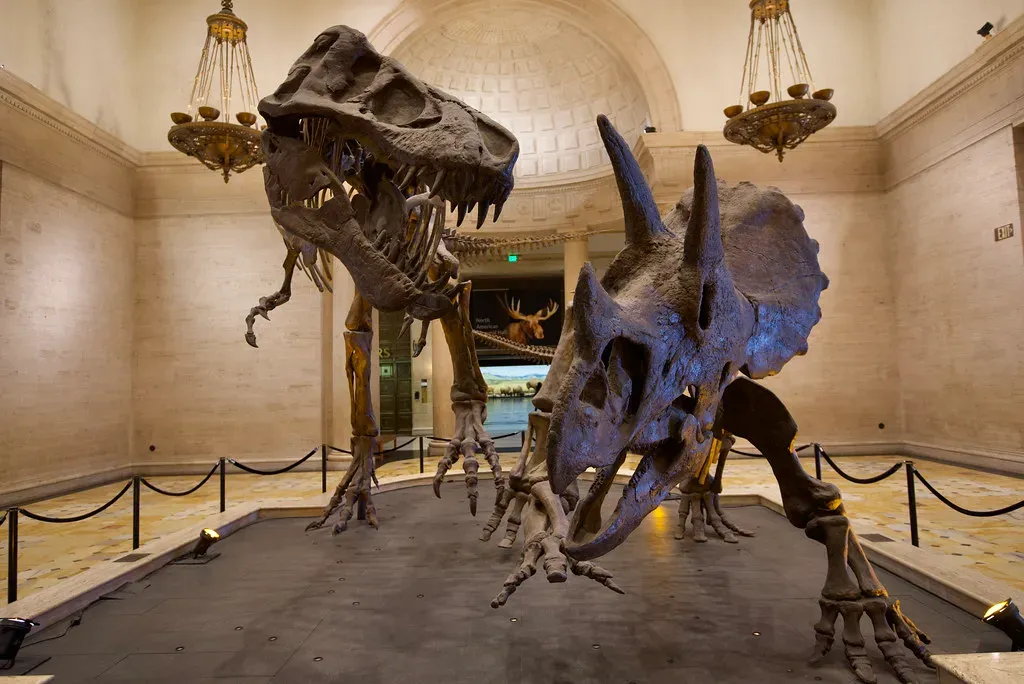
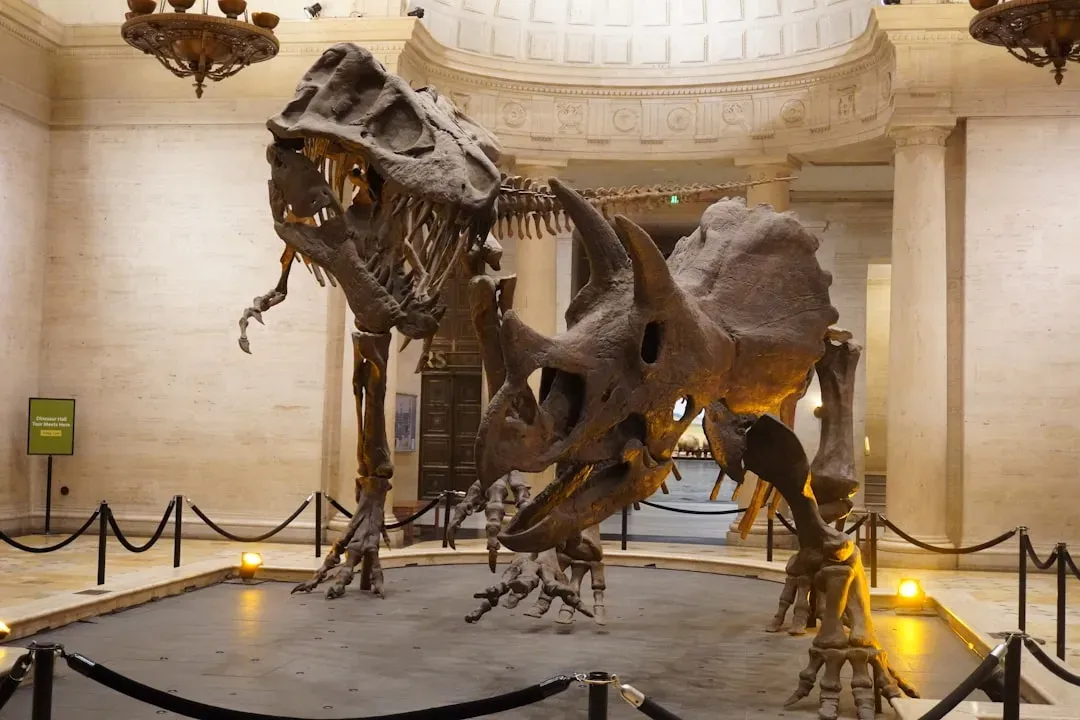
Few matchups feel as cinematic to you as Triceratops facing down Tyrannosaurus rex, and fossils suggest that these battles were not just fantasy. Triceratops skulls and frills often show bite marks that fit the shape and spacing of T. rex teeth, sometimes with signs of healing and sometimes without. That tells you T. rex was at least feeding on Triceratops, and in some cases likely attacking it while it was still alive.
At the same time, T. rex fossils occasionally show injuries that might have been caused by Triceratops horns, such as puncture-like wounds and strange damage to ribs or bones near the chest. You can easily imagine a heavy, horned herbivore lowering its head and charging, driving those horns into a predator that got too close. For you, this turns T. rex from an unstoppable monster into a risk-taking hunter that sometimes paid the price. Each horn scar or tooth mark gives you a hint of who landed a blow in a fight you’ll never fully see, but can still partly reconstruct.
Mosasaur-on-Mosasaur Warfare in Ancient Seas
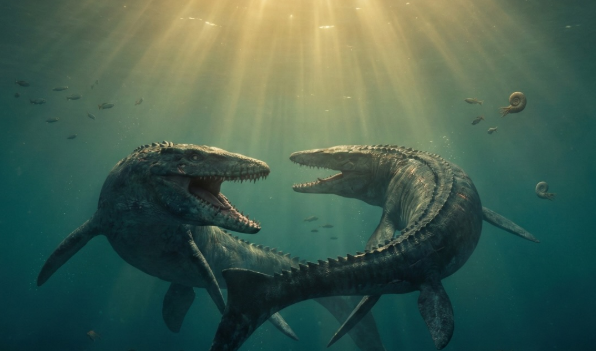
Not all epic dinosaur-era battles happened on land; some of the most brutal ones you learn about took place in the oceans with giant marine reptiles called mosasaurs. Their skulls and vertebrae sometimes carry bite marks that line up with the jaws of other mosasaurs, suggesting that these animals attacked each other as well as their prey. You’re looking at evidence of serious combat, not just gentle nips, because some healed wounds show that victims survived massive damage.
When you picture this, you’re imagining huge, crocodile-like reptiles rocketing through the water, clamping down on rivals in three-dimensional battles where danger came from above, below, and behind. Some fossils even show juvenile mosasaurs with bite marks that may come from cannibalism, hinting that your ancient seas were anything but safe for the young. To you, those oceans start to feel like war zones where top predators constantly tested each other’s strength. The scars left on their skeletons are your only way to witness those underwater clashes.
Raptors vs. Large Herbivores: Pack Attacks and Risky Hunts
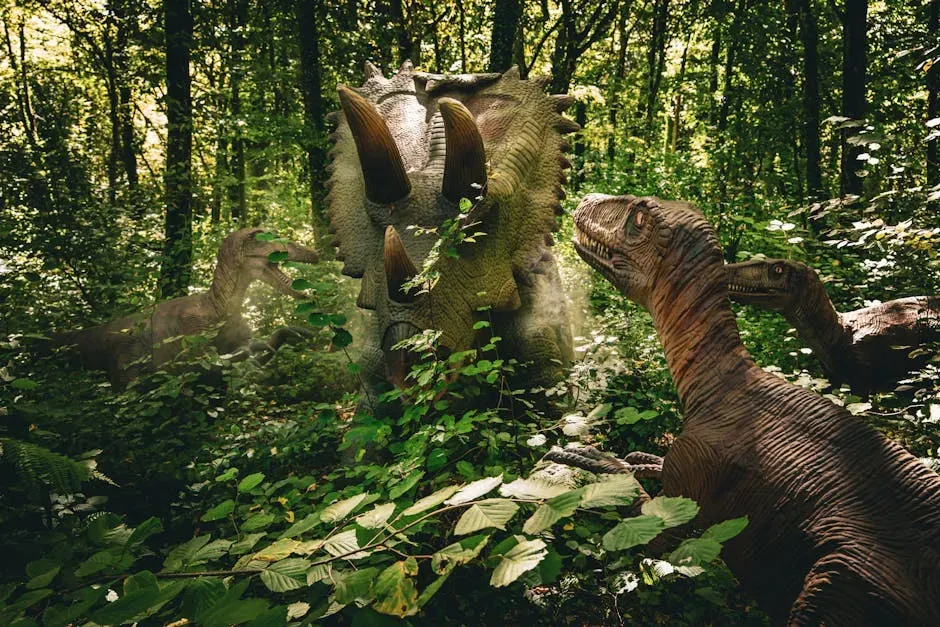
When you look at fossils from medium-sized raptors like Deinonychus, you find their teeth and sometimes their claws associated with the bones of much larger plant-eaters. In some sites, you see multiple raptors connected with the same large prey animal, suggesting that these hunters may have attacked in groups, though you have to stay cautious because scavenging could also explain the pattern. Still, the repeated pairing of raptor remains and big herbivores pushes you to seriously consider coordinated or at least opportunistic group behavior.
For you, that means a hunt against something larger than the hunter, more like wolves testing a bison than a lion swatting a gazelle. Raptor teeth marks on bone can show you where the animals may have tried to latch on or tear off flesh, often around softer parts of the body. Sometimes, broken or damaged raptor bones hint that these hunts were risky and did not always go according to plan. You end up seeing raptors not as flawless assassins, but as predators that gambled with their own lives whenever they went after big, dangerous prey.
Ankylosaurus vs. Large Theropods: The Club Tail’s Crushing Power
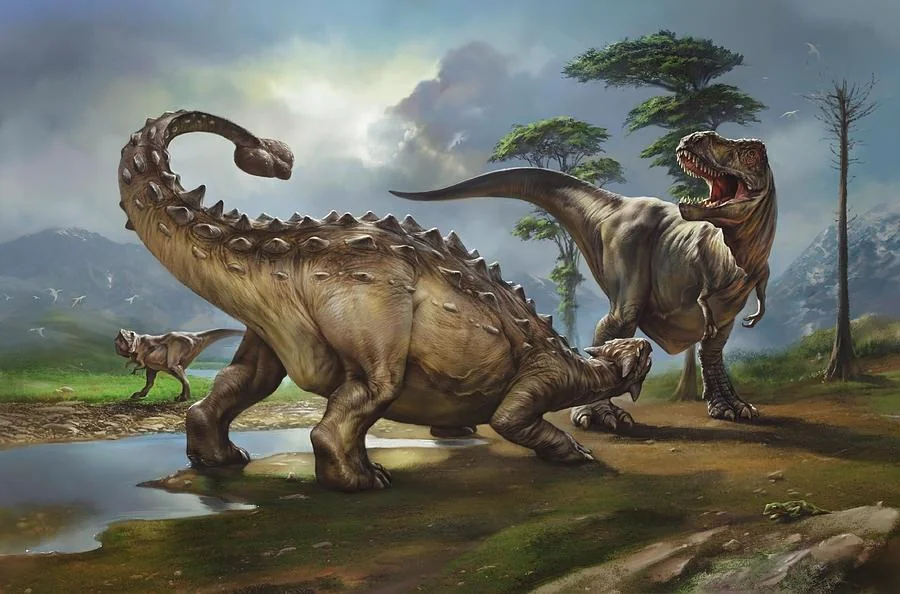
When you study Ankylosaurus and its close relatives, you notice something immediately: these animals were basically living tanks, heavily armored with bony plates and equipped with a massive tail club. Fossils of large predatory dinosaurs sometimes show odd fractures and injuries, especially in the legs or lower body, that could match the kind of blunt force a tail club would deliver. You’re not dealing with neat puncture wounds here but with crushing trauma that might have shattered bones in a single blow.
For you, it’s easy to picture a large theropod circling an ankylosaur, trying to find a weak spot past the armor, only to get caught by a sudden sideways swing of that heavy tail. A well-placed hit could break legs, ribs, or hips, turning a predator into a crippled scavenger overnight. The ankylosaur, on the other hand, relied on patience, armor, and that single devastating weapon. Those potential club-caused injuries remind you that not all plant-eaters were passive victims; some turned their bodies into weapons that predators had to respect or suffer the consequences.
Spinosaurus and Other Large Predators Competing in River Systems
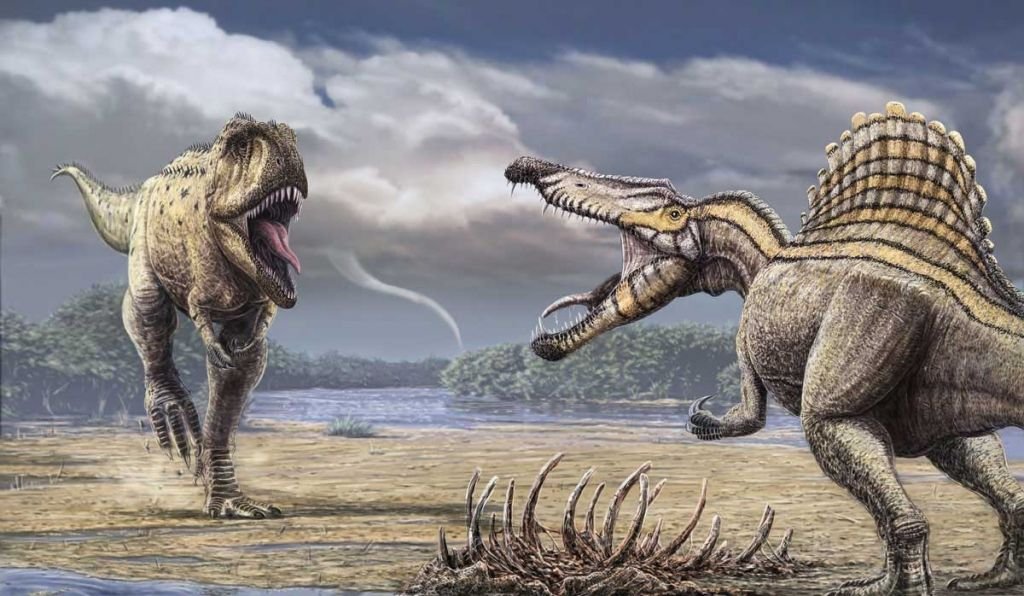
When you look at the environments where Spinosaurus lived, you see broad river systems and wetlands that likely hosted more than one big predator at a time. Fossils from related animals and other large theropods in the same regions hint that you might be looking at overlapping territories where different hunters competed for fish, smaller dinosaurs, and carrion. Although direct skeletons locked in combat are rare here, overlapping habitats and similar diets strongly suggest that these predators clashed at the water’s edge.
For you, the story plays out like rival crocodiles meeting in the same bend of a river, or big cats converging on the same carcass. Teeth from different species are sometimes found near the same prey bones, hinting that more than one predator fed on or fought over a kill. You can imagine tense standoffs, bluff charges, and occasional explosive attacks as each giant tested the other’s resolve. Even without a single iconic “battle fossil,” the ecological puzzle you see points toward repeated conflicts in those crowded waterways.
Dromaeosaurs vs. Sauropods: Small Hunters, Giant Targets
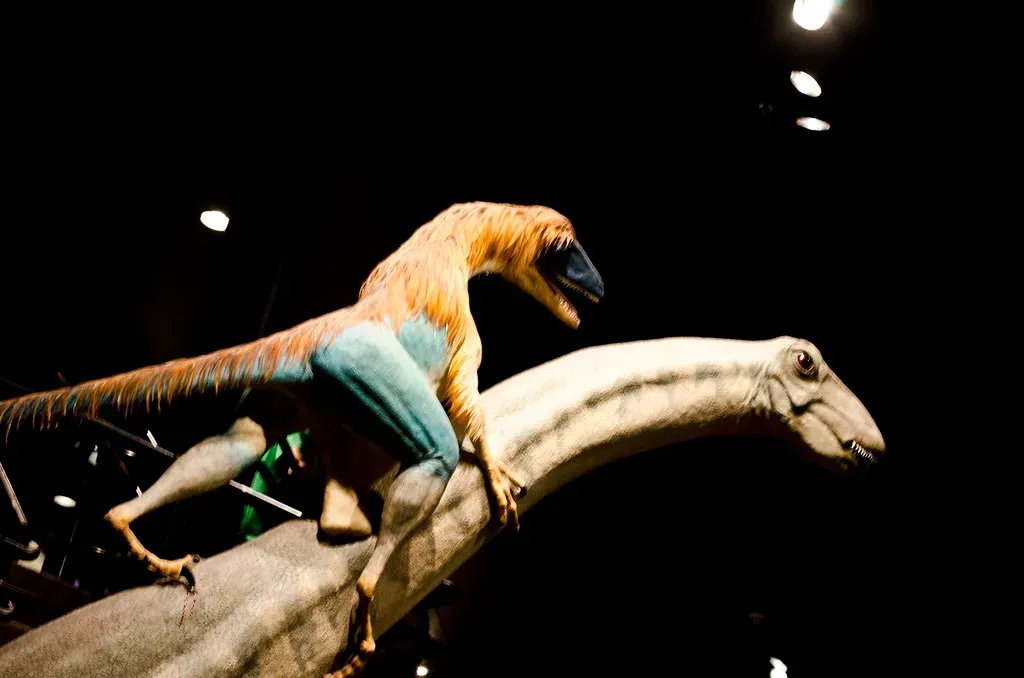
When you think about the long-necked giants called sauropods, it’s tempting to imagine them as untouchable because of their size. But dromaeosaurs, the group that includes Velociraptor and its relatives, occasionally show up in fossil sites alongside sauropod bones with bite marks that resemble their teeth. You’re not seeing proof of a clean, organized hunt the way a documentary might frame it, but you are seeing strong hints that these smaller predators sometimes targeted the young, the weak, or possibly scavenged the fallen bodies of giants.
For you, this turns into a picture of opportunistic attacks on vulnerable individuals, not constant clashes with fully grown titans. A group of agile dromaeosaurs could harass a juvenile sauropod, darting in to bite soft tissue and then retreating before a tail swipe or a trampling foot could reach them. Sometimes those efforts may have led to a kill; other times, the hunters may have ended up as the ones injured or dead. The mix of tooth marks and scattered bones lets you see a harsh reality where no dinosaur, no matter how large, was entirely safe from the hungry eyes of smaller predators.
Herbivore-on-Herbivore Battles: Ceratopsians vs. Ceratopsians
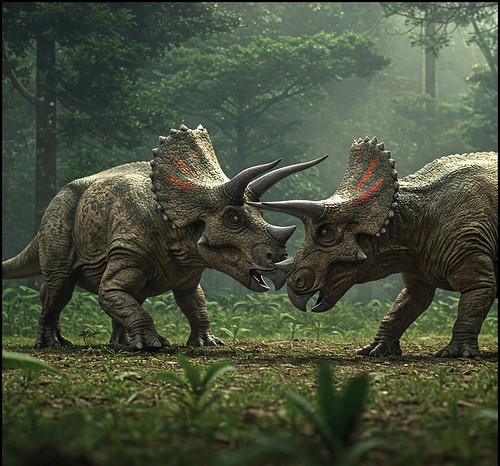
You might assume herbivores just tried to avoid trouble, but when you look at skulls of horned dinosaurs like Triceratops and its relatives, you often see punctures, gouges, and scratches that match their own horn shapes. Some of these wounds show signs of healing, which tells you these were not fatal hits but injuries from repeated clashes, probably over territory, mates, or dominance. You’re basically watching the dinosaur equivalent of two rival bulls locking horns, except with frills, spikes, and several tons of muscle behind each charge.
For you, these battles reframe horned dinosaurs as active fighters, not just prey items standing around waiting for a predator to arrive. You can imagine dust flying as two ceratopsians slam into each other, horns scraping across frills and sometimes punching straight through. The healed wounds show you that many of them survived multiple encounters, carrying visible records of their social struggles on their faces. Those marks remind you that some of the most intense dinosaur fights did not always involve carnivores at all, but plant-eaters battling their own kind.
Conclusion: Reading Ancient Battles in Broken Bones
When you step back from all these cases, you realize you’re not just looking at separate curiosities, but at a whole hidden history of conflict written into fossil bone. Bite marks, fractures, healed wounds, and locked skeletons let you piece together battles that would otherwise be forever lost. You’re seeing that dinosaurs were not just static skeletons in glass cases, but living animals that fought, limped away from injuries, and sometimes died locked in desperate struggles.
As you imagine these battles, it’s tempting to turn them into simple stories with clear winners and losers, but the fossils keep you honest by anchoring everything in physical evidence. You learn to be comfortable with what you can know and what you can only guess, building your picture of the past from every scar and shattered bone. In a way, you become a time-traveling witness, reading violence and survival from fragments of stone. So the next time you see a dinosaur skeleton, will you just admire its size, or will you look closer for the scars that tell you how hard it once had to fight to stay alive?