

There’s a special kind of confusion that comes from dating someone who seems to really like you… but never quite steps all the way in. One minute they’re affectionate and available, the next they’re distant, busy, or suddenly “not ready for anything serious.” It can leave you wondering if you’re doing something wrong, or if they’re just not that into you. Often, the deeper truth is more complicated and more human: they may be afraid of commitment, even if they desperately want connection.
Commitment fears are not always obvious. They don’t only show up as the classic stereotype of the emotionally unavailable player. Sometimes they hide behind politeness, overthinking, or even intense romance that burns hot and dies fast. Understanding the patterns can help you stop blaming yourself and start seeing behavior for what it is. Let’s break down five key signs of a fear of commitment, what they tend to look like in real life, and how you can recognize them without driving yourself crazy.
1. They Love the Chase, But Lose Interest When Things Get Real

Have you ever noticed how some people are incredibly enthusiastic at the beginning, then slowly fade out once you start to relax into the connection? A classic sign of commitment fear is someone who is magnetic during the chase but uncomfortable once things become stable and emotionally intimate. Early on, they may text constantly, make big plans, and talk about how special the connection feels, only to retreat when you start to expect consistency from them.
Psychologically, this often comes from feeling safer with fantasy than reality. The early stages of dating are like a highlight reel: low responsibility, high dopamine, very little risk of being truly seen. Once the relationship moves toward routine and deeper vulnerability, fears about being trapped, rejected, or not good enough can kick in. You’ll recognize this pattern if you feel like each step forward – leaving dating apps, meeting friends, talking about the future – is followed by them pulling back, stalling, or suddenly saying they feel pressured even when you have barely asked for anything.
2. They Avoid Defining the Relationship, No Matter How Long It Has Been

One of the clearest signs of commitment fear is chronic resistance to labels, even when the behavior already looks like a relationship. You might be spending weekends together, sleeping over, meeting family members “by accident,” and still they insist on phrases like “seeing where it goes” or “keeping it chill.” When every attempt to clarify what you are turns into them getting defensive, changing the subject, or asking why labels matter so much, that’s usually not a small thing.
Underneath this avoidance is often anxiety about what a label represents. For some, “boyfriend,” “girlfriend,” or “partner” equals loss of freedom, the possibility of failure, or repeating painful patterns they saw growing up. Instead of saying that out loud, they keep everything technically undefined so they can always step back if they feel overwhelmed. You’ll recognize this if you find yourself in long, vague “situationships” where your emotional investment keeps growing but the other person insists that nothing has really changed and prefers to stay in a gray area indefinitely.
3. Their History Is Full of Short, Intense Relationships or Near-Misses

Patterns over time often reveal what single moments can’t. People who fear commitment frequently have a relationship history that looks like a series of fast starts and abrupt endings. They may talk about several past “almost relationships,” long talking stages that never became official, or a string of exes that lasted a few months before “something just felt off.” Sometimes they even speak nostalgically about a lot of different “the ones that got away,” without ever mentioning a stable, long-term partnership.
This is not about judging someone for having a past; it’s about noticing the rhythm. When a person repeatedly exits around the time a relationship would naturally deepen – meeting families, planning a move, talking about the future – that pattern likely reflects their emotional comfort zone. You might hear them say they “just didn’t feel ready” again and again, regardless of how kind or compatible their partners were. If every story ends right before true commitment, the common thread probably is not the partners; it’s the fear behind that final step.
4. They Keep You at Arm’s Length Emotionally, Even When Physically Close

Another subtle sign of commitment fear is emotional distance wrapped in closeness. On the surface, they may be affectionate, sexual, and physically present. You spend nights together, share jokes, and maybe even meet friends. But when the conversation shifts to feelings, fears, or anything deeply personal, they suddenly become vague, detached, or overly logical. It can feel like hugging someone who is always leaning slightly away.
This protective distance is often an old survival strategy. If they open up fully, the stakes rise: now you can truly hurt them, reject them, or see the parts of themselves they’re not proud of. So they share just enough to keep the connection going, but not enough to feel exposed. You might notice that you know their schedule, favorite foods, and hobbies, but very little about their childhood, past heartbreaks, or what they truly want in the next five years. The relationship may feel oddly one-sided, with you revealing more while they stay on safer, surface-level ground.
5. They Send Mixed Signals and Blame Timing, Not Their Fear
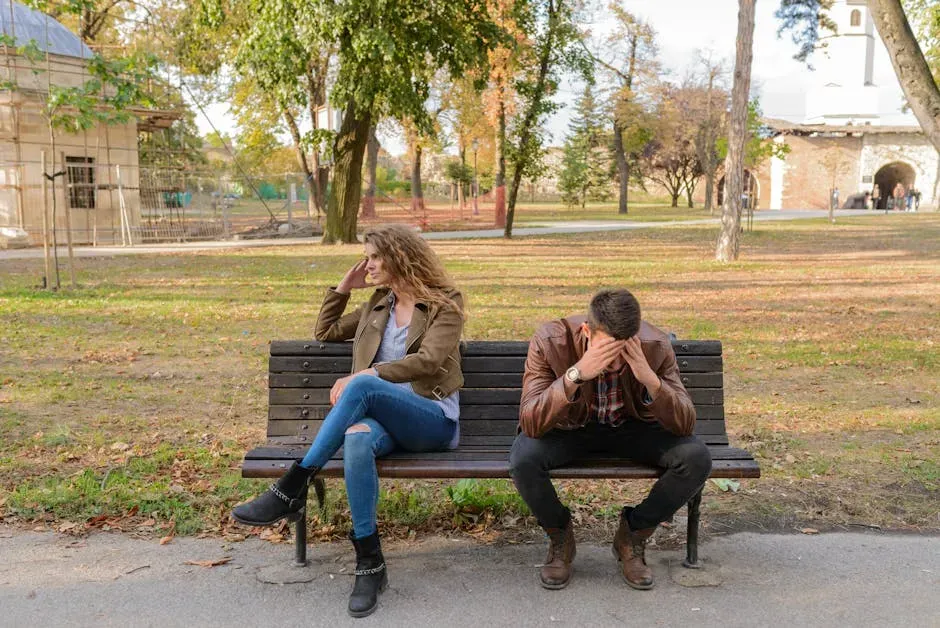
Mixed signals are practically the mascot of commitment fears. One day they talk about future trips together, the next they insist they’re too busy for anything serious. They might act jealous if you mention other people, but also say they’re not in a place to commit. Often, they frame the issue as bad timing, work stress, or not having their life together yet. While those can be real, when the story never changes over time, it may hide a deeper unwillingness to face their own fear of closeness.
You’ll recognize this if you keep hearing phrases that leave the door open but never actually let you walk through it. They might say they care a lot about you, that you’re special, that “in another life” it would be perfect, all while doing very little to actually build something stable right now. This can be incredibly confusing because the emotional warmth feels genuine. The key is to watch their actions over weeks and months: do they move even a little closer to actual commitment, or do they repeatedly circle back to the same excuses while keeping you emotionally hooked?
Conclusion: Recognizing Fear Is Not the Same as Fixing It

Seeing these signs in someone you care about can be equal parts validating and painful. On the one hand, it helps to know you’re not imagining things – that there are real, understandable patterns at play. On the other hand, it is tempting to believe that if you are just patient enough, loving enough, or low-pressure enough, you can erase someone’s fear of commitment by yourself. In my experience and from watching a lot of people struggle with this, that belief usually leads to exhaustion, resentment, and a slow dimming of your own needs.
Fear of commitment is ultimately their work to do, not yours to carry. You can be compassionate about their past, honest about your feelings, and clear about what you want, but you cannot want their healing more than they do. The most empowering move is to recognize the patterns early, take your own needs seriously, and be willing to walk away if their fear keeps you stuck in emotional limbo. After all, real commitment is not just about choosing someone once; it is about choosing each other, consistently, with both eyes open. When you look at your own love life, where do you see courage – and where might fear still be quietly calling the shots?