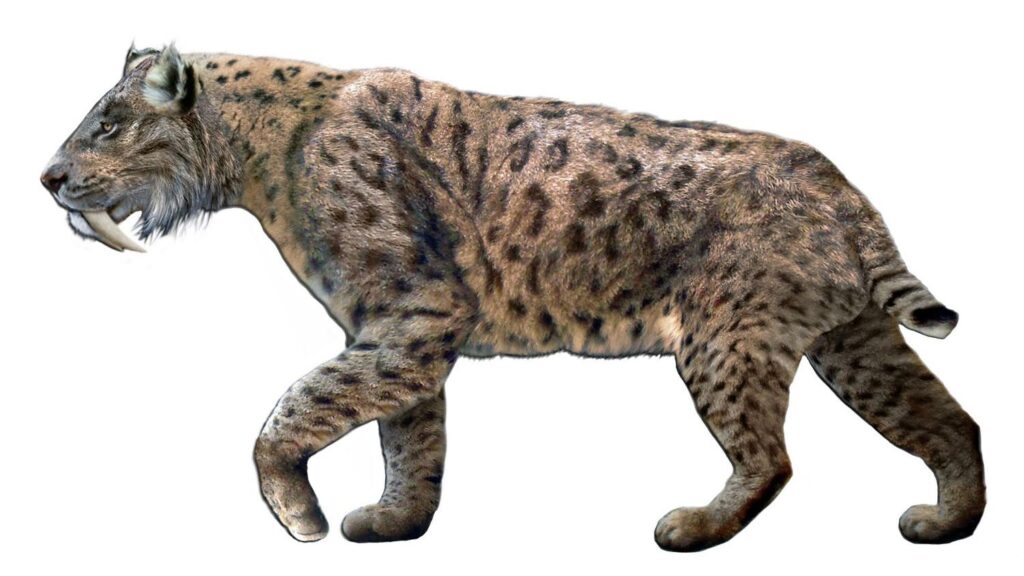
Imagine walking across a frozen plain and seeing a cat-sized predator staring back at you, its upper fangs so long they nearly reach its lower jaw. That chilling image is why the so‑called saber-toothed tiger still grips our imagination thousands of years after it vanished from the Earth. Even though we only know it through fossils, illustrations, and museum skeletons, this Ice Age hunter feels strangely familiar, like a ghost from a time when humans were far closer to the food chain than we are today.
What makes this animal so fascinating is that the more scientists learn about it, the less it fits the simple monster stereotype. It was powerful, yes, but also surprisingly specialized and vulnerable. When I first read about how delicate its famous fangs actually were, it completely flipped my mental picture of this predator. Let’s dig into eight compelling facts that show the saber-toothed “tiger” was more complex, more strategic, and in some ways more fragile than its terrifying looks suggest.
1. It Wasn’t Actually a Tiger at All
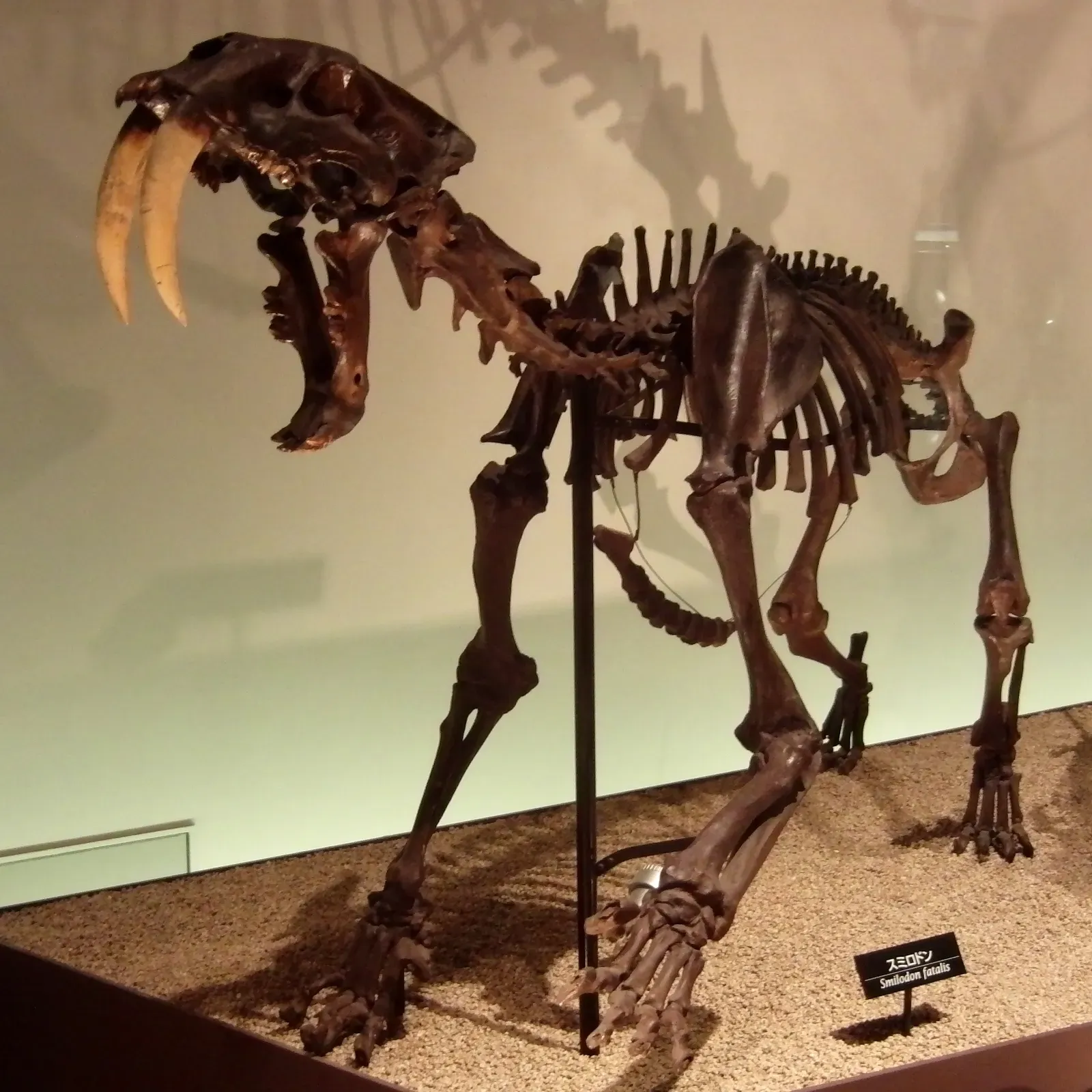
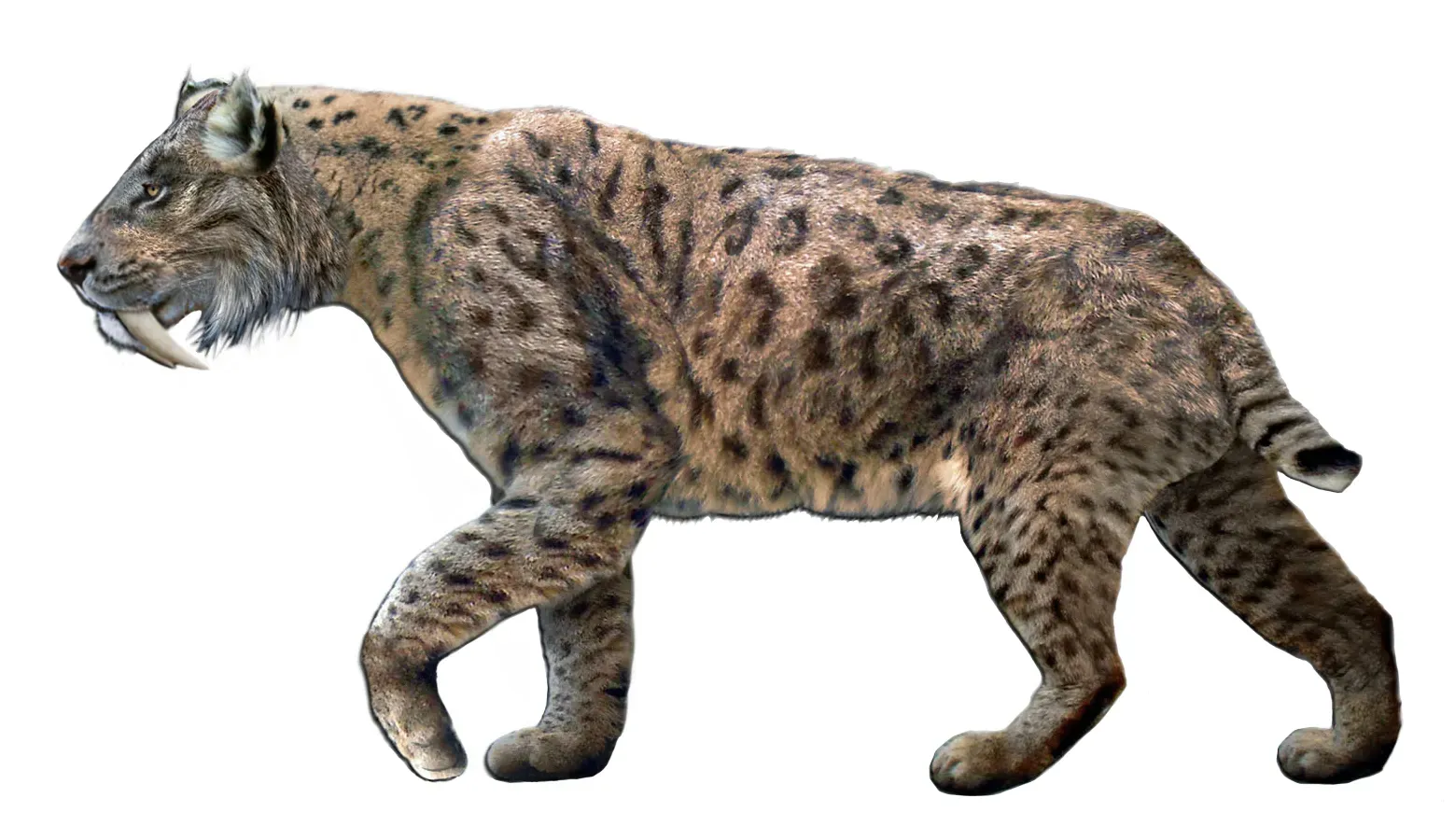
One of the biggest surprises is that the saber-toothed “tiger” was not a tiger in the modern sense and not even especially close to today’s big cats like lions, tigers, or leopards. The most famous species, Smilodon fatalis, belonged to a separate branch of the cat family tree that evolved along its own path, with different body proportions, skull shape, and hunting style. Calling it a tiger is like calling a wolf a “saber-toothed fox” just because it looks vaguely similar from far away.
Scientists group saber-toothed cats into their own subfamily, and many of them, including Smilodon, lived only in the Americas, not across Asia like modern tigers. If you stood next to one, you’d notice it lacked the long, low profile of a tiger and instead had a blockier head and a more robust build. The “tiger” label stuck mostly because it sounds dramatic and is easy to remember, but it can be a bit misleading if you’re trying to picture what the animal was actually like. In reality, it was its own thing: a saber-toothed cat, not a striped jungle stalker.
2. Its Fangs Were Long, Deadly… and Surprisingly Fragile
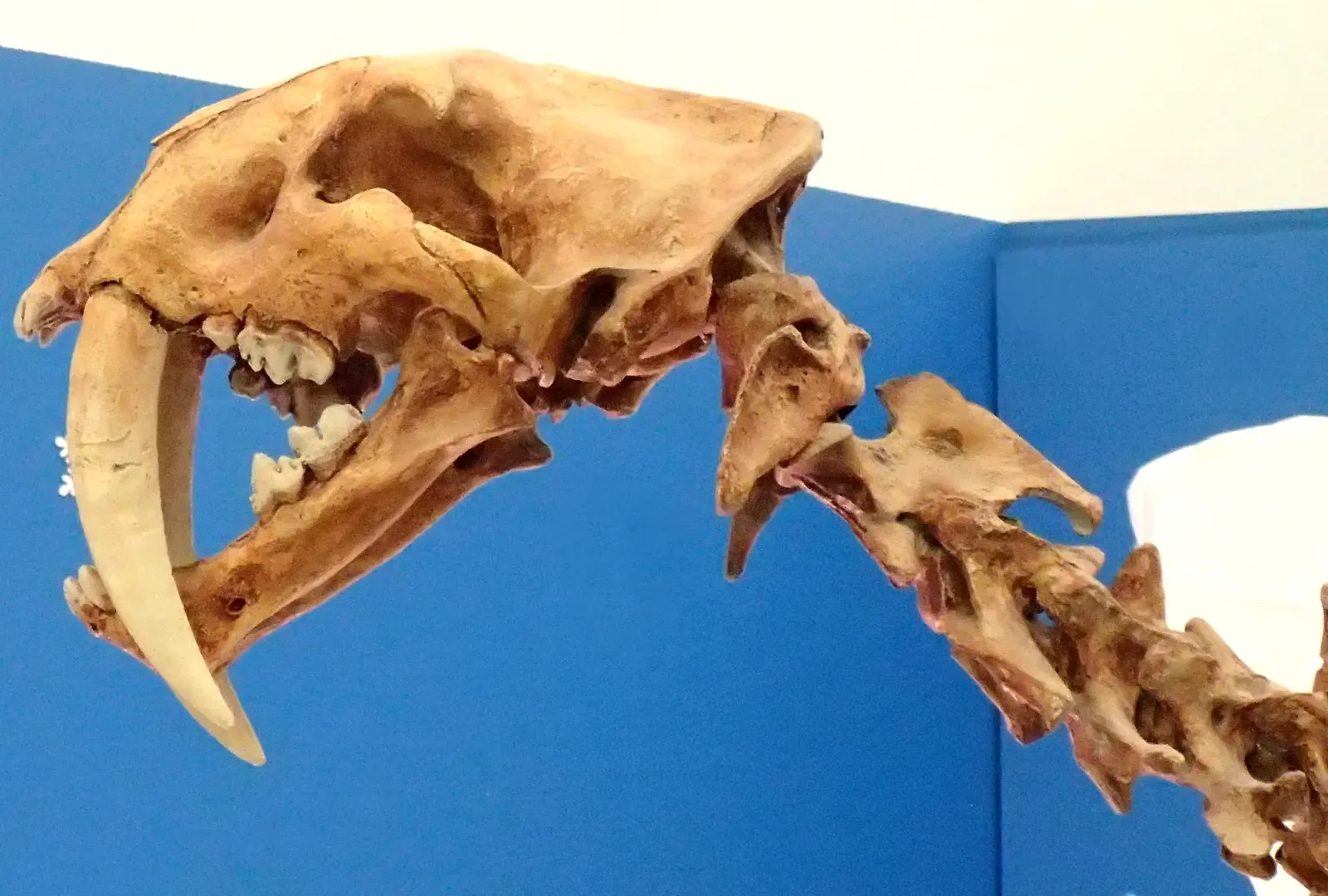
Those saber-like fangs are what everyone remembers, but they were not unbreakable daggers. In some species of Smilodon, the upper canines could be more than the length of an adult human’s fingers, but they were relatively thin when viewed from the side. The teeth were strong in the up‑and‑down direction but more vulnerable to sideways pressure, meaning a bad angle on a struggling prey animal could have chipped or snapped them. That’s not the kind of flaw predator movie posters tend to advertise.
This fragility tells us a lot about how the animal probably hunted. Instead of using its teeth to hang on like a lion clamping down on a zebra’s muzzle, it likely needed a quick, precise strike to soft areas such as the throat or belly, followed by a rapid withdrawal. In that sense, it behaved less like a bulldozer and more like a scalpel. To me, this makes Smilodon less of a brute-force killer and more of a specialist surgeon of the Ice Age, terrifying not because it was reckless, but because it was so precise.
3. Built Like a Feline Powerlifter, Not a Marathon Runner
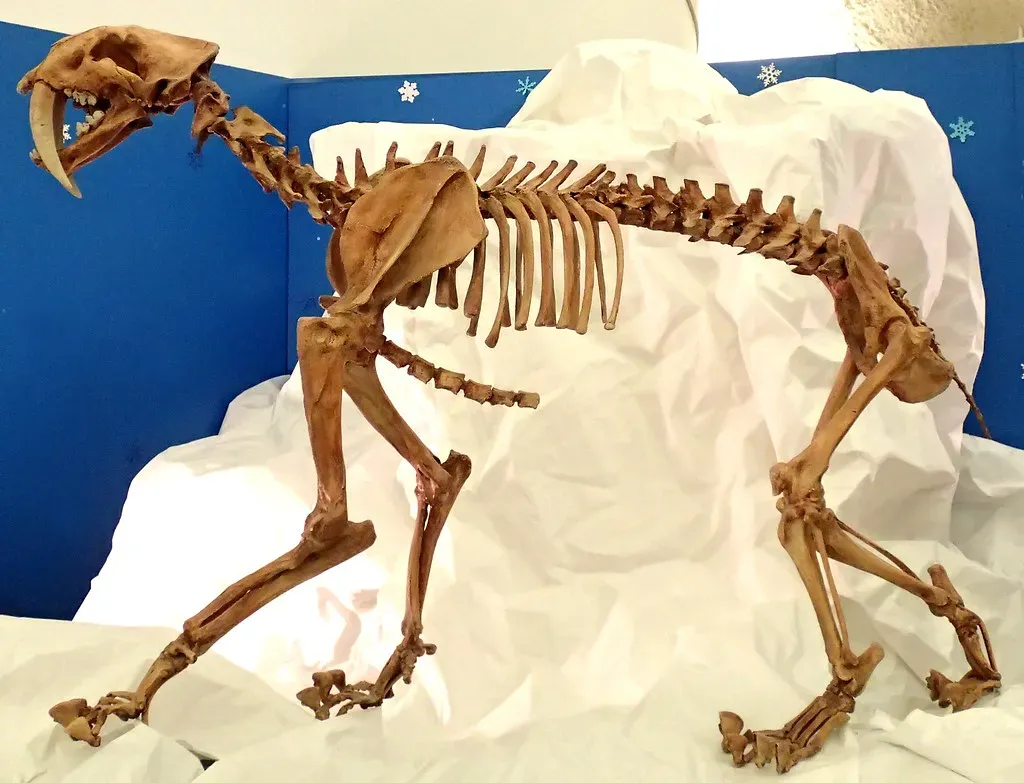
The saber-toothed cat’s body looked more like that of a muscular weightlifter than a lean sprinter. Fossil skeletons show thick, sturdy forelimbs, a deep chest, and relatively short legs, suggesting it was built for intense bursts of strength and grappling rather than long chases. If a modern cheetah is the track star of the cat world, Smilodon was the heavyweight wrestler, designed to bring prey down hard and fast at close range.
Its short tail is another clue that it relied less on high-speed pursuit and agile cornering, traits we often associate with animals like cheetahs or leopards. Instead, it likely ambushed prey at close distances, using its powerful front limbs to wrestle large animals to the ground before delivering a targeted killing bite. Personally, I find that image far more intimidating than a high-speed chase: a silent, low‑slung shape exploding out from cover, relying on raw power and technique rather than just speed.
4. It Hunted Megafauna That Dwarfs Most Modern Prey
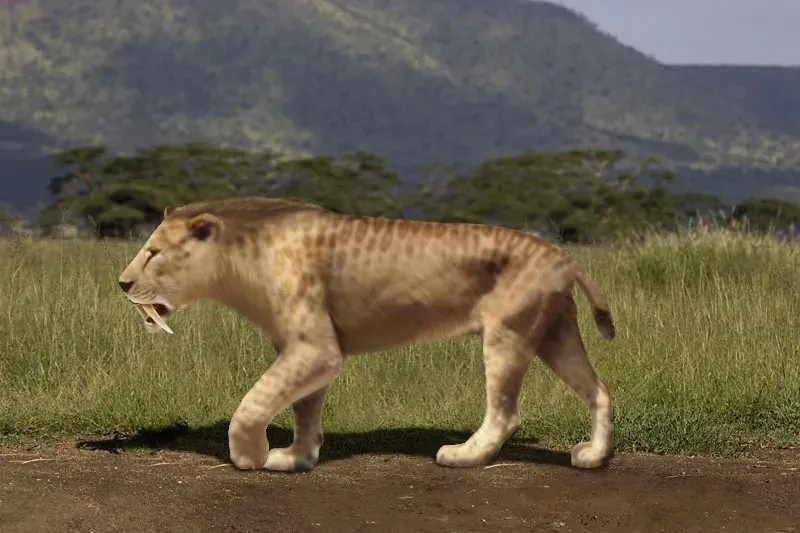
We tend to picture big cats taking down deer or antelope, but the saber-toothed cat lived in a world of megafauna, where many herbivores were enormous by modern standards. In North and South America, it shared its environment with creatures like giant ground sloths, young mammoths and mastodons, and massive bison. Hunting in that crowd meant its prey could be as big or bigger than a modern car, especially when you consider the size of some of the Ice Age herbivores.
This helps explain why Smilodon needed such extreme anatomy: hugely powerful shoulders, thick neck muscles, and those long canines. When your potential dinner weighs several times more than you do, you cannot afford sloppy technique or half measures. Every hunt was a high-stakes gamble that could feed a group for days or leave serious injuries. That kind of danger makes today’s wildlife documentaries look almost gentle by comparison, and it drives home how brutal and unforgiving Ice Age ecosystems really were.
5. Evidence Suggests It May Have Lived and Hunted in Groups
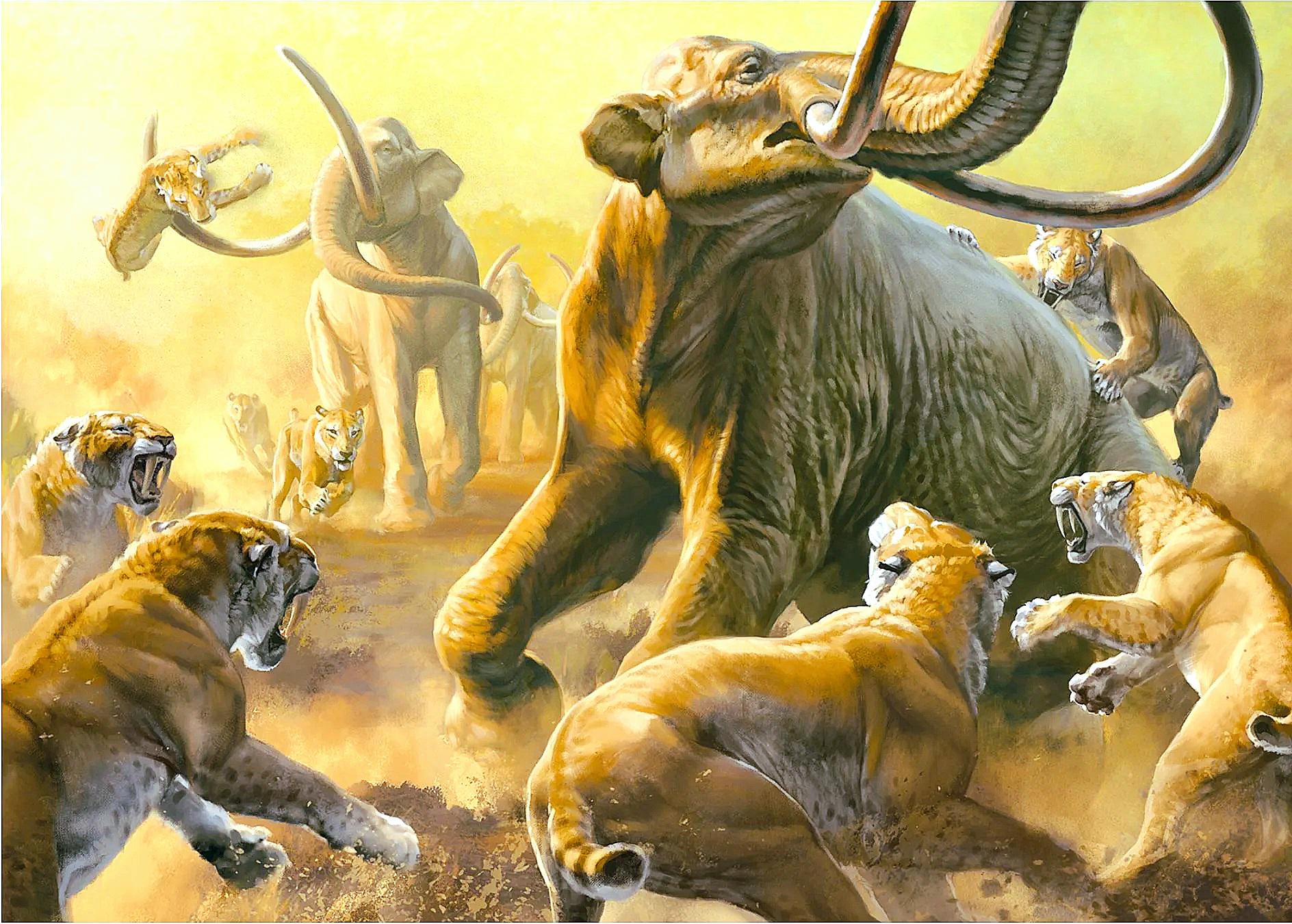
For a long time, people imagined saber-toothed cats as solitary assassins, lurking alone in the shadows. But fossil sites like the La Brea Tar Pits in California have hinted at a different story. There, scientists have found many Smilodon fossils, including individuals with healed injuries that would have made solo hunting almost impossible. The fact that some badly injured animals survived long enough for bones to heal suggests they may have been supported by others, possibly through group living or shared food.
The idea of social behavior is still debated, but if Smilodon did live in groups, that would make it even more formidable. A coordinated team of muscular, saber‑toothed predators working together on huge prey is the kind of thing that makes human survival in the Ice Age seem even more impressive. When I imagine early humans camping near a fire while a group of these cats moves silently in the dark beyond the light, it makes that ancient world feel both terrifying and incredibly alive.
6. Humans and Saber-Toothed Cats Shared the Same Landscapes
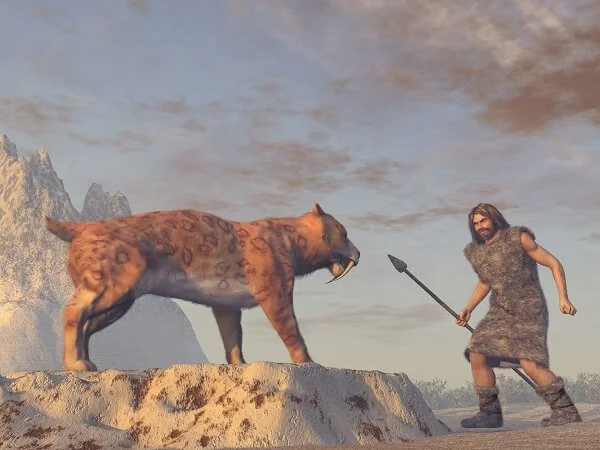
One detail that often surprises people is that early humans and saber-toothed cats were neighbors for a time. In parts of the Americas, our ancestors walked the same valleys and plains where Smilodon stalked mammoths, bison, and other large prey. That does not mean humans were the main target, but it does mean the two species almost certainly saw, smelled, and heard each other, just as people today share space with lions or bears in some regions.
This coexistence raises fascinating questions about how humans adapted their behavior in response to such predators. Did they avoid certain hunting grounds at particular times? Did they use large fires or group sizes as a kind of living shield against attacks? I think this overlap is easy to forget when we see fossils behind glass cases, but for early humans, the saber-toothed cat was not a museum exhibit. It was part of the daily mental map of dangers, right up there with deep cold, hunger, and massive herbivores that could trample you if you misjudged their mood.
7. Climate Change and Ecosystem Upheaval Helped Drive It to Extinction
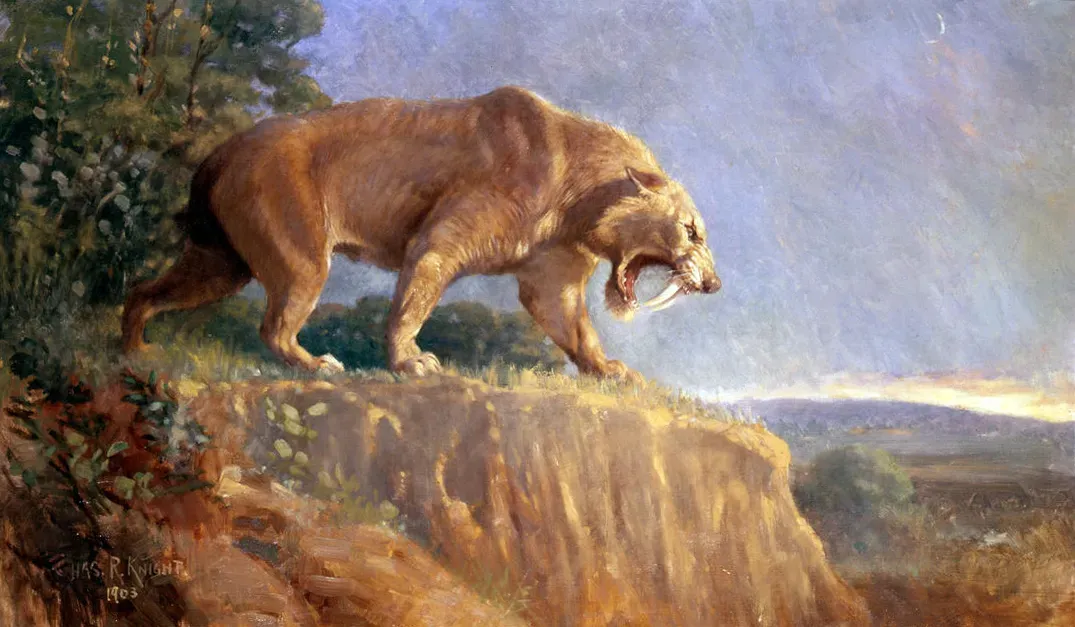
The disappearance of saber-toothed cats is wrapped up in the broader wave of extinctions that hit many large Ice Age animals. As the last Ice Age ended, climates warmed, glaciers retreated, and the ecosystems that supported huge herbivores began to shift. Grasslands and open habitats changed, and many of the large prey species either declined sharply or vanished entirely. For a specialist predator like Smilodon, which seems to have been tuned to hunting big-bodied animals, that kind of ecological shake‑up was disastrous.
Humans likely played a role as well, both by hunting some of the same prey and by altering landscapes through fire and movement. When you combine rapid climate change, shrinking prey populations, and the arrival or spread of an intelligent, tool‑using competitor, the odds start to stack strongly against a large, specialized carnivore. To me, this story feels uncomfortably familiar today: when environments shift quickly, the creatures most perfectly adapted to a narrow niche can be the first to go, no matter how fierce they look on the outside.
8. Its Legacy Lives On in Our Imagination and in Modern Science
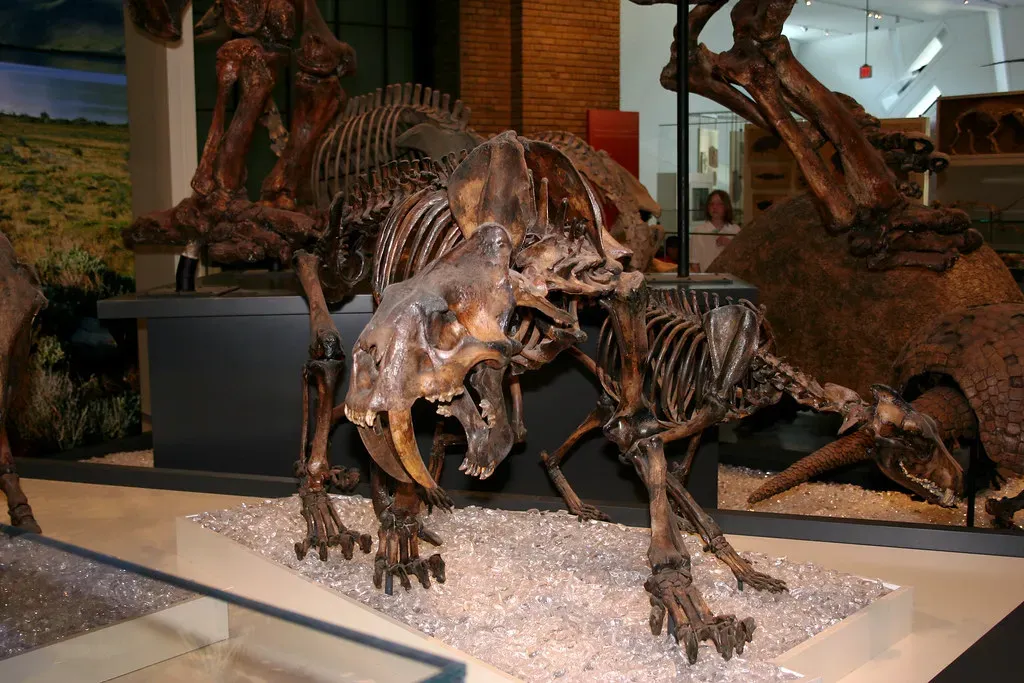
Even though saber-toothed cats disappeared thousands of years ago, they are still everywhere in our culture: in video games, animated movies, museum exhibits, and endless pieces of fan art. There is something about those exaggerated fangs and muscular bodies that hits the same nerve as dragons and monsters, except this creature was absolutely real. Kids often latch onto it the way they latch onto dinosaurs, and honestly, I get it; when I first stood under a Smilodon skeleton in a museum, it felt like meeting a legend in person.
On the scientific side, these animals are more than just scary mascots of the Ice Age. They are a case study in how evolution can push a body plan to extremes, and how those extremes can be both a superpower and a weakness. Researchers still use saber-toothed cats to explore questions about biomechanics, predator–prey dynamics, and extinction patterns under rapid environmental change. In that sense, Smilodon has a strange second life: even in death, it is still teaching us how nature works and, perhaps, warning us about what happens when we push ecosystems too hard and too fast.
Conclusion: A Fearsome Hunter, But Also a Fragile Specialist
When you pull all these facts together, the saber-toothed “tiger” stops looking like an invincible monster and starts to resemble a high‑risk, high‑reward specialist that bet everything on a very particular way of living. It was powerful but not invulnerable, terrifying but also tightly bound to its prey and environment. In my view, that makes it even more fascinating than the simple fearsome predator image we grew up with, because it reminds us that every extreme in nature carries a cost.
To me, the real lesson of the saber-toothed cat is that strength without flexibility can be a dead end over long stretches of time. It ruled its world for a while, but when that world changed, its extraordinary tools became liabilities rather than assets. As we face our own era of rapid climate and ecosystem change, this extinct hunter feels less like a distant curiosity and more like a mirror held up to our assumptions about power and security. In a shifting world, would you rather be the perfectly specialized Smilodon, or the adaptable underdog that survives when the rules of the game change overnight?