
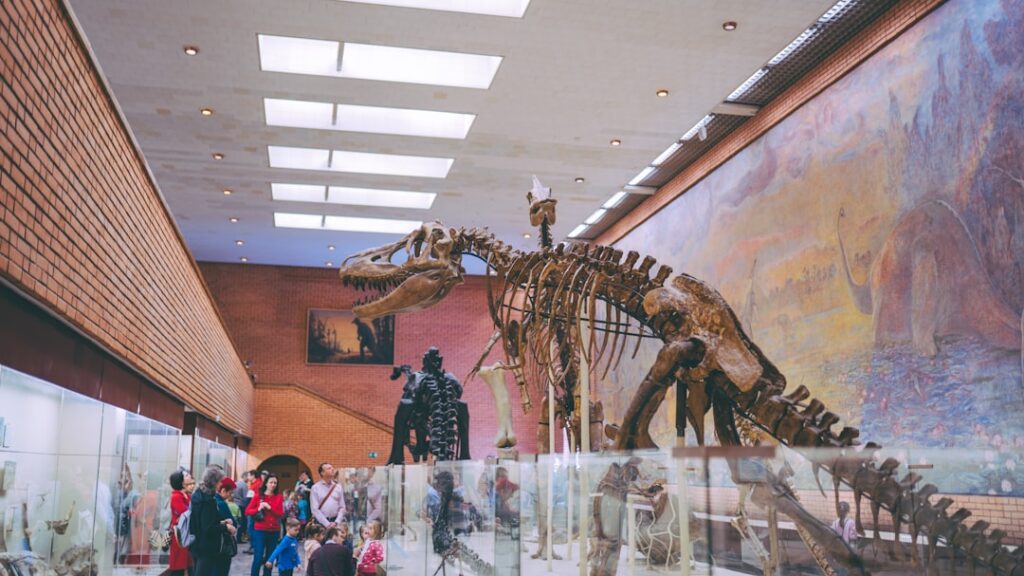
There’s a strange moment that happens the first time you stand under a real dinosaur skeleton. Your brain knows you’re inside a climate‑controlled museum, probably clutching a coffee, but your body reacts like you’ve just walked into the Late Jurassic. Your neck cranes back, your heartbeat kicks up a notch, and for a split second you feel very, very small.
Dinosaur museums are where that time‑travel illusion becomes real. The best ones do more than line up a few big skeletons; they tell stories about vanished ecosystems, mass extinctions, ancient oceans, and the weird evolutionary gamble that eventually led to us. Below are twelve museums where you do not just look at fossils behind glass – you practically step into prehistory itself.
American Museum of Natural History, New York City, USA
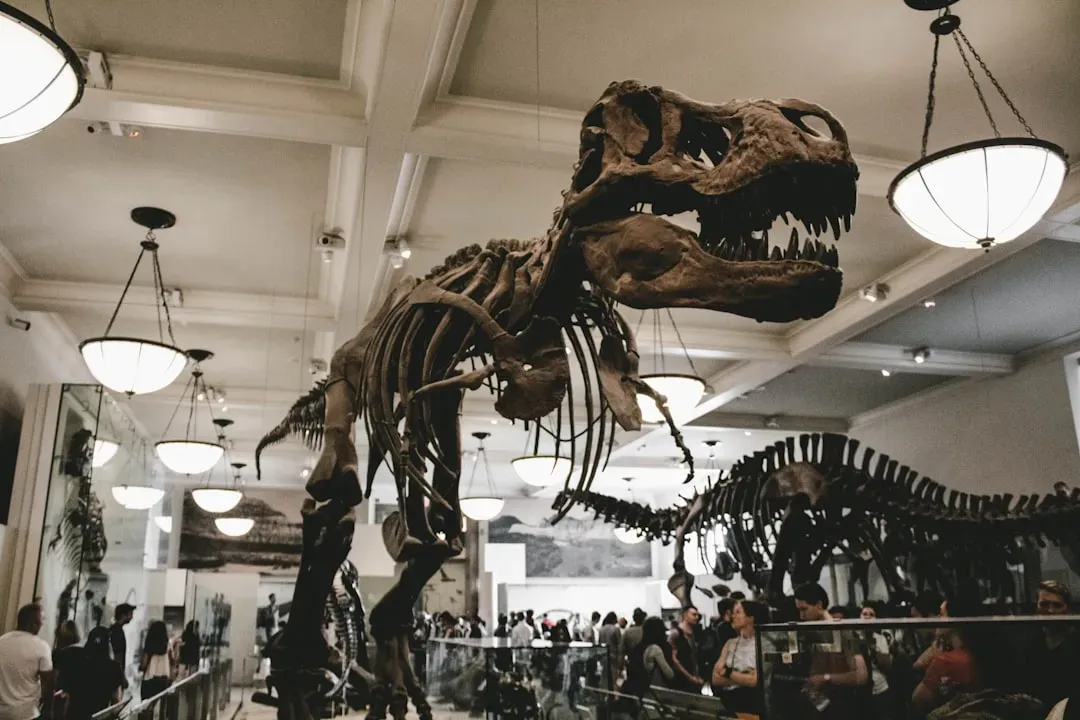
Walk into the fossil halls of the American Museum of Natural History and it feels like you’ve stumbled into a cathedral built for dinosaurs. Towering sauropods, fierce theropods, and horned giants stretch across multiple halls, laid out along an evolutionary tree that lets you literally walk through dinosaur history. Instead of random “greatest hits,” the exhibits are organized to show how different dinosaur groups are related, which quietly upgrades your understanding while you’re busy gawking at a Tyrannosaurus skull. ([amnh.org](https://www.amnh.org/dinosaurs/the-dinosaurs-on-display?utm_source=openai))
What makes this place unforgettable is the sense of scientific depth humming just under the surface. Nearly every display is backed by decades of research done by the museum’s own paleontologists, from early expeditions in Mongolia to modern analyses using CT scans and computer models. You start to notice details: the angle of a claw, the curve of a beak, the hint of feathers on a cast. It stops feeling like a monster gallery and starts feeling like an alien wildlife documentary that you happen to be walking through in person.
The Field Museum, Chicago, USA
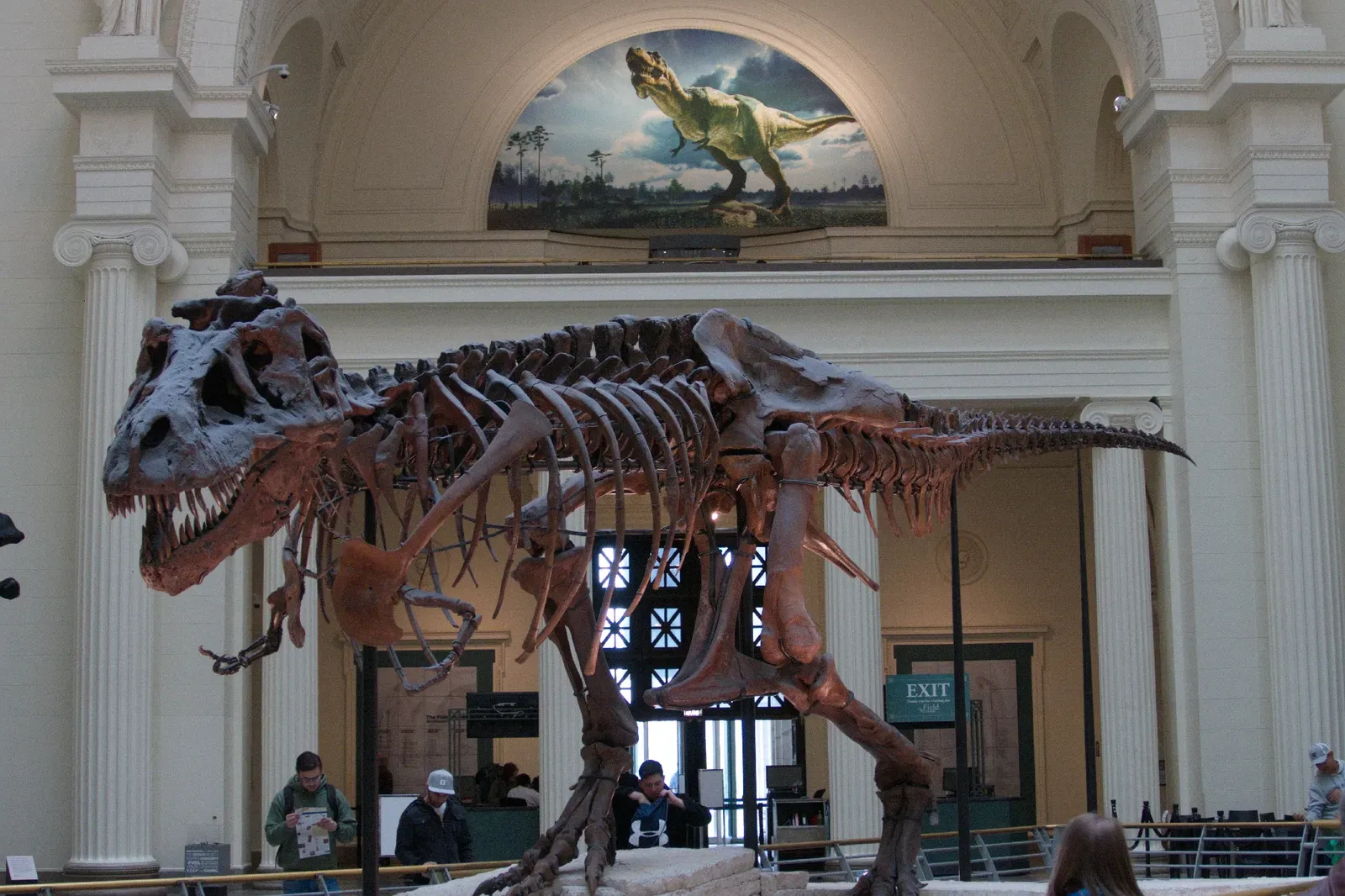
If dinosaurs had celebrities, the Field Museum would be running one of Hollywood’s biggest stars: SUE the Tyrannosaurus rex. This fossil is one of the most complete and best‑preserved T. rex specimens on the planet, and seeing it in person hits different from any photo online. You can stand close enough to study the healed injuries in the bones and imagine the life of a predator that survived brutal fights, only to end up immortalized in a museum thousands of miles and millions of years away from where it died. ([en.wikipedia.org](https://en.wikipedia.org/wiki/Sue_%28dinosaur%29?utm_source=openai))
The surrounding Evolving Planet exhibit pulls you far beyond one famous dinosaur, though. You move from Earth’s earliest life through mass extinctions, ancient seas, lush Carboniferous forests, and finally into dinosaur country, where huge skeletons loom in sweeping, cinematic scenes. The showstopper titanosaurs, with their absurdly long necks, share space with smaller, stranger creatures that force you to admit the past was weirder than any science‑fiction movie. I still remember feeling almost annoyed that humans only get a tiny slice at the very end of the timeline – it’s a humbling reminder that we’re late arrivals to a very old party.
Royal Tyrrell Museum of Palaeontology, Drumheller, Canada
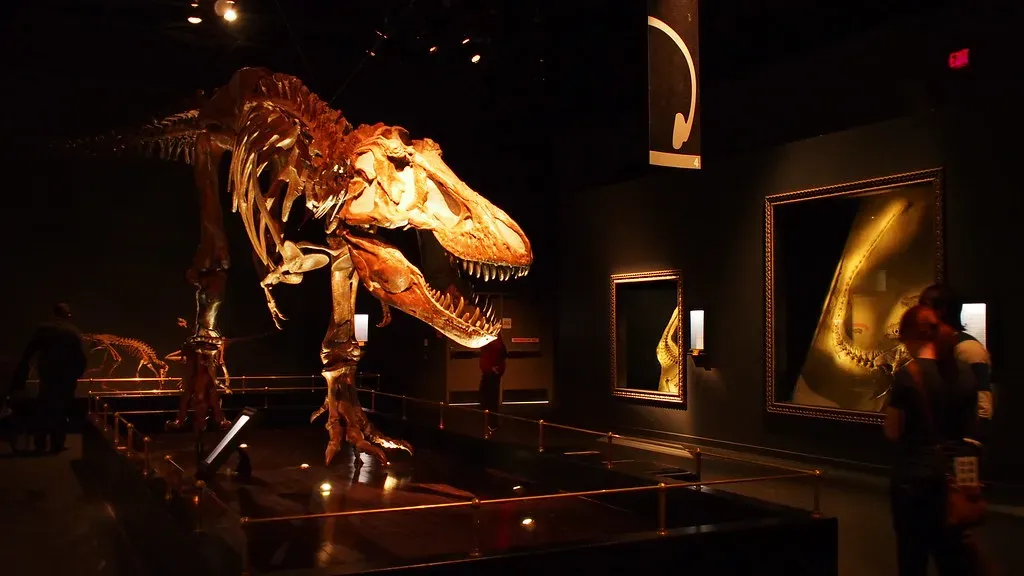
The Royal Tyrrell Museum sits in Alberta’s badlands, and that setting alone makes it feel like you’re stepping directly onto a dig site. This region holds some of the richest dinosaur fossil deposits in the world, and the museum’s Dinosaur Hall is essentially a love letter to that fact. Skeletons are not just posed; they’re arranged into dynamic scenes that make it clear these animals once moved, hunted, nested, and died in places that looked a lot like the landscape just outside the museum’s windows. ([tyrrellmuseum.com](https://www.tyrrellmuseum.com/whats_on/exhibits/dinosaur_hall?utm_source=openai))
One of the coolest things here is how openly the museum embraces active science. Fossils range from massive, picture‑perfect mounts to scrappy, partial remains that show how messy real fieldwork can be. You might see a beautifully preserved horned dinosaur near a case of fragmentary bones that still taught researchers something new about growth or behavior. It drives home that paleontology is not just about displaying trophies; it’s about squeezing every bit of information out of rock, no matter how unspectacular it looks at first glance.
Dinosaur National Monument, Utah/Colorado, USA (Quarry Exhibit Hall)
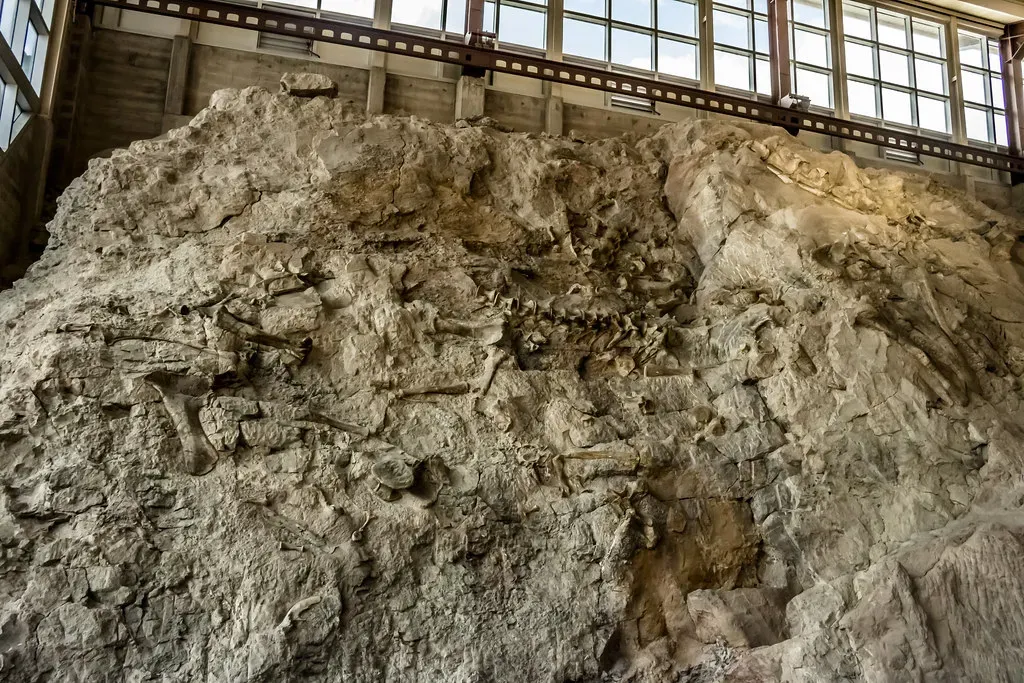
Most dinosaur museums bring fossils to you. Dinosaur National Monument flips that idea and brings you to the fossils instead. Inside the Quarry Exhibit Hall, one wall of the building is literally a cliff face studded with around one and a half thousand dinosaur bones, still partially embedded in the rock where they were buried about 150 million years ago. You can stand on a mezzanine and trace skulls, vertebrae, and limbs with your eyes like a massive, three‑dimensional puzzle. ([nps.gov](https://www.nps.gov/dino/planyourvisit/quarry-exhibit-hall.htm?utm_source=openai))
What makes this place so thrilling is that it feels halfway between a museum and an active dig. Recent discoveries – new fossils uncovered near the visitor area for the first time in roughly a century – are a blunt reminder that this landscape is still giving up its secrets. You look at that bone wall and realize it is just the exposed edge of something even larger still locked inside the hillside. It is less “here’s a finished story” and more “you’ve walked in while the book is still being written,” which is a rare feeling in any museum, let alone one about creatures that died in the Jurassic.
Natural History Museum, London, UK
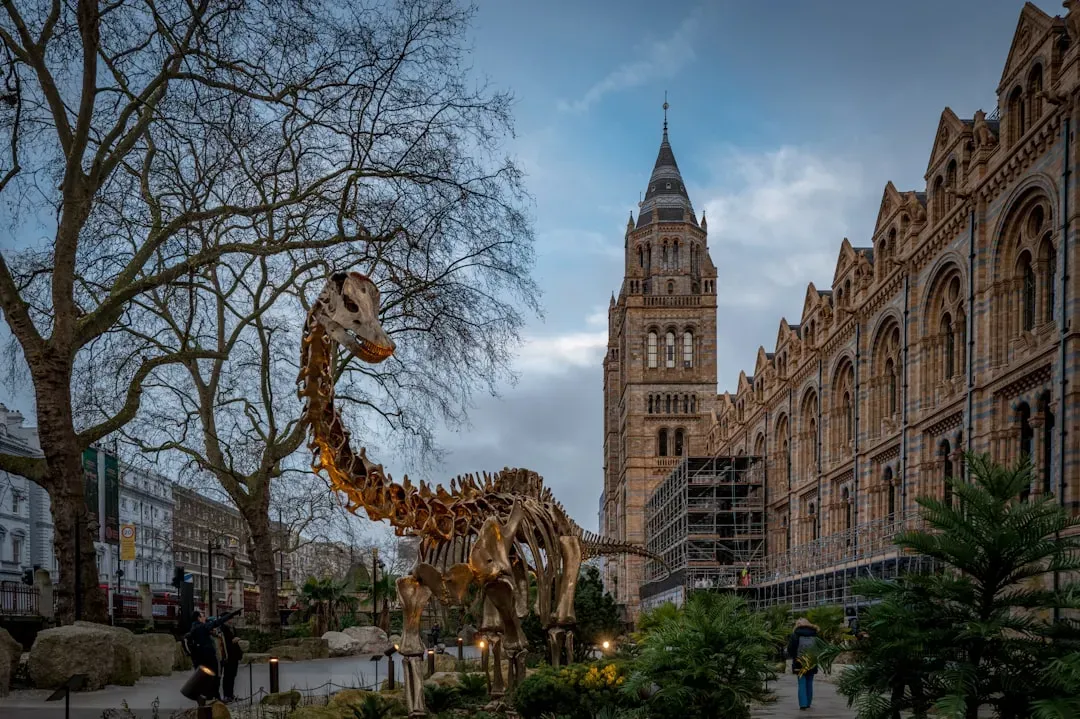
Even before you reach the main dinosaur gallery at London’s Natural History Museum, the building itself starts working on you. The huge Romanesque hall, the carved animal motifs, the echo of footsteps on stone floors – it all telegraphs that you’re in a place that treats natural history with a kind of reverent drama. Inside, the dinosaur exhibits lean into that mood with elaborate skeletal mounts, including an imposing carnivore that seems ready to lunge and sauropod bones that make you instinctively step back to take them in. ([digibuo.uniovi.es](https://digibuo.uniovi.es/dspace/bitstream/handle/10651/69322/Heredia_et_al%202022%20Cantabrian_Mountains%20GuideAGPT%201.pdf?isAllowed=y&sequence=2&utm_source=openai))
What I love here is the focus on questions as much as answers. Instead of pretending scientists have every detail figured out, the exhibits highlight debates about posture, movement, feathers, and behavior. You see how reconstructions have changed over time, sometimes drastically, as new evidence comes in. It is oddly reassuring to watch experts admit they were wrong and fix it in full public view. For visitors who grew up with retro, tail‑dragging dinosaur art, this museum pretty much dares you to update your mental picture.
Royal Belgian Institute of Natural Sciences, Brussels, Belgium
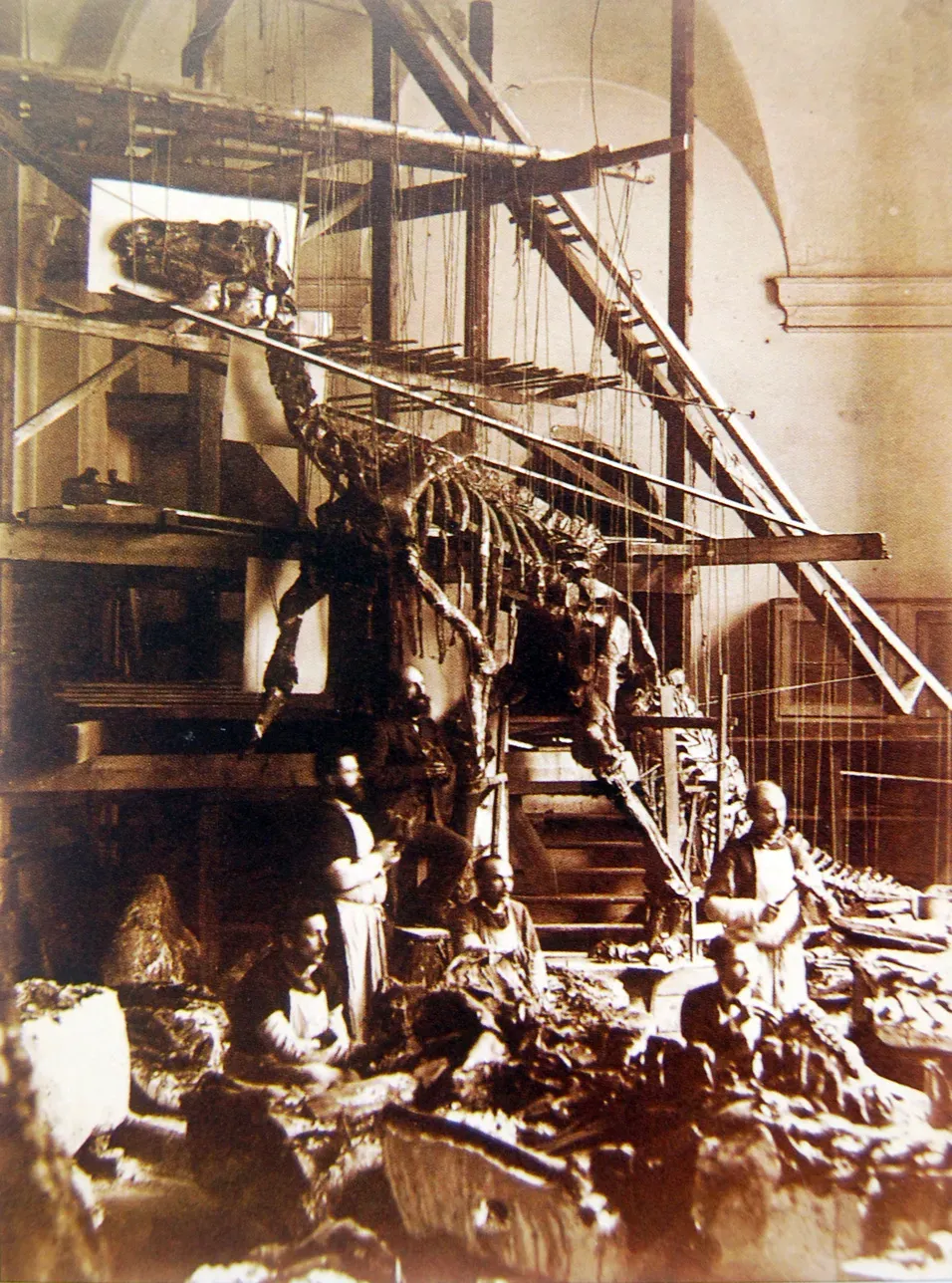
Brussels quietly hosts one of Europe’s most jaw‑dropping dinosaur displays: the Iguanodon gallery at the Royal Belgian Institute of Natural Sciences. In the late nineteenth century, more than two dozen remarkably complete Iguanodon skeletons were hauled out of a coal mine in Belgium, and today they are mounted together in a ranks‑on‑ranks display that feels almost surreal. Standing in front of that many similar dinosaurs at once is like being dropped into a herd frozen mid‑movement. ([en.wikipedia.org](https://en.wikipedia.org/wiki/Royal_Tyrrell_Museum_of_Palaeontology?utm_source=openai))
Beyond the headline act, the museum digs into what it actually means to find fossils deep underground, how early reconstructions got things wrong, and how modern analysis has reshaped what we think Iguanodon looked and moved like. There is something oddly moving about seeing older mounts preserved alongside updated science, as if you’re watching our collective understanding evolve in slow motion. If you like the detective side of paleontology – tracking how ideas change as new fossils show up – this place hits a sweet spot between spectacle and scholarship.
Jurassic Museum of Asturias (MUJA), Colunga, Spain
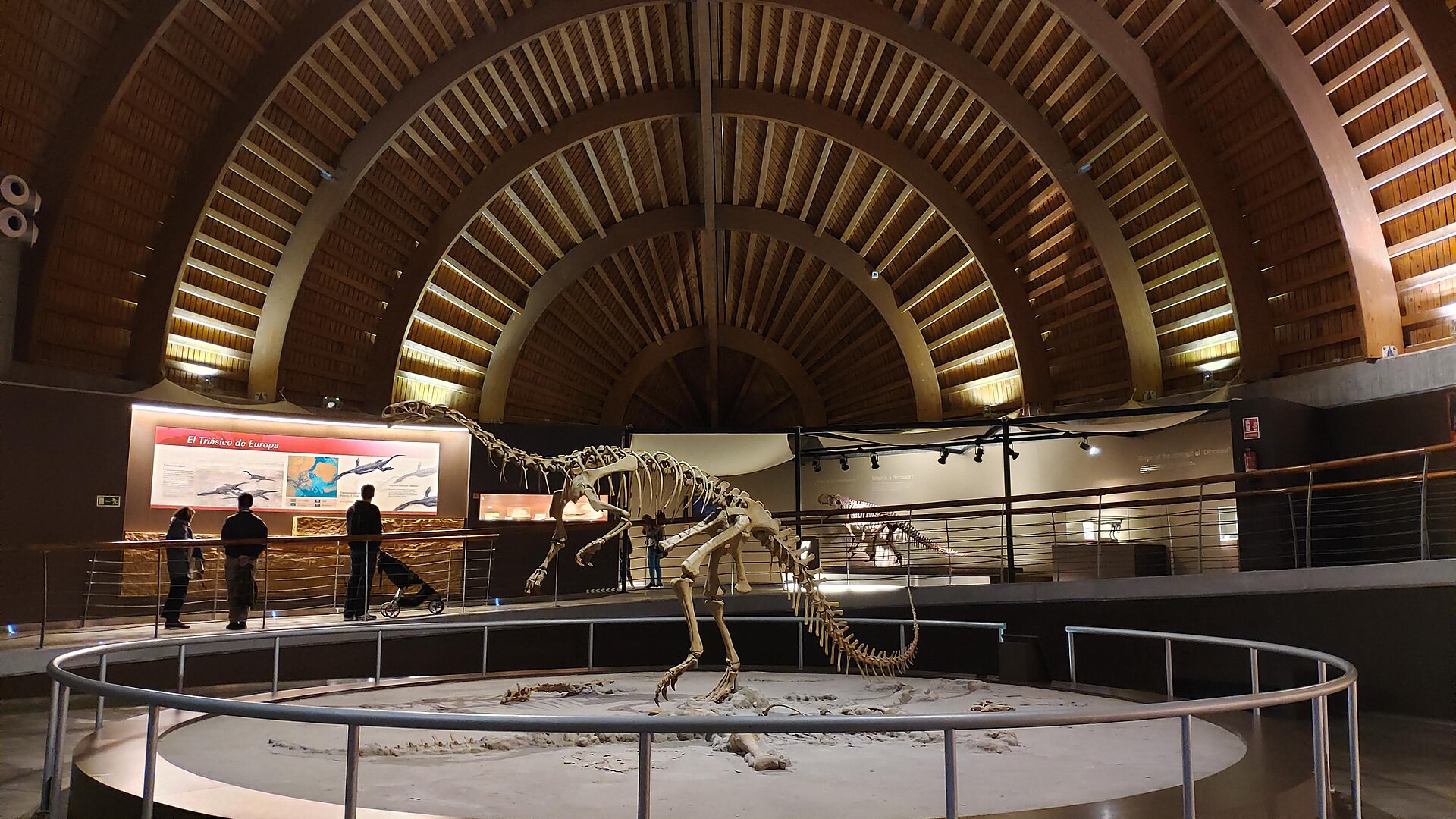
The Jurassic Museum of Asturias might have the most delightfully on‑the‑nose building design of any museum on this list: it is literally shaped like a gigantic three‑toed dinosaur footprint. Perched on a cliff roughly one and a half hundred meters above the sea, MUJA looks out over a coastline famous for its dinosaur tracks and Jurassic rock layers. Inside, the permanent exhibition walks you through the history of life with a special emphasis on the Mesozoic – the Triassic, Jurassic, and Cretaceous are each given their own “toe” of the footprint structure. ([museojurasicoasturias.com](https://www.museojurasicoasturias.com/en/exposici%C3%B3n-permanente?utm_source=openai))
Where this museum really stands out is its obsession with dinosaur footprints, or ichnites. MUJA houses one of the most significant collections of dinosaur tracks in Europe and one of the largest footprint collections in any museum worldwide. These prints capture moments of real behavior: a running animal here, a hesitant step there, sometimes even impressions of skin texture. They are like candid snapshots compared to the posed portraits of skeletons. After a few rooms of trackways and coastal geology, you find yourself staring at muddy footprints on a nearby beach with new respect, wondering which ancient animal pressed those toes into soft sediment long before humans existed.
Natural History Museum of Los Angeles County, USA
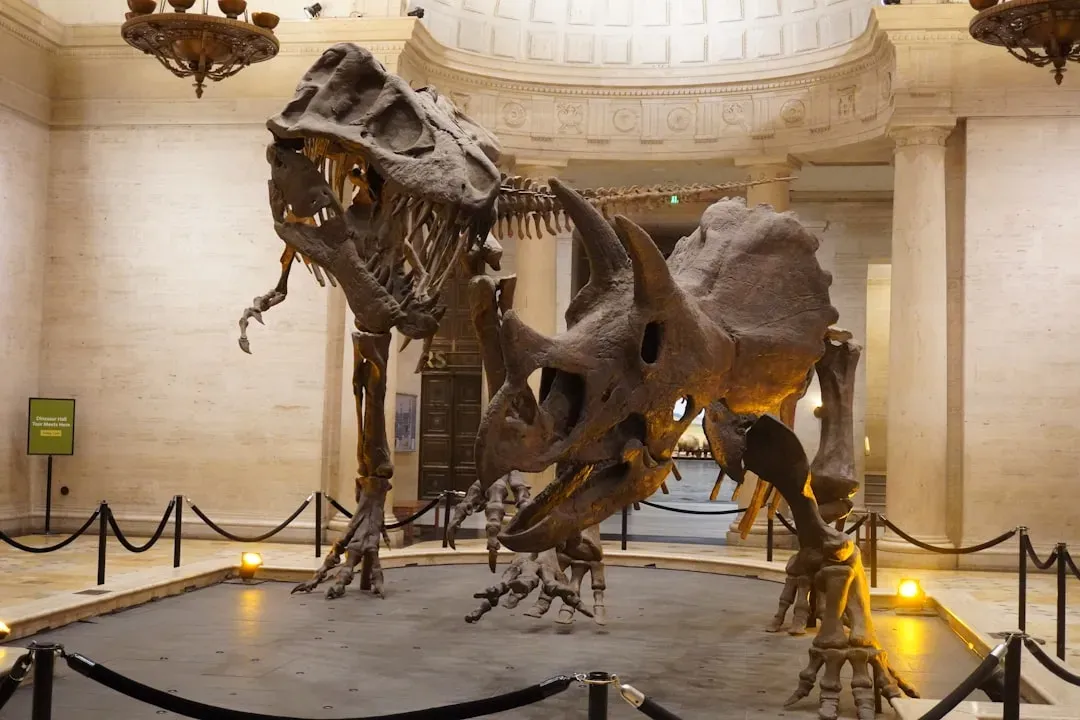
In Los Angeles, the Natural History Museum balances big‑city flash with serious science in its dinosaur halls. Instead of simply lining up skeletons in glassy isolation, the museum immerses you in scenes where carnivores and herbivores share space in ways that hint at predator‑prey dynamics, migration, and growth. You see skeletons at different life stages, which quietly teaches you about how these animals changed as they aged, not just how they looked in some idealized adult form. ([en.wikipedia.org](https://en.wikipedia.org/wiki/Royal_Tyrrell_Museum_of_Palaeontology?utm_source=openai))
The museum also leans into behind‑the‑scenes transparency. Windows into fossil prep labs let you watch technicians work on bones, grinding, gluing, and cleaning rock away grain by grain. It is strangely mesmerizing and a good antidote to the idea that fossils just arrive magically “museum‑ready.” For kids and adults who secretly wish they could be paleontologists, that glimpse is almost better than the skeletons themselves – it shows that the job is real, tedious, and yet incredibly rewarding when a fossil finally emerges from its stone cocoon.
New Mexico Museum of Natural History & Science, Albuquerque, USA
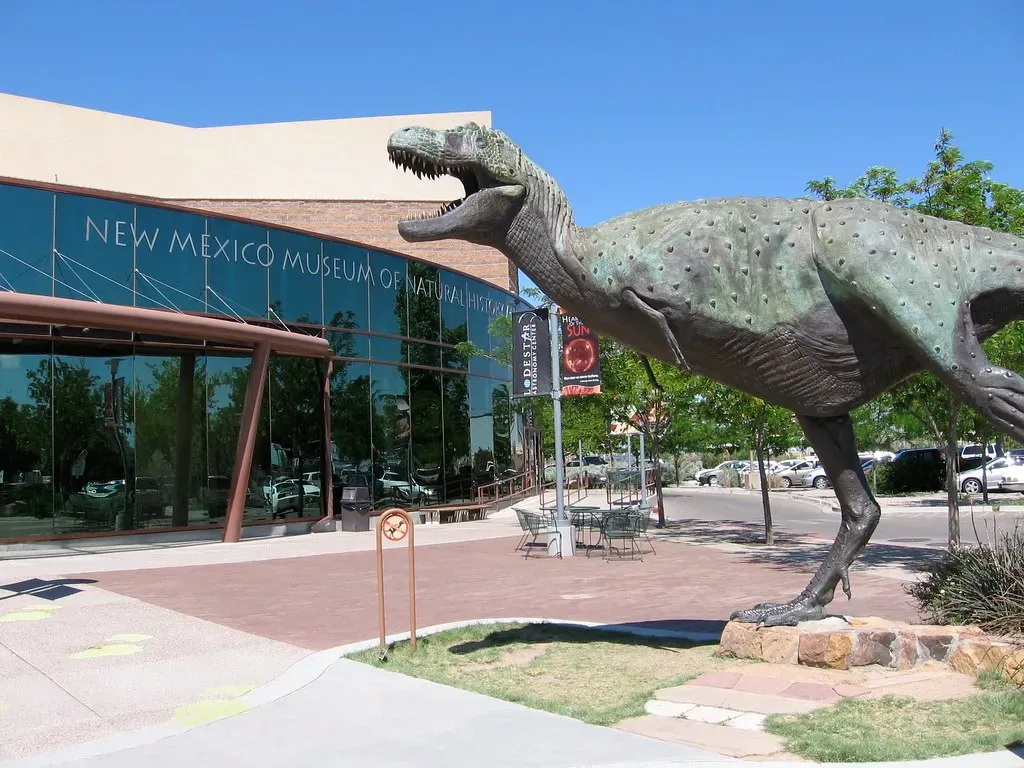
New Mexico is dinosaur country, and its state museum leans hard into that local advantage. The dinosaur exhibits at the New Mexico Museum of Natural History & Science showcase species found in the region, from early Triassic predators to hefty Cretaceous herbivores. Instead of feeling like a generic “world dinosaurs” sampler, the galleries tell the story of how this particular landscape changed over hundreds of millions of years, cycling through shallow seas, river plains, and flood‑basins crawling with reptiles. ([en.wikipedia.org](https://en.wikipedia.org/wiki/Dinosaur_National_Monument?utm_source=openai))
What I really appreciate here is that you come away with a clear sense of deep time attached to a place you can actually go drive around in. Step outside after staring at massive skeletons and you are walking on the worlds that grew those bones. The museum makes that connection explicit with exhibits on local geology and ongoing research in nearby fossil sites. It is less about fame – there is no single superstar dinosaur stealing the show – and more about understanding how a region can preserve a layered archive of life, if you know where and how to look.
Museum für Naturkunde, Berlin, Germany
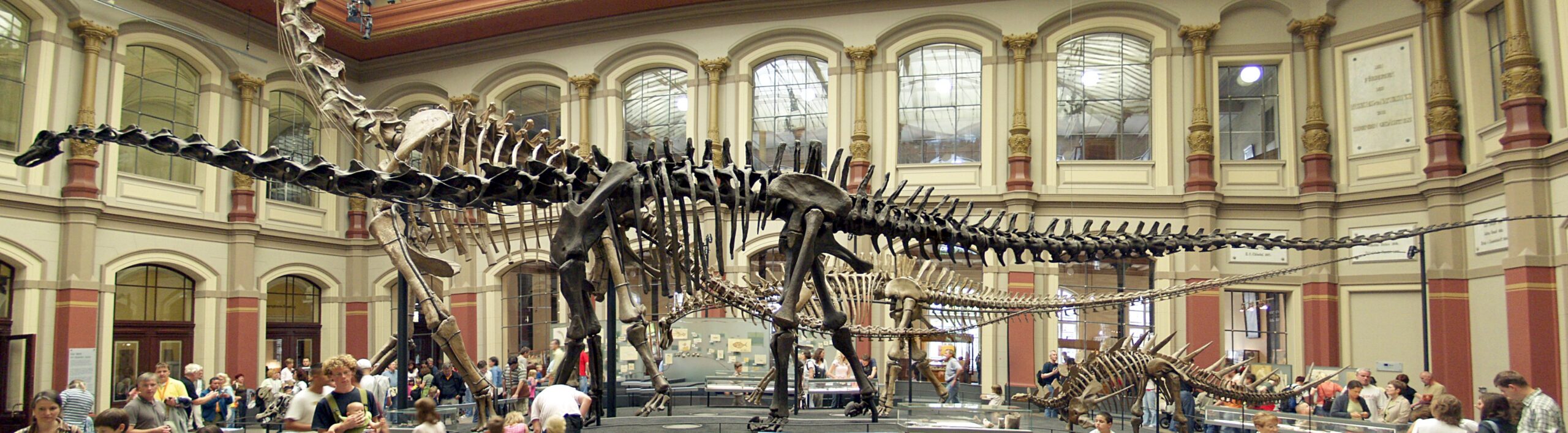
Berlin’s Museum für Naturkunde is home to one of the tallest mounted dinosaurs in the world, a breathtaking sauropod assembled from fossils discovered in Tanzania’s Tendaguru beds. The skeleton looms over the gallery like a moving crane frozen mid‑swing, making even tall adults feel toddler‑sized. Around it, other dinosaurs from Europe and Africa fill out the picture of what Late Jurassic ecosystems looked like on different continents, with predatory theropods and plated or long‑necked herbivores completing the cast. ([en.wikipedia.org](https://en.wikipedia.org/wiki/Royal_Tyrrell_Museum_of_Palaeontology?utm_source=openai))
The museum takes full advantage of its historic collections while embracing modern approaches. Updated labels and digital installations sit right next to classic display cases, so you get that old‑school natural history vibe without being stuck with outdated science. It is like watching a conversation between generations of scientists: the nineteenth‑century explorers who hauled bones across oceans and the twenty‑first‑century researchers who scan those same bones with cutting‑edge tech. If you like your dinosaur experience with a side of history of science, Berlin is a must.
Fukui Prefectural Dinosaur Museum, Katsuyama, Japan
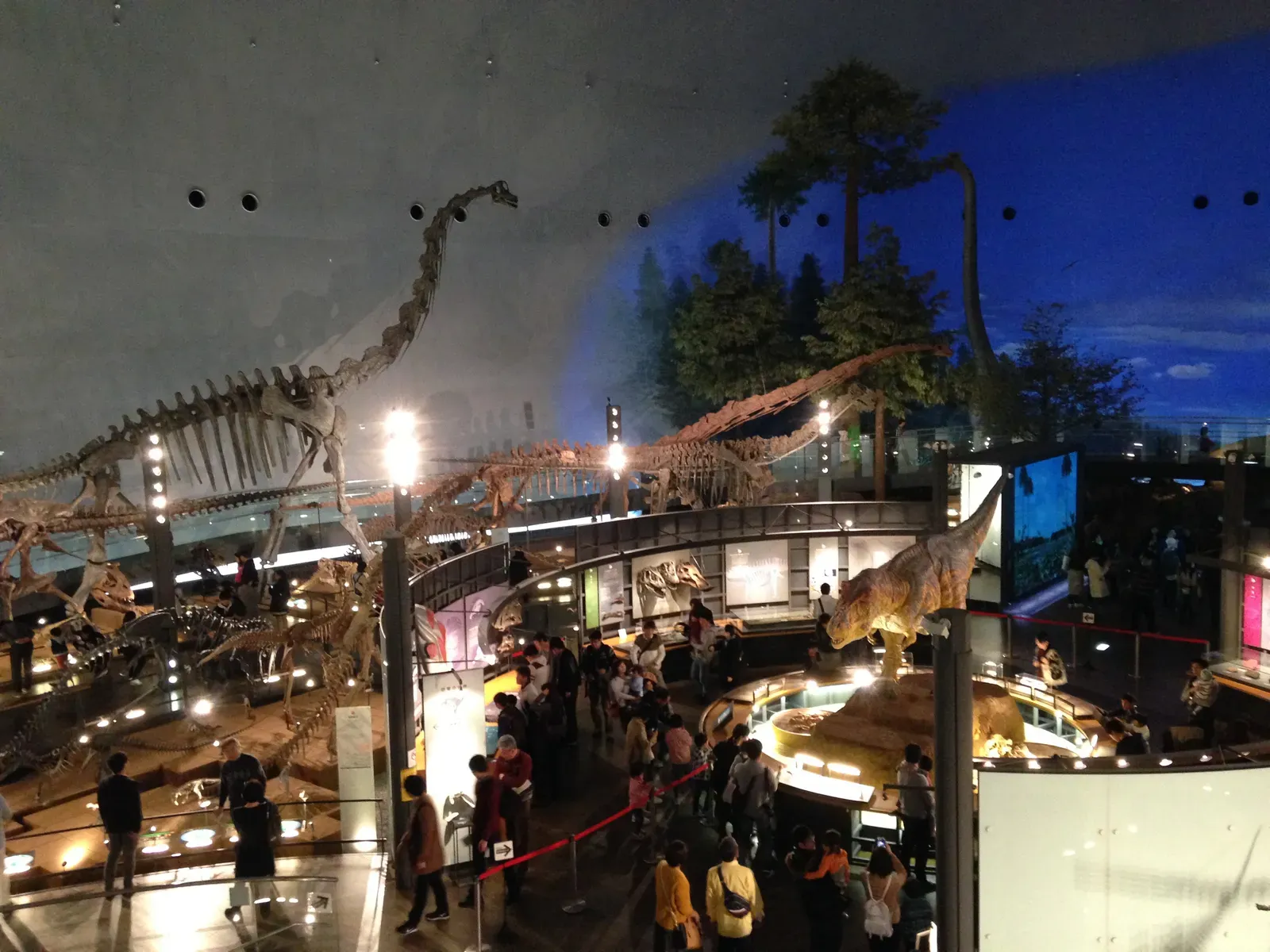
Japan’s Fukui Prefectural Dinosaur Museum feels like a sci‑fi set when you first walk in, with its dramatic architecture and sweeping, dimly lit dinosaur hall. This region has produced several important dinosaur finds, and the museum uses that to anchor its displays: you see local species front and center, not just the usual North American and European cast. For visitors used to hearing the same handful of dinosaur names over and over, discovering unfamiliar Japanese taxa is a welcome shake‑up. ([digibuo.uniovi.es](https://digibuo.uniovi.es/dspace/bitstream/handle/10651/69322/Heredia_et_al%202022%20Cantabrian_Mountains%20GuideAGPT%201.pdf?isAllowed=y&sequence=2&utm_source=openai))
The exhibits do a solid job of blending animatronic “wow” moments with serious fossil content, which means it works for both little kids and hardened dinosaur nerds. There are reconstruction scenes where you feel like you’ve wandered into a prehistoric forest at dusk, balanced by long lines of real bones and casts that nail down the reality behind the spectacle. Add in active field sites nearby where new finds continue to be made, and the whole place radiates the sense that the story of Asian dinosaurs is still very much under construction.
Museo Paleontológico Egidio Feruglio (MEF), Trelew, Argentina
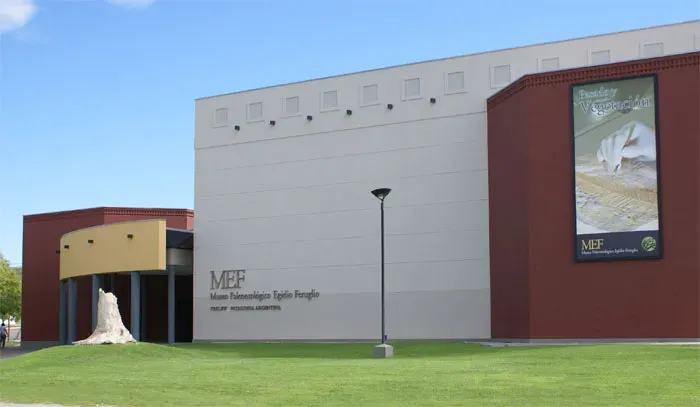
Patagonia has quietly become one of the world’s dinosaur hot spots, and the Egidio Feruglio Paleontological Museum sits right in the middle of that action. This museum is tightly connected to major discoveries from the region, including some of the largest dinosaur species ever described from South America. When you walk through its dinosaur exhibits, you are looking at fossils that rewrote textbooks, not just filled in minor gaps. ([en.wikipedia.org](https://en.wikipedia.org/wiki/Royal_Tyrrell_Museum_of_Palaeontology?utm_source=openai))
What stands out here is how integrated the museum is with fieldwork in the surrounding badlands. Displays often highlight exactly where and how fossils were found, pairing dramatic mounts with photos of dusty trenches and jackets of plaster‑wrapped bone. You get a real sense that paleontology in Patagonia is still ramping up; every field season could produce another animal that stretches our sense of what is possible. It feels less like a museum of something finished and more like a front‑row seat at an unfolding scientific epic.
Conclusion: The Best Dinosaur Museums Do More Than Just Show Big Bones
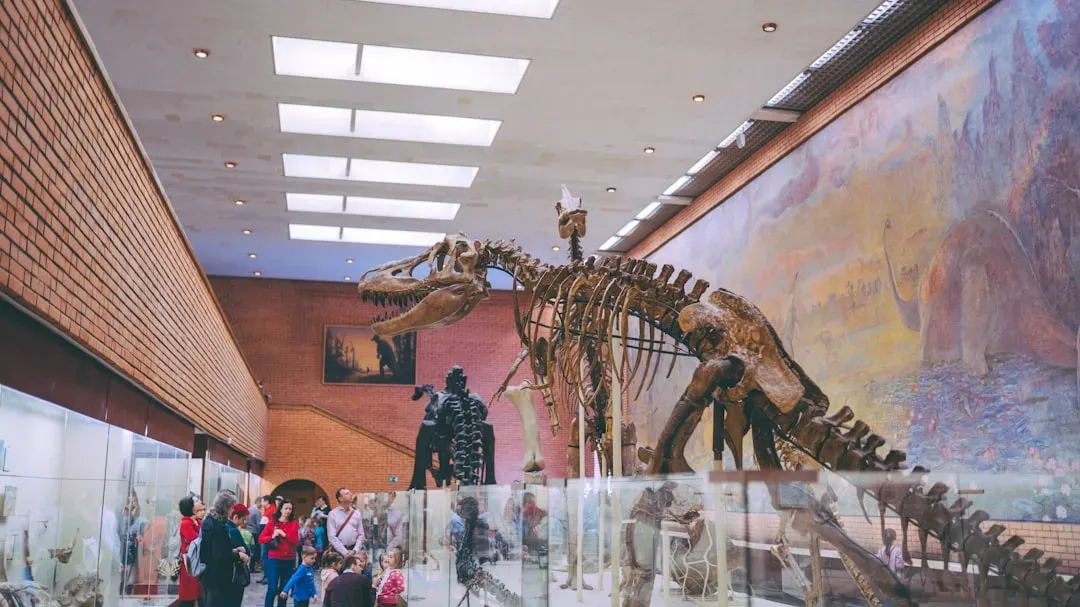
After bouncing between all these institutions, one thing becomes crystal clear: the museums that really stick with you treat dinosaurs as a living story, not a dead curiosity. Skeletons are crucial, sure, but it is the context – footprints on a Spanish coast, bone walls in a Utah cliff, trackways in Canadian badlands, evolving reconstructions in Europe – that makes prehistory feel real. When a museum invites you to see dinosaurs as parts of complex ecosystems, to watch our scientific understanding change, and to picture your own city or landscape under a Jurassic sky, that is when the magic happens.
If I am being blunt, I think every school trip should include at least one of these places, because nothing drives home deep time and climate change like staring up at a creature that thrived for tens of millions of years and then vanished. You walk out a little quieter, a little more aware that our species is not the default outcome of Earth’s story, just the current chapter. And that raises the lingering question that keeps me coming back to dinosaur halls whenever I travel: when some far‑future museum looks back at our fossils, what will they think we got right about the past – and what will they shake their heads at in disbelief?