
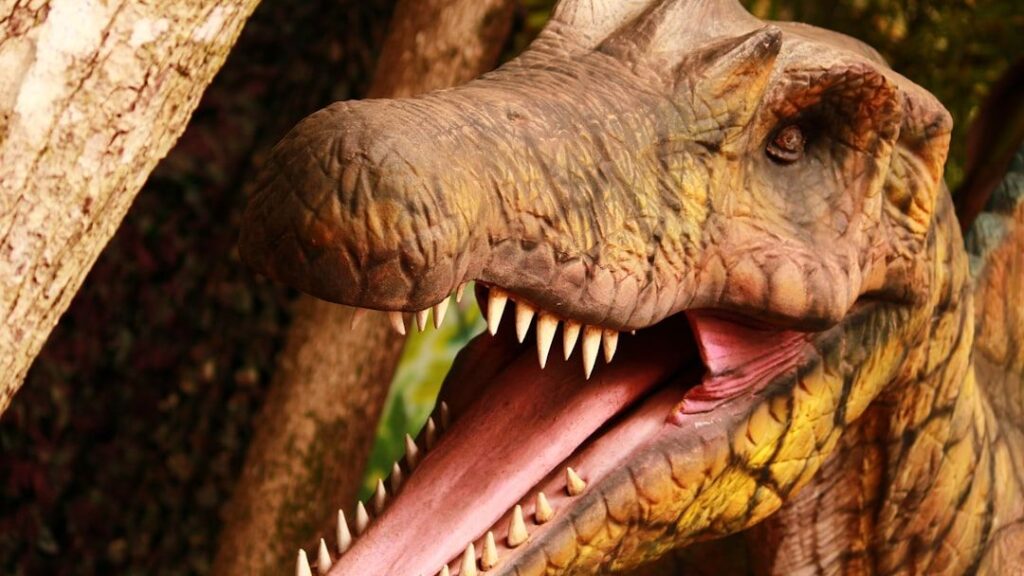
If you could stand in the middle of a Late Cretaceous forest for just one minute, what do you think you’d hear first: an ear-splitting roar, a low rumble you feel in your chest, or something closer to a pigeon coo echoing across a swamp? For decades, movies have convinced us dinosaurs sounded like oversized lions with anger issues, but the science quietly tells a stranger, subtler story. As fossil evidence, computer modeling, and bird biology all collide, the old image of the roaring T. rex is starting to look a lot like a Hollywood fantasy.
We will probably never recover a recording of an actual dinosaur, but we can get surprisingly close to narrowing down what was possible, what was likely, and what is just special effects. By looking at the structure of dinosaur skulls, the airways in their bones, and the behavior of their modern relatives, researchers are sketching out an entire soundscape of groans, booms, hisses, and maybe even musical calls. The more we learn, the more it feels like dinosaurs were not just giant reptiles stomping around, but social, noisy, and emotionally expressive animals living in a world that must have sounded nothing like our own.
The Myth of the Hollywood Roar
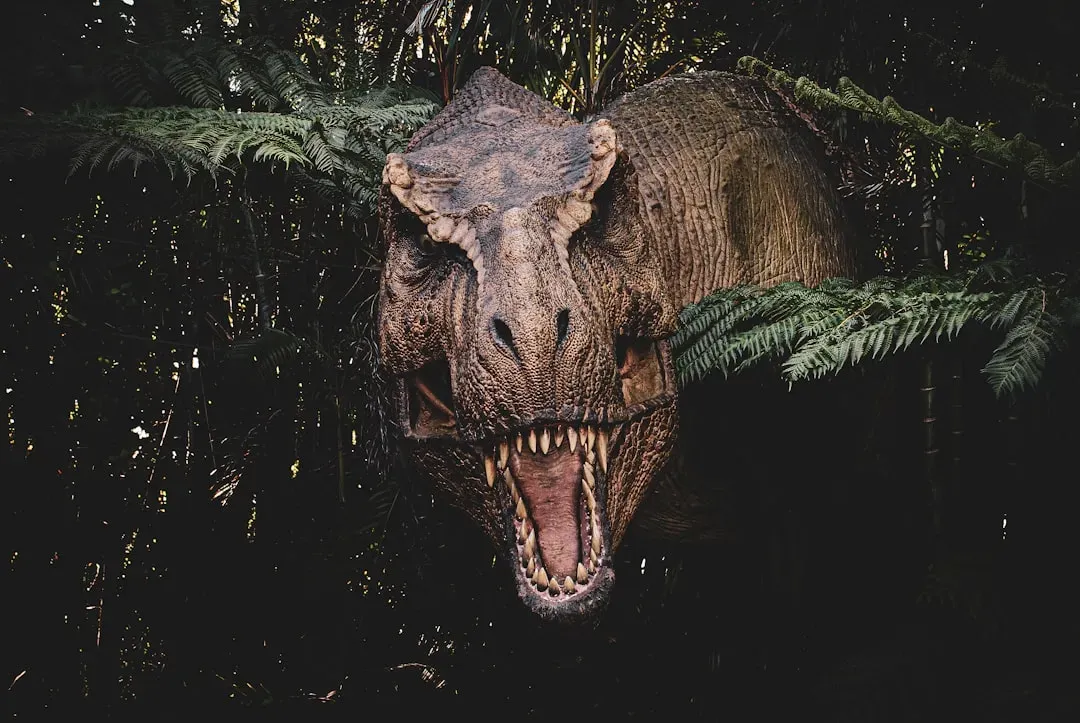
Let’s start with the uncomfortable truth: that iconic T. rex scream you’ve heard a thousand times is pure invention. Sound designers famously stitched together noises from elephants, big cats, alligators, and other animals to create something that felt terrifying on a cinema screen. None of that is based on real evidence from the fossil record, because soft tissues like vocal cords almost never fossilize, and even when we have hints about sound-producing structures, we still have to guess carefully about how they were used. The movie roar works emotionally, but it is not a scientific hypothesis.
When paleontologists actually study tyrannosaur skulls and the anatomy of their closest living relatives – birds and crocodilians – a very different picture emerges. The big clue is that many modern large animals do not shout with piercing high-pitched screams but communicate with deep, low-frequency sounds that travel far without drawing as much attention to their exact location. Think of an elephant’s rumble you feel before you hear clearly, or the chesty thud of a distant alligator. That kind of low, resonant communication is increasingly seen as more plausible for many large dinosaurs than the dramatic, glass-shattering bellows made for film.
Birds, Crocodiles, and the Dino Family Voice
If you want to eavesdrop on a dinosaur today, you listen to birds and crocodiles. Biologically speaking, birds are surviving dinosaurs, and crocodilians are their closest living reptile cousins, so together they bracket the dinosaur family tree. Birds produce sound with a special structure called a syrinx, deep in the chest, while crocodiles use their larynx along with inflatable throat sacs and resonating body cavities to generate booms and growls. Between these two groups, you get an entire toolkit of possible ways ancient dinosaurs might have vocalized without ever needing Hollywood-style roaring.
What is striking is how many of these sounds are not simple loud calls, but complex social signals: courtship songs, territorial announcements, contact calls between parents and young, and low rumbles that coordinate group behavior. In some modern birds, calls are so distinctive that individuals can recognize specific mates or chicks just by sound, even in huge, noisy colonies. When you imagine this level of vocal nuance transported back into the Mesozoic, it becomes much easier to see dinosaurs not as silent brutes, but as animals engaged in continuous acoustic conversations, using sound to negotiate everything from mating to parenting to avoiding conflict.
Crests, Horns, and Built‑In Sound Systems
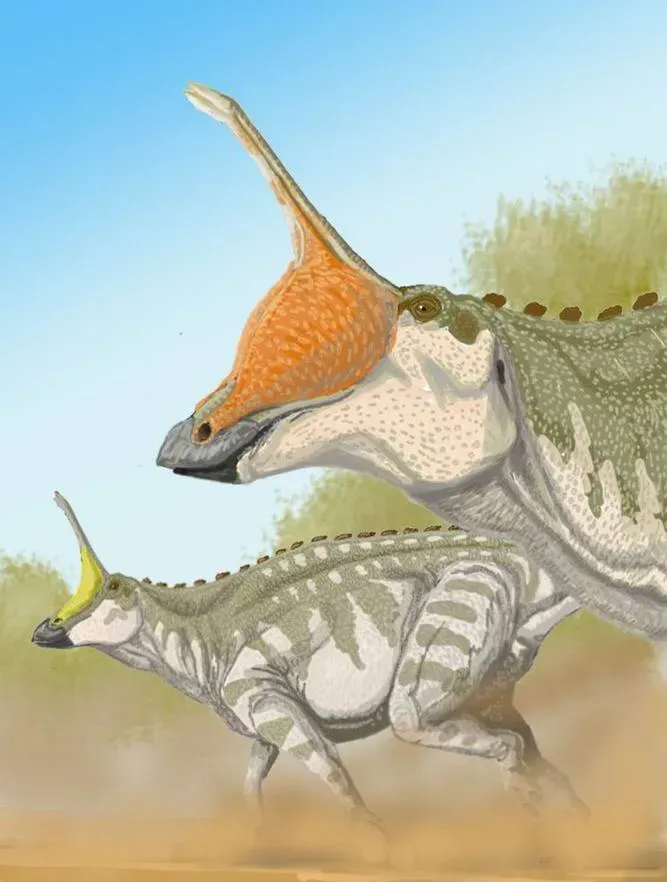
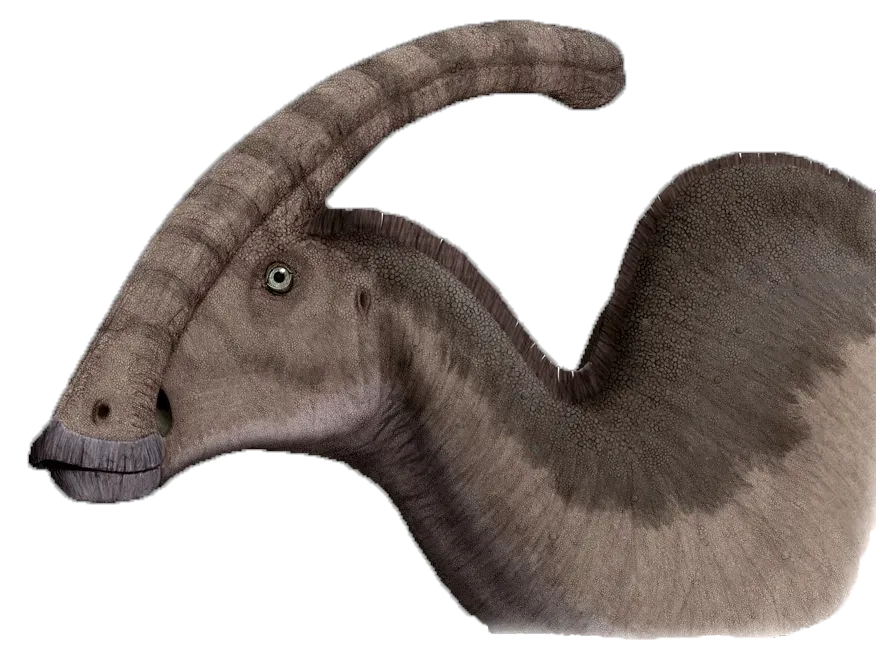
Some dinosaurs did not just rely on soft tissues to shape their voices; they literally built speaker systems into their skulls. The classic example is the hadrosaurs, or “duck-billed” dinosaurs, many of which had enormous hollow crests filled with nasal passages that looped and twisted in elaborate patterns. When air moved through these chambers, it could have produced deep, resonant tones, a bit like blowing through a giant organic trombone. Computer models of these crests suggest they were tuned to low frequencies that travel long distances, supporting the idea of booming calls rolling across prehistoric floodplains.
These crests were also highly variable between species, and even between individuals, which points strongly toward a role in communication and display. A tall, elaborate crest might have acted like both a visual billboard and an acoustic signature, letting members of the same species recognize each other by sight and sound. In a busy ecosystem where many herbivores looked broadly similar from a distance, being able to call out with a species-specific “voice” could reduce dangerous confusion during mating season or group movement. In that sense, some dinosaurs were walking around with personalized sound logos built right into their bones.
Feeling the Roar: Low Frequencies and Vibrations
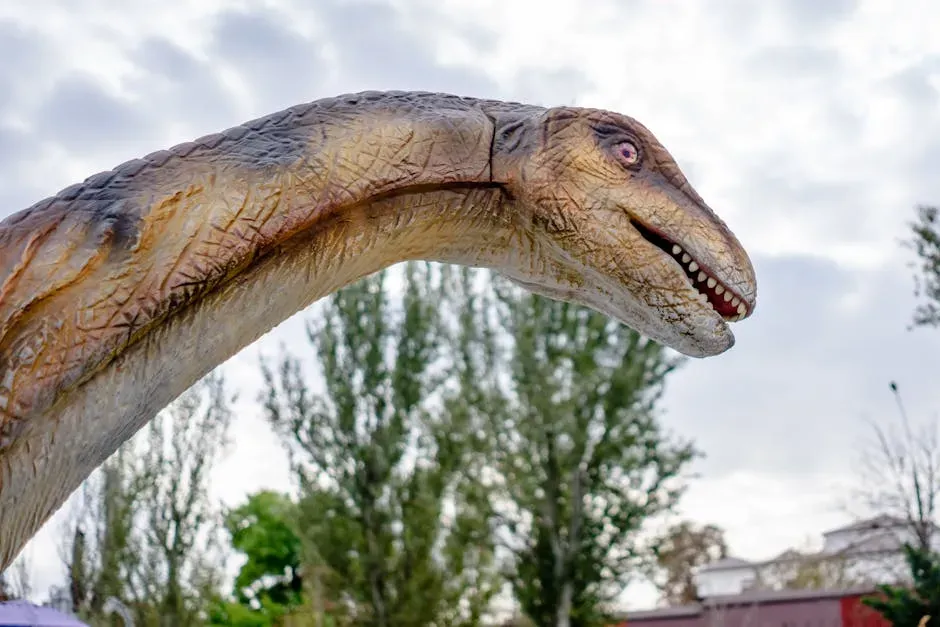
One of the most intriguing ideas about dinosaur communication is that much of it might have been felt as much as heard. Large animals are especially good at producing very low-frequency sounds, sometimes dropping into infrasound that humans can barely detect with their ears but can sense as vibrations. Modern examples include elephants, which use low rumbles to talk with herd members miles away, and crocodiles, whose displays can literally make water dance along their backs. It is not a stretch to imagine big sauropods or tyrannosaurs using similar tricks, sending messages through the ground and air.
Low-frequency communication would have been incredibly useful in the noisy, vegetated environments where many dinosaurs lived. High-pitched calls tend to get blocked by trees and terrain, while deep rumbles bend around obstacles and travel farther with less energy. This kind of soundscape means a herd of long-necked sauropods could coordinate movement or warn of danger without constantly shouting, and predators could communicate with mates or rivals without broadcasting their exact location. Instead of envisioning a Jurassic world full of endless screaming, it might be more realistic to picture a deep, continuous background of rumbles, pulses, and subtle vibrations, like the sub-bass track of an ancient planet.
For me, the idea that you might feel a T. rex before you truly heard it is one of the most chilling possibilities. Not a roaring monster charging in with a cinematic scream, but a creeping, growing vibration in the ground and air, hinting at something huge and alive just out of sight. That is a very different kind of fear than movies usually sell us, and honestly, it feels more plausible and more unsettling at the same time.
Silent Dinosaurs? Body Language, Hisses, and Non‑Vocal Signals
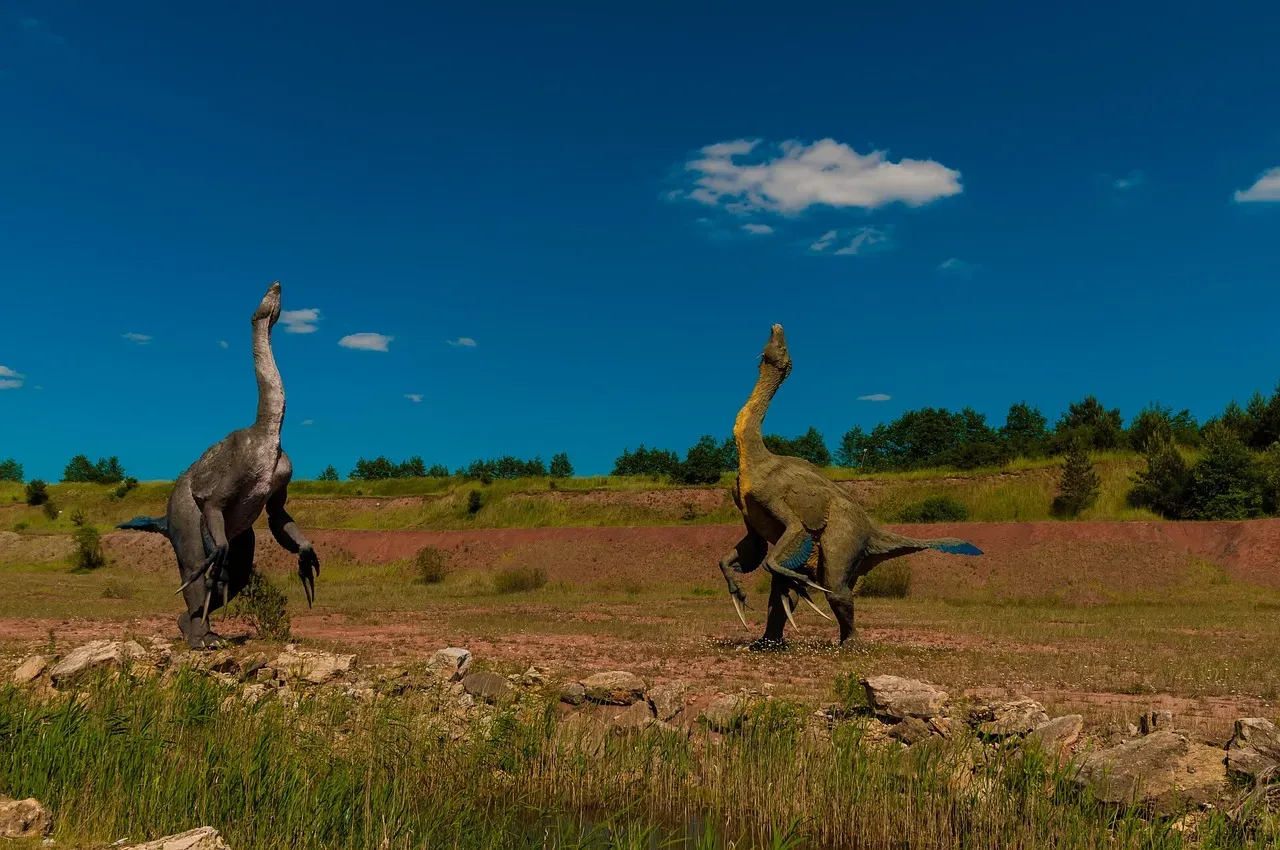
Of course, sound is only one channel in the communication toolbox, and some dinosaurs may have relied less on loud calls and more on visual or mechanical signals. Modern reptiles and birds use hisses, bill clacks, wing beats, tail slaps, and full-body postures to get their point across without necessarily “vocalizing” in the narrow sense. A defensive hiss from a theropod, a rapid tail snap on the ground, or a wing-like arm display could have been just as meaningful as a roar, especially at close range where subtle cues matter. The fossil record preserves horn cores, frills, quills, and posture-friendly skeletons that all hint at a rich language of body movement and display.
This is where things get humbling: we may be over-obsessed with the audible part of dinosaur communication simply because film and media have trained us to equate drama with sound. Yet a ceratopsian locking eyes, lowering its frill, and stomping the ground might have communicated dominance without needing any special vocalization at all. Juvenile dinosaurs could have engaged in playful chases and mock fights, using squeaks, chirps, or even silence, paired with exaggerated motions. When I imagine a dinosaur herd now, I see not just a noisy group but a complex blend of gestures, color flashes, subtle sounds, and maybe the kind of social awkwardness you see in a modern flock of geese squabbling over who stands where.
What We Still Do Not Know (And Why That Matters)
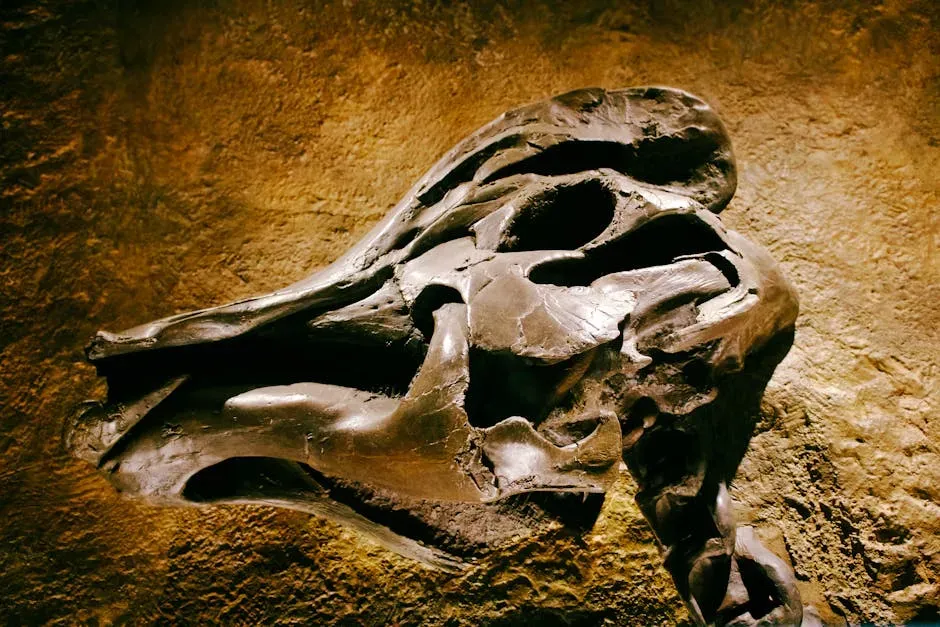
For all the progress, much of dinosaur acoustics is still informed speculation, and it’s important to keep that uncertainty front and center. We can model how air moves through a hadrosaur crest, but we cannot be fully sure how thick the soft tissues were, how tense the membranes got, or how much muscle control they had. We can compare dinosaur skulls to birds and crocodiles, but evolution loves to surprise us with novel structures that do not survive in any modern form. Every reconstruction of a dinosaur call you see online or in a documentary is ultimately a hypothesis dressed up for the camera.
That does not make the science pointless; in fact, it makes it more interesting. Sound is one of the most emotionally powerful aspects of animal life, and building careful, testable models of dinosaur communication forces researchers to confront the limits of the fossil record in an honest way. Instead of pretending we know exactly what a T. rex sounded like, the more responsible path is to outline ranges of possibility, eliminate the most unrealistic options, and be transparent about what is guesswork. In a world overloaded with confident-sounding nonsense, there is something refreshing about a field that can say: here is what we think, here is why, and here is where silence is still the most honest answer.
Conclusion: Rethinking the Roar and Respecting the Unknown
Personally, I think it is time we retire the classic cinematic roar as the default voice of dinosaurs. Not because it is not fun – it absolutely is – but because it flattens an entire spectrum of possible behaviors into one loud, dramatic cliché. The emerging picture suggests a world of low rumbles, resonant booms, subtle hisses, and intricate social calls shaped by crests, cavities, and clever bodies rather than just oversized vocal cords. Dinosaurs start to look less like rampaging monsters and more like complex animals negotiating crowded ecosystems with careful, layered communication.
At the same time, we should resist the urge to replace one fake certainty with another. The honest answer is that we are still largely decoding the dino roar, and some pieces of the puzzle may never fully snap into place. That uncertainty is not a failure; it is a reminder to stay curious and humble about a planet that has reinvented life’s soundtrack over and over again. When you imagine a dinosaur now, maybe let it speak in a voice that is quieter, deeper, and stranger than the movies promised – and accept that part of its message will always remain just out of earshot. If you could stand in that Cretaceous forest for one real minute, what do you think you would actually hear first?