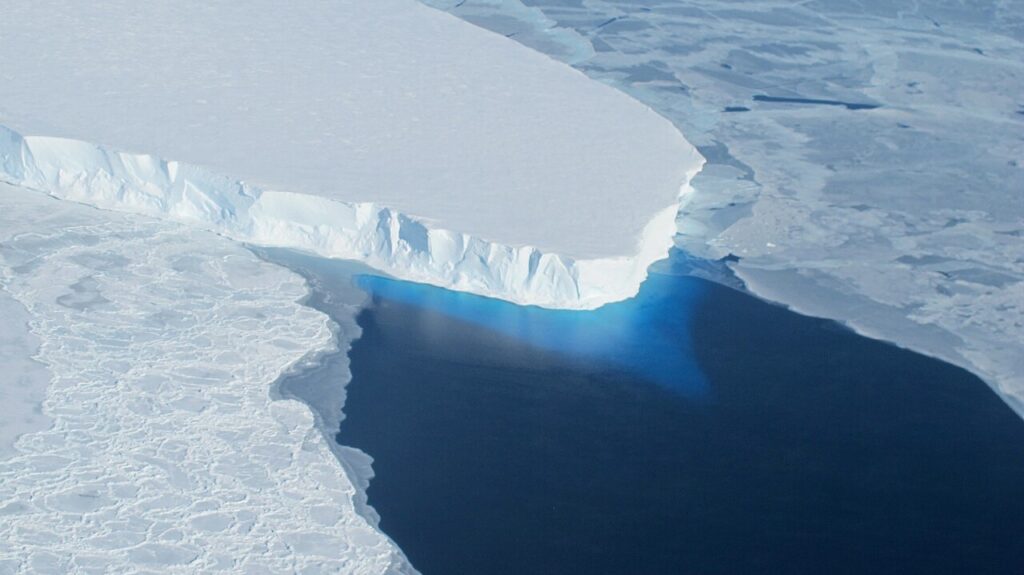
Antarctica’s Thwaites Glacier, the widest in the world, continues to draw close scientific attention as its floating ice shelf displays clear indications of structural failure. Researchers have documented accelerating thinning, faster ice flow, and the retreat of the grounding line where the glacier meets the seafloor. These developments carry direct consequences for global sea levels, with the potential for substantial coastal impacts if the process advances unchecked.
Understanding the Glacier’s Current State
Thwaites Glacier spans roughly the size of Florida or Great Britain and sits in a particularly vulnerable sector of West Antarctica. Its ice shelf, the floating extension that helps stabilize the grounded ice behind it, has been under sustained pressure from warmer ocean waters circulating beneath. Recent observations confirm that the shelf is losing integrity at key points, with cracks widening and sections beginning to separate from the main body.
Measurements from ongoing expeditions reveal that ice loss from Thwaites already accounts for about four percent of the annual global rise in sea levels. The glacier’s contribution could grow significantly if the shelf fully detaches, allowing faster movement of the inland ice toward the ocean. Scientists note that the current pace of change aligns with longer-term models that project continued retreat through the coming decades.
Recent Research and Field Observations
Teams from the British Antarctic Survey and the Korea Polar Research Institute have conducted hot-water drilling operations through the ice shelf near the grounding line. These efforts have provided direct access to the ocean cavity below, confirming the presence of warm water that melts the ice from underneath. Data collected during these missions highlight structural weaknesses that were not fully apparent in earlier satellite imagery alone.
Additional studies have mapped how ice flows across interconnected basins in Antarctica. Melting at Thwaites can influence neighboring glaciers, creating a chain reaction that speeds overall ice discharge. Sediment records from the region further support the view that the current retreat fits a pattern of long-term instability rather than a temporary fluctuation.
Implications for Sea-Level Rise
A complete collapse of Thwaites would release enough ice to raise global sea levels by approximately 65 centimeters. Even partial loss of the ice shelf would remove a critical buttress, allowing faster flow from the broader West Antarctic Ice Sheet. Coastal communities worldwide would face heightened risks of flooding and erosion as a result.
Projections indicate that the glacier is unlikely to disappear entirely in the next few decades, yet the rate of retreat is expected to increase through the 21st and 22nd centuries. Immediate reductions in greenhouse gas emissions remain the most effective way to slow these changes and limit the scale of future sea-level contributions from this region.
Looking Ahead
Continued monitoring through sensors and drilling campaigns will help refine timelines for further ice loss. International collaboration on these projects underscores the shared nature of the challenge posed by Antarctic ice dynamics. While the situation at Thwaites remains serious, the data gathered now will inform strategies to manage the resulting sea-level pressures in the years ahead.