If you grew up in the 1980s, dinosaurs probably lived rent‑free in your imagination. They stomped through your schoolbooks as tail‑dragging swamp monsters, showed up on lunchboxes as lumbering brutes, and felt more like fantasy beasts than real animals that once walked on the same planet you’re standing on right now. The wild part? A lot of what adults confidently told kids about dinosaurs back then has since been flipped completely on its head.
Over the last few decades, paleontology has gone through a quiet revolution. New fossils, new technologies, and new ways of thinking have turned the 80s dinosaur playbook into something that looks almost quaint. Let’s walk through some of the biggest beliefs we held as kids that modern science has torn apart – and what really seems to have been going on in the age of dinosaurs.
1. Dinosaurs Were All Slow, Stupid Brutes
In the 80s, the mental image was clear: dinosaurs as giant, dim‑witted reptiles, barely more sophisticated than cold‑blooded crocodiles that just happened to be super‑sized. Kids heard that a dinosaur like the stegosaurus had a brain the size of a walnut and took that to mean it lumbered through life in permanent slow motion, almost like a walking boulder. The vibe was more monster movie than living, breathing animal with complex behavior.
Since then, researchers have gathered a pile of evidence that many dinosaurs were active, agile, and surprisingly clever for reptiles. Bone structure, trackways, and even the shapes of braincases suggest that a lot of species had relatively large brains for their body size, sharp senses, and fast metabolisms. Hunters like deinonychus and troodontids show signs of pack behavior and problem‑solving abilities closer to modern birds than to sleepy lizards sunning on a rock. The picture now is less “big dumb lizard” and more “specialized, capable animal” that knew exactly what it was doing in its world.
2. Dinosaurs Dragged Their Tails Like Giant Lizards
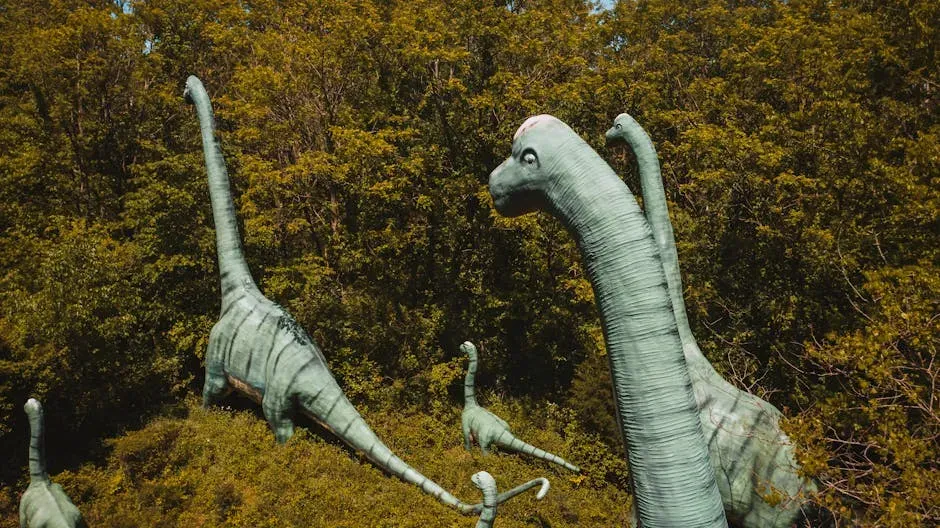
If you flip through an 80s dinosaur book, nearly every drawing shows the same thing: massive bodies, low slung stance, and a tail plowing a trench in the dirt. School posters and museum toys copied this look over and over, so it felt like an unquestionable fact that dinosaur tails were dead weight, just trailing behind. It made them seem clumsy, permanently hunched, and weirdly broken in their own design.
Fossil trackways and better anatomical studies completely shredded that idea. In most dinosaur track sites, there are no tail drag marks at all, which is a pretty loud clue that tails were held off the ground. The vertebrae, hip joints, and muscle attachment points show that many dinosaurs held their tails straight out behind them as a counterbalance, like a tightrope walker using a pole for stability. Once you see dinosaurs in this more horizontal, athletic posture, they stop looking like tired old crocodiles and start looking like what they were: well‑tuned runners, sprinters, and maneuverable animals built to survive, not stumble.
3. Dinosaurs Lived in Swamps Because They Were Too Heavy for Land
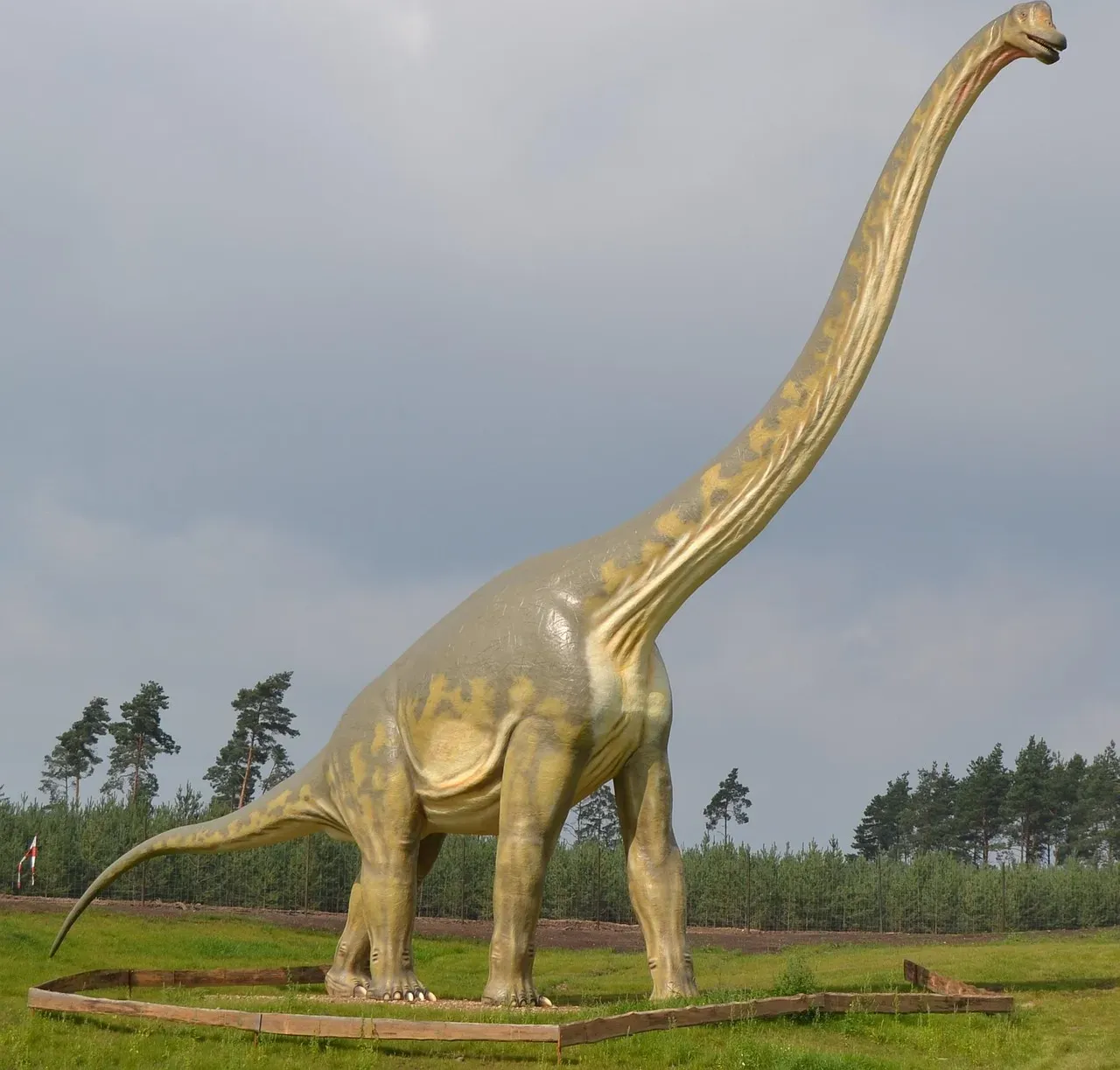
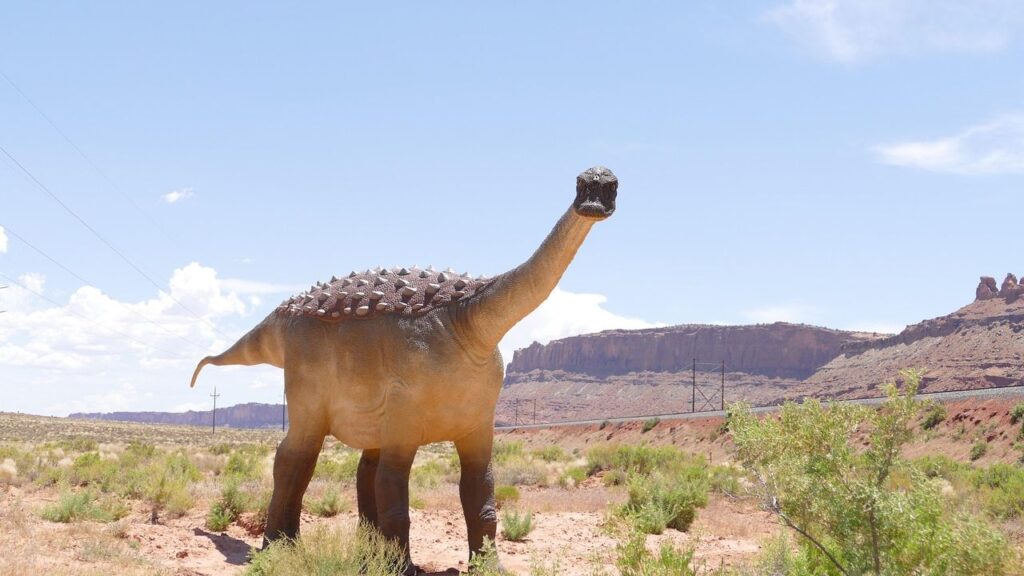
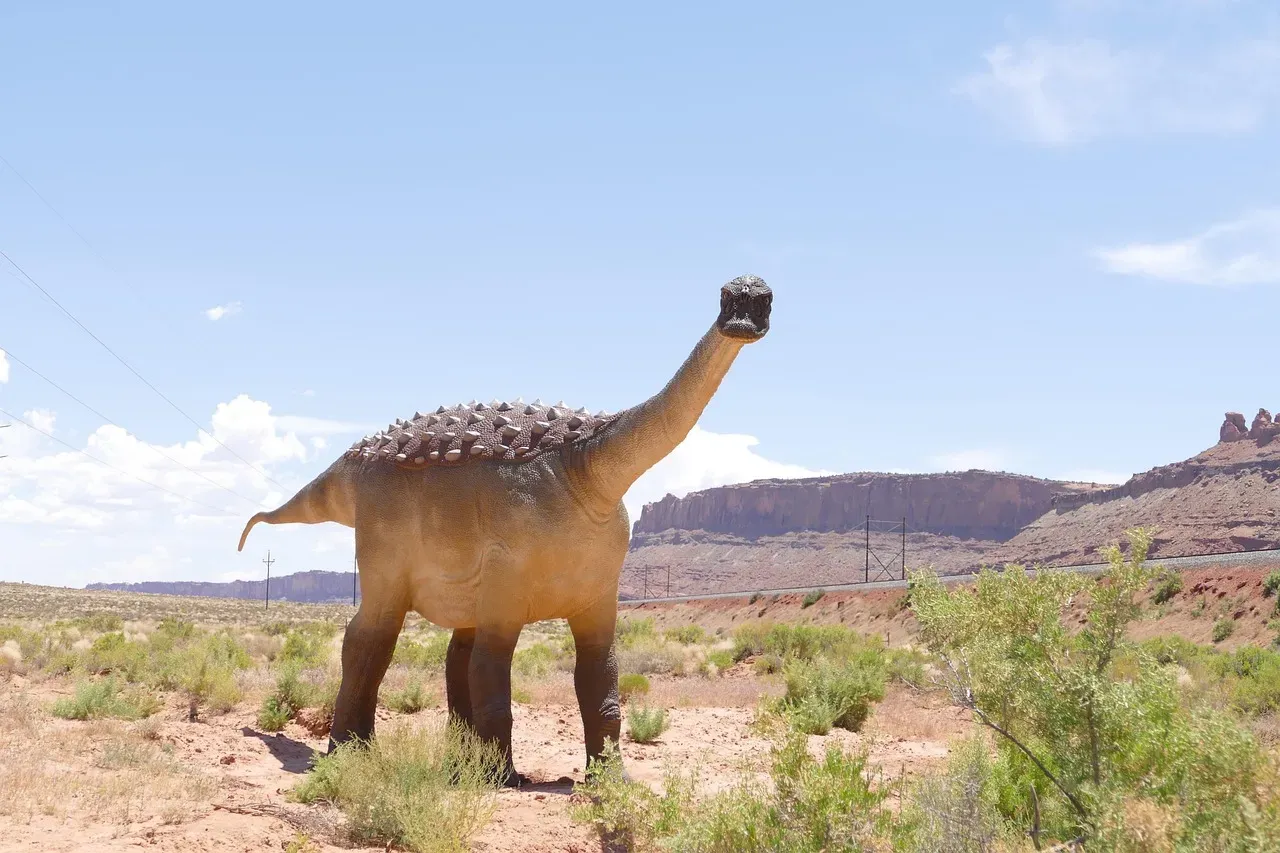
Kids in the 80s were often told that giant sauropods – think brontosaurus and diplodocus – were so unbelievably heavy that they had to live half‑submerged in water to support their own weight. Old illustrations showed herds of long‑necked giants standing in murky lakes, with only backs and necks breaking the surface, like a group of dinosaur hippos. The idea was that their legs were basically too weak and clumsy to hold them up on dry ground.
Modern science has turned that image into a relic of the past. Detailed calculations of bone strength, limb structure, and body mass show that sauropods had robust, column‑like legs perfectly able to support their bodies on land. Their skeletons were engineered more like suspension bridges than collapsing towers, with air‑filled bones and strong muscles distributing their weight efficiently. Trackways found far from ancient lakes or swamps show clear footprints of these giants walking confidently across solid ground. Rather than being pathetic swamp‑prisoners, sauropods now look like long‑distance land walkers that could roam huge territories.
4. All Dinosaurs Were Grayish‑Green and Boringly Colored
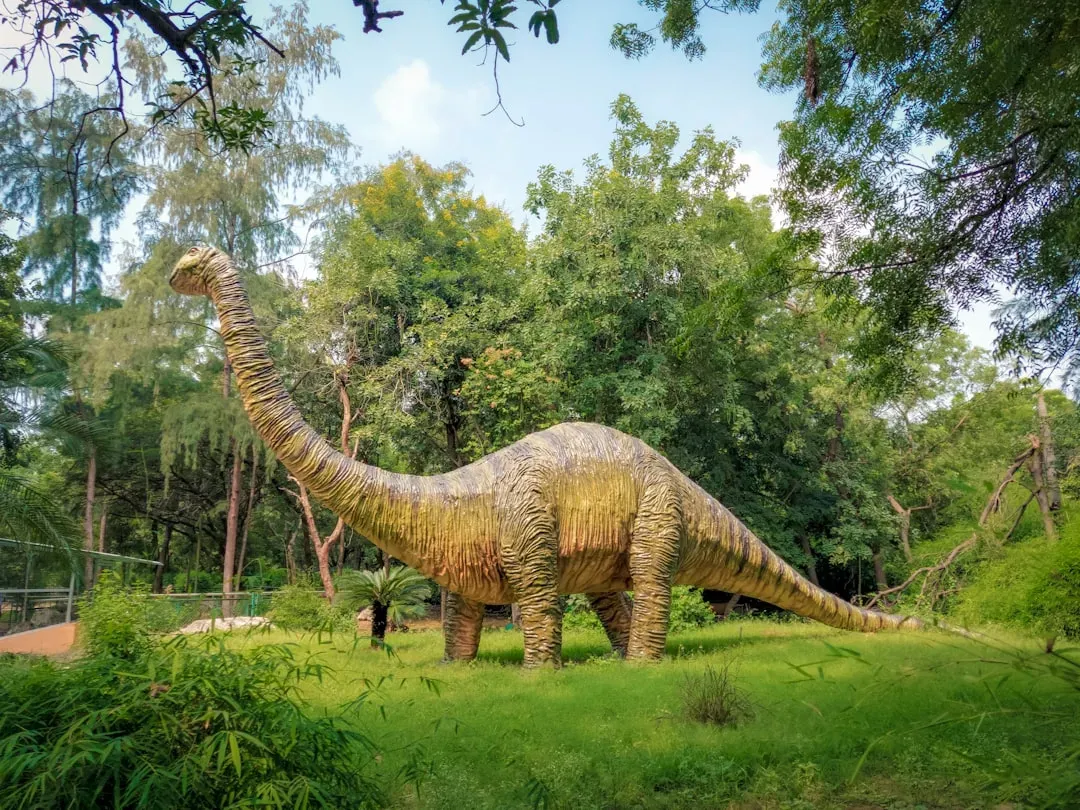
Think back to your childhood dinosaur toys: how many colors did they come in? Usually the same dull palette – murky greens, muddy browns, maybe a gray or beige thrown in “because that’s realistic.” Dinosaurs in 80s books and cartoons rarely had striking patterns or bright hues. The assumption was that, like many modern reptiles, they must have been camouflaged in bland colors to melt into their environments and that anything more imaginative was just for kids’ cartoons.
Then scientists began finding exceptionally well‑preserved fossils with traces of microscopic pigment‑bearing structures. Careful analysis of these structures in some feathered dinosaur fossils has given real clues about color patterns – dark banded tails, rusty reds, even iridescent sheens similar to crows or magpies. While we still only know the colors of a tiny fraction of species, the evidence strongly suggests a world where at least some dinosaurs were patterned, possibly flashy, and visually complex. Instead of a drab army of gray lizards, it is more like a messy, living collage of stripes, spots, and shading, closer in spirit to today’s birds than to plastic army men.
5. No Dinosaurs Had Feathers – That Was Only for Birds
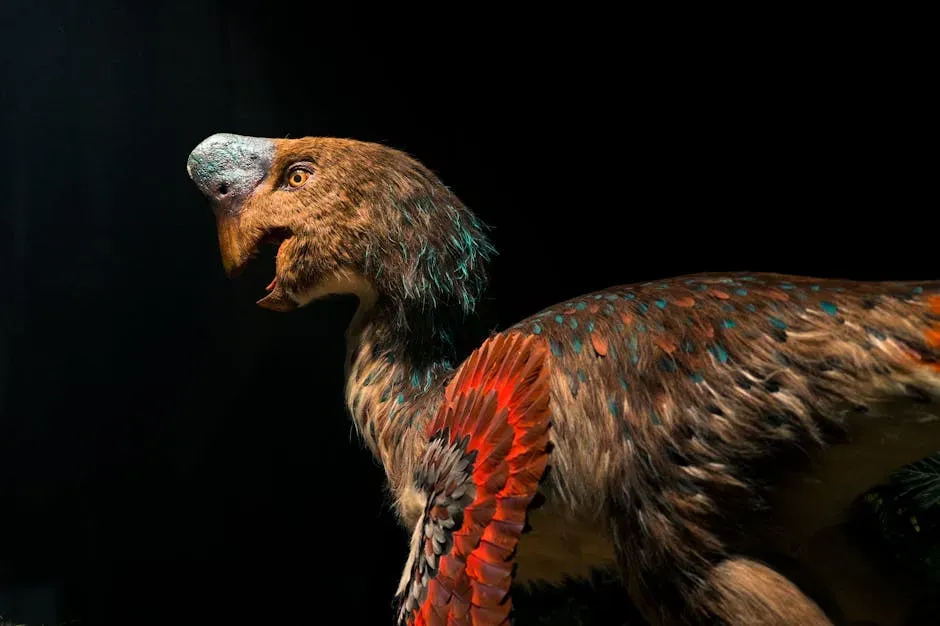
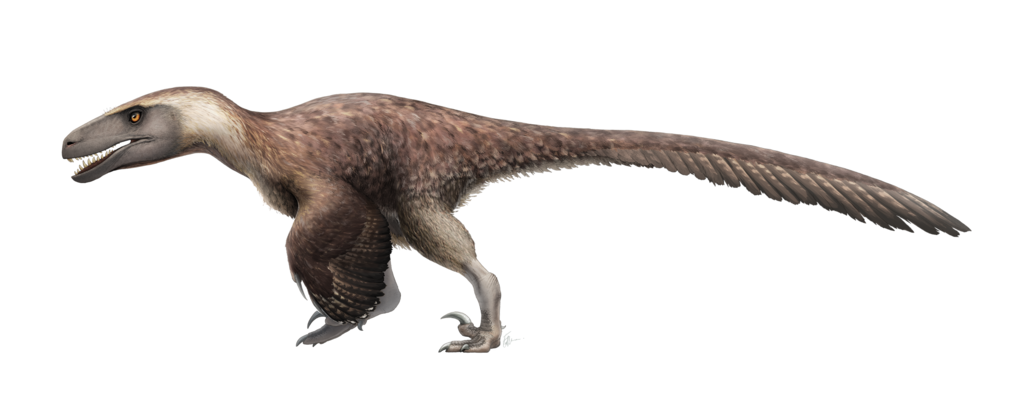
If you told an 80s kid that many dinosaurs actually had feathers, there’s a good chance they would’ve laughed. Feathers were for birds, and dinosaurs were supposed to have scaly skin like dragons and crocodiles. Even when artists tried to imagine smaller, agile carnivores, they almost always drew them smooth‑skinned, with maybe a ridge of spikes at best. The idea of a fluffy, feathered predator sounded more like a joke than science.
Now, feathered dinosaurs are one of the most game‑changing discoveries in modern paleontology. Fossils from sites in China and other parts of the world have revealed a whole spectrum of feather types on dinosaurs: simple filaments, downy coverings, and more complex feather structures. This includes species closely related to velociraptor and other famous “raptors,” which were likely at least partially feathered in real life. Feathers probably started as insulation or display before they were ever used for flight. Once you accept that, the mental line between dinosaurs and birds gets very blurry, and birds start to look a whole lot like tiny, surviving dinosaurs in disguise.
6. Dinosaurs Were Just Oversized Lizards, Not Related to Birds
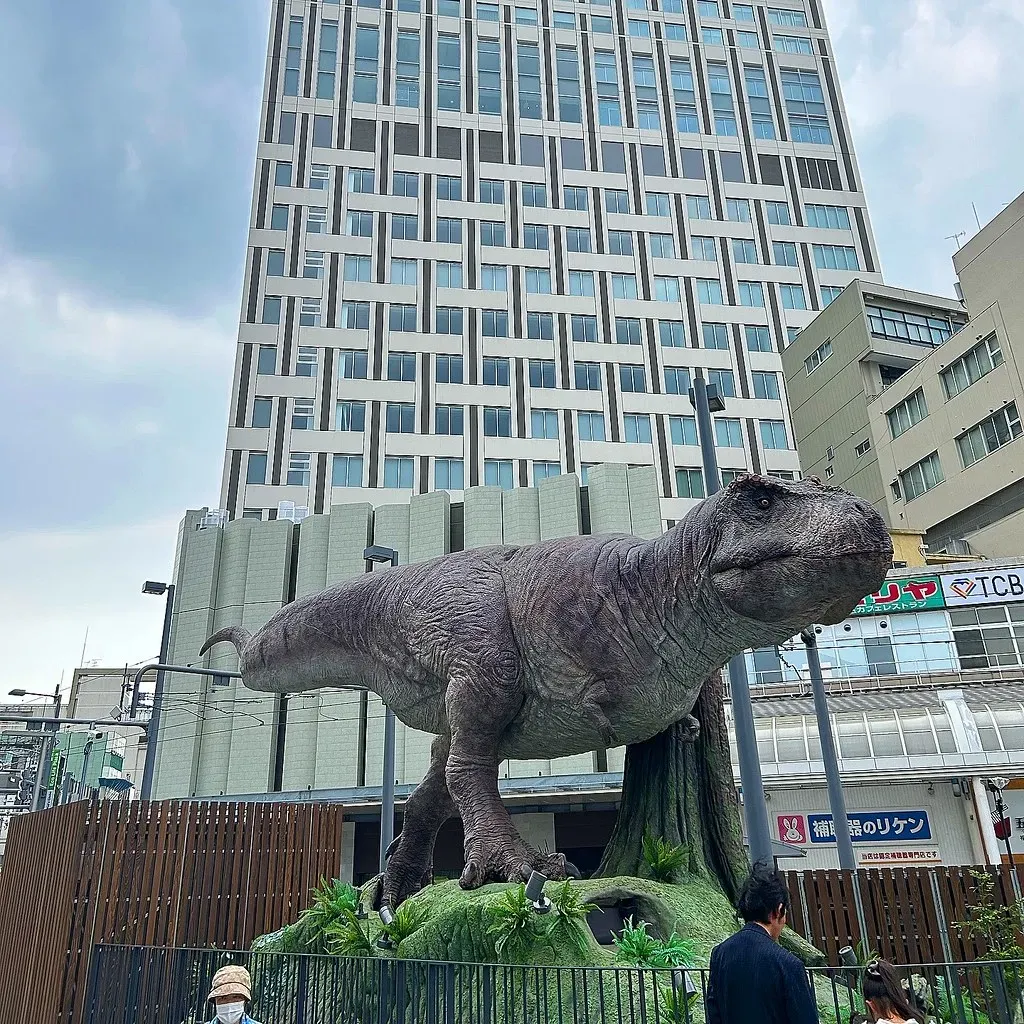
In the 80s, the usual story broken down for kids was simple: reptiles on one branch, birds on another, mammals on a third. Dinosaurs were described as prehistoric reptiles – basically giant, exotic lizards that had their moment and then vanished. Birds were treated as something completely separate, more like evolved descendants of small flying reptiles or a mysterious group that appeared later without a clear link to those big ground‑dwellers.
Today, the overwhelming consensus is that birds are living dinosaurs, specifically descendants of small, feathered theropods. When you look at the details – hollow bones, special ankle and wrist joints, similar nesting and growth patterns – the connection is almost embarrassingly obvious. Chickens, pigeons, and crows are not just distant dinosaur cousins; they sit squarely on the dinosaur family tree. That means when you watch a hawk glide or a robin hop in the yard, you are literally watching the last surviving branch of the dinosaur lineage doing its thing in the modern world, which is a far cry from that old “giant lizard” image.
7. Dinosaurs All Lived at the Same Time in One Giant Prehistoric Mash‑Up
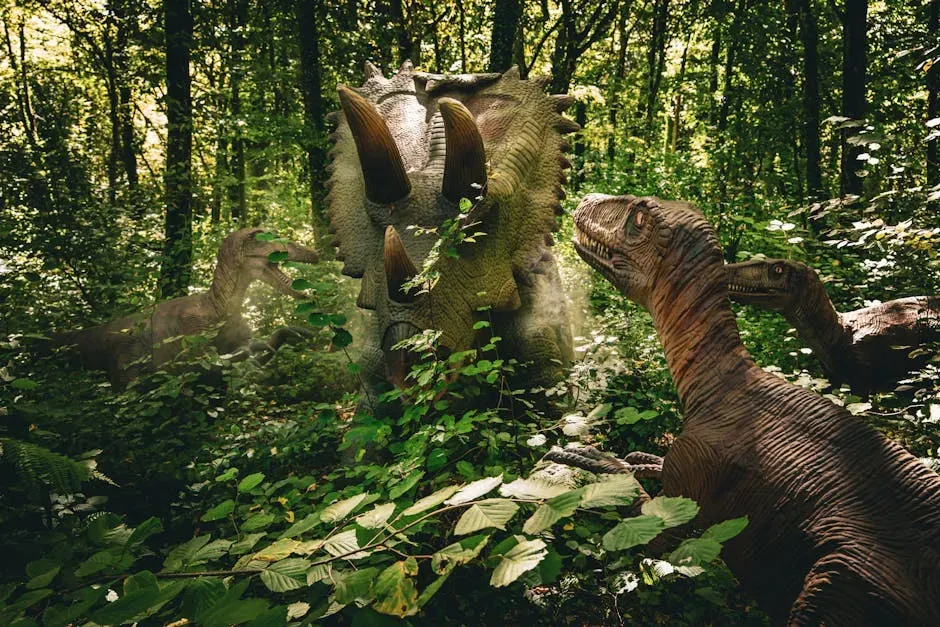
Saturday morning cartoons in the 80s had no problem showing a stegosaurus, a tyrannosaurus, and a brontosaurus all stomping around together like neighbors in the same ancient suburb. For a kid, it felt natural to lump all dinosaurs into one single time called “the dinosaur age,” as if they all coexisted side by side until one big extinction event wiped them out in one dramatic moment. It is a bit like assuming Cleopatra and smartphones shared the same era just because both are “in the past.”
Modern timelines show that dinosaur history stretches over tens of millions of years, with huge gaps between many of the famous species. Stegosaurus, for instance, disappeared long before tyrannosaurus ever evolved, separated by more time than lies between the last dinosaurs and humans. Different species dominated different periods and regions, with entire ecosystems rising and falling long before other iconic dinosaurs even appeared. The real story is less like a crowd photo and more like a long, complex movie series where the main characters keep changing, and almost no one from the early episodes is still around in the finale.
8. Dinosaurs Were Doomed Because They Were Poorly Designed
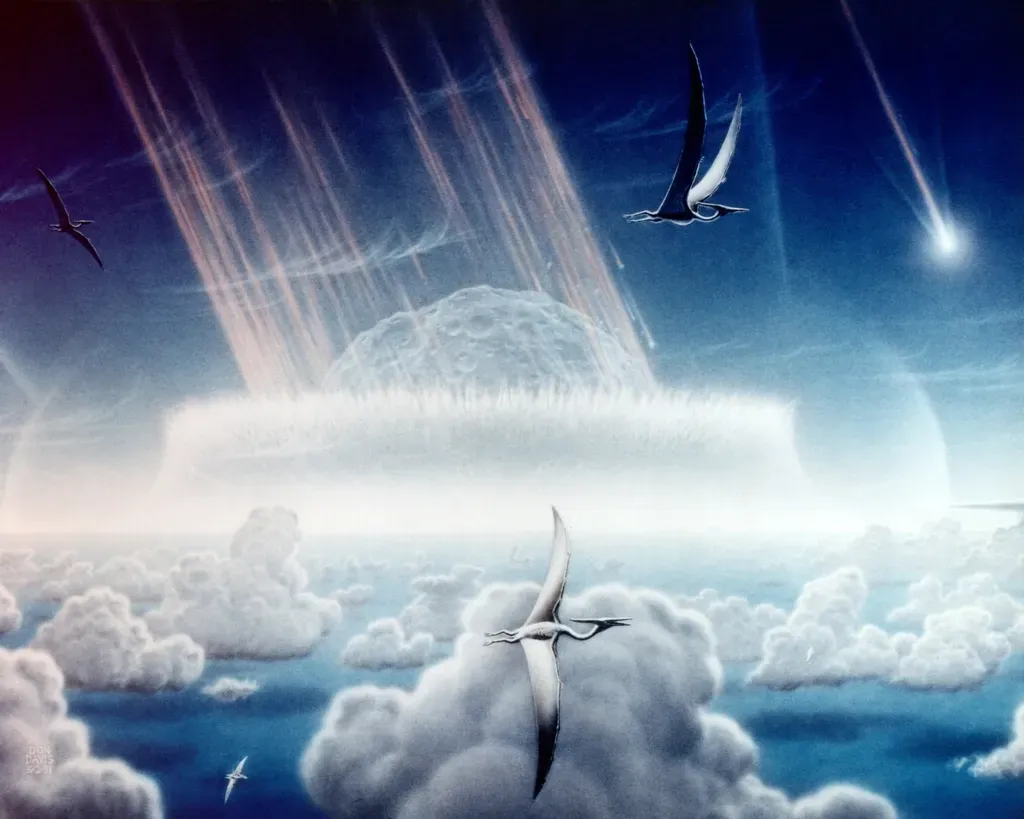
Another 80s favorite: dinosaurs died out because they were evolutionary dead ends – too big, too slow, too specialized, and just not as smart or flexible as mammals. Adults sometimes explained their extinction as the “inevitable” result of being badly adapted, like nature quietly corrected a giant mistake. That made dinosaurs feel like cosmic losers, defeated by their own clumsiness and replaced by supposedly superior, more advanced animals.
Current evidence tells a very different story. Dinosaurs thrived for an astonishing length of time, dominating land ecosystems for tens of millions of years in ways that dwarf the entire human story so far. Many groups were incredibly successful and diverse right up until a sudden catastrophe – most likely a massive asteroid impact combined with volcanic activity and climate shifts – slammed the planet. Under more stable conditions, there is no clear sign that dinosaurs were fading out because they were inherently “flawed.” In fact, the only dinosaur branch that got lucky enough to survive that disaster – birds – is still doing spectacularly well today, which is a pretty strong argument that the design was working just fine.
9. Dinosaurs Were Always Roaring, Bloodthirsty Killers
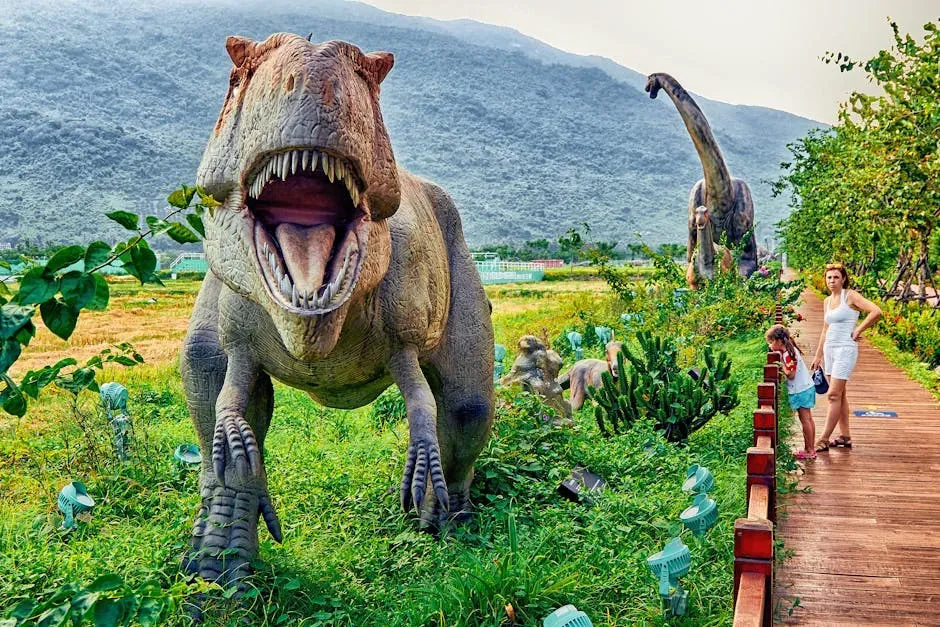
Thanks to toy commercials and 80s movies, many kids grew up thinking every dinosaur spent its day roaring, fighting, and endlessly hunting anything that moved. Herbivores were basically background snacks, and the main storyline was one long chase scene. The emotional tone was pure monster flick: lots of teeth, lots of violence, and not much room for subtle behavior like parenting, communication, or social bonds.
Paleontologists now see a much richer picture, with evidence of nesting, brooding, and herd behavior in several dinosaur groups. Fossilized nests and egg clutches, trackways that show groups moving together, and bonebeds with animals of different ages all hint at family structures and social dynamics. Some species surely were fierce predators, but even they spent most of their time doing what real animals do today: resting, finding mates, raising young, avoiding injury, and navigating complex environments. The more we learn, the clearer it gets that dinosaurs were not movie monsters – they were animals living full, ordinary lives in extraordinary bodies.
Conclusion: Why Updating Our Dinosaur Myths Actually Matters
There is something strangely comforting about realizing how wrong the 80s picture of dinosaurs really was. It is not just a trivia correction; it is a reminder that science is allowed to change its mind when new evidence appears, even if it makes our childhood posters obsolete. To me, that makes the story of dinosaurs more exciting, not less, because it shows that our understanding of the past is alive and constantly evolving rather than frozen in an old textbook illustration.
When we swap swamp‑bound tail‑draggers for agile, feathered, bird‑like animals, we are not just upgrading our mental wallpaper – we are learning to see the world, and ourselves, as part of a much stranger, more intertwined history. Dinosaurs stop being clumsy failures and become what they really were: wildly successful survivors, taken out not by incompetence but by cosmic bad luck, with one branch still flapping around in our backyards. Next time you watch a pigeon strut or a hawk circle overhead, it might be worth asking yourself: if that is a dinosaur, how many other things from the 80s have we been getting wrong all along?