
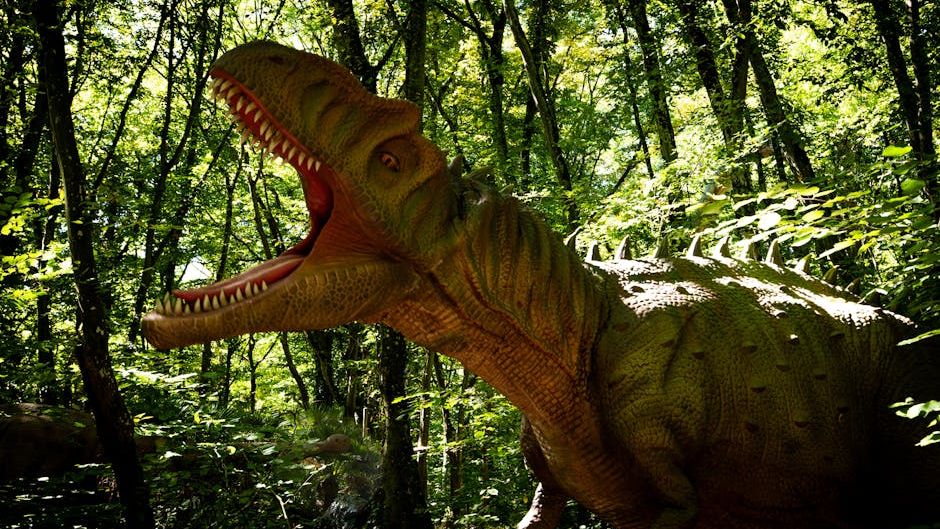
Everyone knows T. rex. It is the poster child of prehistoric fear, the monster on lunchboxes and movie posters. But here is the twist almost nobody talks about: T. rex might not even crack the top ten when it comes to pure, nightmare-fuel terror. In the fossil record, there are predators that were bigger, faster, stranger, and sometimes far more brutal than the famous king of the tyrant lizards.
When I first started digging into lesser-known dinosaurs, I kept thinking, how did we collectively miss these things? Some of them were like crocodiles welded to sharks, others like land-walking buzzsaws with jaws. By the time you get to the end of this list, T. rex starts to feel almost… reasonable. Let’s walk through ten dinosaurs that deserve way more attention – and that you’d really never want to meet in a dark Cretaceous forest.
1. Spinosaurus aegyptiacus – The River Monster From Hell
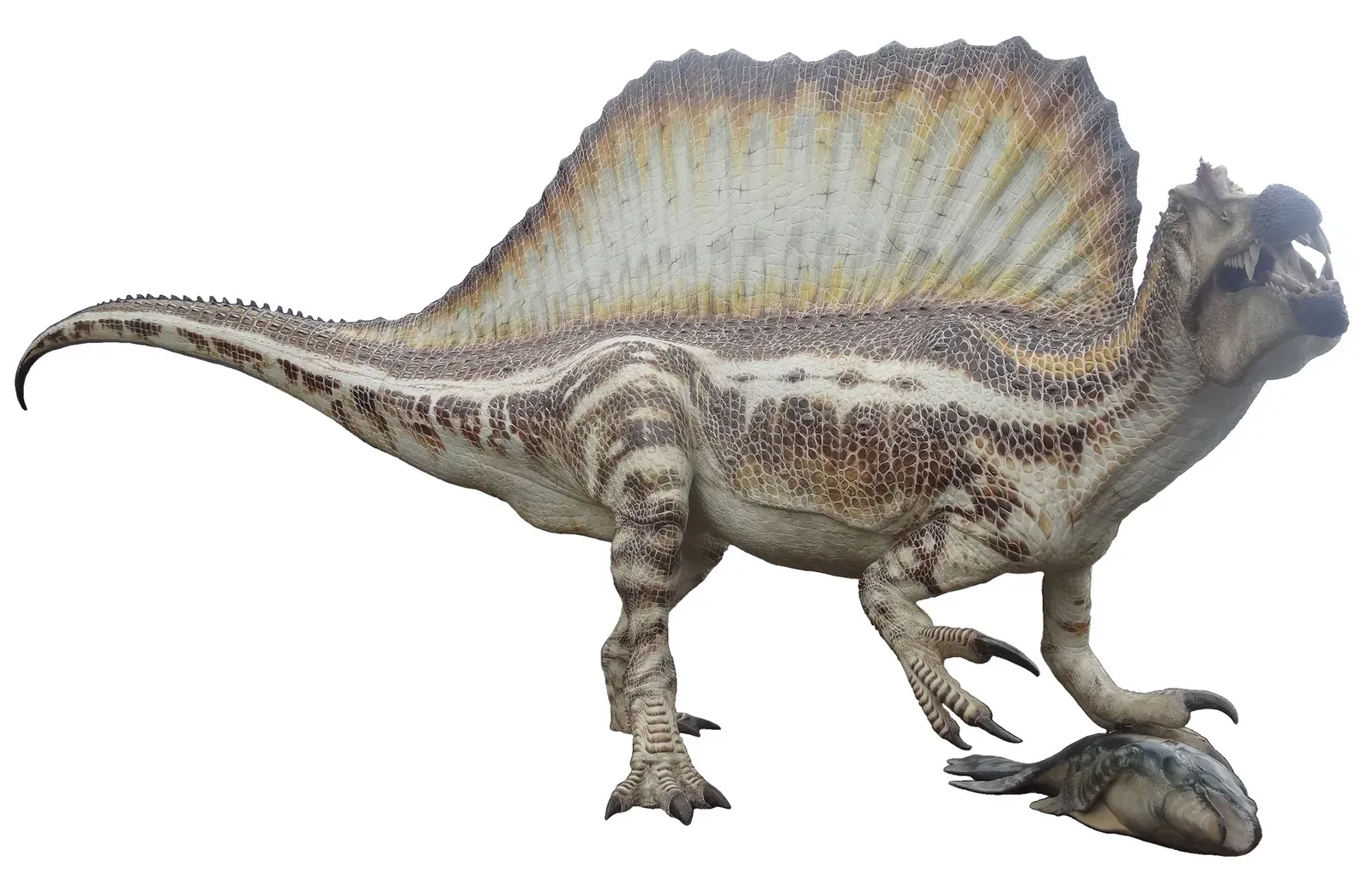
Imagine a predator so big it likely out-massed T. rex, with a crocodile-like skull nearly as long as a human is tall and a sail towering over its back. That is Spinosaurus, a semi-aquatic super predator that ruled rivers and coastal wetlands in what is now North Africa. While T. rex was terrifying on land, Spinosaurus blurred the line between dinosaur and giant crocodile, hunting in water where most big theropods did not dare to specialize.
Recent research suggests Spinosaurus had dense bones and a powerful tail adapted for swimming, making it more like a dinosaurian river dragon than a classic land hunter. Its long, narrow jaws were loaded with cone-shaped teeth ideal for snagging slippery prey such as huge fish, but that does not mean it could not do serious damage to anything else in the water. If T. rex is the horror-movie slasher crashing through your bedroom door, Spinosaurus is the monster that drags you under the surface before you even see it coming.
2. Giganotosaurus carolinii – The Southern Giant That Out-Bulked T. Rex
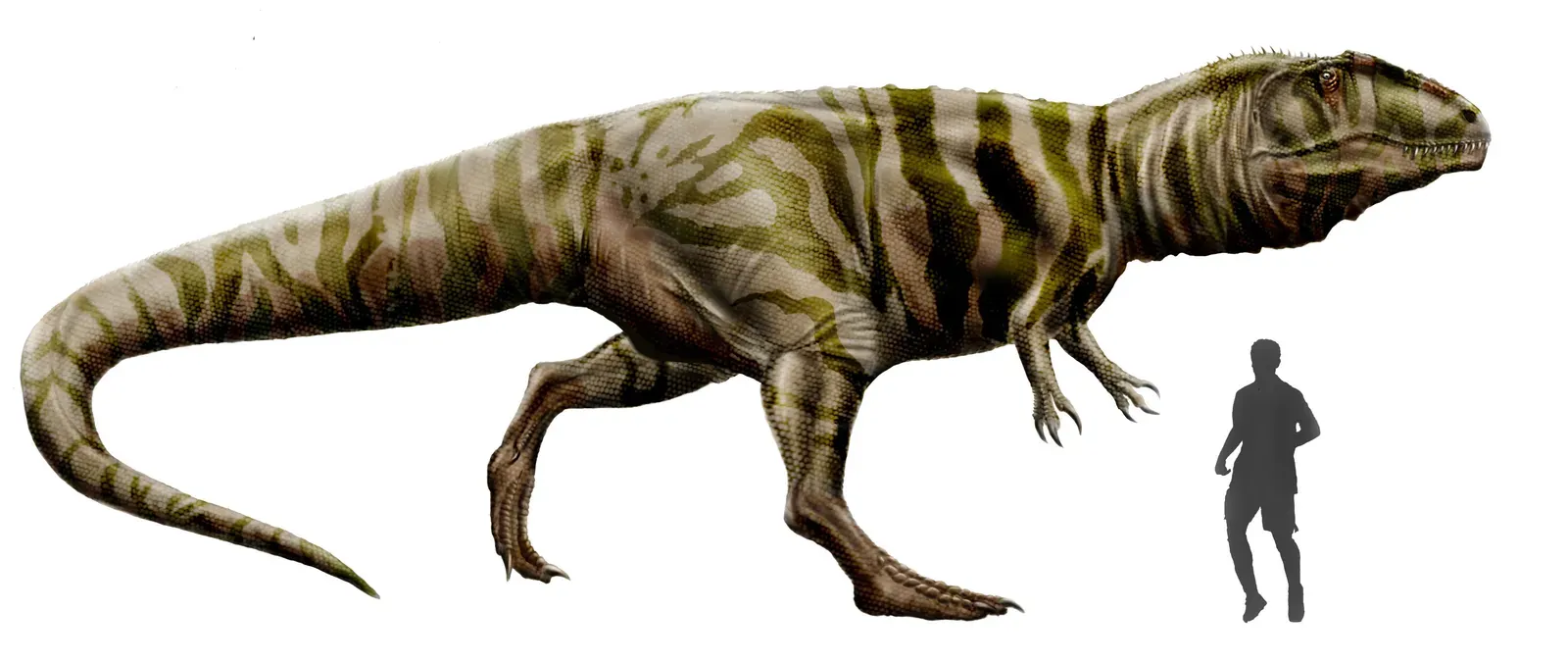
If you are looking for something that beats T. rex at its own game, Giganotosaurus is a strong contender. Living in what is now Patagonia during the Late Cretaceous, this predator was slightly longer and comparable or even heavier in some estimates than T. rex. Its skull stretched more than a meter and a half, packed with slicing teeth built to carve through massive herbivores like giant sauropods.
Unlike T. rex, which had thick, bone-crushing teeth, Giganotosaurus had blade-like teeth better suited to slashing and tearing, almost like a row of massive steak knives. Some paleontologists think it may have hunted in groups, which, if true, is frankly horrifying: picture several T. rex-sized animals working together to strip down a multi-ton prey animal. T. rex might win the popularity contest, but in a raw, terrifying arms race of size and cutting power, Giganotosaurus holds its own and then some.
3. Carcharodontosaurus saharicus – The Shark-Toothed Butcher
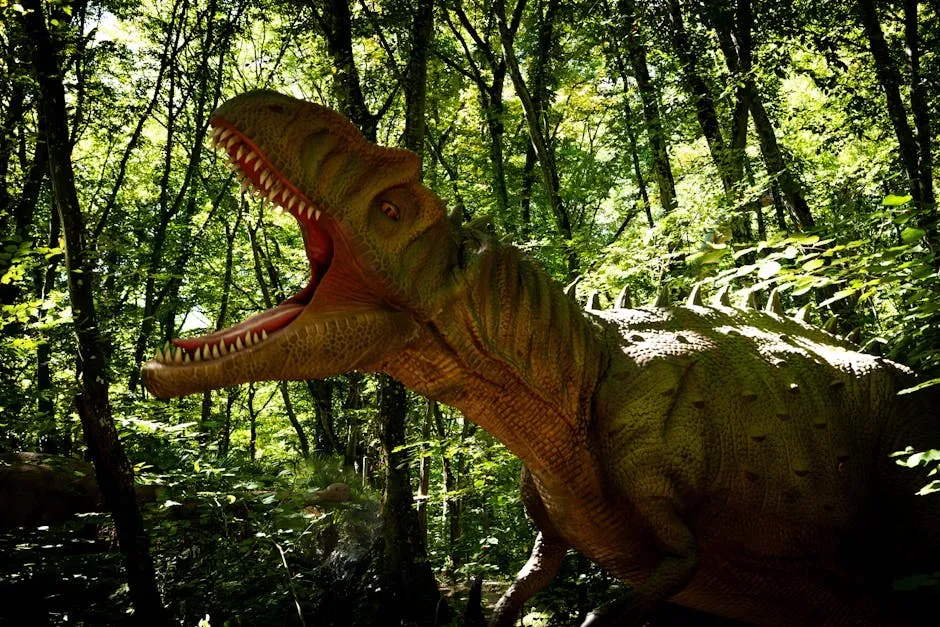
The name Carcharodontosaurus literally means shark-toothed lizard, and it earns that title with a grin full of serrated teeth that look disturbingly like those of a great white shark. This North African predator reached lengths comparable to T. rex and Giganotosaurus, making it one of the largest land carnivores ever discovered. Its skull was enormous, with long, laterally compressed teeth designed to slice rather than crush.
What makes Carcharodontosaurus particularly chilling is that its entire anatomy screams high-output killing machine. With long, muscular legs and a relatively lightly built body for its size, it was likely more agile than T. rex, especially in open environments. If T. rex was a heavyweight boxer, Carcharodontosaurus feels more like a gigantic, knife-wielding sprinter, capable of closing the distance fast and leaving deep, fatal wounds in just a few bites.
4. Mapusaurus roseae – The Pack-Hunting Titan
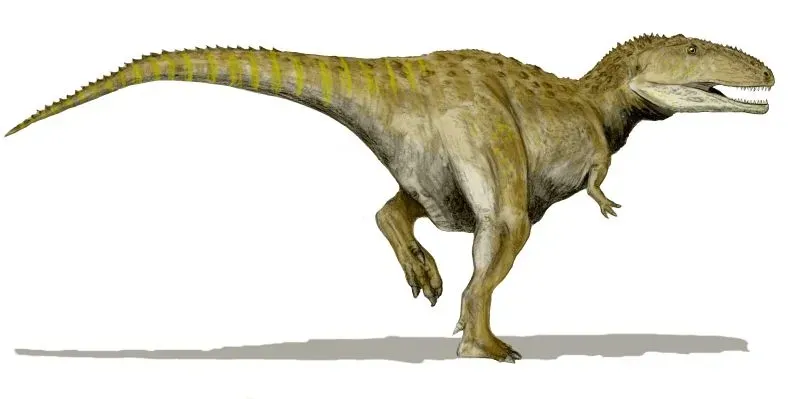
Mapusaurus might not be a household name, but it sits in the same family as Giganotosaurus and may have been just as frightening. Fossils of multiple individuals were found together in Patagonia, which many researchers interpret as evidence of group living or even pack hunting. That idea alone is enough to make T. rex feel tame by comparison: it is one thing to face one giant predator, and a completely different terror to imagine several coordinating attacks.
Mapusaurus was large, likely approaching or matching T. rex in length, with blade-like teeth and a powerful tail for balance during lunges. If it did hunt in groups, it could have targeted some of the biggest plant eaters of its time, taking them down through repeated slashes and blood loss. On a personal level, I find this scenario far more chilling than the classic lone super predator – multiple massive theropods circling and testing prey, like wolves scaled up to the size of buses.
5. Torvosaurus gurneyi – The Forgotten Jurassic Killer
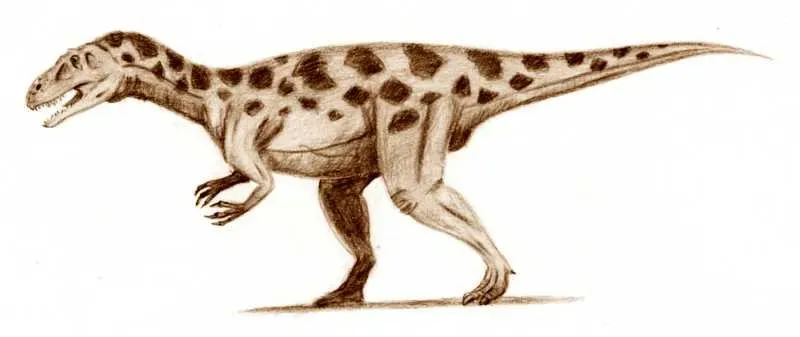
Torvosaurus lived long before T. rex, during the Late Jurassic, and it was one of the largest known predators of its time in what is now Europe and North America. Torvosaurus gurneyi, described from Portugal, may have reached lengths close to T. rex, making it a gigantic hunter in an ecosystem filled with stegosaurs and sauropods. Just picturing something that big stalking through Jurassic floodplains instantly upgrades the fear factor of that era.
Its skull and teeth were built for a combination of crushing and tearing, and it likely relied on ambush tactics, using its sheer size and power to overwhelm prey. Unlike T. rex, which we tend to imagine in open North American plains, Torvosaurus lurked in environments rich with vegetation and river systems, where visibility could be limited and ambushes more sudden. If you dropped T. rex back into that world, Torvosaurus would still give it serious competition, and in that murky Jurassic landscape, it might even feel like the more terrifying encounter.
6. Acrocanthosaurus atokensis – The High-Spined Stalker
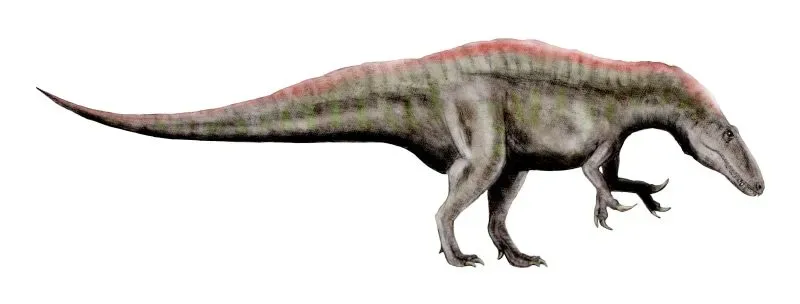
Acrocanthosaurus is one of those dinosaurs that looks stranger the longer you stare at it. This large predator from Early Cretaceous North America sported tall neural spines along its back, giving it a raised, almost ridge-like profile. It was slightly smaller than T. rex overall but still massive, with a skull bristling with serrated teeth and a body built for power and endurance rather than short bursts of speed.
Trackways associated with Acrocanthosaurus suggest complex movement and possibly even coordinated behavior, hinting that it might have been a persistent, strategic hunter rather than just a sprinter. There is something extra unnerving about a predator that can shadow you for long distances rather than simply relying on a quick chase. In a way, T. rex is like a thunderclap you see coming, while Acrocanthosaurus feels more like a storm front that quietly follows you for miles until you finally slip.
7. Allosaurus fragilis – The Original Cretaceous Boogeyman’s Predecessor
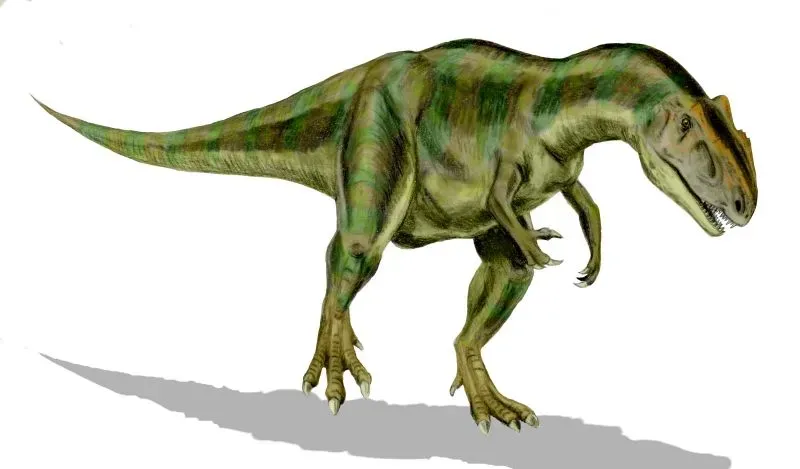
Allosaurus is not obscure among dinosaur fans, but it is constantly overshadowed by its younger, bulkier cousin, T. rex. Yet in its own time during the Late Jurassic of North America, Allosaurus was every bit as terrifying within its ecosystem. It was smaller and more lightly built than T. rex, but that meant it could be faster and more agile, with jaws designed to open wide and deliver rapid, repeated bites that sliced flesh like a prehistoric saber.
Some studies suggest Allosaurus may have used a hatchet-style attack, slamming its upper jaws down into prey using neck muscles as much as bite force. That mental image alone is brutal: a predator using its entire head like a bladed hammer. Add to that the possibility of group hunting indicated by multiple individuals found together, and suddenly the Jurassic world feels less like a gentle land of lumbering giants and more like a battlefield ruled by athletic, coordinated killers.
8. Utahraptor ostrommaysorum – The Supersized Raptor You Actually Should Fear
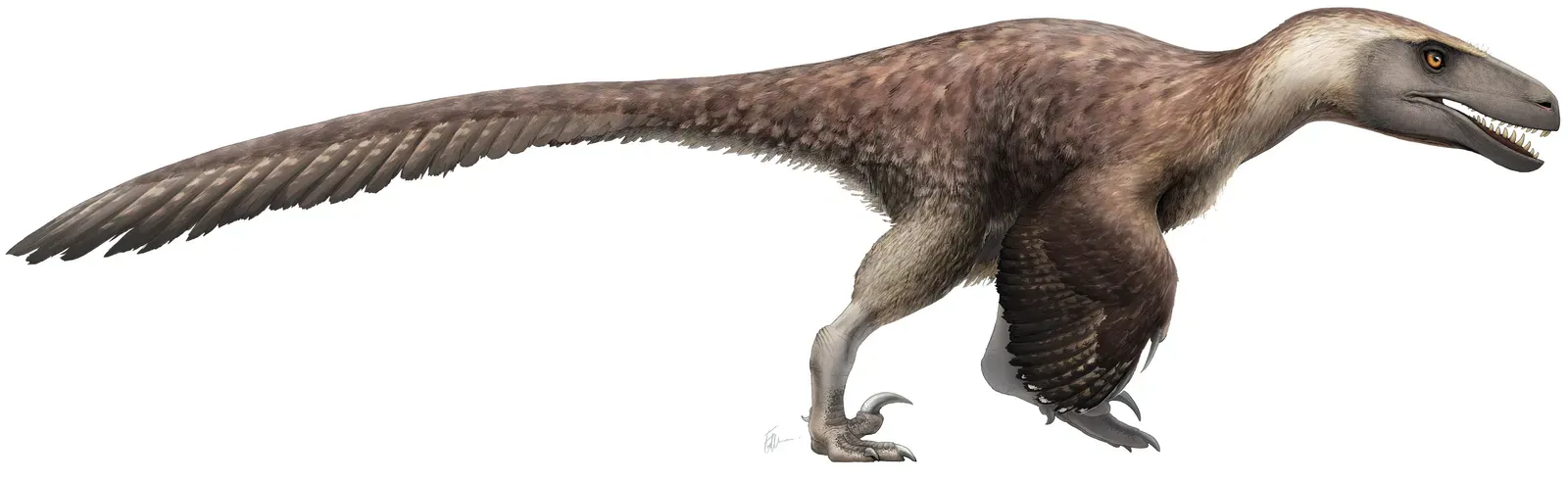
If movie raptors gave you nightmares, Utahraptor is the real-life version cranked to maximum. Much larger than the famous Velociraptor, Utahraptor lived in what is now Utah during the Early Cretaceous and likely weighed as much as a large human or more. It carried huge, curved claws on its second toes, potentially over twenty centimeters long, perfect for gripping, slashing, or pinning down prey.
While it was not as massive as T. rex, the terror of Utahraptor comes from imagining its speed, intelligence, and possible group behavior. A single T. rex is horrifying, but a pack of large, feathered predators darting in and out, slashing at tendons and soft tissue, could be even worse. It is the difference between facing a charging bull and being surrounded by a team of knife fighters: in terms of personal, up-close fear, Utahraptor might actually win.
9. Therizinosaurus cheloniformis – The Nightmare With Giant Claws
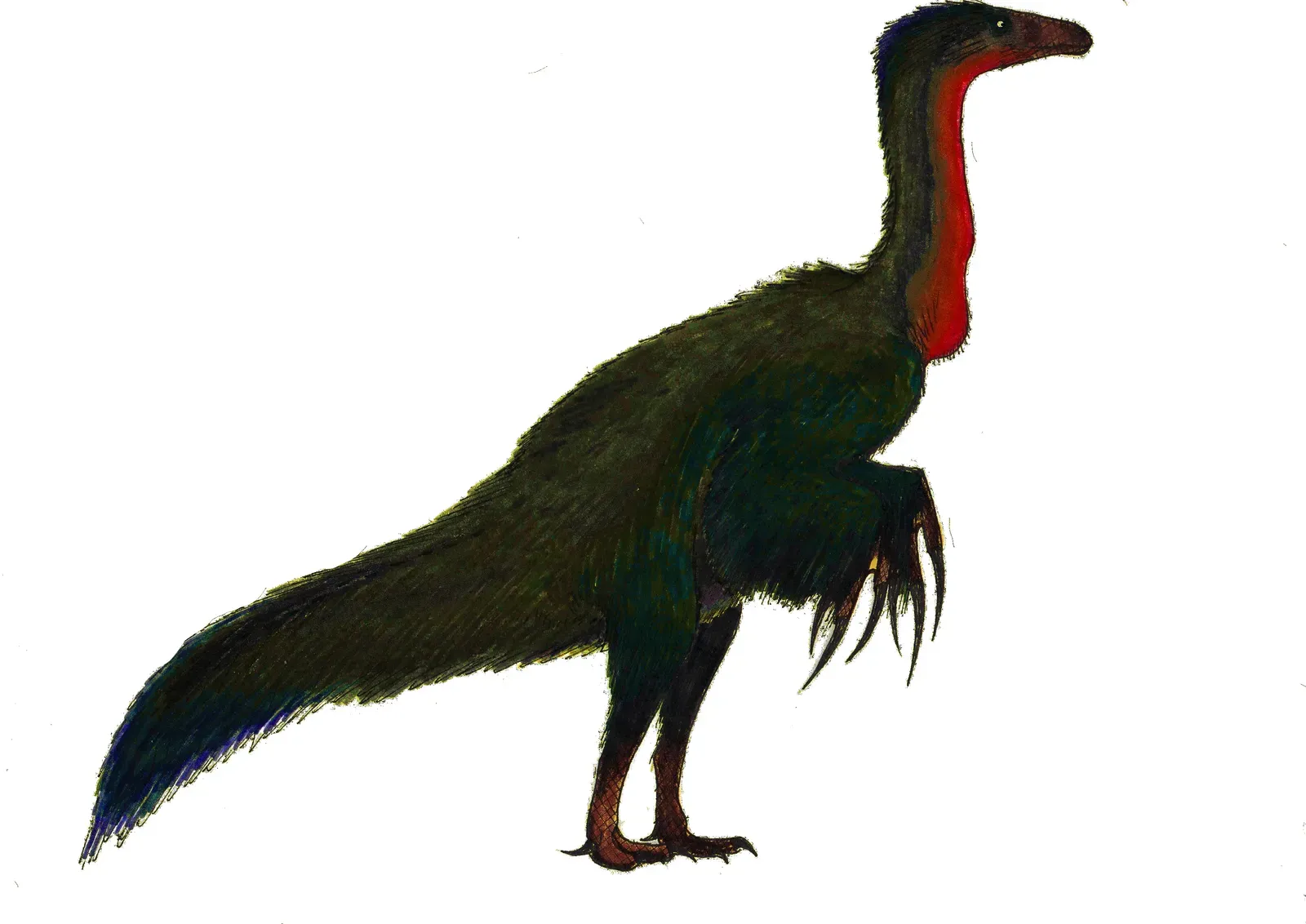
Therizinosaurus is one of the weirdest dinosaurs ever discovered, and its terror factor comes straight from that bizarre design. This Late Cretaceous dinosaur from Mongolia had enormous, scythe-like claws on its hands, some of the longest known in the animal kingdom, stretching longer than many people’s arms. Although it was probably herbivorous or omnivorous, those claws could absolutely have been used in defense, and a defensive swipe from Therizinosaurus would have been catastrophic.
Standing upright with a pot-bellied body, long neck, and feathered form, it might look less like a classic predator and more like something out of a dark fantasy sketchbook. But that almost makes it more unsettling: a giant, possibly slow-moving creature covered in feathers, calmly ripping vegetation or, if threatened, potentially disemboweling an attacker with one stroke. Even if it was not a dedicated hunter, I would still rather take my chances with a distant T. rex than accidentally stumble into the personal space of an irritated Therizinosaurus.
10. Deinocheirus mirificus – The Giant Mysterious “Dino-Monster”
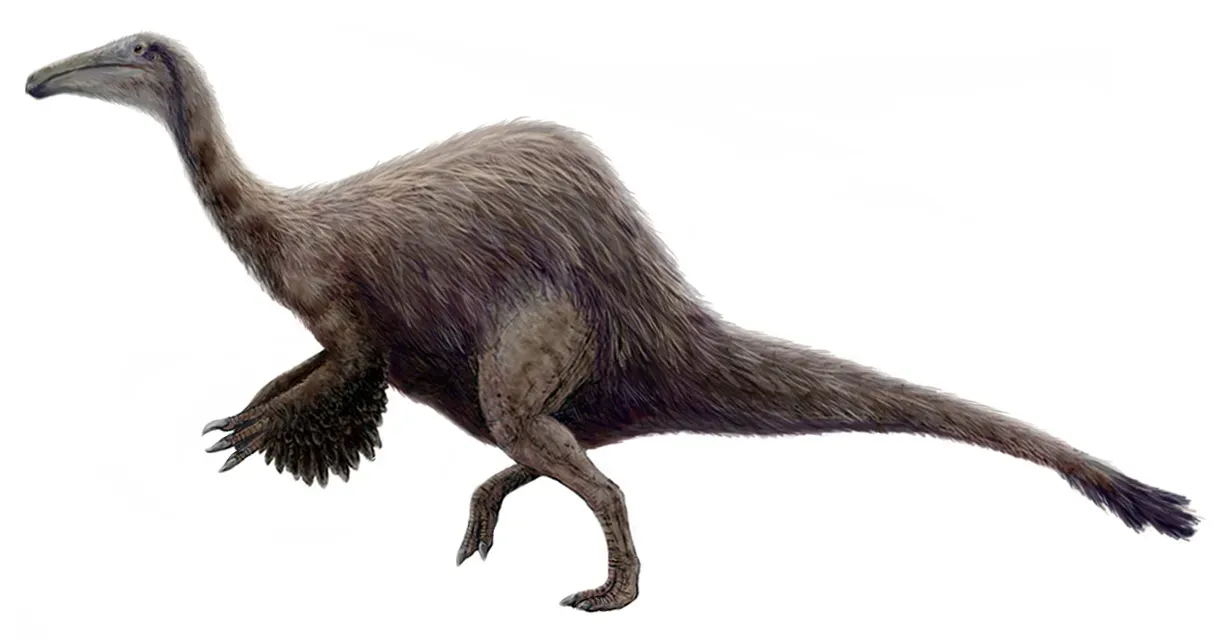
For decades, Deinocheirus was known only from a pair of massive arms with huge claws, which let imaginations run wild. When more complete fossils were finally found, the full picture was somehow even stranger than the guesses. This Late Cretaceous dinosaur combined a duck-like bill, a humped back, long clawed arms, and a bulky, towering body that could rival a small sauropod in height. It was likely omnivorous, feeding on plants, small animals, and anything it could scoop up in river environments.
What makes Deinocheirus terrifying is not straightforward predatory behavior but sheer uncanny presence. Picture wading birds like herons or shoebills, now scale that eerie, watchful vibe up to the size of a truck, and give it massive claws capable of brutal defense. It might not have been chasing down prey like T. rex, but if we are being honest, stumbling across a looming, silent Deinocheirus in a foggy floodplain sounds just as chilling as any classic movie monster.
Conclusion: Maybe T. Rex Was Never the Scariest After All
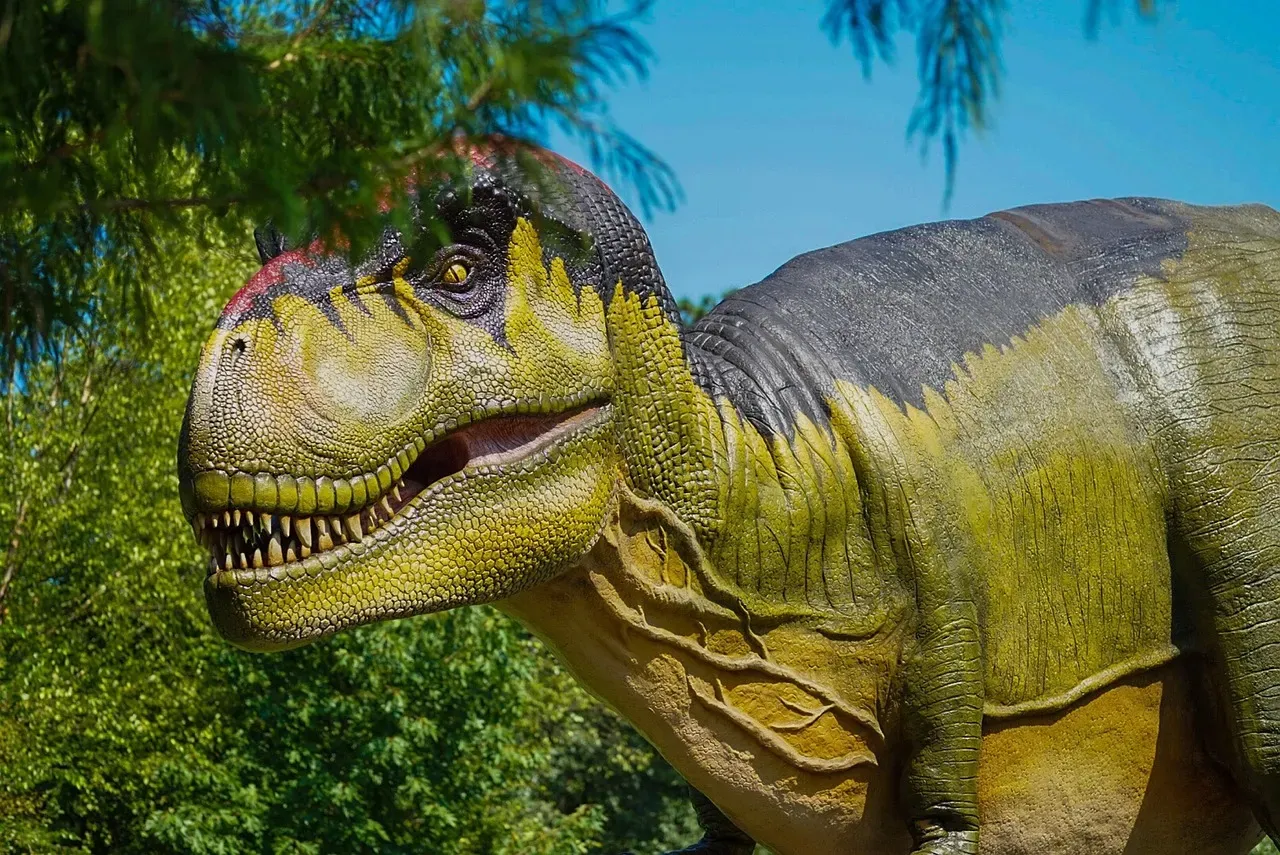
The more we learn about the dinosaur world, the more T. rex starts to look less like a singular nightmare and more like one frightening member of a much larger, more varied horror show. Some rivals, like Giganotosaurus and Carcharodontosaurus, beat it on size or cutting power, while others such as Utahraptor and Allosaurus ramp up the terror through agility, strategy, or sheer unpredictability. Then you have the truly odd forms – Therizinosaurus and Deinocheirus – that remind us nature does not care what fits our idea of a proper monster; it just follows the rules of survival and evolution.
Personally, I think T. rex stays famous not because it was objectively the most terrifying, but because it sits at the sweet spot where our imaginations, fossils, and pop culture all intersect. Once you peek beyond that spotlight, though, it is impossible not to see a whole cast of creatures that could steal the crown of fear in a heartbeat. So next time someone gushes about T. rex being the ultimate dinosaur, ask them which is worse: one tyrant lizard you see coming, or a world full of stranger, meaner, and sometimes smarter killers waiting in the shadows – what would you really be most afraid to meet?