If you grew up memorizing dinosaur flashcards and drawing giant green lizards stomping through swamps, you’re not alone. For a long time, the way we taught kids about dinosaurs lagged decades behind what scientists were actually discovering. Textbooks, posters, even museum gift shops kept repeating the same old ideas, long after paleontologists had already moved on.
That gap between what we learned as kids and what scientists know now is wild. Some of the “facts” that felt rock solid in third grade are now about as reliable as a crayon drawing on a fridge. Let’s walk through six of the biggest myths your elementary school teacher probably passed along – and why modern science has completely flipped them on their heads.
1. Dinosaurs Were All Slow, Sluggish, Cold‑Blooded Reptiles
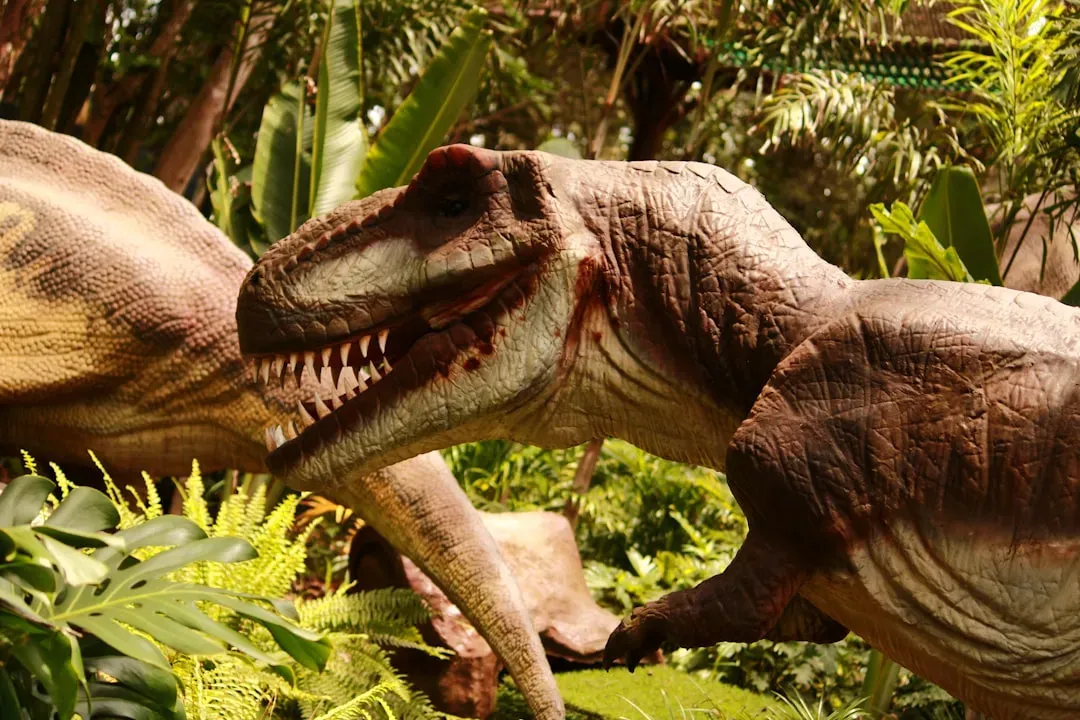
Remember those pictures of dinosaurs as huge, lumbering beasts dragging their tails through murky swamps? That image was based on a really old assumption: that dinosaurs were just oversized versions of modern lizards. In that view, they were cold‑blooded, lazy, and barely able to move quickly under their own weight. It sounded logical at the time, but it turns out it was more guesswork than evidence.
Over the last few decades, scientists have found bone structures, growth rings, and even oxygen isotopes that point to much more active animals with higher metabolisms. Many dinosaurs grew incredibly fast, closer to birds and mammals than to modern reptiles. Their limb structure also tells a different story: legs positioned under the body, strong muscle attachments, and trackways that show fast, agile movement. Instead of swamp‑dragging couch potatoes, a lot of dinosaurs were built more like long‑distance runners or sprinters – not exactly the sleepy lizards you saw on those classroom posters.
2. All Dinosaurs Were Green or Brown, Scaly, and Pretty Boring to Look At
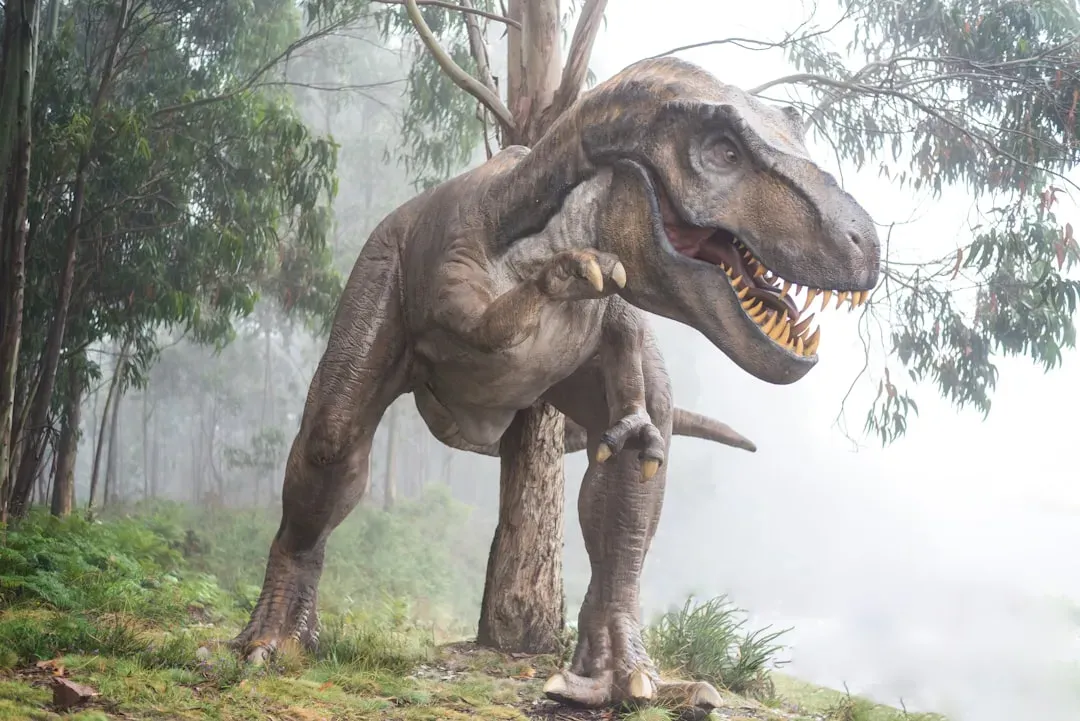
The classic schoolbook dinosaur is usually a dull olive green or muddy brown, covered in scales and not much else. Teachers would say things like “they needed to blend in with their environment,” which sounds reasonable if you’ve never seen a parrot or a poison dart frog. The unspoken assumption was that dinosaurs were basically giant crocodiles in camouflage, drab and colorless because “nature is practical.”
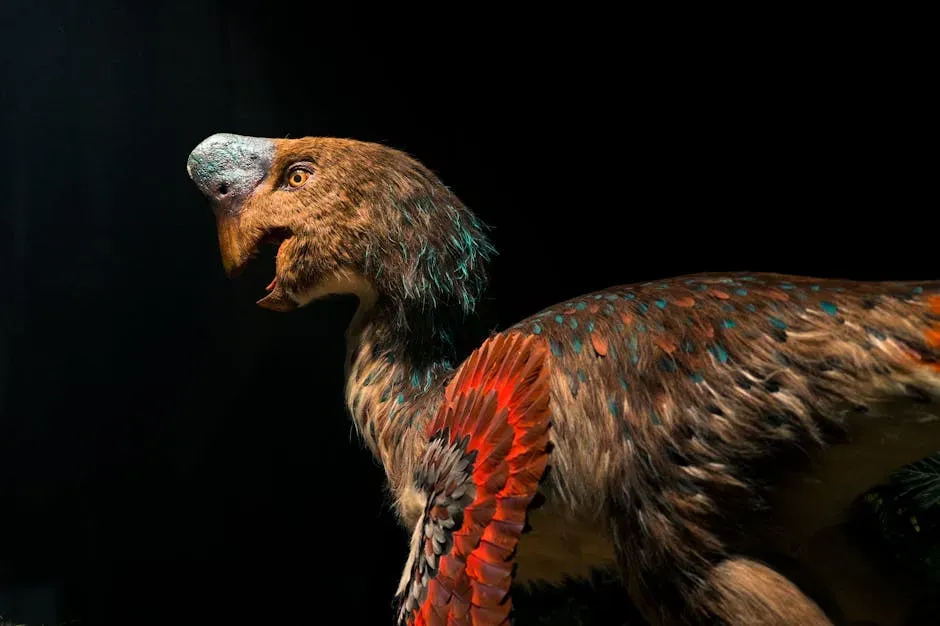
Then paleontologists started finding something game‑changing: fossilized structures in feathers called melanosomes, which can preserve clues to original colors and patterns. By comparing these structures to those in modern birds, researchers have reconstructed dinosaurs with bands, stripes, and rich shades – from dark, glossy tones to rusty reds and even iridescent sheens. On top of that, we now know that many species had complex display features: crests, frills, quills, and feather fans. So while some dinosaurs were probably plain, others may have been as visually dramatic as tropical birds, more runway fashion show than dusty camouflage.
3. Dinosaurs and Humans Lived Side by Side
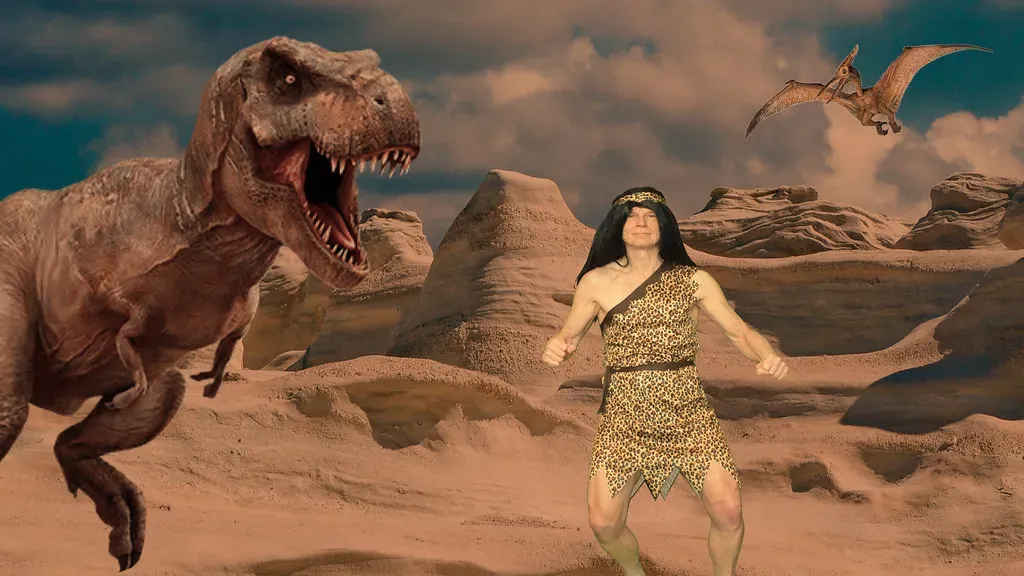
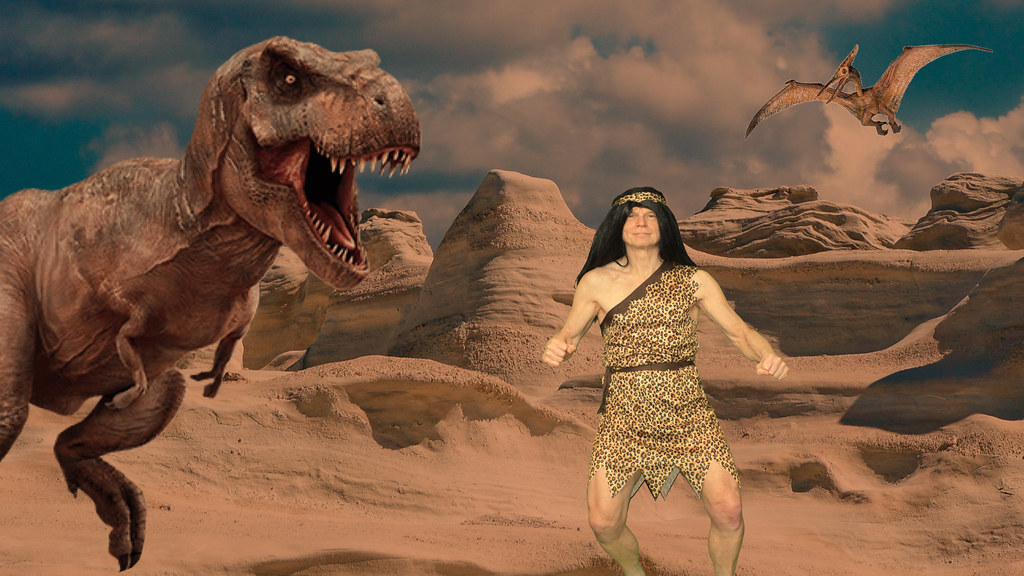
Even if your teacher never said this outright, a lot of classroom materials kind of implied it. Cartoons, posters, and even some children’s books casually mixed cavemen and dinosaurs like they were neighbors sharing the same prehistoric cul‑de‑sac. For a kid, it felt obvious: old stuff all happened at the same time, right? Brains love simple pictures, and nothing is simpler than “stone tools and T. rex, same era.”
The actual timeline is brutally clear: non‑avian dinosaurs died out around sixty‑six million years ago, while anatomically modern humans did not appear until a few hundred thousand years ago. There is a gap between us and T. rex so huge it makes the entire history of human civilization look microscopic by comparison. When you realize that the time between T. rex and a Stegosaurus is also tens of millions of years, you start to see how misleading that “one big prehistoric age” idea really was. If anything, humans are closer in time to the first iPhone than to the last dinosaur, and that puts those classroom cartoons in a very different light.
4. Dinosaurs Were Doomed Because They Were “Too Big and Too Dumb”
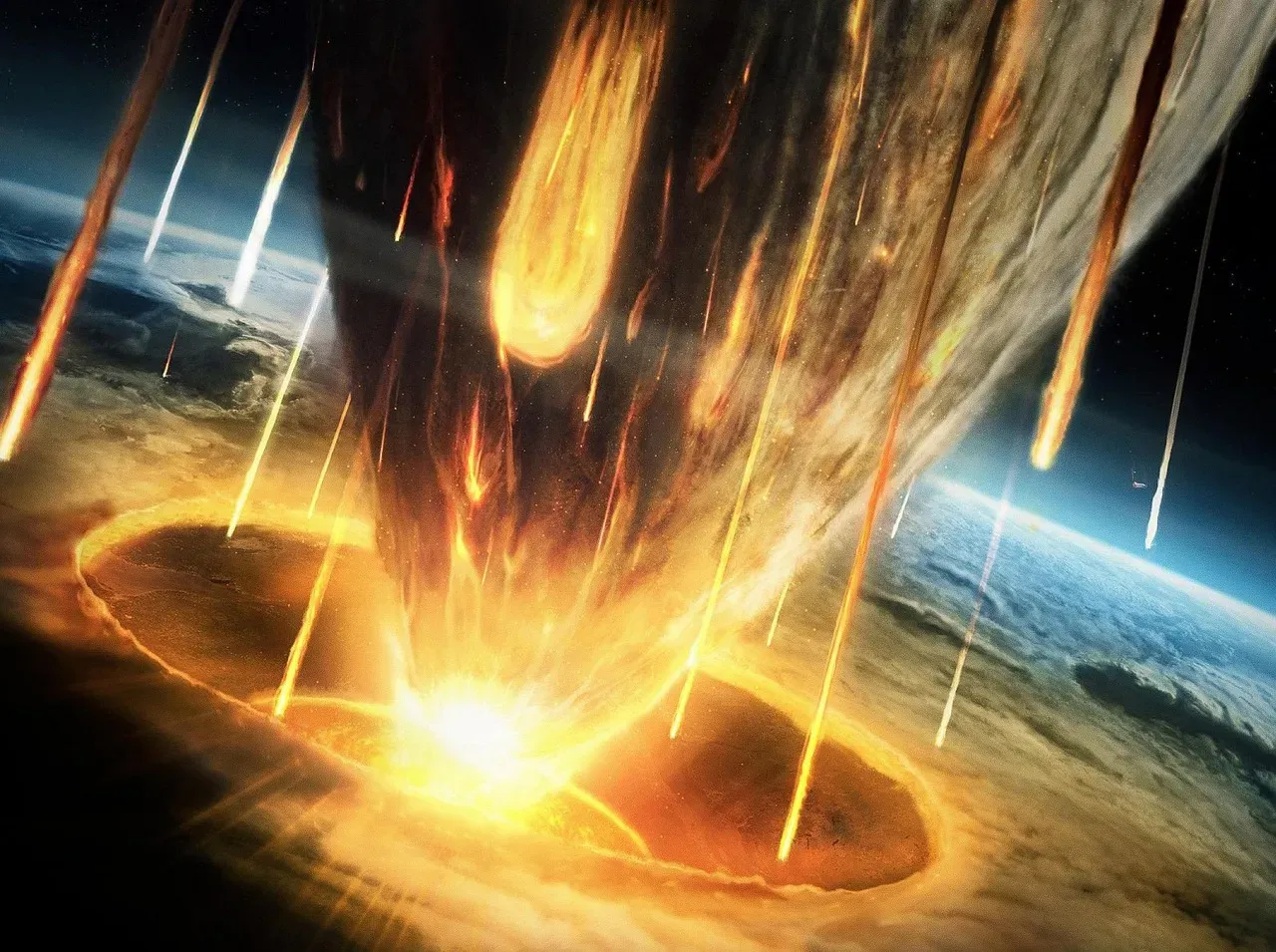
A surprisingly common school story went like this: dinosaurs got too big, too heavy, and too stupid, and nature basically “replaced” them with smarter mammals. It has that neat moral we love to give kids – brain over brawn, small but clever beats giant but foolish. The problem is, this is not what the fossil record shows, and it gives a wildly unfair picture of how successful dinosaurs actually were.
Dinosaurs dominated land ecosystems for well over a hundred million years, spread across multiple continents and climates, and evolved into a huge variety of forms. That is not what failure looks like; that is what success on an epic scale looks like. Many had relatively large brains for their body size, particularly some of the predatory theropods and maniraptoran dinosaurs, which show brain‑to‑body ratios comparable to or better than many modern reptiles and birds. Their extinction is now strongly linked to a catastrophic asteroid impact and its global aftereffects, not some slow decline caused by being “too dumb to live.” If a rock from space had not slammed into Earth, it is very possible that dinosaurs would still be the dominant large land animals today – and we might be the footnote.
5. Birds Are Not Dinosaurs – They’re Just “Related”

In school, the story was usually that dinosaurs died out and then, millions of years later, birds came along as their distant relatives. The idea that the sparrow on your windowsill is a living dinosaur would have sounded like a weird science fiction twist, not mainstream science. Teachers might say birds “evolved from reptiles,” skipping over the uncomfortable fact that dinosaurs are not just cousins in the reptile family tree – they are part of the direct line.
Today, the consensus among paleontologists is that birds are not just related to dinosaurs; birds are a particular group of theropod dinosaurs that survived the mass extinction. The skeletal similarities are everywhere: wishbones, hollow bones, three‑toed limbs, similar shoulder structures, and even the arrangement of feathers in fossilized specimens. Once you see those connections, it is hard to unsee them; a running emu or ostrich looks more like a tiny, slightly ridiculous theropod than anything else. So when we say the non‑avian dinosaurs went extinct, that “non‑avian” part matters a lot – because technically, dinosaurs are still with us, singing in the trees and stealing french fries at outdoor cafés.
6. The Asteroid Instantly Wiped Out All Dinosaurs in One Single Moment
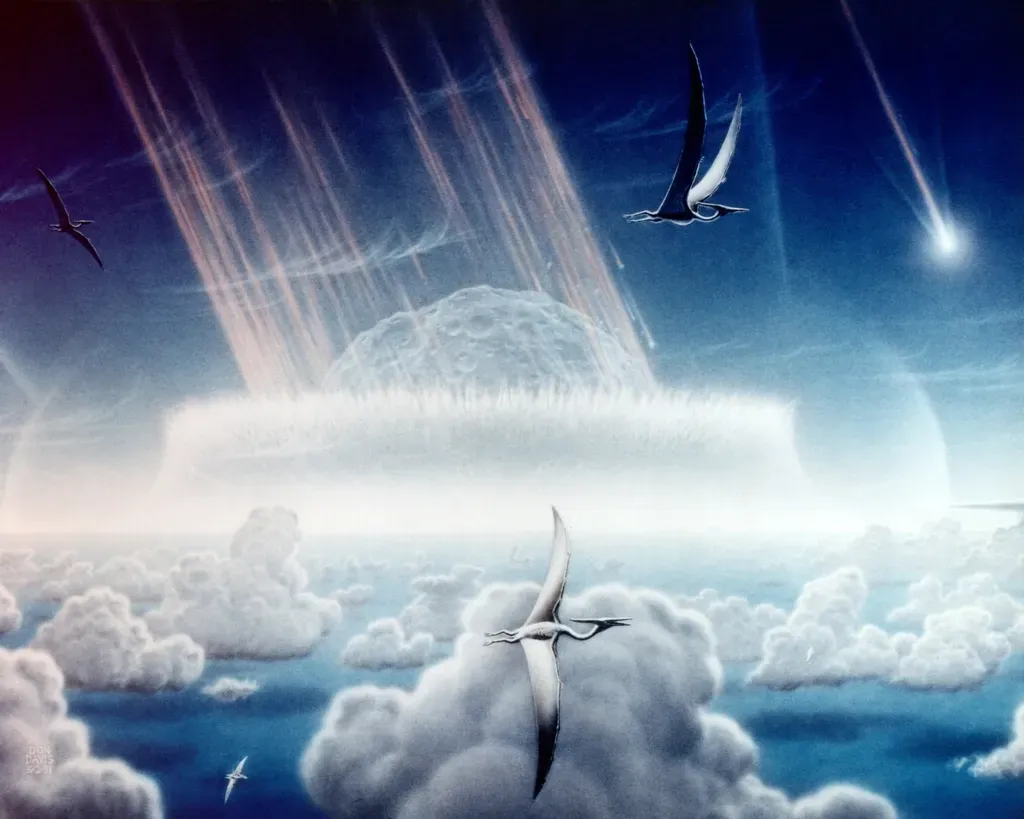
Many of us were taught a very dramatic, movie‑style version of the end: a giant rock hits, everything explodes, and every dinosaur drops dead almost at the same time. It is emotionally satisfying, like the final scene of a disaster film. But reality, as usual, is messier. While the asteroid impact was absolutely devastating, the extinction was not a single heartbeat moment where every dinosaur on Earth vanished at once.
The impact triggered a chain of disasters: global fires, a dust‑filled atmosphere that darkened the skies, rapid climate changes, and a collapse of food chains on land and in the oceans. Some dinosaur populations likely died off quickly, especially near the impact site, but others probably lingered for thousands or even tens of thousands of years as environments changed and resources vanished. The story is less “instant annihilation” and more “a brutal, drawn‑out unraveling” of ecosystems under extreme stress. To me, that slower, harsher reality is actually more haunting than the simple classroom version – and it reminds us how vulnerable even the mightiest creatures are when the planet itself turns hostile.
Conclusion: Time to Retire the Cartoon Dinosaurs in Our Heads
Looking back, it is almost funny how confident those old classroom posters seemed: green lizards, swampy backgrounds, cavemen nearby, the whole package served up as fact. Now we know dinosaurs were, in many cases, fast, warm‑blooded, feathered, complex animals that ruled the planet for an almost unimaginable span of time – and that their closest living descendants are watching us right now from city trees and backyard feeders. The myths we grew up with flatten that story into something smaller and duller than it deserves to be.
Personally, I find the updated picture way more exciting and a little humbling. The world of dinosaurs was not a clumsy prelude to humans; it was a rich, thriving era in its own right, and our species shows up very late to the party. Updating our mental image of dinosaurs is not just about trivia, it is about respecting the evidence and letting go of comforting, simple stories when reality turns out to be stranger and grander. Next time you see a pigeon strutting on the sidewalk, imagine it as the scrappy, street‑wise descendant of a long‑lost dynasty of giants – and ask yourself: which of today’s “facts” will our great‑grandkids laugh at the way we now laugh at our childhood dinosaur posters?