At first glance, supercontinents feel permanent, almost comforting. A whole planet’s land fused into a single colossal mass sounds like the ultimate symbol of stability. Yet, over and over again, Earth has built these giants only to tear them apart in spectacular slow motion. It is one of the most dramatic repeating stories in our planet’s four and a half billion–year history.
When you zoom out far enough in time, you realize something a bit unsettling: on geological timescales, nothing is truly stable. Continents slide, oceans appear and vanish, mountain ranges rise and erode away like sandcastles at the edge of a relentless tide. Supercontinents are not exceptions to this rule; if anything, they are the most temporary of all. Let’s walk through why they always, inevitably, break.
The Restless Engine Beneath Our Feet
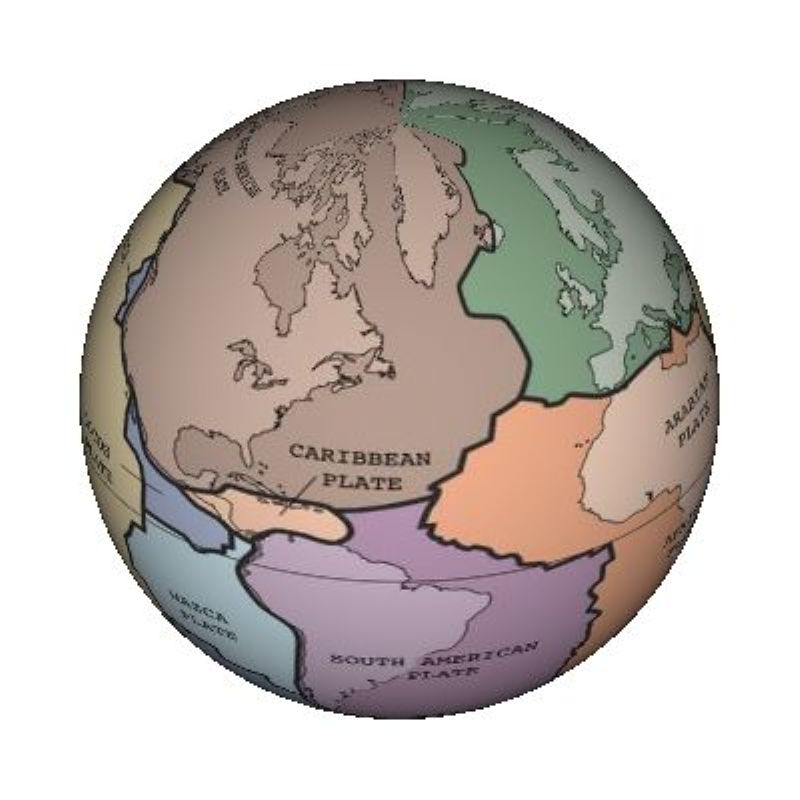
Here is the core truth that shatters any illusion of permanence: Earth’s interior is restless. Deep beneath your feet, the mantle is slowly, constantly churning like an unimaginably thick, hot soup. This slow overturning of rock, driven by heat escaping from Earth’s interior, is what drags continents around the surface in what we call plate tectonics. As long as that internal engine runs, no continent can stay still forever.
Supercontinents like Pangaea, Rodinia, and earlier ones formed when drifting plates converged and stitched together. But the same engine that slammed them into place never turned off. Heat keeps trying to escape from the core and deep mantle, and it does this by moving material upward and sideways. That movement pushes on the undersides of plates, and over tens of millions of years, even a solid continent begins to behave more like a slow-motion raft being nudged and cracked from below.
How Mantle Convection Tears Giants Apart
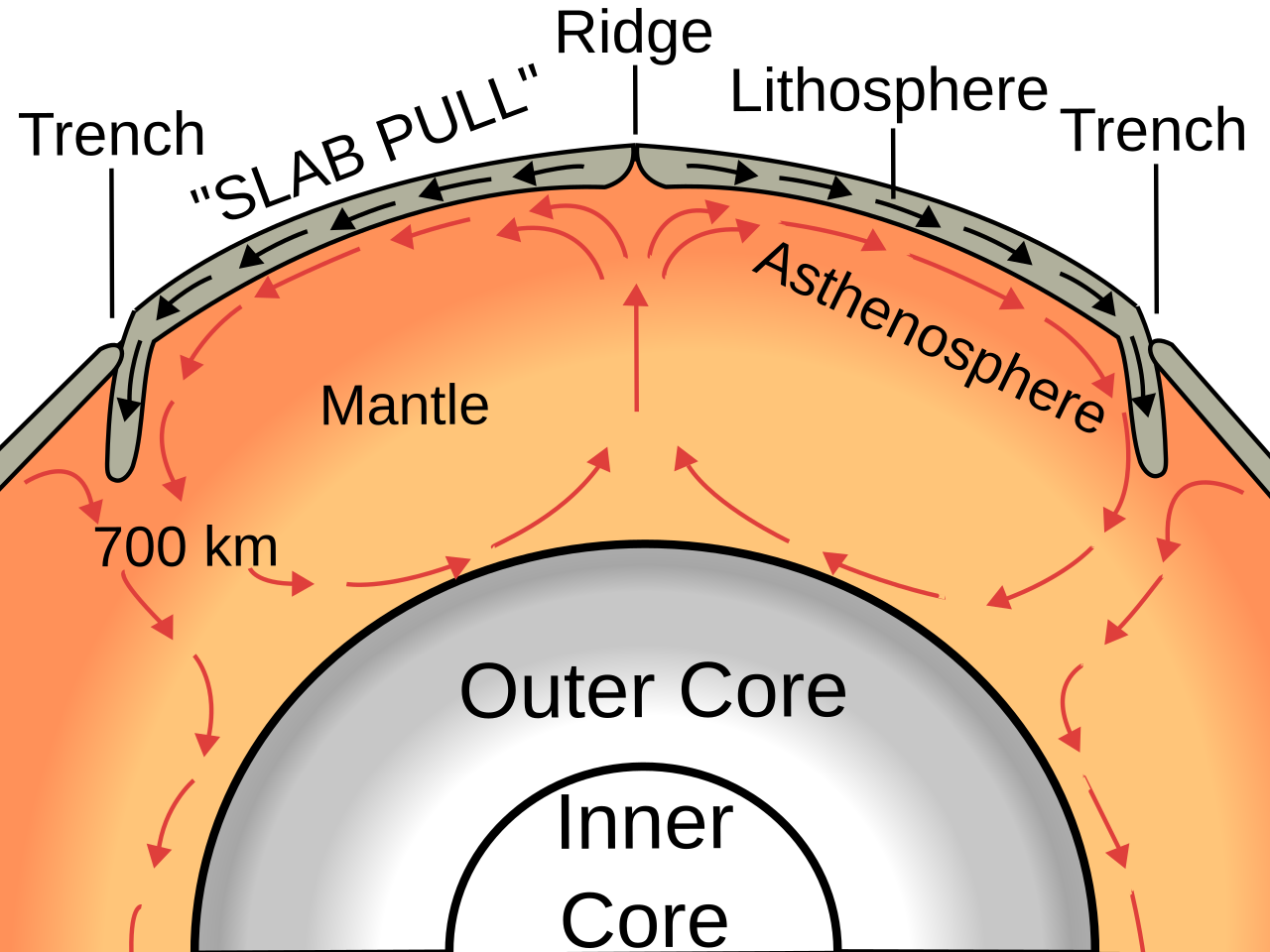
To picture mantle convection, imagine a giant pot of porridge on low heat. Hot material rises in some spots, spreads out near the surface, cools, and then sinks back down elsewhere. Earth’s mantle does something similar, but instead of minutes, it works on timescales of tens to hundreds of millions of years. Supercontinents are like big lids on that pot, trapping heat and changing how the mantle flows underneath them.
When a supercontinent sits over the mantle for too long, heat can start to build up beneath its thick, insulating crust. This can trigger rising plumes of hotter-than-average mantle material. Those plumes push up on the base of the continent, stretching and thinning the crust. Once that stretching crosses a critical point, it begins to crack open. Over time, those cracks can widen into rift valleys and eventually brand-new ocean basins. In other words, the same convection that once brought continents together now pries them apart.
Rifting: Supercontinents Break Where They Are Weakest
Supercontinents are not uniform slabs of rock; they are patchworks stitched together along ancient collision zones and older faults. These seams are mechanically weaker, a bit like the perforated line on a notepad that makes it easier to tear the paper in a straight line. When mantle forces and built-up stresses start pulling, those pre-existing weaknesses are usually the first places to fail. That is where rifting often begins.
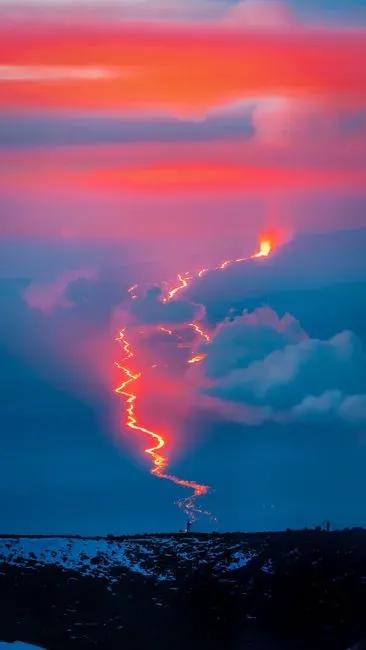
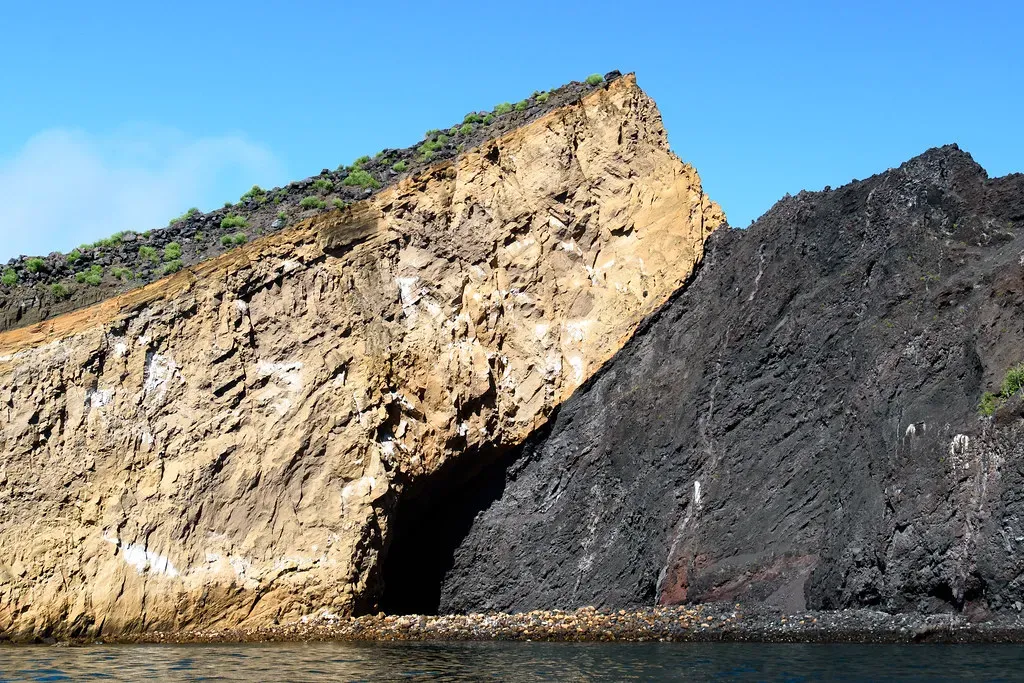
As a rift develops, the crust stretches and becomes thinner, allowing magma from the mantle to rise and fill in the gaps. That volcanic activity can create long chains of volcanic rocks and new, youthful crust. Eventually, the rift widens so much that seawater floods in, turning it into a narrow sea and then a full ocean. The Atlantic Ocean, for example, began as such a rift when Pangaea started to break. Once that process really gets going, the supercontinent is already doomed; the tear can lengthen, branch, and fragment the once-continuous landmass into separate drifting continents.
The Supercontinent Cycle: A Planet-Sized Breath
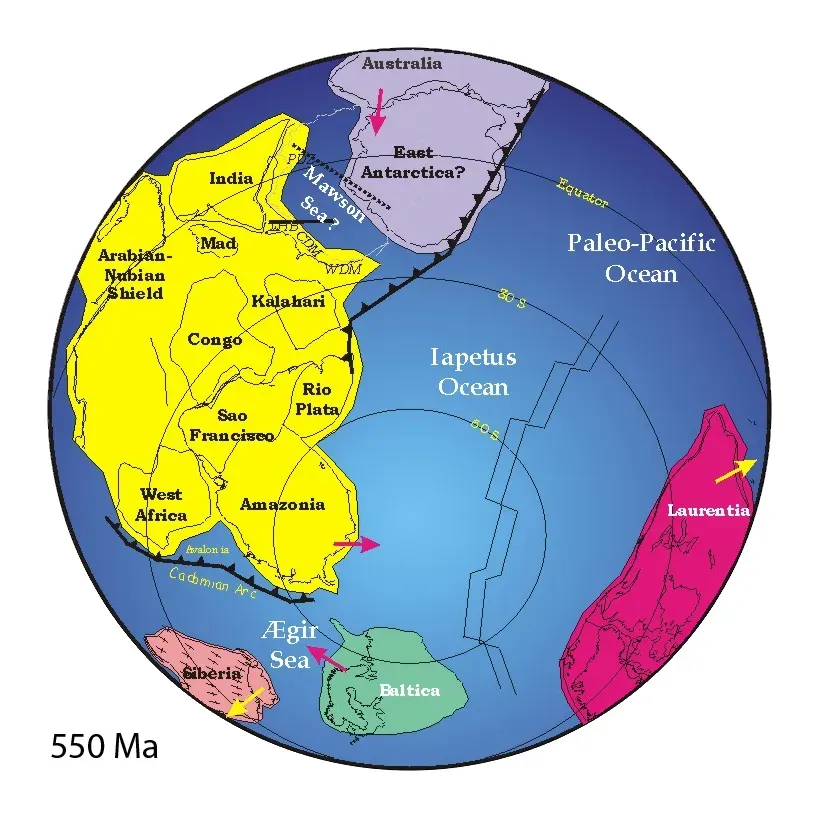
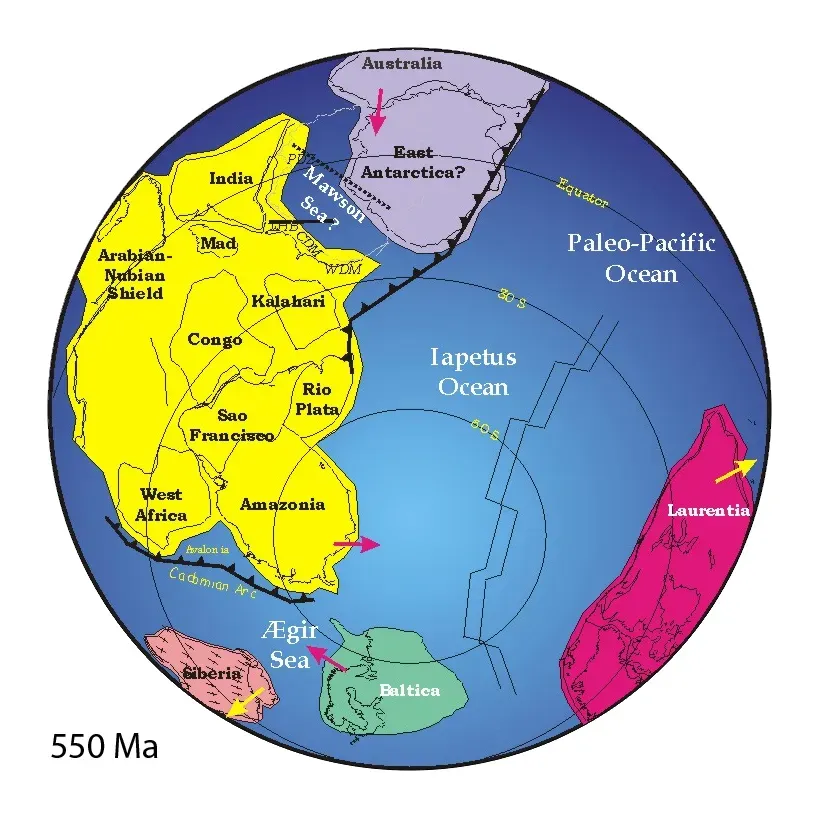
Geologists see a pattern when they look far back in time: supercontinents form, break apart, their pieces drift and collide again, and another supercontinent emerges. This repeating pattern is called the supercontinent cycle. It is almost like the planet is breathing on a timescale of hundreds of millions of years, inhaling the continents together and exhaling them apart. The names change – Columbia, Rodinia, Pannotia, Pangaea – but the rhythm stays broadly similar.
This cycle is not perfectly regular, and scientists are still debating exactly how many supercontinents there have been and the details of their timelines. But the big picture is clear enough: the forces that assemble supercontinents also sow the seeds of their destruction. When many plates converge, you get intense mountain building and thick, stable crust, but you also change how mantle convection works. After a while, the system reorganizes, stress redistributes, and the next break-up begins. From that perspective, every supercontinent starts dying the moment it finishes forming.
Climate, Life, and the Hidden Costs of Staying Together
There is also a more subtle angle: supercontinents dramatically reshape climate and life on Earth, and those changes feed back into the tectonic system. When most land is clumped around the equator or into one massive block, interior regions can become extremely dry or seasonally harsh because they are far from the moderating influence of oceans. That affects weathering, erosion, and the movement of carbon between rocks, atmosphere, and oceans. Over very long timescales, those processes influence how much carbon dioxide remains in the air and thus how warm or cold the planet becomes.
Climate changes, in turn, can influence erosion rates, sediment deposition, and even how heavy or light parts of the crust become as they accumulate or lose material. That might sound minor, but small differences in weight and thickness can nudge how plates move and bend. While climate and life are not the main drivers of supercontinent break-up, they are part of a complex web of feedbacks. From my point of view, it is almost poetic: life evolving on a supercontinent helps reshape the surface conditions that, in tiny incremental ways, contribute to the eventual rearrangement of that very land.
Why Our Current Continents Are Already “Mid‑Story”
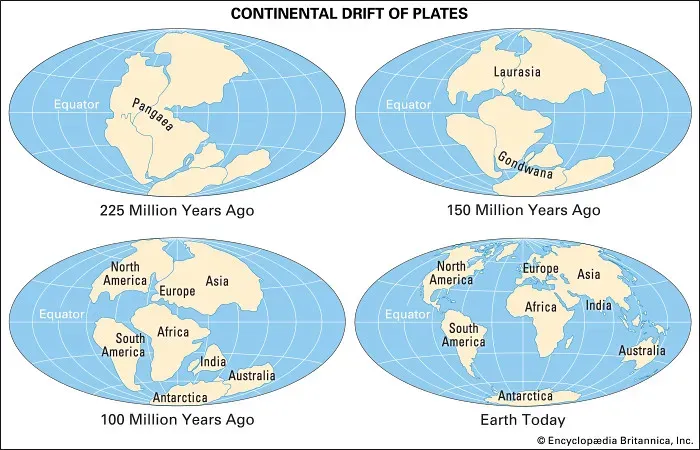
It is tempting to think we live between supercontinents, in some quiet, ordinary chapter, but that is a bit of an illusion. Today’s continents are actively moving; the Atlantic Ocean is slowly widening, while parts of the Pacific are shrinking. Mountain belts like the Himalaya are still rising as India pushes into Eurasia. All of this is part of the same long, looping narrative that produced Pangaea and will, eventually, produce a future supercontinent with its own name and shape.
Some models suggest that another supercontinent could form in a couple hundred million years, perhaps centered over the Arctic, or maybe by closing the Pacific instead. No one can say with certainty which specific version will win out; the system is too complex and sensitive to details we cannot fully observe. But if there is one thing we can be confident about, it is this: whatever supercontinent forms in the distant future will not last forever either. As long as Earth’s internal heat continues to drive plate tectonics, break-up is not a possibility, it is a guarantee.
Conclusion: Impermanence Is the Only Constant
When you step back from the details, the message is strikingly clear: supercontinents fall apart because Earth itself refuses to sit still. Mantle convection, plate motions, rifting along old scars, even long-term climate and life feedbacks all conspire to make permanence impossible. From a human timescale, continents seem eternal; on a planetary clock, they are shifting puzzle pieces in a game that never ends. I find that oddly comforting, because it reminds us that change is not a flaw in the system – it is the system.
My opinion is that a truly stable, unchanging Earth would be a dead Earth. The very restlessness that rips supercontinents apart also builds new oceans, fresh coastlines, fertile mountain ranges, and constantly shifting habitats where life can diversify and reinvent itself. The fall of each supercontinent is less a catastrophe and more a reset, a new chapter in a story that has been going on for billions of years and will continue long after us. Knowing that even the greatest landmasses are temporary, how could we ever think our own arrangements of borders and nations are permanent?