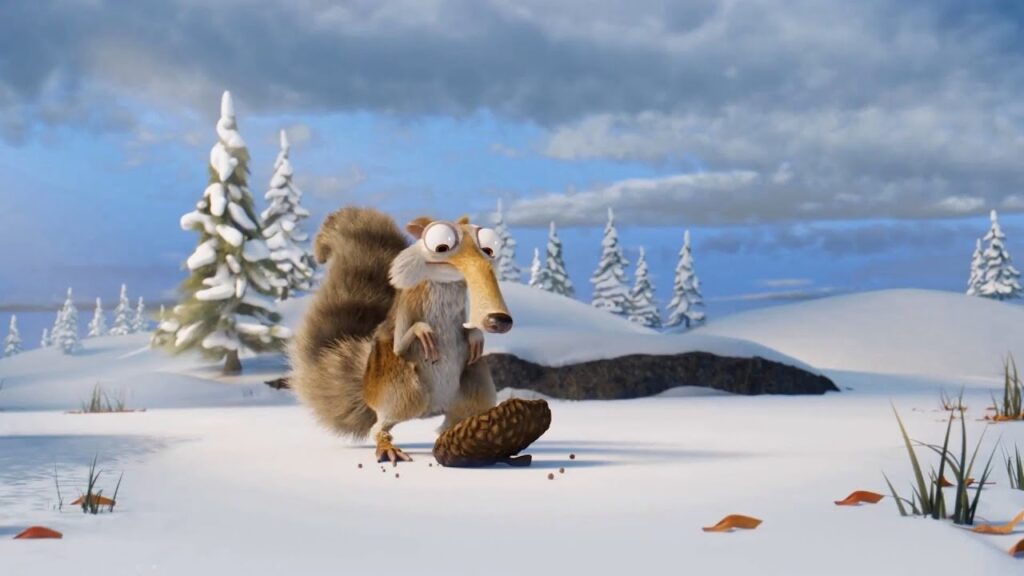
You know a movie has really burrowed into our brains when a jittery prehistoric squirrel makes people rethink geology. The Ice Age films turned Scrat’s acorn-chasing disasters into a running joke about global catastrophe, from cracking glaciers to literally shattering continents. It is so over the top that you almost want to ask: could anything like that ever happen in real life, even in the wildest, most round‑about way?
I remember watching one of those scenes in a crowded cinema and hearing someone behind me whisper that maybe this was how Pangaea broke apart. It was meant as a joke, but my inner science nerd could not let it go. So let’s lean into the question no one needed answered: if we forget the slapstick for a second and bring in what we actually know about plate tectonics, energy, and Earth’s deep past, how impossible is Scrat’s acorn stunt really?
How fast do continents actually move in the real world?
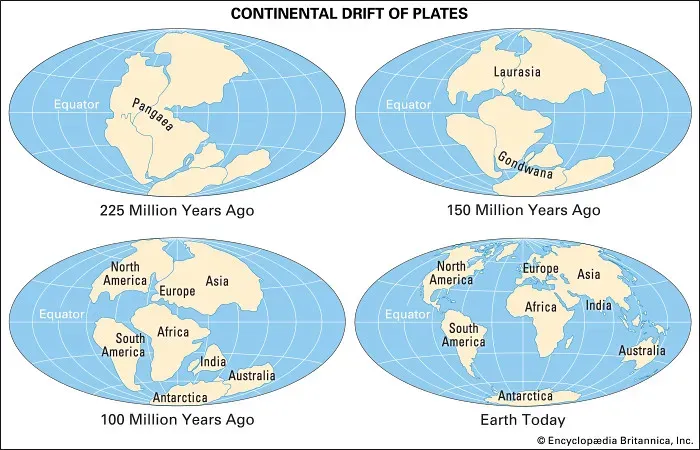
Continental drift sounds dramatic, but in human terms it is painfully slow, like watching paint dry on a glacier. The big tectonic plates that carry continents typically creep along at speeds of a few centimeters a year, roughly the rate at which your fingernails grow. Some faster plates can move more like a few inches a year, which still feels absurdly sluggish when movies show continents rocketing apart in seconds.
Stretch that out over tens of millions of years, though, and those tiny annual shifts add up to ocean‑sized distances. A continent can wander from the equator toward the poles, fragment into pieces, or collide with another plate to raise massive mountain chains. The choreography is driven from deep within the planet, not from anything happening on the surface. So right away, Scrat is up against a problem: he is trying to outmuscle a process that plays out over time spans so long they make human civilization look like a blink.
What actually drives continental drift beneath our feet?
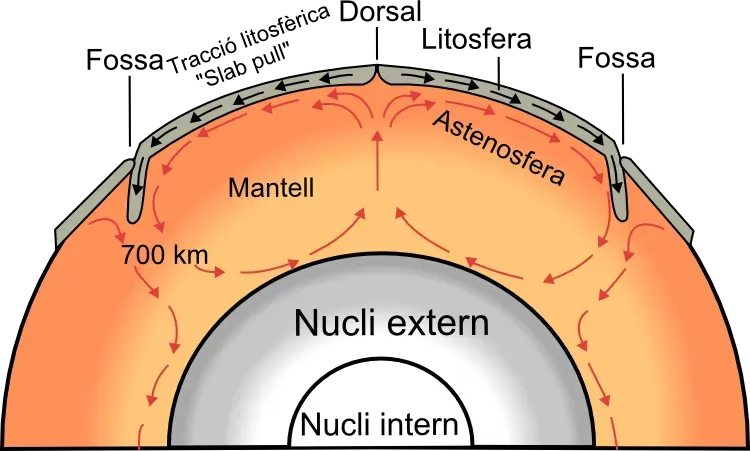
Under the continents is not a solid, immovable foundation but a thick layer of hot, slowly flowing rock called the mantle. It behaves a bit like extremely thick honey under high pressure: it is solid on short timescales, but over millions of years it deforms and circulates. Heat from Earth’s interior causes this mantle to convect, with hotter material rising and cooler material sinking, setting up vast, sluggish conveyor belts of rock.
The tectonic plates, including the continents, are effectively rafts riding on top of this convecting mantle. Where mantle upwelling occurs, new crust can form and push plates apart; where it sinks, plates can be dragged down and recycled. Forces like ridge push and slab pull do the heavy lifting, not anything happening up in the atmosphere, ocean, or on the surface. Compared to the relentless, planet‑scale machinery of mantle convection, one frantic rodent and a single acorn do not even register as a rounding error.
Could a surface event ever crack a continent like in the movies?
To split a continent in a blink, you would need an unimaginably huge, sudden input of energy. Even the largest earthquakes only rupture parts of plate boundaries and mostly release built‑up stress that was already there. They can be devastating for cities, but they do not carve new oceans or rearrange entire landmasses overnight. Earth’s crust is thick, tough, and under immense pressure; tearing it apart takes sustained stretching over millions of years, not one slapstick accident.
Even catastrophic events like supervolcanic eruptions or large asteroid impacts, as extreme as they are, do not usually reconfigure continents wholesale. A truly massive asteroid strike can certainly shatter crust locally, generate global tsunamis, and trigger climate shifts, but plates themselves still ride on that deeper mantle engine. The energy from a Scrat‑style pratfall, even exaggerated a billion times over, is still laughably tiny beside planetary‑scale forces. The visual of a single crack racing across a continent after one small trigger is fun storytelling, but it is nowhere near how geophysics actually works.
How much energy would Scrat’s acorn actually deliver?
If we shrink this down to a simple physics thought experiment, Scrat’s acorn is just a small object with limited mass and speed. Even if we generously imagine the acorn being launched at outrageous cartoon velocities, the kinetic energy is still in the ballpark of something like a piece of sports equipment flying through the air, not a doomsday device. At best, in the real world, an acorn moving that fast could shatter on impact, dent a surface, or injure a very unlucky squirrel, but it would not even register on seismometers as a meaningful event.
By contrast, the energy released in a big earthquake is many orders of magnitude larger, and those events still only slightly adjust stresses along faults rather than reorganizing plates. You can think of it like flicking a giant stone dam with your finger versus the combined force of an entire river system pushing on it for decades. Scrat’s acorn, in any plausible physical scenario, is the finger flick. The slowly churning mantle and the gravitational interactions shaping Earth over billions of years are the river, the reservoir, and the entire landscape that channels it.
Is there any real science hiding inside Scrat’s chaos?
As ridiculous as the continental‑shattering gag is, it does accidentally hint at something real: small triggers often act on stresses that are already there. In earthquake physics, a relatively small disturbance can sometimes set off a fault that was already close to failure. In that sense, the last straw matters, but only because all the other straws have been building up quietly for a long time. The system’s underlying energy and structure do almost all the work; the trigger just decides when the release happens.
If you really want to stretch the metaphor, Scrat’s acorn is like that tiny final nudge, while Earth’s interior is the piled‑up stress. But the leap from a fault slipping a few meters to an entire continent snapping in half is enormous. The film compresses all the messy, invisible buildup of tectonic stress and mantle flow into one simple, comedic moment. It is a clever storytelling shortcut, not a physics lesson, and it only works because the audience agrees to pretend that one ridiculous cause can explain a world‑changing effect.
So what does Scrat’s acorn really tell us about Earth – and about us?

On the strict scientific question, the verdict is clear: no, Scrat’s acorn could not have caused continental drift, and nothing remotely like that could break up a supercontinent in a single instant. The forces that move continents are buried deep beneath our feet, powered by Earth’s internal heat and gravity, operating across spans of time far beyond a single lifetime, or even a single species. From that perspective, the whole idea that a slapstick accident could reshape the planet is charmingly absurd.
But on another level, I kind of love that people even ask the question. It says something oddly hopeful about us that we want to connect the stories we enjoy with how the real world works. A jittery squirrel chasing an acorn does not rewrite geology, but it can nudge us into wondering what lies under the ground we walk on and why the continents look the way they do. If a cartoon disaster can spark real curiosity about plate tectonics, maybe that misbehaving acorn did change something important after all: not Earth’s crust, but how we pay attention to it. Did you expect a prehistoric comedy to make you think this hard about the planet under your feet?