Everyone knows the T-Rex. It shows up on lunchboxes, blockbuster posters, and every “scariest animal ever” list ever written. At 12 tons and 40 feet long, it feels like the ceiling of prehistoric terror. But paleontologists have known for decades that the real nightmare fuel wasn’t stalking dusty floodplains – it was cruising silently through ancient oceans so deep and dark that sunlight never reached the bottom. The sea didn’t just produce bigger predators than T-Rex. It produced creatures that would have treated a T-Rex like a light snack.
What follows isn’t a list of obscure footnotes from a dusty textbook. These are animals with fossilized stomach contents, bite-force measurements, and body lengths that keep getting revised upward every time somebody digs up a new specimen. Some had jaws the size of a small car. One weighed as much as thirteen T-Rexes combined. By the time you reach number one, the “king” of the dinosaurs is going to look like it belongs in a petting zoo.
#11 – Dunkleosteus: The Armored Terror With a Built-In Guillotine
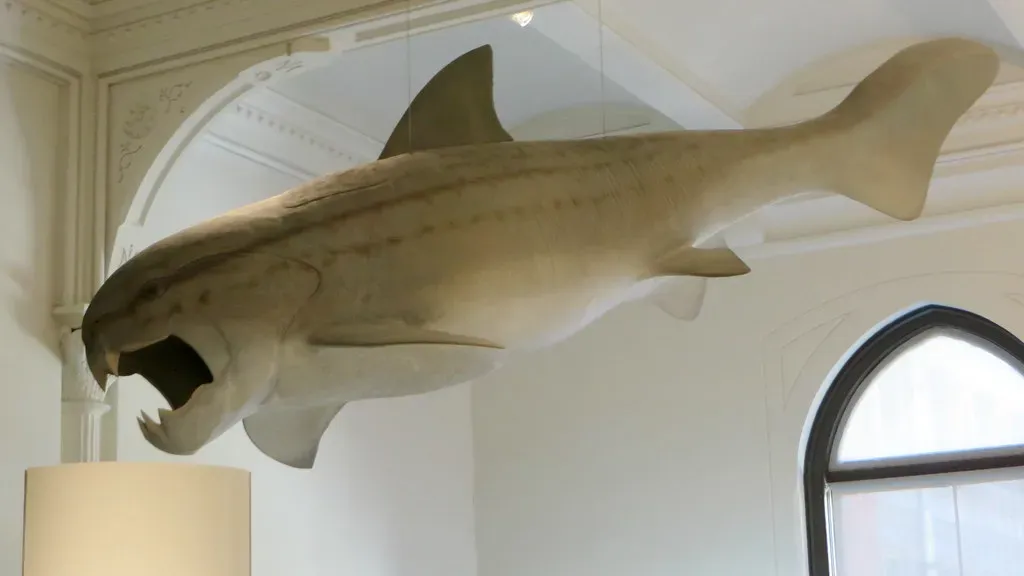
Most people picture early fish as small, silvery, and completely harmless. Dunkleosteus had no interest in that reputation. This Devonian giant stretched up to 10 meters and wore interlocking bony armor plates across its head and thorax like a medieval knight – except the armor was also the weapon. Those bony plates formed self-sharpening shears that could snap shut with a bite force estimated at up to 8,000 pounds per square inch, placing it in the same league as T-Rex itself. It didn’t chew its prey so much as guillotine it.
The detail that genuinely surprises people is what happened after the kill. Dunkleosteus apparently couldn’t fully digest everything it caught, so it regurgitated compact pellets of bones and scales – exactly the way an owl does today. Fossilized versions of those pellets have been found, still containing the crushed remains of other armored fish. A 400-million-year-old apex predator that hunted in armor and disposed of leftovers in tidy pellets is somehow both terrifying and weirdly methodical. It ranks eleventh here only because of its modest length. Pair that bite with a larger body, and the rest of this list gets nervous.
Fast Facts
- Era: Late Devonian, approximately 360–380 million years ago
- Length: Up to 10 meters (33 feet); weighed roughly 4 tons
- Bite force: Estimated up to 8,000 psi – comparable to T-Rex, double that of a great white shark
- Jaw speed: Could fling jaws open in just 1/50th of a second, creating a vacuum that pulled prey in
- Range: Fossils found across North America, Europe, and Africa – a true global apex predator
- Distinction: Considered the world’s first pelagic super-predator, occupying a niche now held by great whites and orcas
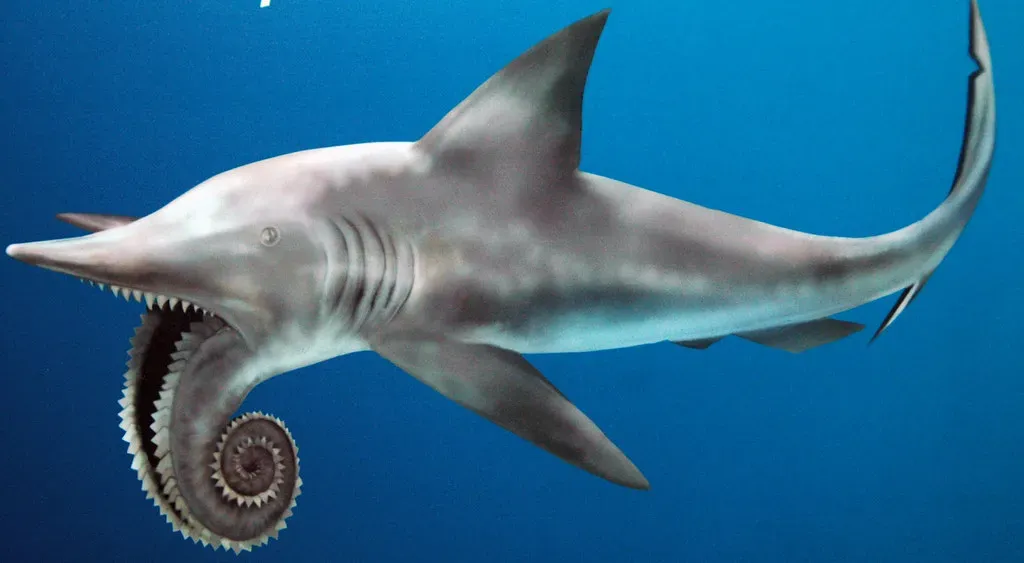
#10 – Helicoprion: The Shark With a Nightmare Spiral Saw
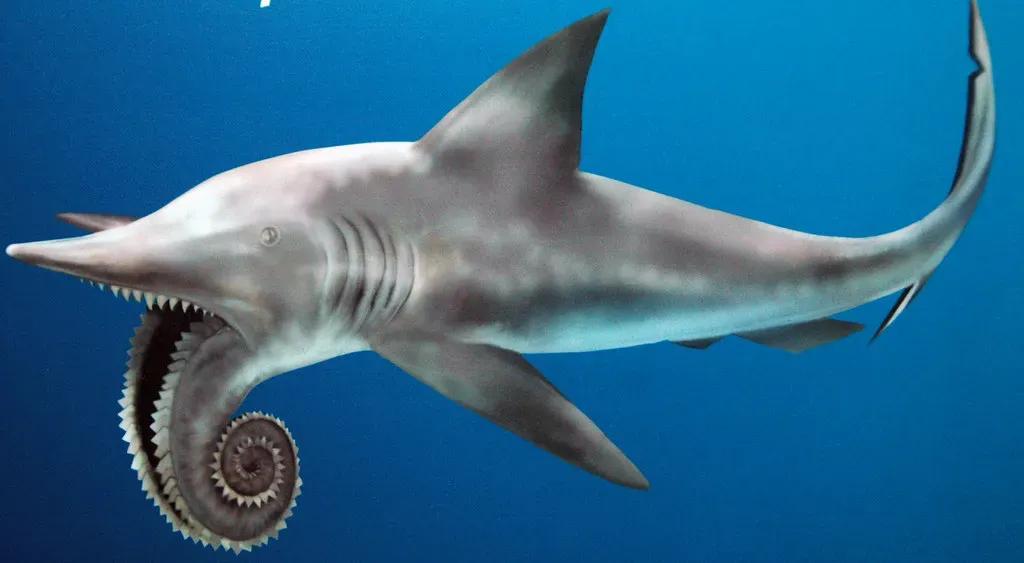
Helicoprion looked, from a distance, like a fairly ordinary Permian shark. Then you saw the mouth. Where a normal jaw would be, evolution had installed a continuously growing spiral of teeth that formed a literal buzzsaw inside the lower jaw – dozens of serrated teeth arranged in a tight coil, the oldest teeth rotating inward as new ones grew at the front. Paleontologists who first found the fossils genuinely had no idea what they were looking at. For decades, the spiral was thought to be a free-floating structure, maybe even an ammonite shell that had been swallowed. CT scanning eventually revealed the truth, and it was stranger than any of the guesses.
At 3 to 4 meters long, Helicoprion wasn’t the biggest animal on this list, but its dental engineering was unlike anything evolution has produced before or since. The spiral was almost certainly used to slice through soft-bodied prey like squid and fish, trapping and shredding in a single sweeping motion. Every T-Rex had teeth that fell out regularly and had to be replaced one by one. Helicoprion built an escalating armory that lasted a lifetime, with every new tooth sharper and better positioned than the last. Evolutionary dead end or not, that design concept remains one of the most bizarre and effective killing tools the fossil record has ever handed us.
#9 – Leedsichthys: The Gentle Giant That Still Dwarfed T-Rex
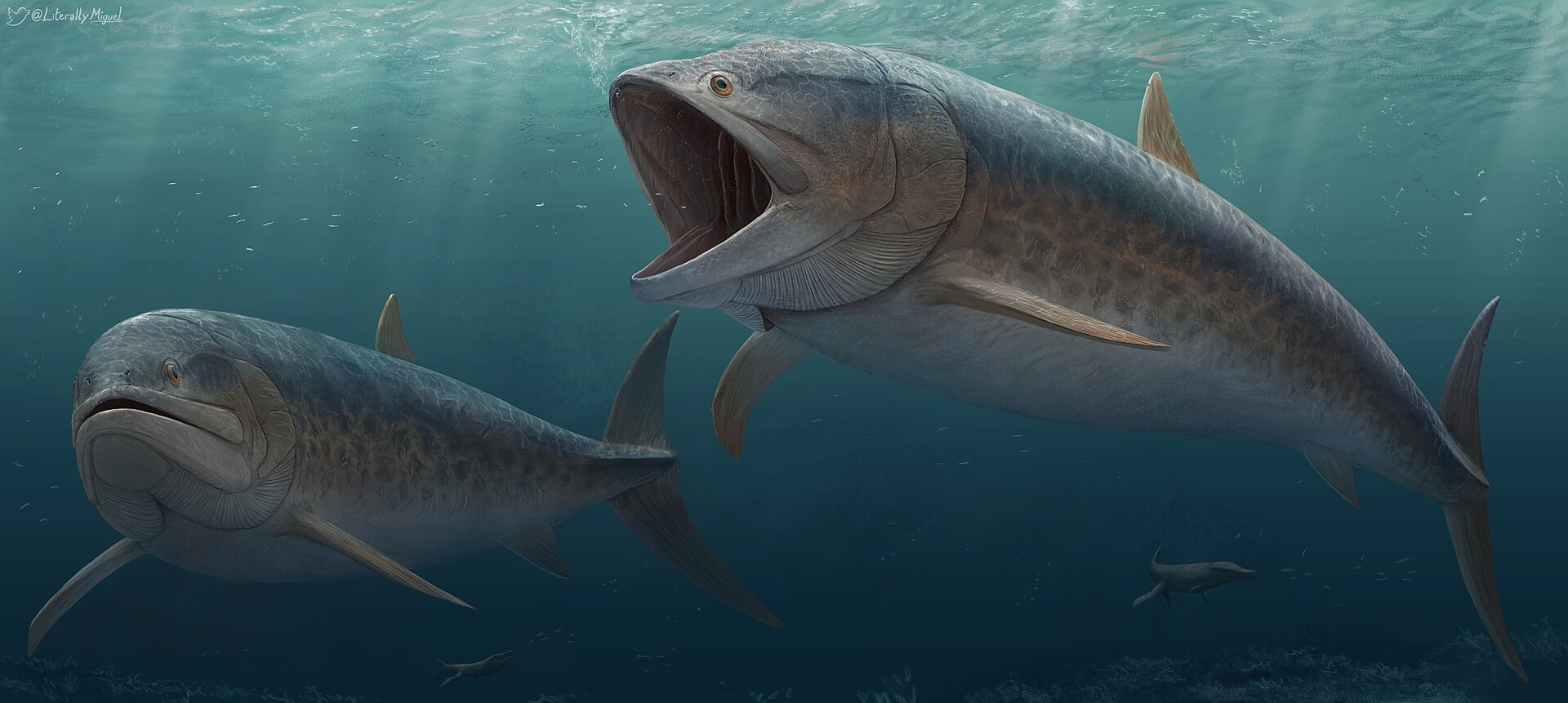
Not every creature on this list killed with teeth and fury. Leedsichthys made the case that sheer, incomprehensible size is its own kind of dominance. This Jurassic filter-feeder reached at least 16 meters – and possibly considerably more – making it one of the largest bony fish that has ever existed. It cruised Jurassic seas with its enormous mouth hanging open, scooping plankton and small organisms the way a living trawler net would. A T-Rex venturing near the waterline would have been an afterthought, an accidental obstacle in its path.
The frustrating and fascinating thing about Leedsichthys is that its skeleton was mostly cartilage, which fossilizes poorly. Every time researchers think they’ve pinned down its maximum size, a new fragmentary specimen turns up and the estimates shift upward again. That makes it a perpetual mystery – a fish so enormous that the ocean apparently couldn’t even preserve it properly. It’s easy to dismiss filter-feeders as harmless, but an animal that reshapes entire food webs just by existing, that out-masses every land dinosaur without ever needing to bite one, is a different kind of power. Not louder. Just bigger than anything you can fully picture.
#8 – Basilosaurus: The Serpentine Whale That Hunted Like a Snake
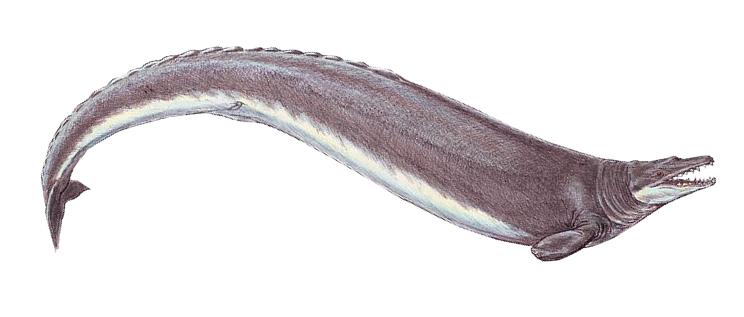
Basilosaurus is one of the most unsettling cases of mistaken identity in science history. When the first bones surfaced in the 19th century, researchers were so convinced they’d found a sea serpent that they named it “king lizard.” It wasn’t a lizard. It was an early whale – roughly 18 meters of sinuous, eel-bodied Eocene predator with sharp, interlocking teeth built for tearing fish and other marine mammals apart. It also retained small, vestigial hind limbs, leftover echoes of the land-walking ancestor it had abandoned millions of years before. The result was something that looked like a fever dream and hunted like a nightmare.
What makes Basilosaurus genuinely significant isn’t just its size. It’s the speed of the takeover. Mammals only reclaimed the seas after the dinosaurs cleared out, and within a geological blink, they produced a whale-shaped apex predator 18 meters long. Dinosaurs spent over 150 million years on land and never approached that scale. Basilosaurus did it in a fraction of the time. The fossils also show evidence that it fed on early sharks and smaller whale relatives, which means it wasn’t just occupying the ocean – it was dominating a food chain it had only recently joined. That’s not evolution. That’s a hostile takeover.
At a Glance: Ocean vs. Land Apex Predators
- T-Rex – 12–13 meters, ~8–12 tons, bite force ~8,000–13,000 psi
- Basilosaurus – ~18 meters, early whale, active predator on sharks and other whales
- Livyatan melvillei – 13.5–17.5 meters, teeth up to 36 cm – the largest functional biting teeth of any known animal
- Megalodon – up to ~20 meters, bite force estimated at 40,000 psi – more than triple T-Rex
- Ichthyotitan – ~25 meters, potentially rivaling or surpassing blue whale mass
#7 – Livyatan: The Sperm Whale With Teeth the Size of Your Arm
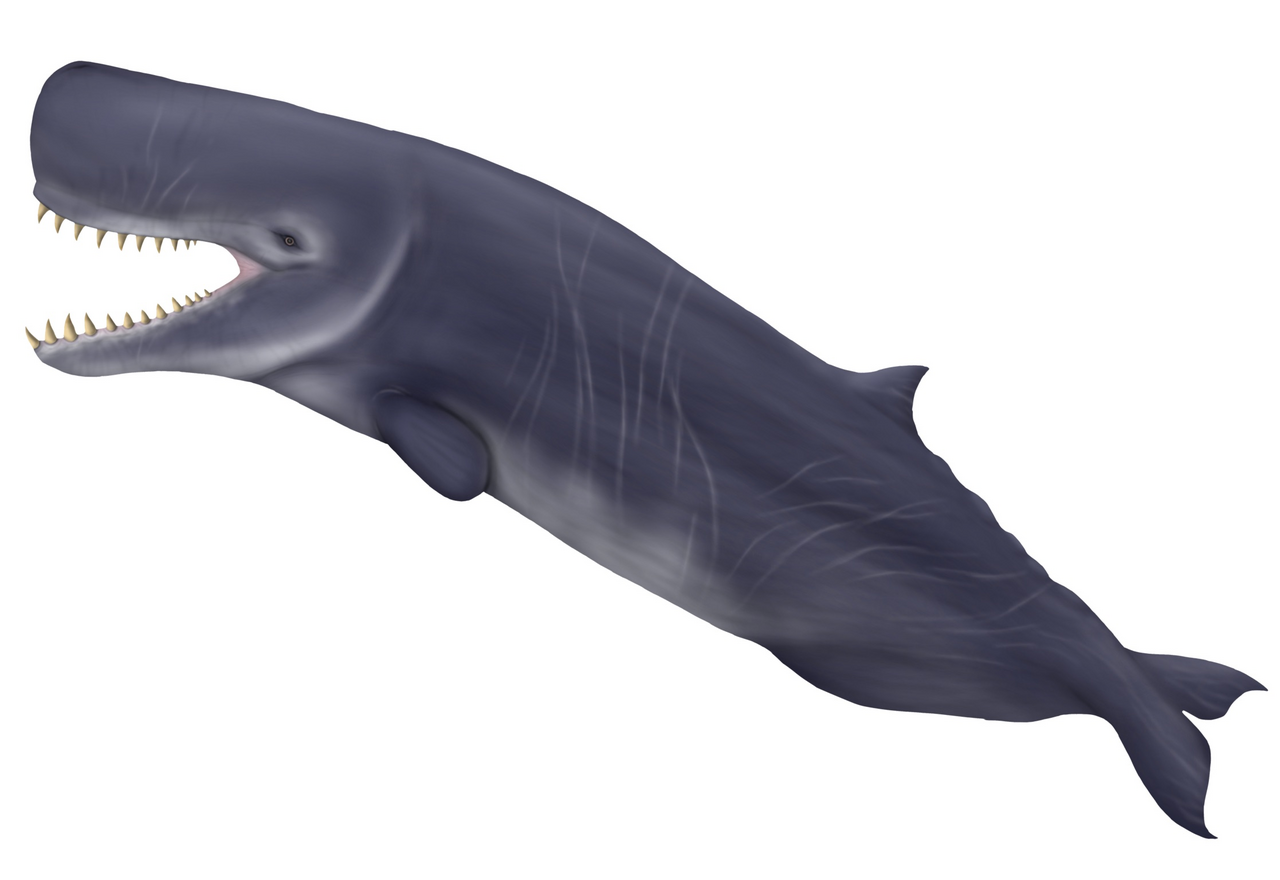
Livyatan melvillei was named after the biblical sea monster and the author of Moby-Dick simultaneously, which tells you everything about how paleontologists felt when they found it. This Miocene sperm whale measured between 13.5 and 17.5 meters, but the number that stops conversations is its teeth: up to 36 centimeters long, the largest functional teeth of any known animal in Earth’s history. Not ornamental tusks. Not filter plates. Actual gripping, tearing, crushing weapons, present in both upper and lower jaws, designed for one purpose – hunting other whales.
Livyatan and Megalodon lived at the same time, in the same oceans, eating the same prey. The idea of those two animals competing for the same whale carcass in the warm Miocene shallows is one of the most vivid collision scenarios the fossil record allows us to imagine. Some researchers believe Livyatan may actually have been more agile than Megalodon, using its massive reinforced skull for ramming as well as biting. T-Rex had teeth roughly 20 to 30 centimeters long, and we’ve been celebrating that for a century. Livyatan matched or exceeded that measurement and used those teeth on prey that was itself the size of a bus.
#6 – Tylosaurus: The Mosasaur Built Like a Missile
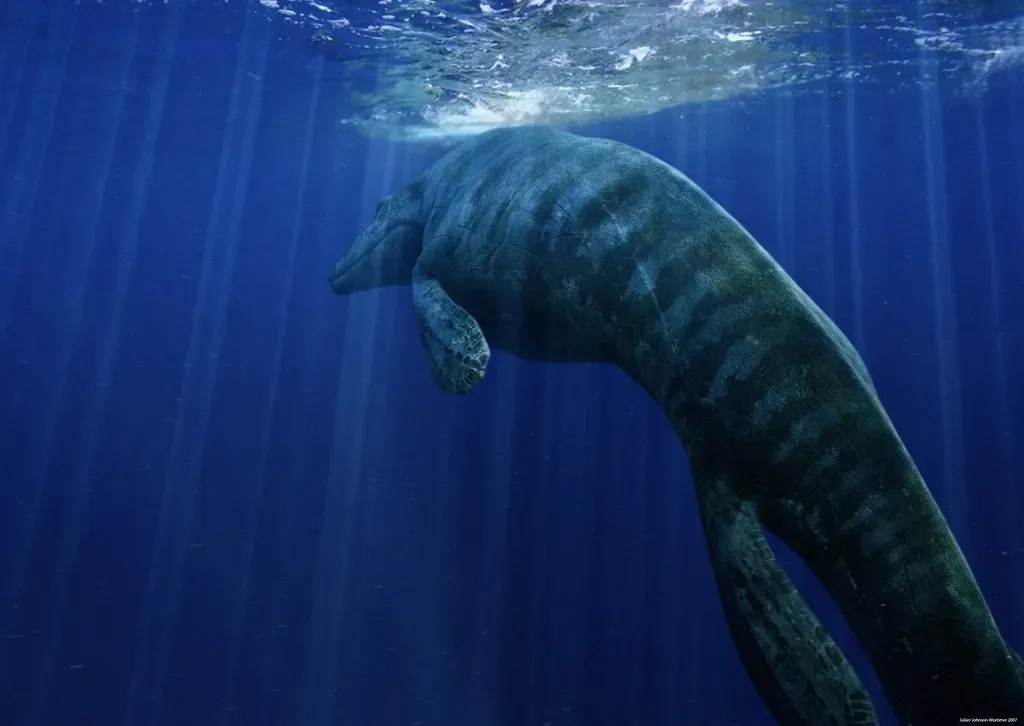
Tylosaurus was what you’d get if you asked evolution to redesign a crocodile as a torpedo and then forgot to set a size limit. This late Cretaceous mosasaur stretched to 14 meters or more, with a powerful, paddle-driven tail that could generate explosive bursts of speed and a reinforced, elongated snout purpose-built for ramming. It patrolled the shallow inland sea that once split North America in two, and it was not selective about what it ate. Fossil evidence shows Tylosaurus consumed fish, turtles, diving birds, other reptiles, and sharks – not occasionally, but as a regular part of its diet.
The stomach-content fossils are what elevate Tylosaurus beyond just “big lizard in the water.” Finding shark remains and smaller mosasaur bones inside a single predator tells you something specific about an animal’s confidence in its environment. Tylosaurus wasn’t hiding from anything. It was the thing everything else was hiding from. While popular culture fixates on theropod dinosaurs as the Cretaceous’s supreme killers, Tylosaurus was operating at the same time – in a completely different arena, with no terrestrial competition – and winning every round.
#5 – Mosasaurus: The Hollywood Star That Was Even Deadlier in Reality
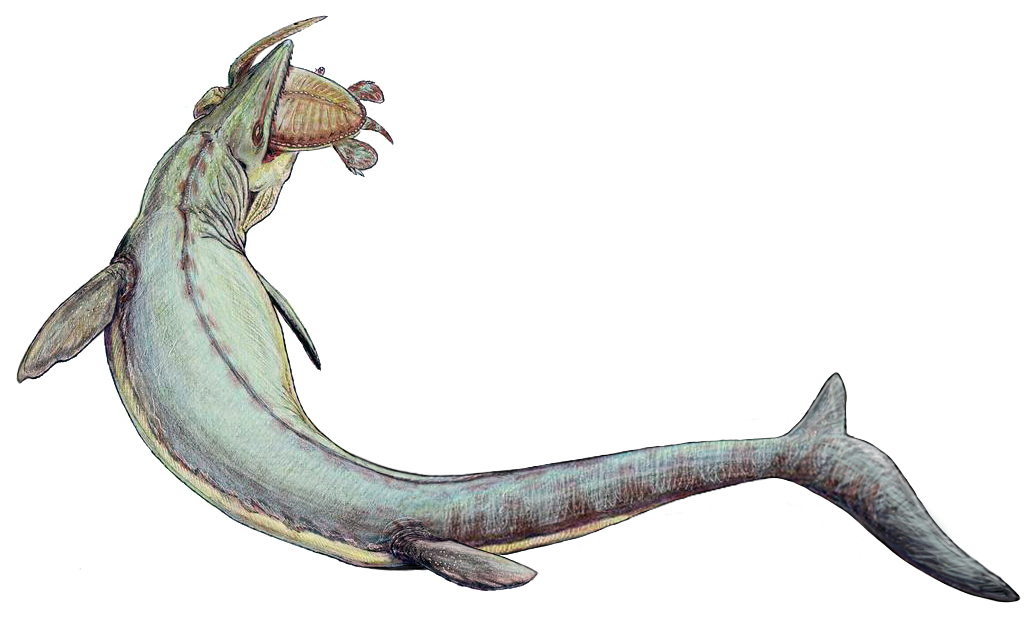
Mosasaurus hoffmannii has a higher name recognition than almost anything else on this list, thanks largely to a certain theme park franchise. The films gave it the ability to leap from the water and snatch pterosaurs out of the sky, which is almost certainly exaggerated. The reality, though, is only marginally less alarming. At up to 18 meters long with a bone-crushing bite and a second set of pterygoid teeth on the roof of its mouth to prevent prey from escaping, the real Mosasaurus was a sufficiently terrifying animal without any Hollywood embellishment.
What the films skip over entirely is the resilience data locked inside the fossils. Several Mosasaurus specimens show healed fractures – including broken jaws that knitted back together during the animal’s lifetime. That means this creature absorbed catastrophic injuries during hunts or territorial fights and kept going. It didn’t just dominate its environment through size. It was tough enough to survive the cost of dominance and come back for more. Any land-based theropod with a broken jaw was effectively a dead animal. Mosasaurus apparently treated the same injury as a temporary inconvenience.
Worth Knowing: The Mosasaur Family by the Numbers
- Mosasaurus hoffmannii – up to 18 m; double row of teeth; healed jaw fractures documented in fossils
- Tylosaurus – up to 14 m; reinforced ramming snout; diet confirmed to include sharks and smaller mosasaurs
- Mosasaur peak dominance: Late Cretaceous, roughly 66–82 million years ago – the same era as T-Rex, just underwater
- Key advantage over land predators: Three-dimensional hunting in a fluid medium with no escape routes above or below
#4 – Shonisaurus: The Ichthyosaur That Challenged Blue Whale Proportions
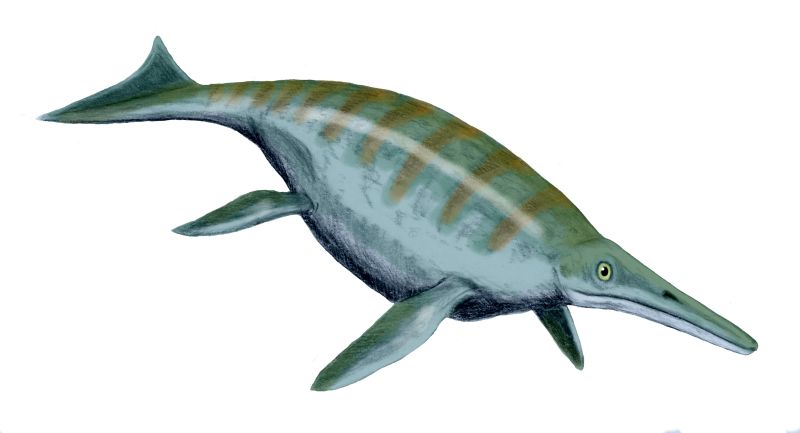
Shonisaurus sikanniensis lived during the Triassic, a period most people associate with the early, smaller dinosaurs just getting their footing on land. While those early dinosaurs were cautiously testing their environment, Shonisaurus was already swimming through deep Triassic oceans at nearly 21 meters long. It had the streamlined, dolphin-like body plan that ichthyosaurs would refine for the next hundred million years, but on a scale that wouldn’t be matched on land until the great sauropods reached their peak – and arguably not even then.
Some mass estimates for the largest Shonisaurus specimens push toward 80 tons. To put that number in context: a large T-Rex weighed roughly 8 to 12 tons. Shonisaurus outweighed it by a factor of seven or eight. It achieved this during the Triassic, when mammals were still tiny insect-eaters hiding from everything, and it did so in a body plan so hydrodynamically efficient that dolphins and orcas converged on the same basic shape hundreds of millions of years later. Evolution isn’t always slow. Sometimes it produces an 80-ton marine reptile and then just leaves it there as a reminder.
#3 – Megalodon: The Shark Whose Bite Could Crush a T-Rex Skull
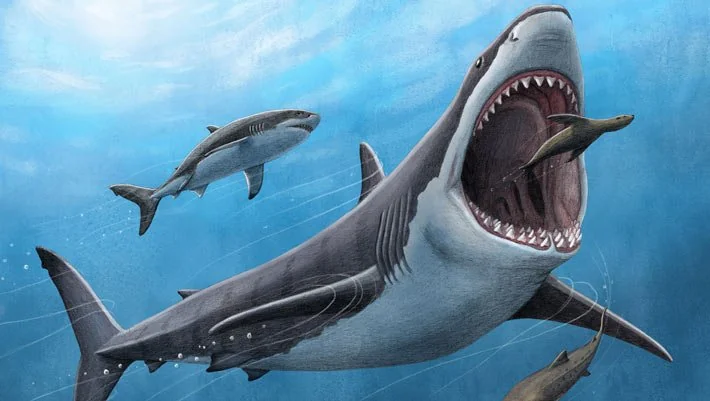
Megalodon doesn’t need much of an introduction, but it deserves an accurate one. This was a shark that hunted great whales – not as an occasional opportunistic feeding event, but as a primary survival strategy. Its serrated teeth measured up to 18 centimeters, roughly the size of an adult human hand, and its bite force has been estimated at around 40,000 pounds per square inch – more than triple the bite force of T-Rex and ten times that of a modern great white shark. For millions of years across the warm Miocene and Pliocene oceans, Megalodon was the apex predator of the most productive marine ecosystems on Earth.
Recent size modeling has pushed maximum length estimates for the largest individuals toward 20 meters, with some analyses suggesting outliers approaching 24 meters. Those numbers are still debated, but even the conservative estimates place Megalodon well beyond T-Rex in every meaningful metric – length, mass, bite force, and the size of prey it routinely dispatched. The reason Megalodon sits at number three rather than number one is that two animals on this list were actually larger. That fact alone should recalibrate how anyone thinks about the hierarchy of prehistoric life.
Quick Compare: Megalodon vs. T-Rex
| Metric | T-Rex | Megalodon |
|---|---|---|
| Length | ~12–13 m (40 ft) | ~18–20 m (up to 65 ft) |
| Bite Force | ~8,000–13,000 psi | ~40,000 psi |
| Tooth Size | ~20–30 cm | Up to 18 cm serrated (hand-sized) |
| Primary Prey | Large dinosaurs | Great whales |
| Reign | ~68–66 million years ago | ~23–3.6 million years ago |
#2 – Kronosaurus: The Pliosaur With a Head Like a Small Car
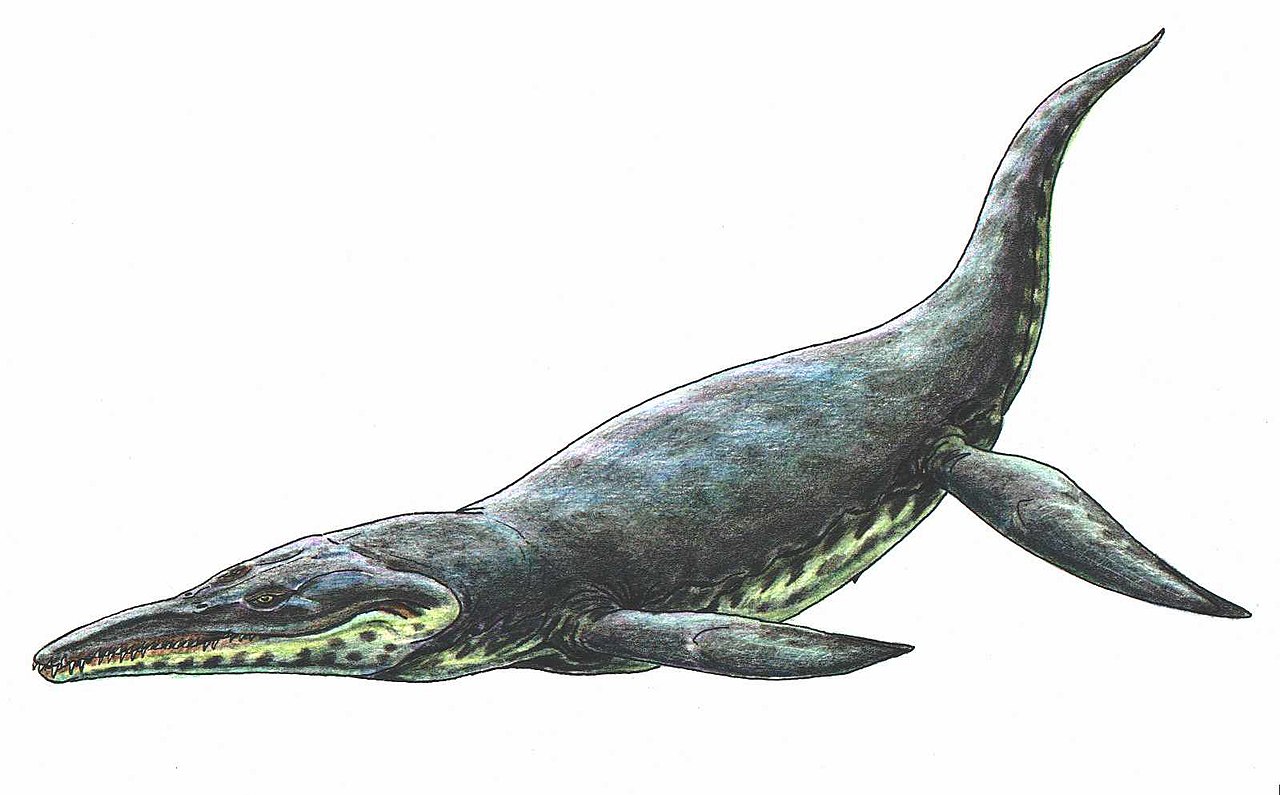
Kronosaurus queenslandicus was named after the Greek titan who devoured his own children, and whoever made that naming decision had clearly seen the skull. This Early Cretaceous pliosaur measured 10 to 12 meters in total length, but roughly a quarter of that was pure head – a skull over 2 meters long packed with conical, interlocking teeth that could grip and tear with forces that scaled dramatically beyond modern crocodilians. Unlike the long-necked plesiosaurs people sometimes confuse them with, pliosaurs were compact, powerful, and built for explosive close-quarters attacks.
What made Kronosaurus particularly dangerous wasn’t just the bite – it was the ambush geometry. With four large paddle limbs generating burst acceleration and a head that big riding low in the water, Kronosaurus could strike upward from depth before prey registered the threat. Stomach fossils suggest it fed on large marine reptiles, fish, and anything else that shared its patch of ocean. A T-Rex relied on its environment staying still long enough for it to charge. Kronosaurus hunted in three dimensions, in darkness, with a head the size of a small car and the patience of something that knew nothing in the water was faster than it was.
#1 – Ichthyotitan: The Ultimate Marine Reptile That Almost Matched Blue Whales
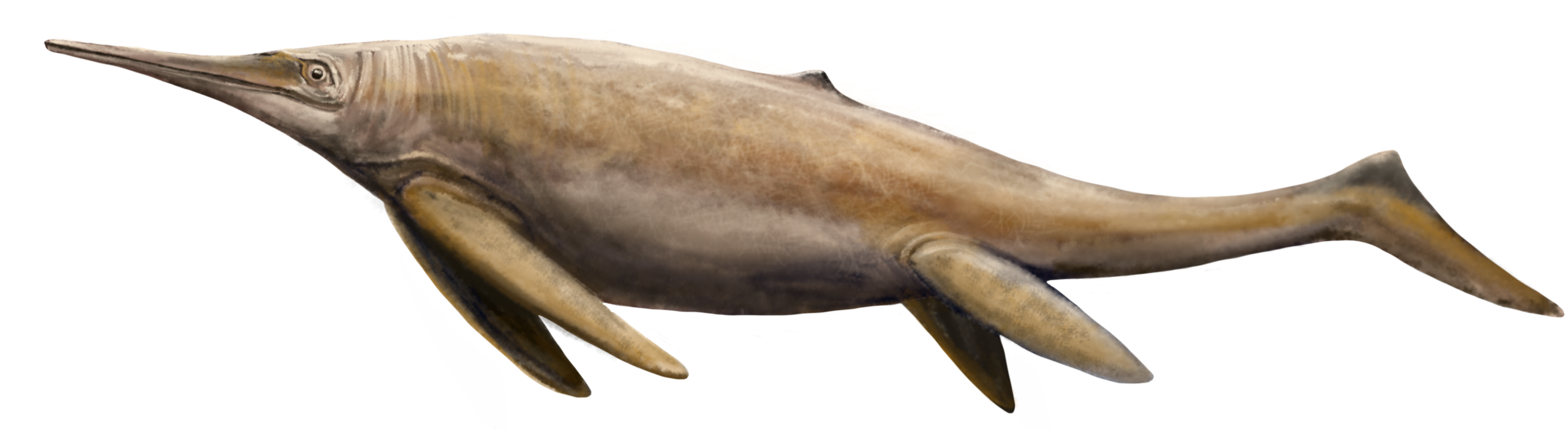
Ichthyotitan severnensis is the newest entry on this list and the most staggering. Fossils discovered in Somerset, England – formally described in 2024 in the journal PLOS ONE – confirm this Triassic ichthyosaur reached approximately 25 meters in length, making it the largest marine reptile ever documented and one of the largest animals to have ever lived on Earth by any measure. Its name translates to “giant fish lizard of the Severn,” which is the kind of name you give something when every other description feels inadequate. It lived roughly 202 million years ago, well before most of the dinosaurs people know by name had even appeared.
The key fossil evidence is extraordinary in its own right: a jawbone fragment over 2 meters long, first spotted on a Somerset beach in 2020 by an 11-year-old fossil hunter named Ruby Reynolds. No formal weight estimate has yet been published – because scientists don’t yet know enough about its relatives to calculate one reliably – but even a very slender animal of this length would likely rival or surpass the mass of a blue whale. And here is the opinion this list earns the right to state plainly: the cultural obsession with T-Rex as the ultimate prehistoric animal is a land-based bias with no real scientific foundation. The oceans were always the more extreme environment. They produced larger bodies, more specialized weapons, and more ruthless killing strategies than anything that ever walked on legs. T-Rex was impressive. These animals were something else entirely – and the fossil record keeps finding more of them.
Fast Facts: Ichthyotitan severnensis
- Formally described: April 2024, published in PLOS ONE
- Estimated length: ~25 meters (82 feet) – the largest marine reptile known to science
- Age: ~202 million years ago, Late Triassic (Rhaetian stage)
- Discovery: Two jaw fragments found on Somerset beaches in 2016 and 2020; key fragment found by 11-year-old Ruby Reynolds
- Scale check: Even as a slender animal, its size would likely rival or surpass a blue whale
- Family: Shastasauridae – the same group as Shonisaurus, which itself reached 21 meters
The conclusion practically writes itself at this point, but it’s worth stating directly. Every creature on this list outclassed T-Rex in at least one critical dimension – size, bite force, weaponry, or sheer biological audacity. Dunkleosteus was biting with guillotine force 360 million years before T-Rex existed. Megalodon’s jaws could generate more than three times the bite force of the “tyrant lizard king.” Ichthyotitan was cruising Triassic oceans at 25 meters while the dinosaur lineage was still figuring out how to stand upright. The real history of life’s most extreme predators isn’t a land story – it never was. It’s a deep-water story, written in bone fragments, fossilized stomach contents, and teeth the size of forearms. T-Rex got the movies. The ocean got the records. And based on what paleontologists keep pulling out of cliff faces and ocean floors, we’ve probably only scratched the surface of what’s still down there waiting to be found.