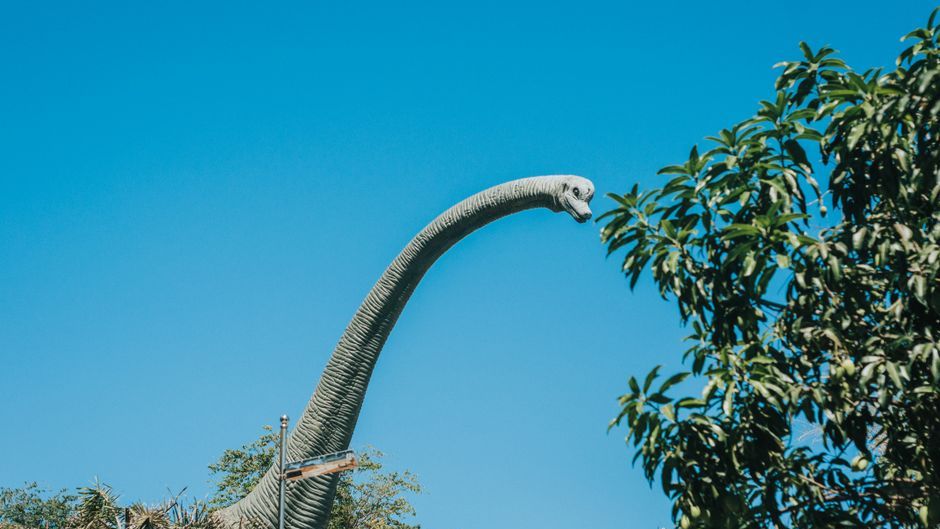
Close your eyes for a second and picture Brachiosaurus. Odds are, you just saw that classic pose: a skyscraper of a dinosaur with its neck shooting straight up like a giraffe on stilts, head poking into the canopy, happily munching leaves from the very top of some cartoonishly tall tree. That image is burned into pop culture, from museum murals to Jurassic-era toys on store shelves. But here’s the twist: the more scientists dig into bones, biomechanics, and even living animals, the more that iconic pose starts to look less like reality and more like a cinematic exaggeration.
This does not mean Brachiosaurus suddenly shrank into some sad, ground-level cow. It was still massive, still impressive, and still an ecological heavyweight. But how it held and used that famous neck was probably a lot more nuanced, dynamic, and limited than the perfectly vertical, crane-like posture we’re all used to seeing. Once you start looking at the actual physics, anatomy, and even blood pressure problems involved, you realize the straight-up neck might be one of the greatest visual myths in dinosaur history – and the real story is way more interesting.
The Pop-Culture Giraffe: How We All Got the Neck Story Stuck in Our Heads
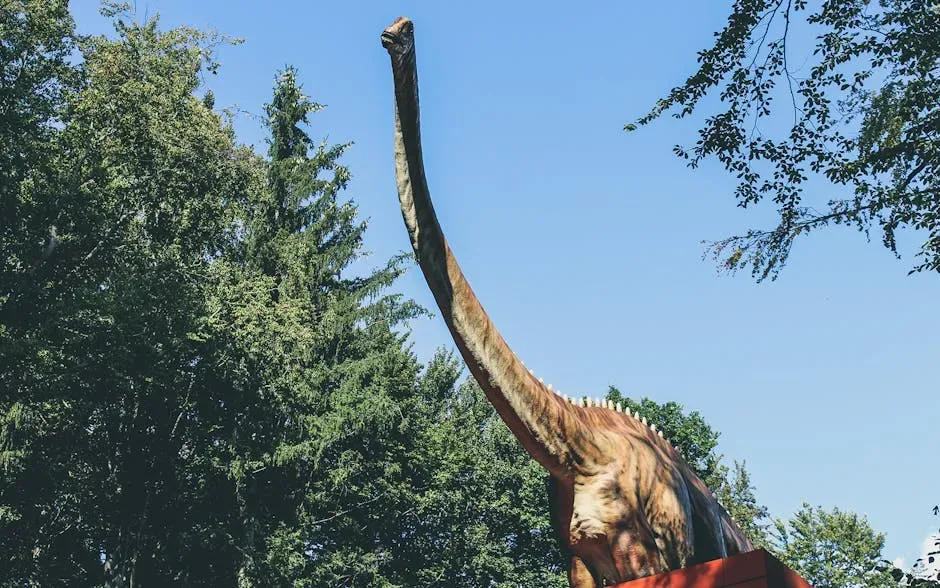
For most people, Brachiosaurus lives rent-free in their minds thanks to movies, kids’ books, and museum displays that leaned into one simple idea: long neck equals maximum height. That logic is incredibly satisfying because it feels intuitive, like giving evolution a neat engineering goal – get higher, eat more leaves, win the game. Early skeletal mounts and artistic reconstructions took that idea and ran with it, often pushing the neck straight up to its absolute anatomical limit, creating a kind of dinosaur lighthouse towering over everything else.
Once that image settled in, it became self-reinforcing. New toys copied old art, new documentaries reused old models, and a whole generation grew up never questioning whether that shape was even physically practical. It reminds me of how pirates are always drawn with eye patches and parrots, even though real history is a lot messier and less theatrical. The vertical Brachiosaurus neck became the dinosaur version of that – familiar, dramatic, and just believable enough that nobody stopped to ask whether the bones were actually telling a different story.
What the Bones Really Say About Brachiosaurus Neck Posture
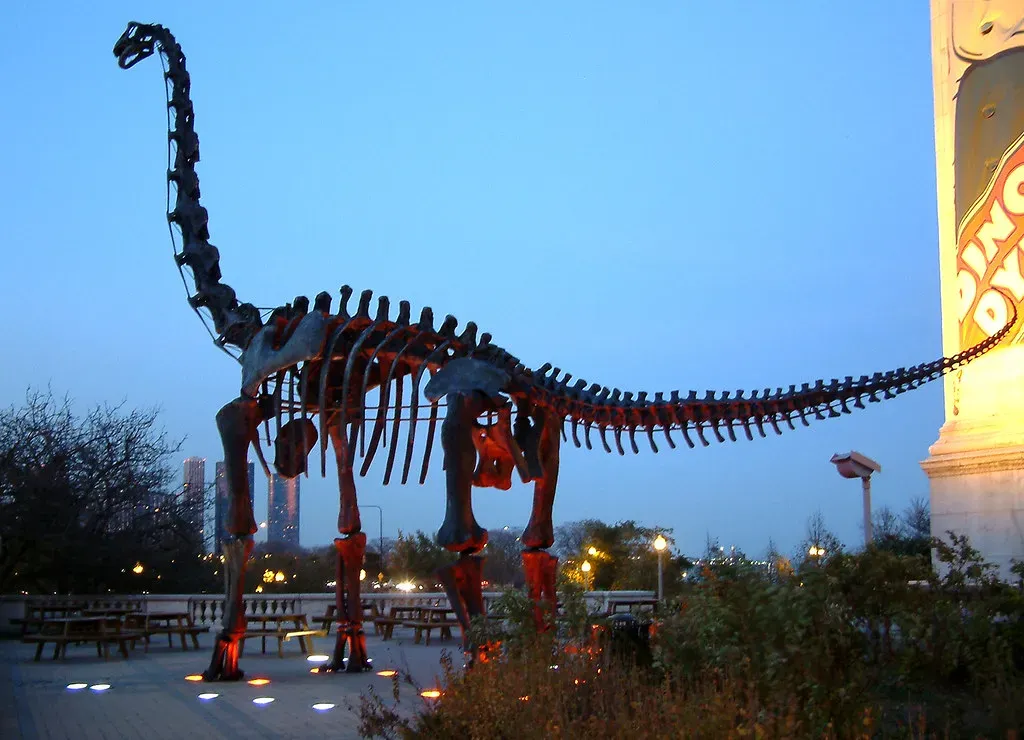
When you strip away the movie magic and just look at the vertebrae, the story changes fast. Neck bones are not just beads on a string; they are complex joints with specific shapes that constrain how far each segment can bend and twist. In Brachiosaurus and its close relatives, the vertebrae show evidence of strong interlocking structures that helped stabilize that huge neck so it did not flop around under its own weight. That stability is great for holding the neck steady, but it also suggests that extreme vertical flexing would not be the default, everyday posture.
Several studies on sauropod necks have argued that the neutral, resting position of many long-necked dinosaurs was more horizontal or gently inclined, rather than a continuous vertical column. Think of it less like a flagpole and more like a long cantilevered beam that projects forward and slightly up from the shoulders. In that arrangement, the bones, ligaments, and muscles work together to distribute forces more evenly, reducing strain at any single point along the neck. The straight-up diagram we’re used to simply ignores those structural hints and acts as if the neck was a pure extension ladder that could just be raised and locked into place at will.
Blood Pressure Nightmares: The Cardiovascular Cost of a Vertical Neck

Even if the bones could technically allow a near-vertical pose, the soft-tissue problem is brutal: getting blood all the way up to a head several stories above the heart is not a casual engineering challenge. A fully vertical Brachiosaurus neck would mean a massive height difference between heart and brain, demanding extraordinary blood pressure and a correspondingly enormous, powerful heart. In living animals, even tall giraffes already push the limits of what biology can comfortably manage just to keep their brains supplied when their heads are raised.
If Brachiosaurus had regularly held its neck like a living crane, the cardiovascular system would have needed to be pushed into truly extreme territory – far beyond what we see in any land animal today. That sort of setup is possible in theory, but evolution tends to prefer solutions that are efficient rather than just barely survivable. A more modest, gently inclined neck posture slashes the vertical distance, easing the demands on heart and vessels. It suggests that while Brachiosaurus might have been capable of raising its head higher when needed, doing so constantly would have been an expensive, risky way to live.
Biomechanics 101: Why a Crane-Neck Dinosaur Is Not Great Engineering
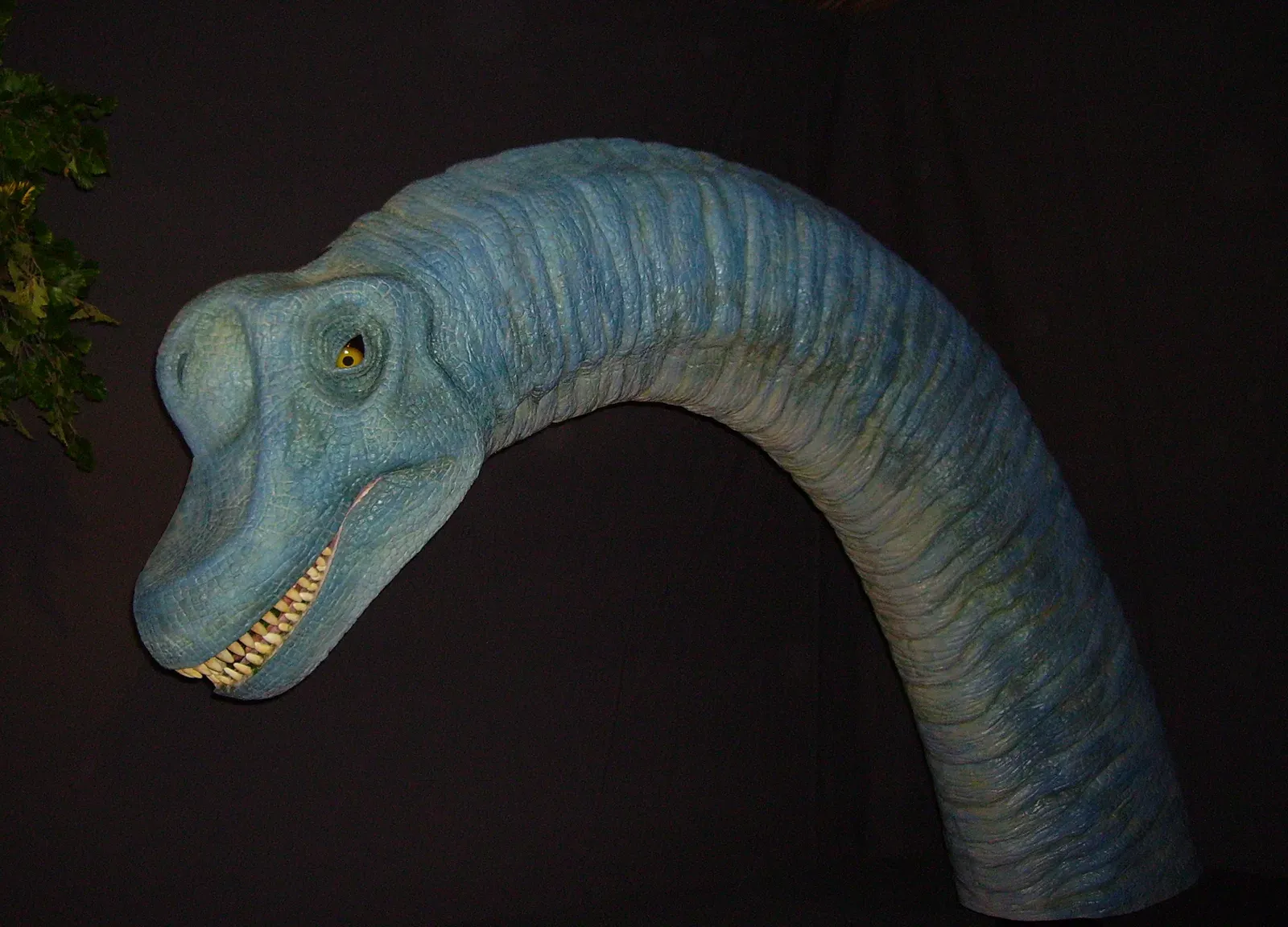
From a mechanical perspective, a long neck is a lever, and levers come with trade-offs. The longer and more vertical the lever, the more torque you dump onto the base, and the more support you need from muscles, bones, and ligaments just to stop it collapsing forward. For Brachiosaurus, that base was already dealing with enormous body mass, long forelimbs, and the need to walk, turn, and maybe even move at more than a slow plod. Holding a gigantic neck straight up like a construction crane would have multiplied the strain on the shoulders and spine every second of the day.
Engineers hate unnecessary stress concentrations, and nature usually does too. A slightly forward-leaning neck spreads the load out better, keeps the center of mass in a more controllable place, and makes it easier to balance the body during movement. Think of how awkward it feels if you carry a heavy backpack on a broom handle held upright above your head, versus slung forward closer to your center of gravity. One arrangement is barely manageable; the other is annoying but doable. It makes sense to imagine Brachiosaurus using its neck more like the second scenario – long, powerful, but managed in a way that does not constantly flirt with mechanical disaster.
Looking at Living Animals: Giraffes, Swans, and the Neck Illusion
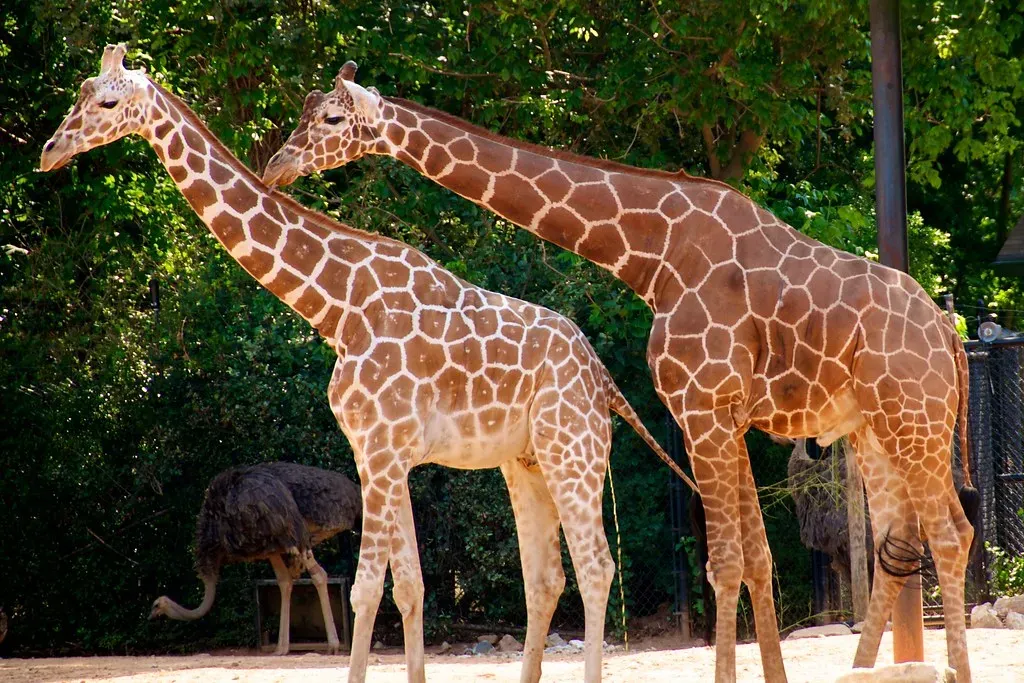
Modern animals with long necks are a reality check against our artistic fantasies. Giraffes can lift their heads pretty high, but in relaxed posture they often hold their necks in gentle curves rather than perfectly straight vertical lines. Swans and other birds offer another clue: they have insane neck flexibility, yet they keep their necks in S-shaped poses most of the time, using curvature and muscle tension to fine-tune reach and control without overloading any single joint. Long necks, in practice, are usually about versatility, not just raw height.
When paleontologists compare sauropod neck vertebrae with those of modern animals, they look for patterns in joint shape and range of motion. Some of those comparisons suggest that Brachiosaurus could raise and lower its head, but not in the extreme, rigid, always-up way that museum mounts sometimes imply. Instead, it probably had a comfortable middle zone where the neck was inclined, maybe sweeping through different feeding levels like a living boom arm. That kind of behavior is far less glamorous than the towering, vertical postcard pose, but it lines up much better with what the bones and modern biology tell us.
I remember the first time I realized this, standing in front of a classic sauropod mount and mentally trying to imagine that neck lowered by several meters. Suddenly the dinosaur felt less like a monster crane and more like an actual animal, one that could graze, browse, and move without constantly defying gravity and blood pressure. Once you see it that way, it becomes hard to go back to the old image without feeling like you’re watching a stylized movie version rather than a plausible creature.
Feeding Strategies: Height Was Not the Only Game in Town
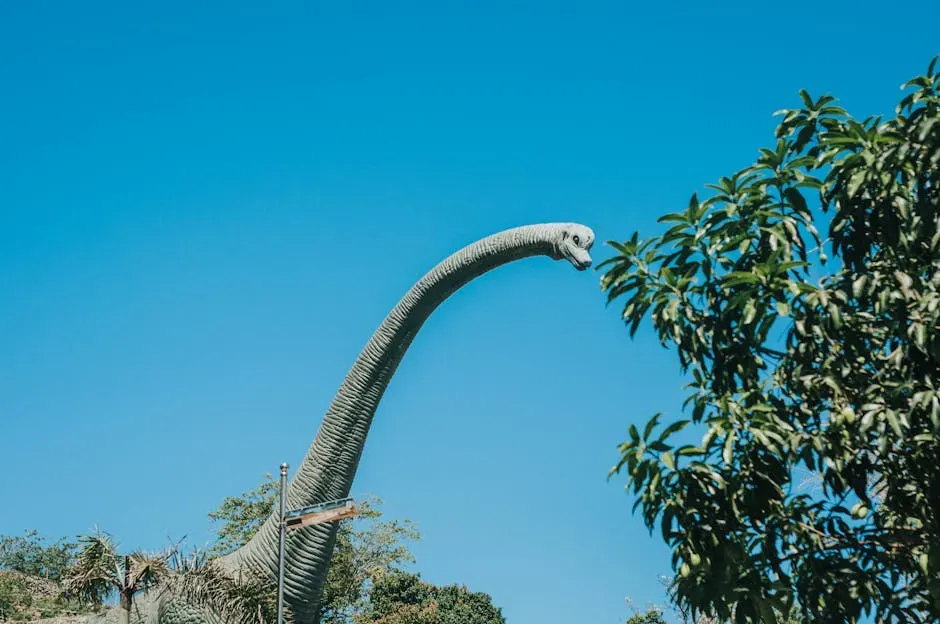
The vertical-neck story assumes one big evolutionary goal: reach the tallest trees and outcompete everyone else. But ecosystems are rarely that simple. Food is spread across different heights, from low shrubs to mid-level branches to occasional tall canopies. A long, mobile neck lets an animal access a wide feeding envelope without having to move its entire body all the time. Brachiosaurus did have relatively longer forelimbs, which likely gave it extra shoulder height, but that still does not mean it spent its entire life with its head at maximum extension, like someone permanently standing on tiptoes.
A more realistic view is that Brachiosaurus probably mixed its feeding strategies, using the neck to sweep through different plant layers, maybe focusing on mid to high browsing that other dinosaurs could not easily reach. That flexibility would have been evolutionary gold, allowing it to pivot between resources depending on season and competition. If you think about it in modern terms, it is a bit like having a car that can handle city streets and highways instead of one that only makes sense on a racetrack. The common diagram that shows the head permanently at the forest ceiling flattens all that complexity into one exaggerated and unlikely moment.
So Why Do We Still Draw It Wrong? Habit, Drama, and Human Imagination
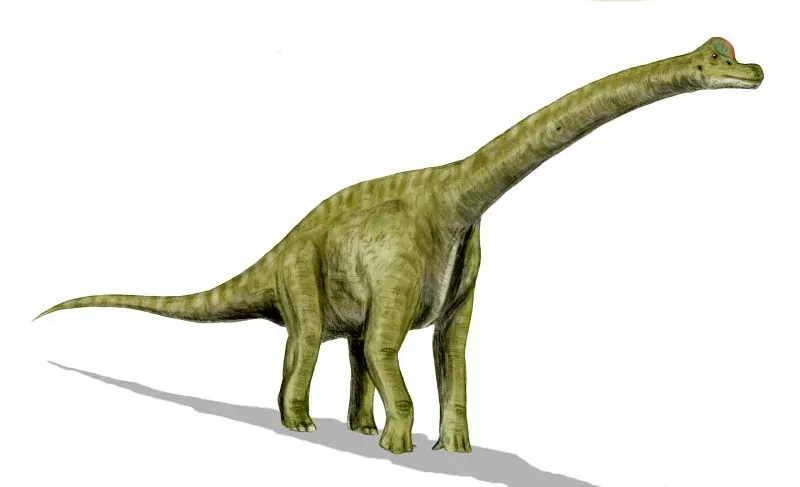
If the science increasingly nudges us away from the straight-up neck, why do those old diagrams and mounts keep hanging on? Part of it is simple inertia: once an image becomes iconic, changing it feels risky, especially for institutions that depend on public familiarity. People expect their childhood dinosaurs to look a certain way, and tweaking that silhouette can trigger surprising resistance. There is also the storytelling factor. A Brachiosaurus with its head just somewhat higher than its body is impressive. One towering over a whole forest is unforgettable. Drama wins attention, even when accuracy pays the price.
There is also a deeper psychological thing going on. We like extremes because they help us feel awe, and dinosaurs are one of our favorite outlets for that feeling. Making Brachiosaurus as tall as physically imaginable fits that emotional need. But as our understanding of these animals matures, there is something even more awe-inspiring about realizing they were not fantasy giants but real, constrained, problem-solving organisms shaped by physics and ecology. Admitting that the classic vertical neck is probably wrong is less about ruining the fun and more about trading a cartoon for a richer, more believable creature that had to survive in a real world with real limits.
Conclusion: The Mythic Tower vs. the Real Animal
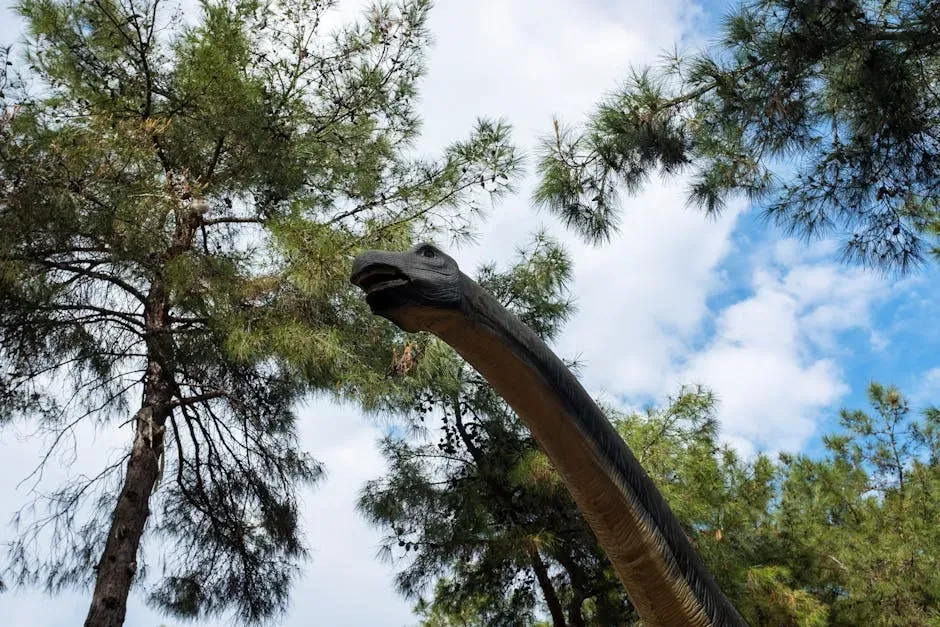
When you put everything together – the bone anatomy, the cardiovascular demands, the mechanical stresses, the comparisons with living animals, and the ecological context – the perfectly vertical Brachiosaurus neck looks less and less like a normal pose and more like a dramatic outlier at best. It is not that the dinosaur could never raise its head high; it is that holding it that way as a default, everyday posture would have been biologically expensive, mechanically awkward, and evolutionarily questionable. The popular image persists mostly because it is spectacular and familiar, not because it best fits the evidence.
Personally, I think the “less vertical, more versatile” Brachiosaurus is far more interesting. It forces us to imagine an active, dynamic animal sweeping its neck through space with purpose, responding to its environment instead of just existing as a living watchtower. Letting go of the old myth does not shrink Brachiosaurus; it makes it feel more real, more grounded, and honestly more impressive for having to play by the same physical rules everything else does. The next time you see that straight-up neck in a diagram, will you still buy it – or will you find yourself picturing the quieter, more plausible reality instead?