If you grew up thinking T. rex was the undisputed king of the dinosaurs, Giganotosaurus is the giant challenger that quietly crashes that party. The more paleontologists uncover about this massive carnivore from Argentina, the more it starts to feel less like a side character and more like a main rival. It is not just another big meat‑eater; it is a predator that pushed the limits of size, speed, and sheer bite-focused design in its own terrifying way.
When I first saw a reconstruction of Giganotosaurus next to T. rex, I remember that uncomfortable feeling of, “Wait… why did no one tell me about this thing?” The two are not twins, and they ruled different times and places, but they occupy a similar niche in our imagination: apex hunter, bone-crushing presence, final boss of the Late Cretaceous. Let’s dig into what makes Giganotosaurus such a serious contender in the “top predator” conversation – and why T. rex might not be as lonely on that throne as pop culture suggests.
1. Giganotosaurus Was Comparable in Size – And May Have Edged Out T. Rex in Length
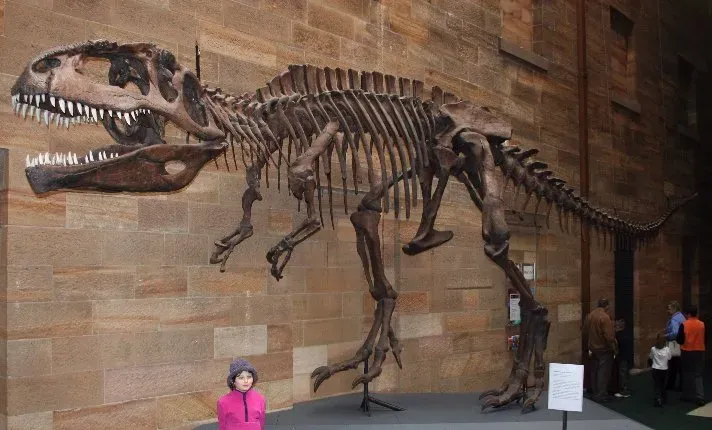
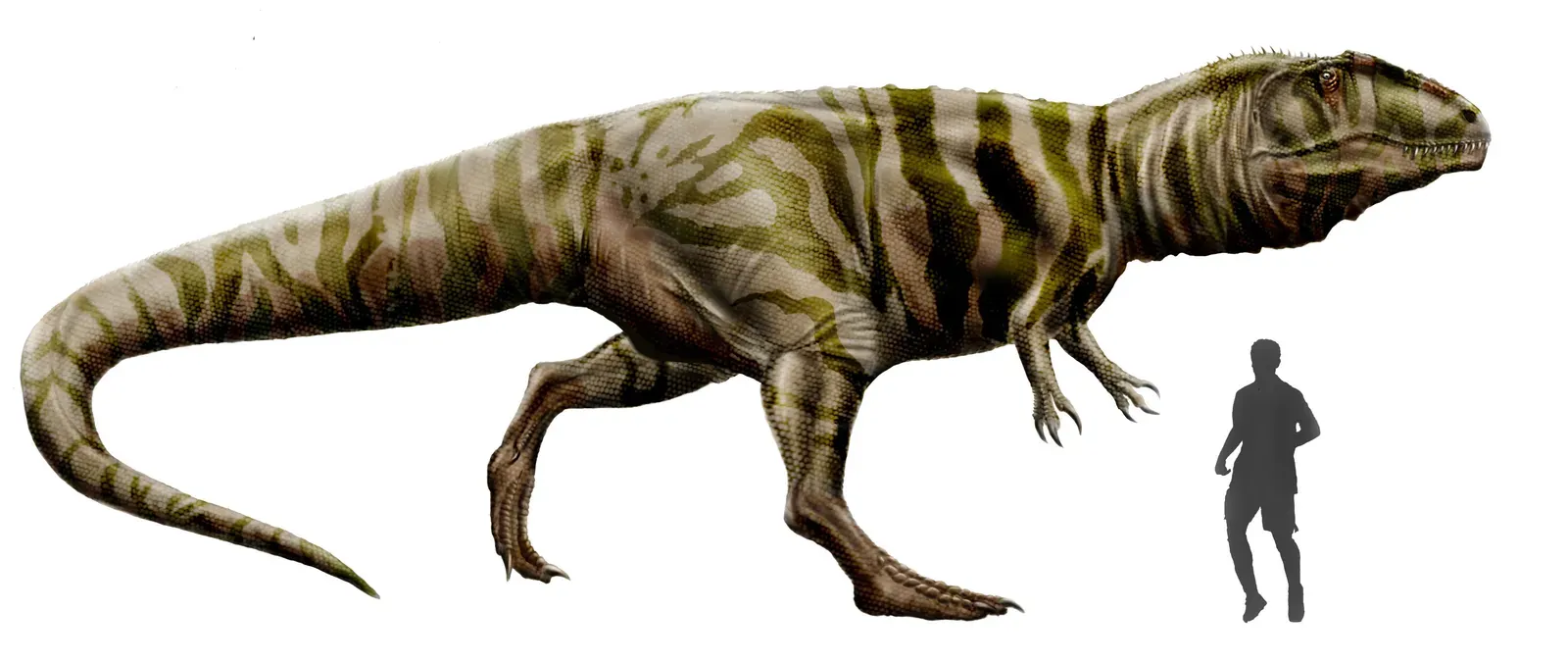
The first shocking thing about Giganotosaurus is simply how big it was. Fossil estimates put it within the same general mass range as very large T. rex specimens, but with a body that was slightly longer and more stretched out. Some reconstructions suggest Giganotosaurus could reach around forty to forty-three feet in length, nudging past the average known T. rex, even if their weights overlapped. In a face‑off on a flat plain, it would not look like a younger cousin to T. rex; it would look like a true peer.
Of course, dinosaur size is never an exact number; it is always a range, with margins of error, educated guesses, and heated scientific debates. Still, the fact that many experts consider Giganotosaurus to be “in the same league” or even slightly longer than T. rex is enough to shake the old idea that T. rex towered over every other predator. Picture two heavyweight fighters at roughly the same scale – T. rex with a compact, power‑lifter frame and Giganotosaurus with a taller, leaner build – and you start to see why this animal earns respect as a rival, not a runner‑up.
2. A Different Skull Design Built for Slicing Flesh, Not Just Crushing Bone
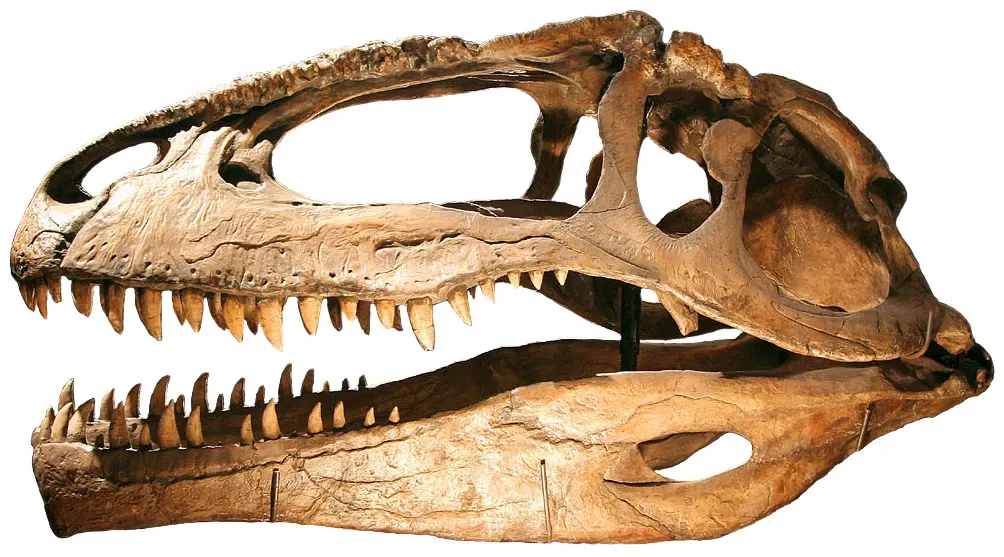
One of the coolest differences between Giganotosaurus and T. rex shows up in their skulls. T. rex had a deep, massively reinforced skull built like a biological wrecking ball, perfect for crushing bone and delivering devastating, single‑bite damage. Giganotosaurus, in contrast, had a longer, more laterally compressed skull that looks sleeker and more blade‑like, hinting at a different hunting style. Its teeth were sharp and laterally compressed too – less like the thick, banana‑shaped teeth of T. rex and more like serrated knives designed for slashing.
This skull and tooth setup suggests Giganotosaurus was probably better at carving and slicing through flesh than pulverizing the skeletons of its prey. Instead of relying on pure bone‑crushing power, it might have focused on delivering a series of cutting bites that opened up huge wounds. Think of the difference between a sledgehammer and a set of massive butcher knives: both terrifying in their own way, but built for different jobs. That contrast makes Giganotosaurus feel less like a T. rex clone and more like a rival champion with its own brutal specialization.
3. A Potential Speed Advantage for a Predator of Its Size
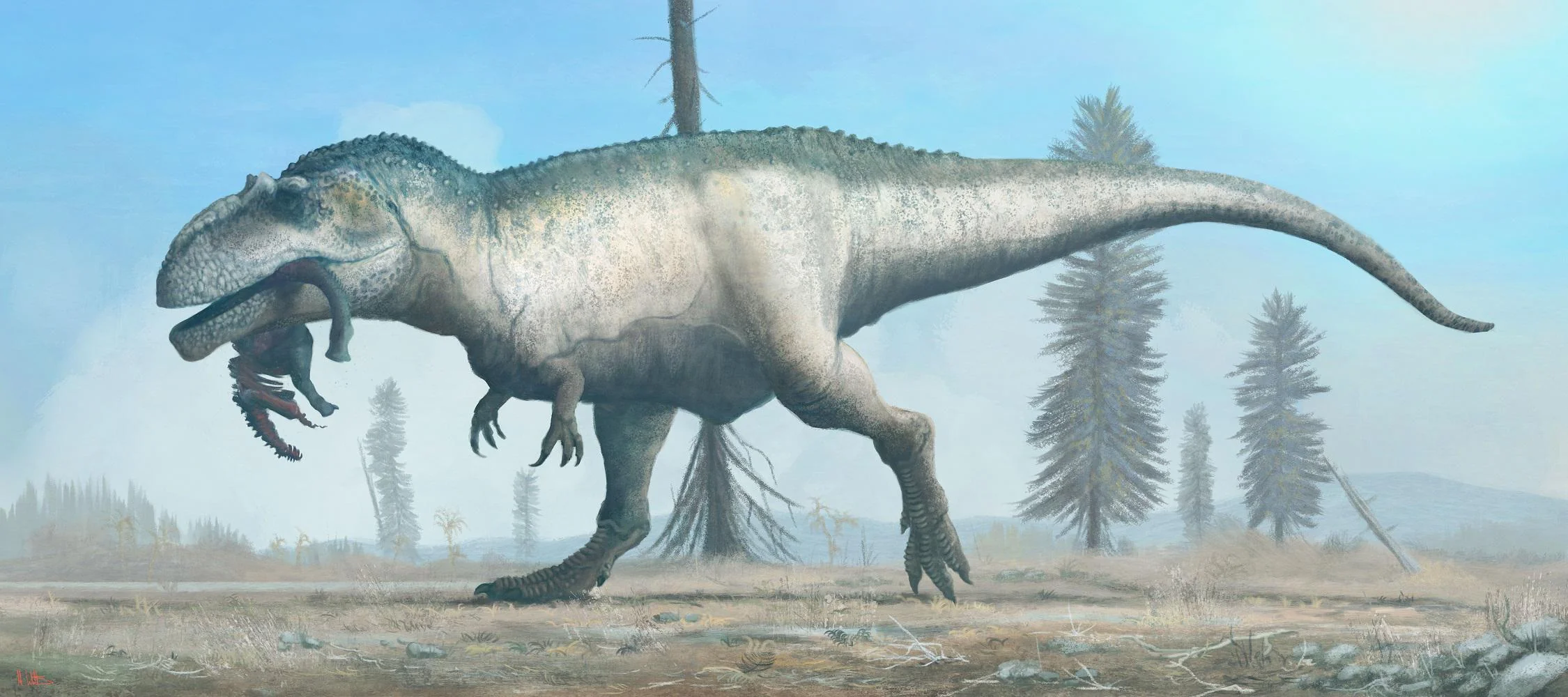
Speed might be the area where Giganotosaurus quietly scores some points over T. rex, at least in many reconstructions. Its body plan appears somewhat more lightly built in comparison, with a longer torso and relatively more gracile limbs. While there is no stopwatch for extinct animals, biomechanical studies often suggest that Giganotosaurus could have been capable of decent running speeds for its size, possibly edging out a similarly massive T. rex in a straight sprint. That is a horrifying thought when you imagine something weighing several tons moving at a brisk, ground‑shaking run.
Of course, both animals were still giant theropods, and they were not sprinting like cheetahs across the landscape; their speed is always relative to their enormous mass. But a slightly more streamlined build in Giganotosaurus hints that it might have relied more on pacing, pursuit, and quick follow‑up attacks, rather than the short, explosive bursts often imagined for T. rex. If you picture T. rex as the heavyweight brawler that lands a few devastating hits, Giganotosaurus starts to look more like the terrifying combination of reach and mobility – a predator that could stay on top of you once it committed to the chase.
4. A South American Apex Predator Holding Its Own Kingdom
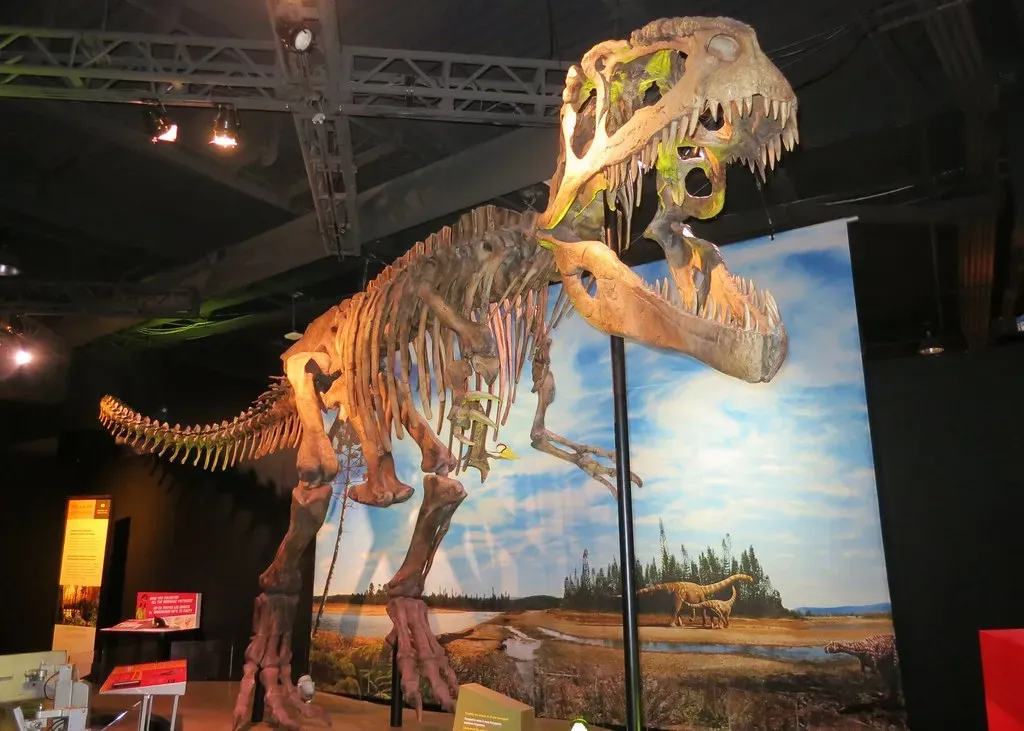
One underrated thing that makes Giganotosaurus such a serious rival is that it was not living in T. rex’s shadow at all – it was ruling a different continent, in a different time. Giganotosaurus stalked what is now Patagonia in South America during the mid‑Cretaceous, long before T. rex appeared in North America toward the end of the period. In its own ecosystem, Giganotosaurus was not a side character; it was the top of the food web, hunting some of the largest herbivores on Earth at the time. It was the terror of its region in every way that T. rex was the terror of its own.
This separation in space and time actually strengthens its image as a rival rather than a mere copy. There was no competition between them in real life, but if you lined up apex predators from different corners of the Cretaceous, Giganotosaurus would absolutely step into the ring. It shows that nature can arrive at similar “solutions” in different places: a giant, meat‑eating, bipedal dinosaur with a massive head and formidable teeth. To me, the coolest part is realizing there were multiple “tyrant lizard” equivalents on the planet – T. rex was one, but Giganotosaurus was another, every bit as legitimate in its own domain.
5. Hunting Giant Sauropods Demanded a Different Kind of Brutality
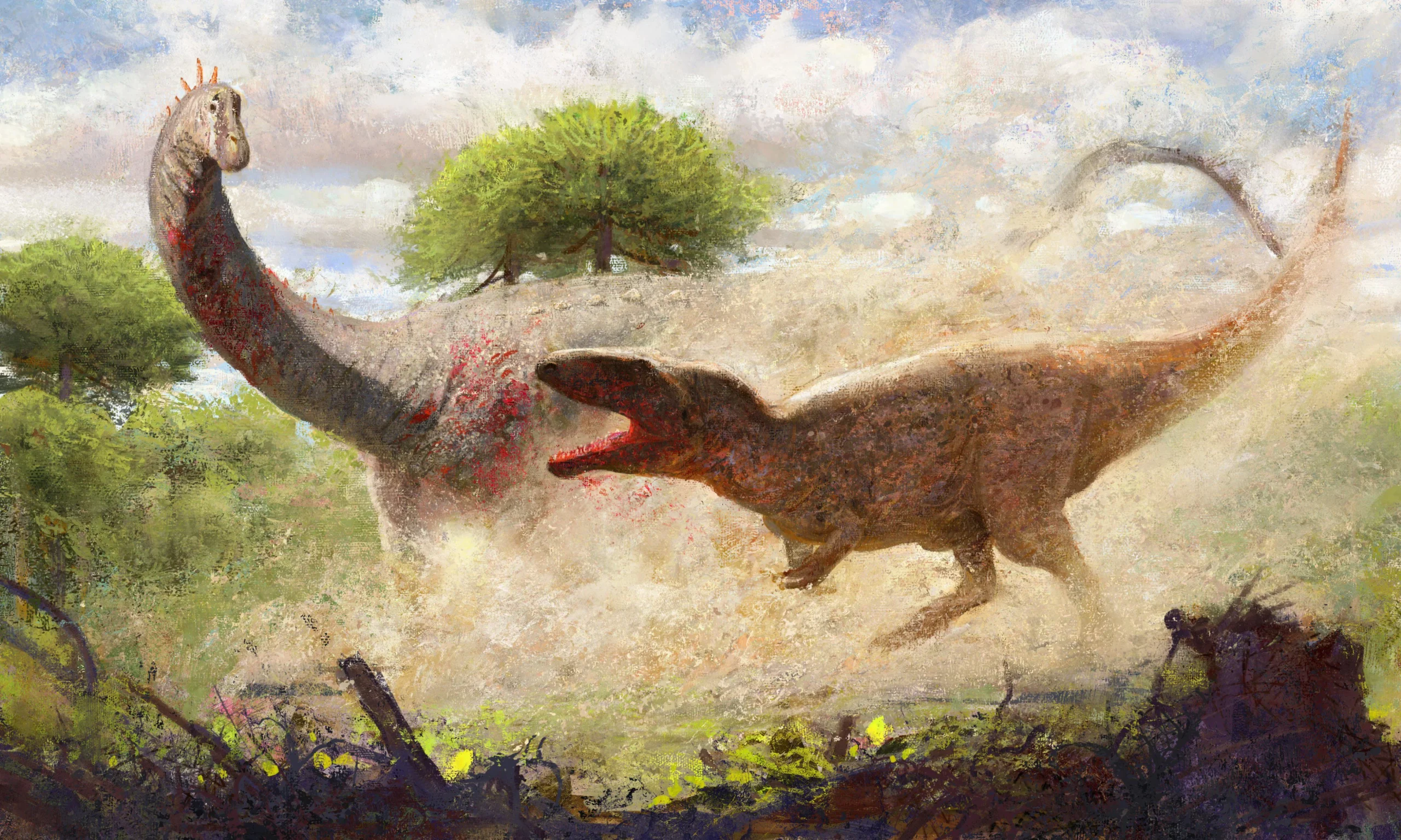
Giganotosaurus lived alongside enormous sauropods – long‑necked, heavy‑bodied plant‑eaters that were basically walking mountains of meat. Taking down such colossal prey would have required a hunting strategy tailored to massive, thick‑skinned targets rather than smaller, bone‑dense animals. Its slicing teeth and elongated skull make a lot of sense in this context; instead of trying to crush through huge bones in one go, Giganotosaurus may have aimed for repeated, devastating flesh wounds to wear down these giants. Picture a predator that attacks like a living chainsaw rather than a single, concussive punch.
This ecological role sets it apart from T. rex, which is often imagined tackling large hadrosaurs and ceratopsians – a different kind of challenge involving more compact, heavily built prey. Giganotosaurus may have focused more on crippling the muscles and soft tissues of its victims, causing heavy blood loss and shock over the course of a prolonged attack. That sounds grim, but it also highlights how differently “top predators” can be built depending on what is available to eat. In terms of brutality, you could argue that Giganotosaurus had the more drawn‑out, horror‑movie style of hunting, and that alone earns it serious rival status.
6. A Brain and Senses Good Enough to Run a Giant Predator’s Body
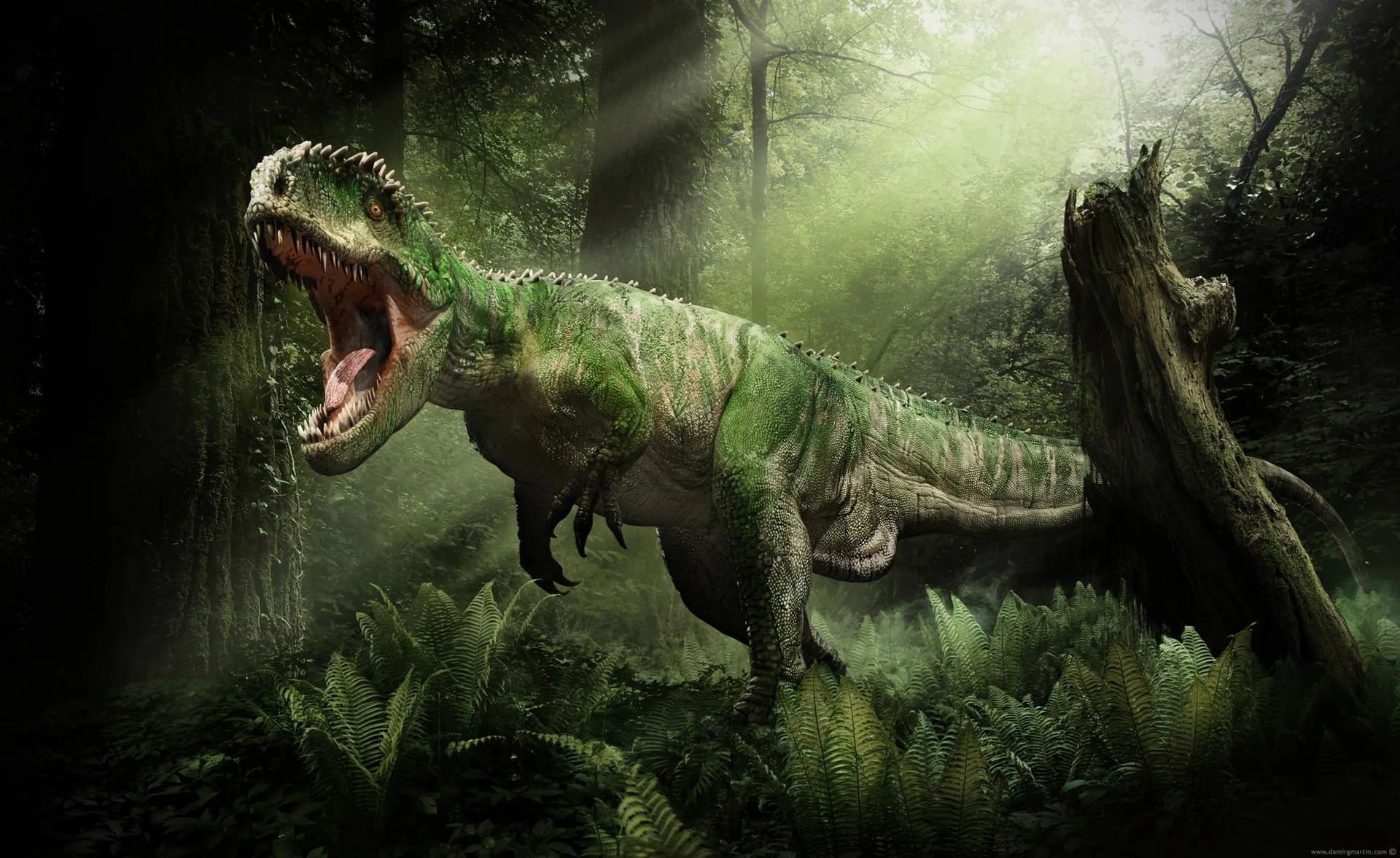
When people talk about T. rex, they often highlight its relatively advanced senses, especially smell and vision. Giganotosaurus does not have the same fame in that department, but that does not mean it was some clumsy, dull‑witted monster stomping around blindly. Endocasts of related carcharodontosaurids suggest sensory systems adequately developed for active predation, including regions associated with balance and coordination. You do not successfully hunt multi‑ton sauropods by stumbling around like a walking boulder; you need a brain that can coordinate timing, movement, and targeting.
It is also easy to underestimate how impressive “good enough” is at this scale. A predator weighing several tons, with a long tail, massive head, and powerful legs, needs constant fine‑tuned adjustments just to avoid falling over. The fact that Giganotosaurus could move quickly, turn, bite, and maintain balance tells us more about its brain and inner ear system than a simple brain size comparison ever would. While T. rex might still take the prize for having more intensively studied senses, Giganotosaurus clearly passed nature’s only test that really matters: it could live and hunt effectively in a world full of other deadly animals.
7. A Body Built for Reach and Intimidation
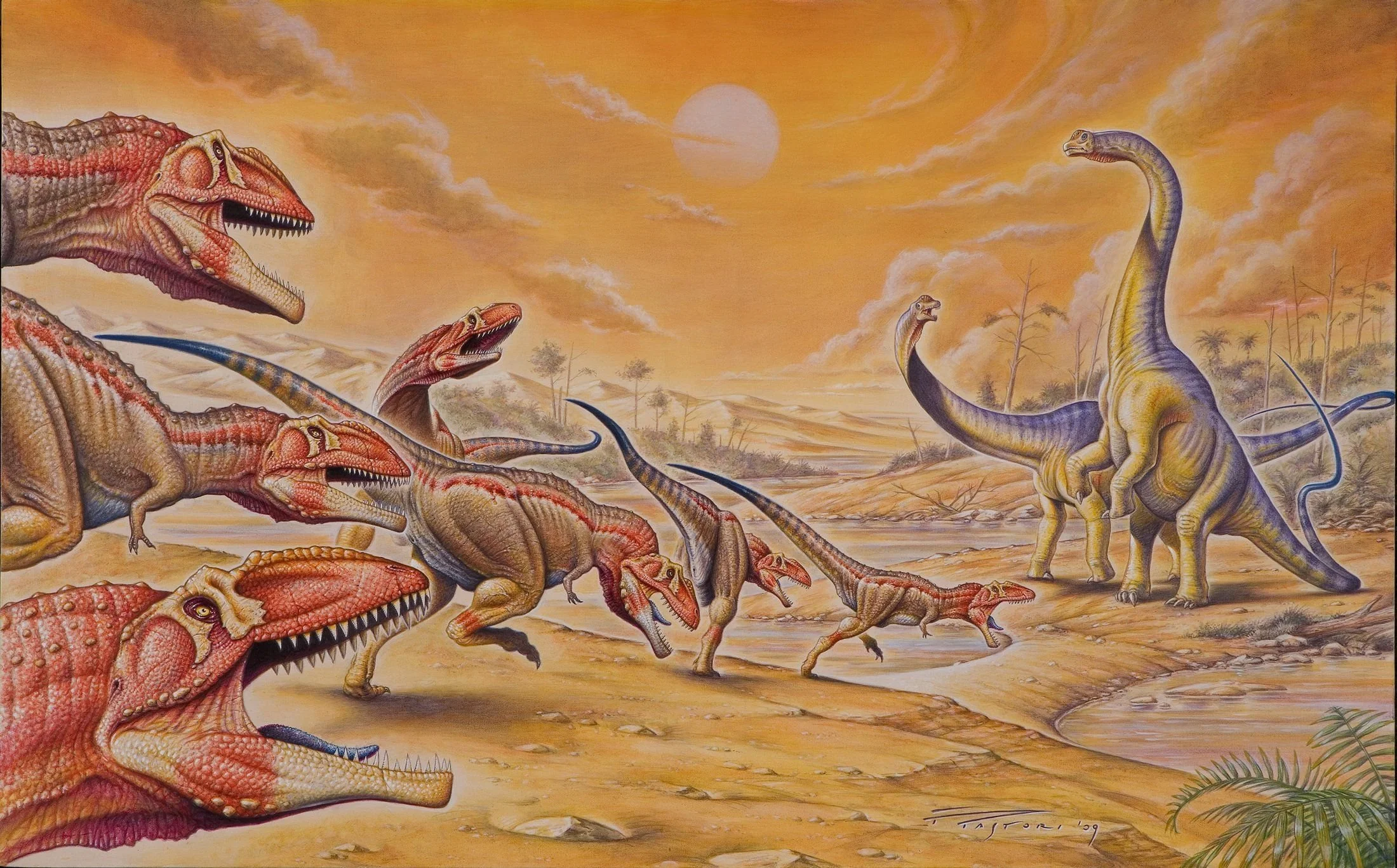
One thing that always strikes me about Giganotosaurus reconstructions is the sheer reach of the animal. The long skull, long neck, and extended torso mean its bite range would have been impressive, allowing it to strike from a bit farther away than a more compact predator like T. rex. That kind of reach matters when you are facing huge, tail‑swinging sauropods or other large competitors; getting your jaws in without exposing your entire body can be a life‑or‑death advantage. Just imagining that head lashing forward in a sideways slash is enough to make your skin crawl.
Intimidation is not a trivial factor either, especially in ecosystems where confrontations over carcasses or territory were likely. A towering, long‑bodied predator with a massive skull and serrated teeth would have been an imposing sight for any animal unlucky enough to share its landscape. That combination of reach and presence makes Giganotosaurus feel like the dinosaurian version of a fighter with an absurd wingspan – always able to reach you before you think it is close enough. Standing across from T. rex in some imaginary prehistoric arena, it would absolutely look like a worthy, terrifying opponent.
8. Evidence That It Belonged to a Family of Giant Killers
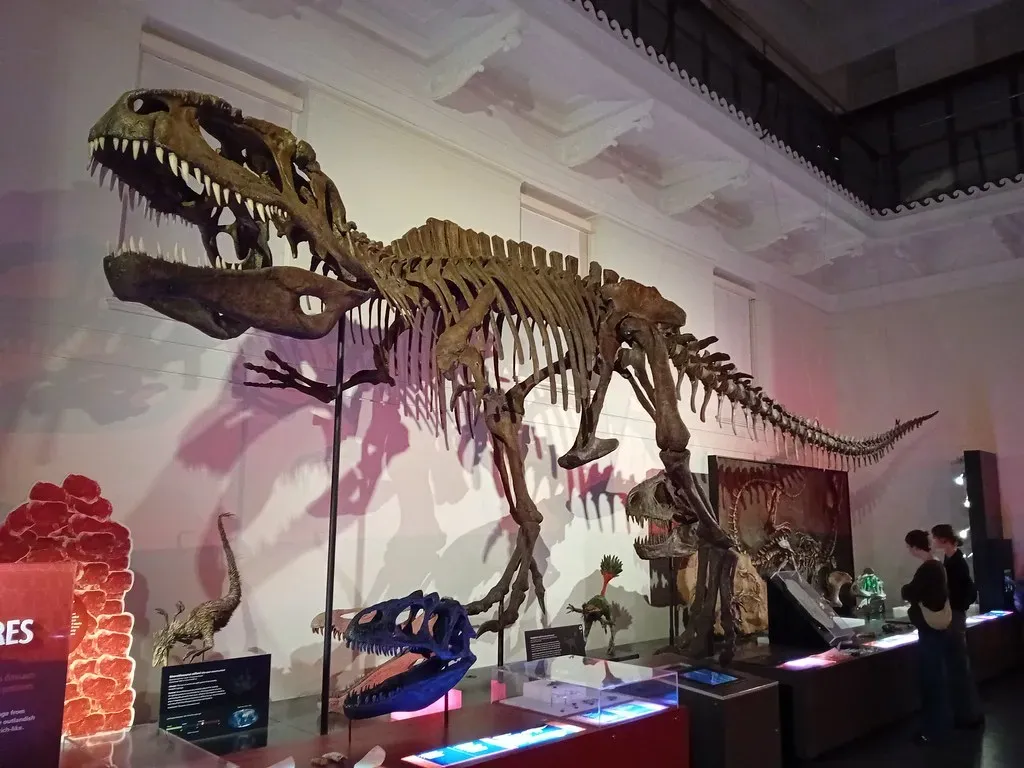
Giganotosaurus is not an isolated oddball; it is part of the carcharodontosaurid group, a family that includes several massive predatory dinosaurs scattered across ancient continents. That family connection matters because it shows that this size and style of predator was not a freak accident, but part of a broader evolutionary pattern. Other relatives, like Carcharodontosaurus itself, also pushed into similar size ranges and had comparable skull and tooth designs. In a way, Giganotosaurus is one of the flagships of a whole lineage of “shark‑toothed” giants.
When you compare that to T. rex, which represents the peak of the tyrannosaur lineage, you get this fascinating image of two different dynasties of giant predators evolving in parallel. One focuses on deep, bone‑crushing skulls and ultra‑strong bites, the other on long, blade‑like skulls and slicing teeth. Giganotosaurus stands out within its clan as one of the largest and most iconic, and that pedigree reinforces its status as a real rival. It is not just a one‑off contender; it is the champion of an entire predatory tradition that evolved to dominate its own corners of the Cretaceous world.
9. Pop Culture Is Finally Catching Up to Its Real-Life Importance
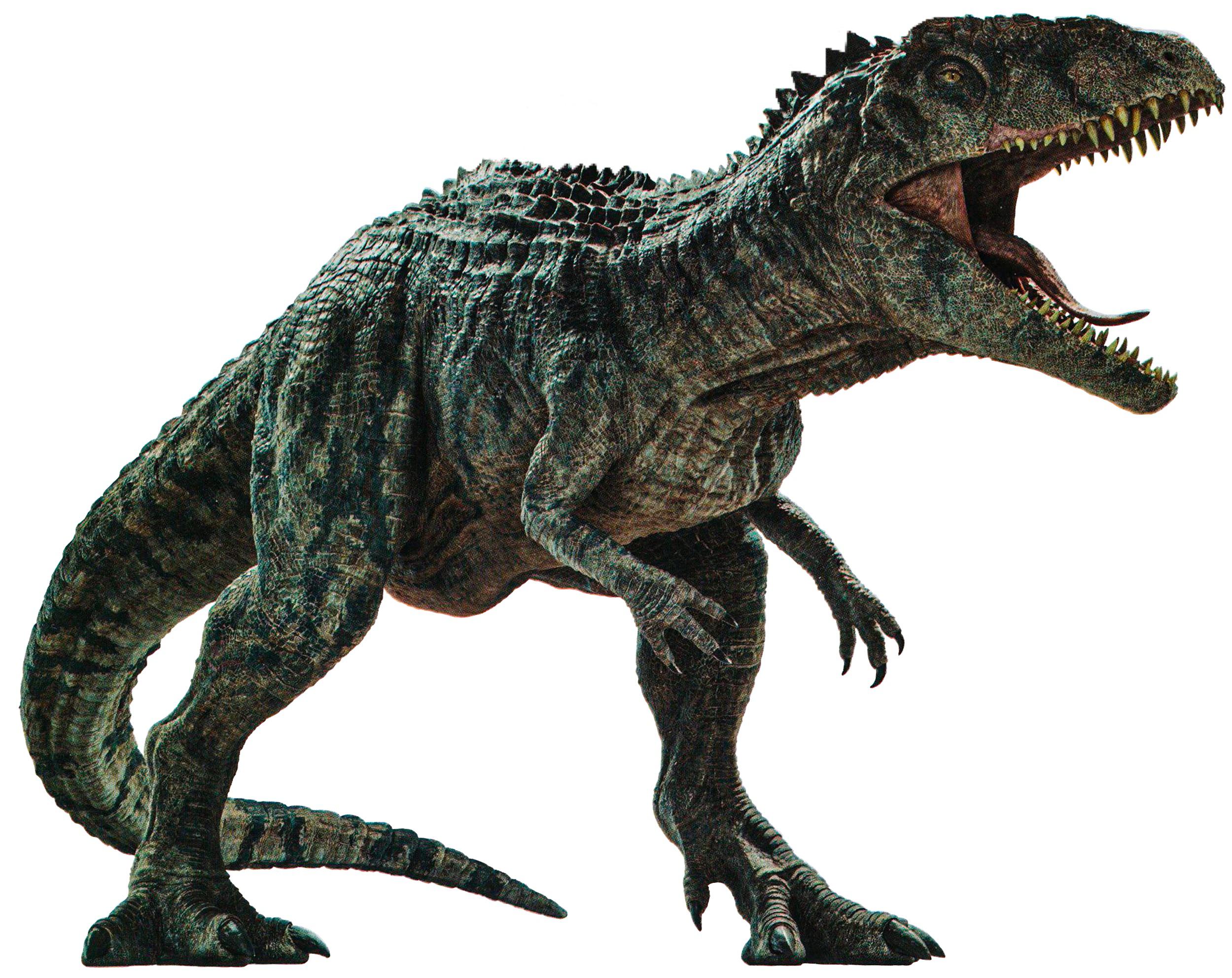
For a long time, T. rex hogged the spotlight while Giganotosaurus lurked in the background of dinosaur books and museum halls, known mostly to dedicated fans. In the last couple of decades, that has started to change, with more documentaries, exhibits, and media giving Giganotosaurus its moment as a genuine titanic predator. While movies and games sometimes exaggerate or stylize it, they at least put the name in front of people who might otherwise never hear about it. Suddenly kids are asking not just about T. rex, but about that other huge dinosaur from South America with the hard‑to‑pronounce name.
There is something satisfying about watching a scientifically interesting animal finally get the cultural attention it deserves. In my own experience, whenever friends find out that Giganotosaurus was roughly on par with T. rex in size, you can almost see their mental dinosaur ranking board reshuffling. That shift in pop culture matters, because it changes how we imagine the prehistoric world: not as a single monarch ruling all time, but as a series of different apex predators, each terrifying in its own way. Giganotosaurus stepping into the public eye feels like a long overdue correction.
10. In the “Who Would Win?” Debate, Giganotosaurus Makes the Fight Interesting
Let’s be honest: a huge part of why people compare Giganotosaurus and T. rex is that timeless, slightly childish question – who would win in a fight? From a scientific standpoint, it is a hypothetical mash‑up; they never met, lived in different places and times, and evolved for different prey. But the fact that Giganotosaurus can even be a serious contender in that thought experiment shows how formidable it was. Its combination of size, reach, cutting teeth, and likely decent speed makes it more than just a background opponent in a cinematic showdown.
If you force me to pick a side, I still lean toward T. rex, mainly because of its absurd bite force and heavily built skull that could probably do catastrophic damage if it landed a good hit. But the beauty of Giganotosaurus is that it makes the debate actually worth having. This is not some undersized pretender; it is a legitimate, well‑armed giant that could dish out horrific slashing wounds and potentially outmaneuver its rival. In that imaginary arena, you would not want to bet your life on either one walking away untouched.
Conclusion: Two Different Kings on Two Different Thrones
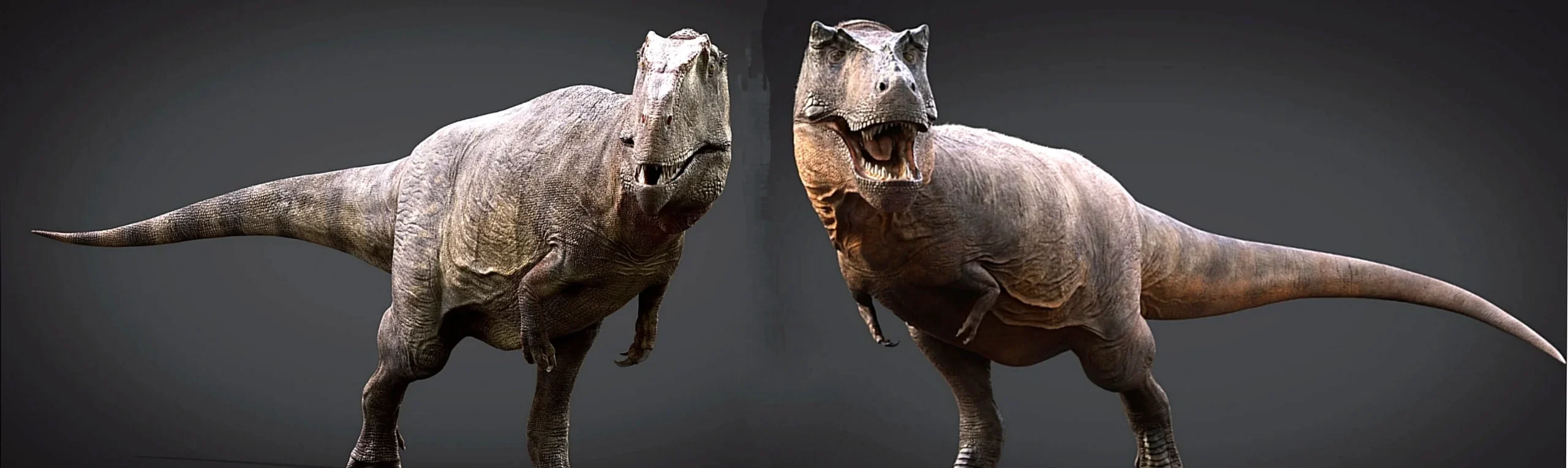
When you really look at the evidence, Giganotosaurus is not a knockoff T. rex – it is a parallel answer to the question of how to build a giant, terrifying carnivore. T. rex still deserves its fame for that extreme bone‑crushing bite and stocky, powerhouse build, but Giganotosaurus stands shoulder to shoulder as a longer, slicier, more reach‑focused monster. It ruled its own ecosystem, hunted its own colossal prey, and evolved along a separate path that was every bit as successful in its time and place. To pretend it is second‑tier just because it is less famous feels, frankly, like doing the fossil record a disservice.
In my view, the fairest way to see it is simple: T. rex and Giganotosaurus were two different kings on two different thrones, each terrifying in ways the other was not. One was the sledgehammer, the other the chainsaw, and the prehistoric world was big enough for both designs to thrive. So maybe the real thrill is not deciding which one would win, but appreciating that nature produced more than one version of “ultimate predator.” Now that you know what Giganotosaurus brought to the table, does T. rex still feel like the only rightful ruler of your dinosaur imagination – or are you starting to share the crown?