When most of us picture the Age of Dinosaurs, we instantly think of toothy giants like Tyrannosaurus rex crashing through forests, ruling the food chain without challenge. But here’s the twist: some of the most terrifying killers sharing that world were not dinosaurs at all. They swam rather than stomped, slicing through ancient seas with jaws full of razor teeth, and in many places they were closer to the top of the food web than any land-based carnivore.
The story of these non-dinosaur predators is stranger and more fascinating than most people realize. They were reptiles, yes, but they belonged to very different branches of the reptile family tree, with bodies shaped by water instead of land. Once you look closely at their bones, bite marks, and even fossilized stomach contents, you start to see a sobering pattern: in many environments, the true apex predators of the dinosaur age were marine reptiles that could take on almost anything unfortunate enough to cross their path.
The Overlooked Monsters That Ruled the Seas
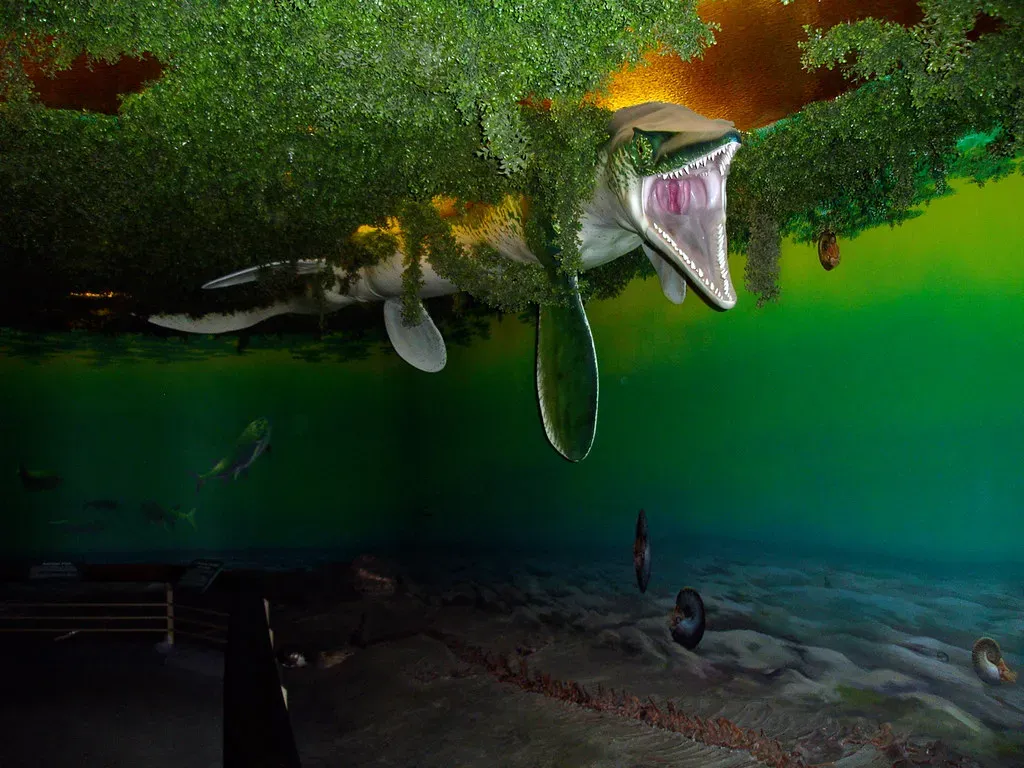
It feels almost unfair how much attention dinosaurs get compared with their ocean-going neighbors. While giant carnivorous dinosaurs were dominating the land, the seas teemed with marine reptiles like mosasaurs, plesiosaurs, pliosaurs, and ichthyosaurs, many of which grew to sizes that would make a T. rex look almost modest. These were not just big fish; they were air-breathing reptiles with powerful lungs, advanced senses, and complex hunting strategies that turned vast swaths of the ocean into their personal killing grounds.
Picture an animal longer than a city bus, propelled by a massive tail, with a crocodile-like skull and rows of conical teeth built for gripping and tearing. That describes a large mosasaur, and by the late Cretaceous, creatures like this were widespread in many of the world’s shallow seas. You had entire marine ecosystems where nearly every big predator was a reptile rather than a shark or a fish, and on the top step of that staircase were animals that could swallow smaller marine reptiles whole. On land, dinosaurs might have been king, but out at sea the crown belonged to a very different kind of reptile.
Mosasaurs: The Super-Predators That Out-Terrorized T. rex
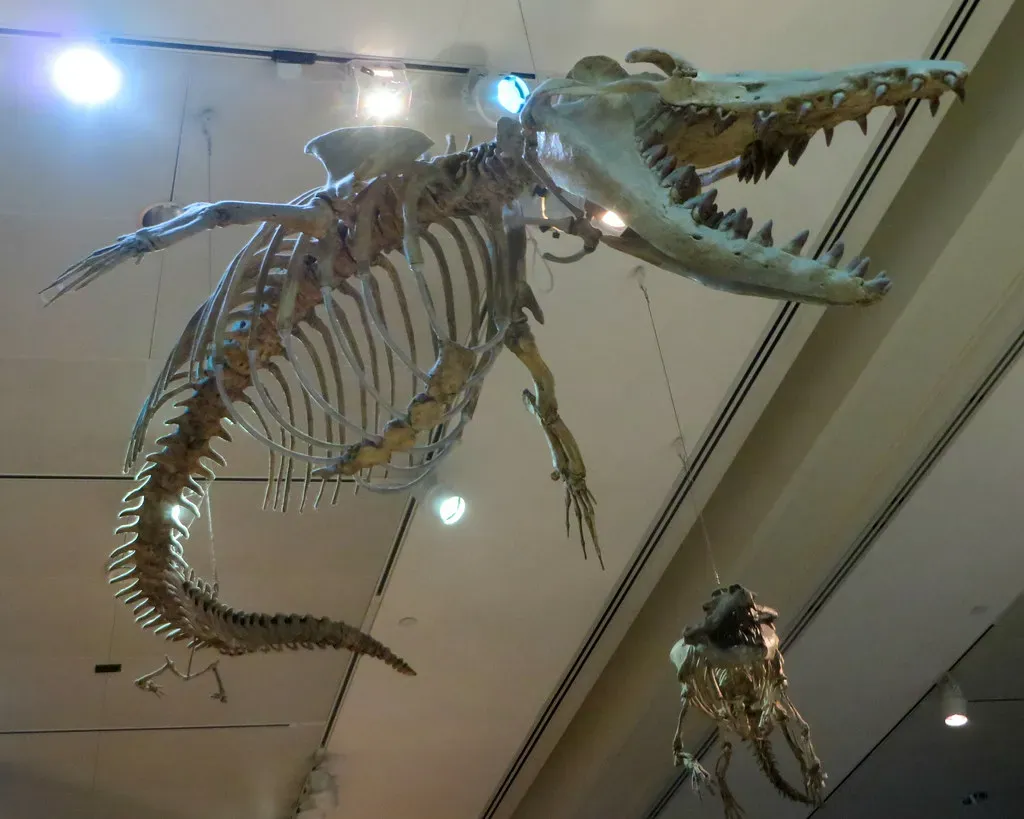
If you had to nominate a single non-dinosaur as the scariest predator of the dinosaur age, mosasaurs would make a very strong case. These were fully aquatic lizards, distant relatives of today’s monitor lizards and snakes, that evolved into gigantic torpedo-shaped hunters. Some species exceeded the length of most school buses, with skulls packed with large, recurved teeth and secondary rows of teeth on the roof of the mouth to keep struggling prey from escaping. Their bodies were streamlined and muscular, with a powerful tail fin that let them accelerate quickly and ambush victims from below or behind.
What makes mosasaurs feel so especially dangerous is not just their size but the range of prey they tackled. Fossil evidence shows them feeding on fish, ammonites, turtles, seabirds, and other marine reptiles, including smaller mosasaurs. Bite marks and crushed bones tell a story of violent, high-stakes hunts in which a mosasaur’s jaws could simply overpower just about anything in reach. In some Late Cretaceous seas, mosasaurs were not just apex predators; they were ecosystem engineers, shaping which species survived and how food chains were structured by the sheer force of their appetites.
Pliosaurs and the “Sea T. rex” Problem
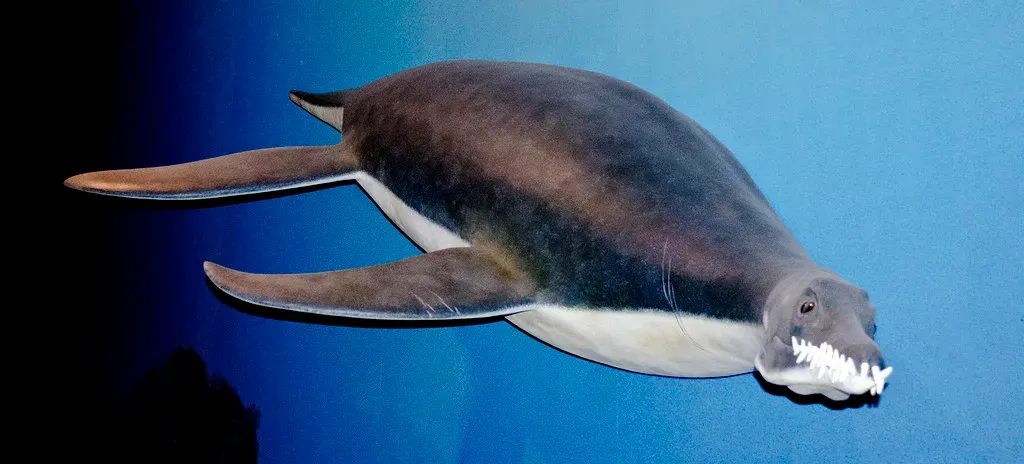
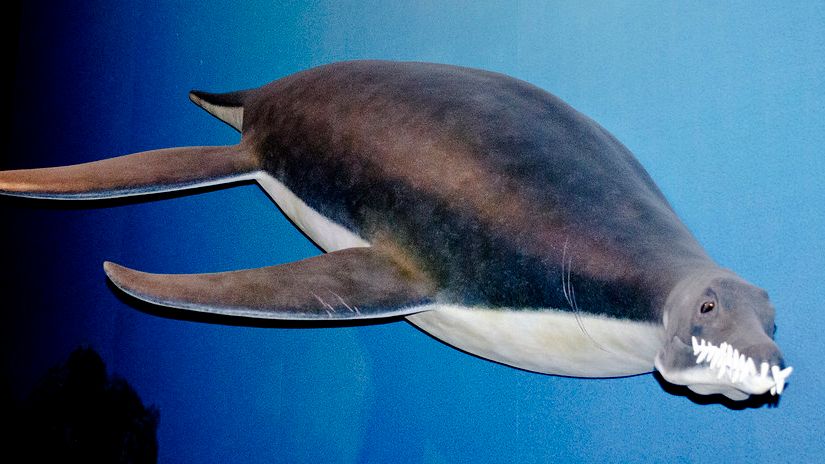
Before mosasaurs took over the oceans in the Late Cretaceous, pliosaurs had already written their own terrifying chapter in marine history. Pliosaurs were a type of short-necked plesiosaur with massive heads and strong, wide jaws, some of which rivaled or even exceeded the bite force of the largest land carnivores. Their bodies were powered by four flipper-like limbs, beating in a powerful underwater “flight” that let them cruise and then surge forward in sudden bursts, much like an underwater version of a soaring predator diving on its target.
Some of the biggest pliosaurs had skulls that stretched several meters long, built like enormous, reinforced traps lined with conical teeth. These animals clearly focused on large, fleshy prey: other marine reptiles, large fish, and anything else they could overpower. It is tempting to call them the “T. rex of the sea,” but in some ways that comparison undersells them. While a big theropod had to chase prey over solid ground, pliosaurs moved in three dimensions, striking from above, below, or the side, with the element of surprise always on their side in the gloomy marine depths.
Ambush, Not Chase: How Marine Reptiles Hunted
![Ambush, Not Chase: How Marine Reptiles Hunted (By Printed under a CC BY license, with permission from Nadine Bösch and Beat Scheffold, original copyright [2013]., CC BY 2.5)](https://nvmwebsites-budwg5g9avh3epea.z03.azurefd.net/dinoworld/f47e5f9baa26288fc47cbffd80e7597f.webp)
One thing that stands out when you compare dinosaur and marine reptile predators is the hunting style. Many large theropods on land needed to close distance over long ground chases or short, powerful rushes, working against the limits of gravity and body weight. In the water, that equation changes completely. Marine reptiles could float neutrally buoyant, drift nearly motionless, and then explode into motion using tails and flippers to cover short distances with shocking speed. This made them classic ambush hunters, exploiting murky water, surface glare, and complex reefs or seafloor topography to surprise prey.
Skull and body shapes back up this idea. Broad jaws with conical teeth, large eyes, and streamlined profiles all point to animals that relied more on stealth and sudden force than on long, high-speed pursuit. A big mosasaur or pliosaur could approach from below a school of fish or from the blind side of another marine reptile, then lunge forward with a single, crushing bite. In that sense, they were like crocodiles in three dimensions: patient, opportunistic, and devastatingly effective the instant a target made a mistake and wandered too close.
Why “Apex Predator” Means Something Different in the Sea
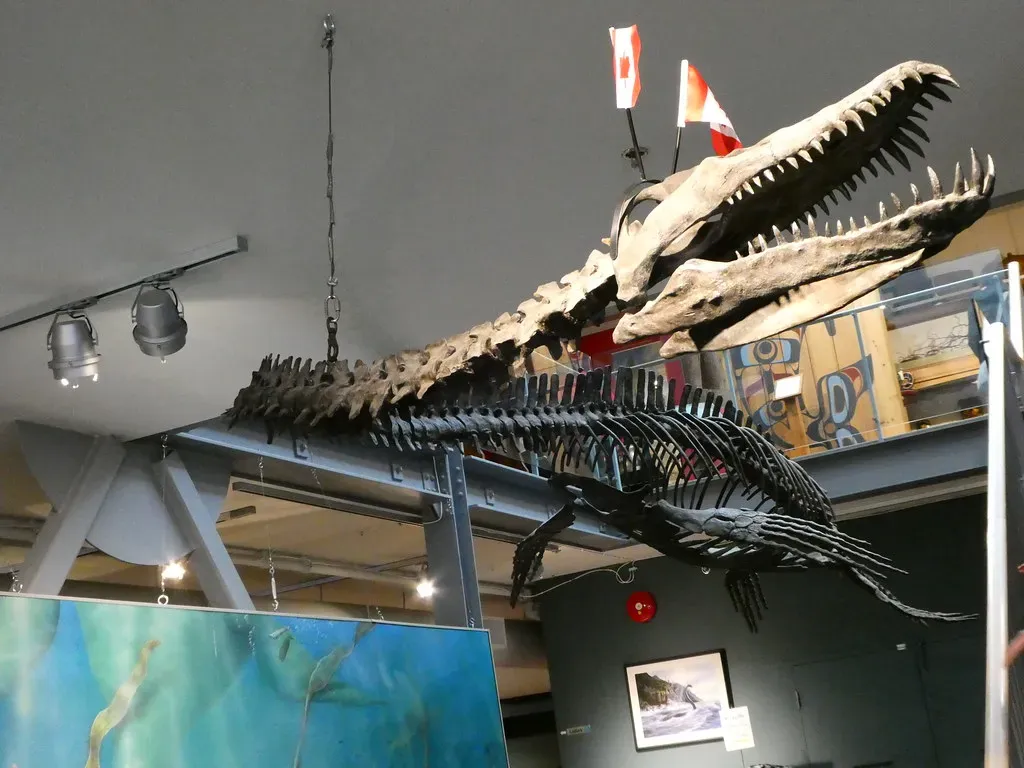
On land, apex predators usually sit at the top of a relatively simple pyramid: smaller predators below them, then herbivores, then plants. In the ocean, the structure is far more tangled, with multiple layers of predators feeding on one another and on different types of prey at different life stages. Large marine reptiles often fed not only on big fish and other reptiles but also on mid-level predators that themselves hunted smaller fish and invertebrates. This meant that a single mosasaur population could influence several trophic levels at once, amplifying its ecological impact far beyond the immediate victims of each hunt.
Because the seas of the dinosaur age were so rich and productive, they could support a surprising number of these large predators at the same time. Instead of one dominant carnivore species in an area, you might have a mosaic of large mosasaurs, smaller mosasaurs, long-necked plesiosaurs, fast ichthyosaurs, and big predatory fish all interacting and sometimes preying on one another. In that complex web, the largest marine reptiles often rose to become the true apex predators, more influential in their world than even the biggest theropods stomping around on nearby coastlines and floodplains.
The Power of Water: Why Marine Reptiles Could Grow So Extreme
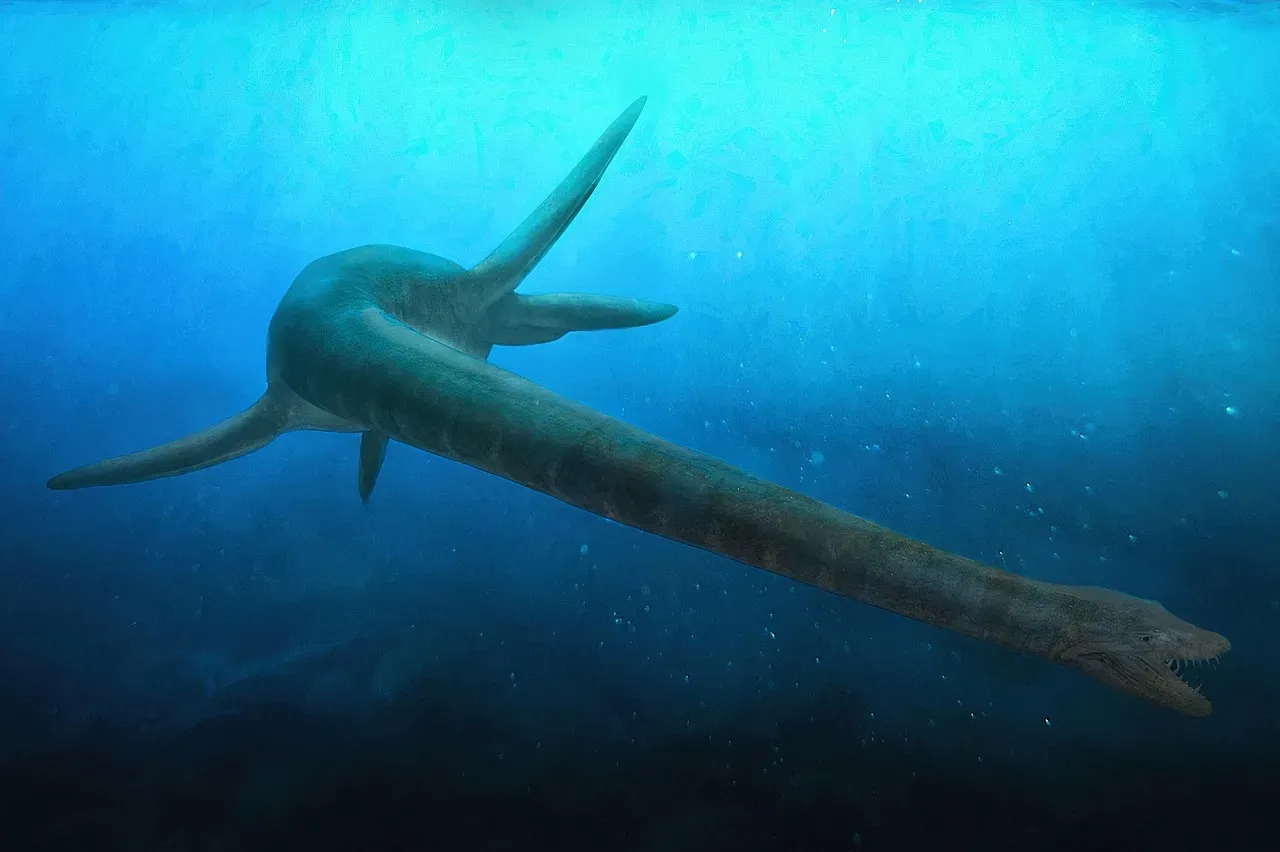
There is also a physical reason why marine reptiles could reach such extreme sizes and hunting power: water supports weight in a way that land never can. On land, a heavy predator has to constantly fight gravity with strong legs and robust bones, which sets practical limits on how large and fast it can become. In the water, buoyancy takes much of that load off the skeleton, allowing animals to grow longer, heavier, and more streamlined without their own weight crippling them. This gave marine reptiles more evolutionary “room” to become gigantic and specialized as apex predators.
That freedom shows up in their body plans. Mosasaurs developed long, muscular tails with large flukes; plesiosaurs could carry massive skulls at the end of relatively short, thick necks; ichthyosaurs evolved barrel chests and tall dorsal fins. All of these designs would have been awkward or even impossible on land at the same scale, but in water they became brutally efficient ways to chase, ambush, and overpower prey. When you add that physical advantage to a rich marine food web, you get predators that could dominate entire ocean basins in a way few land animals ever could.
So Were Dinosaurs Really the Scariest Animals of Their Time?
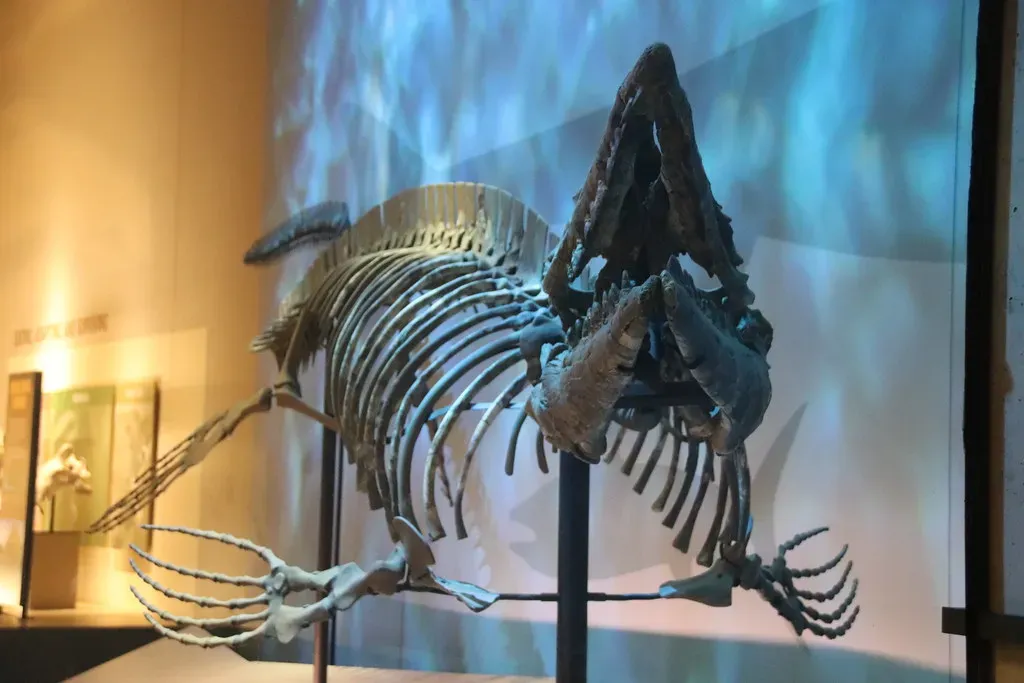
There is no question that large carnivorous dinosaurs were formidable and dangerous in their own environments. However, if you step back and compare across the whole planet, a strong case emerges that the most extreme, wide-ranging apex predators of the Mesozoic were marine reptiles like mosasaurs and pliosaurs. They occupied a medium – water – that allowed larger body sizes and three-dimensional hunting tactics, and they fed at or near the top of deeply layered food webs. In many Cretaceous seas, a large mosasaur was simply the final word in who lived and who died.
In my view, this shifts the story of the dinosaur age in a way that is both humbling and exciting. The land might have belonged to dinosaurs, but the seas were arguably even more dangerous, patrolled by predators with the size of a bus and the kill efficiency of a modern orca blended with a crocodile. When we talk about the most dangerous predator of the time, it feels a bit dinosaur-centric to always point to T. rex. If you were a marine animal in those days, the name that mattered most was not a dinosaur at all, but a reptile waiting silently beneath the waves. Would you really rather meet a land carnivore in a forest than a mosasaur in deep, dark water?