If you grew up thinking Velociraptor was the ultimate dinosaur predator, Utahraptor is about to crash that mental movie like a surprise sequel. This animal was bigger, bulkier, and probably far more terrifying than the raptors that sprint across movie screens. The strange part is that, despite being one of the most dramatic predators of its time, Utahraptor still sits in the shadows of its smaller, more famous cousin.
Utahraptor is one of those dinosaurs that quietly rewrites what we thought we knew about prehistoric life. Every time paleontologists uncover a new fossil, the picture becomes a little stranger and a lot more exciting. So let’s dig into eight surprising facts that show why Utahraptor deserves way more attention than it gets, and why it may be the raptor you would least want to meet in a dark Mesozoic forest.
1. Utahraptor Was Massive Compared To The “Movie” Velociraptor
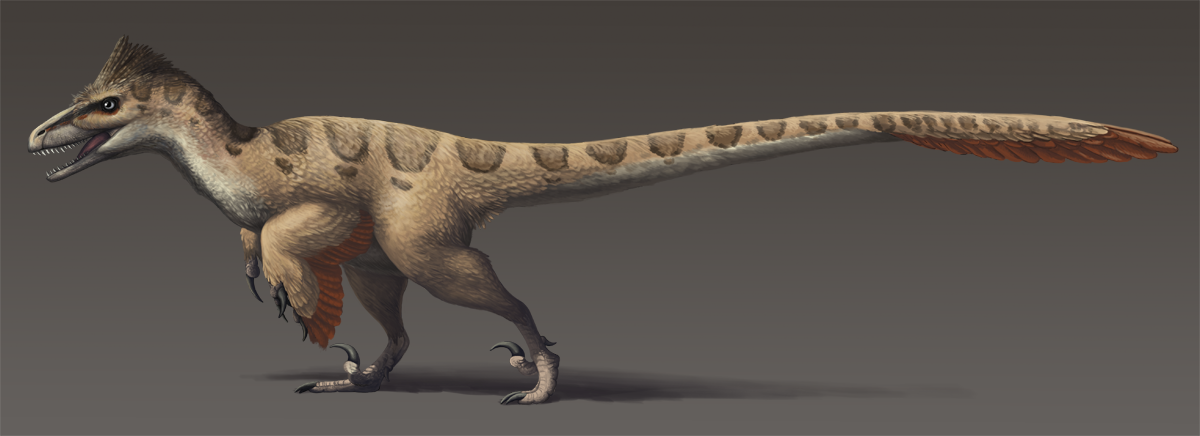
Most people imagine Velociraptor as a human‑sized, razor‑clawed hunter, but that image is much closer to Utahraptor. Utahraptor was truly big: roughly the length of a small car from nose to tail, and likely heavier than a modern lion. Instead of a sleek little sprinter, think of a stocky, power‑built predator that would have easily dwarfed the raptors shown in most films. In reality, true Velociraptor was closer in size to a turkey, while Utahraptor was the heavyweight of the family.
This size difference changes everything about how we imagine raptors moved, hunted, and behaved. A turkey‑sized Velociraptor might have been agile and quick, but Utahraptor was operating in a different league entirely, with muscles and bones built to take on big prey. It is as if we discovered that the wolf in our stories was actually a bear with claws like knives. Once you adjust your mental image, the whole late‑Cretaceous landscape suddenly looks more dangerous.
2. Its Killing Claw Was Like A Biological Switchblade
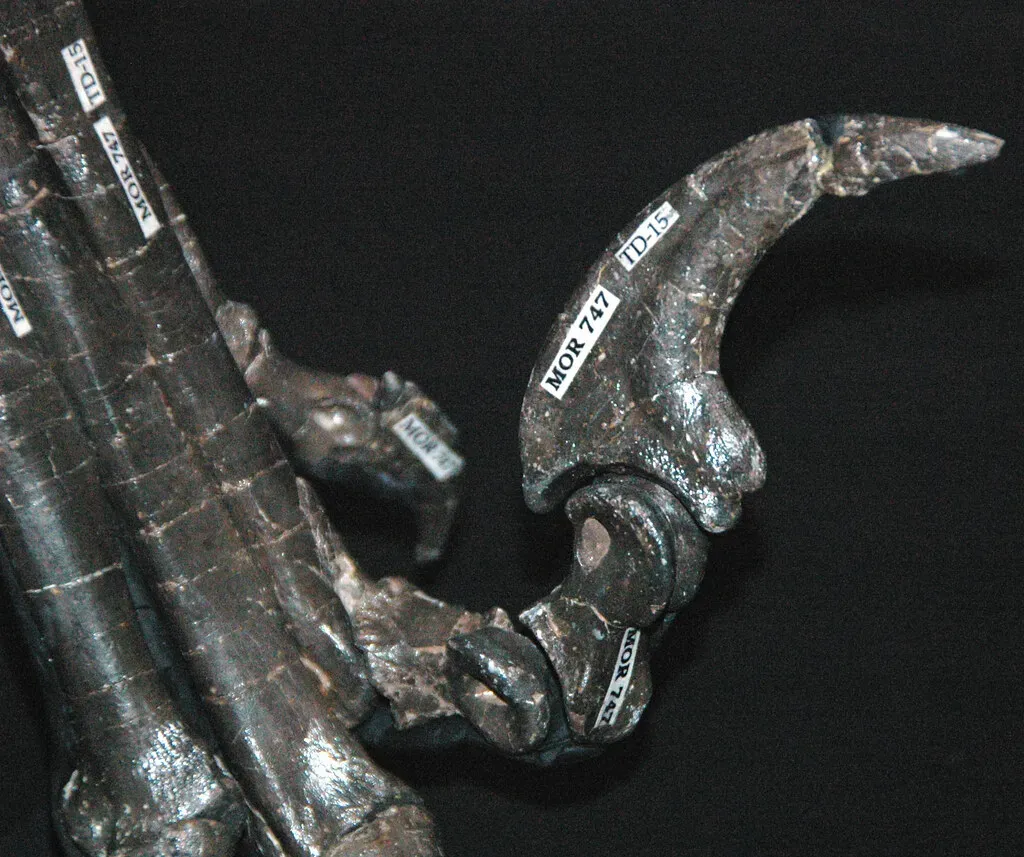
Utahraptor’s most iconic feature is that sickle‑shaped claw on its second toe, and it was proportionally enormous. Curved and sharply hooked, it could reach the length of a large kitchen knife, built for gripping, slashing, or stabbing into struggling prey. The claw could be lifted off the ground so it stayed sharp, like a natural weapon kept sheathed until the moment it was needed. When you picture it, think less “cat’s claw” and more “folding knife attached to a powerful leg muscle system.”
Scientists still debate exactly how that claw was used, but there is wide agreement that it played a central role in Utahraptor’s hunting style. Some reconstructions imagine the animal leaping and driving the claw into the sides of prey, while others emphasize its use as a hooked anchor to cling to large animals. Either way, this was not a simple tool for finishing off small victims; it was more like specialized gear for tackling opponents that fought back hard. It is the kind of adaptation that tells you right away this dinosaur lived a rough and violent life.
3. Utahraptor Lived Long Before The Classic “Raptor” Era
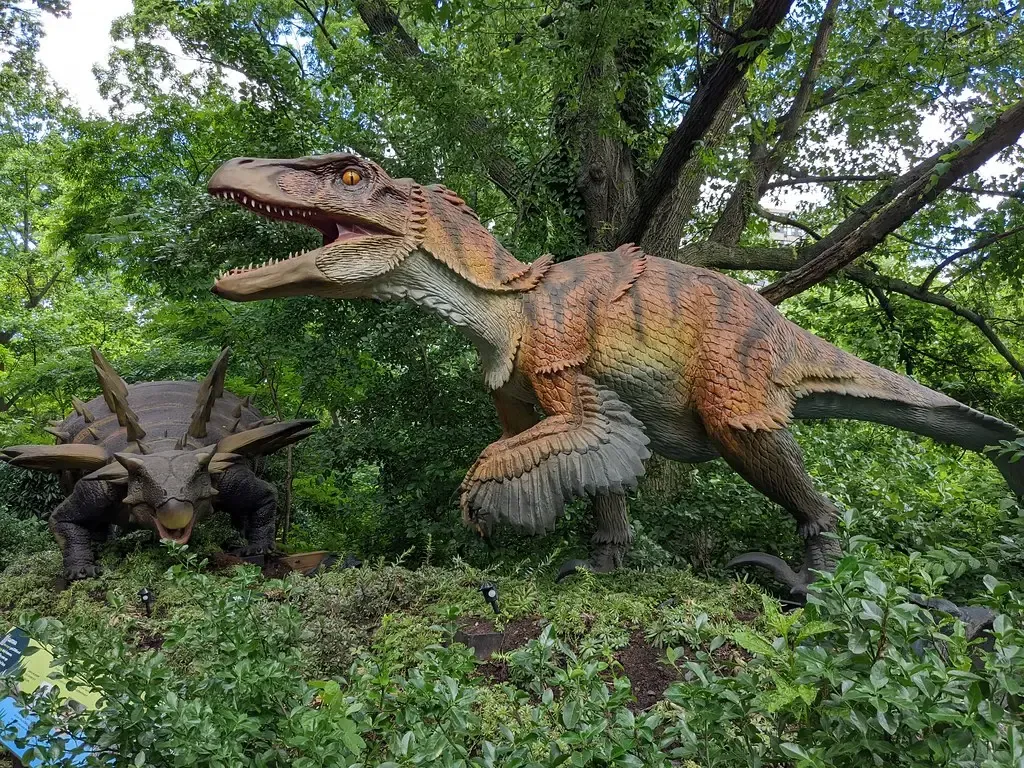
Here is a twist that surprises a lot of people: Utahraptor is older than the famous late‑Cretaceous Velociraptor. Utahraptor roamed the Earth in the early Cretaceous, tens of millions of years before its smaller cousins that usually steal the spotlight. That means the iconic “raptor” body plan, with curved claws and stiff tails, was already well‑developed quite early in the Cretaceous timeline. Utahraptor is not a late addition to the dinosaur story; it is part of the earlier chapters.
This timing matters because it shows that big, sophisticated predators using this style of hunting were already on the scene far earlier than many people realize. The early Cretaceous was a time of shifting ecosystems and evolving plant life, and Utahraptor was one of the apex hunters navigating that change. When we imagine the dinosaur world as a single chaotic mash‑up, we miss details like this. In reality, Utahraptor’s era and Velociraptor’s era were separated by vast gulfs of time, closer to the distance between humans and some of our own ancient ancestors than we often appreciate.
4. It Probably Had Feathers, Even If That Breaks The Movie Image
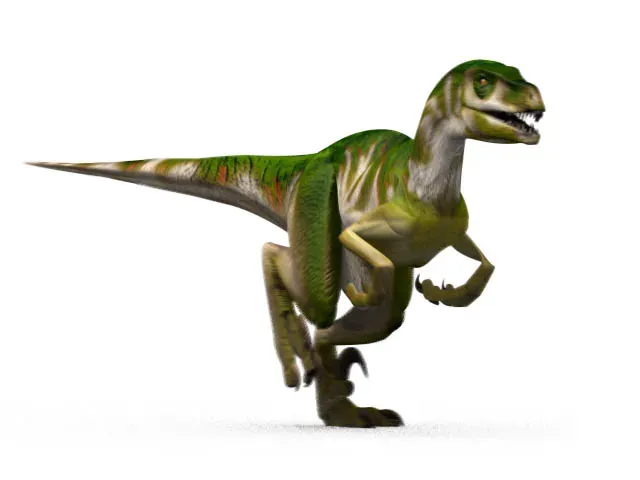
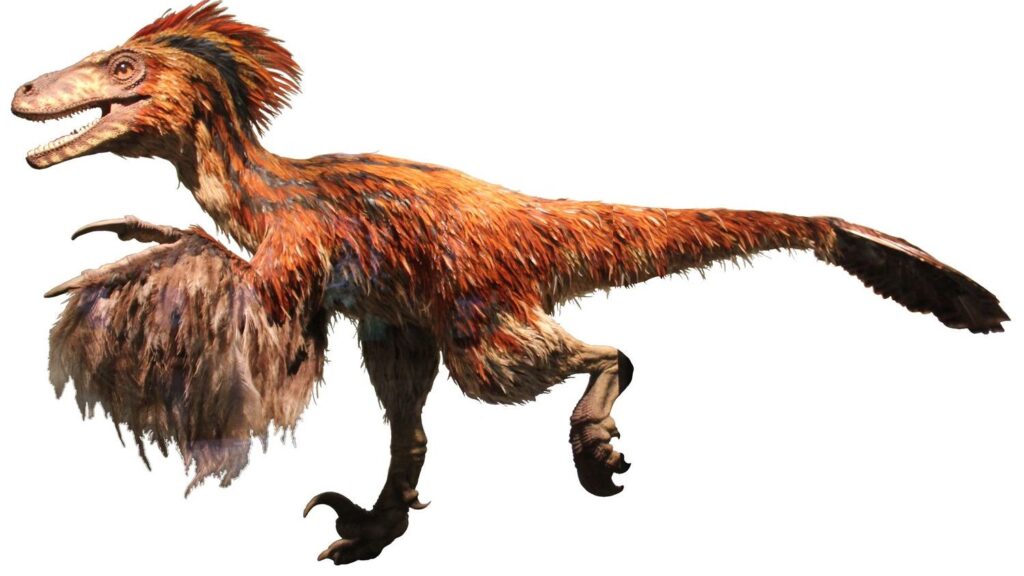
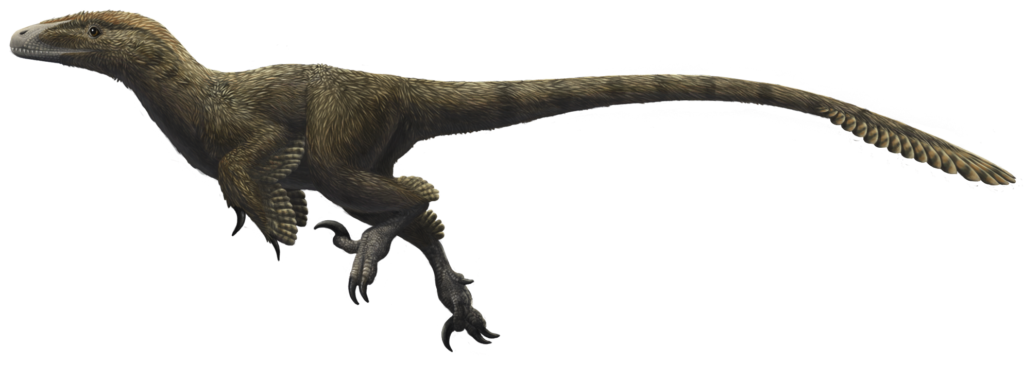
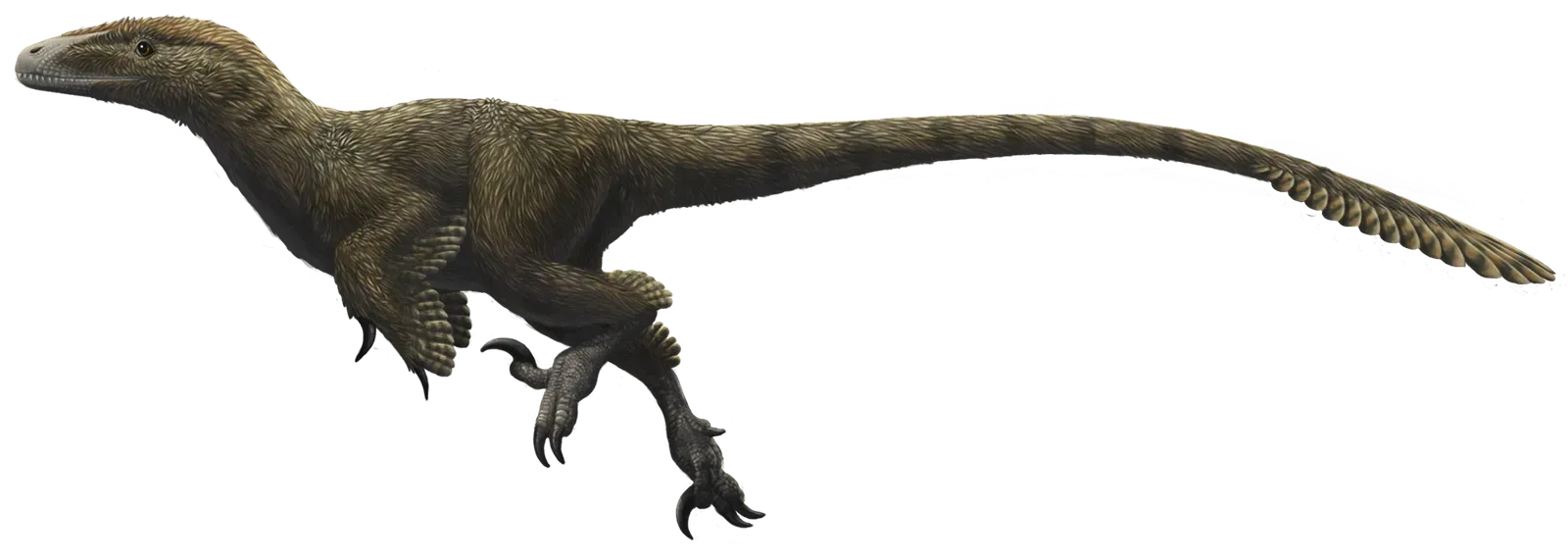
Feathers on a giant, terrifying predator feel counterintuitive at first, but the science strongly points in that direction. Many close relatives of Utahraptor show direct evidence of feathering, including smaller dromaeosaurs preserved with clear impressions of filamentous plumage. Because feathered skin is so rarely preserved, paleontologists rely on evolutionary relationships and shared features, and by that logic Utahraptor almost certainly did not have bare, scaly skin like a crocodile. Instead, it likely carried at least a partial coat of feathers along its body, tail, and arms.
That does not mean it looked like a giant fluffy bird hopping through the forest. The feathers might have been more like a coat of bristles or a streamlined covering that helped with insulation, display, and maybe a bit of maneuvering. Once you accept the feathers, the animal becomes weirder and more vivid, almost like a monstrous ground eagle with a sickle claw. Personally, I find that version far more unsettling than the sleek movie‑monster look; a feathered Utahraptor has an uncanny, almost alien menace that is hard to shake.
5. It Was Built For Power, Not Just Speed
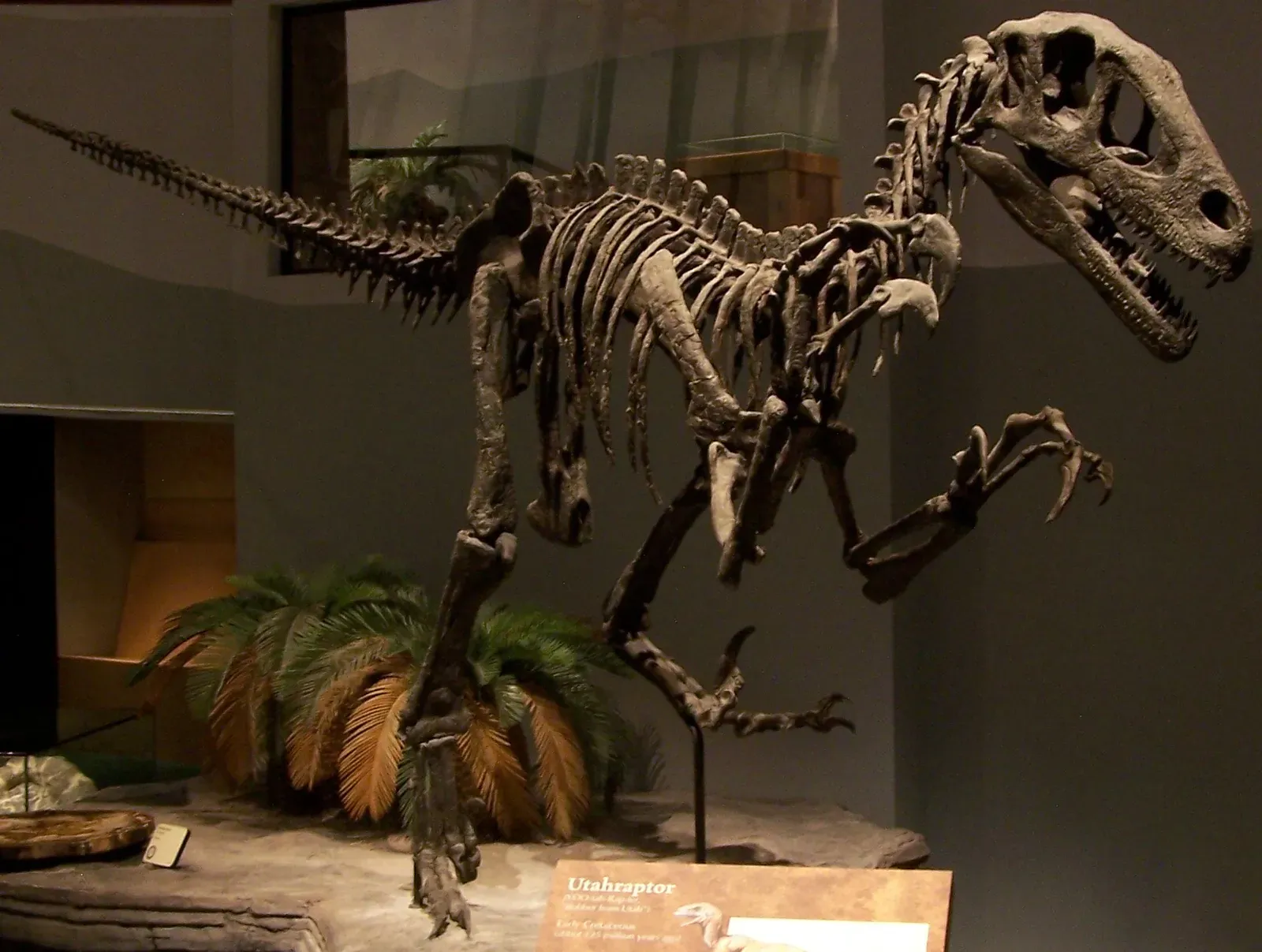
We usually imagine raptors as high‑speed sprinters, but Utahraptor’s skeleton tells a slightly different story. Its legs and hips look more robust than those of some smaller relatives, and its overall proportions suggest a balance tilted toward strength over sheer acceleration. That does not mean it was slow, but it likely was not a cheetah‑like blur racing across open plains. Instead, it seems better suited to powerful lunges, sudden bursts, and wrestling with large, struggling prey animals.
In that sense, Utahraptor feels more like the dinosaurian equivalent of a big cat that tackles prey and holds on, rather than a marathon runner. The stiffened tail would have provided balance as it pivoted, jumped, or slashed with its feet. Add in the muscular legs and weaponized claws, and you get the picture of an animal that could anchor itself to a victim and ride out the struggle. It is easy to picture it bursting out from cover, slamming into a dinosaur several times its own weight, and turning the encounter into a brutal contest of leverage and endurance.
6. It Shared Its World With Big, Tough Plant‑Eaters
Utahraptor was not stalking empty forests; it lived in an ecosystem packed with potential targets and competitors. The rocks that hold its fossils also preserve the remains of hefty plant‑eating dinosaurs, including early relatives of the armored and long‑necked groups people tend to recognize. These herbivores were not easy meals. Many would have been heavy, strong, and possibly social, leading to very dangerous confrontations for any predator bold enough to test them. Utahraptor had to earn every bite in a world filled with horns, armor, and thick muscle.
Thinking about the environment forces us to drop the simple “monster in a vacuum” image. Utahraptor had to navigate rivers, forests, changing seasons, and shifting food sources just like large predators today. It may have competed with other meat‑eaters, scavenged when it could, and taken advantage of injured or isolated individuals. When I picture it, I see a predator that sometimes dominated and sometimes barely scraped by, much like modern lions that alternate between dramatic kills and long, hungry stretches. That more complicated, less heroic version makes Utahraptor feel far more real.
7. A Bonebed Discovery Hints At Group Behavior
One of the most intriguing finds associated with Utahraptor is a site where multiple individuals of different sizes were discovered together, mixed with the bones of large herbivores. This kind of bonebed raises a huge question: were these dinosaurs living, hunting, or at least feeding in groups? If so, that would push Utahraptor even higher up the chart of terrifying predators, because coordinated attacks could bring down animals that a lone hunter might never manage. The presence of juveniles alongside adults especially makes researchers wonder about family‑style social structures.
To be fair, scientists are cautious about declaring Utahraptor a pack hunter just from one location, because bones can be gathered together by water, accidents, or other natural forces. But the possibility is there, and it is hard not to imagine a team of feathered, knife‑clawed predators mobbing a much larger victim. Even if they simply gathered at carcasses or opportunistically hunted in loose groups, that still changes the emotional impact of picturing them. A single Utahraptor is alarming; a cluster of them around a screaming herbivore is the stuff of genuine nightmares.
8. Utahraptor Is Still Teaching Us New Things
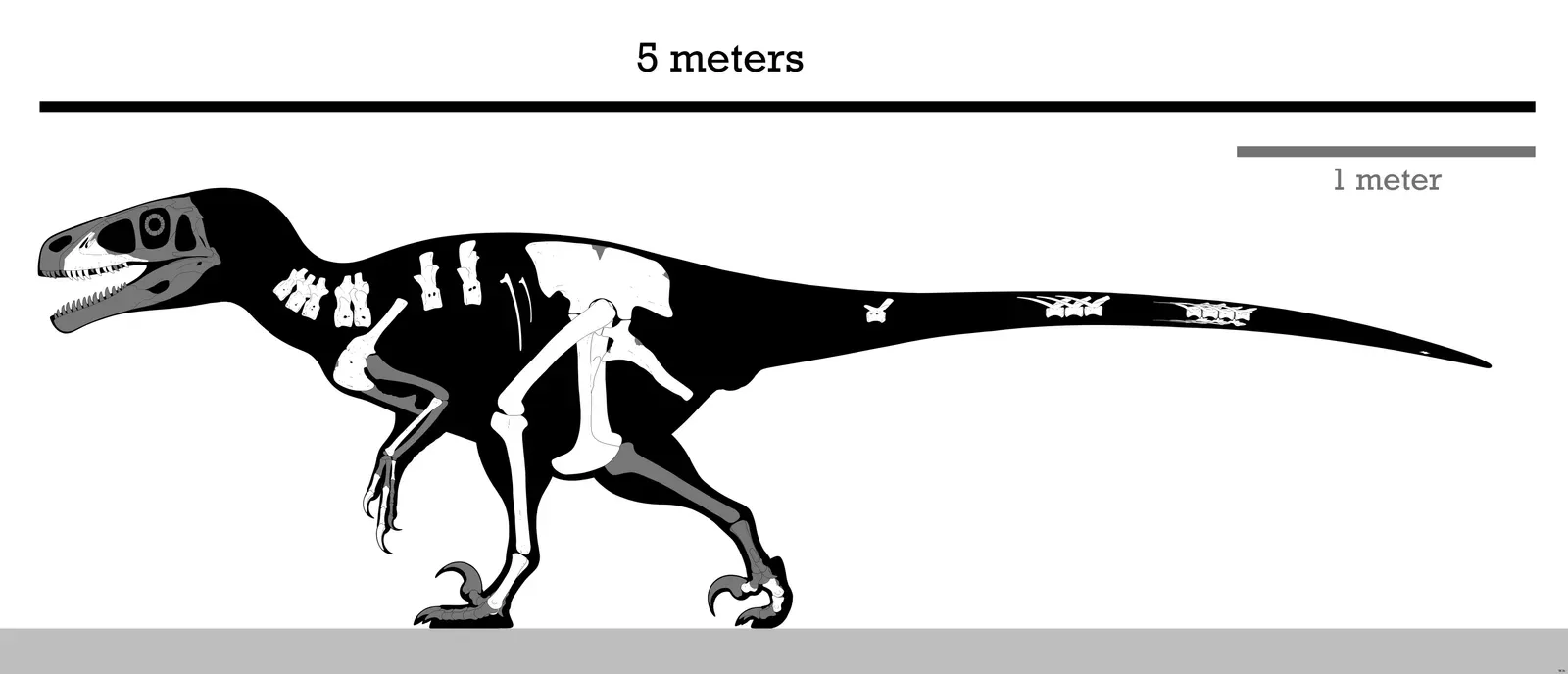
For all its drama, Utahraptor is a relatively recent addition to the public dinosaur canon, and research is very much ongoing. New material and more complete skeletons continue to refine estimates of its size, proportions, and relationships to other dromaeosaurs. As techniques improve, scientists can study microscopic details of its bones to learn about its growth, metabolism, and even how fast individuals may have matured. That means the Utahraptor you imagine today may not match the Utahraptor scientists describe ten or twenty years from now.
I actually love that uncertainty, because it keeps this dinosaur from becoming a static pop‑culture icon. Instead, Utahraptor is a moving target, a creature whose story is still forming as new data arrives. Every update nudges it further away from the flat, scaly monsters of old art and closer to a complex, warm‑blooded, possibly social animal with feathers, instincts, and struggles. It reminds us that dinosaurs are not just movie props; they are real organisms we are trying to reconstruct from fragments. That ongoing mystery might be the most surprising fact of all.
Conclusion: Utahraptor Deserves The Spotlight, Not The Cameo
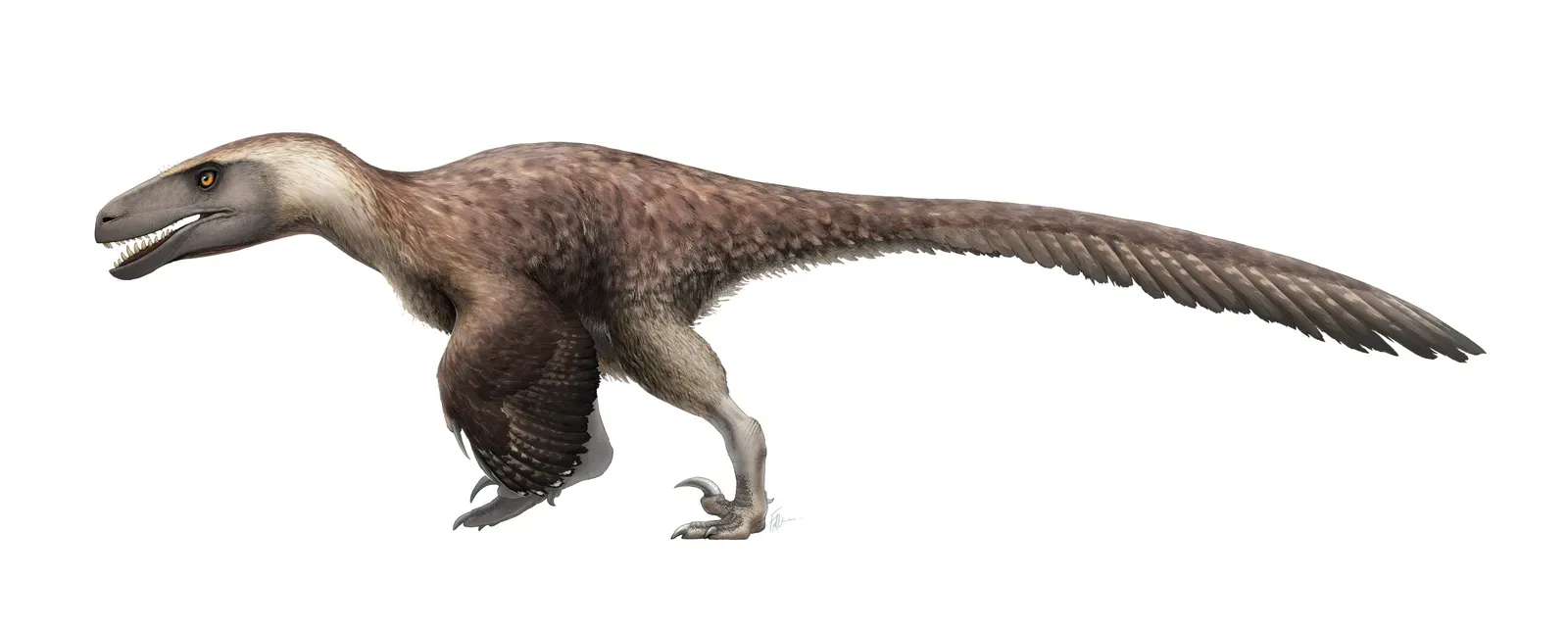
The more you learn about Utahraptor, the harder it is to keep thinking of Velociraptor as the main character. This was a giant, heavily armed predator with a switchblade claw, power‑focused build, likely feathers, and a place near the top of its early‑Cretaceous food web. It was not a background extra in dinosaur history; it was one of the headline acts. In my opinion, if any raptor deserves the cultural obsession we give to fictionalized movie versions, it is this one.
What makes Utahraptor so compelling is not just its size or its weapons, but the way it forces us to update our mental image of dinosaurs as active, evolving animals. It blurs the line between the familiar and the alien: part giant bird, part big cat, part nightmare you did not realize you should be having. As research continues, I suspect Utahraptor will only get stranger, more nuanced, and more important to the story of predatory dinosaurs. Next time you think “raptor,” will your mind still jump to the movies, or will it jump to the feathered heavyweight from Utah instead?