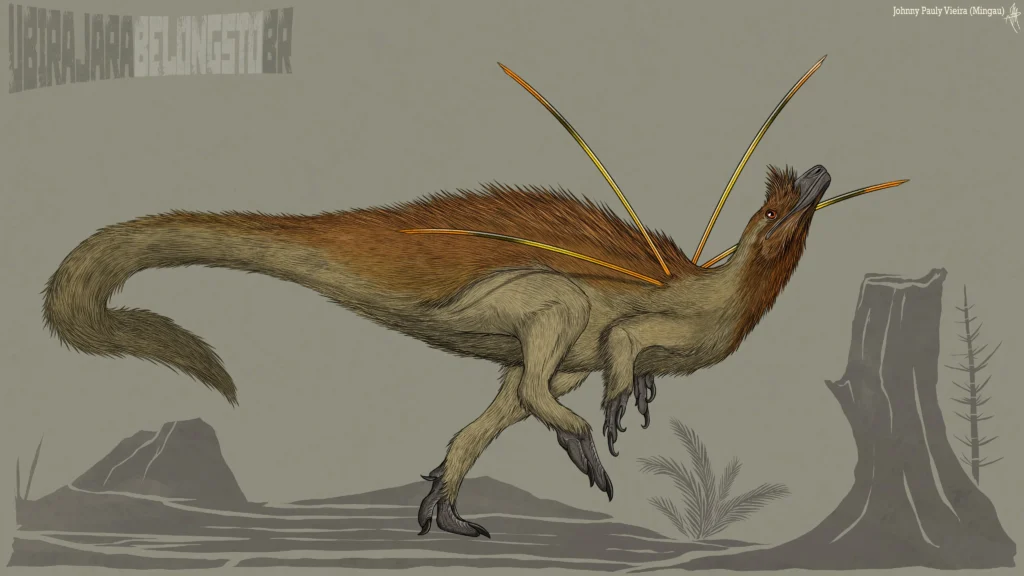
If you tried to dream up the most stylish dinosaur imaginable, you’d probably get surprisingly close to Ubirajara. Picture something roughly the size of a chicken, strutting through a Cretaceous lakeside with a raised mane of filaments down its back and a pair of long, flat ribbons jutting dramatically from its shoulders like prehistoric couture. It looks less like a scaly movie monster and more like a runway model in a feathery, experimental jacket.
What makes Ubirajara so captivating is not just its looks, but the strange, very human story wrapped around its fossil: scientific excitement, ethical controversy, international politics, and a social media movement that helped send it back home. This is one of those rare cases where a single small fossil forces us to rethink not only how dinosaurs looked, but how science itself should work. Once you meet this little “spear lord,” it’s very hard to forget it.
A Tiny Dinosaur With Outrageous Style
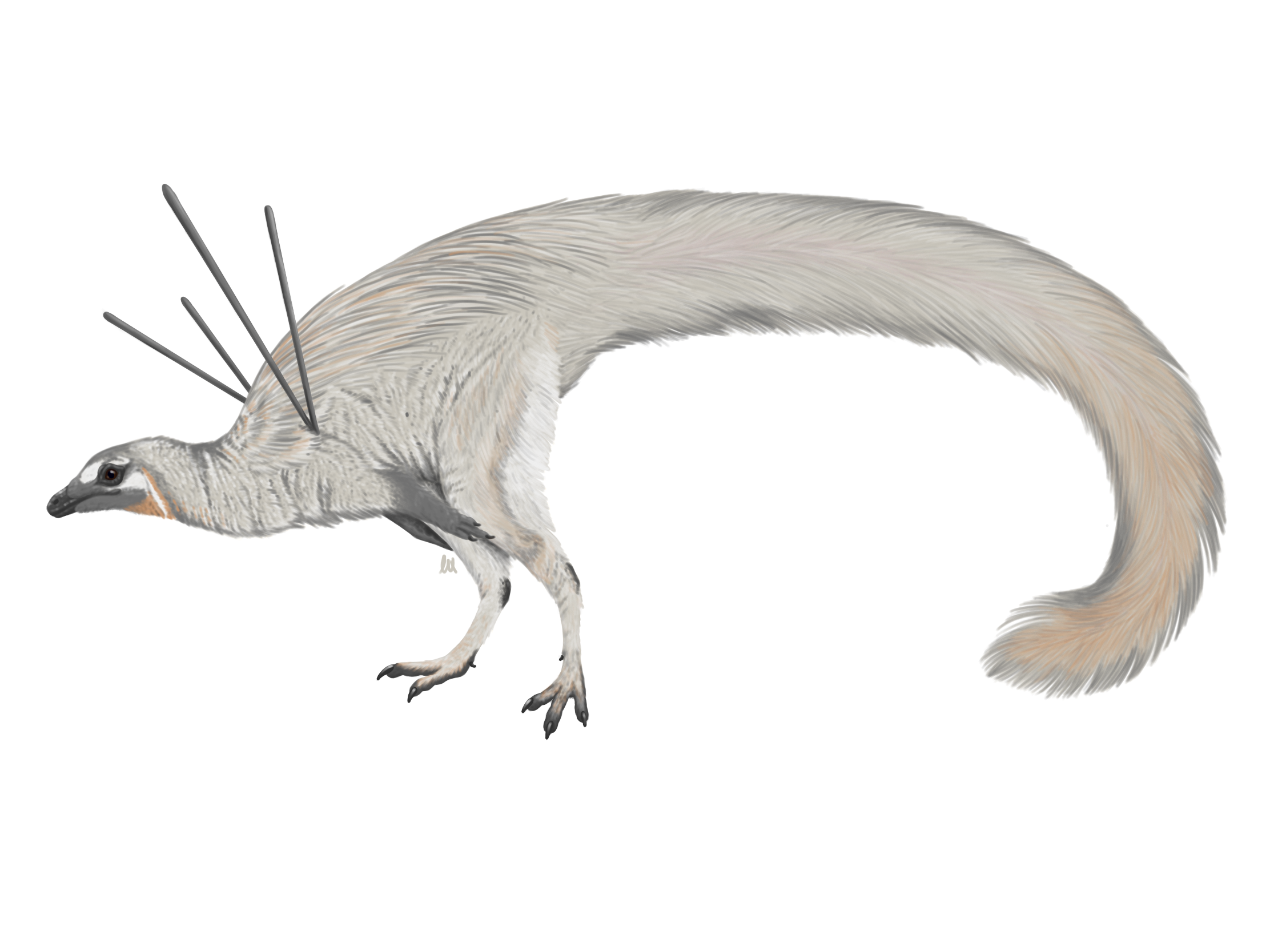
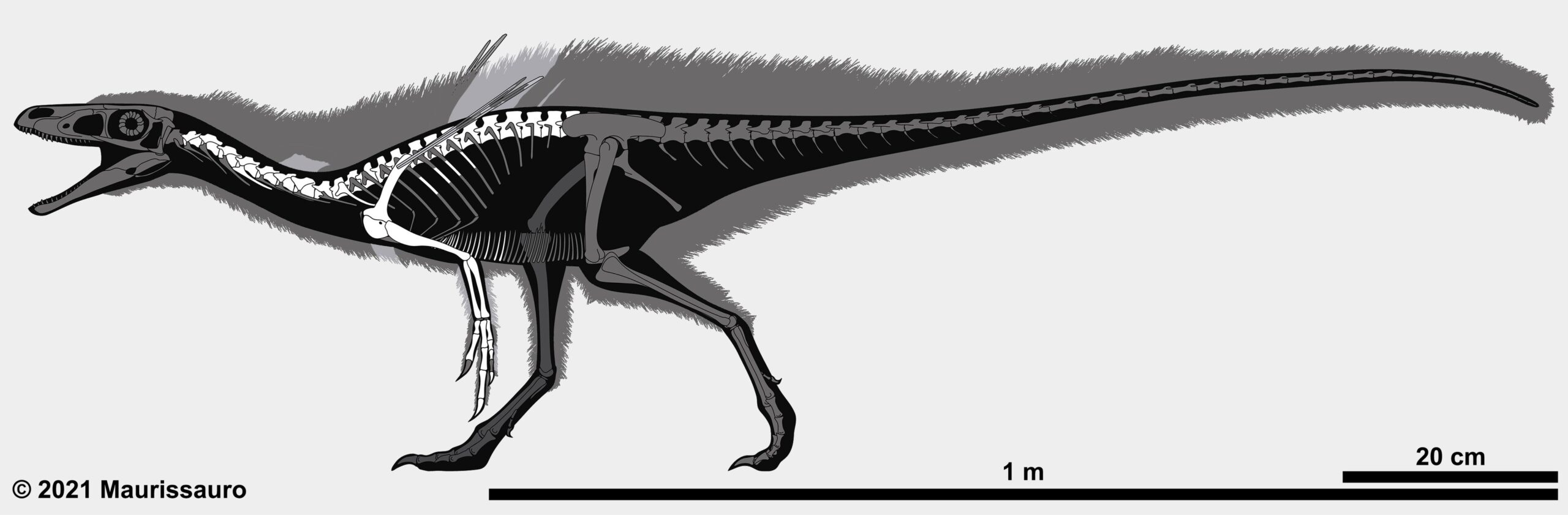
At first glance, Ubirajara does not sound like a showstopper. It was a small theropod, only about one meter long from snout to tail, living in what is now northeastern Brazil more than one hundred million years ago. In body shape, it belonged to the compsognathid family, the same general group as the classic “small, nimble predator” you see darting around in paleo art. If it were just another skinny, long-tailed carnivore, it might have blended quietly into the long list of obscure dinosaurs known only to specialists.
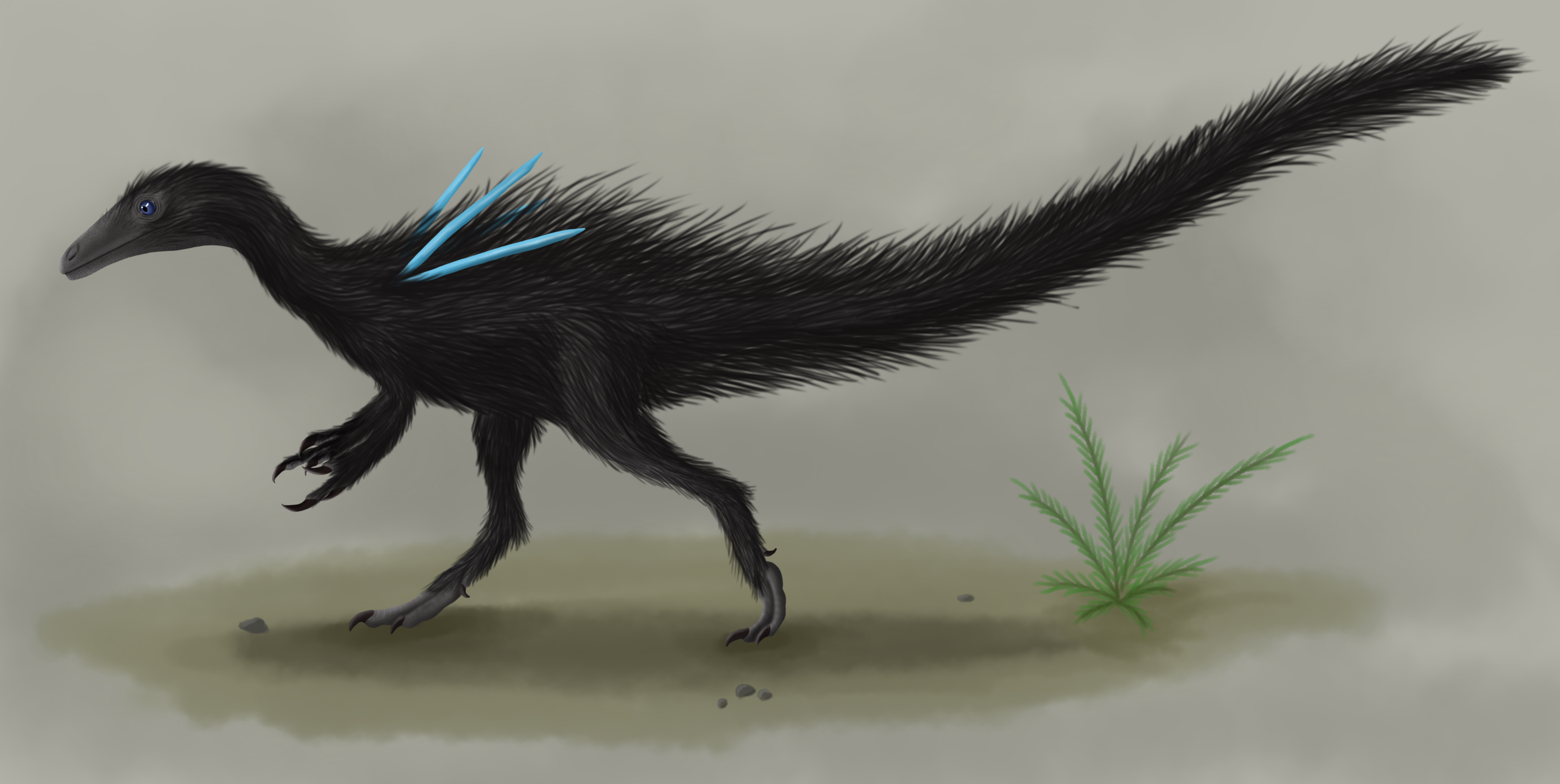
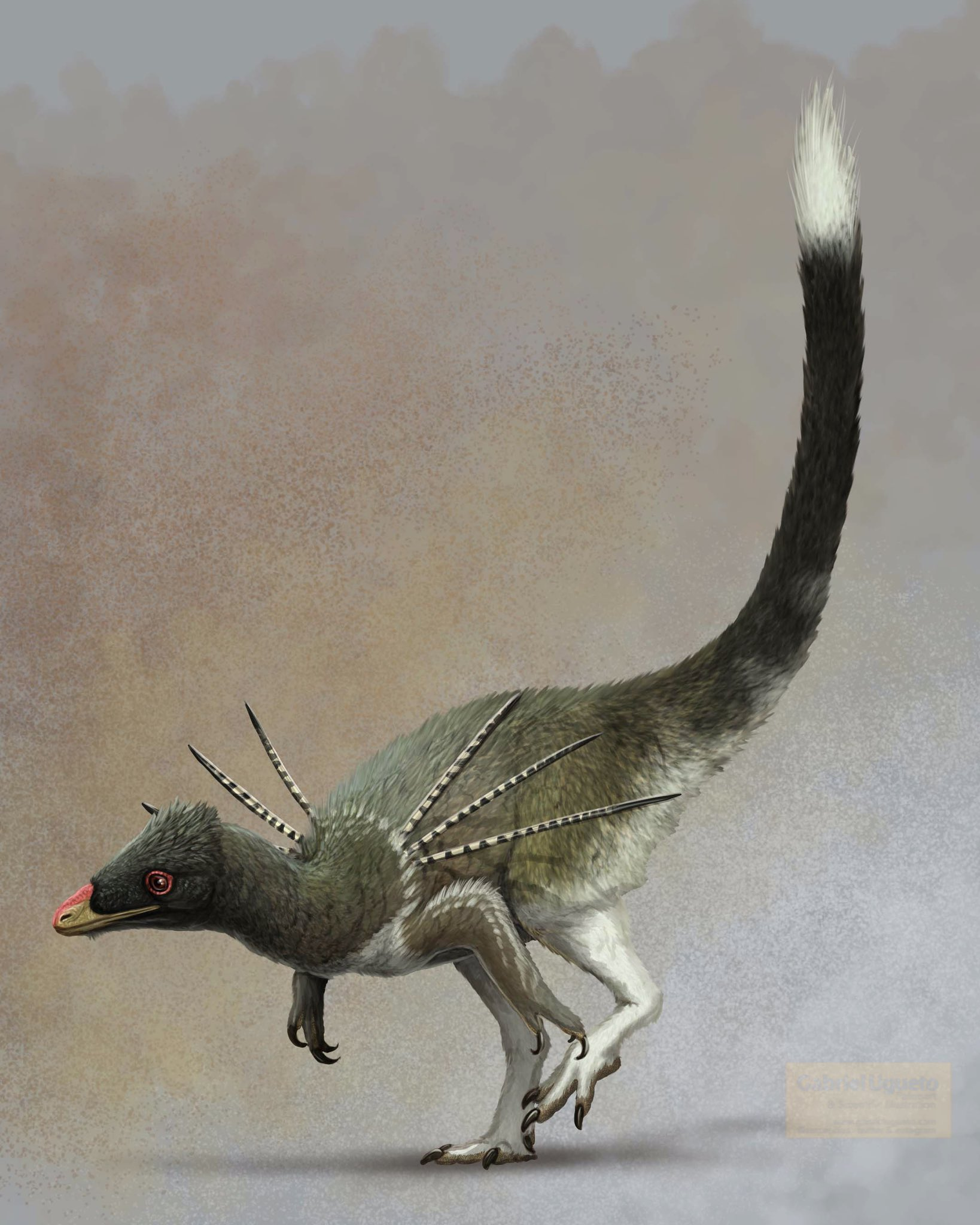
But the fossil from the Crato Formation came with a twist: along its neck, back, and arms were delicate filaments interpreted as proto-feathers, creating a kind of mane that grew longer toward the middle of its back. Even more striking were two stiff, ribbonlike structures emerging from its shoulders and extending beyond the body like elegant banners. These were not wings and not quite like any feather display seen before, more like decorative rods or streamers. When I first saw a reconstruction, my immediate reaction was that it looked less like a predator and more like someone who absolutely knew they were being watched.
How Ubirajara Changed the Way We Picture Dinosaur Beauty
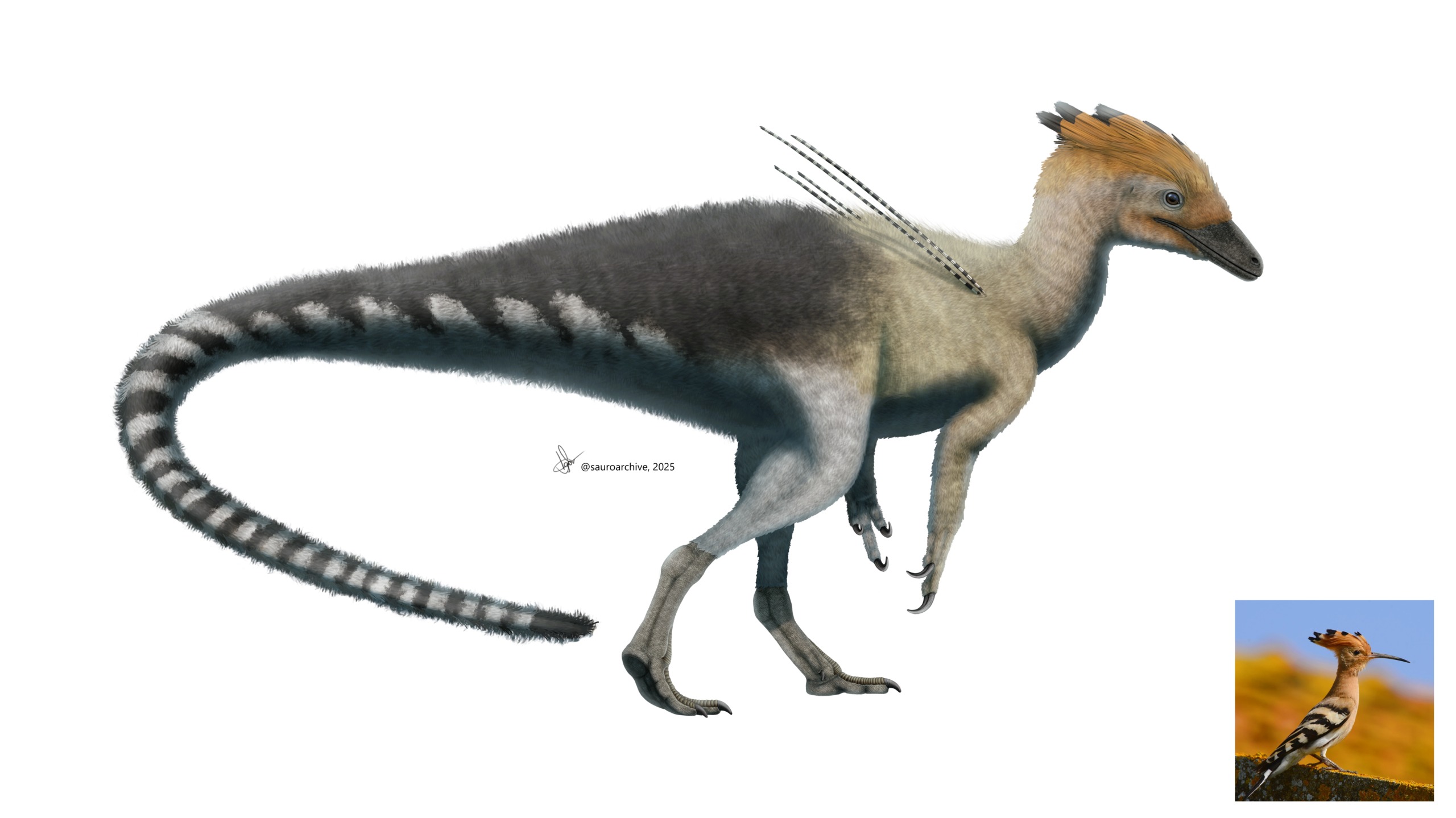
For decades, dinosaurs were drawn as drab, scaly reptiles colored in dull greens and browns, as if nature forgot to hit the saturation button. Ubirajara helped push that image even further toward the idea of dinosaurs as flamboyant, display-obsessed animals, closer in spirit to birds of paradise than to crocodiles. Its filaments and shoulder ribbons strongly suggest that visual communication and sexual display were already a big deal among small theropods in Gondwana, not just in the feathered dinosaurs of China that tend to get the spotlight.
Those strange shoulder ribbons are especially important because they show an entirely new way of “wearing” feathers or featherlike structures. Instead of just forming a wing or tail fan, these elements seem to have acted like independent display gadgets, maybe raised, angled, or vibrated in courtship or rivalry. In modern animals, you see similar exaggerations in peacocks fanning tails, birds of paradise inflating plumes, or lizards flashing dewlaps. Ubirajara hints that the evolutionary arms race for attention was already well underway in the Early Cretaceous, and beauty, in the dinosaur world, could take wonderfully bizarre forms.
A Snapshot From an Ancient Tropical World
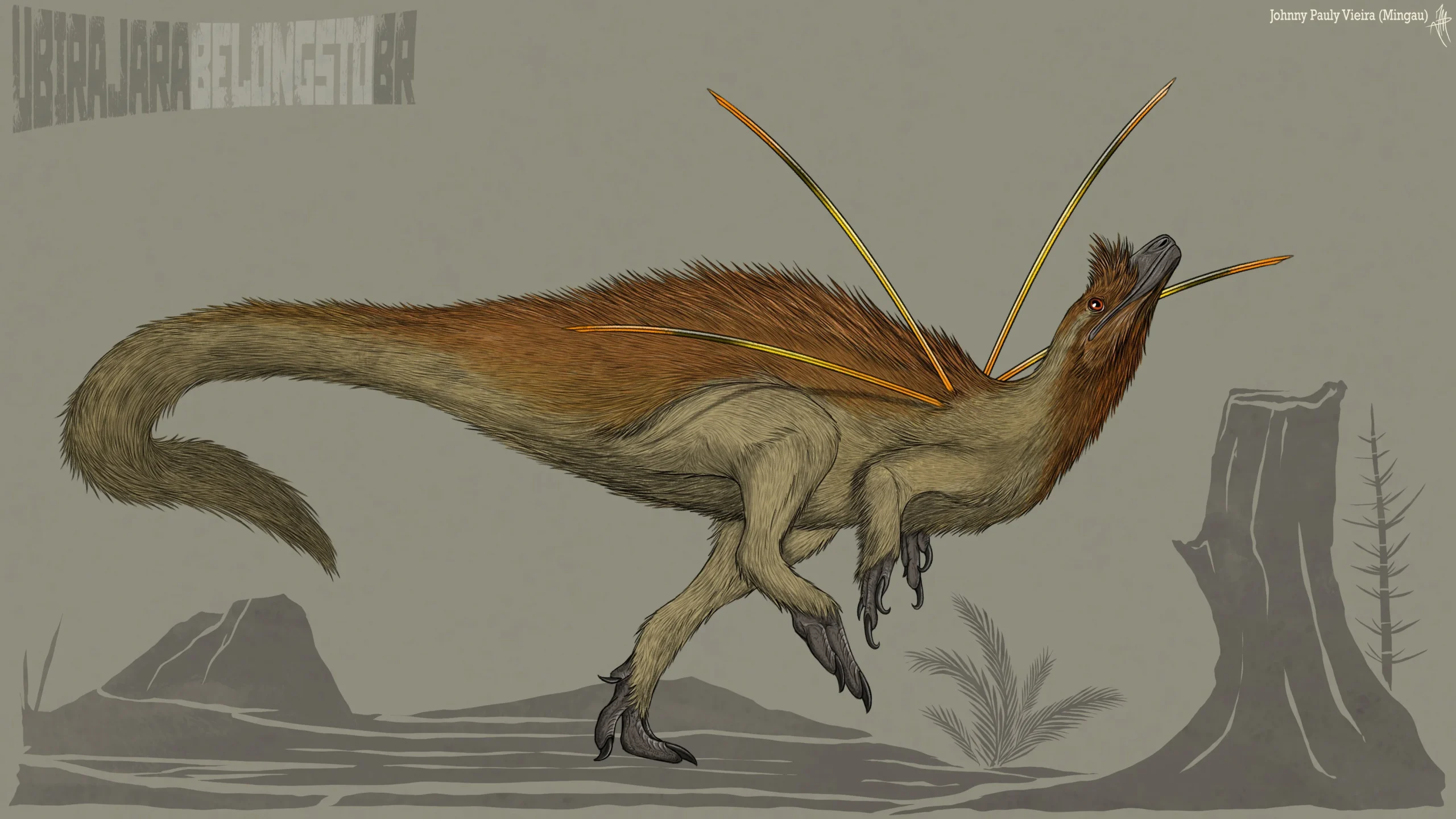
Ubirajara’s story is also the story of its home: the Araripe Basin and the famous Crato Formation in northeastern Brazil. During the Early Cretaceous, this region was a warm, lake-dotted landscape on the breaking-apart supercontinent of Gondwana. Fine-grained limestones captured fish, insects, plants, and the occasional unlucky terrestrial animal in astonishing detail, preserving delicate tissues that usually vanish, such as skin patterns, soft fins, and, in Ubirajara’s case, filamentous integument. It is one of those rare fossil deposits that feels like nature pressed “save” on an entire ecosystem.
In that world, a small, agile predator like Ubirajara probably prowled along the shores, hunting insects, small vertebrates, or whatever else it could grab. Its size and build suggest a quick, alert animal, with the filaments adding not just visual flair but perhaps some limited insulation or tactile feedback. I like to imagine it at dawn, mist over the lake, standing on a rock with its mane slightly raised, those ribbons catching the first light as other animals begin to stir. It is speculation, of course, but grounded in the idea that this animal lived in a complex, busy environment where being seen – by mates, rivals, and predators – could make the difference between passing on genes or disappearing without a trace.
From “New Species” to Nomen Nudum: The Naming Roller Coaster
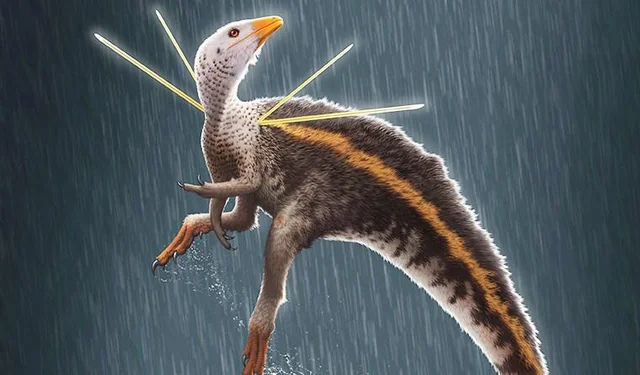
In 2020, a study briefly announced this animal under the name Ubirajara jubatus, combining an Indigenous Brazilian word meaning something like “spear lord” with a Latin term for “crested” or “maned.” The name fit perfectly with its striking shoulder structures and back mane, and for a short period it circulated widely in news stories and paleo art. Many people, myself included, enthusiastically adopted that name and mentally filed Ubirajara among the great roster of charismatic feathered dinosaurs. It felt like the fossil had finally stepped into the spotlight it deserved.
Then the story took a sharp turn. Because of questions over the legality and ethics of how the fossil had been removed from Brazil and the way it had been described, the article was withdrawn, and under the rules of zoological nomenclature the name became an unavailable “naked name,” or nomen nudum. Later, it was even removed from the official ZooBank registry. That does not erase the animal itself – its bones and filaments are still very real – but it does mean that, in strict scientific terms, it currently has no valid formal name. In practice, many people still say Ubirajara out of habit or convenience, but there is a strange, almost ghostly feeling in knowing that one of the most photogenic dinosaurs we know is, technically, nameless for now.
The Controversy: Fossil Smuggling, Hashtags, and Repatriation
If Ubirajara was just about feathers, this would be a tidy, feel‑good story of scientific discovery. Instead, it became a focal point for a much tougher conversation about how fossils are collected, exported, and studied. The specimen had been taken from Brazil in the 1990s and ended up in a German museum, with documents and permits that later came under intense scrutiny. Brazilian paleontologists and legal experts argued that the export likely violated national laws designed to keep such heritage within the country, and that local researchers had been shut out of the process even though the fossil came from their own backyard.
That dispute spilled out of academic circles and onto social media, especially through the #UbirajaraBelongstoBR campaign. For once, dinosaur fandom, science communication, and legal advocacy pulled in the same direction, pushing for transparency and for the fossil to be returned. After years of back‑and‑forth, investigations, and diplomatic negotiations, the specimen was finally repatriated to Brazil in 2023. To me, that matters as much as the feathers themselves: it sends a signal that scientific curiosity does not excuse ignoring the rights of source countries or the people who live where these animals once walked.
Why Ubirajara Still Matters, Even Without a Name
Some people might shrug and say this is just one small dinosaur and a lot of drama. But Ubirajara sits right at the crossroads of several big ideas: how spectacularly diverse dinosaur body plans really were, how feathers and display structures evolved, and how modern science should share power and credit. Its fossil shows, in concrete detail, that even small, non‑avian dinosaurs in Gondwana were playing with elaborate visual signals, not just their cousins in northern China. That helps close a geographic gap in our understanding and hints that we are only beginning to glimpse the full visual richness of the Mesozoic world.
On top of that, the political side of Ubirajara’s story has become a case study in what some call scientific colonialism: the long‑standing habit of extracting specimens from the Global South for study and display in institutions in the Global North. In my view, the repatriation of this fossil was not just a nice gesture; it was a necessary correction and a blueprint for how things should work going forward. Beautiful fossils deserve beautiful science: inclusive, transparent, and rooted in collaboration with the communities whose land preserves these ancient treasures. Ubirajara may not yet have a valid scientific name, but it has already earned a permanent place in the conversation about how we do paleontology in the twenty‑first century.
Conclusion: A Beautiful Dinosaur With an Unfinished Story
When I think about Ubirajara, I do not just see a pretty dinosaur; I see a mirror held up to us. Here is a small, gorgeously adorned animal that tells us evolution has been experimenting with extreme fashion for a very long time, and at the same time, its modern journey exposes our own messy relationship with power, ownership, and credit in science. In a way, the fact that it currently lacks a valid name feels oddly appropriate, like a reminder that the story is not finished and that we still have work to do to describe it properly, in every sense of the word.
My opinion is that Ubirajara should be remembered as much for what it forced us to confront as for its fabulous shoulder ribbons. It pushed dinosaur art toward even bolder, more bird‑like visions, and it pushed institutions toward more just and respectful treatment of fossils and the countries they come from. One day, when it is formally described again under a new, valid name, I suspect it will stand as a symbol of a turning point: the moment when a tiny, beautiful dinosaur helped nudge paleontology toward a fairer future. Looking at that delicate fossil and its wild display structures, it is hard not to wonder: how many other spectacular stories are still hidden in stone, just waiting for us to find them – and to handle them better this time?