Imagine an animal shaped a bit like a dolphin, armed with eyes so huge they would put a basketball to shame. These were the ichthyosaurs, marine reptiles that ruled the oceans long before whales showed up. Their giant eyeballs are not just a fun trivia fact; they open a window into a very alien way of seeing the world, in water that could be dark, cold, and full of danger.
When I first learned that some ichthyosaurs had eyes close to the size of dinner plates and beyond, it felt almost cartoonish, like something from a sci‑fi movie rather than the fossil record. But the more you dive into the science, the more it makes sense: if you live in deep, dim seas and need to chase fast, slippery prey, vision becomes a matter of life or death. Let’s unpack what those huge eyes really meant for these ancient ocean hunters and why they still fascinate scientists today.
The Astonishing Scale Of Ichthyosaur Eyes
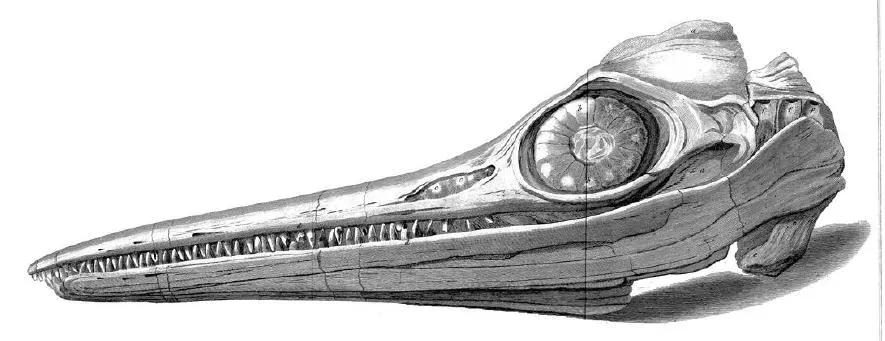
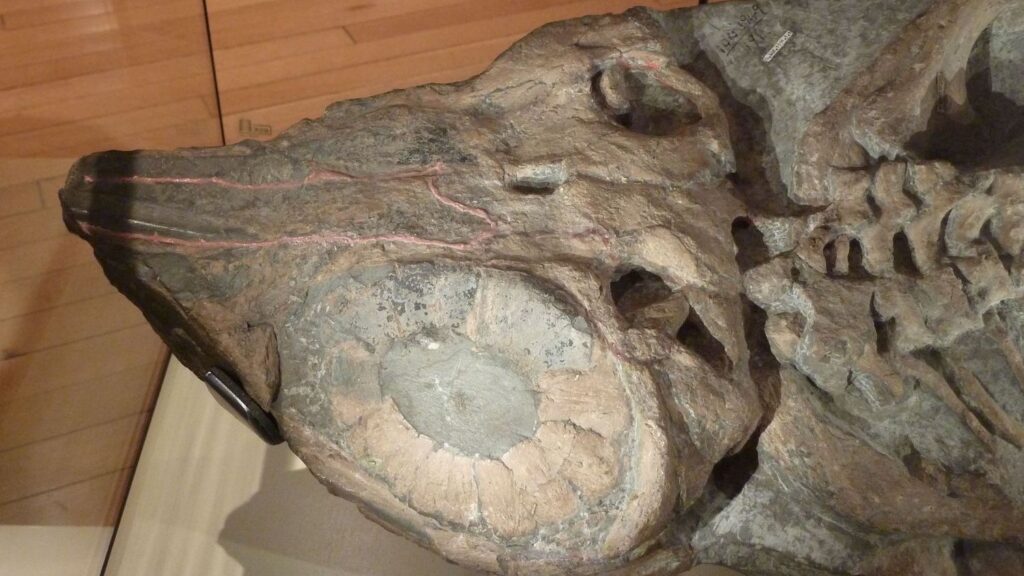
It sounds exaggerated, but some ichthyosaurs genuinely had eyes that rivalled or exceeded the size of a basketball in diameter. In a few large species, the bony ring that supported the eyeball, called the sclerotic ring, suggests an eye diameter of around twenty to twenty‑five centimeters or more. That puts them among the largest eyes ever known in the history of vertebrates, comparable to the eyes of modern giant squids and bigger than those of most whales.
These were not rare oddities either; many species had eyes that were proportionally enormous compared with their skulls. If you picture a streamlined reptilian torpedo with eyes taking up a huge chunk of the head, you are not far off. It is as if evolution decided that, for ichthyosaurs, eye size was not a luxury but an essential investment, like strapping high‑end headlights onto a racing car built for the open ocean.
How Fossils Reveal The Size Of A Soft, Squishy Eye
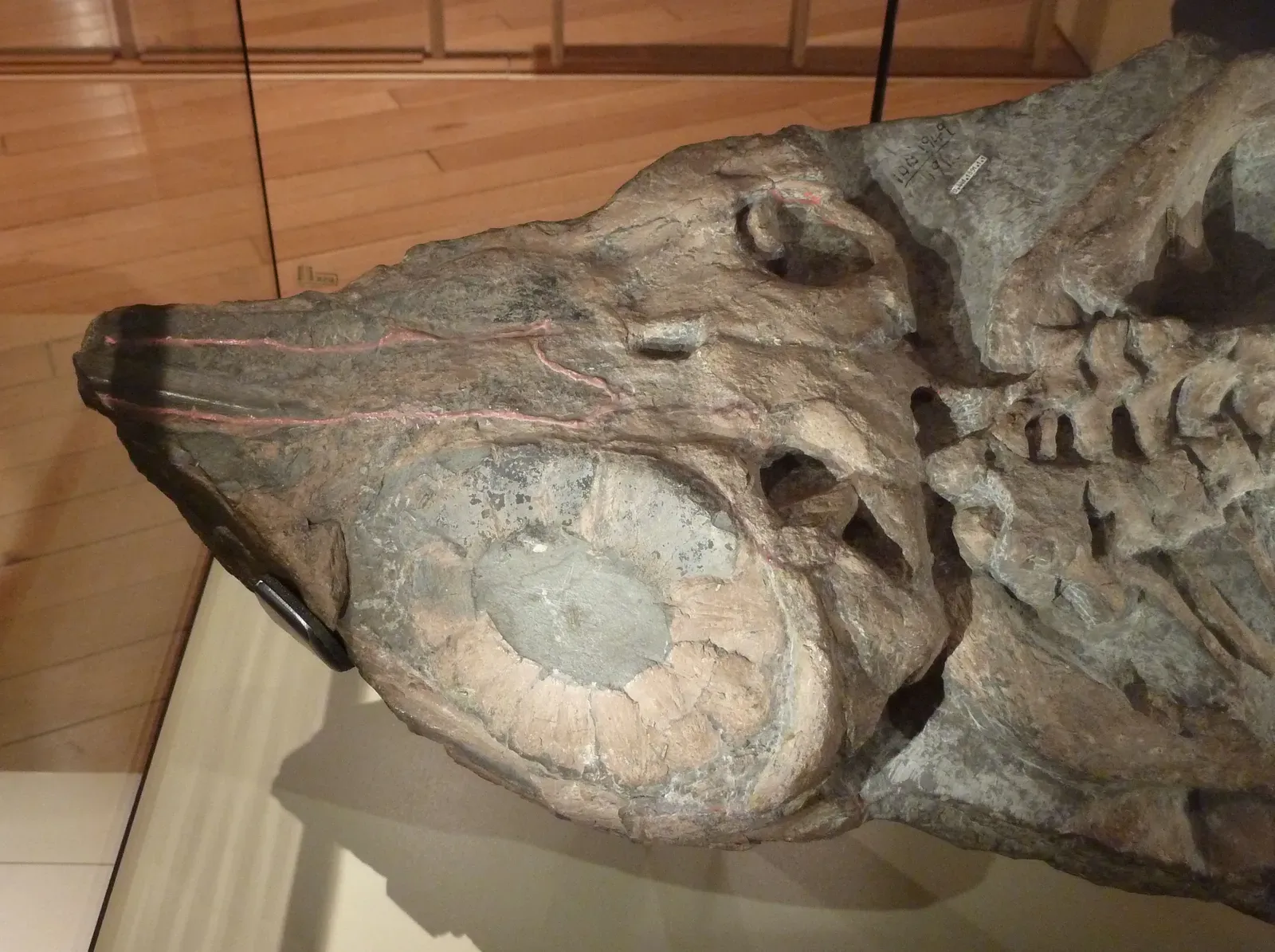
Eyes do not fossilize well; they are mostly soft tissue, gone long before rock forms. What does survive in many ichthyosaur skulls is that remarkable sclerotic ring, a circle of interlocking bones embedded within the eye socket. By measuring the diameter of this ring and the shape of the surrounding orbit, paleontologists can estimate how large the actual eyeball would have been in life. It is a bit like reconstructing the size of a missing lens just from the metal frame of a pair of glasses.
There is still some scientific debate and uncertainty around the exact eyeball size in any single species, and that is worth being honest about. Different methods of reconstruction can produce slightly different estimates, and soft tissues like the cornea and lens add wiggle room. But across multiple finds, the pattern is consistent: ichthyosaurs were serial offenders when it came to oversized eyes. Even if the upper estimates are shaved down a little, we are still talking about extreme visual hardware by any normal standard.
Why Would A Marine Reptile Need Eyes That Big?
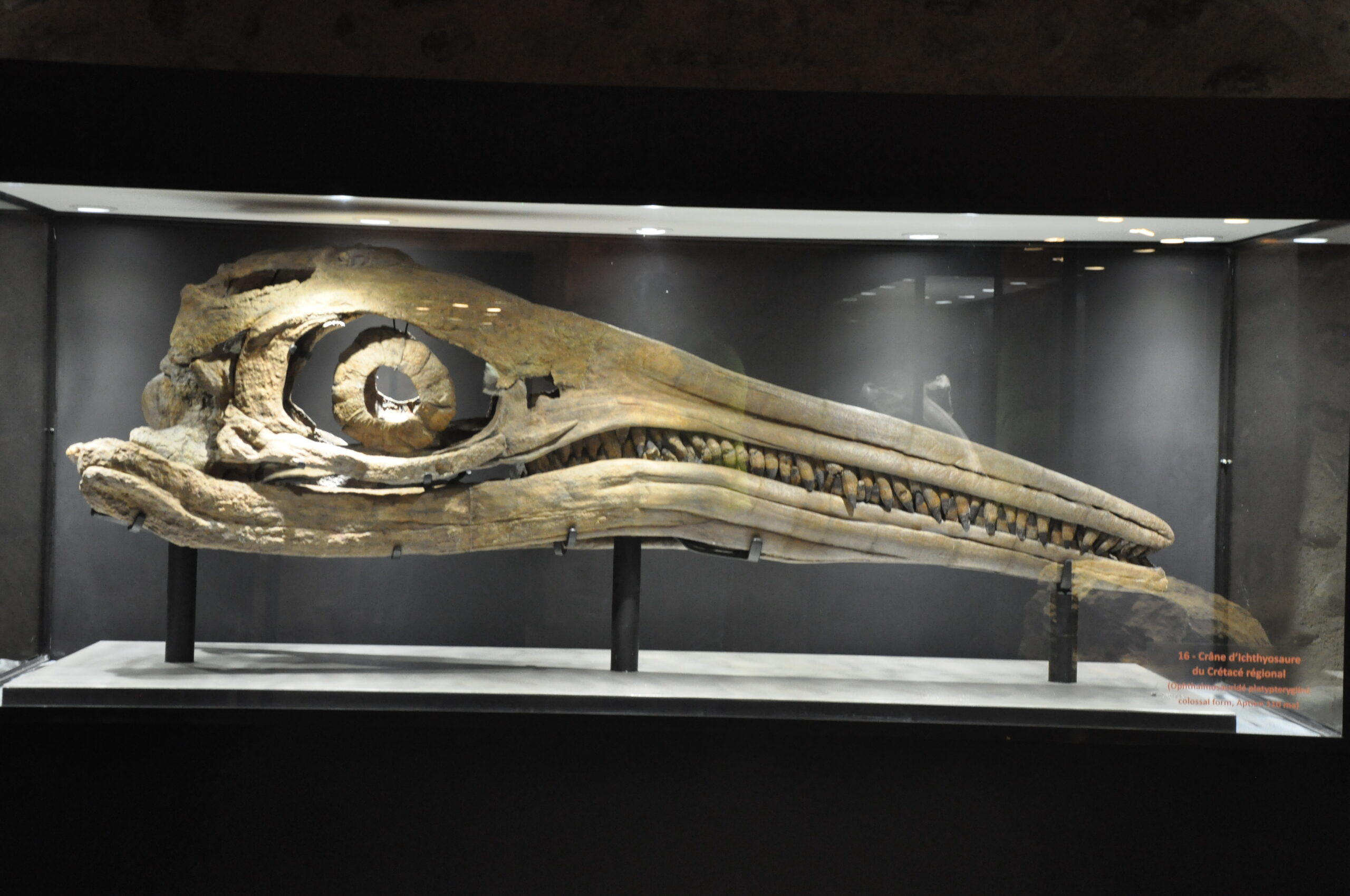
Enormous eyes are expensive, biologically speaking; they take energy to build and maintain. Animals do not evolve them for fun. The leading explanation is that big eyes helped ichthyosaurs see in low‑light conditions, whether in deeper water, at dusk and dawn, or in murky seas. A larger eye can host a larger pupil and a wider retina, capturing more photons, which is a fancy way of saying they can squeeze more information out of any scrap of available light.
That kind of visual superpower would have been massively useful for a fast‑swimming predator chasing fish, squid‑like animals, or other agile prey. Instead of plodding along the surface, ichthyosaurs likely dove down into darker layers, and their eyes would have let them track movement where smaller‑eyed animals were half blind. Think of it as having a top‑of‑the‑line night‑vision camera strapped into your skull, tuned for life in the twilight zone of the ancient oceans.
Seeing In The Twilight: Deep Dives And Fast Chases
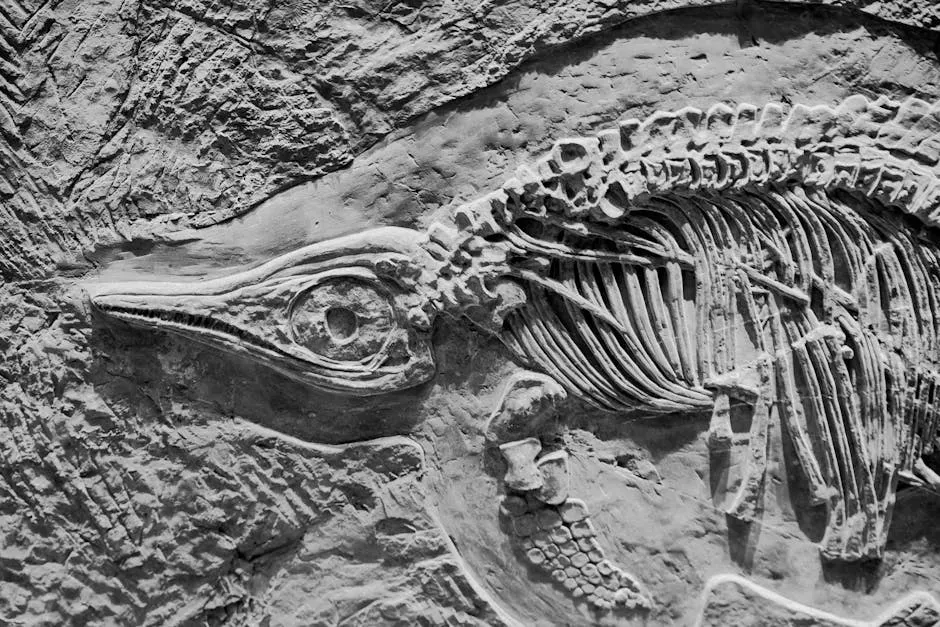
There is growing evidence that some ichthyosaurs were capable of fairly deep dives, perhaps similar in spirit to modern whales that chase prey into darker layers of the sea. In such zones, sunlight fades quickly, and colors vanish, leaving shapes and motion as the main clues. Oversized eyes would have allowed ichthyosaurs to pick out the outline of a fleeing fish or the flicker of a squid’s movement, even when the water was more gloom than glow.
At the same time, ichthyosaurs were built like high‑speed submarines, with stiff, streamlined bodies and crescent‑shaped tails. High‑speed pursuits demand fast visual processing; you cannot hit what you cannot see clearly, especially when both you and your target are moving quickly. It is not hard to imagine an ichthyosaur launching from the depths toward the surface, tracking the zigzag of its prey using those giant eyes like living, underwater radar systems.
How Ichthyosaur Eyes Stack Up Against Modern Animals
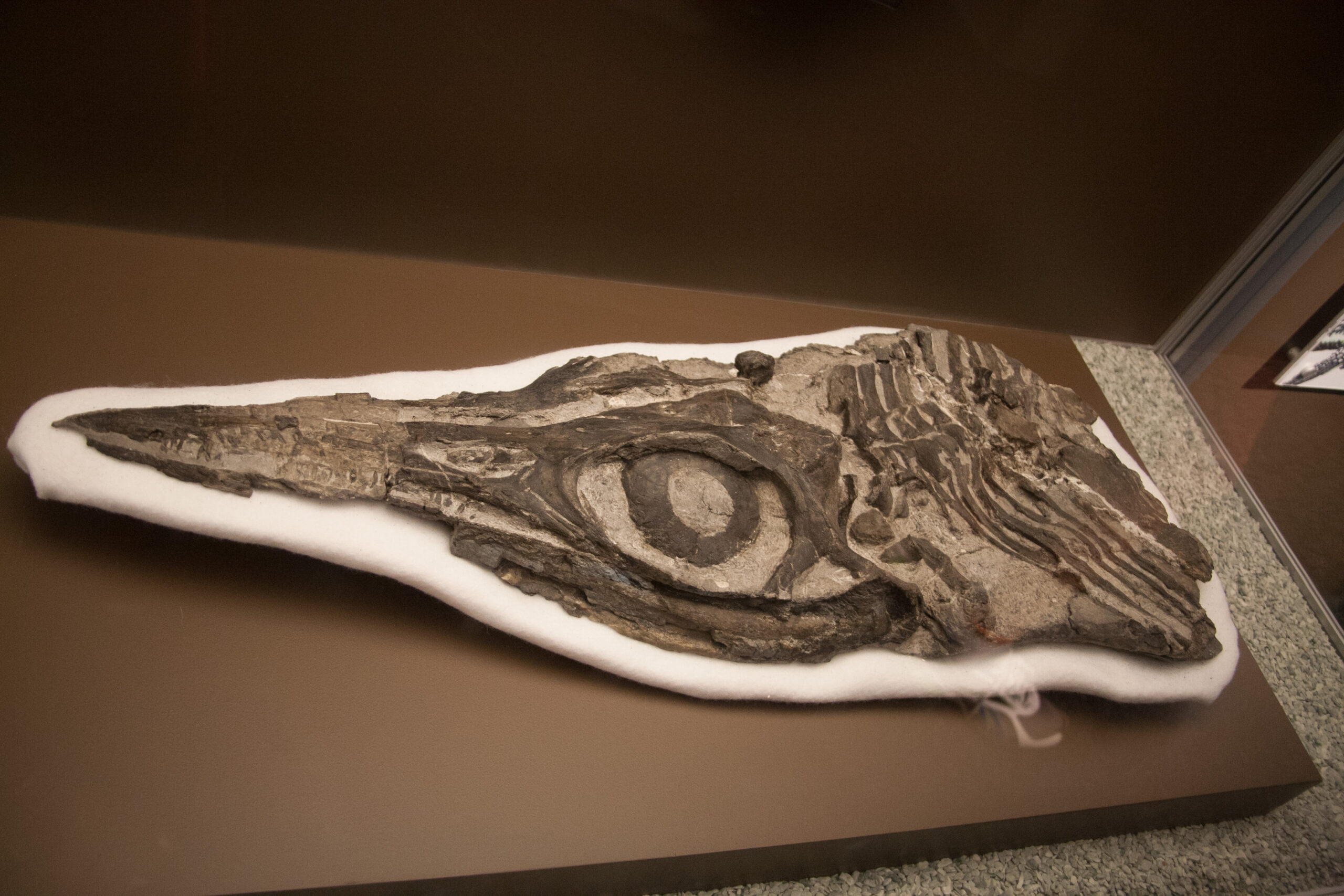
To really appreciate how extreme ichthyosaur eyes were, it helps to compare them with living species. The biggest eyes in the modern animal kingdom belong to some giant squids, followed by large whales like the giant squid’s nemesis, the sperm whale. Ichthyosaur eyes occupy that same elite club, which is wild when you remember we are talking about reptiles that evolved long before mammals took over the seas.
Unlike squids, which rely on soft tissues alone, ichthyosaurs reinforced their eyes with that sclerotic ring, possibly helping them withstand water pressure and maintain eye shape at depth. Whales, of course, took a very different evolutionary path, developing sophisticated echolocation and other tools alongside vision. In that context, ichthyosaurs start to look like an early, alternative experiment in building a top predator: less sonar, more pure, unapologetic eyeball power.
What Giant Eyes Tell Us About Their Minds, Lives, And Extinction
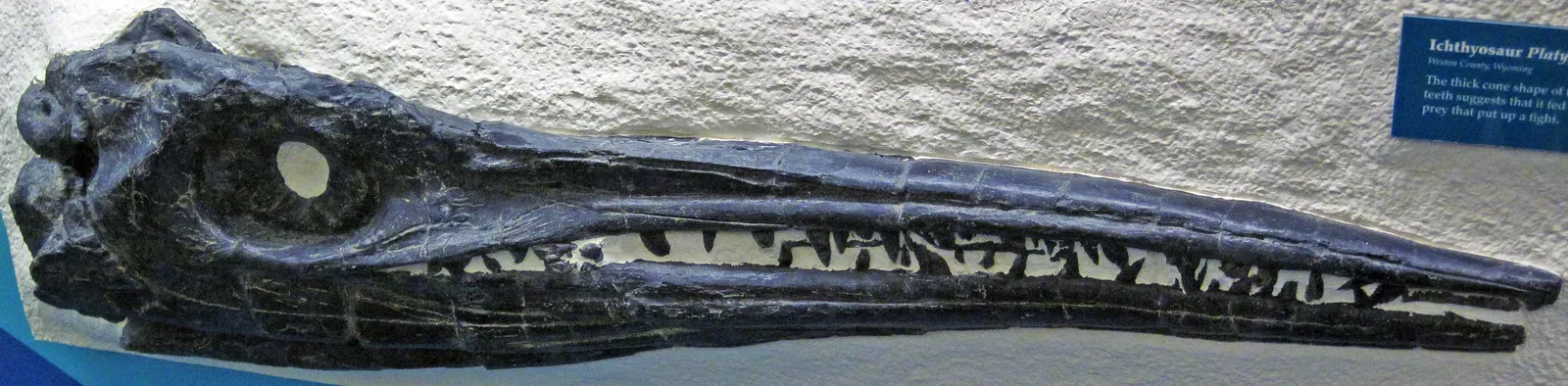
Giant eyes hint at more than just good vision; they hint at a way of life built around constant vigilance and rapid reactions. An ichthyosaur with such huge visual investment was probably not a lazy cruiser. It likely needed to process a flood of information about prey, predators, and changing light conditions. While we have to be cautious about guessing brainpower from eyes alone, it seems fair to say these were animals tuned to a highly visual, high‑speed world.
Personally, I find it a little bittersweet. These marine reptiles evolved such specialized adaptations, dominating the seas for tens of millions of years, only to vanish by the mid‑Cretaceous while other groups took their place. In my view, their massive eyes are a reminder that evolution is not a gentle, linear story toward perfection but a messy, experimental process. Ichthyosaurs bet big on vision, and for a long time, that bet paid off. When you look at those fossil skulls today and imagine eyes larger than basketballs staring back, it is hard not to wonder: if they were here now, what would they see in us?