Every so often, a fossil turns up that makes even veteran paleontologists stop, stare, and quietly wonder if someone is playing a prank on them. The strangest dinosaur skull ever found did exactly that. When it first emerged from the rocks, it looked wrong in almost every way: too broad here, too narrow there, bones flaring out like sails, others curved in unsettling directions. It did not fit anybody’s neat diagram of what a “proper” dinosaur head was supposed to look like.
What followed was not a quick scientific agreement, but a long, sometimes heated tug-of-war over what this animal was, how it lived, and even whether the skull had been assembled correctly. For decades, different teams published competing ideas, took turns accusing each other of misinterpreting the fossils, and kept revising reconstruction after reconstruction. It became one of those legendary cases scientists still bring up over coffee: the dinosaur skull that seemed to defy common sense and turned into a test of how we deal with the unknown.
A Dinosaur Skull So Weird People Wondered If It Was Even Real
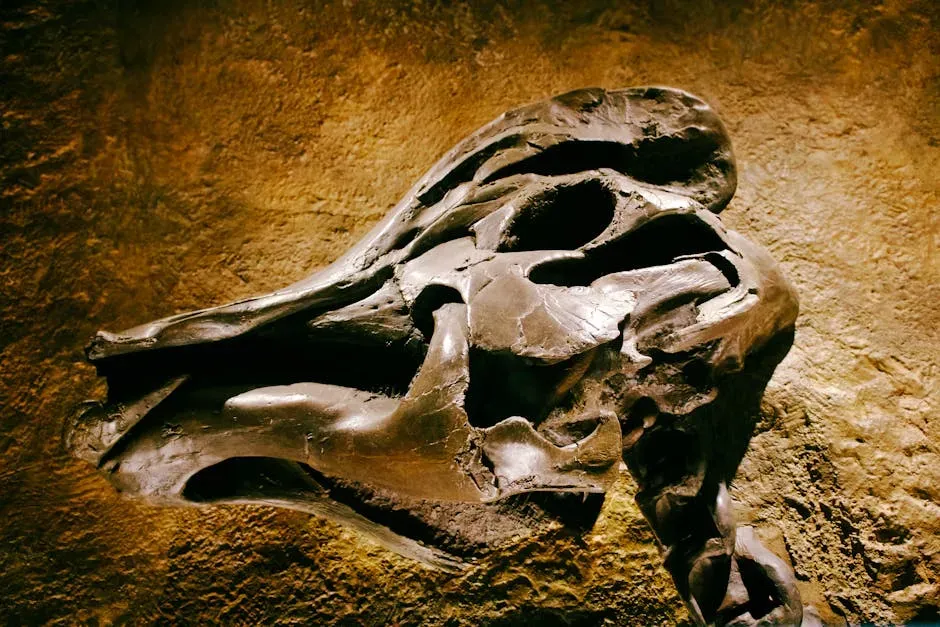
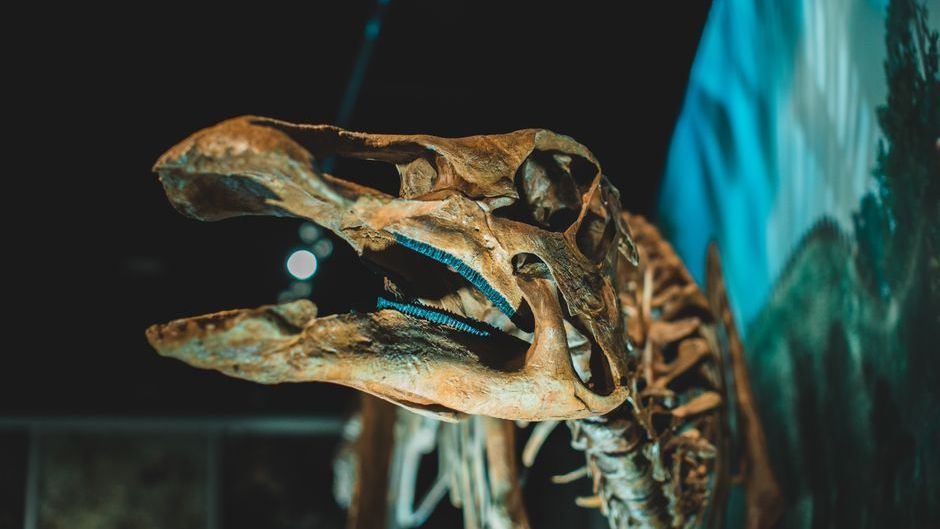
Imagine walking into a lab and seeing, laid out on a table, a skull that looks like someone mashed together parts from three different animals. That was the vibe when this bizarre dinosaur skull was first described: bones flared outward where they were expected to be flat, nasal passages twisted like plumbing in an old house, and strange crests or ridges hinted at something more like a fantasy dragon than a textbook dinosaur. The basic parts were all there – jaws, eye sockets, openings for nerves and blood vessels – but arranged in a way that made experienced researchers double-check the labels on the specimens.
This was not just a matter of looking a little odd. The skull seemed to break rules that paleontologists quietly rely on when identifying fossils, like certain bones always connecting in certain ways, or particular shapes lining up with known dinosaur families. Some scientists openly wondered if the specimen had been distorted by geological forces, or even accidentally mixed with bones from a different animal. Others suspected that what they were looking at was a legitimate but extremely specialized dinosaur that had gone down its own evolutionary rabbit hole. Right away, it became clear this was not going to be a straightforward “find it, name it, move on” situation.
How One Skewed Skull Turned Into a Scientific Battlefield
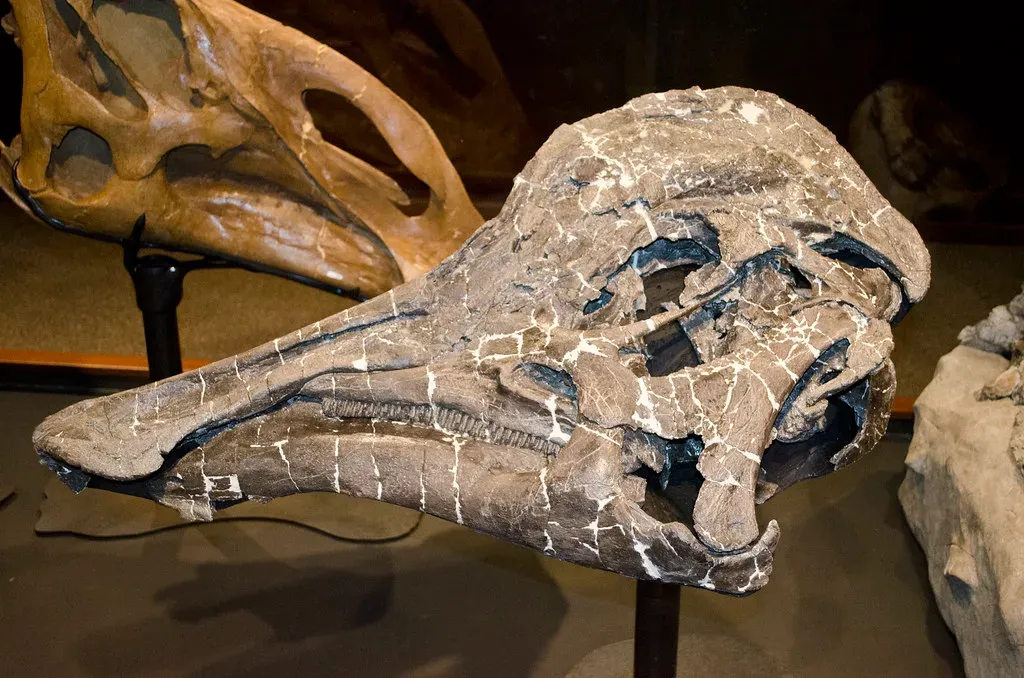
Once the skull was published, the real drama started. Different teams of scientists took the same pieces of bone and came away with very different interpretations. Some argued that the skull had been crushed and warped over millions of years, so trying to read too much into its strange shape was like drawing conclusions from a melted car after a house fire. Others pushed back, saying that even after accounting for damage, the features were so distinctive that they had to represent real biology, not just geological accident.
Over the years, the debate played out in dense technical papers, intense conference Q&A sessions, and quiet hallway conversations. People disagreed over basic questions: Did this dinosaur belong in a well-known group, only with extreme modifications, or was it something that deserved its own new branch on the dinosaur family tree? Were certain openings genuine structures or just missing chunks? Where exactly did the jaw muscles attach? It might sound nitpicky, but in paleontology, these small details are what separate a solid reconstruction from a house of cards, and no one wanted to be the one who confidently backed the wrong shape of a skull.
The Trouble With Reconstructing a Face From Crushed Bones
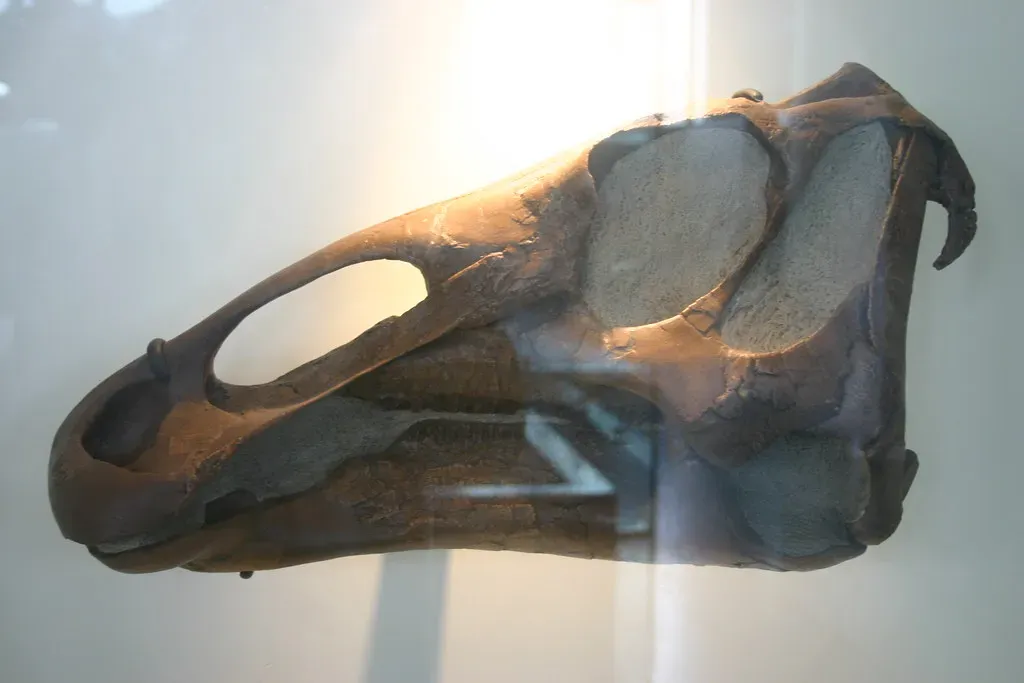
Trying to rebuild this skull was like attempting a 3D puzzle with a third of the pieces missing and no box art. Fossils rarely preserve in pristine condition; they get crushed, stretched, and fractured as layers of rock pile up and tectonic forces reshape the ground. With this dinosaur, those natural distortions were extreme, and that made every decision about how to “undo” the damage incredibly consequential. If you widen one section by just a little too much or rotate a bone a few degrees the wrong way, you can transform a plausible head into something that never existed.
Before high-resolution scans and digital modeling became routine, researchers had to rely heavily on physical casts, hand-drawn diagrams, and educated guesswork. Even when CT scanning entered the picture, separating real anatomical features from cracks and infill required judgment calls. Two teams could look at the same scan and disagree about which lines on the screen were original bone and which were later distortions. The result was a long parade of skull reconstructions, each slightly different from the last, each claiming to be the most accurate yet, and each giving this dinosaur a slightly different “face” and therefore a different lifestyle story.
What the Skull’s Bizarre Features Might Say About How It Lived
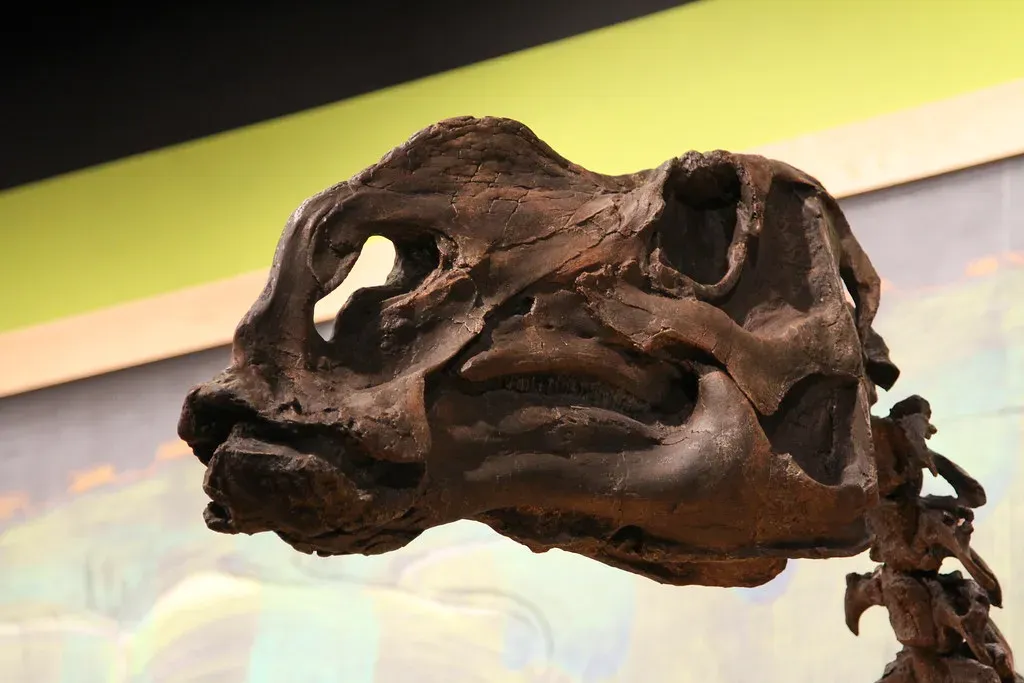
Despite all the arguments, certain odd features of the skull kept forcing scientists to think seriously about how this animal lived. Unusual crests, flanges, or ridges could point to visual display structures, turning the skull into something like a living billboard for impressing mates or intimidating rivals. Strange openings and internal chambers might hint at complex sinuses or resonating spaces that allowed the dinosaur to produce deep, booming sounds, more like a brass instrument than a simple reptile hiss. Even the arrangement of teeth and jaws raised questions about whether it was slicing meat, crushing tough plants, or doing something stranger in between.
Some researchers argued that the skull showed signs of extreme specialization, the kind of thing you see when an animal occupies a narrow ecological niche. It is a bit like looking at a hummingbird’s beak or a pelican’s pouch: you can tell right away this is not a generalist. That specialization, however, made the story harder to pin down, because it meant the closest living analogs might be scattered across very different modern animals. Was it more like a weird bird, a crocodile with unusual tastes, or something with no real modern parallel at all? The skull became a Rorschach test, with different scientists seeing different lifestyles in the same set of bones.
How New Tech Slowly Defused a Decades-Long Debate
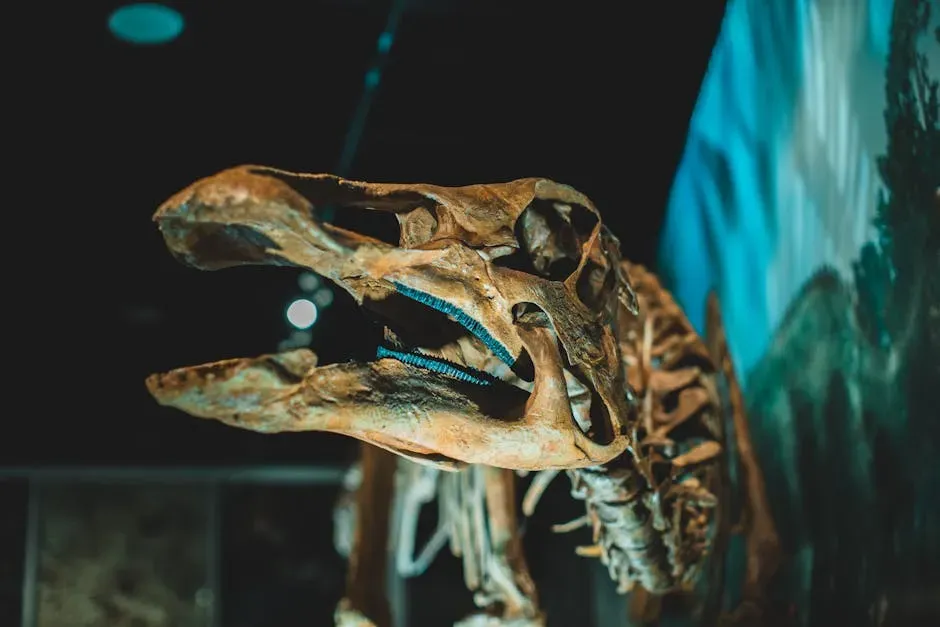
As technology improved, the conversation around this skull shifted from raw argument toward cautious convergence. High-resolution CT scans allowed researchers to peer deep into the fossil without damaging it, revealing internal structures that could not be seen from the outside. These scans helped clarify which parts of the skull were truly original and which were cracks, compression, or missing sections filled in by surrounding rock. Digital modeling made it easier to virtually “uncrush” warped bones and test how different reconstructions would affect things like bite mechanics or muscle attachments.
Computer simulations also brought biomechanics into the spotlight. Scientists could now ask whether a proposed skull shape could actually withstand the forces of biting or moving in life, or whether it would snap under realistic stress. Some popular reconstructions failed those tests, pushing the field back toward more conservative shapes. Over time, this chipped away at the wildest interpretations and left a smaller set of plausible options on the table. The debate did not completely vanish, but it did become more grounded, less about personalities and more about testable models and hard data.
One thing that quietly changed, too, was attitude. Younger researchers who grew up with digital tools were often more comfortable treating reconstructions as hypotheses rather than final truths. Instead of insisting on a single “correct” version of the skull, they explored a range of possibilities, each linked to different assumptions about distortion and anatomy. That shift made the whole story feel less like a bitter feud and more like an evolving detective case, where every new technique was another clue rather than a weapon.
Why This Strange Skull Still Matters More Than Ever
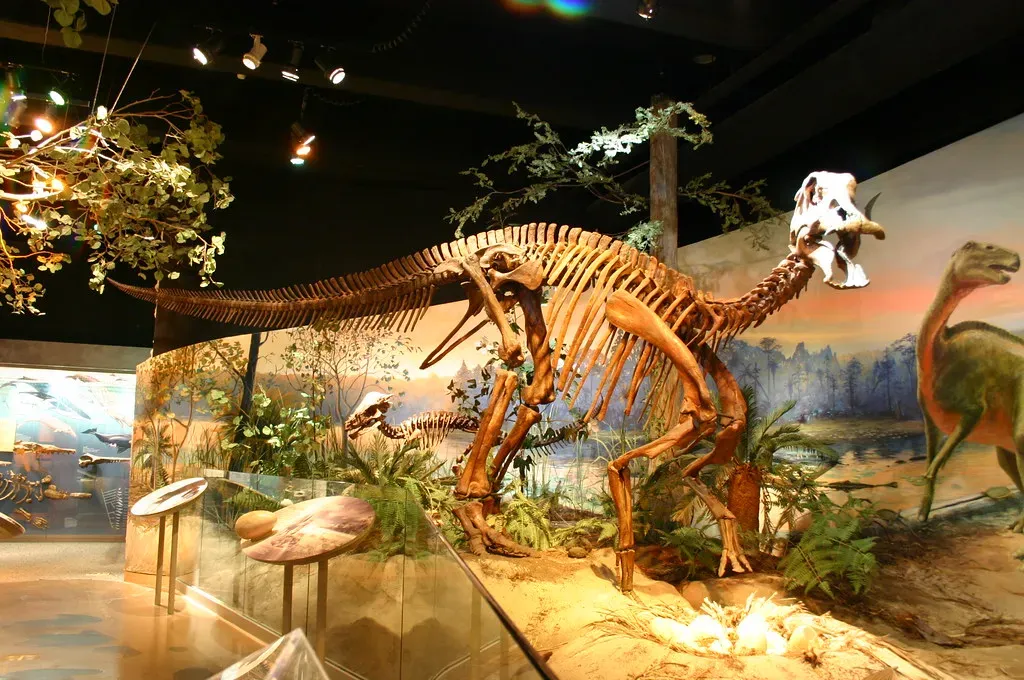
Looking back, what makes this dinosaur skull so important is not just how weird it looks, but how it forced scientists to confront the limits of what they can know from broken bones. It exposed how much of paleontology depends on interpretation, on carefully justified but ultimately human choices about how to fit the pieces together. In a way, the decades-long feud over its shape was a stress test for the field, revealing where methods were strong, where they were shaky, and where new tools were desperately needed. That kind of uncomfortable case study is not glamorous, but it is how science grows up.
On a more personal level, I love this story because it shows science as it really is: messy, argumentative, occasionally petty, but ultimately self-correcting. No single team or star researcher got to declare the final word; instead, the truth had to be wrestled toward slowly, with each new scan or analysis nudging the consensus. My opinion is that this skull should be celebrated precisely because it refused to fit neatly into anyone’s expectations. It reminds us that prehistoric life was not a tidy lineup of textbook diagrams, but a wild, experimental riot of forms we are still struggling to decode. And really, if one strange fossil can keep experts arguing for decades, what else might be hiding in the rocks, just waiting to upend our favorite stories about the age of dinosaurs?