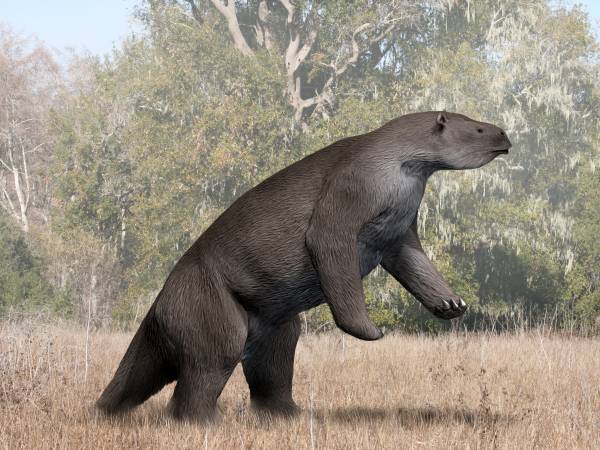
If you think of prehistoric giants, your mind probably jumps straight to dinosaurs, maybe mammoths, and if you’re really into it, saber-toothed cats. But almost no one pictures a house-sized sloth, rearing up higher than a giraffe, ripping branches off trees with claws the size of garden trowels. That animal was real, it lived alongside early humans, and yet it barely gets a footnote in popular culture.
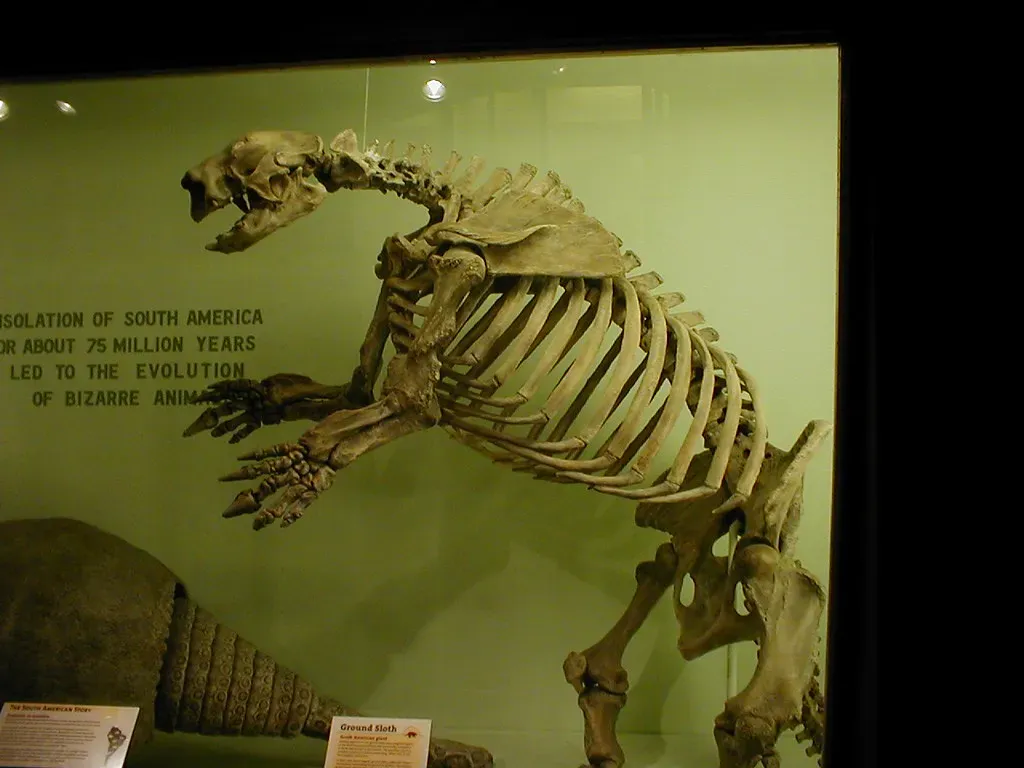
When I first learned that some giant ground sloths could stand more than six meters tall, I honestly thought someone was exaggerating on purpose. Then I saw the skeletal reconstructions and museum mounts and realized I’d somehow missed an entire category of nightmare‑level megafauna. The wild part? Most people still have never heard of these creatures. Let’s talk about why that is, what these animals were actually like, and why they deserve way more attention than they get.
A Sloth the Size of a Small Bus: Meet the Giant Ground Sloths
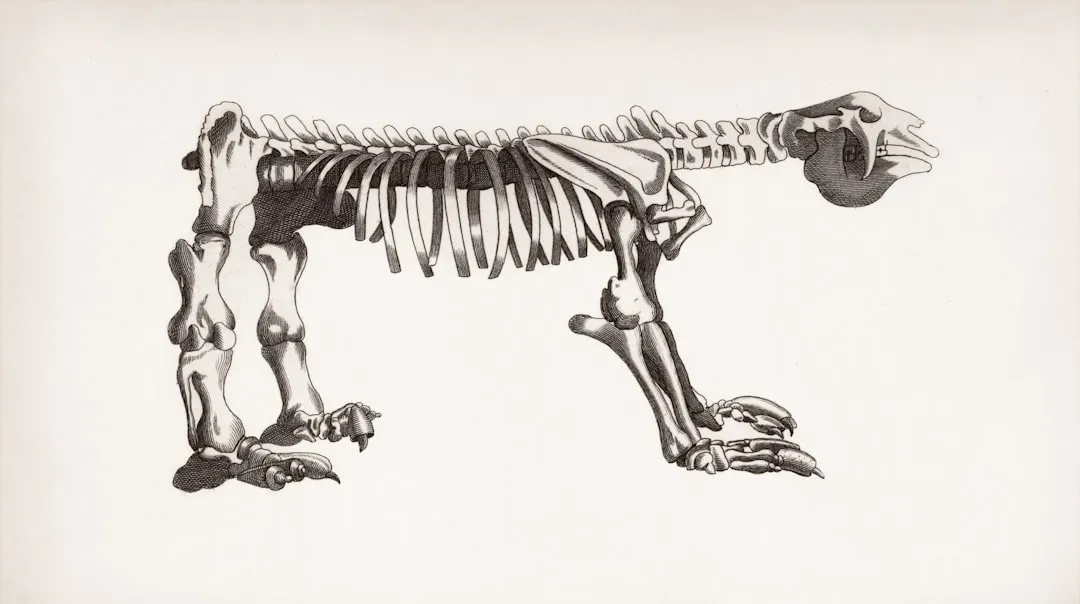
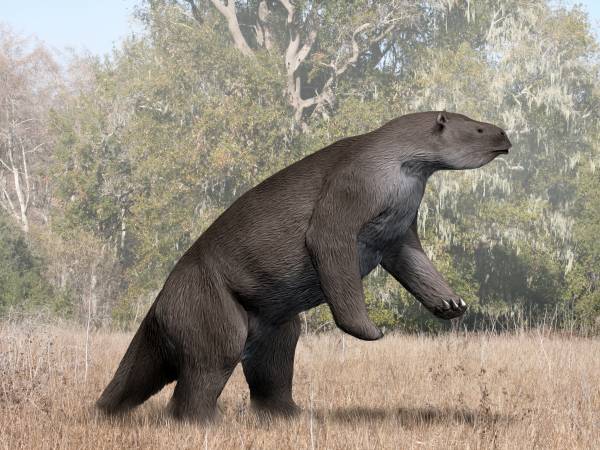
Giant ground sloths were not just “big sloths.” They were a whole family of land-dwelling titans, some of which made today’s largest mammals look modest. Species like Megatherium from South America could weigh several tons, with a body length roughly comparable to a small bus and a standing height that rivaled or surpassed a giraffe when it reared up on its hind legs. Unlike modern tree sloths, these were heavy, thick-boned, ground-walking powerhouses built for strength, not dainty branch-hanging.
Imagine a sloth with hip bones like stone pillars, arms as thick as telephone poles, and curved claws that were more like hooked machetes than gentle gripping tools. Its massive tail acted almost like a third leg, forming a tripod so it could rear back and pull down entire branches or even small trees to feed. You end up with an animal that was slow, yes, but also incredibly imposing – something halfway between a bear, a tank, and a weirdly chill construction crane.
Taller Than a Giraffe: What the Fossils Actually Show
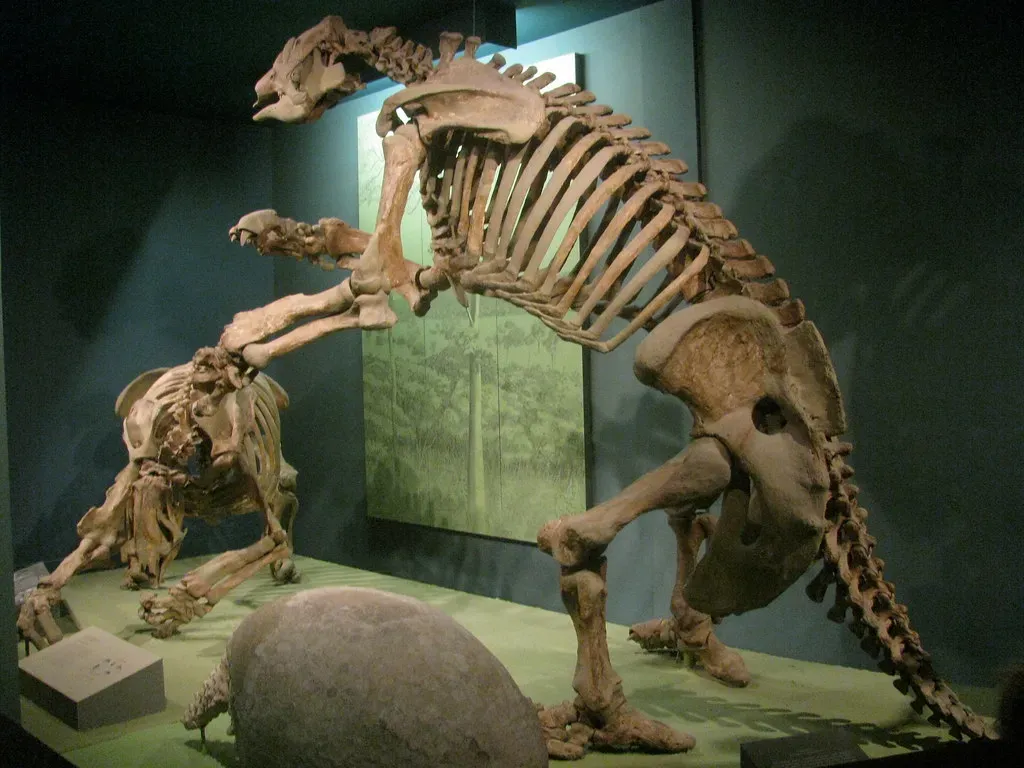
When paleontologists talk about the height of giant ground sloths, they usually distinguish between body length on all fours and full height when standing or rearing. On four legs, they were big but not outrageous by prehistoric standards; they looked like oversized, somewhat hunched mammals. The jaw-drop moment comes when you realize that several species could rear up, balance on their hind legs and massive tail, and suddenly tower above nearly any land animal alive today.
Reconstructions of large Megatherium individuals suggest a rearing height on the order of six meters or more, which puts them in the same ballpark – or higher – than a modern giraffe. That is not a speculative fantasy rendering; it is based on limb proportions, joint structure, and the heavy, reinforced vertebrae that support such a posture. In other words, this was not a rare circus trick for them; standing up like that was part of how they fed, moved, and probably defended themselves. Next time someone shows you a giraffe as the symbol of “tallest land animal,” you’re completely justified in thinking, “Well, not always.”
We tend to associate sloths with slow-motion videos and sleepy rainforest memes, but giant ground sloths were living in a very different world with very different demands. They were herbivores, but not delicate leaf-nibblers; they were more like living bulldozers, stripping foliage, branches, and possibly bark with their strong jaws and broad, grinding teeth. Their huge gut capacity likely helped them break down tough, fibrous plant material, a bit like a living compost machine wrapped in fur and muscle.
Although they probably were not fast sprinters, “slow” for a multi-ton mammal is still no joke up close. Their size alone would have offered major protection against most predators, and those infamous claws – while adapted primarily for feeding and digging – would have been terrifying defensive weapons if anything was foolish enough to attack. Picture an animal that spends most of its day eating and lumbering around, but with the physical potential to flip a predator like a toy if it had to. That is a lot more intense than the sleepy tree-dweller image pop culture has drilled into us.
Shadow Giants of the Ice Age: Where and When They Roamed
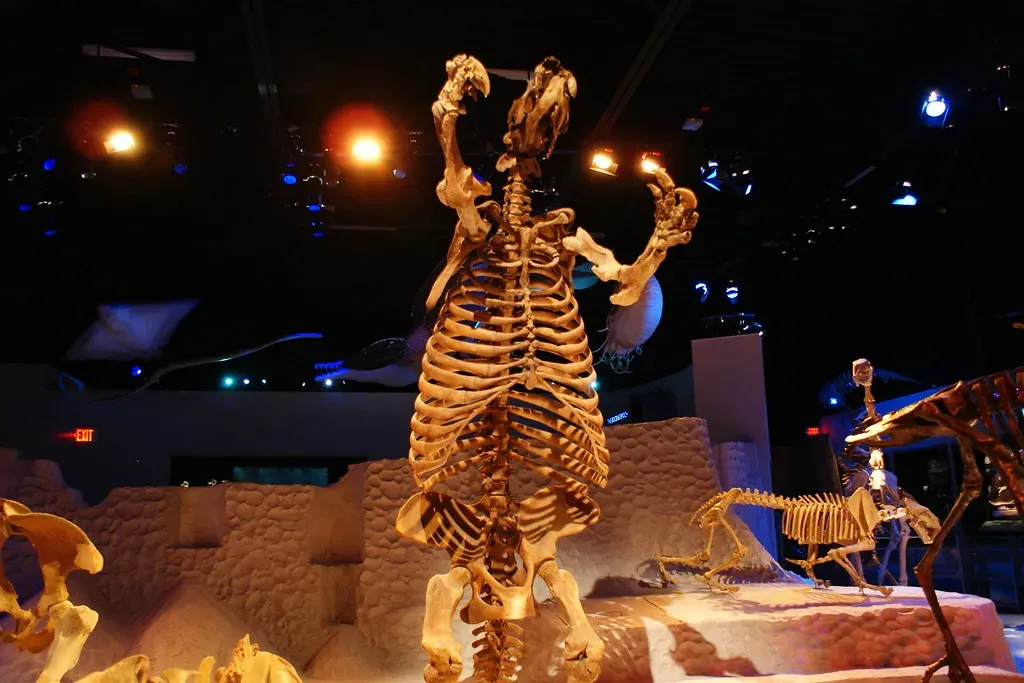
Giant ground sloths did not belong to some obscure corner of the world. Different species occupied a huge swath of the Americas, from South America up through Central and North America. During the Ice Age, they lived in a range of habitats, from more open grasslands and scrublands to wooded environments rich in shrubs and trees. These were not rare side characters in the ecosystem; in many places they were among the dominant large herbivores, shaping vegetation and landscape just like elephants and bison do in some regions today.
What makes them even more fascinating is that they overlapped in time and space with early humans in the Americas. This was not a separate, unreachable era; people saw these animals, tracked them, and probably built stories around them. Fossil sites with sloth bones and cut marks suggest that at least some populations were hunted or scavenged by humans. Yet in our modern storytelling about prehistory, they have been pushed so far into the background that they barely exist outside of specialist books and a handful of museum exhibits.
Why Did These Giants Vanish – And Did Humans Help?
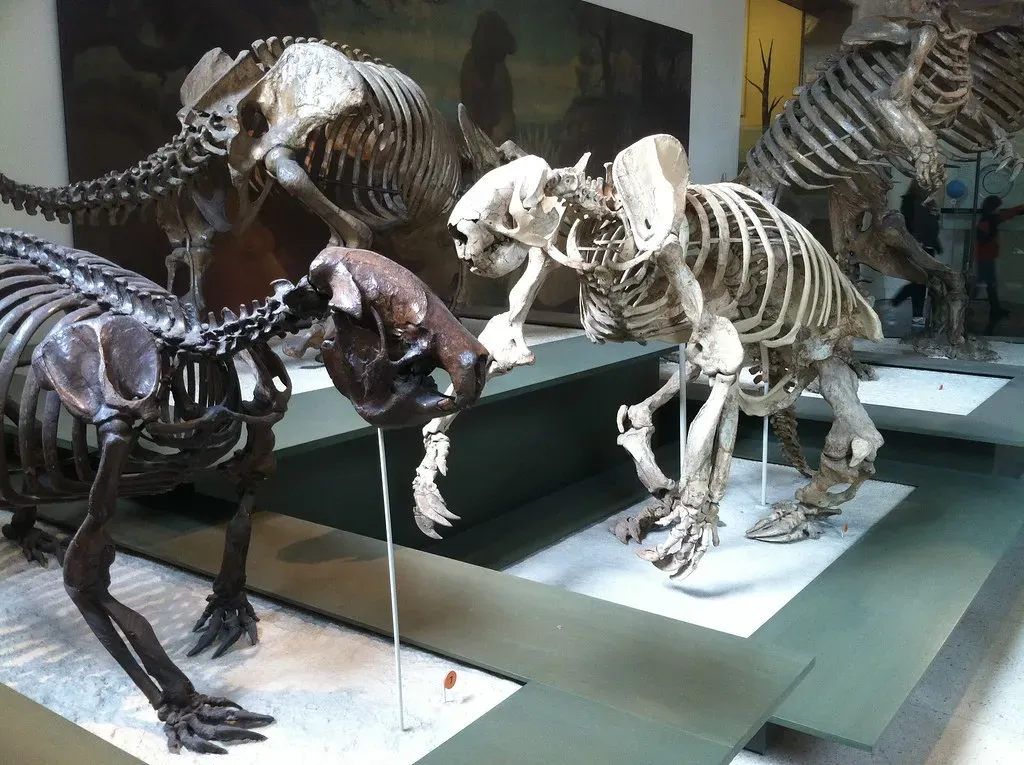
The big, uncomfortable question with any Ice Age giant is: what happened to them? Giant ground sloths, like mammoths and many other megafauna, disappeared around the end of the last Ice Age. Climate was shifting dramatically, ecosystems were reorganizing, and at the same time, humans were spreading and refining their hunting strategies. Most scientists today see their extinction as a complex mix of changing environments and human influence, rather than a single neat cause.
There is evidence that humans interacted with and sometimes butchered these animals, which suggests hunting at least contributed to their decline in some regions. At the same time, retreating glaciers, altered rainfall patterns, and changing plant communities would have put pressure on large, slow-reproducing herbivores. When you combine environmental stress with even moderate hunting pressure, giant, specialized animals are usually the first to go. It is a sobering reminder that we have been shaping, and sometimes collapsing, ecosystems for far longer than industrial history alone would suggest.
So Why Does Almost Nobody Talk About Them?
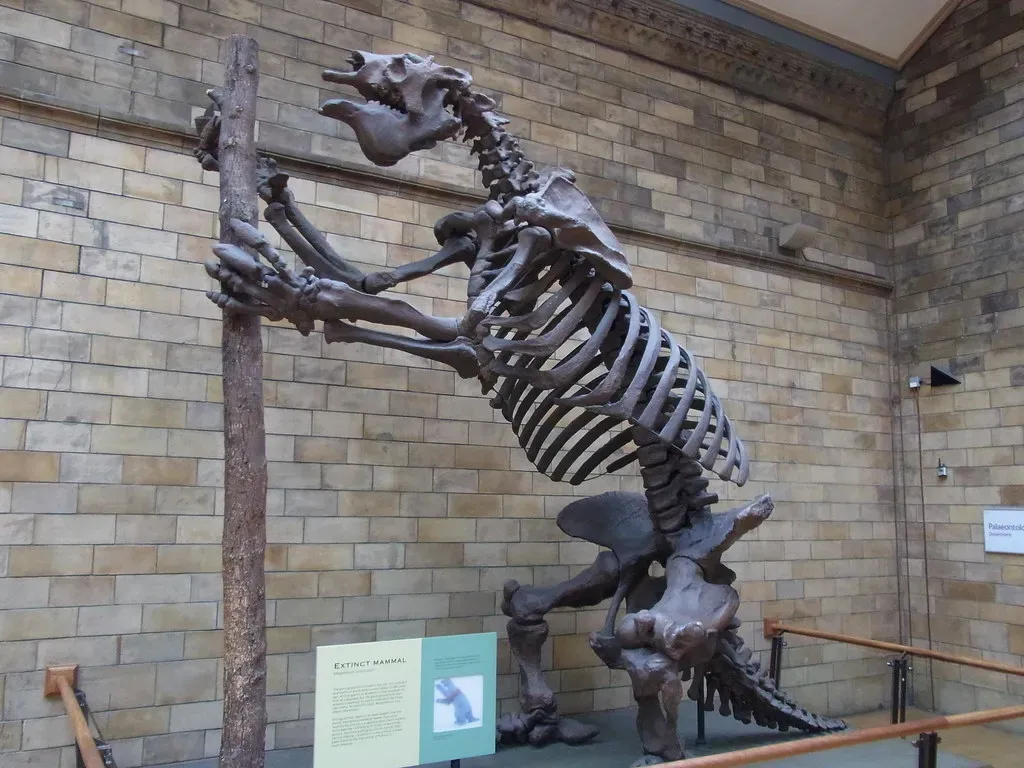
Given how spectacular they were, it is honestly strange how little cultural space giant ground sloths occupy. Dinosaurs get entire media empires. Mammoths at least get scattered attention. Giant sloths, despite the fact they were towering, clawed herbivores taller than giraffes, barely manage a cameo in mainstream documentaries or films. Part of the reason is timing: dinosaurs feel comfortably distant, while Ice Age giants were “almost us,” and that kind of near overlap with humans can feel less mythic and more unsettling.
There is also a branding problem. The word “sloth” has been welded in people’s minds to cute, sleepy, harmless tree animals. Marketers can sell “adorable sloth merch” way more easily than “multi-ton monster sloth that could rake a sapling out of the ground.” Giant sloths do not fit cleanly into existing categories: they are not predators, they are not reptiles, and they do not fit the sleek, high-speed style of most pop-science heroes. Ironically, they are almost too weird and too real at the same time, so they slide into obscurity while we keep replaying the same dinosaur greatest hits.
What Giant Sloths Can Teach Us About the World We’re Losing
When you realize that giant ground sloths were around recently enough to share continents with humans, they stop feeling like fantasy monsters and start feeling like neighbors we quietly erased. These animals help us see ecosystems as dynamic, fragile tapestries: remove one big thread – like a multi-ton herbivore – and everything from plant communities to predator populations can shift. Some researchers even argue that the loss of Ice Age giants reshaped entire landscapes, potentially making some regions more fire-prone or less biologically diverse over time.
To me, that makes the silence around giant sloths more than just a missed storytelling opportunity; it feels like a symptom of how easily we forget what we have already lost. We talk a lot about saving endangered species today, but the baseline we compare to is already stripped of many of its original giants. Remembering that the Americas once had sloths taller than giraffes is a way of expanding our imagination of what a “normal” ecosystem can look like. If our picture of nature is this incomplete, what else are we underestimating right now?
Conclusion: The Tall, Quiet Ghosts of Our Imagination
I think the giant ground sloth’s biggest tragedy is not just that it went extinct, but that it has been half-erased from our collective imagination. An animal that could stand taller than a giraffe, wield enormous claws, and shape whole landscapes has somehow lost the cultural spotlight to creatures that lived tens of millions of years earlier. That says more about our storytelling habits than it does about the animals themselves. We gravitate to the familiar: dinosaurs, big cats, mammoths. The stranger, slower giants just get left in the file marked “too weird, did not market‑test well.”
In a way, giving giant sloths more attention is not just about cool trivia; it is about widening the lens through which we see Earth’s past and, by extension, its future. If we can learn to be fascinated by a massive, slow herbivore that quietly transformed its habitat, maybe we can also learn to value the less glamorous species still holding our ecosystems together today. The giant sloth was real, it was taller than a giraffe, and it absolutely deserves better than obscurity. Now that you know it existed, are you really going to forget it again?