
Imagine hiking into a new land, hungry, tired, and wary of the cold, only to spot a shadow moving on the horizon that is bigger than any animal your people have ever seen. As you get closer, you realize it is not a hill or a boulder, but a living mound of fur and muscle with tusks the size of tree trunks. For the first humans who pushed into the Americas, that image was not fantasy. Their world was crowded with giant, now-vanished animals that would look more at home in a movie monster lineup than in a nature documentary.
What makes this story so gripping is that it actually happened. These early travelers, probably arriving in waves over thousands of years, stepped into an ecosystem loaded with megafauna: towering ground sloths, saber-toothed predators, oversized camels and horses, bizarre armored herbivores, and elephant-like beasts built for ice age extremes. Scientists are still arguing over exactly how, when, and where these encounters unfolded, but the broad picture is clear enough to be chilling. If you have ever wondered what it would feel like to walk through a world halfway between reality and nightmare, this is as close as human history gets.
A New World, But Not an Empty One
There is a popular but very misleading idea that the first people arrived in the Americas and found vast empty landscapes just waiting to be filled. In reality, these lands were already packed with powerful, well-adapted animals that had been evolving there for millions of years. When humans showed up, they were the new players stepping into a game that was already in full swing, surrounded by creatures that did not yet know to be afraid of them. That lack of fear, at least at first, probably made the encounters both easier and more dangerous.
Archaeology and genetics suggest that humans were in the Americas by at least around fifteen thousand years ago, and possibly somewhat earlier, arriving through multiple routes and over long stretches of time. Whether they moved along icy coastlines, crossed exposed land bridges, or threaded through interior corridors, they were not entering a blank map. They were slotting into complex food webs that included predators as big as small cars and herbivores as tall as houses. I like to picture them standing on a ridge, seeing smoke from their own campfire on one side and unfamiliar herds and hulking silhouettes on the other, realizing that this “new world” was already deeply, almost overwhelmingly alive.
Mammoths and Mastodons: The Walking Mountains
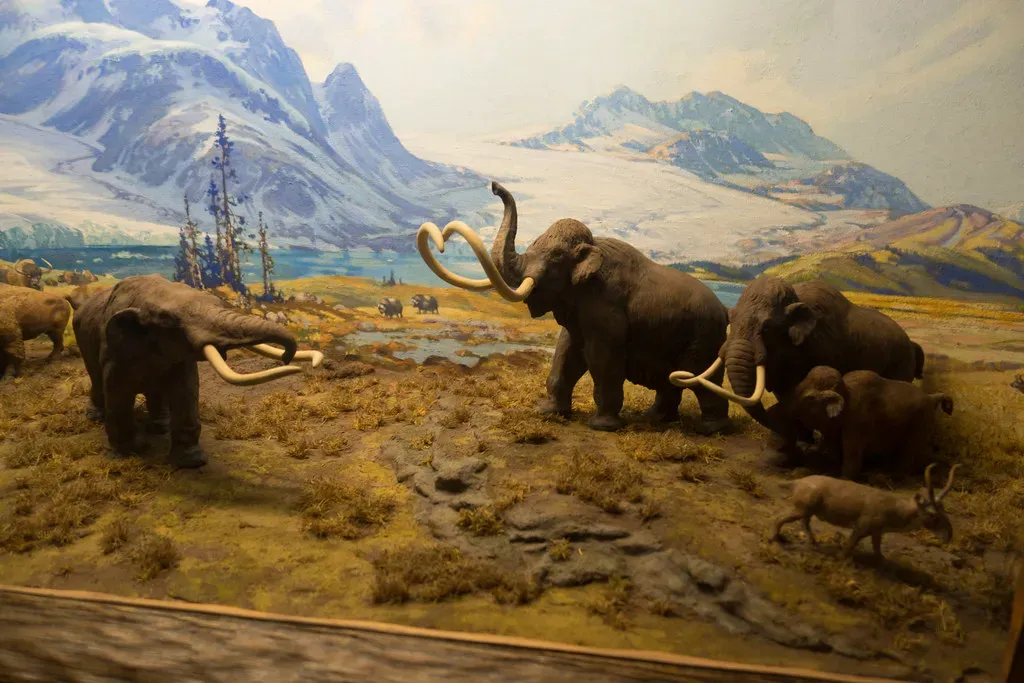
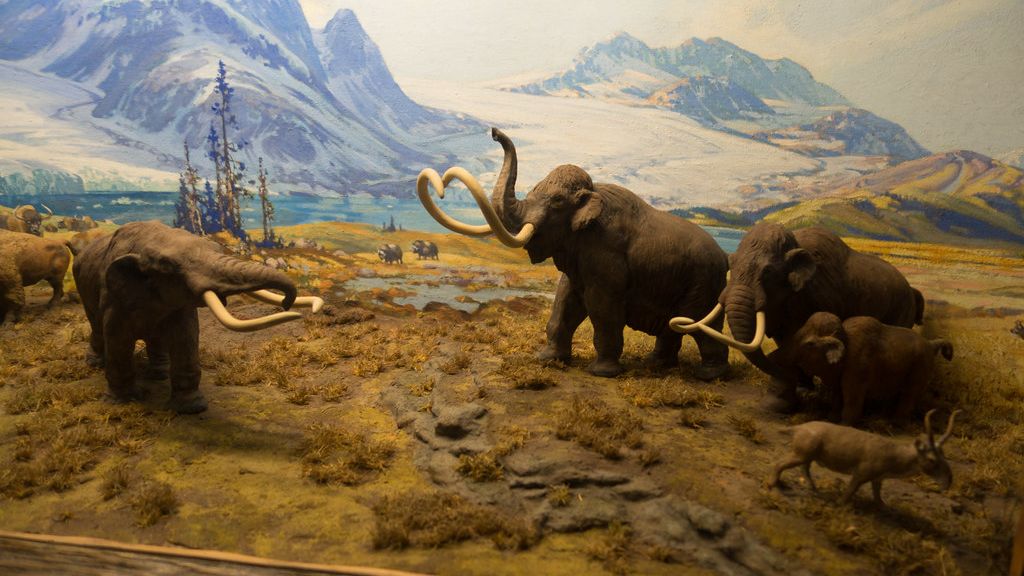
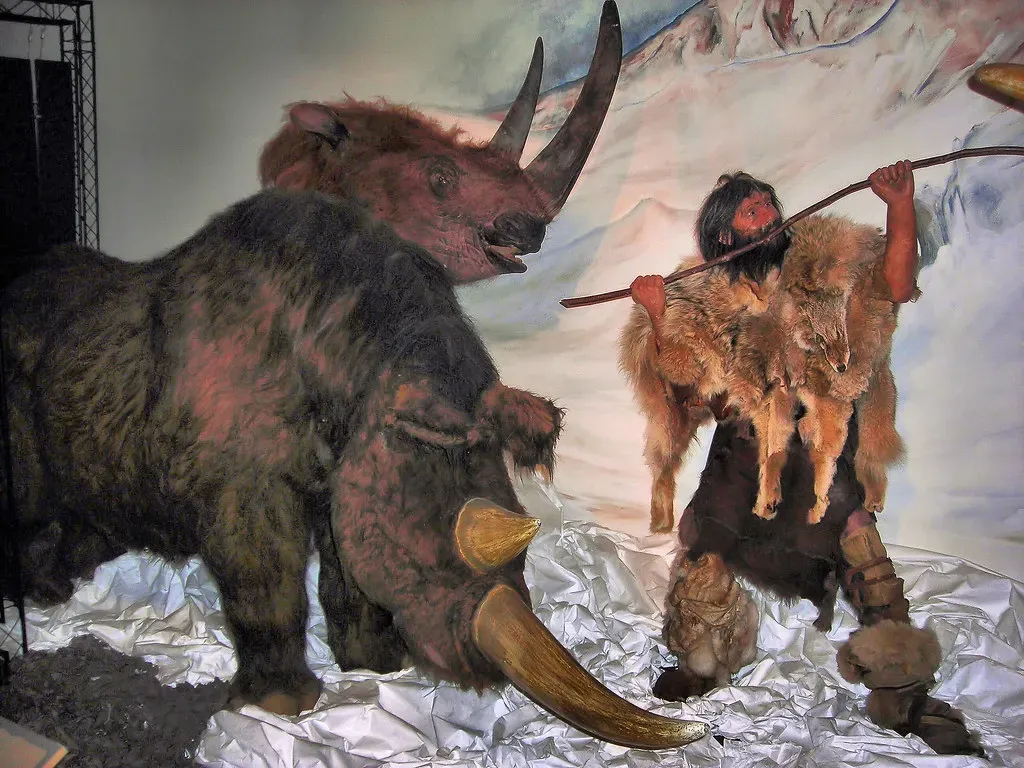
When people think of Ice Age monsters, mammoths usually come to mind first, and for good reason. These animals were roughly the size of modern elephants, with long curving tusks and thick woolly coats that let them claim the frozen edges of the world as their own. In parts of North America, early humans would have seen mammoths moving across open steppe and grassland in slow, steady lines, like furry hills drifting across a sea of wind and snow. You can imagine stepping out of a stand of spruce trees and suddenly hearing the deep, rhythmic crunch of many tons of animal moving through crusted snow nearby.
Mastodons, their close but distinct cousins, added another twist to the nightmare. They were more forest-loving, with stockier builds and different teeth, browsing in wetlands and woodlands rather than wide-open plains. For human groups tracking river valleys or following game through mixed terrain, a mastodon encounter might come with almost no warning: a ripple of noise in the trees, a snapping branch, then a massive shape parting the undergrowth. Hunting these giants would have taken coordination, courage, and probably a lot of trial and error. Up close, they were not just “resources”; they were moving walls of muscle, bone, and attitude, and a single mistake could mean a trampled hunter left behind on the snow.
Saber-Toothed Predators and Other Tooth-Heavy Nightmares
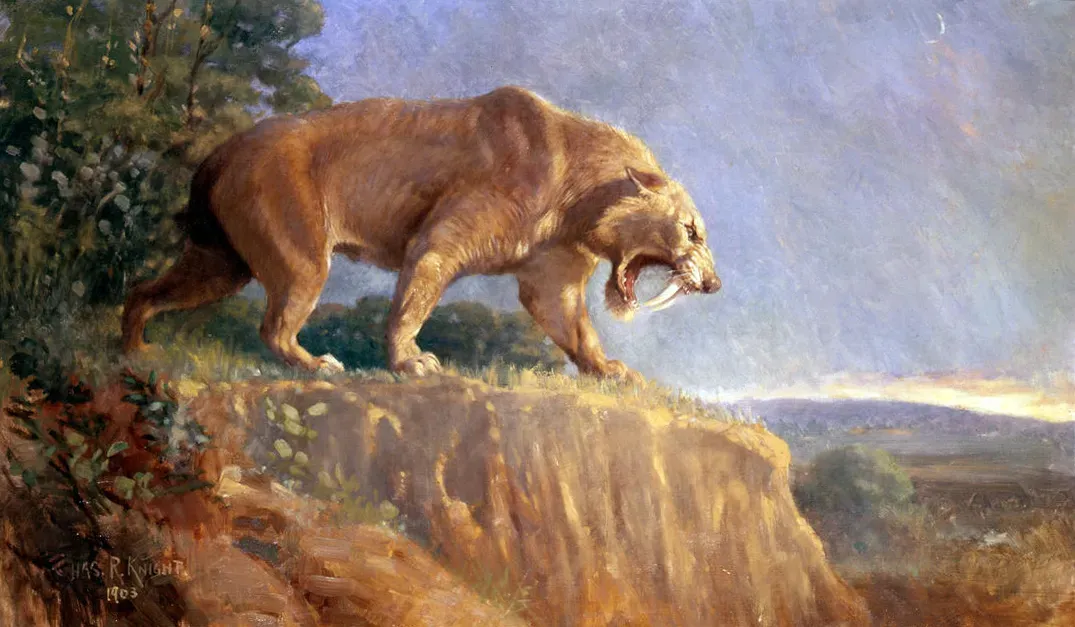
If the herbivores were living tanks, the predators were the sharpened knives. The most famous of them, often called the saber-toothed cat, carried elongated upper canine teeth that hung like ivory daggers past its lower jaw. Early humans wandering into its territory would have been facing a predator built to bring down large, struggling prey by sheer precision and power. These cats were not fast sprinters like modern cheetahs; they were ambush specialists, more like living trapdoors that snapped shut when the timing was right. For people on foot without high vantage points, that is the sort of danger you might never see coming until it was already too close.
And the saber-toothed cat was not alone. The Americas also hosted enormous lion-like cats and powerful short-faced bears that were bigger and likely faster over open ground than today’s grizzlies. To an early human, a landscape filled with these animals would have demanded constant vigilance: scanning riverbanks before watering, listening for the wrong kind of silence in the brush, sleeping with the fire just a little too big and bright. I sometimes think about what it must have felt like to tell stories around the fire, not about imaginary monsters, but about the very real ones that prowled just beyond the circle of light, eyes reflecting the flames back at you.
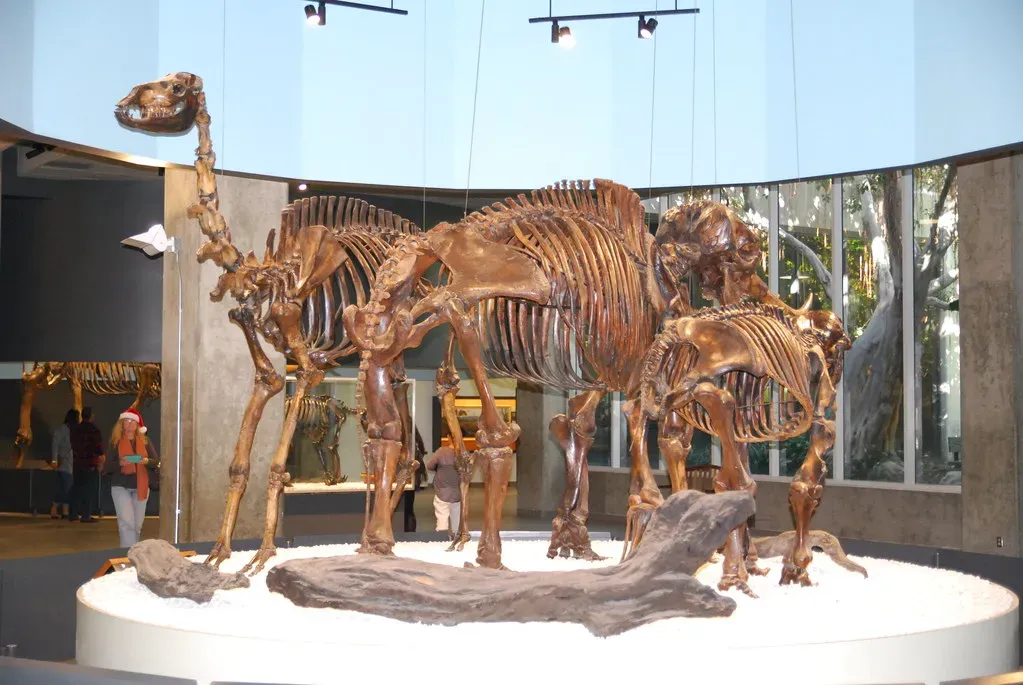
One of the strangest groups waiting in the Americas for human arrival were the giant ground sloths, some of which could stand as tall as a two-story house when rearing up. It is hard to wrap your head around that if you only know modern tree sloths, which look like sleepy bundles of fur moving in slow motion. Their ancient relatives were bulked-up powerhouses, with massive claws and heavy bones, built to bulldoze through vegetation and reach leaves and branches out of reach of other herbivores. Meeting one across an open plain would have been like encountering a living excavator wrapped in shaggy fur, both mesmerizing and deeply unsettling.
What makes ground sloths especially eerie is how unfamiliar they are to our modern eyes. We have no exact equivalent today, no animal that combines their size, posture, and behavior in quite the same way. Early humans seeing them for the first time would have had no inherited stories, no ancestral memory to explain what these hulking, slow-moving beasts were. Were they dangerous? Could they be hunted safely? Did they ever turn those claws on people when threatened? We can only guess how our ancestors answered those questions, but it is hard to believe they did not feel, at least at first, that they had walked into a world that was bending the rules of what an animal was supposed to look like.
Armored Giants: Glyptodonts, Giant Beavers, and Other Oddities
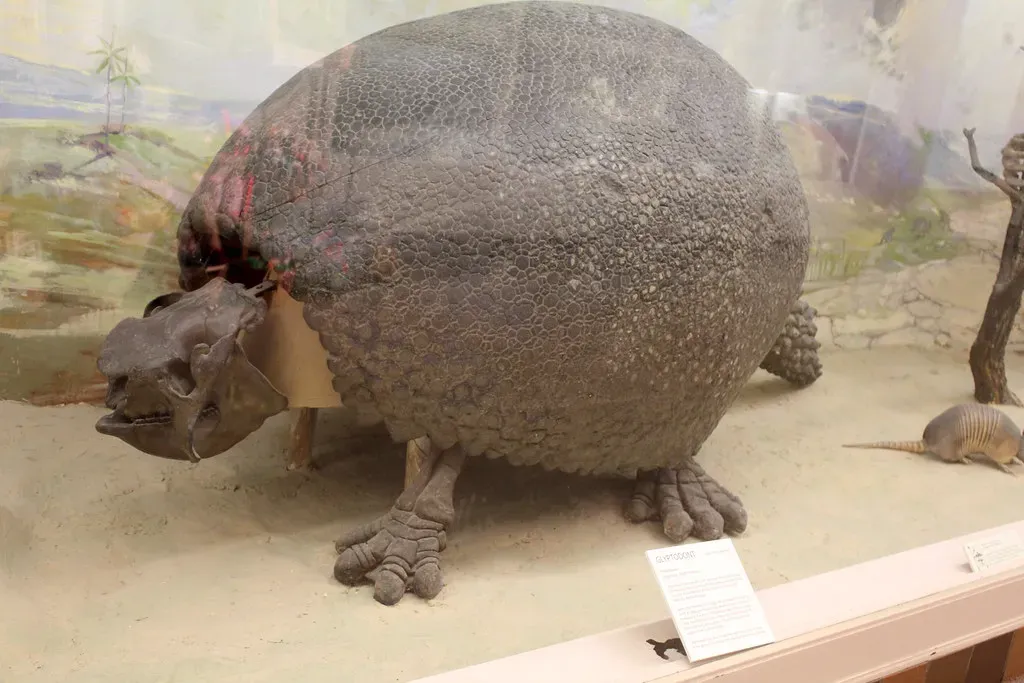
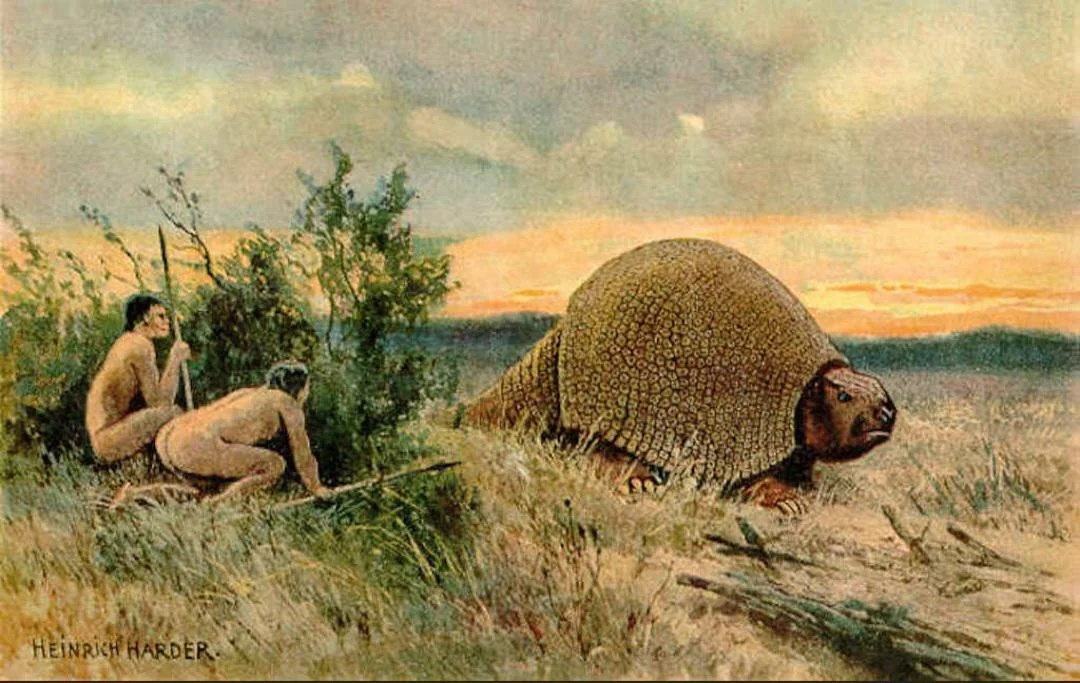
Not all nightmares are about teeth and claws; some are about the sheer strangeness of what evolution can invent. Imagine, for example, a Volkswagen-sized armadillo rolling slowly across a riverbank. That is not far off from what a glyptodont looked like: a heavily armored herbivore with a domed shell and, in some species, a spiked or clubbed tail that could be swung like a medieval weapon. For an early human, this must have been a mind-bending sight, something that looked half like a reptile, half like a mammal, and entirely like trouble if you stood behind it in the wrong moment.
The oddities did not stop there. The Americas also hosted giant beavers much larger than today’s versions, along with oversized camels, horses, and even weird hoofed animals that have no close modern analogs. Crossing a wetland or river valley, a human group might see a dam structure and, instead of small beavers scurrying around, find something closer in size to a black bear chewing on saplings. The world would have felt exaggerated, like someone had taken a familiar ecosystem and quietly turned the size knob to the maximum. If you have ever walked into a room where all the furniture was just slightly too big, you know the unsettling feeling; now imagine that applied to an entire continent’s worth of wildlife.
How People Survived and Adapted in a Land of Giants
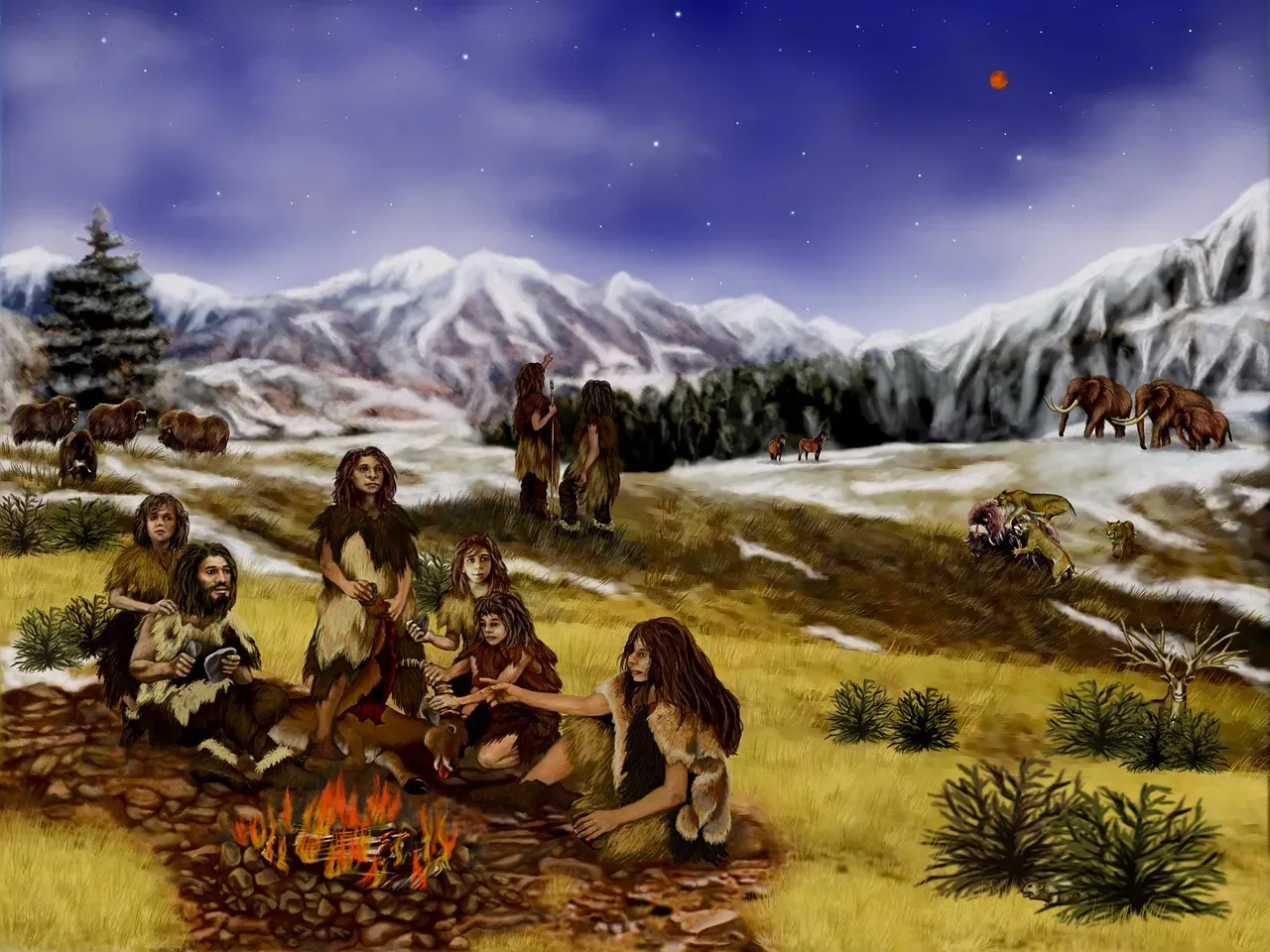
It is tempting to assume that early humans were constantly terrified in the face of all this megafauna, but that underestimates how quickly people adapt when survival is on the line. These were highly capable hunter-gatherers with flexible minds, cooperative social structures, and an impressive toolkit for their time. They were used to reading tracks, sensing patterns, learning the habits of prey and predators in detail. In many ways, this was their superpower: they were generalists, while most of the megafauna were specialists tuned to particular environments and behaviors.
Over time, human groups likely learned which animals could be hunted safely, which had to be treated with extreme caution, and which were best avoided altogether. They experimented with different hunting strategies, weapon types, and group tactics, gradually turning what looked like a nightmare cast of giants into a complex, dangerous, but navigable world. I find it almost inspiring to picture a band of people standing around a newly killed mammoth, sharing the work and the reward, knowing that this single animal might feed and clothe them for weeks. Fear was part of their reality, but so were skill, courage, and a growing sense that they could shape the rules of the game rather than only obey them.
Did Humans Help End the Age of Monsters?
No story about early humans and megafauna is complete without asking the hardest question: did people help drive these giant animals to extinction? Around the time humans spread widely across the Americas, many of the big species vanished over a few thousand years. The timing is suspicious, and there is evidence in some places that intense hunting pressure, combined with shifting climates at the end of the Ice Age, pushed vulnerable populations over the edge. In some regions, the pattern looks uncomfortably like what happens when a new, highly efficient predator arrives in an ecosystem that has not evolved to handle it.
At the same time, the picture is not simple or uniform. Climate was changing rapidly, habitats were reshuffling, and not every megafauna species disappeared at exactly the same time or in the same way. In my view, the most honest conclusion is that humans were likely part of a larger, messy story rather than the sole villains or innocent bystanders. That does not let us off the hook, though. The fact that our species has been powerful enough to tip ecosystems for thousands of years should make us think twice about our impact today. When we walk through modern landscapes missing their mammoths, ground sloths, and saber-toothed cats, we are living in the shadow of choices and changes that began as soon as humans first gazed across those Ice Age plains and realized they were not alone.
Conclusion: A World We Lost, and What It Says About Us
When I think about the first humans in the Americas, I do not picture them as tiny, helpless figures in a hostile land. I picture them as tough, observant, and endlessly curious people stepping into a world that looked, at first, like a fever dream of evolution. They had to learn to read the moods of mammoths, to recognize the silence before a predator’s rush, to see opportunity in armored glyptodonts and towering sloths. Their lives were threaded through with real danger, but also with a kind of raw awe that most of us will never feel, because the giants that inspired it are gone. In a way, they were the last humans to know what it truly meant to live alongside animals that could crush you, outrun you, or simply ignore you because you were too small to matter.
My opinion is that we should stop treating this lost world as just a cool backdrop for documentaries and start seeing it as a mirror. The same species that learned to navigate lands full of nightmare megafauna is now reshaping the entire planet, often without pausing to ask what will vanish next. Remembering that our ancestors likely helped end the age of monsters does not mean we should drown in guilt, but it should push us to be brutally honest about our power. If those first travelers could stand beside us now, listening to our stories about climate change and disappearing species, would they see us as wiser descendants or as people repeating the same old patterns on a much bigger scale?