
Picture this: you are a mid‑sized dinosaur stopping for a drink, when the riverbank itself suddenly rises, snaps you in half, and drags you under. No dramatic music, no heroic escape, just a bad day to be near the water. That was the reality in parts of the Mesozoic, when giant crocodilian relatives turned lakes, rivers, and coastlines into ambush zones. These predators were big enough and weird enough to rival anything in Jurassic Park, yet they mostly get reduced to one throwaway line in a documentary and then forgotten.
What makes it even wilder is that many of these monsters were not just scaled‑up modern crocs. Some sprinted on land, some had jaws like scissors, others were built like semi‑aquatic tanks with armor that would make a medieval knight jealous. They hunted alongside dinosaurs, ate them when they could, and survived global cataclysms that wiped out almost everything else. And somehow, Hollywood keeps giving us yet another slightly larger T. rex instead of the creatures that literally dragged dinosaurs to their doom.
When Relatives Of Crocodiles Ruled The Rivers
One of the biggest surprises when you dive into ancient crocodilian history is realizing how long they have been power players. Their broader group, often called crocodyliforms, stretches back more than two hundred million years, overlapping with, and sometimes outlasting, many dinosaur lineages. Instead of being side characters in the dinosaur era, they were parallel apex predators in their own right, especially in rivers, swamps, deltas, and coastal lagoons. If you imagine the Mesozoic landscape as a neighborhood, dinosaurs ruled the streets, but crocodilians absolutely owned the waterfront property.
These rivers and wetlands were not peaceful scenes with gentle herbivores sipping water. They were more like underwater minefields, full of jaws, teeth, and eyes barely breaking the surface. Some of these crocodilians reached lengths that would make a modern saltwater crocodile look small, turning waterholes into genuine kill zones. Dinosaurs that came to drink, migrate, or cross channels had to gamble that the shadow under the water was just a log and not a living torpedo. In that sense, dinosaurs were not fighting just each other; they were constantly playing a deadly game of “is the riverbank safe today?”
Deinosuchus: The Dinosaur‑Crunching “Terror Croc” Of North America
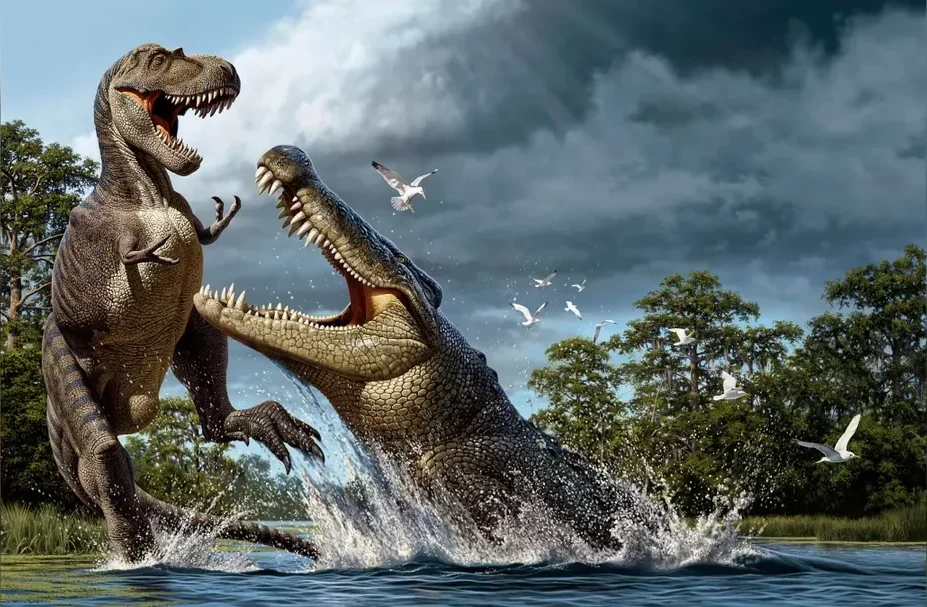
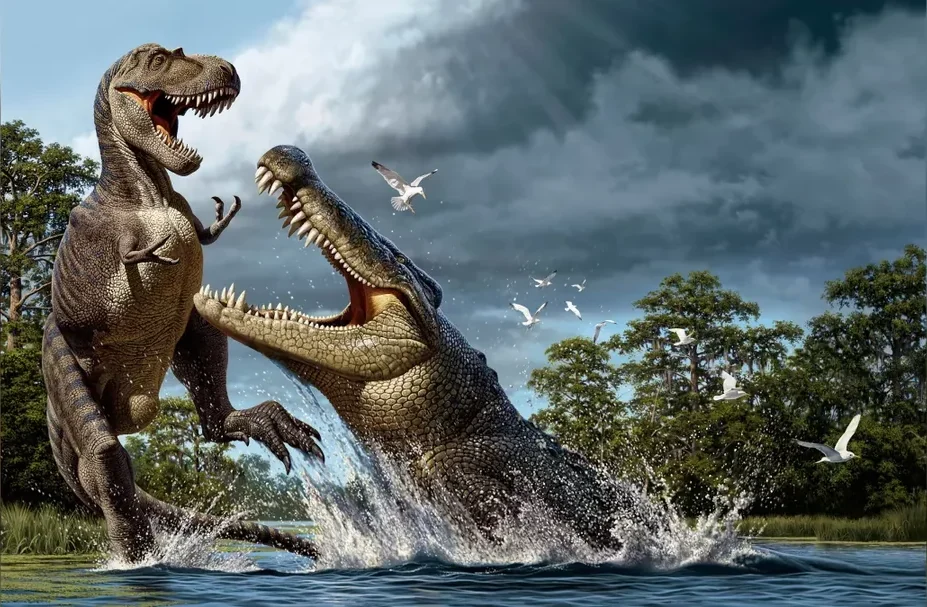
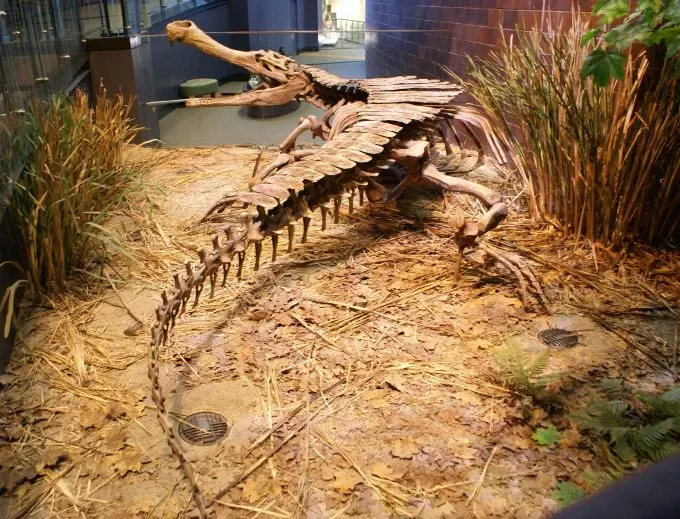
Deinosuchus is probably the closest thing we have to a crocodilian supervillain from the age of dinosaurs. Living in North America roughly in the late Cretaceous, it reached lengths estimated at about ten meters or more in some individuals, making it longer than most buses people take to work. Its skull was enormous and heavily built, with thick, robust teeth that were better suited for crushing than for the delicate slicing you see in some other reptilian predators. Fossilized dinosaur bones bearing bite marks that match Deinosuchus teeth paint a pretty blunt picture: this animal was not just scavenging; it was actively attacking big dinosaurs that wandered too close to the water.
What I love (and slightly hate) is how invisible this creature is in pop culture. We keep getting movies where a T. rex stands at a riverbank roaring, as if the water is just set dressing. In the real Cretaceous, that river might have been Deinosuchus territory, and the smart move for a large dinosaur would’ve been to drink fast and leave. Paleontologists have found Deinosuchus fossils along what used to be vast coastal and river systems, suggesting it patrolled ancient shorelines like a living drawbridge of death. The idea that a duck‑billed dinosaur could be grabbed and rolled by a reptile lurking under the surface sounds like a horror scene, yet it is grounded in hard evidence, not special effects.
Sarcosuchus: The So‑Called “SuperCroc” That Turned Lakes Into Traps
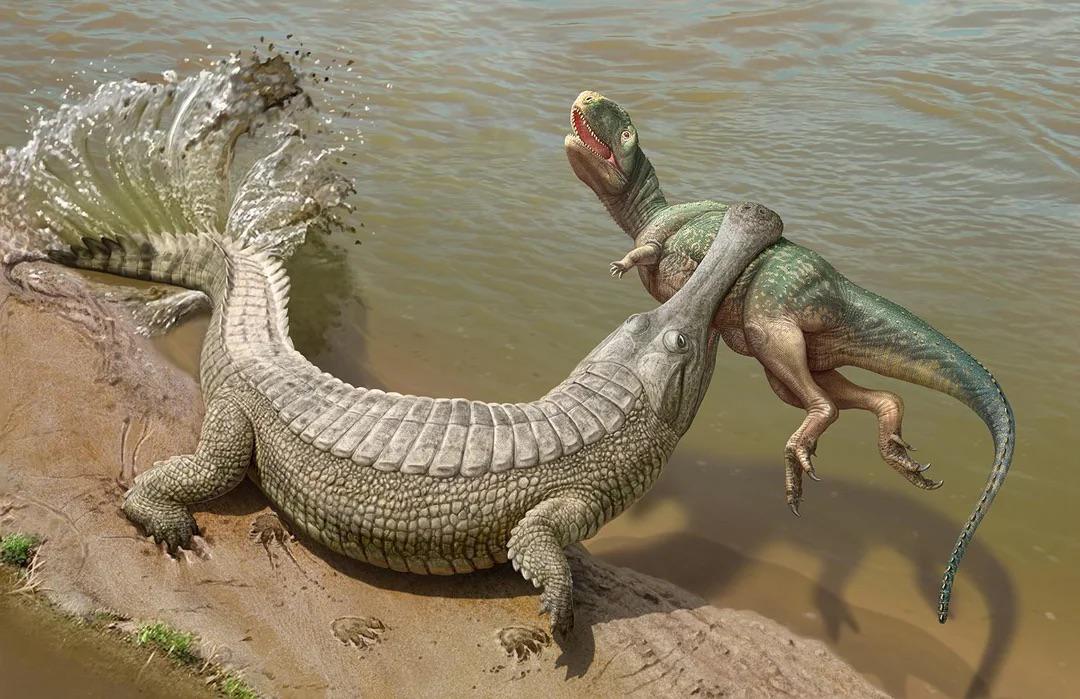
Across the Atlantic, in what is now Africa, another giant crocodilian relative prowled: Sarcosuchus. Often nicknamed “SuperCroc” in documentaries, it lived earlier than Deinosuchus, during the early Cretaceous, and likely reached around twelve meters in length in some estimates. Its skull was long, with a distinctive bulbous expansion near the snout tip, and it carried a serious set of conical teeth. Unlike some more specialized relatives, Sarcosuchus seems built for grabbing large prey, including dinosaurs, in broad, swampy environments sprinkled across what was then a much wetter Sahara region.
Imagine standing on the shore of a sprawling Cretaceous lake, thinking you are at the top of the food chain, while a reptile the length of a large truck waits in the murky shallows. That was the reality for many herbivorous dinosaurs coming in to drink or forage. Sarcosuchus likely ambushed with a lunging strike, using body weight and water leverage to overpower struggling prey, then either drowning it or tearing it apart. It is almost absurd that we have lavish CGI budgets to render another slightly different raptor, while this literal lake monster, backed by solid fossil evidence, barely gets a cameo in science communication, let alone its own blockbuster.
Not Just Bigger Crocs: The Wild Diversity Of Croc Relatives
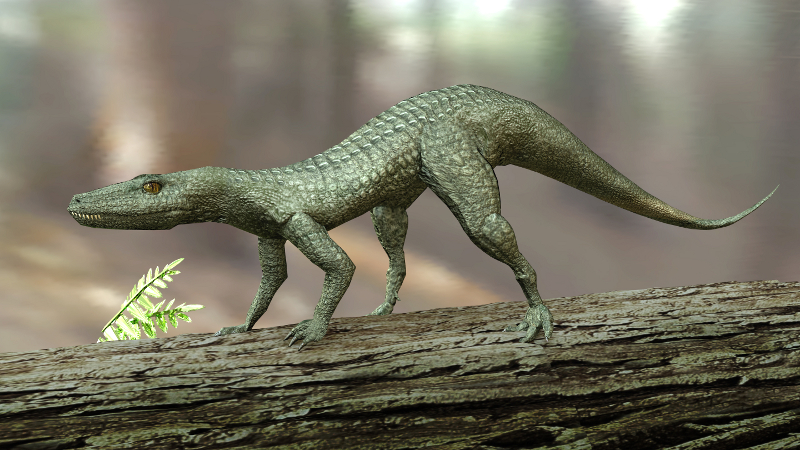
One of the biggest misconceptions is that these ancient crocodilians were just scaled‑up versions of what we see today. In reality, their broader evolutionary group, sometimes dubbed “crocodylomorphs,” experimented with a wild range of body plans and lifestyles. Some species were heavily armored land predators with long legs, more like reptilian wolves than ambush hunters. Others had narrow, delicate snouts adapted for catching fish, or even skulls that hint at omnivorous or plant‑leaning diets. It is as if evolution kept hitting shuffle on the crocodilian template, trying out new shapes for tens of millions of years.
Once you grasp that, the mental image of the dinosaur era changes completely. Dinosaurs were not just sharing their world with today’s croc copy‑paste; they were dealing with a whole cast of reptilian neighbors, some agile, some hulking, some specialized for open oceans, and some for fast‑flowing rivers. A few could probably move faster on land than many people assume when they hear the word “crocodile.” It starts to feel less like a simple dino‑focused drama and more like an ensemble show, where crocodilian relatives play everything from lurking assassins to opportunistic scavengers. Honestly, that richness of weird body shapes and strategies is way more interesting than yet another movie about one oversized lizard chasing a jeep.
Why These Dinosaur‑Hunters Stayed In The Shadows
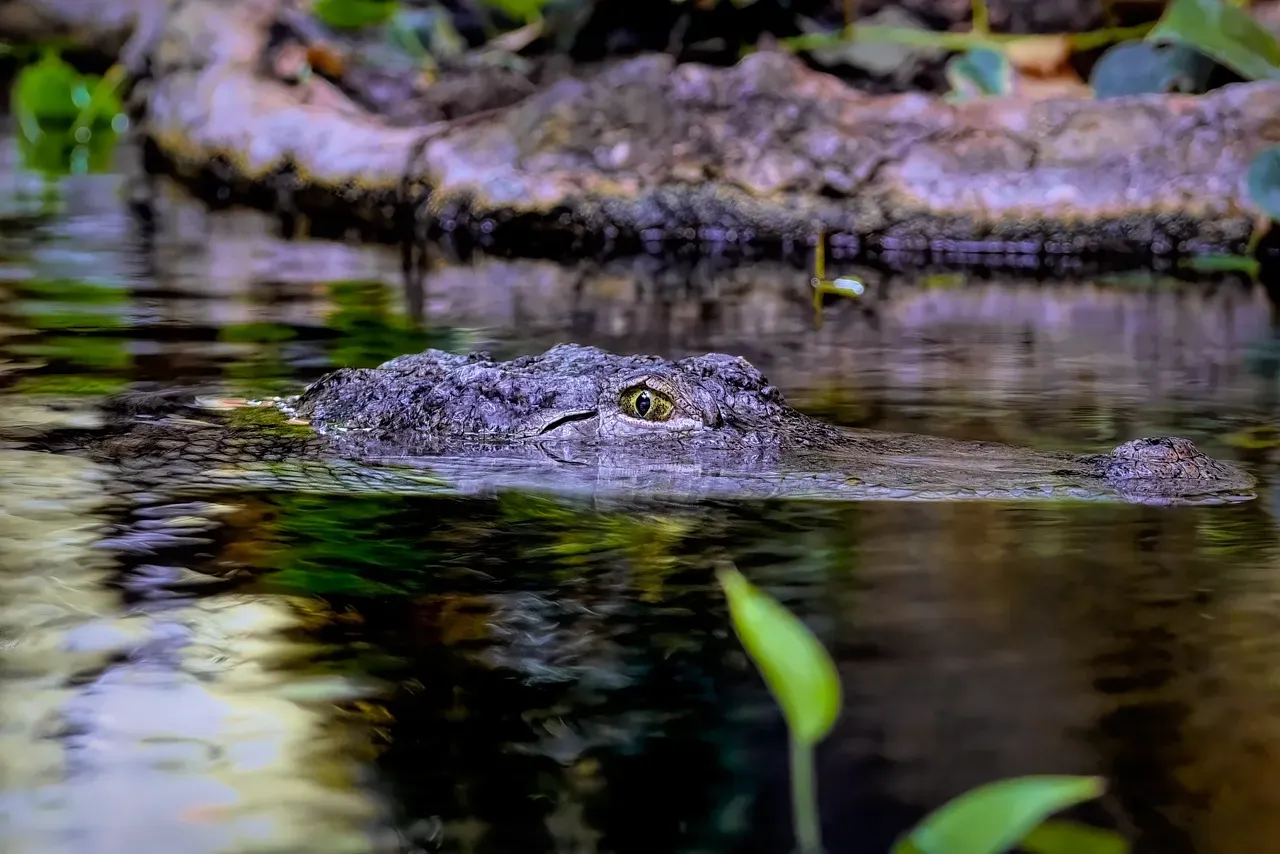
So why have these massive crocodilians never really gotten the movie deal they deserve? Part of it is branding: dinosaurs have been sold to the public for over a century as the main stars of the Mesozoic, while crocodilians get cast as supporting villains at best. A T. rex standing upright with massive teeth is an easy, iconic silhouette that marketing teams can slap on lunch boxes and posters. By contrast, a long, low crocodilian emerging from muddy water feels visually subtler, even though, in real life, that subtlety is exactly what made them terrifying. It is a case where the most realistic predator is also the least flashy in traditional storytelling.
There is also a bias toward land‑based action. Chases, fights, and dramatic kills are easier to stage on dry ground, where the audience can see every claw and tooth. Aquatic ambushes are brutal but brief: a sudden lunge, a splash, and silence. That makes for terrifying realism, but it demands a different kind of filmmaking, one that leans into suspense and dread instead of long choreographed battles. Personally, I think that is a missed opportunity. A film that truly commits to the horror of a shoreline where every quiet ripple might hide a Deinosuchus or Sarcosuchus could be more nerve‑shredding than any rooftop dinosaur duel. Maybe the real reason we do not see it is that such a monster hits too close to home, because we still share our modern coasts and rivers with its smaller, very real descendants.
The Crocodilian Legacy: Survivors, Not Side Characters
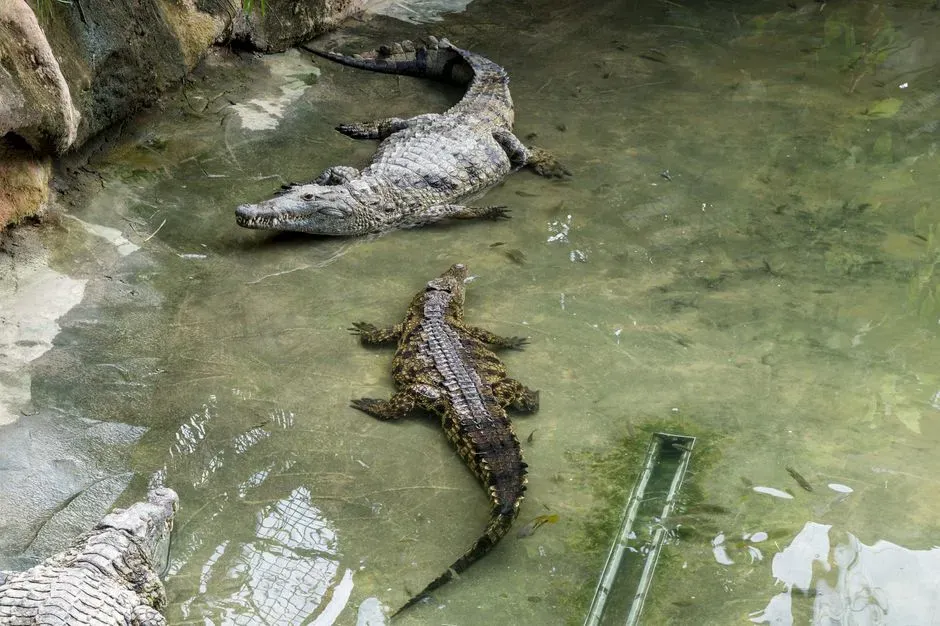
In the end, the most humbling part of this story is that crocodilians, in various forms, actually made it through catastrophes that erased many of their dinosaur contemporaries. They rode out massive environmental shifts, asteroid impacts, and climate swings, shrinking, adapting, and shifting habitats along the way. Today’s crocodiles and alligators might look primitive to a casual observer, but they are actually the product of brutal evolutionary filtering that removed the fragile and left only what worked. Every time you see a modern croc silently watching from a riverbank, you are looking at a survivor whose lineage once included dinosaur‑crunching giants.
I find it a little funny, and a little unfair, that we have turned dinosaurs into celebrities while treating crocodilians like permanent extras. These animals shaped ecosystems, altered dinosaur behavior, and still command genuine fear and respect in the wild today. If anything, their story is more relevant to us: persistence through chaos, adaptation instead of flashy dominance, power that hides in plain sight. Maybe the real twist is that they did not need a movie deal. They just needed time, patience, and a good riverbank. And honestly, when you realize that the quiet reptile in the water outlasted the loudest giants on land, it raises a sharp question: in the long run, who were the real rulers of the age of dinosaurs?