Most fans assume Jurassic World spent its bigger budget fixing the dinosaur science that Jurassic Park fumbled back in 1993. New animatronics, sharper CGI, a whole genetics lab full of jargon – surely somebody finally called a paleontologist, right?
Here’s the uncomfortable part. When you line the two eras up side by side, the sequel didn’t correct a single one of the original’s biggest blunders. It copied them, polished them, and in a few cases made them worse. Stick around, because the last mistake on this list is the one paleontologists get the most worked up about.
#10 – The Dilophosaurus That Never Spat Venom
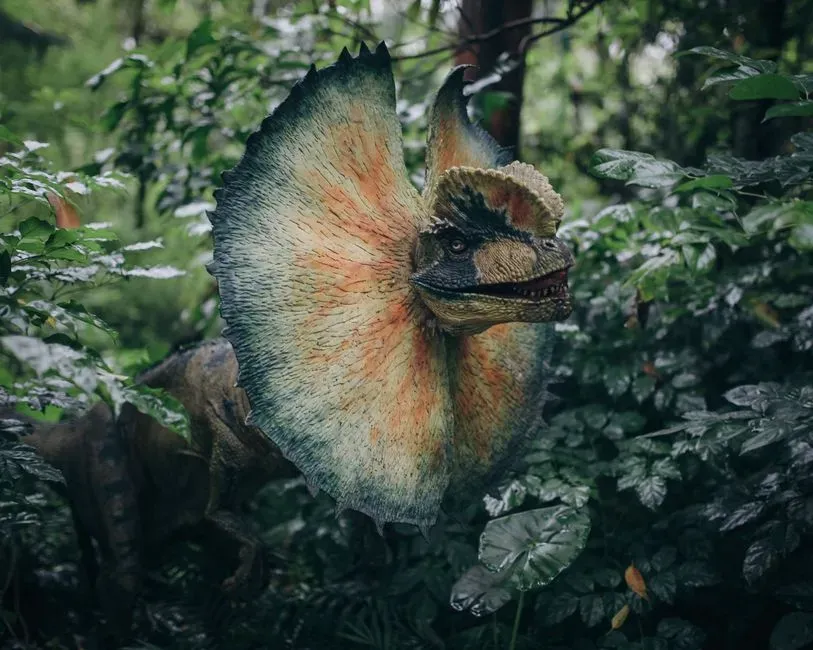
Everyone remembers that scene. Newman, the rain, the little frilled dinosaur that hisses like a cobra and blinds a grown man with a face full of poison. It’s one of the most quoted moments in 90s cinema – and almost none of it is real.
Paleontologists have studied every Dilophosaurus skeleton ever pulled from the ground, and there’s no trace of a frill, no venom glands, nothing close to a spitting mechanism. The actual animal stretched about 20 feet long, far bigger than the movie’s knee-high version, with a bite built for hunting, not theatrics. Jurassic World had every chance to quietly retire this myth. Instead it left the legend untouched, letting a fictional party trick outlive three decades of fossil evidence.
Fast Facts
- Real length: roughly 20 to 23 feet nose to tail, not the compact size shown on screen
- Estimated weight: around 400 to 450 kilograms, or 880 to 1,000 pounds
- First fossils found in Arizona in the early 1940s, formally named in 1970
- No frill or venom gland has ever turned up in any Dilophosaurus specimen
- Its name actually means “two-crested lizard,” referencing the paired bony crests on its skull
#9 – The Velociraptor That Should’ve Been the Size of a Turkey
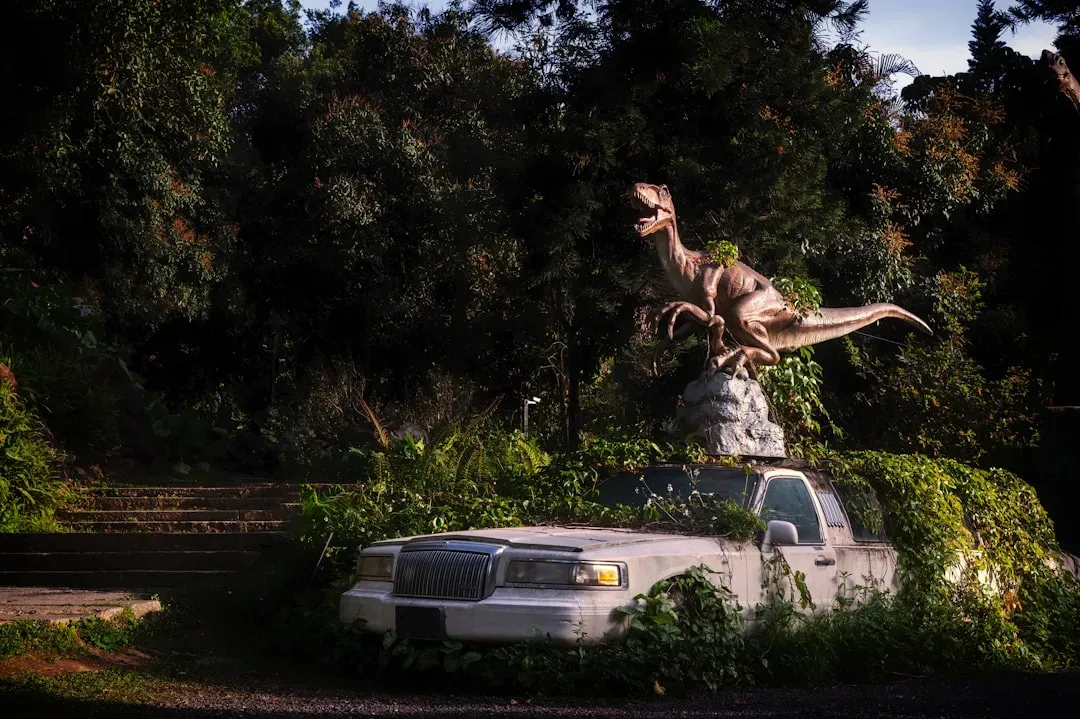
The raptors are the franchise’s beating heart, prowling kitchens and staring down Chris Pratt like they own the place. They’re built like linebackers with claws. The problem is that the real Velociraptor mongoliensis wouldn’t have made it past your ankles.
Fossils put the actual animal at roughly turkey-sized, weighing somewhere between 15 and 20 pounds, with a lightweight frame designed for speed and agility rather than muscle. The on-screen raptors are closer to Utahraptor or Deinonychus, animals that genuinely reached man-sized proportions. Jurassic World had the perfect opening to introduce a correctly sized raptor as a twist. It leaned harder into the myth instead, because nobody wants to be chased by something the size of dinner.
#8 – The Feather Cover-Up Both Movies Refused to Admit
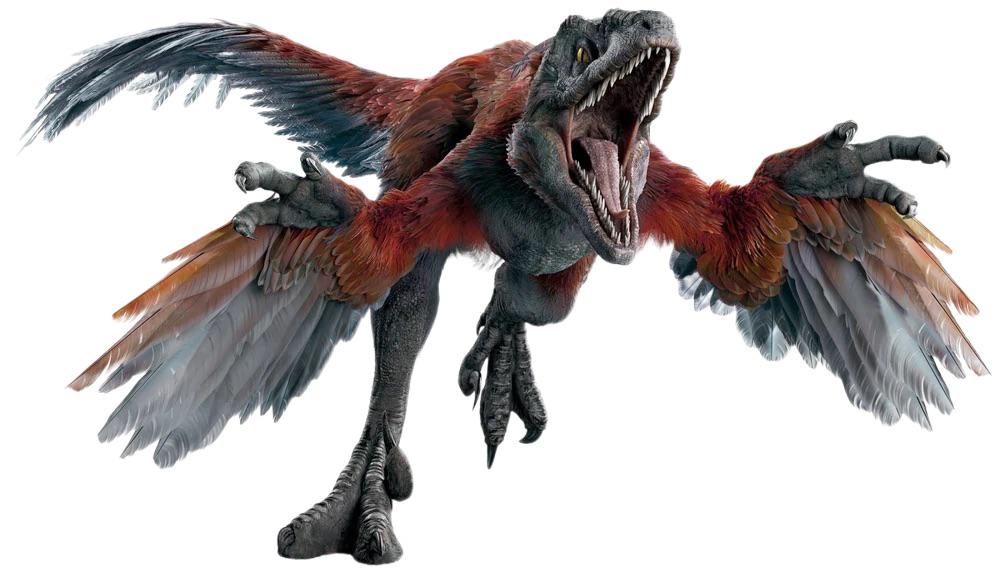
Every predator in this franchise looks like it just crawled out of a reptile enclosure – smooth, scaly, and dry. That look was defensible in 1993. It stopped being defensible sometime in the mid-90s, when Chinese fossil beds started producing dromaeosaurids with unmistakable feather impressions pressed right into the rock.
By the time Jurassic World hit theaters in 2015, the feathered-raptor evidence wasn’t a fringe theory anymore, it was mainstream paleontology. The film kept the bare, scaly skin anyway, reportedly because the studio worried feathered raptors would look less frightening to audiences. That’s a marketing decision dressed up as a design choice, and it left millions of moviegoers with a mental image of raptors that’s now decades out of date.
#7 – The “Don’t Move” Myth Killed by One Skull
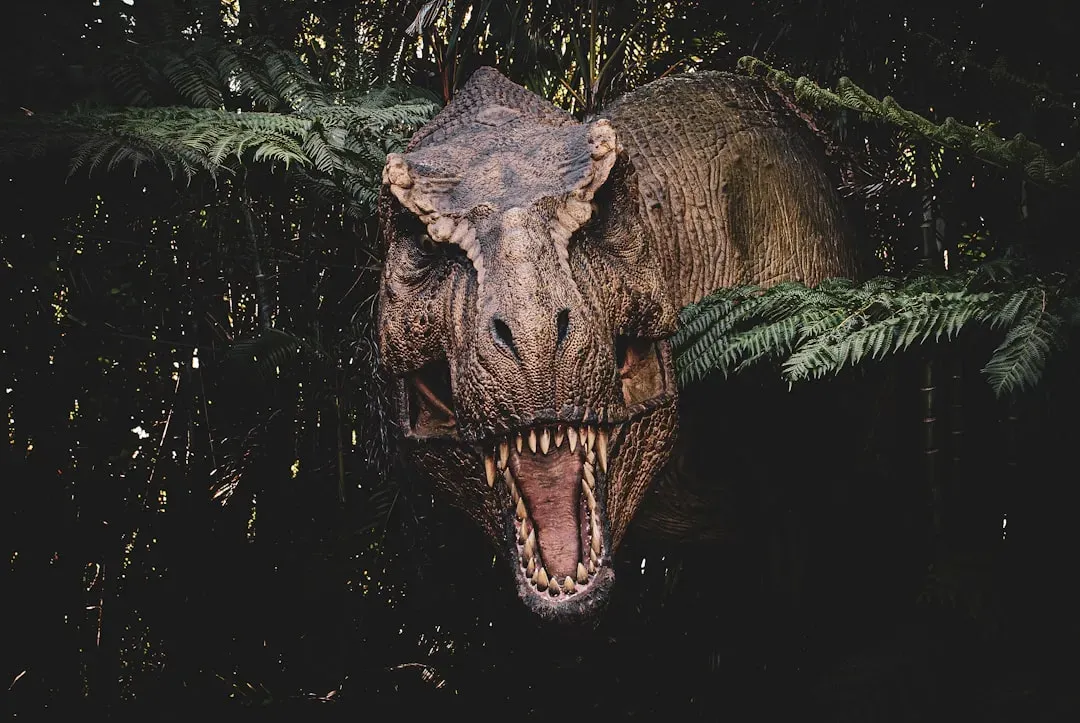
Alan Grant’s advice echoes through every T. rex encounter in the franchise: stay still and it can’t see you, because its vision is supposedly based on movement. It’s a great piece of tension-building dialogue. It’s also not how Tyrannosaurus rex actually saw the world.
Later studies of T. rex skulls found forward-facing eye sockets built for strong binocular vision, the same setup that gives modern predators sharp depth perception on stationary targets. That means a real T. rex could likely spot a frozen human just as easily as a running one. Both films kept the myth alive purely because “stand perfectly still” makes for better suspense than “you’re already dead.”
#6 – The Roar That Real Dinosaurs Never Made
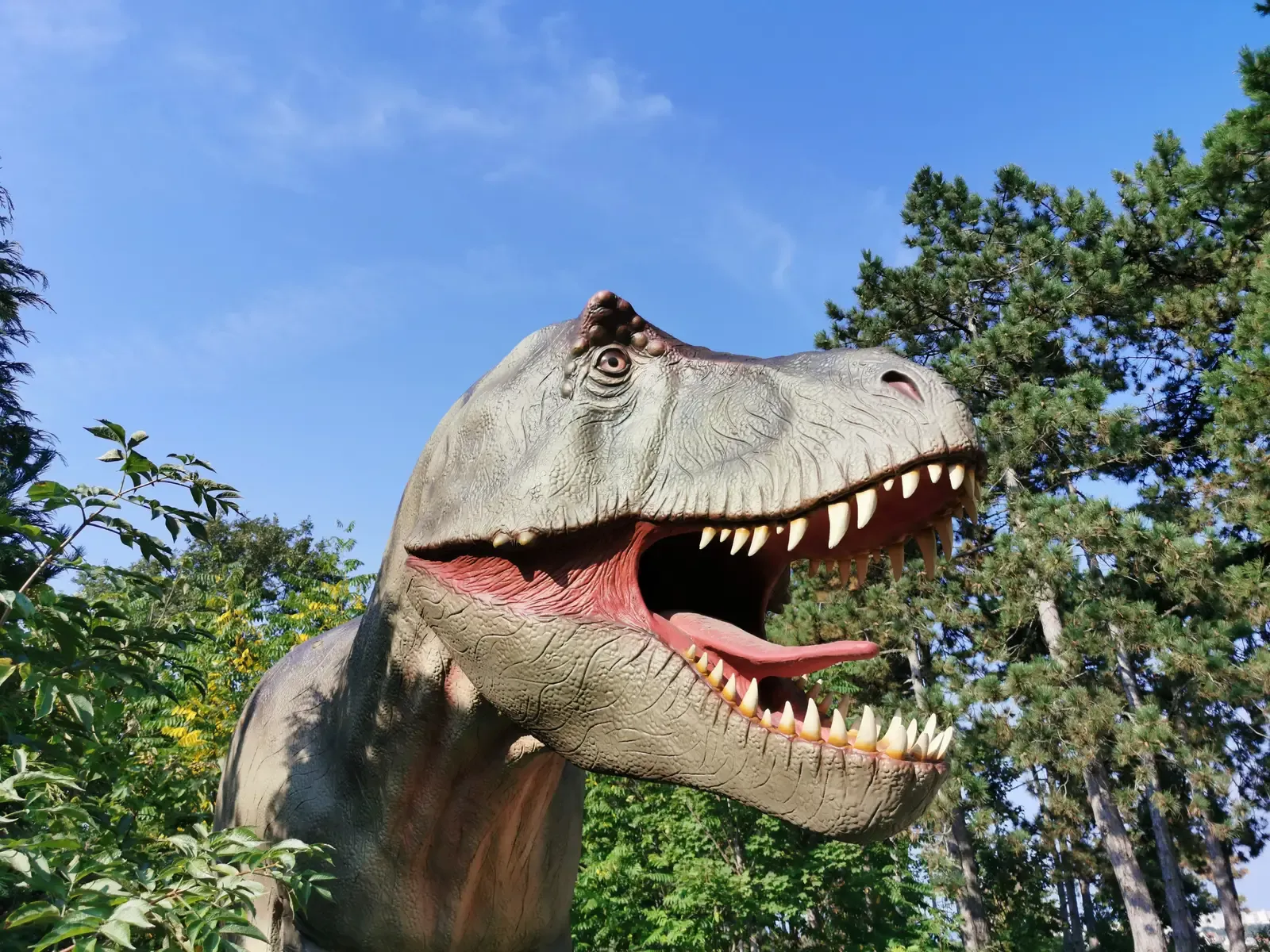
Strip the sound design out of any Jurassic movie and you lose half the terror. That bone-rattling T. rex roar, the raptor shrieks – they’re baked into pop culture at this point. They’re also almost certainly fictional.
Living relatives of dinosaurs, birds and crocodilians, suggest these animals more likely produced closed-mouth booms, low coos, or deep resonant calls rather than open-jawed mammalian roars. There’s also a simple behavioral problem: no real predator repeatedly announces its location while actively hunting, because that just tips off the prey. The franchise never touched its sound library, because a chorus of quiet booms doesn’t exactly sell movie tickets.
Quick Compare
- Movie T. rex: a full open-mouth roar that echoes across the jungle
- Likely real T. rex: a closed-mouth boom or infrasonic rumble, similar to what alligators and some birds produce today
- Movie raptors: sharp, high-pitched shrieks meant to raise the hair on your neck
- Likely real raptors: bird-like chirps, hisses, and low clicks rather than dramatic screams
#5 – The Pterosaur Kidnapping Scenes Biology Says Were Impossible
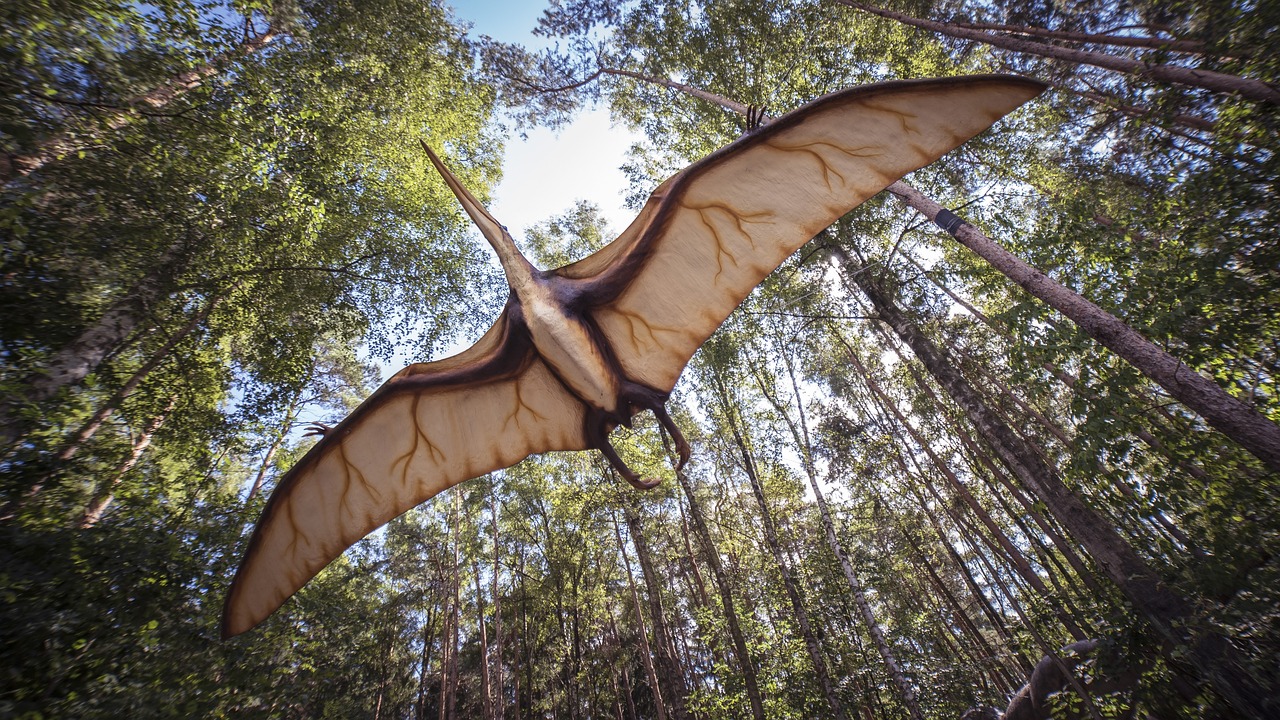
Pteranodons snatch people right out of their shoes in both franchises, hauling them off like oversized eagles. It’s a fantastic action beat. It’s also biomechanically backwards.
Pterosaur feet were shaped for swimming and perching, not for gripping and lifting heavy prey mid-flight. Their muscle structure simply wasn’t built to carry serious weight while airborne, and fossil trackways back this up. A real Pteranodon trying to snatch a full-grown adult would’ve likely dropped them, or never gotten off the ground at all. Hollywood needed a flying threat with hands, so it gave one to an animal that never had that ability.
#4 – The Ankylosaurus Armor Hollywood Sharpened for Drama
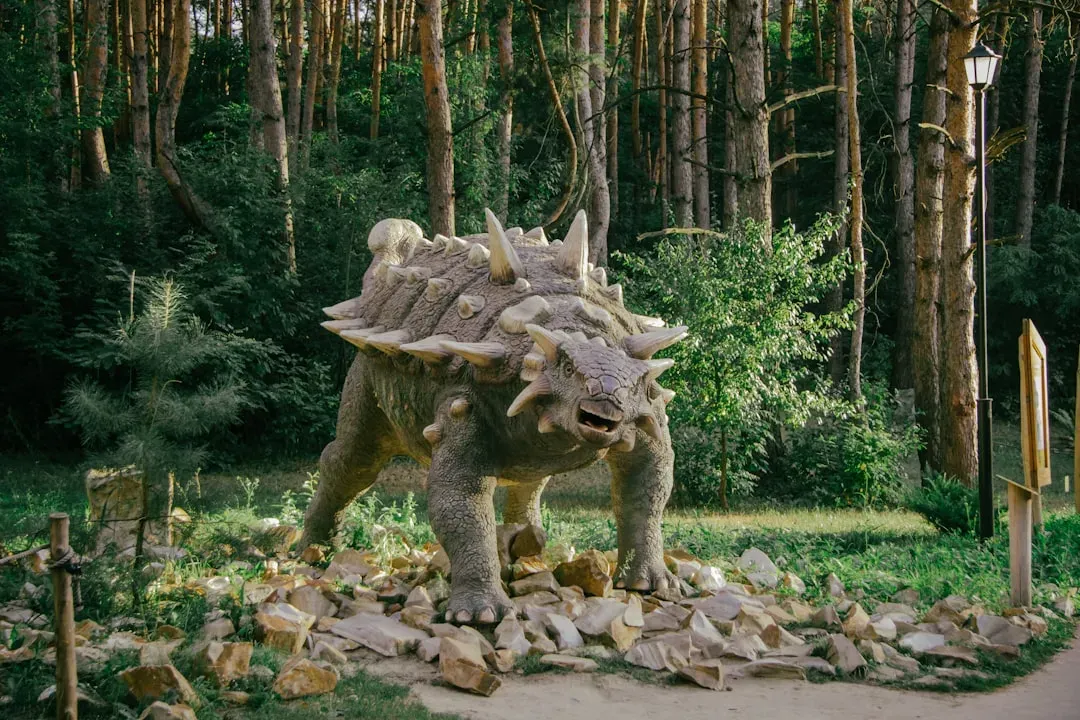
The movie version of Ankylosaurus looks like a war machine, bristling with tall spikes running down its back. It’s visually striking. It’s also not what the fossil record shows.
Actual Ankylosaurus osteoderms were flatter, rounder, and arranged in overlapping plates built for defense, not for looking like a medieval weapon. The real silhouette is lower, more compact, and honestly less cinematic. Both Jurassic Park and Jurassic World kept the exaggerated spiky version because a flatter, tank-like animal doesn’t photograph quite as menacingly on a movie poster.
Worth Knowing
- Real armor was made of flat, overlapping bony plates called osteoderms, arranged in rows across the neck, back, and tail
- The neck was shielded by two curved half-rings of bone rather than upright spikes
- Its tail ended in a heavy club of fused vertebrae that could reportedly deliver bone-breaking blows
- No confirmed dorsal horns have ever been found on an actual Ankylosaurus skeleton, despite how it’s usually drawn
#3 – The Brachiosaurus Rearing Trick That Would’ve Broken Its Own Neck
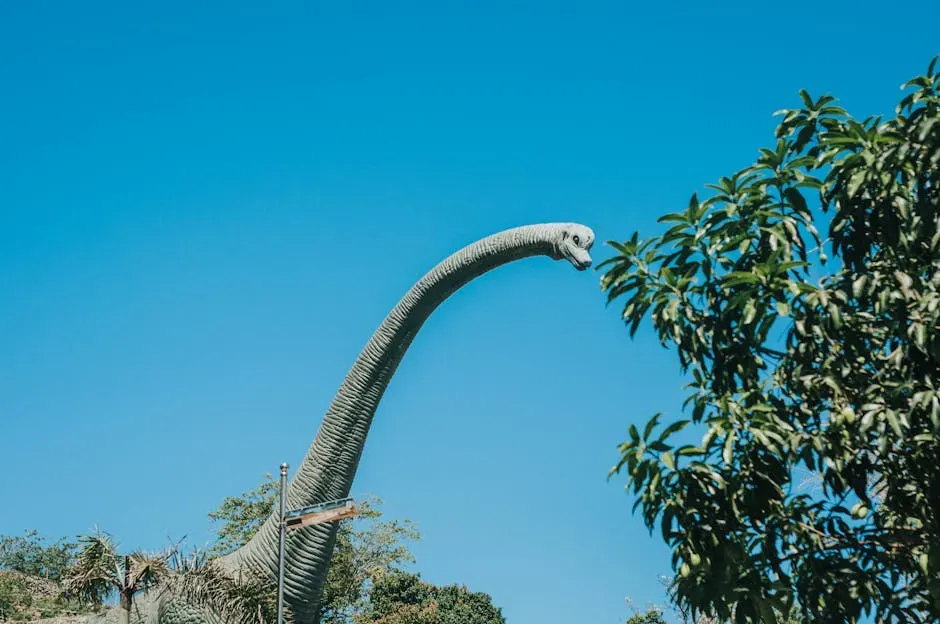
That first Brachiosaurus reveal is still one of the most beloved shots in blockbuster history, the gentle giant rearing up on its hind legs to strip leaves from the treetops. It’s beautiful. It’s also almost certainly something the real animal never did.
Sauropod jaw and neck mechanics show these animals stripped vegetation without chewing, and rearing up onto two legs would have put enormous stress on a frame already carrying tens of thousands of pounds. Neck flexibility studies suggest their actual reach was more limited than the dramatic poses in either film. The scene sells wonder beautifully. It just isn’t biology.
#2 – Wrong Era: Most “Jurassic” Stars Are Actually Cretaceous Refugees
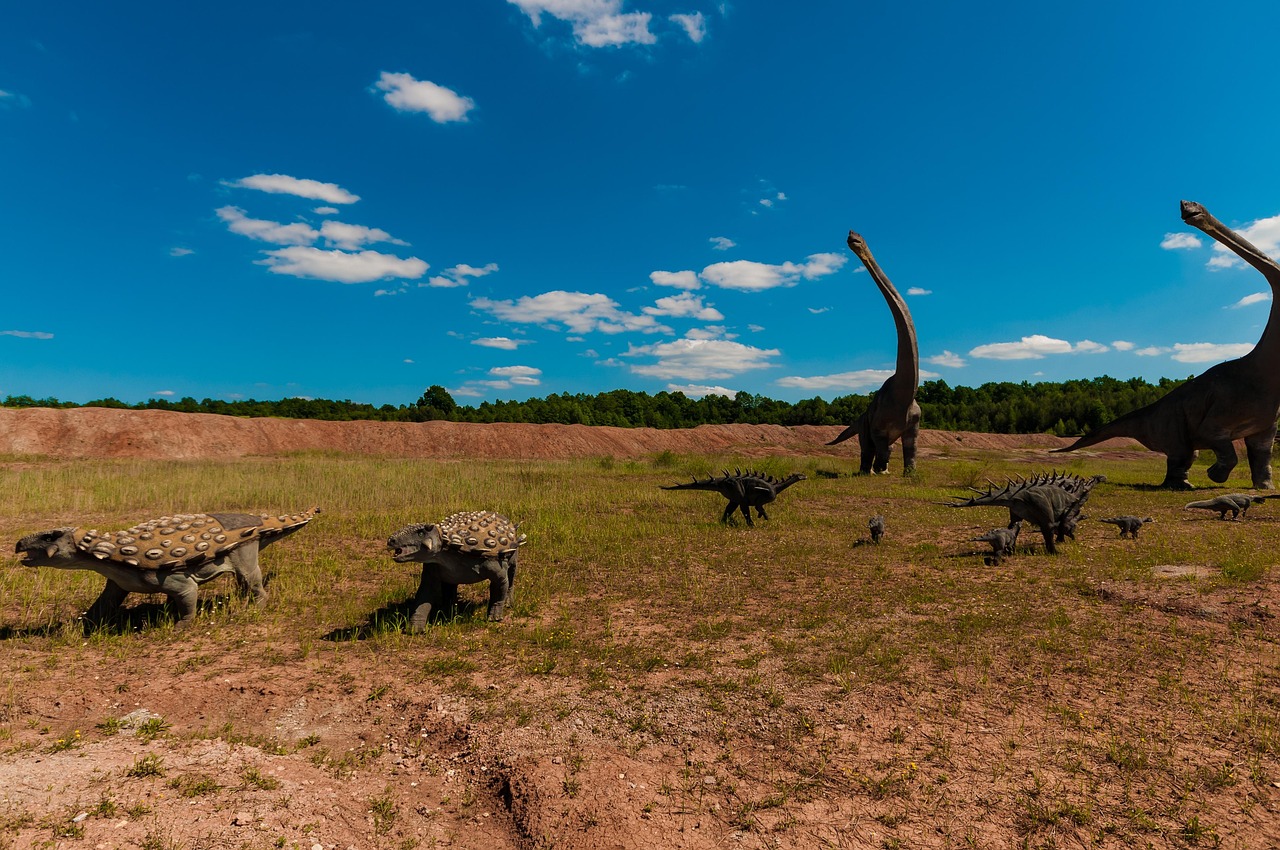
Here’s the one that hides in plain sight. The title promises Jurassic dinosaurs, yet T. rex, Velociraptor, and Triceratops didn’t even exist during the Jurassic Period. They belong to the Cretaceous, tens of millions of years after the Jurassic closed out.
Only a small handful of the franchise’s actual stars, like Brachiosaurus and Stegosaurus, technically lived when the title says they did. Jurassic World had a golden opportunity to quietly fix this branding oversight with a new park, a new island, and a fresh cast of animals. Instead it carried the same mismatched lineup forward, because “Cretaceous World” was never going to test as well with audiences.
At a Glance
- Jurassic Period: roughly 201 to 145 million years ago
- Cretaceous Period: roughly 145 to 66 million years ago
- Cretaceous-era stars in the franchise: T. rex, Velociraptor, Triceratops
- True Jurassic-era species in the franchise: Brachiosaurus, Stegosaurus
#1 – The Hand Pose That’s Anatomically Impossible in Every Single Film
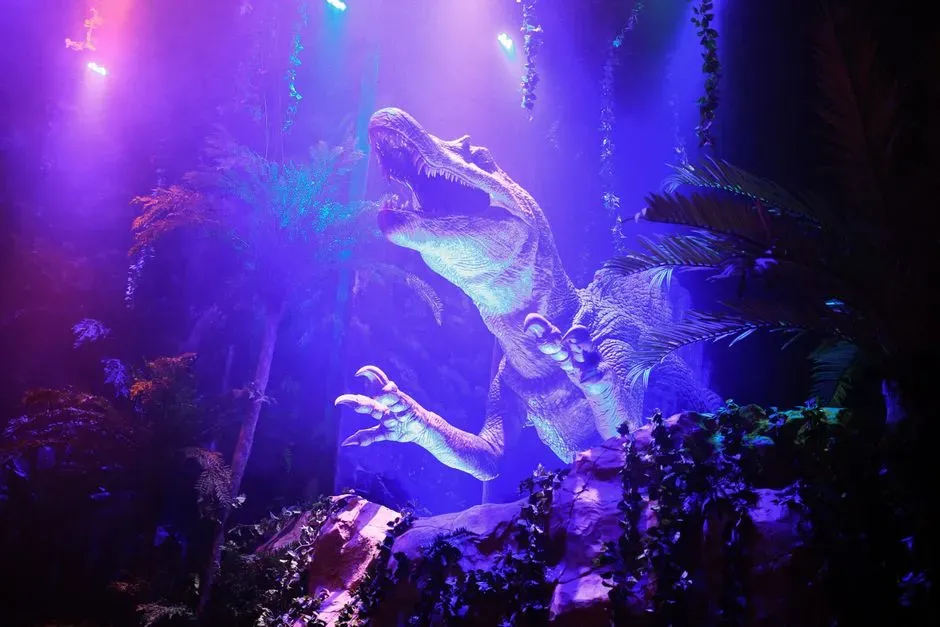
Watch any raptor scene closely and you’ll notice their hands hang palms-down, ready to slash like a pair of switchblades. It’s become the franchise’s signature threat pose. It’s also the one error paleontologists bring up more than any other, because the real anatomy makes that pose physically impossible.
Theropod wrist joints were built to rotate sideways in a clapping motion, hands facing inward toward each other rather than down toward the ground. Bone structure and joint anatomy confirm this wasn’t a minor stylistic choice, it’s a fundamental limitation of how these animals’ arms actually worked. The pose has persisted from the very first film all the way through the newest sequel, unchanged, undebated, and quietly wrong the entire time.
The Bottom Line
None of this makes the Jurassic franchise a bad watch. It makes it a time capsule, one that froze a 1993 understanding of dinosaurs and kept reheating it for three decades while the actual science moved on without it. Feathers, wrist joints, roars, vision, even the basic timeline, all of it got the same treatment: acknowledged by scientists, ignored by the script.
The honest take is that Jurassic World never intended to be a documentary, and that’s fine. But calling it an “upgrade” on the original’s dinosaur science is generous at best. It’s the same monster movie wearing a nicer coat of CGI, and if you rewatch it knowing that, it’s almost more fun to spot exactly where the fiction takes over from the fossils.