There are dinosaurs everyone knows on sight – Tyrannosaurus, Triceratops, Velociraptor – and then there are the quiet weirdos that slip under the radar. Rugops is one of those. It did not have the movie-star fame or the headline-grabbing teeth, but its skull tells a story that is strangely intimate, eerily specific, and still not fully understood.
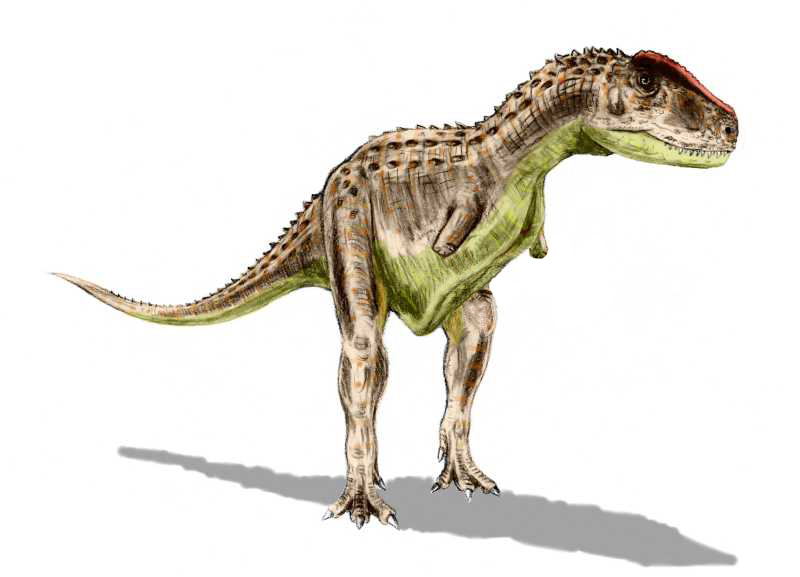
When I first saw a reconstruction of Rugops, I remember thinking its face looked less like a reptilian killer and more like something halfway between a crocodile and a vulture. Bumps, pits, strange textures, and that short snout: it felt like the fossil equivalent of an unfinished sketch with important lines missing. That is exactly what makes Rugops so fascinating – its bones clearly hint at something dramatic happening on the outside, but they refuse to say exactly what.
A Strange Predator with a Surprisingly Small Bite
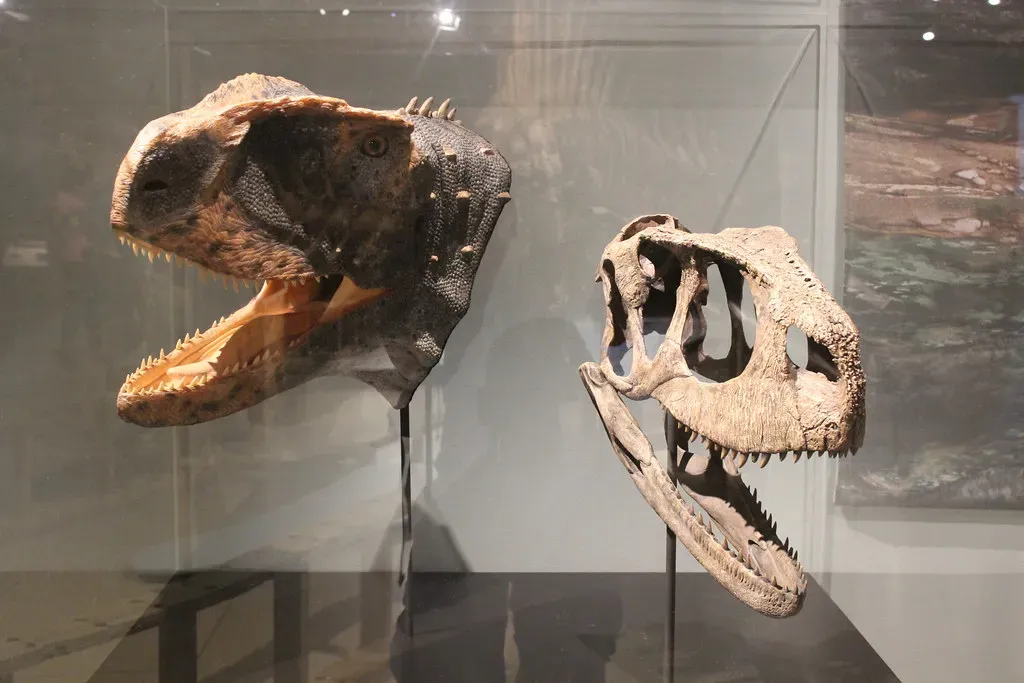
Here is the first curveball: Rugops was a theropod, the same broad group that includes T. rex, yet its skull was relatively short and lightly built. Instead of the brutal, crushing bite you might expect from a carnivorous dinosaur, its jaw structure suggests a more modest, perhaps even delicate feeding style. The bones are not reinforced in the thick, heavy way we see in top-tier apex predators.
That mismatch between its group and its build has led many paleontologists to think Rugops was not ruling the food chain. It likely shared its environment with larger, more imposing carnivores, and its anatomy hints that it may have specialized in softer targets – maybe scavenging carcasses, picking at flesh others left behind, or focusing on smaller animals. Right from the start, the skull tells us this was not a dinosaur trying to win a powerlifting contest with its head.
A Face Covered in Pits, Grooves, and Weird Texture
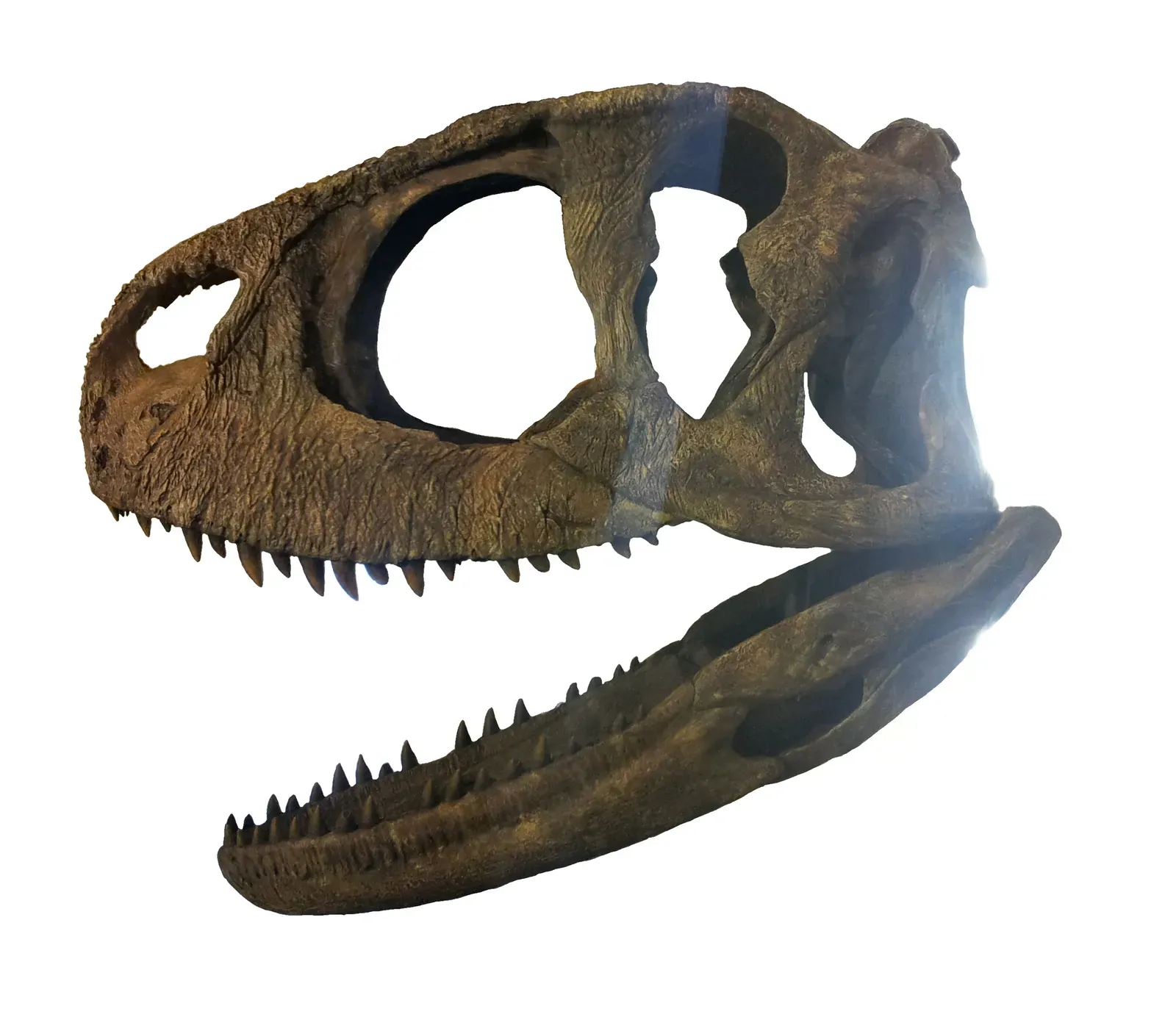
Now for the part that really hooks people: Rugops has a face that looks like it was attacked with a hole punch. The bones of the snout and skull roof are covered in small pits and grooves, sometimes arranged in patterns that suggest they were not just random erosion. To anyone who has stared at modern animals, this is the sort of texture that screams soft-tissue attachment.
Those pits and grooves are often associated with thick skin, keratinous coverings, or blood-rich tissues like pads and crests. Think of how a crocodile’s skull looks pitted under its scaly hide, or how the rough bony surface under a bird’s beak gives structure to the horn sheath. Rugops seems to share that same story: a facial surface built not just for strength, but to anchor something visually striking that we no longer see.
Armor, Display, or Both? The Great Rugops Face Debate
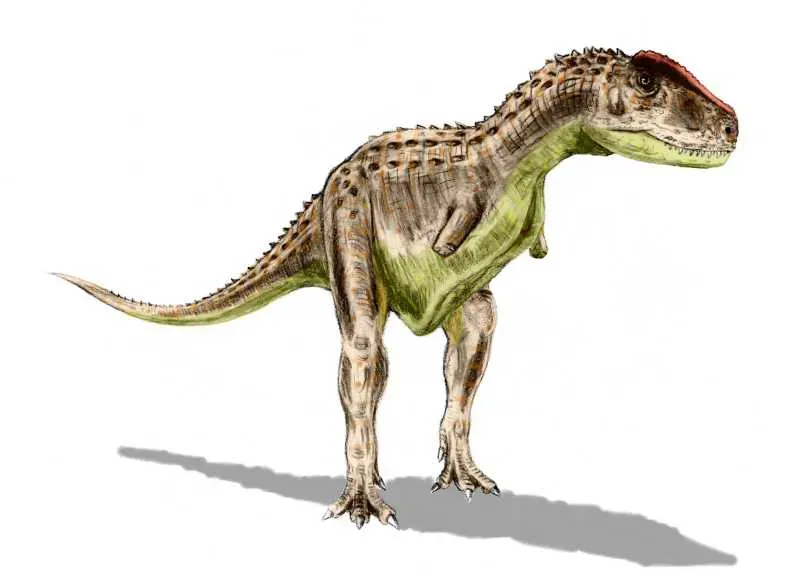
The honest truth is that scientists still argue about what exactly covered Rugops’ face, but the main ideas are dramatic enough to feel like science fiction. One camp leans toward the idea of a crocodile-like, heavily textured skin, maybe with armor-like scales or thickened pads that protected the snout during feeding or rough contact. That would make Rugops’ face more functional than flashy – a built-in bumper for a messy lifestyle involving carcasses and competition.
Another interpretation is more theatrical: some researchers think the bone texture hints at elaborate soft tissues used for display – swollen pads, brightly colored skin, or even keratinous structures that might have changed with age or season. If that is right, Rugops did not just have a weird face; it had a billboard where its personality lived. Personally, I suspect it did a bit of both: sturdy enough to take some abuse, but with enough visual flair to show off to rivals and potential mates.
Not a Lone Oddball: Rugops and Its Bizarre Cousins
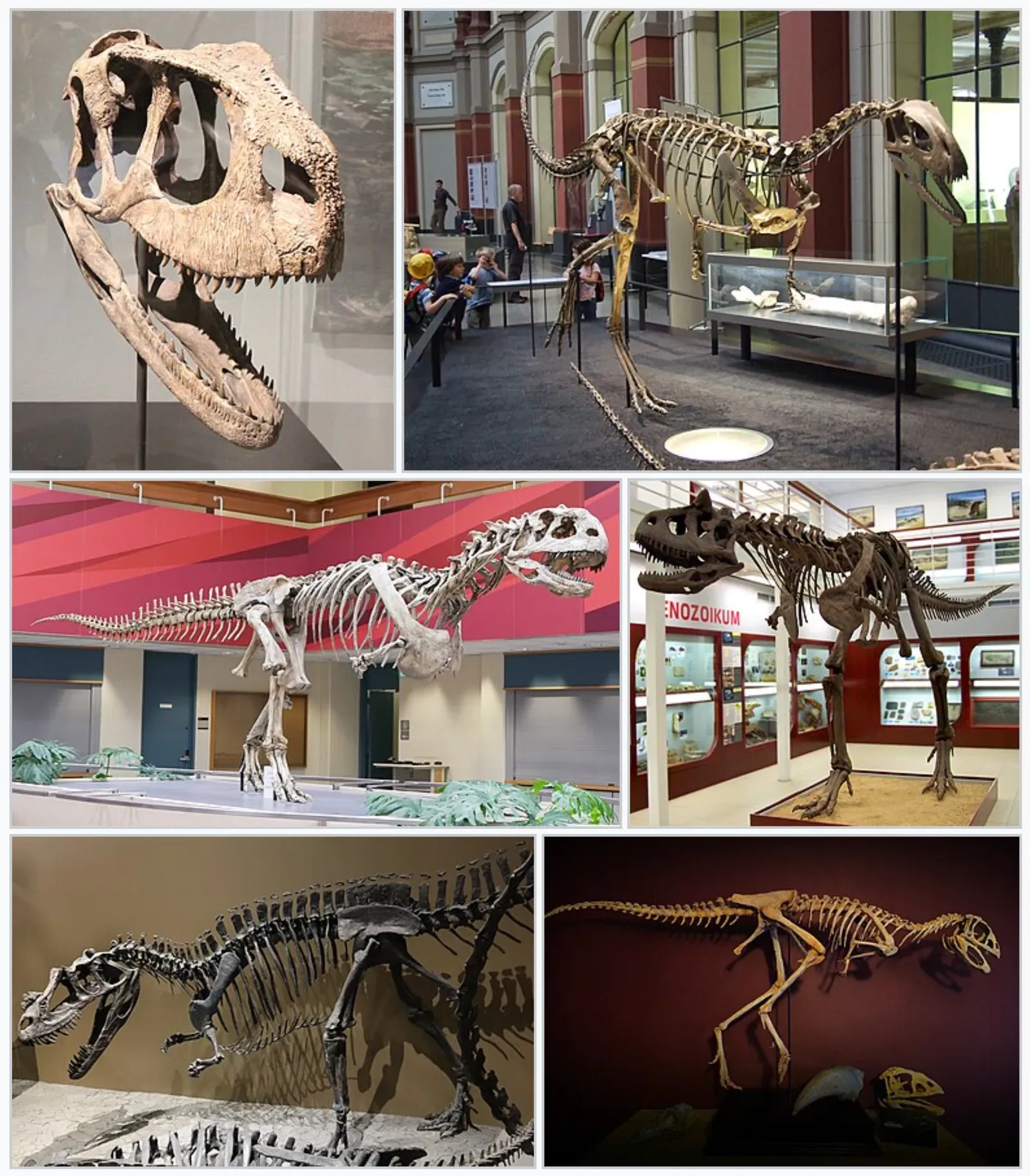
Rugops was part of the abelisaur family, a group of theropods famous for their bizarre skulls and often stubby arms. Many abelisaurs have heavily ornamented faces – think thickened bones, knobby ridges, and strange depressions that practically scream for soft-tissue reconstructions. Rugops fits right into this pattern, but it does so in a particularly subtle, almost cryptic way.
Instead of giant horns or huge crests, Rugops seems to lean into texture: repeated pits, irregular surfaces, and fine details that hint at complexity rather than one big showy structure. In a way, that makes Rugops even more mysterious than its more obviously decorated cousins. It is like meeting a relative in a photo album who looks quietly different from everyone else, and no one left a note explaining why.
A Scavenger’s Face in a Dangerous World
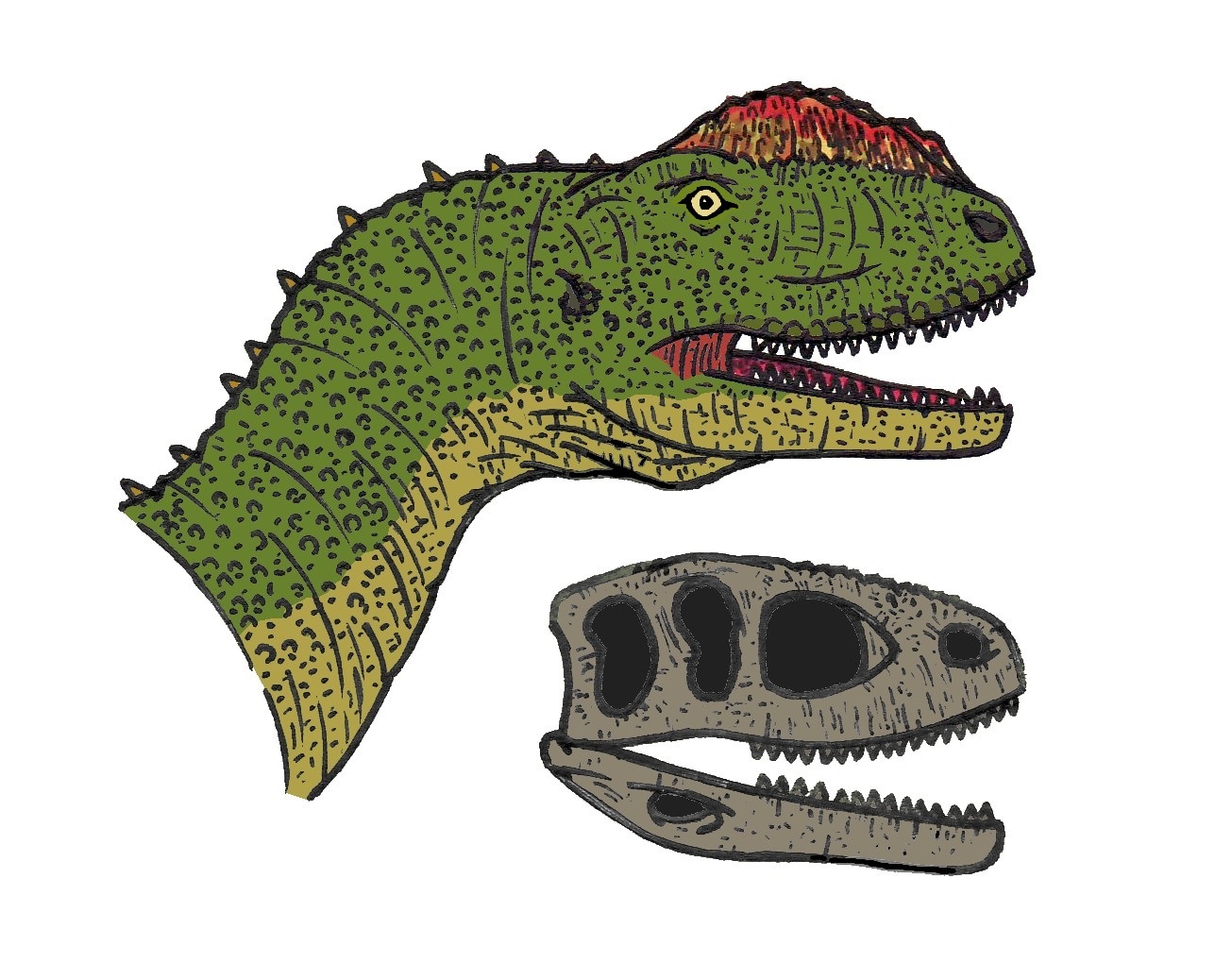
When you place Rugops back into its ancient African ecosystem, its face starts to make more sense. It lived alongside larger predators and massive herbivores, in a world where carcasses would have been valuable resources and feeding safely was almost an art form. A reinforced, textured face may have helped it push into bodies, scrape at tough tissue, or deal with the rough-and-tumble jostling at a shared meal without wrecking delicate skin.
If Rugops really did specialize in scavenging more than high-speed hunting, its facial features might reflect a lifestyle of persistence rather than dominance. That image – a medium-sized predator with a strange, adapted face, working the margins of the food web – is powerful. It shifts Rugops from the stereotype of a roaring movie monster into something more nuanced: a survivor finding its niche in a crowded, dangerous landscape.
The Mysterious Appeal of a Face We Cannot See
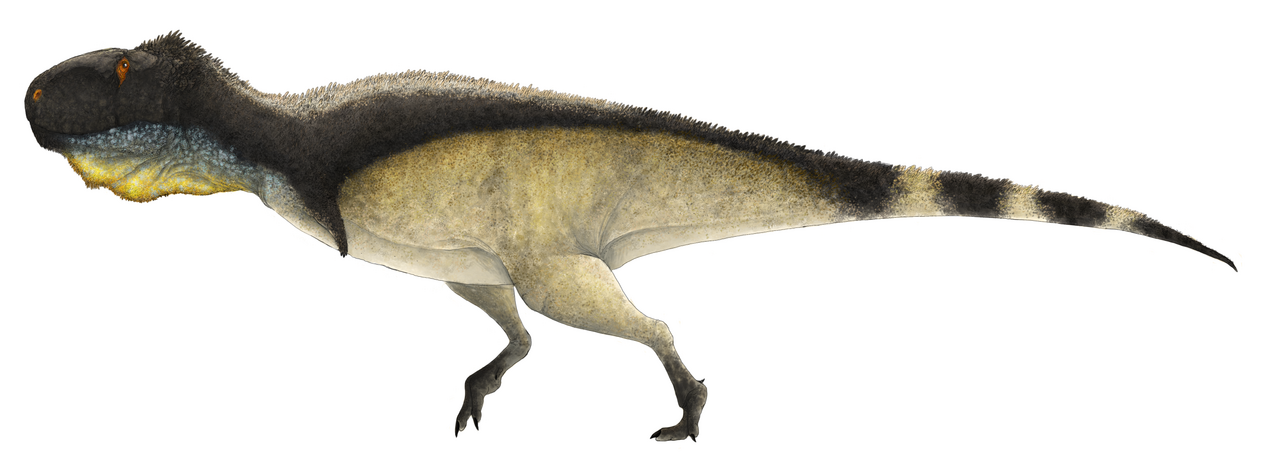
What makes Rugops unforgettable is not that we know exactly what it looked like, but that the skull makes us feel how close we are to knowing, and how far. The fossils preserve all these tantalizing clues – pits, textures, proportions – yet the skin, colors, and soft tissues that brought it to life are gone. You stand at the glass of a museum case, looking at bare bone, and it almost dares you to imagine the rest.
I think that is why Rugops hits such an emotional nerve for dinosaur fans and scientists alike. Its face is a reminder that paleontology is not about perfect answers; it is about making the best, most honest stories we can from incomplete evidence. Rugops forces us to stay humble, get creative, and admit that some of the most fascinating animals in history will always keep part of their identity off-limits.
Conclusion: A Quiet Dinosaur with a Loud Question Mark
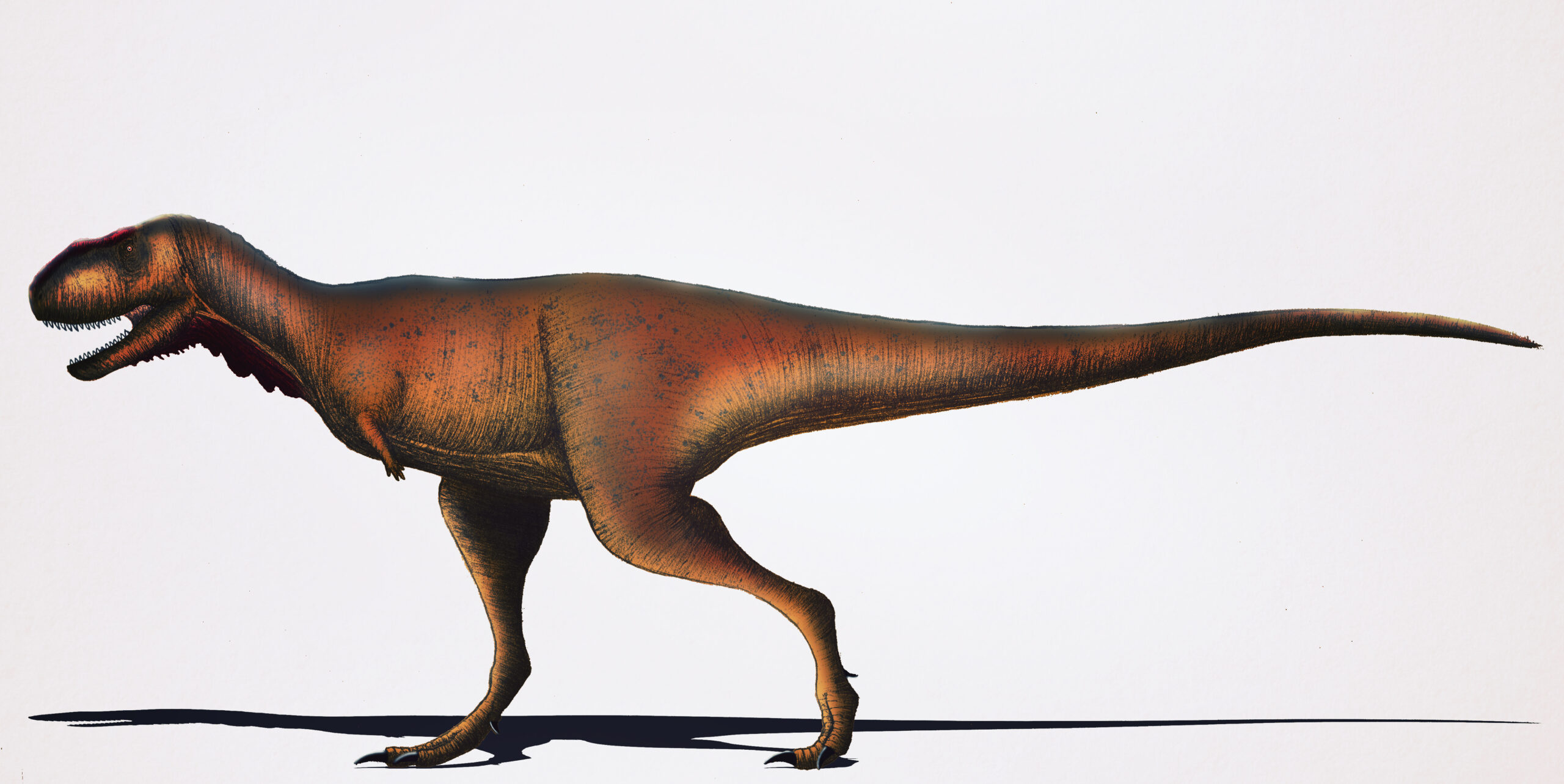
In my view, Rugops deserves a lot more fame than it gets, precisely because its face refuses to give us a neat, simple explanation. This was not the strongest biter or the biggest predator, but it carried one of the most provocative skulls in dinosaur history, covered in signs of soft tissues we can only sketch in cautious outlines. That blend of evidence and uncertainty is not a flaw; it is the main attraction.
If anything, Rugops is a lesson in how science should deal with mystery: stay grounded in the fossils, avoid wild storytelling, but do not shy away from admitting where imagination and evidence have to meet halfway. To me, that makes Rugops less like a background extra and more like a quiet star of the dinosaur world – the one whose face you cannot quite forget, even though you have never really seen it. When you picture it now, what do you think its mysterious face actually looked like?