
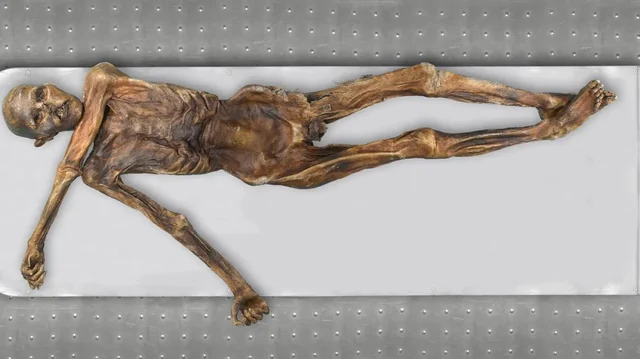
You think history is dry and distant – then a 5,300‑year‑old man turns up in the ice with his last meal still in his stomach, his tattoos still visible, and even his gut bacteria waiting to be analyzed. is not just another archaeological find; he is a time capsule so detailed that scientists can talk about his cholesterol, his shoes, and even his probable eye color. For a man who died before the pyramids were built, he has a shockingly modern medical file. What makes Ötzi so gripping is how personal he feels. We are not dealing with a legend or a skeleton with a tag on its toe – we are dealing with someone whose injuries, tastes, tools, and illnesses we can track almost hour by hour before he died. The more scientists study him, the more he stops being “a mummy” and starts being a person who hiked, hurt, worried, and ate very specific foods on a very bad final day. Here are ten of the most surprising things we now know about him.
1. Ötzi Is Older Than the Pyramids and Has the World’s Oldest Known Tattoos
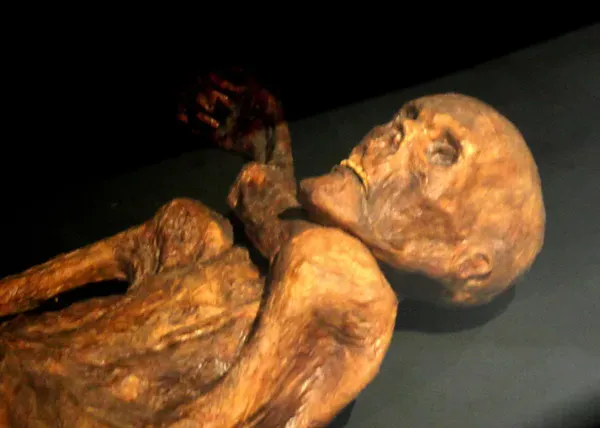
It is hard to wrap your head around the dates. Ötzi died around the early fourth millennium BCE, which means he was already long gone before the Great Pyramid of Giza was even planned. Yet this man, older than many of the most famous monuments on Earth, lay in the ice almost perfectly preserved until hikers stumbled across him in 1991. That accident in the Alps turned what could have been a nameless prehistoric burial into the most intensively studied human body in archaeology. One of the wildest details is that Ötzi still holds the record for the oldest known tattoos on a human body. Researchers have counted sixty‑one separate tattoos, mostly simple dark lines and small crosses, dotted along his spine, knees, ankles, and other joints. They were not decorative sleeve pieces; they were more like tiny, targeted marks on pain points. In a strange twist, this ancient mountain man has become a quiet icon in modern tattoo culture and alternative medicine circles.
2. His Tattoos May Be a Kind of Prehistoric Acupuncture
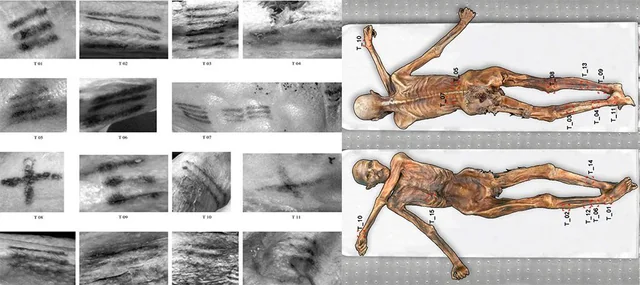
When scientists mapped out the locations of Ötzi’s tattoos, a pattern jumped out: many of them sit right where modern acupuncture points for joint and back pain are found. These markings are not on flashy, visible spots like the face or upper arms. Instead, they sit on the lower back, behind the knees, and around the ankles – exactly where he clearly had physical problems. It looks less like fashion and more like therapy. Microscopic analysis suggests the pigment was made by rubbing charcoal into tiny puncture wounds. That technique, paired with the medical pattern of the tattoo locations, has led many researchers to argue that these were attempts to treat chronic pain, not to show off status or identity. If that interpretation is right, then Ötzi may be one of the oldest witnesses to the idea of stimulating points on the body to ease discomfort, thousands of years before Chinese acupuncture was described in writing.
3. New DNA Work Showed He Looked Very Different From Early Reconstructions
For years, museum reconstructions of Ötzi showed him as a rugged, fair‑skinned alpine hunter with a strong jaw, lightish eyes, and a kind of generic “European outdoorsman” look. Then more advanced genome analysis came along and threw cold water on that picture. New studies of his DNA suggest he probably had darker skin than most people expected, with a complexion closer to modern Mediterranean tones. He also had a strong genetic contribution from early Anatolian farming populations, not just local hunter‑gatherers. The updated genetics also make it likely that he had a tendency toward baldness and did not have a thick head of hair at the time of his death. That flips the usual cave‑man stereotype on its head: instead of a wild‑haired barbarian, imagine a relatively short, dark‑skinned man with thinning hair, trudging up the Alps in carefully made leather and fur gear. Personally, I love this correction – it forces us to drop our lazy visual clichés and accept that ancient Europeans did not all look like characters from a fantasy movie.
4. His Last Meal Was a High‑Fat “Performance Snack” for the Mountains
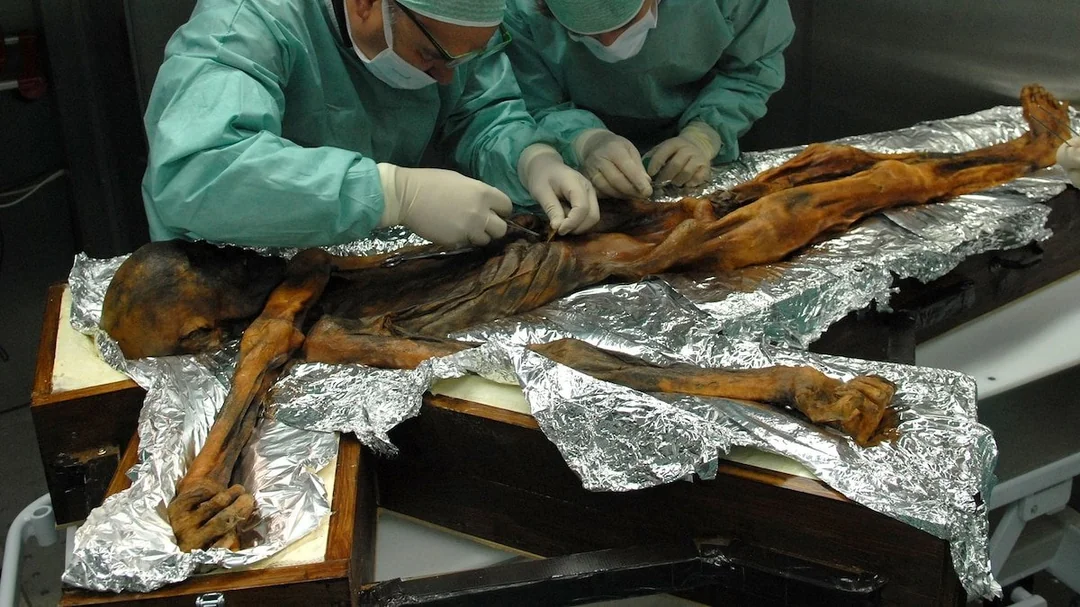
One of the eeriest things scientists have done is reconstruct what Ötzi ate just hours before he died. When researchers finally located and examined his stomach, they found it was packed with a carefully balanced meal of wild ibex meat, red deer, grains from einkorn wheat, and a huge amount of animal fat. There were also traces of a bracken fern that may have been used as a kind of natural food wrapping or possibly as medicine for gut parasites. It was not random grazing; it was fuel. Nutritional analysis shows that the meal was extremely rich in fat, which makes perfect sense for a man climbing high, cold mountains with a heavy load. Think of it as the Copper Age version of a fatty trail mix or energy bar, but built from wild meat and ancient grains. There is something weirdly intimate about knowing that two hours before an arrow hit him, he was eating a dense, greasy, practical lunch – maybe tired, maybe anxious, chewing on ibex while planning his next move.
5. He Was Seriously Sick: Heart Disease, Parasites, and Possibly Lyme
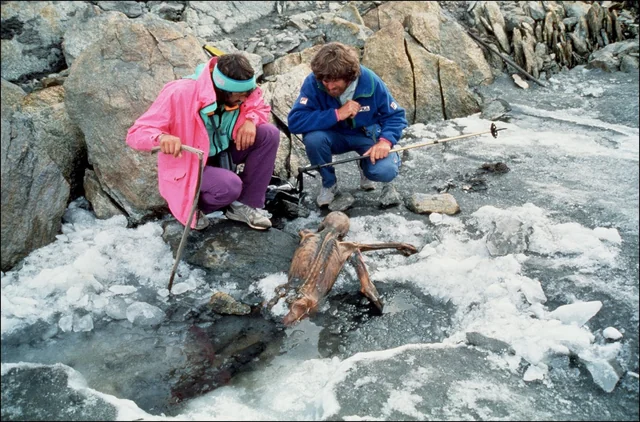
For someone in his mid‑forties in the Copper Age, Ötzi had lived long enough to collect an impressive list of health problems. Scans of his arteries show heavy calcification, suggesting a strong genetic or lifestyle predisposition to cardiovascular disease. He also had bad teeth with deep wear and decay, the kind you would expect from a diet that included coarse grains and possibly smoke exposure. The “fit mountain man” image hides a more fragile, aging body that was under significant stress. His gut told a similar story. Researchers found the eggs of parasitic worms in his intestines, which would have caused abdominal pain and digestive problems. There is also evidence that he carried the bacterium responsible for Lyme disease and a high‑risk strain of human papillomavirus. Add in chronic joint pain, visible in wear on his spine and knees, and you get a picture of a man who likely woke up sore almost every day. In that light, the therapeutic tattoos along his aching joints make even more sense.
6. He Carried a Copper Axe That Screams High Status
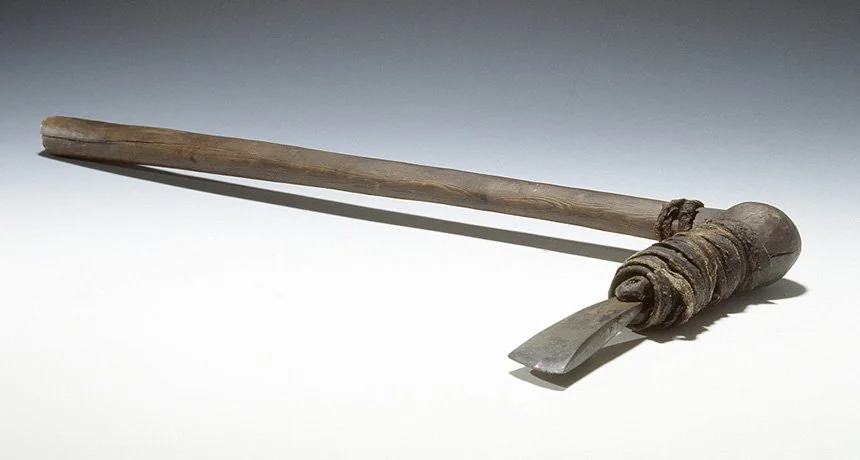
One of the flashiest surprises from the discovery site was Ötzi’s copper‑bladed axe. This was not a crude lump of metal – it was a carefully cast blade made from very pure copper, with a yew wood handle, carried at a time when metal was still a luxury technology. Chemical analysis of the metal suggests the copper likely came from ore deposits far to the south, showing that someone, somewhere, moved that material or tool over long distances. The fact that he still had this axe when he died is striking. In many prehistoric burials, valuable metal items are placed with people of special status, whether for practical or symbolic reasons. Some researchers argue that walking around with such a tool marks Ötzi as a man of importance in his community, perhaps involved in metalworking or trade. To put it in modern terms, he was not wandering the mountains with a cheap pocketknife – he was carrying the Bronze‑Age equivalent of an expensive, custom tool that not everyone could own.
7. His Clothes Were High‑Tech Outdoor Gear for the Stone Age
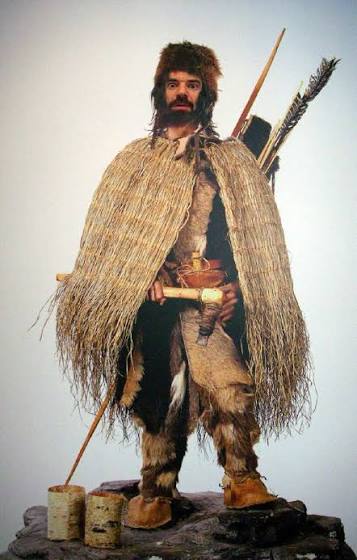
If you have ever spent real time in the mountains, you know that bad clothing can ruin you faster than bad food. Ötzi’s outfit reads like a carefully thought‑out layering system, not a random bundle of hides. He wore leggings made from goat hide, a loincloth, and a coat assembled from strips of animal leather stitched together, likely using different species for different properties like warmth and durability. Over this, he had a grass cloak that worked as a windbreaker and maybe as light rain protection. On his feet, he wore shoes built with a surprising amount of engineering. They had a bearskin sole for toughness, deer or goat leather uppers, and a woven net‑like interior that could hold insulating grass or straw around the foot. Archaeologists who have tested replicas report that they are impressively warm and suitable for snowy terrain. The more you look at his kit, the more it feels like browsing the rack of a high‑end outdoor store – except everything is hand‑made from wild animals and plants he or his community hunted and gathered.
8. His Death Was Almost Certainly a Murder, Not a Peaceful Mountain Accident
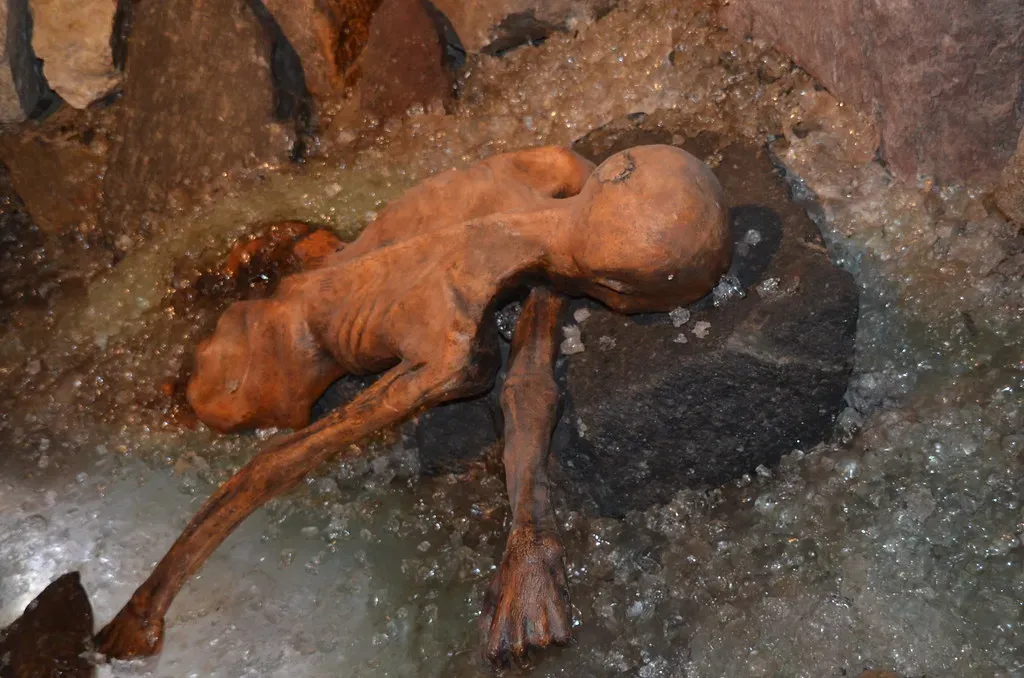
For a while after his discovery, there were all sorts of theories about Ötzi’s final moments – did he get caught in a storm, suffer a fall, or simply lie down and freeze? Modern forensics changed that story dramatically. A CT scan revealed a flint arrowhead lodged in his left shoulder, having torn through a major artery. That kind of wound would have caused rapid internal bleeding and a quick collapse. Someone shot him from behind with a well‑aimed arrow. There are also defensive wounds and older injuries that hint at recent conflict, including a deep cut on his hand that likely came from a fight shortly before he died. The fact that his valuable axe and gear were left at the scene is puzzling and has fueled endless debate. Was this a targeted killing by someone who wanted him dead but not his belongings, or was the attacker interrupted, or part of his own group? We will probably never know the precise story, but it is hard not to picture a tense chase, a desperate climb, and a sudden, fatal shot.
9. His Gut Microbiome and Ancient Yeasts Are a Goldmine for Modern Science
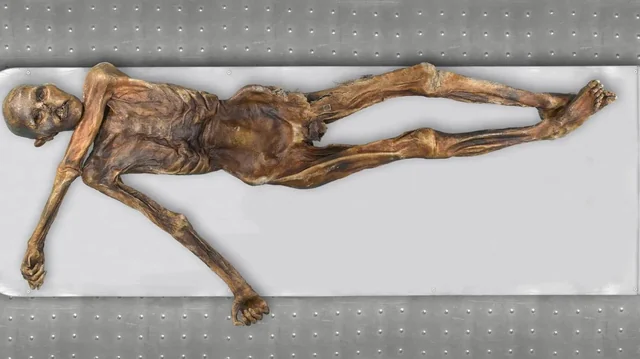
Ötzi is not just about bones and tools – he is also about microbes. Researchers have sequenced bacteria from his mouth and intestines, discovering strains that look more like those found in modern traditional communities than in industrialized Western populations. That gives scientists a rare window into what the human microbiome looked like before antibiotics, processed foods, and urban living started reshaping it. It is like finding a frozen snapshot of our internal ecosystem before the modern era. Recently, scientists even isolated cold‑adapted yeasts from the water and skin around his body, some of which may be descendants of microbes that colonized him soon after death in the ice. Early experiments show that at least some of these yeasts can be used to make sourdough bread. There is something almost absurdly poetic about this: a murdered Copper Age traveler, preserved by glaciers, helping researchers think about new fermentation strains today. It drives home how living and dynamic his remains still are, more like a slow biological process than a static relic in a freezer.
10. Ötzi Forces Us to Rethink What “Prehistoric” Really Means
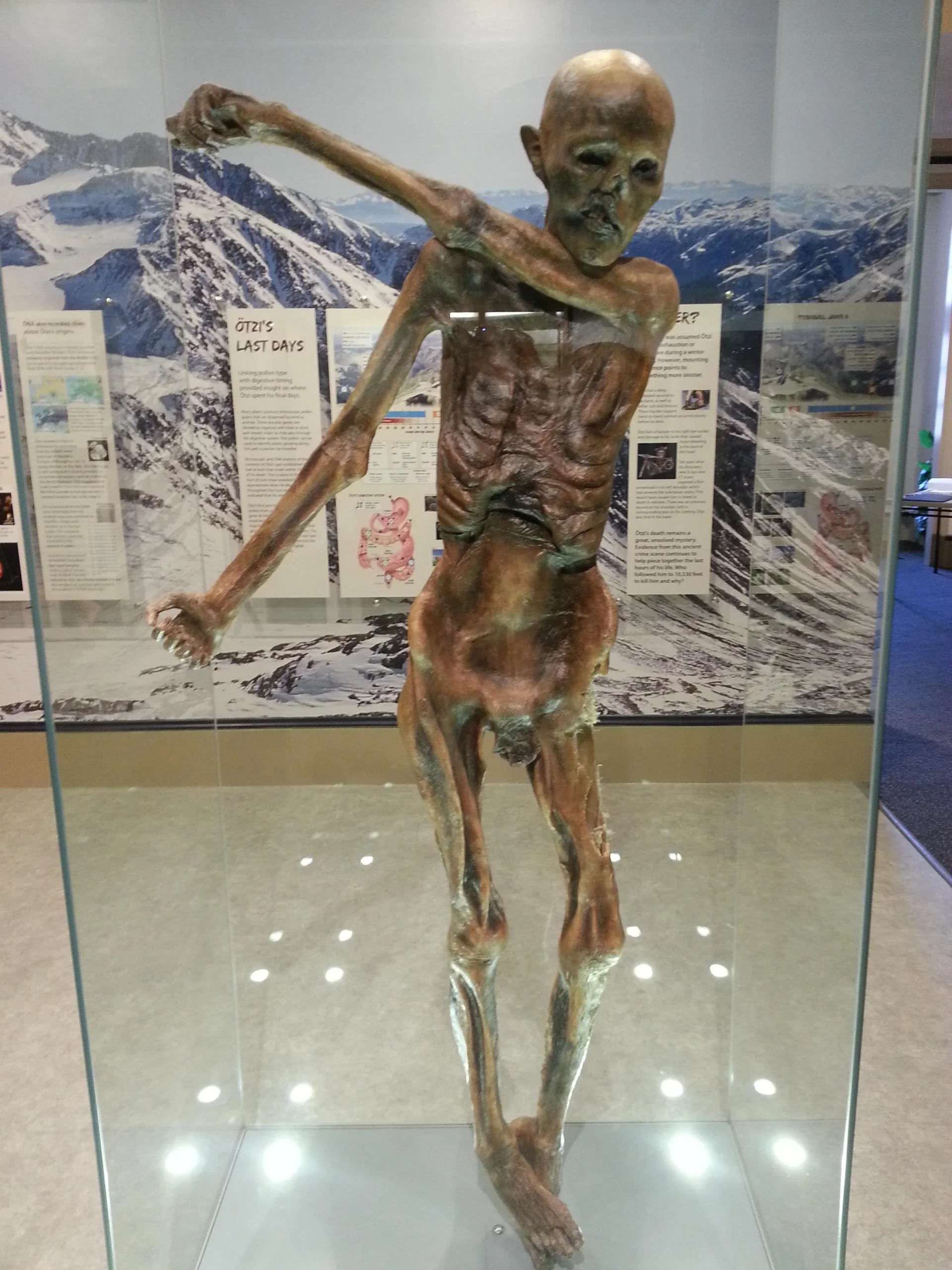
When people hear “prehistoric,” they often picture something crude, simple, and barely human. Ötzi wrecks that cliché. Here is a man with carefully made multi‑layer clothing, a long‑distance trade item in his hand, a medical tattoo system etched on his skin, and a diet that makes nutritional sense for high‑altitude travel. He nursed chronic diseases, managed pain, carried tools for fire‑starting and repair, and moved through a landscape woven with social and economic networks we are only starting to see. For me, the most unsettling and beautiful thing about Ötzi is how ordinary he probably felt to himself. He was not a king, not a mythic hero. He was a tired, middle‑aged guy with bad joints, work stress, and relationship ties we will never decode, who happened to die in a place and way that turned him into science’s favorite time traveler. He reminds us that “prehistory” is not about faceless cavemen; it is about people like us, navigating risk, pain, hunger, and hope with the tools they had.
Conclusion: A 5,300‑Year‑Old Stranger Who Feels Uncomfortably Familiar
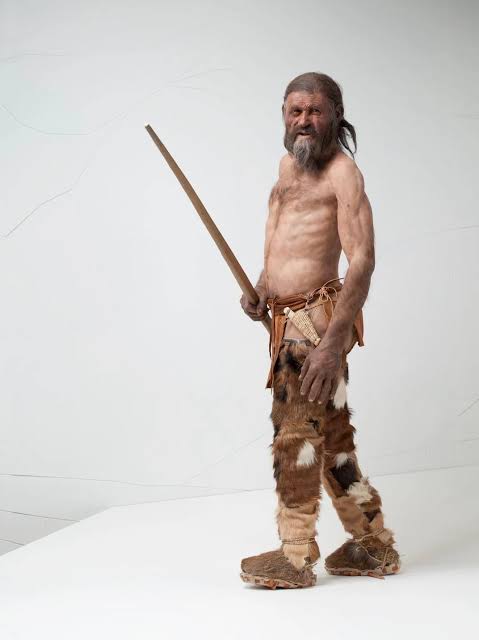
The more we learn about Ötzi, the harder it is to keep him at arm’s length as a curiosity in a glass box. He starts to feel like that one older hiker you pass on a trail – weathered, limping a bit, but clearly competent and stubborn, carrying his trusted gear and pushing through the pain. Yes, his world was brutal in ways most of us can barely imagine, but the logic behind his choices – what he ate, wore, carried, and tried to heal – feels instantly relatable. That is what makes his story so gripping and, honestly, a little haunting. I think we like to believe we have completely outgrown people like Ötzi, that smartphones and MRI scanners make us a different species. His body quietly argues the opposite: the same fragile arteries, the same aches, the same need for comfort, status, and safety, just wrapped in different technology. Standing in front of his chilled display, you are not just looking at a museum piece – you are looking at family. And that raises an uncomfortable question that lingers long after you leave: if someone found your body 5,000 years from now, what story would they tell about the way you chose to live?