
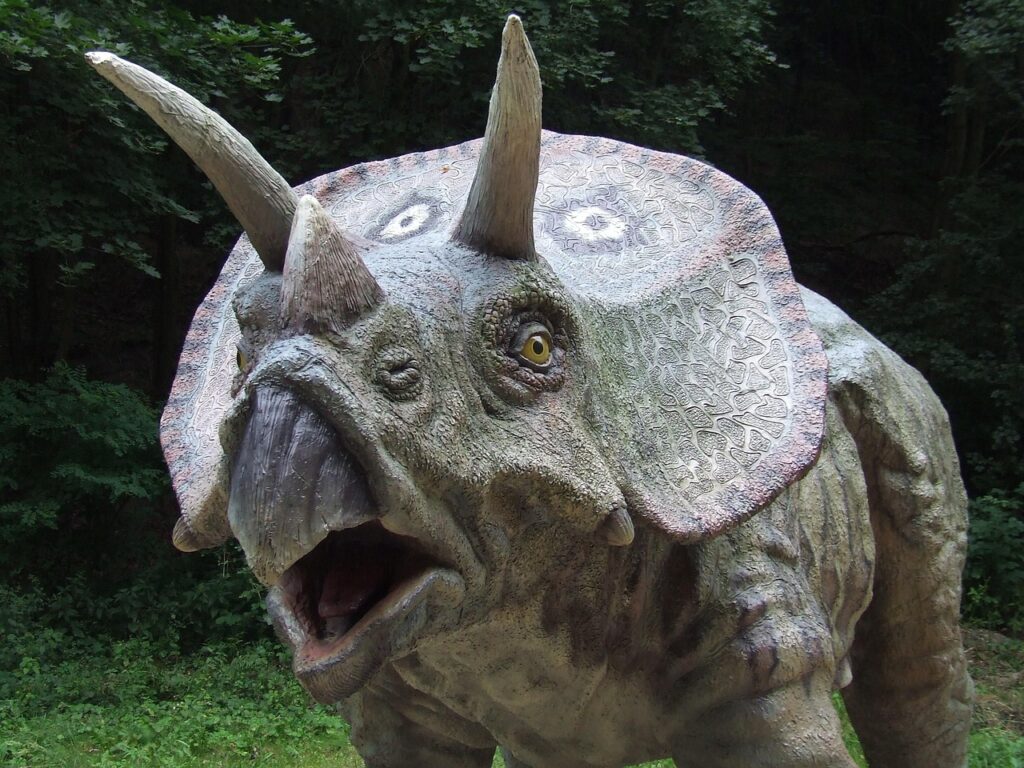
When most people picture dangerous dinosaurs, they jump straight to sharp-toothed predators like Tyrannosaurus or Velociraptor. Herbivores get cast as background characters: big, slow, peaceful and basically prehistoric cows. But that stereotype falls apart the moment you look closely at the fossils. A lot of plant‑eating dinosaurs were built like biological tanks, and getting on the wrong side of them would’ve been a very fast, very bad day.
What fascinates me is this simple twist: these animals were not hunting meat, yet the weapons they evolved could rival any predator’s bite. Think of them less as gentle giants and more as moody rhinos with medieval armor. Let’s walk through seven herbivorous dinosaurs that, despite their salad‑only menu, were authentically and impressively dangerous.
1. Triceratops: The Tank With a Temper
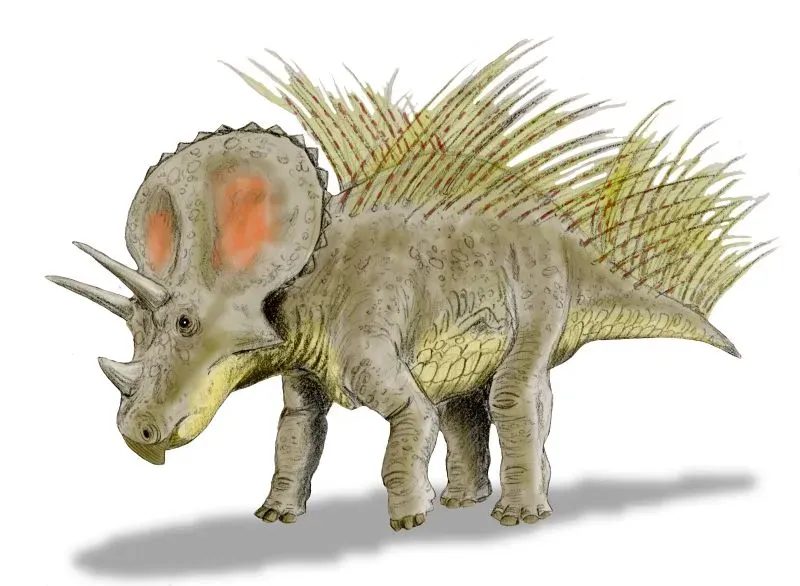
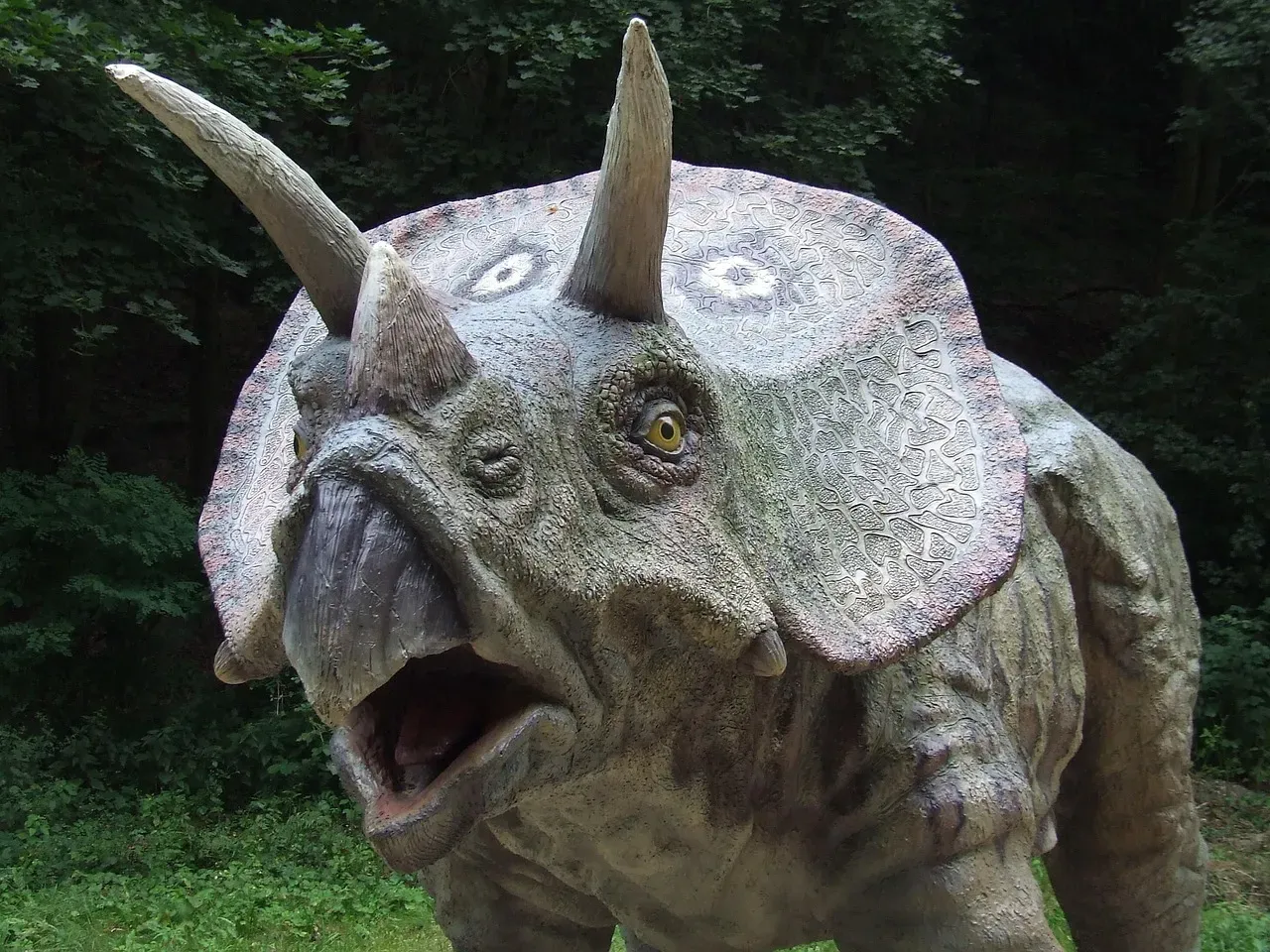
Triceratops is the classic three-horned face everyone recognizes from kids’ books, but the reality was closer to a living battle tank. It carried two long brow horns that could stretch longer than a human arm and a shorter nose horn, all anchored to a skull so massive it took up roughly a third of the animal’s body length. Behind that, a solid bony frill acted like a huge shield protecting the neck, and muscle attachment sites show its head and neck were powered by serious strength.
Evidence of healed puncture marks on Triceratops skulls suggests they sometimes locked horns with each other, possibly in dominance battles or contests over mates, and those same horns would have been brutal defensive weapons against predators like Tyrannosaurus. One fossil even shows damage in a Tyrannosaur skull that some paleontologists think might match a blow from a horned dinosaur. Standing up to a top predator that size means Triceratops was not a passive pushover; it was more like a short-tempered bison scaled up to bus size.
2. Ankylosaurus: The Walking Wrecking Ball
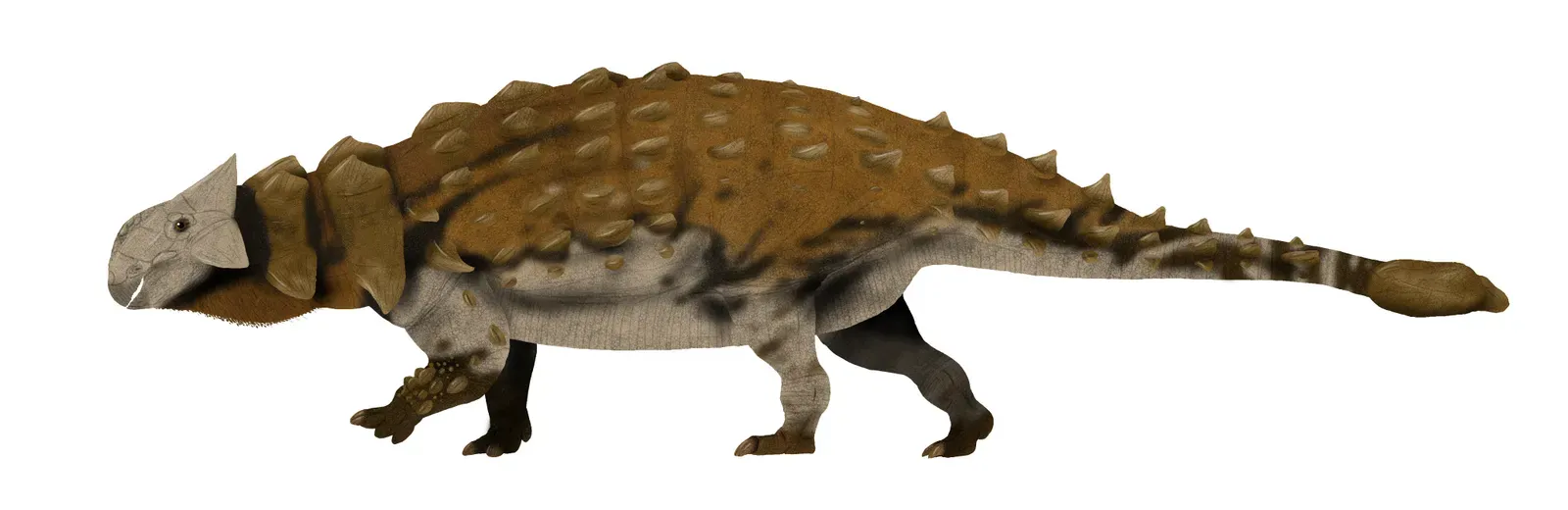
Ankylosaurus looks like something out of a sci‑fi movie: a low-slung, wide-bodied dinosaur covered in thick bony armor plates, with a massive club at the end of its tail. Those osteoderms – bony tiles set into the skin – formed a kind of natural body armor, and many had rough, spiky shapes, turning the entire back into a no-go zone. Its skull was broad and low, and its body shape suggests it hugged the ground, making it harder for predators to flip or bite at the softer underbelly.
The truly terrifying part was that tail club. Studies modeling its structure and musculature suggest Ankylosaurus could swing that club with enough force to break bone, potentially shattering the legs of a charging predator. Some fossils of related ankylosaurs show broken tail clubs that healed, hinting these weapons were used in real, high-impact confrontations. Imagine a prehistoric armored car that can also swing a sledgehammer with perfect aim – that’s Ankylosaurus in a nutshell.
3. Stegosaurus: Plates, Spikes, and a Killer Tail
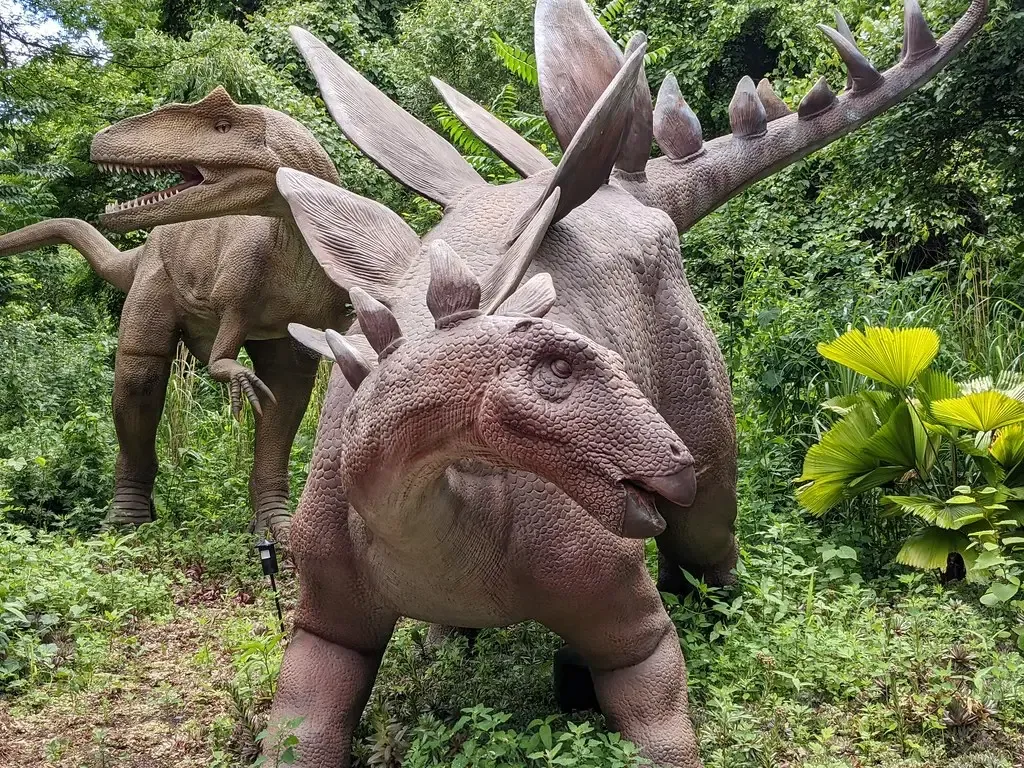
Stegosaurus is often treated as a slightly awkward, dim dinosaur with big plates and a tiny brain, but that sells it short. Its most dangerous feature wasn’t the famous row of plates along its back – those were probably more about display and thermoregulation than combat. The real weapons were the four long, sharp spikes at the end of its tail, collectively called a “thagomizer,” which could reach lengths comparable to a large kitchen knife or longer.
Fossil evidence from a carnivorous dinosaur shows a hip bone with a puncture that matches the size and shape of a Stegosaurus tail spike, suggesting that tail strikes were not only possible but devastating. Stegosaurus’s tail was highly flexible and muscular, meaning it could whip those spikes sideways with speed rather than just poking straight back. Picture a cow that can flick its tail like a martial artist swinging a spear, and suddenly this plant-eater feels a lot less harmless.
4. Parasaurolophus: The Alarm System With Serious Muscle
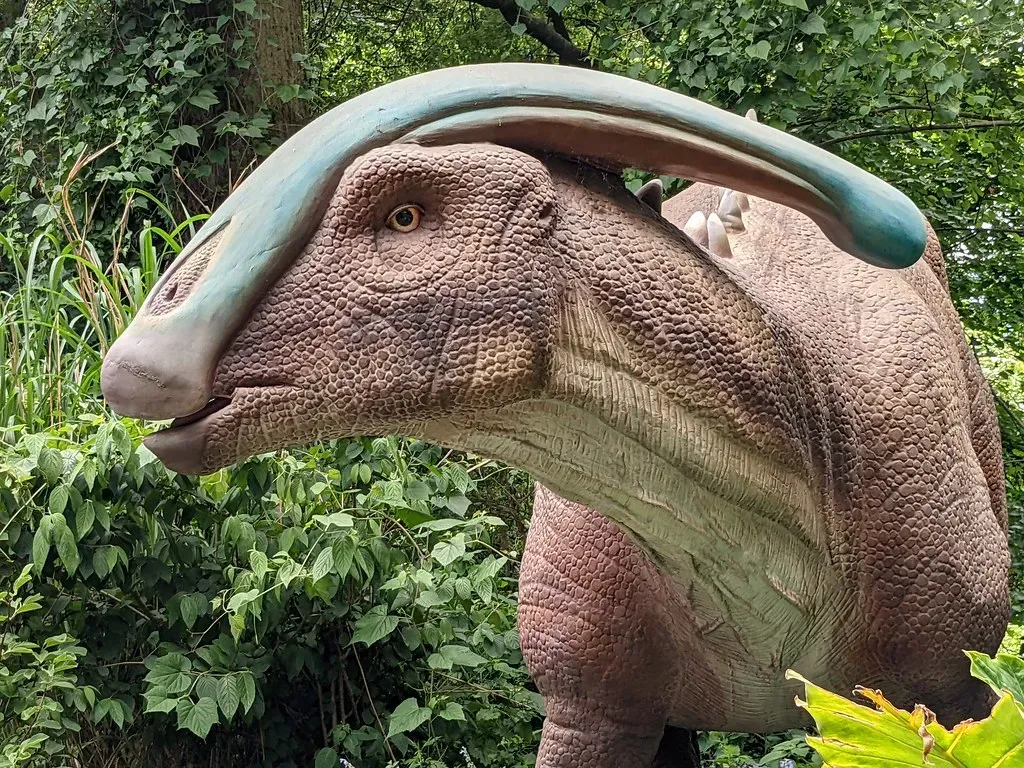
At first glance, Parasaurolophus doesn’t look dangerous; it looks elegant. This hadrosaur, or duck-billed dinosaur, is best known for the long, curved crest rising from the back of its head, which likely connected to a complex system of air passages. Many scientists think it acted like a resonance chamber, allowing Parasaurolophus to produce low, booming calls that carried over long distances – basically a built-in foghorn for communication and alarm.
The danger with an animal like this isn’t in claws or horns, but in size, speed, and social behavior. Parasaurolophus was a large, multi-ton animal with powerful hind legs, and it could probably shift from walking on four legs to bolting on two when threatened. In a herd, dozens of these animals panicking at once would be like a stampede of armored SUVs, easily trampling anything in their path. They might not have aimed to attack, but a frightened group of Parasaurolophus would have been an extremely bad place for a predator – or an unlucky bystander – to stand.
5. Pachycephalosaurus: The Head-Butting Menace
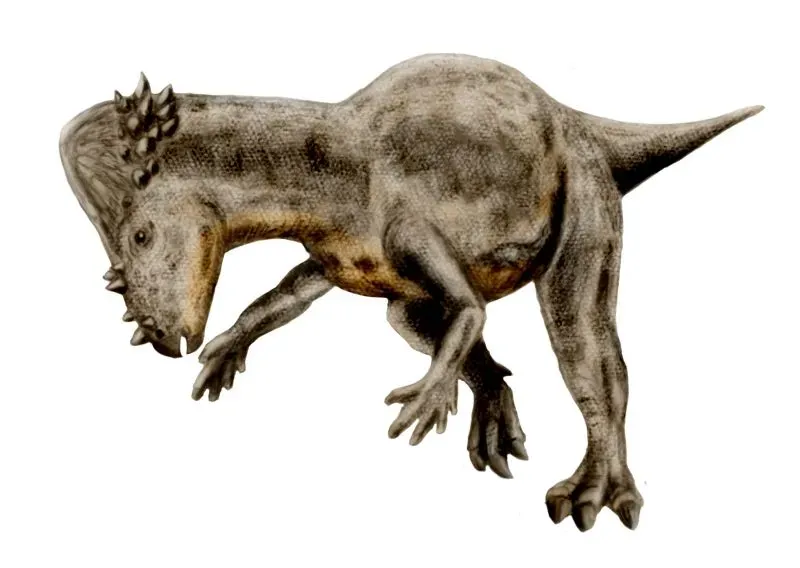
Pachycephalosaurus had one of the strangest skulls of any dinosaur: a thick, domed head, with bone up to several inches thick at the top, ringed with small knobs and spikes. This dome shape has led to the popular idea that these dinosaurs engaged in head-butting contests, either by ramming each other straight-on or by glancing blows to the side. Some studies have questioned the exact mechanics, but the anatomy still strongly suggests this animal was built to absorb and deliver heavy impacts to the head region.
Even if Pachycephalosaurus mostly used that dome in social displays or low-contact shoves, any predator foolish enough to get close to the front end would risk a powerful, skull-led charge. Think of a goat or bighorn sheep, but scaled up and with a harder, thicker helmet. One good hit to a ribcage or leg could cause serious injury. It is odd to think of a plant-eater using its own head as a blunt-force weapon, but Pachycephalosaurus pushes exactly that uncomfortable image into reality.
6. Iguanodon: The Original Thumb-Spiked Bouncer
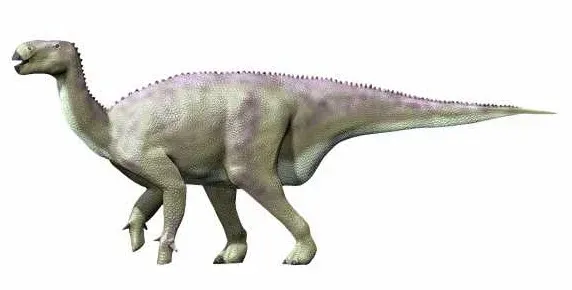
Iguanodon might not have the name recognition of Triceratops, but it was one of the earliest dinosaurs ever scientifically described and turned out to be anything but mild. It was a hefty herbivore with strong forelimbs and a surprisingly versatile hand. The most striking feature was the large, conical spike on each thumb, originally misinterpreted in early reconstructions but now understood as a serious close-range weapon likely used in defense and possibly in intraspecies combat.
Imagine being a predator trying to wrestle with an animal as big as a small truck, only to find out it has hidden daggers on its hands. With powerful arms and a semi-upright posture, Iguanodon could potentially rear up and slash downward or jab sideways with those thumb spikes, much like a bouncer suddenly producing a concealed weapon. Its combination of bulk, mobility, and armament made it far from an easy target, and it probably commanded more respect in its ecosystem than its plant-based diet might suggest.
7. Therizinosaurus: The Gentle Giant With Nightmare Claws
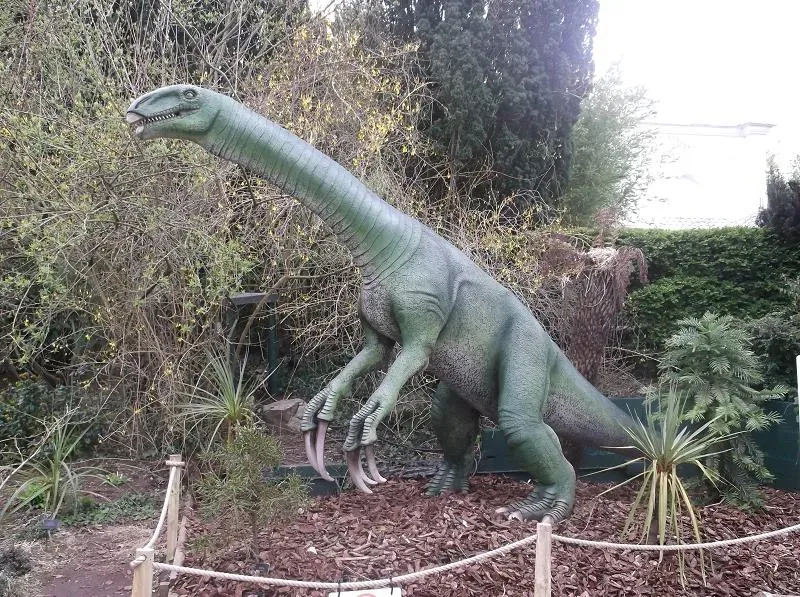
Therizinosaurus looks like an artist mashed up several animals: a huge, pot-bellied, feathered dinosaur with a long neck, small head, and arms that carried some of the longest claws known in the animal kingdom. Each claw could reach the length of a human forearm or more, curved and blade-like. Although this dinosaur is thought to have been primarily herbivorous or omnivorous – using its claws to pull down branches or manipulate vegetation – the potential for those claws as defensive weapons is hard to ignore.
Even if Therizinosaurus was relatively slow and not particularly agile, a predator confronting it would face a wall of slashing, hooked blades controlled by massive arm muscles. One well-aimed swipe could rip skin open or cause debilitating wounds, and the sheer intimidation factor of a towering, feathered creature waving scythes around would have been impressive. It is one of those dinosaurs that shows how evolution sometimes arms peaceful feeders with equipment that looks better suited to a horror film than a salad bar.
Conclusion: The Myth of the “Safe” Herbivore
Looking at these seven dinosaurs, it becomes clear that “herbivore” never meant “harmless.” In modern ecosystems, the animals that worry wildlife rangers most are often big plant-eaters – hippos, buffalo, elephants – because they have size, power, and a low tolerance for threats. The same principle held in the Mesozoic: many plant-eating dinosaurs were armed to the teeth, just not with teeth, and they likely shaped predator behavior as much as any carnivore did.
Personally, I find that more interesting than any simple predator-versus-prey storyline. It reminds us that nature rarely deals in clear heroes and villains; it deals in survival strategies, and some of the scariest ones belong to animals that never tasted meat. Next time you picture a dinosaur, maybe imagine the nervous respect a hungry predator had to feel when it realized dinner came with horns, armor, or a bone-breaking tail. Which of these “gentle” giants would you least want to bump into on a walk through the Late Cretaceous?