
Imagine growing up in a world where no one ever says yesterday, today, or tomorrow. Not because people are confused or careless, but because the language simply does not carve reality up that way. It sounds like science fiction, but anthropologists and linguists have spent decades with communities whose languages lack a generic word for time, and the way people in those cultures talk, think, and remember turns out to be strikingly different from the global norm.
This does not mean they are timeless, mystical beings drifting in a dream. They still remember events, make plans, and show up when they said they would. But they do it using different mental tools. When you look closely, you start to see that our own obsession with time as a straight line, chopped into units and ruled by clocks, is not universal at all. It is just one cultural choice among many, and the alternatives are not only fascinating, they quietly challenge how sure we are about our own way of remembering the past.
Languages Without a Word for Time Really Do Exist
One of the most surprising findings from field linguistics is that some languages genuinely lack a single abstract noun that corresponds to the English word time. Speakers in certain Indigenous communities instead talk about events, seasons, cycles, or relations, but not time as a free-floating thing you can have, spend, or waste. If you tried to translate a sentence like I do not have time, you would often need to rewrite it entirely, perhaps as something like I am busy with another task, anchored in specific activities rather than a vague resource called time.
Researchers working in remote parts of Australia, the Amazon, and Papua New Guinea, among other places, have documented exactly this kind of linguistic pattern. People talk about the rainy period, the mango season, or a certain ritual moment, but there is no umbrella term that lumps them together under the label time. When I first read some of this work, I caught myself trying to mentally force the English notion of time back into these descriptions, like a stubborn puzzle piece that obviously did not belong there. That little struggle is the point: we are so used to treating time as a universal thing that we forget it is also a cultural idea.
How Do You Talk About Before and After Without Time Words?

At this point you might be wondering how people manage basic conversations without saying earlier, later, or last week. The answer is that they absolutely do talk about sequences, but they often do it by chaining events to other events, not to time as an invisible axis. Instead of saying We will meet in an hour, someone might say We will meet when the sun has gone down a bit or We will talk after you return from the river. The rhythm is still there, just grounded in concrete, shared reference points.
This event-based way of speaking can extend to memories of the past as well. Rather than saying That happened many years ago, speakers might say That happened when my eldest child was small or That was before your uncle’s sickness. The past becomes a web of meaningful episodes connected to people, places, and situations, not a set of coordinates on a clock or calendar. It feels almost like remembering your life as a series of vivid scenes rather than as entries in a planner, and that difference in framing already nudges memory in a distinctive direction.
Event-Based Memory: Remembering Stories Instead of Dates
Psychologists who study memory know that humans everywhere tend to remember meaningful episodes more strongly than dry details like dates, but this tendency becomes especially visible in communities without an abstract concept of time. There, autobiographical memory is often structured almost entirely around key events: a flood, a long journey, a marriage, a conflict, a ceremony. Ask when something happened and you are more likely to hear what it happened around rather than how long ago in years. It is like organizing your photo gallery by albums with names such as The Big Move or The Drought, instead of by timestamps alone.
When researchers run memory tasks in such communities, they often find that people excel at recalling the order and relational context of events while paying far less attention to absolute age or duration. People might clearly remember that a certain hunting trip came before a specific illness and after a large meeting, but not care whether that was five or ten years ago in clock time. In my view, that is not a sign of a weaker memory at all; it is a sign of a different priority system. The mind is tuned to social and ecological relevance rather than to abstract numerical precision, and that makes a lot of sense in environments where calendars and deadlines are not the main way life is organized.
When Time Runs East–West or Not at All
Even when communities do talk about sequences, they do not always picture them as a straight line running from left to right the way many literate Westerners do. In some Indigenous Australian groups, for example, people have been found to arrange temporal sequences from east to west, lining up pictures of a person aging or a banana rotting so that the earlier stages sit toward the sunrise and the later stages toward the sunset. What looks like time from our perspective is, for them, another way of mapping the world spatially, linked to the landscape rather than to a mental calendar.
In languages without a word for time, mental timelines can be even looser or more embedded in other systems, such as kinship or rivers or seasonal cycles. A life story might be organized more like a circle or a spiral, with key episodes recurring at certain phases of the environment, rather than marching forward along a strict arrow. To someone raised on graphs and Gantt charts, this can seem almost alien. But if you live in an ecosystem where wet and dry seasons repeat endlessly and your survival depends on reading those cycles, it may be far more intuitive to imagine events returning in patterns than disappearing into a distant timeline.
Do Different Languages Really Change How We Remember?
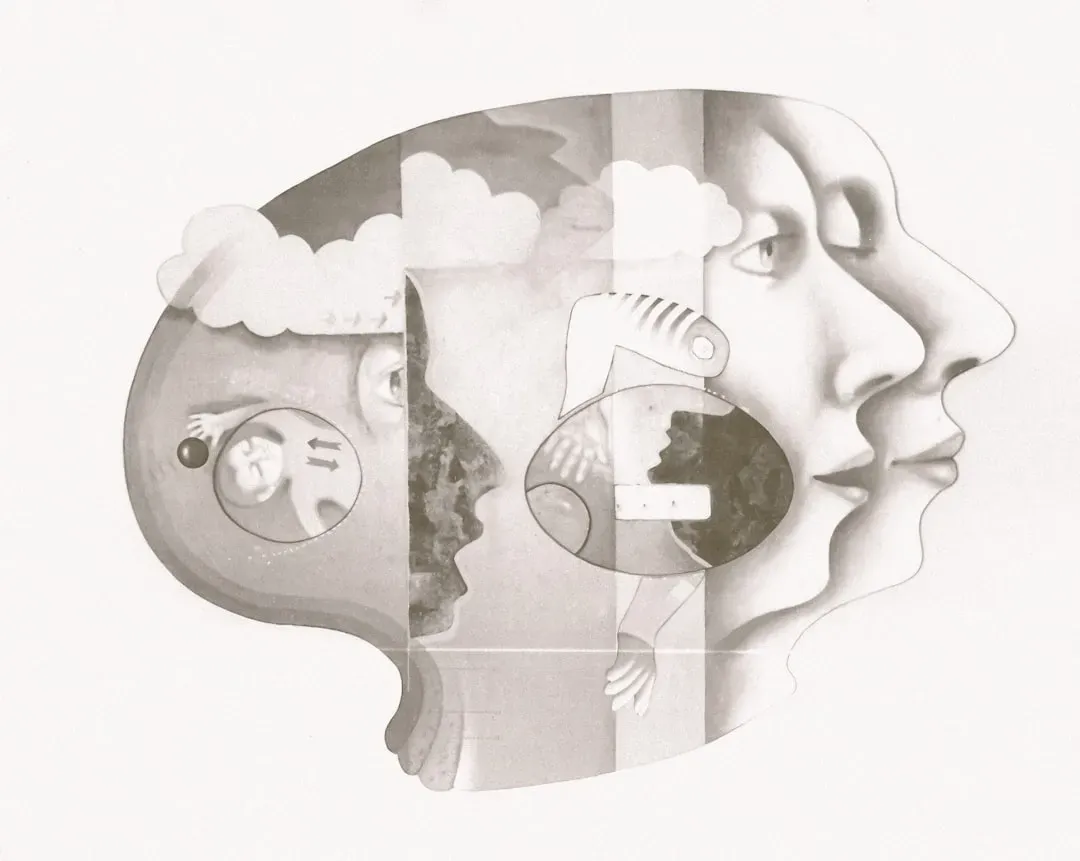
Here is where things get controversial. Some scholars argue that differences in language only gently nudge thought, while others claim they can fundamentally reshape cognition. Studies of communities whose languages lack a word for time suggest that the truth sits somewhere in the middle. People in these cultures can certainly grasp sequencing, aging, and cause and effect; no one has trouble understanding that a person is older than their younger cousin. But when asked to remember or reason about events, they lean more heavily on contextual anchors and less on abstract durations or dates.
In psychological experiments, this shows up as systematic patterns rather than total differences. For instance, speakers of languages with rich tense systems and a strong time vocabulary are generally quicker and more precise when asked to estimate how long ago something happened in years or months. Meanwhile, speakers of languages that lack those tools can be just as accurate when asked who did what before what, yet less concerned with pinning events to specific numbered intervals. To me, the most honest way to put it is this: language does not trap anyone, but it does offer certain habits of mind, and when your language never asks you to think in terms of time as a substance, you do not practice that skill as much.
Living Without Constant Clock Anxiety

There is another, more emotional side to this story that rarely shows up in lab reports. Many of us, especially in industrialized societies, live under relentless time pressure. We talk about time as a scarce commodity: we spend it, lose it, save it, and run out of it. That metaphor quietly creates anxiety. If your language and culture do not push the idea that time is a thing you own and can mismanage, you may experience your days in a much less frantic way. The absence of a word for time often goes hand in hand with more flexible scheduling, richer attention to the present moment, and patience for the natural pace of social life.
To be fair, this does not mean every community without a time noun is some kind of utopia free of stress. People still worry about harvests, relationships, and obligations. But it does suggest that our particular brand of time-related stress is not a built-in feature of the human brain; it is a cultural choice. When I catch myself obsessively checking the clock, I sometimes think about people who instead anchor their day to when the shade reaches a certain tree or when a particular bird calls at dusk. They are still tracking change, but they are not constantly quantifying it, and that difference feels profound.
What We Lose When We Flatten Time Into Numbers
Modern timekeeping has brought real advantages, from coordinating international flights to performing precise science experiments. But there is a quiet cost that anthropology exposes. When we reduce time to a uniform line of identical units, we risk flattening the texture of our own past. Birthdays, migrations, communal feasts, protests, and personal heartbreaks can all get squeezed into the same abstract slot called three years ago. Communities that organize memory around relationships and significant episodes instead keep those events alive as rich, interwoven stories rather than as distant points on a graph.
In my opinion, societies obsessed with calendars and clocks have overcorrected. We have gained control and predictability, but we have given up a kind of narrative depth that event-focused cultures protect almost by default. When your language constantly reminds you that the past is not just a date but a web of connections between people, landscapes, and rituals, you are less likely to treat your memories as dusty archives and more likely to see them as living threads in a shared story. Maybe that is why some of the most moving oral histories come from places where no one can tell you what year something happened, but everyone can tell you exactly what kind of sky hung over it.
Conclusion: Maybe Our Way of Time Is the Strange One
If you step back from the clock on the wall and the calendar on your phone, the truly weird thing is not that some languages have no word for time, but that ours treats time as a commodity, a tyrant, and a god all rolled into one. Anthropology shows that humans can live, remember, and coordinate perfectly well by anchoring their minds in events, relationships, and cycles instead of in naked timestamps. Their memories are not less accurate; they are organized differently, with meaning doing the heavy lifting where numbers usually would. To me, that makes our culture’s rigid timelines look less like progress and more like a narrow stylistic choice we have mistaken for reality itself.
My own bias is clear: I think we urgently need to learn from languages that sidestep the abstract category of time and from the people who grow up living in stories rather than on schedules. That does not mean throwing away clocks, but it does mean admitting that our way is not neutral or inevitable. It is one cognitive toolkit among many, and not always the wisest for a balanced life. Maybe the real question is not how those other communities can function without a word for time, but how we have allowed a single idea to colonize so much of our inner world. Which way of remembering would you choose if you were not born into one by default?