Most people assume the “bad science” in Jurassic Park made dinosaurs scarier than they really were. But one creature got the opposite treatment – Hollywood actually shrank it, tamed it, and turned an apex predator into a cartoonish house pet with a party trick.
For three decades, audiences laughed at its size and cooed over its frill, convinced it was the “cute” one in a cast of monsters. Paleontologists have spent years quietly correcting the record, and what they’ve found flips the entire scene on its head. Here’s what the fossil evidence actually says – and why it should change how you watch that movie forever.
The Dinosaur That Fooled a Generation of Moviegoers
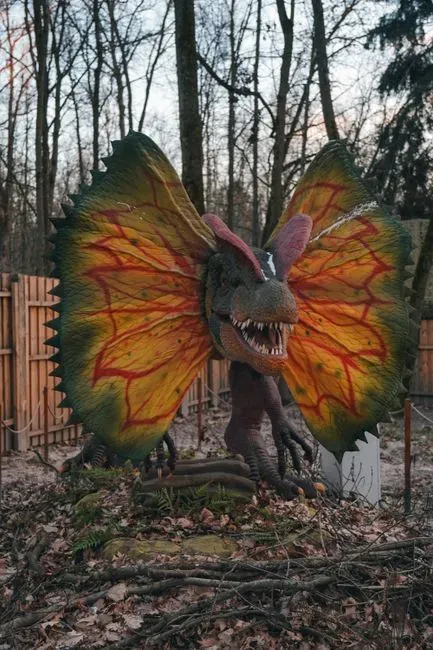
Everyone remembers the scene. A small, frilled dinosaur hisses at a stranded, overweight computer programmer, spits something in his face, and then finishes him off while John Williams’ score fades into silence. It’s terrifying in the moment – but it’s also played for a strange kind of dark comedy, because the animal itself looks almost dainty compared to the film’s raptors and its towering Tyrannosaurus.
That creature was Dilophosaurus, and the movie made a deliberate choice to present it as smaller and less imposing than the “real” villains of the story. This theropod, loosely based on the actual Jurassic meat-eater, spits venom into its victims’ faces in the film, blinding them and letting the animal overpower prey without much of a fight. In other words, the movie needed a gimmick to make a small animal seem dangerous. Real paleontology, it turns out, never needed the gimmick at all – and audiences wouldn’t learn that for years. That disconnect is exactly where this story gets interesting.
Why Spielberg’s “Cute Little Dino” Was Never Real
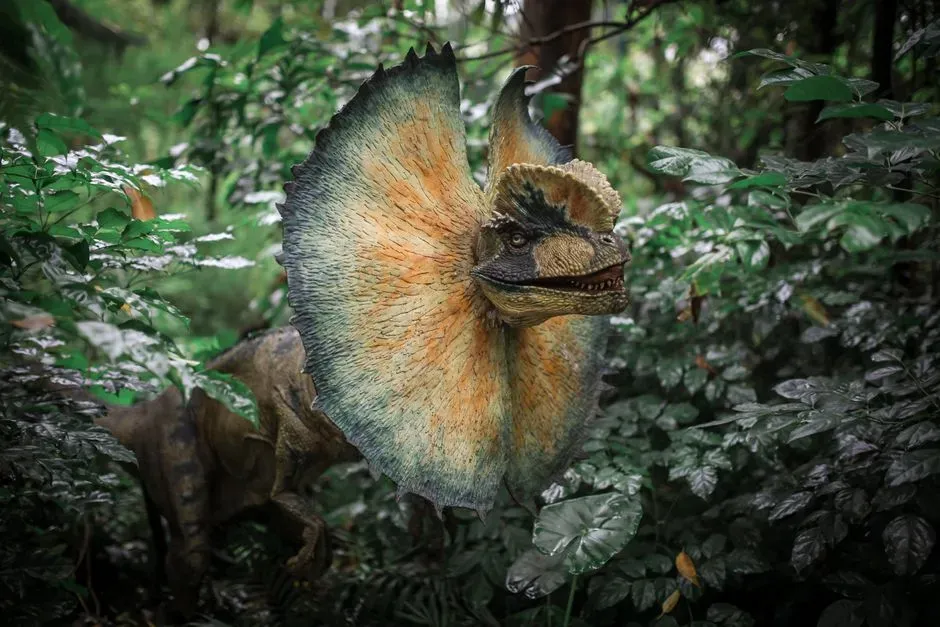
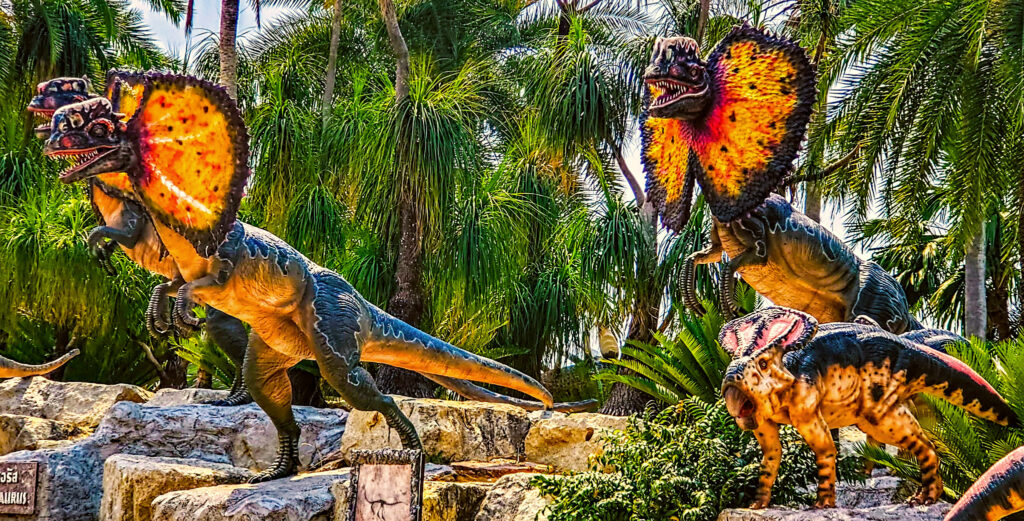
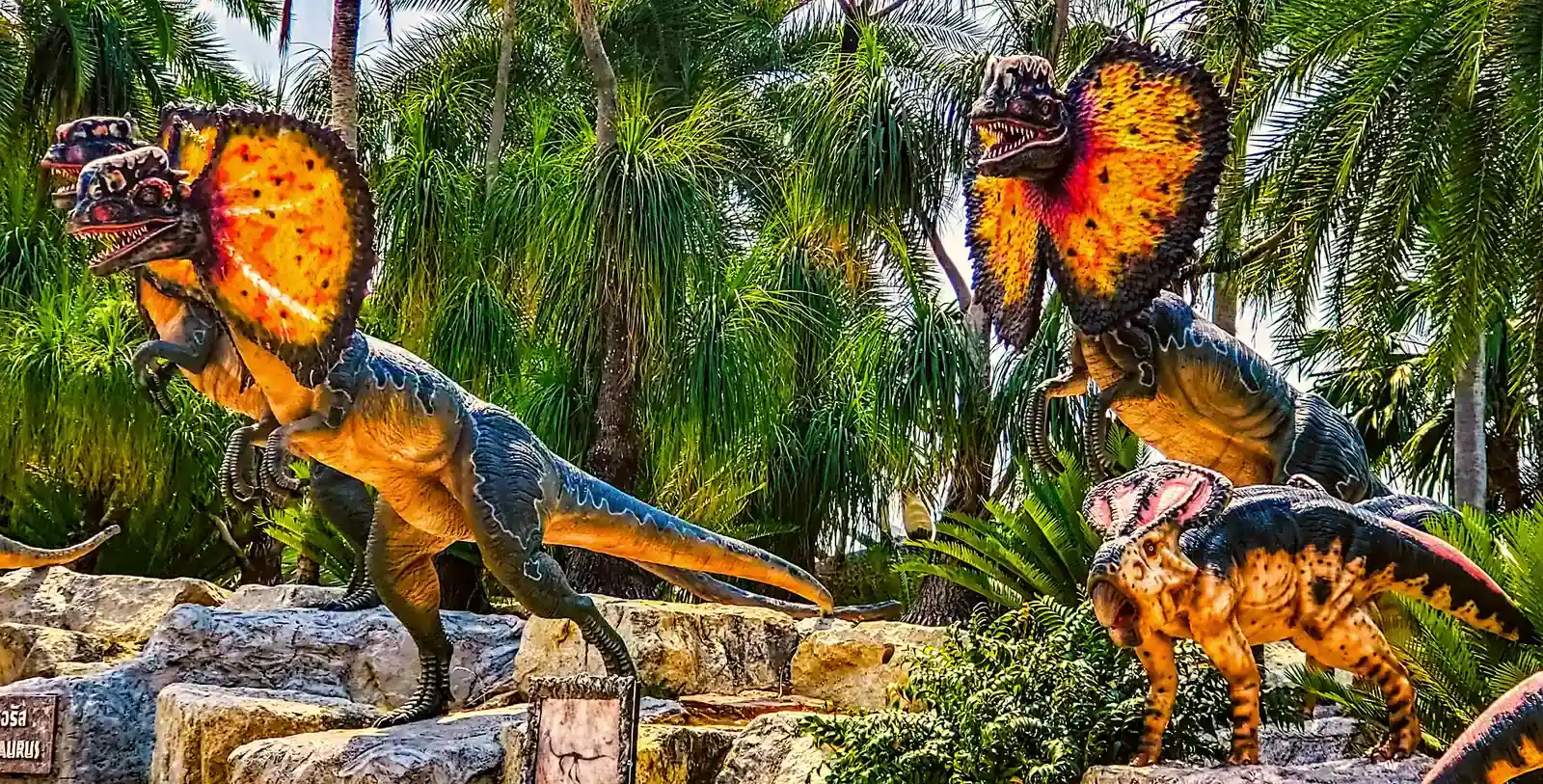
Here’s the part that should bother every dinosaur fan: the frill never existed. In one of the most memorable scenes in the original film, Dilophosaurus spreads a wide, colorful frill around its neck before spraying venom – but that frill, inspired by Australia’s frilled lizard, is pure Hollywood invention. There’s no fossil evidence, no anatomical basis, nothing. It was built purely to make a smaller animal feel more menacing on screen.
The venom-spitting wasn’t entirely fabricated out of thin air, though. It was based on a real, if outdated, scientific guess. Paleontologists once speculated that Dilophosaurus had a toxic bite after Sam Welles, who formally described the Arizona dinosaur, identified a structure in the jaw as a possible venom gland and suggested its skull was too fragile to kill with brute force alone. That single, decades-old assumption became the foundation for one of the most iconic dinosaur scenes in film history. But newer fossils would completely dismantle it – and reveal something far more dangerous underneath.
The Real Size Will Change How You See This Predator
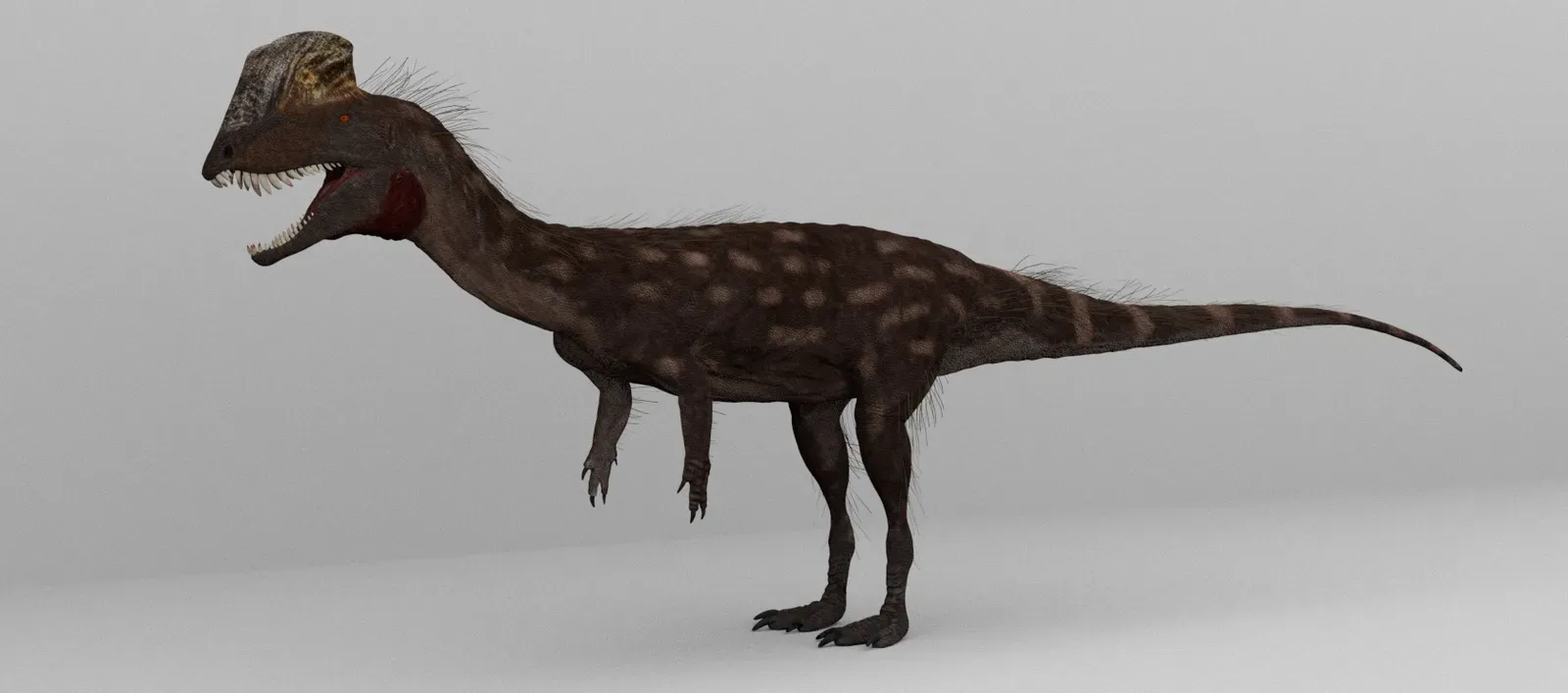
Forget the dog-sized creature that skulks around Nedry’s jeep. The actual animal was enormous for its era, and that scale alone should have made it one of the scarier names in the franchise. Most dinosaurs roaming western North America just 20 million years earlier were the size of turkeys or eagles. Dilophosaurus, by contrast, would have towered over a grown adult, standing up to eight feet tall and stretching close to 25 feet long when fully grown.
To put that in modern terms: the real animal weighed somewhere between 880 and 1,000 pounds – roughly the mass of a modern polar bear. That’s not a fringe estimate floated by one overexcited researcher, either; multiple fossil studies land in that same heavyweight range, with the animal standing around six feet tall at the hip. The film’s version could be tucked under an arm. The real version could have looked a grown adult directly in the eye.
Fast Facts
- Height: up to 8 feet tall
- Length: nearly 25 feet, nose to tail
- Weight: 880 to 1,000 pounds – about the mass of a polar bear
- Hip height: roughly 6 feet, taller than most adult humans
The Venom Myth: What Scientists Actually Found in Its Jaw
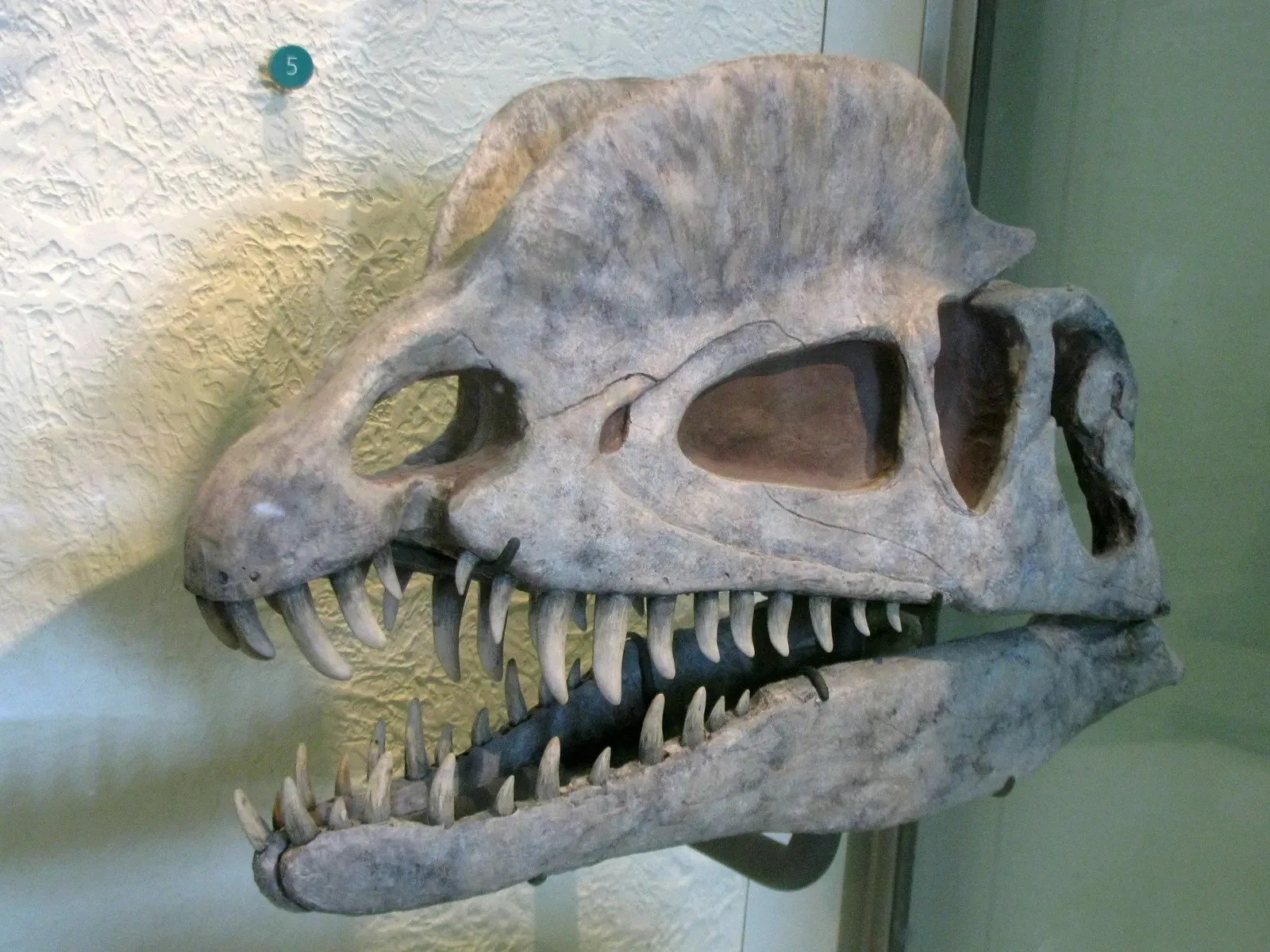
This is the twist most casual fans never hear about. The “venom gland” that inspired the movie’s most famous kill scene was, according to modern research, never there in the first place. More complete fossils have rewritten those early assumptions – scientists now believe Dilophosaurus’s jaws were far stronger than Welles realized, and the structure he flagged as a venom gland was simply a misidentified part of the jawbone. Dilophosaurus is no longer considered venomous by anyone seriously studying the animal.
That single correction changes the entire narrative. The movie’s Dilophosaurus needed poison because its jaws supposedly couldn’t finish the job. The real Dilophosaurus needed no such crutch. Researchers studying its skull structure found it was built for gripping and tearing flesh, packed with sharp teeth and reinforced for repeated bites. Hollywood essentially took a fully capable predator, disarmed it, and then handed it a fake weapon to compensate. But that’s nothing compared to what the arms and legs reveal.
The Jaw That Was Built to Kill, Not Poison
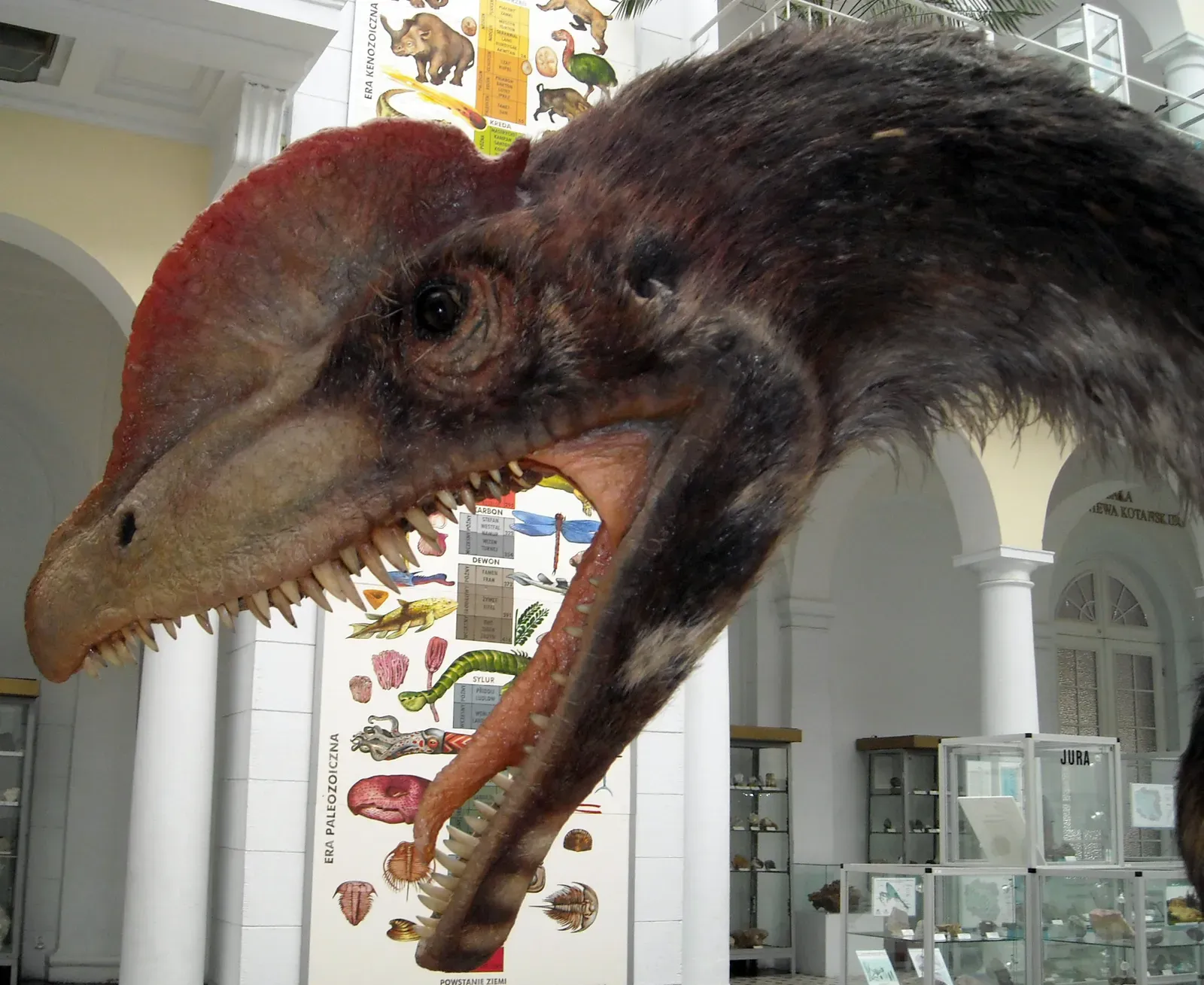
Once the venom-gland theory collapsed, researchers had to explain what that jaw structure was actually for – and the answer points to a far more conventional, and far scarier, hunting style. The evidence now supports the idea that Dilophosaurus was a predator with a genuinely deadly bite, not a scavenger leaning on venom or claws to finish off weakened prey, as Welles once assumed.
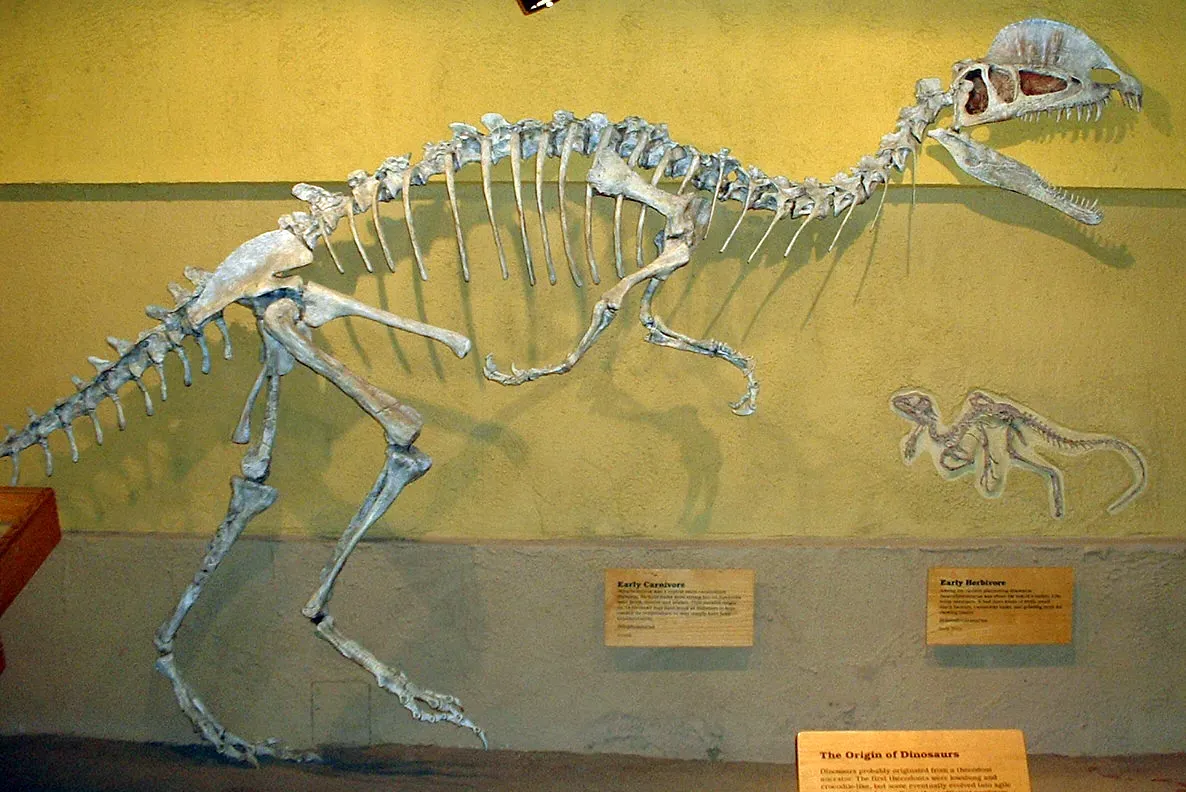
That reframing matters because it repositions Dilophosaurus from a scrappy scavenger into a legitimate top-tier hunter of its ecosystem. It had longer, stronger arms than later giants like Allosaurus and Ceratosaurus, along with relatively longer legs. That’s a controversial claim among casual dino fans who assume bigger always means scarier – Allosaurus gets all the attention as a “true” apex predator, yet Dilophosaurus’s proportions suggest it may have been better equipped for certain kills. It’s the kind of detail that rarely makes it into a documentary voiceover, but it fundamentally changes how this animal should be ranked.
Built for Speed: The Anatomy Hollywood Left Out
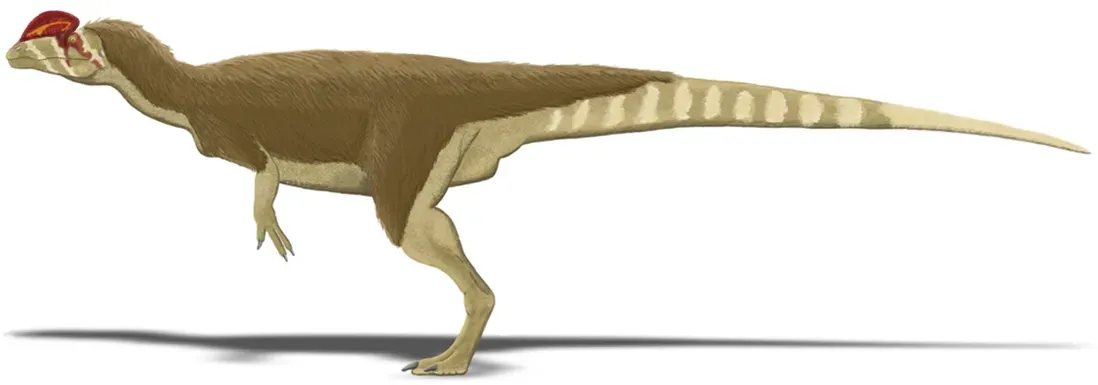
The movie version waddles and hisses. The real version, according to researchers who’ve studied its limb proportions, was built to run its prey into the ground. Unlike the sluggish movie portrayal, the real Dilophosaurus had long, powerful legs and a lightweight frame that likely allowed it to hit impressive speeds in short bursts – possibly over 25 miles per hour. A tail making up nearly half its total body length acted as a dynamic counterbalance while it moved.
That single detail should reframe the entire movie scene. The Jurassic Park version needed to ambush a stationary, distracted man in a jeep. The real animal likely didn’t need the element of surprise at all – it could simply outrun almost anything else alive in its era. Most nature documentaries still show Triassic and Early Jurassic predators as slow, lumbering hunters. This one wasn’t. And its hands were just as unsettling as its legs.
Quick Compare: Movie vs. Real Dilophosaurus
- Size: Movie – roughly dog-sized | Real – up to 8 feet tall, 25 feet long
- Signature weapon: Movie – venomous spit | Real – a punishing, bone-crushing bite
- Speed: Movie – slow and lumbering | Real – fast bursts possibly over 25 mph
- Neck display: Movie – a flaring frill | Real – no frill, just twin bony head crests
The Claws and Arms That Made It a Top-Tier Hunter
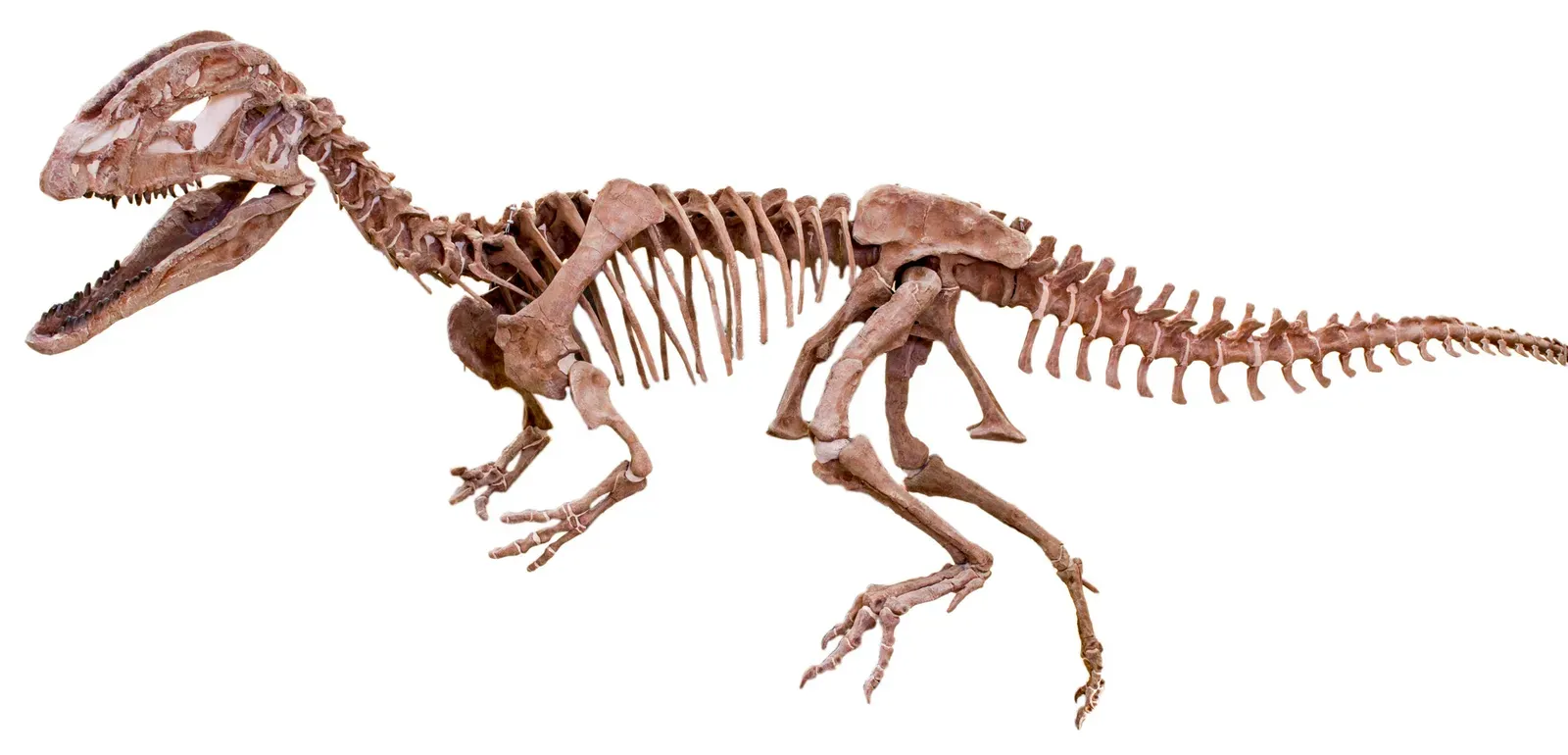
If the jaw and legs weren’t enough, the hands seal the case. While the movie gave Dilophosaurus fictional poison, nature equipped it with very real and very dangerous weapons. Its hands carried four fingers, each tipped with sharp, curved claws that could grow up to 10 inches long – longer than most kitchen knives – attached to an arm strong enough to pin down struggling prey.
Combine that with everything else researchers have documented, and the picture becomes unmistakable. Speed, size, punishing bite force, and 10-inch claws made Dilophosaurus one of the dominant predators of its environment. It’s a strange feeling to realize the “harmless-looking” movie monster was, in reality, faster, stronger, and better-armed than the film ever gave it credit for. Most people walked out of theaters fearing the raptors. Paleontologists will tell you they’d have been far more worried about this one.
One of the Earliest Giant Predators on Earth
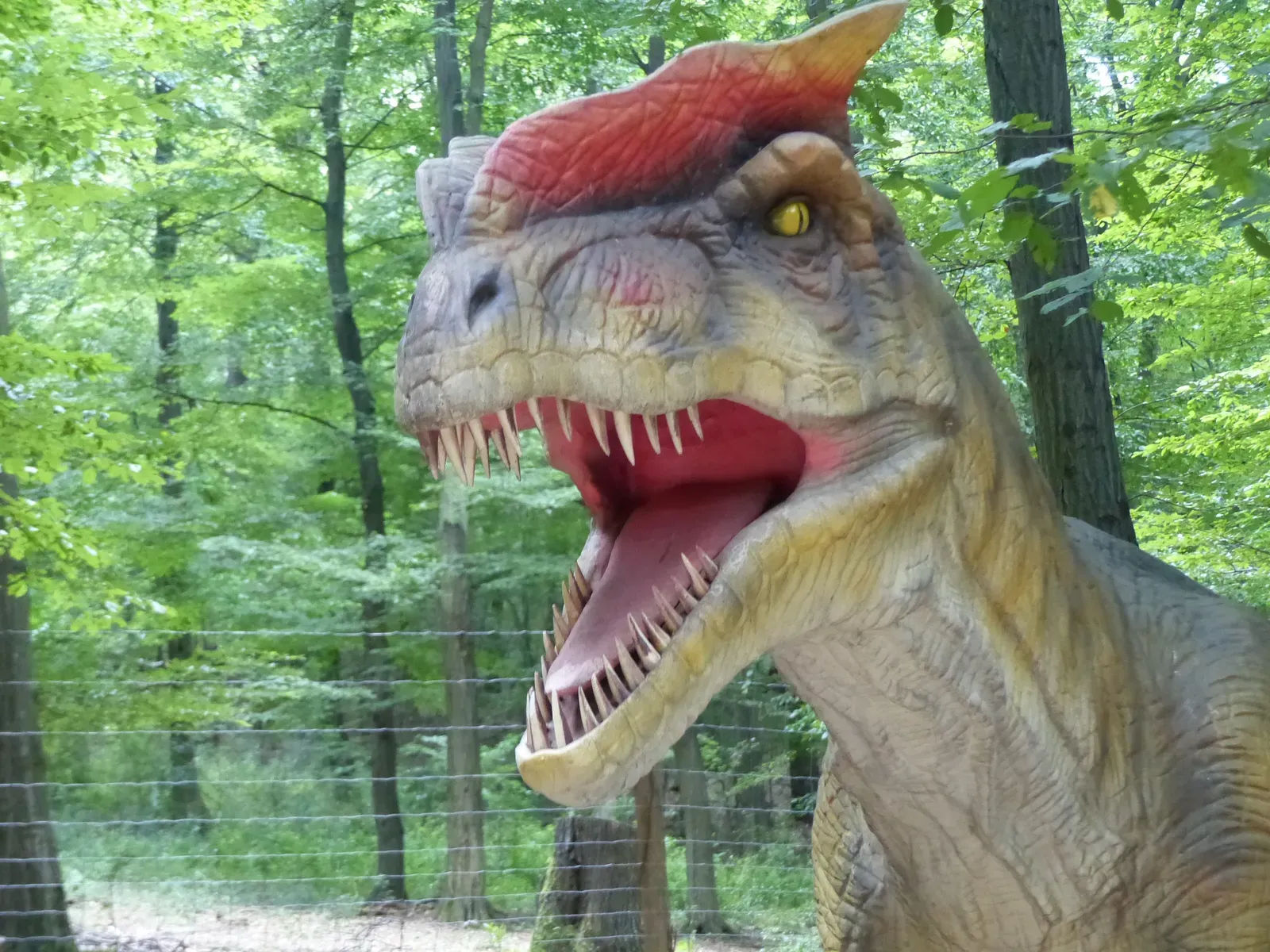
Size alone doesn’t make a predator historically significant – timing does, and this is where Dilophosaurus earns a genuinely important title. It couldn’t spit acid or venom, but it absolutely could have killed a human, and it stands as one of the earliest large predatory dinosaurs on the planet. It wasn’t just big for its era – it was one of the first animals anywhere to reach that scale as an apex hunter.
That’s a detail that rarely gets mentioned in mainstream coverage, and it’s a genuinely controversial point among paleoartists. Many popular illustrations still depict Early Jurassic ecosystems as dominated by small, skittish creatures, when in reality an animal like this was already patrolling the top of the food chain. It suggests the “age of giant predators” – the one pop culture usually credits to T. rex and Allosaurus – actually started much earlier than most people realize. That alone should have made this dinosaur a franchise headliner instead of a punchline.
Worth Knowing
- Dilophosaurus lived roughly 193 million years ago, during the Early Jurassic
- That’s well over 120 million years before Tyrannosaurus rex ever existed
- Its fossils were first uncovered in Arizona in 1940, but it wasn’t formally named Dilophosaurus until 1970
- It’s regarded as one of the best-preserved large theropods from the Early Jurassic
The Discovery That Changed Everything We Thought We Knew
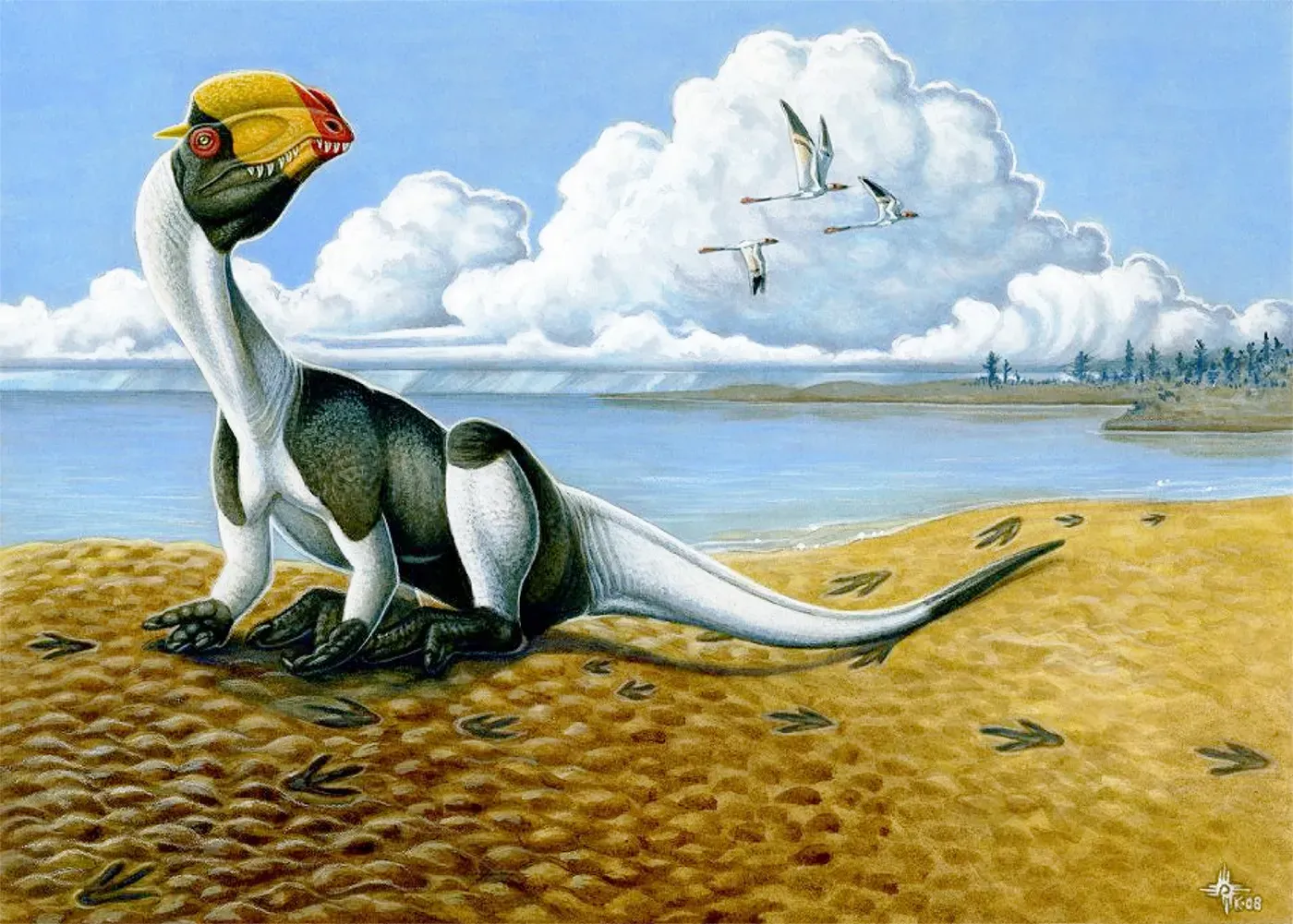
The full picture didn’t come together overnight – it took decades of new fossil finds to force a total rewrite of the textbook description. Newer research suggests Dilophosaurus was significantly larger than its movie portrayal, reaching up to 20 feet in length, and shared more traits with modern birds than scientists once believed.
Even the researchers behind that work admit how messy the original data was.
It’s pretty much the best, worst-known dinosaur.
Adam Marsh, paleontologist
That’s a striking admission – one of the most famous dinosaurs in pop culture history was, scientifically speaking, one of the least understood for decades. Early skeletal reconstructions were even built on flawed assumptions. When the first skeletons were found, scientists thought Dilophosaurus was related to carnosaurs like Allosaurus and Streptospondylus, so they filled in the missing parts of its pelvis to match those animals. In other words, the science behind this dinosaur has been evolving in real time – and every correction has made the animal scarier, not tamer.
What This Means for Every Other “Harmless” Movie Dinosaur
Dilophosaurus isn’t the only creature Hollywood quietly downgraded for the sake of a plot twist. The pattern repeats across the franchise, and it’s worth being blunt about it: filmmakers routinely shrink real predators to make room for invented monsters, and audiences rarely question it. Even the film’s most “realistic” reptile got a fictional makeover it never needed. Tyrannosaurus was already an apex predator that would have happily fed on humans given the chance – no embellishment required, yet the industry keeps inventing gimmicks anyway.
Some scientists argue this habit actually undersells how genuinely frightening the fossil record already is. Researchers who consult on these films have pointed out that made-up monsters are unnecessary, because in most cases the real fossil record is more interesting than anything a screenwriter could invent. Dilophosaurus is the clearest proof of that argument. Hollywood didn’t need a frill or venom to make it terrifying – it needed to leave the real anatomy alone.
Why It Stands Out
- Velociraptor: the real animal was roughly turkey-sized, while the on-screen raptors were modeled largely on the much bigger Deinonychus
- Tyrannosaurus: needed zero embellishment – it was already a genuine man-sized-prey apex predator
- Dilophosaurus: the most extreme reversal of all, shrunk on screen despite ranking among the largest land predators of its time
The Bottom Line
The uncomfortable truth is that Dilophosaurus never needed Hollywood’s help. Real fossils show an 880-to-1,000-pound predator, up to 25 feet long, with punishing jaw strength, 10-inch claws, and legs built for chasing down prey at speed – while the film shrank it, defanged its bite, and handed it a fictional poison gland to compensate.
That’s not a minor inaccuracy; it’s a complete inversion of the truth. If anything, the movie underestimated its own monster. The real animal deserved top billing, not a supporting cameo played for a jump scare.
Which other “harmless” movie dinosaur do you think science has gotten completely wrong? Drop your pick in the comments.