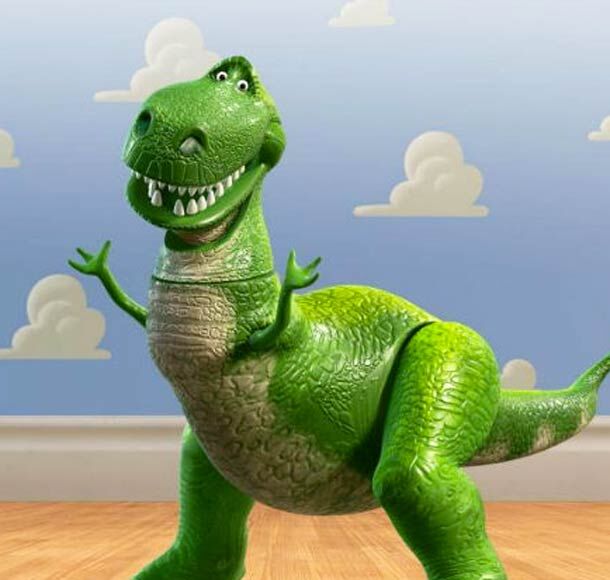
On paper, Rex should not work. He is a towering Tyrannosaurus rex, a symbol of prehistoric terror, yet he spends most of his screen time trembling, overthinking, and apologizing for everything. Somehow, this anxious green plastic dinosaur ended up stealing scenes in a franchise packed with bigger, flashier personalities. That contrast alone is enough to make you lean in a little closer: how did the scariest dinosaur in pop culture history become the franchise’s lovable nervous wreck?
There’s something disarming about a character who looks like a monster but sounds like every overthinking friend you’ve ever had. Rex is clumsy, loud, and emotionally transparent, and instead of being mocked by the films, he’s embraced and protected by the rest of the toys. Beneath the slapstick and screaming lies a quietly brilliant piece of character design that taps into modern anxieties, kids’ fears, and even a bit of dinosaur science. Once you see how carefully he’s built, you may never look at that wobbly green T. rex the same way again.
A cowardly T. Rex in a world that expects a monster
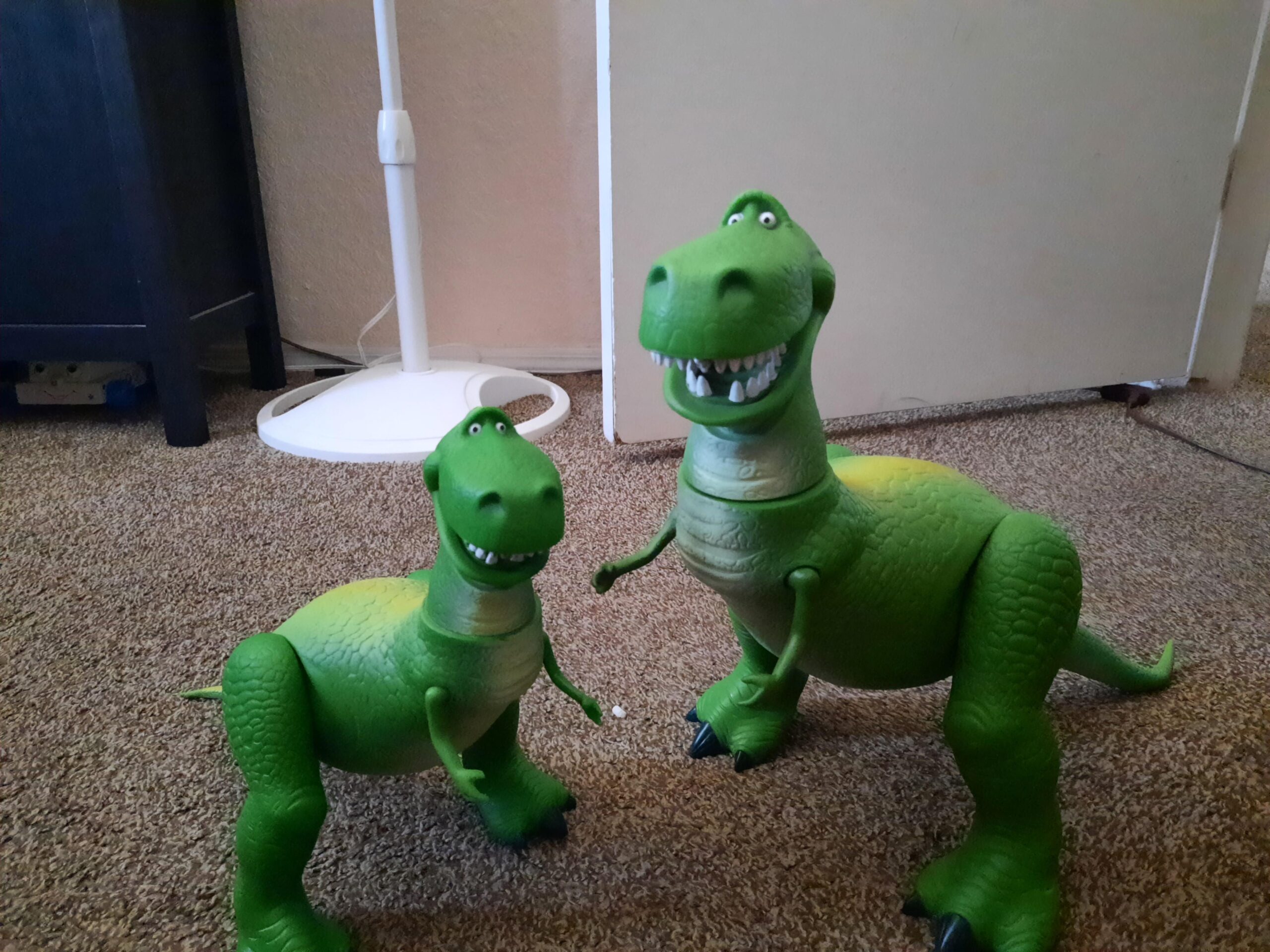
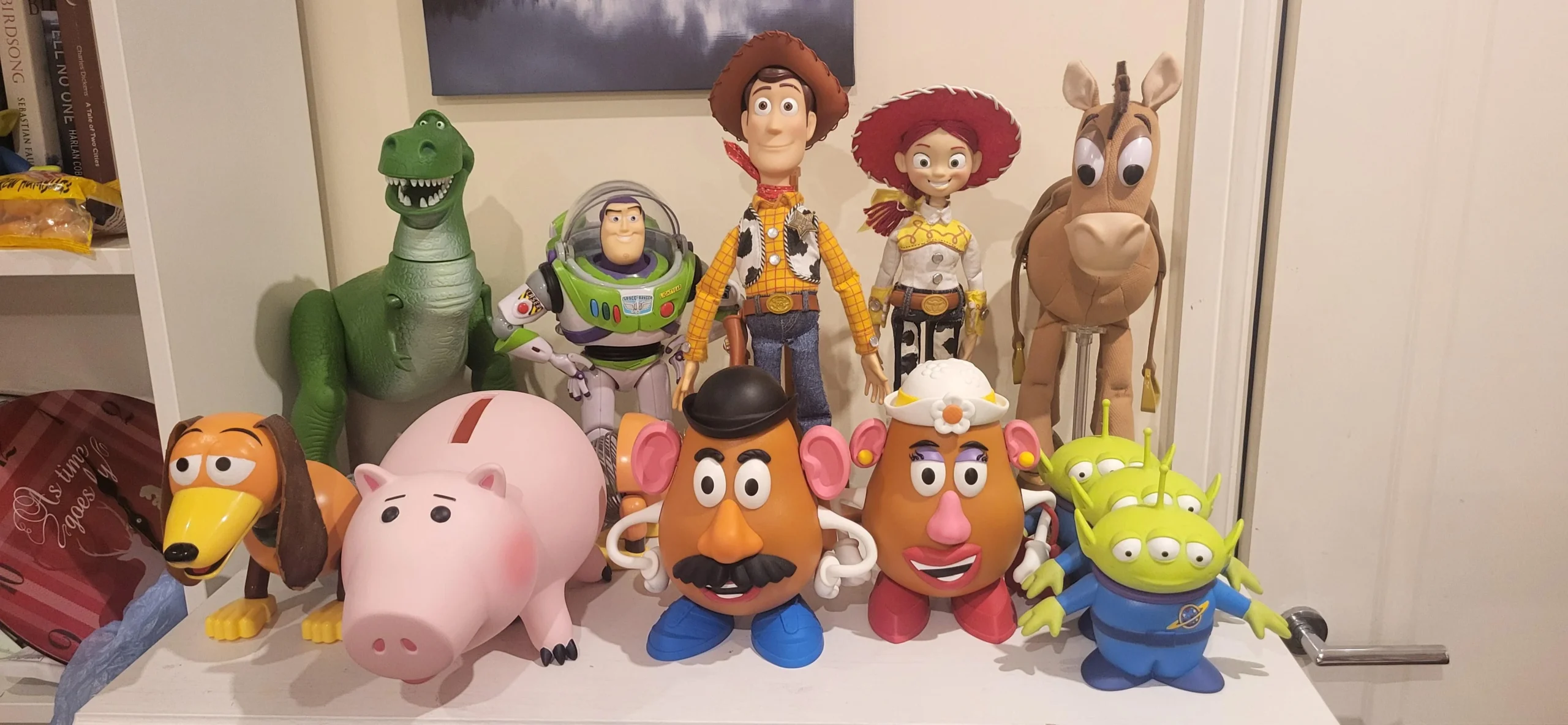
The very first joke of Rex is visual: he’s a T. rex, the top predator of the dinosaur world, yet he moves like a spooked housecat trapped in the wrong body. His oversized head, tiny arms, and slightly too-round belly make him more balloon animal than apex carnivore, sending a clear message that this dinosaur is safe to laugh at, not run from. That mismatch between form and personality acts as a constant punchline, but it also plants a more subtle idea: maybe we don’t have to be what everyone assumes we are.
Throughout the Toy Story films, Rex is haunted by the fact that he does not feel scary enough. He worries that he is a bad dinosaur because he cannot roar convincingly or intimidate anyone, which is a surprisingly relatable version of imposter syndrome dressed up in plastic scales. Kids and adults know the feeling of not living up to expectations, whether those expectations are about toughness, confidence, or “acting your age.” Rex turns that pressure into comedy, but the emotion underneath is honest, and that’s a big reason audiences instinctively root for him.
Anxiety in plastic: how Rex became a mirror for modern worries
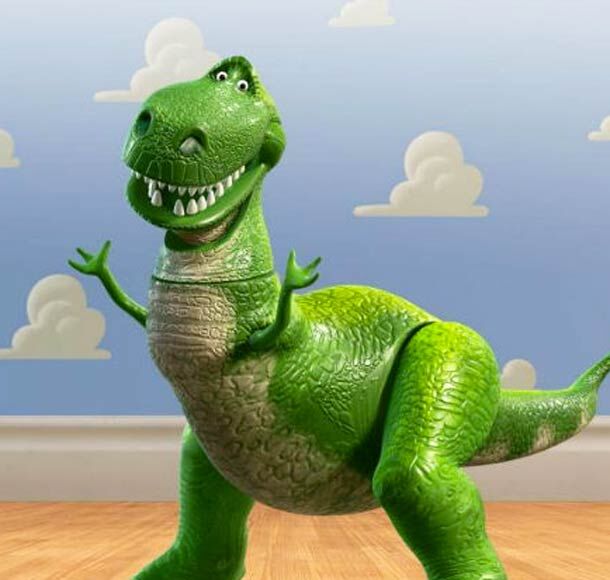
Rex is basically the personification of social anxiety stuffed into a hollow vinyl shell. He catastrophizes, spirals quickly, and assumes that every problem is somehow his fault. In group scenes, he frequently jumps to worst-case scenarios and then clings to the calm reassurance of the other toys, which is exactly how anxiety often plays out in real relationships. The films never label him as “anxious,” but his behaviors are familiar to anyone who has ever overthought a group text or replayed a conversation for hours afterward.
What makes Rex special is that the narrative never punishes him for this emotional wiring. His anxiety is inconvenient sometimes, yes, but it is also treated as harmless and, crucially, worthy of compassion. Woody rolls his eyes now and then, but the toys never reject Rex or ask him to “toughen up.” Instead, they accept that part of who he is involves nervous questions and panicked flailing. For viewers – especially children wrestling with big feelings – seeing a character who is anxious yet still completely loved sends a quiet but powerful signal that you are allowed to be afraid and still belong.
Comic relief with a backbone: why Rex’s jokes matter
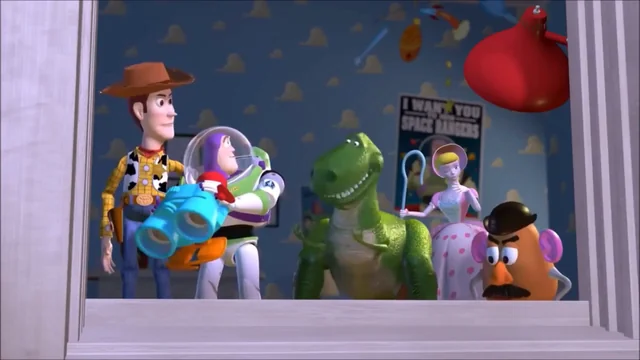
It would be easy to dismiss Rex as simple comic relief: he falls over, he screams too loud, he misreads the situation, and the audience laughs. But the humor works so well because it sits on a backbone of consistent character psychology. Rex’s punchlines usually grow out of his deepest insecurity – his fear of not being useful, cool, or scary enough. When he blurts out something ridiculous in a crisis, it does not feel random; it feels like a nervous brain short-circuiting under pressure, which is funnier precisely because it is recognizable.
That grounded approach to comedy is part of why Rex sticks in memory long after some louder gags fade. We laugh at him, but we never truly laugh at his expense; the joke is almost always about the absurdity of his expectations or the situation he is in. The films make sure he gets tiny wins – moments where his gaming knowledge, his persistence, or even his chaotic energy help save the day. Those little victories mean that when he trips, freaks out, or misunderstands the plan, it feels affectionate rather than cruel. He becomes that friend in the group chat who always sends the nervous message, but somehow ends up saying exactly what everyone else was afraid to admit.
A scientifically impossible dinosaur that still feels emotionally true
From a scientific standpoint, Rex is not a realistic T. rex in any modern paleontological sense. Real Tyrannosaurus rex likely had a more balanced posture, complex musculature, and, by today’s leading hypotheses, at least some form of feathering at certain life stages. Our current view of these animals leans toward intelligent, highly adapted predators, not clumsy, soft-edged cartoon figures. Rex, with his toy proportions and smooth green skin, is clearly more about how mass culture used to imagine dinosaurs than about the fossil record itself.
Yet emotionally, he taps into something oddly accurate about predators and fear. Paleontology suggests that Tyrannosaurus rex was finely tuned for survival and interaction with its environment, not a mindless, roaring monster. In a strange way, turning the “king of the dinosaurs” into a worried, thoughtful toy exposes how much fear we project onto animals based on their teeth and size alone. Rex reminds us that the story we tell about a creature can be scarier than the creature itself, just as the story we tell about ourselves – “I must be fearless, I must be strong” – can be much harsher than the reality of being a messy, anxious human.
As someone who grew up obsessed with dinosaur books, I still grin at the contrast between what I know scientifically and what Rex represents. He is a walking, talking time capsule of the big, lizard-like dinosaur trope, while paleontology has marched on into a feathered, more nuanced age. And yet, sitting on a shelf or shuffling across the screen, he feels emotionally more real than plenty of scientifically accurate reconstructions, because his inner life is so clearly drawn.
The power of voice, design, and vulnerability in making Rex lovable
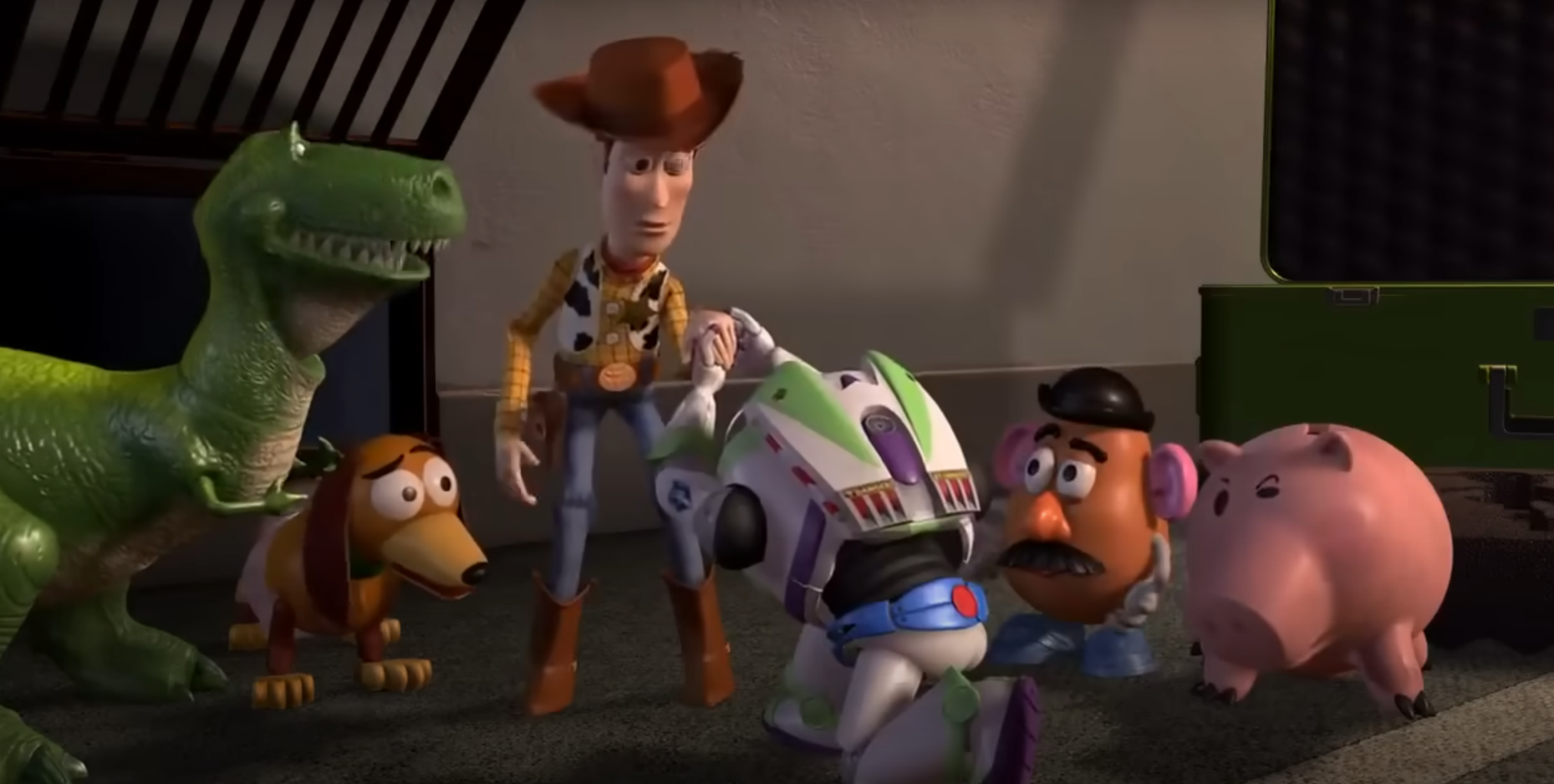
Rex’s appeal is not just on the page; it lives in the combination of performance and design that brings him to life. His slightly squeaky, anxious vocal delivery turns lines that could feel annoying into something endearing, like a friend nervously overexplaining because they care too much. The animators lean into that energy with jittery body language: quick little foot shuffles, overcompensating tail swings, and a tendency to huddle closer to the group whenever danger appears. Every movement tells you that this “terrifying” dinosaur’s first instinct is to seek comfort, not conflict.
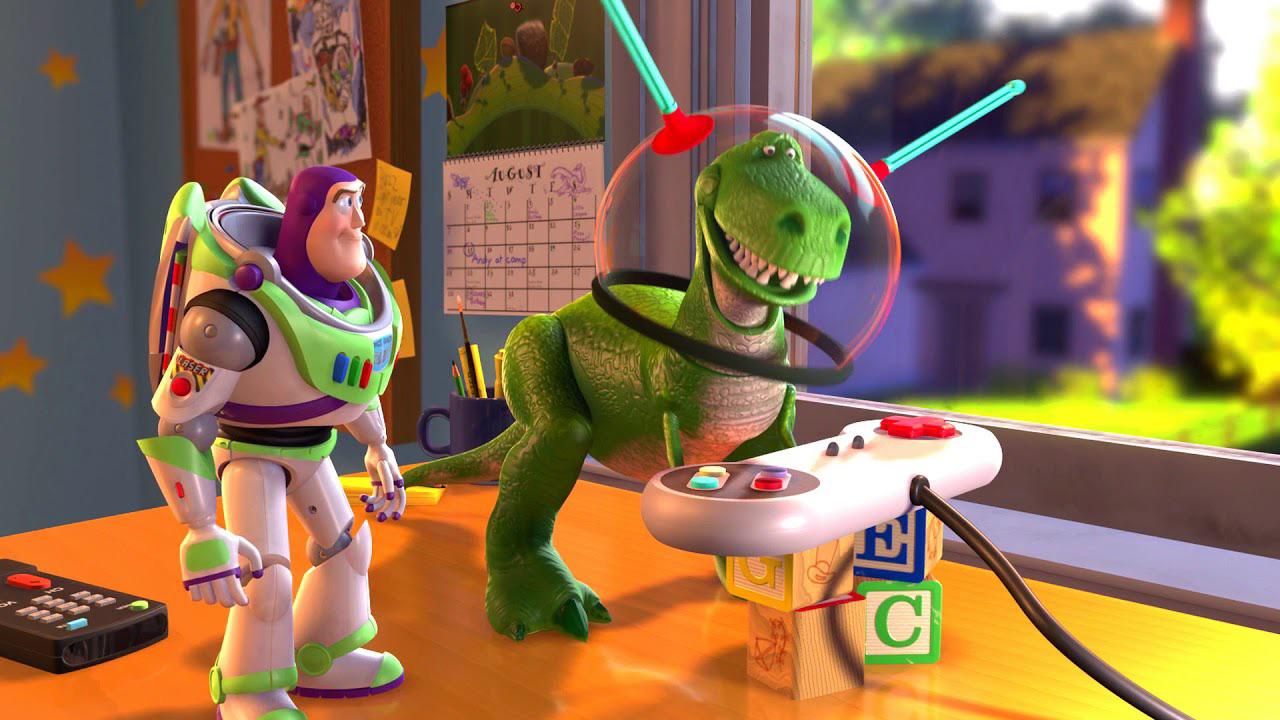
At the same time, the filmmakers are smart about where they let Rex be vulnerable. They give him moments of childlike wonder, especially around technology and games, where his enthusiasm blasts past his fear. When he gets swept up in play, his anxiety eases, letting us glimpse the joyful kid hidden inside the worrier. That vulnerability makes him feel more like a real person than a one-note gag. For many of us, the most lovable people in our lives are not the ones with perfect composure, but the ones who wear their nerves openly and still show up anyway – that is Rex in a nutshell.
Why kids, adults, and anxious viewers see themselves in Rex
On the surface, Rex is a kid-friendly clown, the obvious entry point for slapstick laughs. But if you watch the Toy Story films at different ages, you start to notice how his worries track different stages of life. Children may relate to his fear of not being “good enough” at being a dinosaur in the same way they worry about not being good enough at school or sports. Teenagers and adults, meanwhile, see their own spiraling thoughts in his habit of imagining disasters that never happen, or in his desperate desire to contribute meaningfully to the group.
Over time, Rex becomes a kind of mascot for the quietly anxious viewer watching from the couch. He does not have a perfect character arc where he “gets over” his anxiety and emerges as a stoic hero; he remains jumpy and self-doubting across the series. But he grows in small ways – more willing to try, quicker to bounce back, more trusting that his friends will catch him when he falls. That feels closer to how real people change. Most of us do not vanish our fears; we just get slightly better at living with them, and Rex models that steady, imperfect progress with surprising tenderness.
From running gag to unlikely icon: what Rex really says about us
For me, the most striking thing about Rex is how he sneaks up on you. You go in expecting a background joke – big dinosaur, little courage – and come out realizing he quietly embodies how a lot of us actually feel moving through the world. In a culture obsessed with confidence and constant self-improvement, he is a reminder that it is possible to be deeply anxious and still be valuable, funny, and loved. The fact that a neurotic T. rex has become one of cinema’s most endearing prehistoric characters says less about dinosaurs and more about what modern audiences are hungry to see.
If anything, Rex’s accidental ascent to fan-favorite status feels like a gentle rebuke to the idea that heroes must be tough, smooth, and unshakable. His lasting charm proves that vulnerability is not a flaw to be edited out, but a feature that invites connection. We did not fall in love with him despite his panic – we fell in love with him because of it, and because the story around him refused to treat that panic as a joke without a heart. In the end, the loudest roar in Toy Story does not come from the scariest character; it comes from the quiet realization that even the most frightened among us can leave a giant footprint on the stories we share. Did you expect the softest dinosaur in the room to be the one that sticks with you the longest?