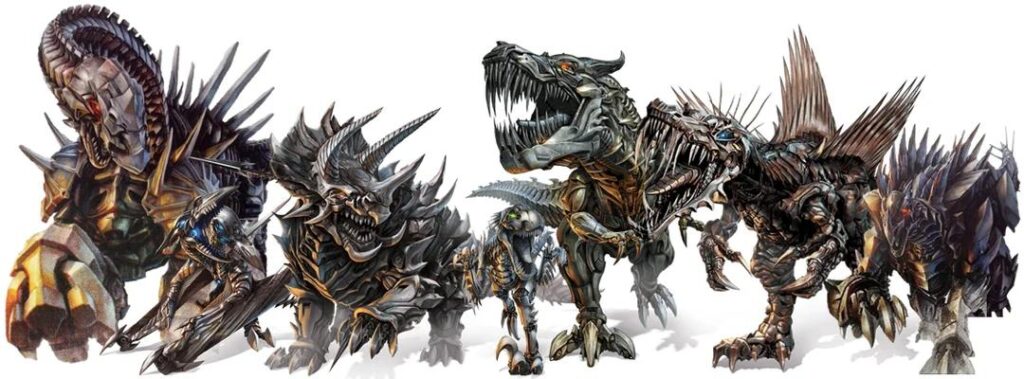
If you grew up loving giant metal dinosaurs that breathe fire and swing swords the size of trucks, you probably were not thinking about vertebrate anatomy. The Dinobots were pure chaos on screen and on the page, but under all that mayhem there is a surprisingly interesting question: how close were these designs to real prehistoric animals?
Looking at them with 2026 eyes, we now have decades of new paleontology, updated dinosaur reconstructions, and a lot less patience for blob-shaped tail-draggers. That makes revisiting Grimlock and his crew weirdly fun: some designs age okay, some look hilariously wrong, and one or two end up being more defensible than you might expect. Let’s rank the classic Dinobots from least to most scientifically plausible alt-mode and see which metal dinosaur actually holds up.
6. Slag / Slug – A Triceratops that never got the memo about modern ceratopsians
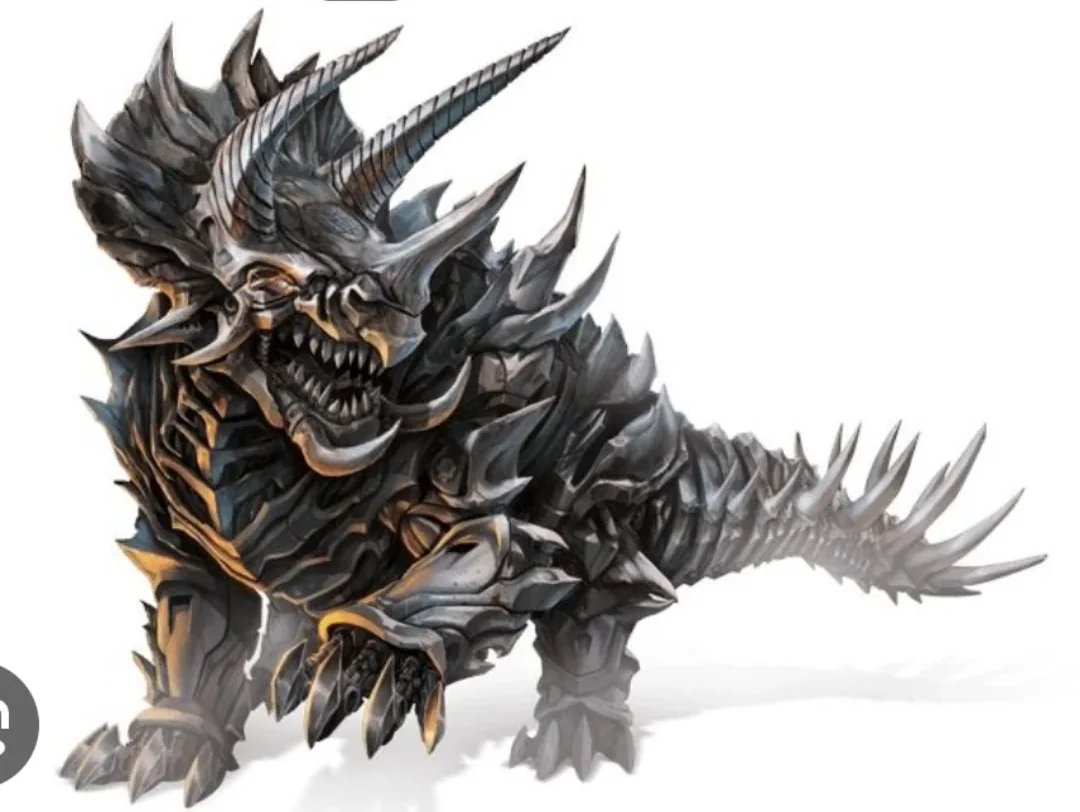
Slag, later renamed Slug in many releases, is the cranky three-horned bruiser of the team, but his Triceratops mode is locked in a 1970s museum diorama. The classic toy and cartoon both show him as a low-slung, tail-dragging tank with a sprawling-ish posture that makes his limbs flare out more like a reptilian table than an active, warm-blooded herbivore. Modern reconstructions of Triceratops give it a far more upright, powerful stance with the tail held off the ground, the chest lifted, and the legs tucked under the body in a posture closer to a rhino than a lizard.
On top of that, Slag’s head proportions and skull shape are more “generic horned dinosaur” than anything that lines up with real fossils. Triceratops had a shorter frill and a beak-heavy face; many depictions of Slag lean into a huge frill and elongated horns just because it looks cool in silhouette. There is also basically no sign of the heavy musculature around the neck and shoulders you would need to support that skull in real life. As a piece of Transformers history, he is iconic. As a scientifically defensible ceratopsian? He is fighting the data and losing hard.
5. Grimlock – King of the Dinobots, but stuck in obsolete Tyrannosaurus mode
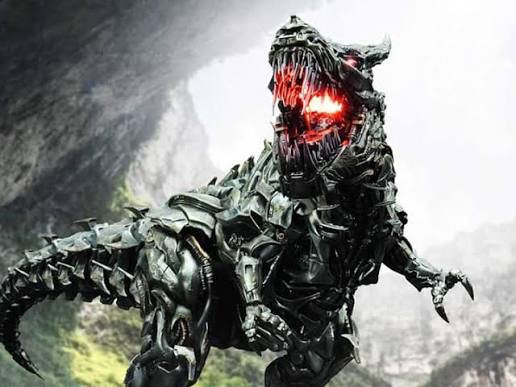
Grimlock is instantly recognizable, and that is part of the problem: his Tyrannosaurus mode is frozen in the “tail on the ground, Godzilla stance” era. We now know Tyrannosaurus balanced its massive skull with a stiff, muscular tail held straight out, forming a roughly horizontal body line. Grimlock stands upright like a guy in a rubber suit, with the tail as a third leg, which would have snapped a real tyrannosaur’s spine in no time. The arms are also placed awkwardly, often too low relative to the chest, making the shoulder girdle look nothing like what the skeleton tells us.
To his credit, Grimlock at least gets the broad strokes of a theropod: big head, hindlimb-dominant posture, and a bipedal frame centered over powerful legs. The skull is exaggerated but still clearly tyrannosaur-inspired, and the number of fingers on each hand is often correctly depicted as two, which is an easy detail a lot of media still manages to get wrong. The issue is not that he is absurd; it is that he is locked to a version of Tyrannosaurus paleontologists have pretty much abandoned. If you squint and forgive the vertical posture, he is not utterly hopeless, but he certainly is not winning any accuracy contests.
4. Snarl – A Stegosaurus that captures the vibe, if not the details
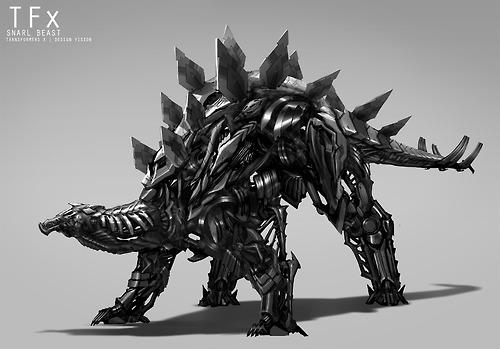
Snarl’s Stegosaurus mode sits in an interesting middle zone: instantly readable as a stegosaur, but full of older assumptions. The back plates are large, dramatic, and help sell the silhouette, but their arrangement tends toward simplistic single rows or overly symmetrical patterns instead of the staggered, offset double row we now think is most accurate for Stegosaurus. His tail is also often too stiff and straight, where a real animal had more subtle curvature and a flexible, muscular base with those iconic spikes – the thagomizer – angled in defensively useful ways.
On the other hand, Snarl at least keeps his body low and quadrupedal, with rear legs that look like they do most of the pushing, which matches the real animal’s power distribution. The tiny head and bulky torso are also roughly in line with stegosaur proportions, even if the neck is usually too short and thick. You can tell the designers were working from genuine reference material, but filtered through the toy engineering constraints and visual drama of the 1980s. It is not accurate by modern standards, yet it feels like it is trying to be a dinosaur instead of a random lizard with armor plates.
3. Swoop – A Pteranodon that half-remembers basic pterosaur anatomy
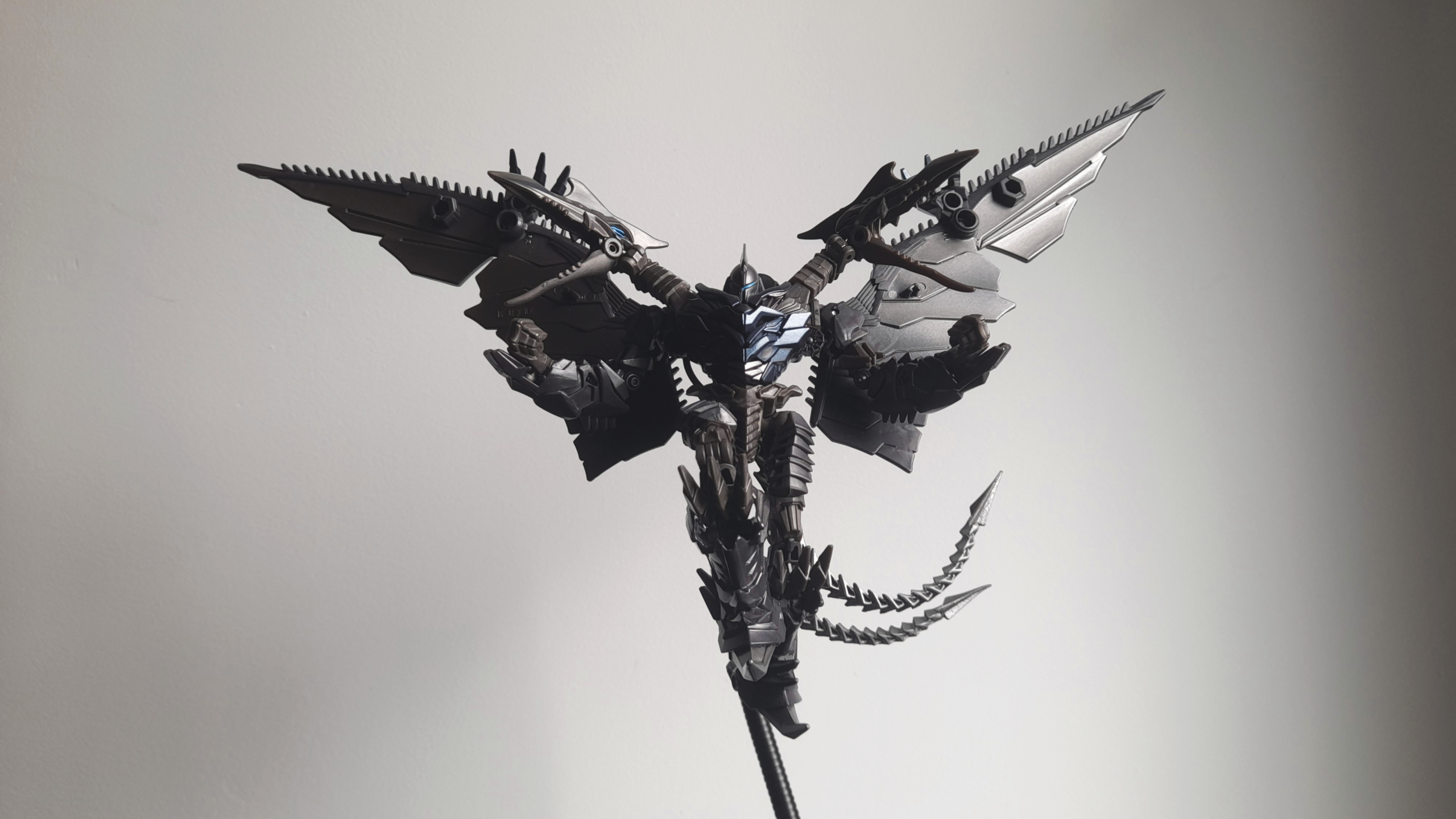
Swoop is technically not a dinosaur at all – he is based on a Pteranodon, which is a pterosaur – but since the franchise cheerfully lumps all big prehistoric reptiles into “dinobots,” he stays on the list. His alt-mode at least acknowledges a few key pterosaur features: the backward-swept head crest, the long beak, and the wing membranes stretching from an elongated fourth finger. Many pieces of 1980s media completely messed that up, giving “pterodactyls” bat-like fingered wings, so Swoop’s general outline ages a bit better than you might expect.
The problems kick in when you look closer. Swoop’s body tends to be too chunky and metallic-blocky for a real Pteranodon, which would have had an incredibly lightweight, hollow-boned frame adapted for soaring flight. His hind limbs and hips are also often arranged like a simplified bird rather than a pterosaur, and the wing membranes themselves usually attach in the wrong places along the torso and legs. He is more like a stylized fighter jet made to resemble a Pteranodon than a living animal, but there is just enough anatomical intent there to feel at least loosely grounded in real-world biology.
2. Sludge – A sauropod that accidentally falls close to a classic Apatosaurus
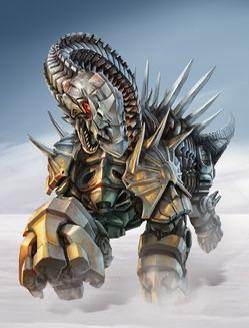
Sludge transforms into a long-necked sauropod, usually described as Brontosaurus or Apatosaurus in fan circles, and at first glance he looks very old-fashioned: big belly, thick neck, and a generally dumpy outline. The tail often dips too low and sometimes even brushes the ground, but compared with the wildly wrong theropod and ceratopsian poses of the same era, his overall geometry is not that far off from traditional sauropod reconstructions. The bulk is at least in the right place, and the general proportions – long neck, deep body, long tail – are close enough to read as a plausible giant herbivore.
Where Sludge ends up surprisingly defensible is in how little he actively breaks sauropod rules. He does not try to stand upright like a kangaroo, he does not add random horns or spikes that have no fossil basis, and his legs are more or less columnar supports directly under the body. Modern sauropod research has refined details like neck posture and tail carriage, often pushing them more horizontal and dynamic than the older, swamp-dwelling images. Still, if you adjusted his neck to be a bit more forward and raised the tail slightly, Sludge would not look outrageously out of place next to a museum illustration from a couple of decades ago. That low bar ends up placing him near the top.
1. The “winner”: Sludge again, in light of what the others get wrong
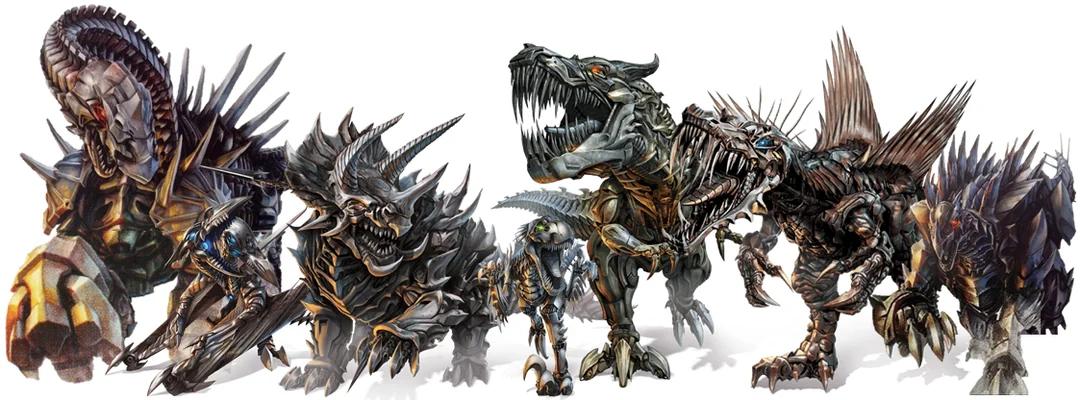
If you force a ranking based on scientific defensibility, Sludge edges out the rest simply because his basic sauropod template clashes the least with what we now know. Everyone else makes some glaring error that would cripple or kill a real animal: Grimlock’s bent spine, Slag’s sprawled limbs, Swoop’s overly heavy frame, Snarl’s mismatched plates and tail mechanics. Sludge mostly commits the crime of being old-fashioned, not structurally impossible. His body plan aligns well with a big, slow herbivore that relies mainly on mass, height, and a long reach rather than speed or agility.
That does not mean Sludge is accurate by modern 2026 standards; he is still missing details like more nuanced limb muscle definition, correct neck flexibility, and the often more horizontal torso posture scientists support today. But if you had to pick one Dinobot design to stand in for a vaguely plausible prehistoric animal, he is the one you could tweak slightly and get away with on a documentary poster. In a lineup defined by cool factor first and anatomy second, the plodding sauropod accidentally ends up the quiet champion.
Conclusion: When “least wrong” is the real crown
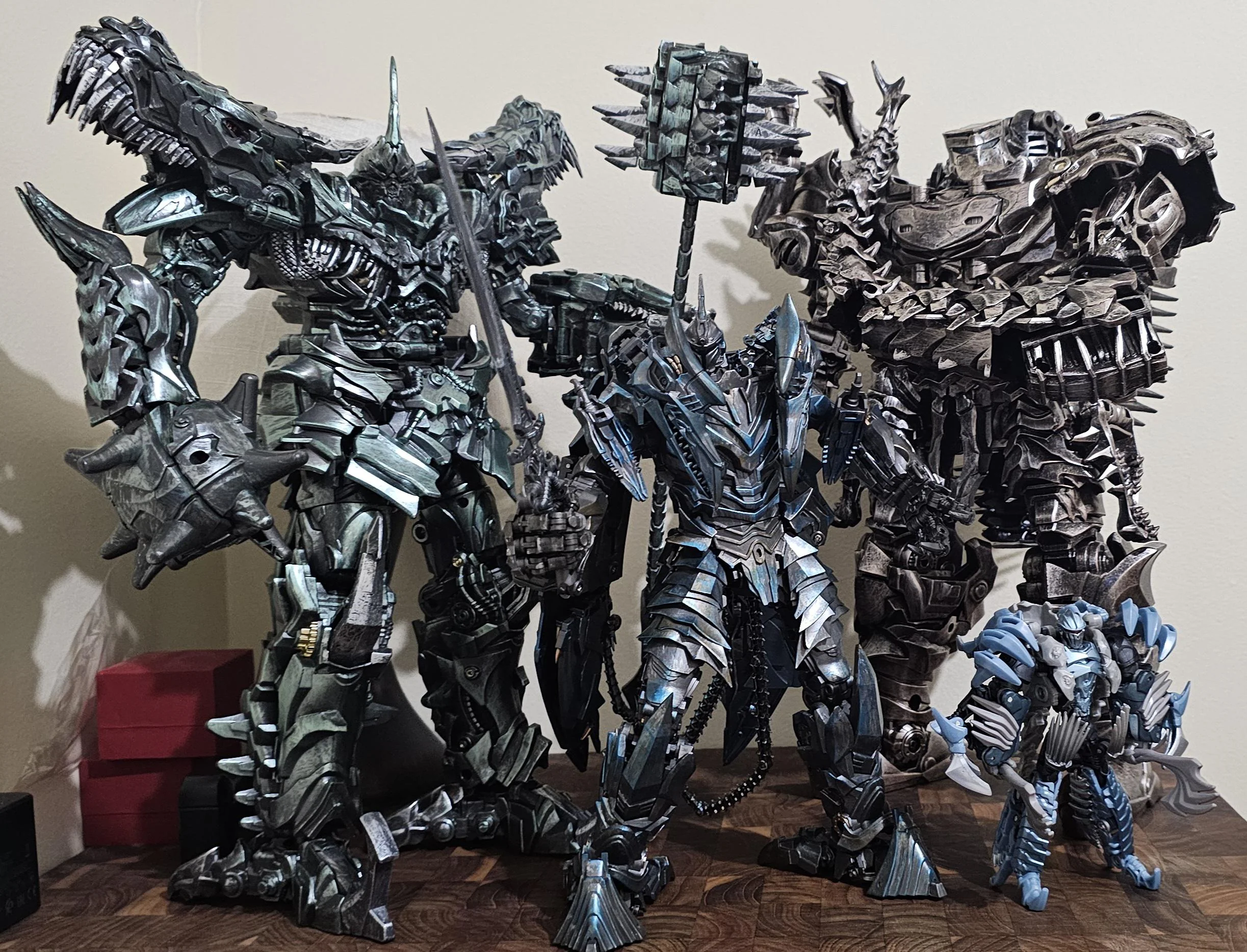
Looking back at the Dinobots with modern paleontology in mind is a bit like rewatching a beloved sci-fi movie after learning basic physics: you suddenly see every impossible angle, but the emotional connection is still there. These designs were never meant to survive peer review; they were meant to sell toys, light up kids’ imaginations, and make robots look like they could stomp a city into rubble. From that angle, Grimlock towering in his vertical stance or Slag charging like a horned tank still absolutely works, scientific sins and all.
But if we are brutally honest and stick to the headline’s challenge, Sludge walks away with the “most defensible” title precisely because he is almost boringly straightforward. His sauropod body plan does not fight the fossil record as hard as the others do, and that makes him the least wrong in a group built on glorious exaggeration. Maybe that is the real charm of revisiting the Dinobots today: you get to love them for what they got delightfully wrong and quietly appreciate the one that, by accident or design, stayed closest to reality. If you had to bet on one of them surviving as a living animal, would you really pick anyone but the big, steady plodder?