If the ground under your feet suddenly decided that north is south and south is north, you probably wouldn’t notice it over breakfast. Compasses would slowly start lying, migratory animals might get confused, auroras could bloom in strange places, and high‑altitude flights would get a lot more interesting. Yet the really unsettling part is this: Earth’s magnetic field has done exactly that, over and over again, and scientists still cannot say with confidence exactly what it does to life while it is happening.
I remember the first time I learned that the magnetic poles had flipped many times; it felt like discovering that the planet has a hidden mood swing no one told us about. We live our lives assuming Earth is stable and predictable, but deep below us, liquid metal is churning like a stormy ocean, occasionally rewiring the whole global shield that protects our DNA from cosmic radiation. The evidence that this has happened hundreds of times is rock‑solid. What it means for ecosystems, climate, and vulnerability to space weather? That story is still being written.
The Strange Idea That North and South Can Swap Places
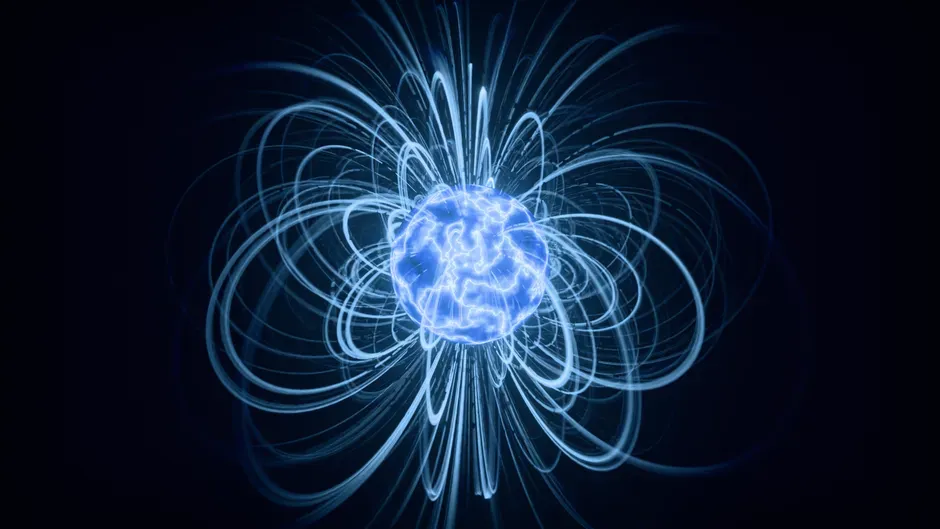
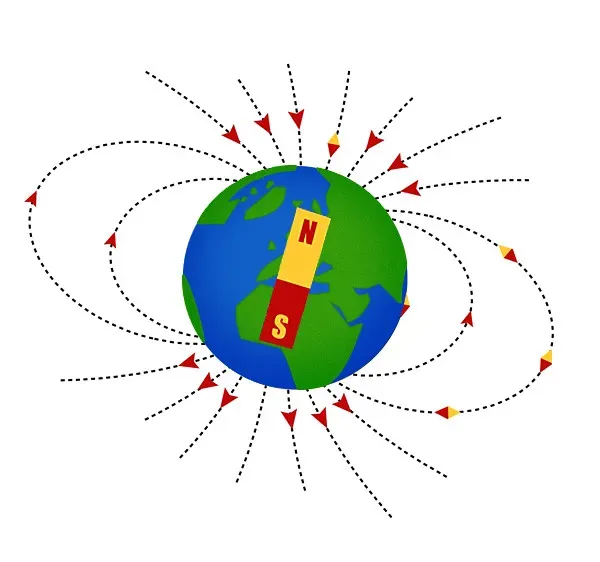
It sounds like science fiction: one day in the deep future, your compass needle calmly turns and starts pointing toward Antarctica instead of the Arctic. In reality, magnetic reversals are not cinematic, instant flips; they unfold slowly over thousands of years as Earth’s magnetic field becomes messy, weak, and patchy before settling into a new configuration. The geographic poles stay put, but the invisible magnetic field lines, generated by molten iron sloshing around in the outer core, reorganize themselves in a way that sometimes leaves north where south used to be.
The unsettling part is that this is not a rare glitch but a recurring behavior of our planet’s interior dynamo. Over tens of millions of years, the field has reversed countless times, sometimes frequently, sometimes with long quiet stretches of stability. From a human perspective, it feels almost mythic: we evolved under a protective magnetic shield that can, on geological timescales, rewire itself without warning. From a planetary physics point of view, though, reversals seem to be a natural part of how a turbulent, rotating, metal‑rich fluid behaves when it is trying to move heat out of Earth’s core.
How We Know the Poles Have Flipped Hundreds of Times
The proof that Earth’s magnetic field has reversed again and again is literally baked into rocks. When molten lava cools, tiny magnetic minerals inside it line up with the direction of the local magnetic field, like microscopic compass needles, and then get locked in place as the rock solidifies. By dating volcanic layers and ancient seafloor crust and measuring those frozen magnetic directions, geophysicists can reconstruct a barcode‑like pattern of normal and reversed polarity stretching back tens of millions of years.
Oceanic crust is particularly revealing because it forms continuously at mid‑ocean ridges and spreads outwards, carrying the history of the field with it in symmetrical stripes on both sides of the ridge. These stripes alternate between “north is up” and “north is down,” proving that the field has switched many times and that reversals are global. The detailed timeline, called the geomagnetic polarity timescale, shows periods where reversals were relatively frequent and others where the field stayed in one orientation for tens of millions of years. That regular irregularity is one of the big clues that reversals are tied to deep processes in the core, not anything happening at the surface.
What Actually Happens During a Geomagnetic Reversal?

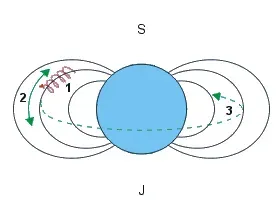
During a reversal, the field does not simply vanish and reappear with opposite polarity like flipping a light switch. Instead, the overall strength of the global dipole field declines, sometimes to a small fraction of its usual intensity, while the field geometry becomes complicated and lumpy. Multiple north and south magnetic spots can emerge at different latitudes, including near the equator, and the main dipole axis can wander far from the geographic poles before it finally settles into a new alignment.
From the perspective of the ground, that would mean compass directions slowly drifting over generations, with some regions experiencing much weaker shielding from charged particles streaming from the Sun and cosmic rays from deep space. A weaker, more tangled field would allow more energetic particles to penetrate closer to the surface, especially at low and mid‑latitudes that are normally well protected. The process can last on the order of thousands of years, which is long for a human civilization but just a blink in geological time, and it may include shorter, chaotic episodes where the field collapses and recovers in strange configurations before committing to the final flip.
Radiation, DNA, and the Big Question About Mass Extinctions

The biggest worry you usually hear is that a weak or reversing magnetic field might blast life with extra cosmic radiation, causing mutations and maybe even triggering mass extinctions. It is a natural fear: remove or weaken the shield, and you would expect more damage to DNA, more cancers, more reproductive problems, and more stress for organisms that cannot hide underground, in water, or behind thick atmosphere. When you imagine that playing out across an entire planet for thousands of years, it sounds like a recipe for evolutionary disaster.
But when scientists line up the known timings of major extinction events with the timings of well‑dated reversals, the neat, dramatic story mostly falls apart. Some big die‑offs happen with no obvious reversal nearby, while many reversals occur with no sign of unusually elevated global extinction. That does not mean there is no effect at all; it suggests the impact is more subtle, tangled up with other forces like climate swings, volcanic eruptions, and changes in ocean chemistry. The magnetic field might be one stressor among many, not a guaranteed planet‑killer on its own.
How Animals That Use Earth’s Magnetic Field Might Be Affected
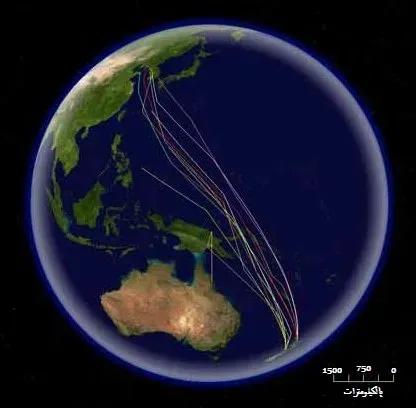
Many animals, from tiny bacteria to migratory birds and sea turtles, seem to use Earth’s magnetic field as part of their internal GPS. They sense direction, position, or field intensity in ways we still do not fully understand, guided by a quiet signal that has been relatively stable over the timescales of their evolutionary history. If that background signal becomes scrambled during a reversal, with multiple poles and rapid shifts, it is reasonable to worry that migration routes, breeding behaviors, and survival strategies could be disrupted.
There is some evidence that smaller‑scale changes and irregularities in the field today can nudge migratory paths or confuse animals, which hints at what might happen during a full reversal, but we are far from having a complete picture. Many species also rely on a mix of cues: stars, the Sun, smells, landmarks, and even sounds. That redundancy might help buffer them against a chaotic magnetic environment, while others might suffer or adapt in unexpected ways. If anything, reversals may act as evolutionary stress tests that reward flexibility and punish overspecialization on a single environmental cue.
The Ozone Layer, Atmosphere, and Climate: What We Know and What We Don’t
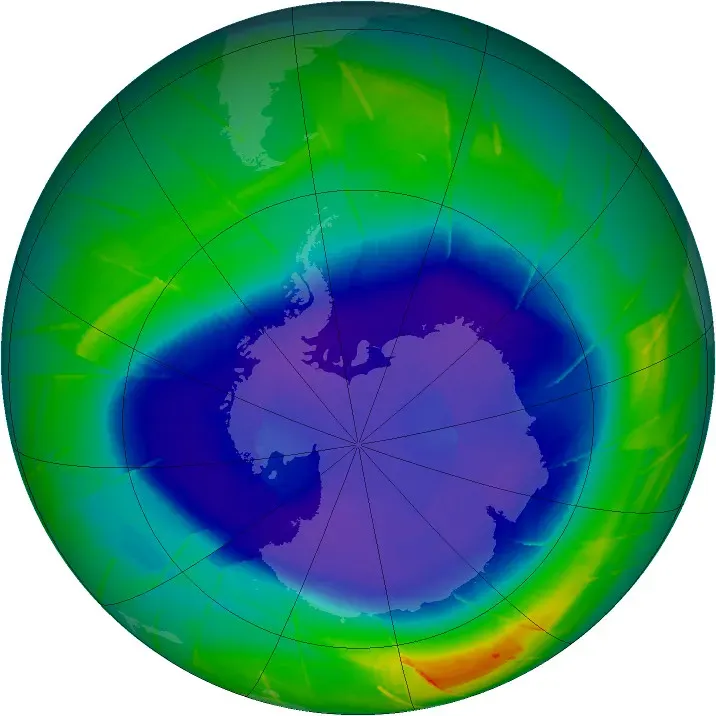
Another big question is whether a weak magnetic field lets more high‑energy particles into the upper atmosphere, altering the chemistry of the ozone layer and, indirectly, the climate. In theory, increased particle bombardment could generate more reactive molecules that nibble away at ozone, allowing more ultraviolet radiation from the Sun to reach the surface. That could stress ecosystems, especially in sun‑sensitive regions or among species already near their tolerance limits. It is a plausible chain of effects, but turning that into a clear, quantified risk is where things get messy.
Studies of past reversals and shorter magnetic field collapses, along with computer simulations of space weather and atmospheric chemistry, have hinted at potential ozone thinning and regional climate impacts, but the evidence is patchy and often indirect. Climate is a noisy system driven by many overlapping influences, from greenhouse gases to volcanic aerosols to orbital cycles, and teasing out the specific fingerprint of magnetic field changes is tough. My own opinion is that we should treat magnetic reversals as a factor that can amplify or modulate other stresses, rather than a solitary villain that drives climate chaos by itself.
What a Future Reversal Could Mean for Our Technology and Society
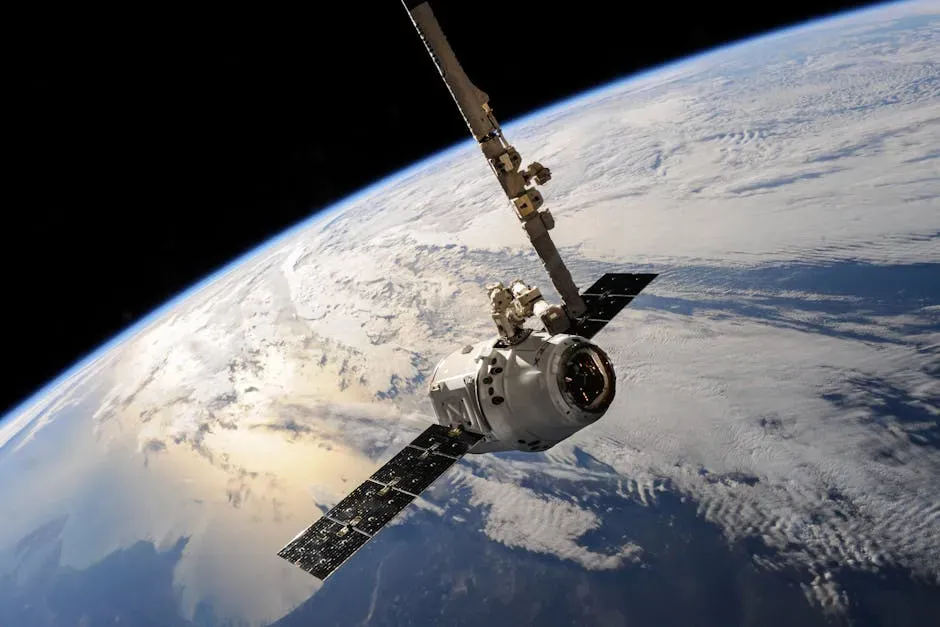
From a human civilization standpoint, the most immediate concerns during a future reversal might not be biological but technological. A weaker, more irregular magnetic field could expose satellites, power grids, pipelines, and aviation to stronger and more frequent bursts of charged particles from solar storms. That raises the risk of communication disruptions, GPS errors, hardware damage, and even large‑scale blackouts if extreme space weather hits while the field is in a particularly vulnerable state. In a world that leans heavily on electronics, that is not a theoretical nuisance; it is a genuine resilience challenge.
At the same time, it is important not to fall into doomsday fantasies. We already know how to harden satellites, reroute flights, and upgrade grid infrastructure to better withstand geomagnetic disturbances, and our understanding of space weather is improving. A reversal would likely unfold slowly compared with human planning timescales, giving us room to adapt if we take the risk seriously early enough. The uncomfortable truth is that our biggest vulnerability might not be the physics of the magnetic field at all, but our habit of underinvesting in slow‑burn risks until they suddenly become urgent.
Why the Science Is Still So Uncertain – and Why That Matters
It might be frustrating to hear that something as fundamental as Earth’s magnetic field can flip hundreds of times and we still do not fully understand what that does to life, but that is honestly where the science stands. Our data come from rocks, sediments, fossils, ice cores, and a relatively short window of direct magnetic measurements, all of which are incomplete and sometimes hard to interpret. On top of that, the physical processes in the core, the coupling to the mantle, the atmosphere, and the biosphere form a cascade of interactions that are nearly impossible to capture in a single neat model.
Instead of a simple story, we have a mosaic: some evidence that reversals change radiation exposure, some hints of atmospheric effects, scattered observations about animal navigation, and a striking absence of clean one‑to‑one links with global catastrophe. In my view, the honest position is to admit that magnetic reversals are significant planetary events whose full consequences range from mild annoyance to serious stress, depending on what else is happening at the same time. That uncertainty is not a failure; it is a reminder that Earth is still a partially unread book, even in the supposedly well‑understood chapters.
Conclusion: A Planet That Can Turn Its Shield Inside Out
To me, the most striking thing about geomagnetic reversals is not the fear they provoke but the resilience they quietly reveal. Life on Earth has persisted and diversified through hundreds of flips, shrugging off changes in the invisible shield that stands between us and space. That does not mean reversals are harmless, but it does argue strongly against the idea that the next one will automatically spell doom. If anything, it is a humbling reminder that our planet has been through far wilder swings than the ones we obsess over in daily news cycles.
My opinion is that we should treat magnetic reversals like we treat earthquakes or major storms: inevitable features of a dynamic planet, not reasons to panic but reasons to prepare and to respect the physics that make our world habitable in the first place. The fact that we still do not fully understand how these flips shape biology and climate should push us to study them harder, not to spin reckless disaster scenarios or dismiss them as trivia. Earth can turn its magnetic shield inside out and keep going; the real question is whether our species will be wise enough to adapt thoughtfully when it happens again. If you had not heard of geomagnetic reversals before today, would you have guessed our planet was this restless under the surface?