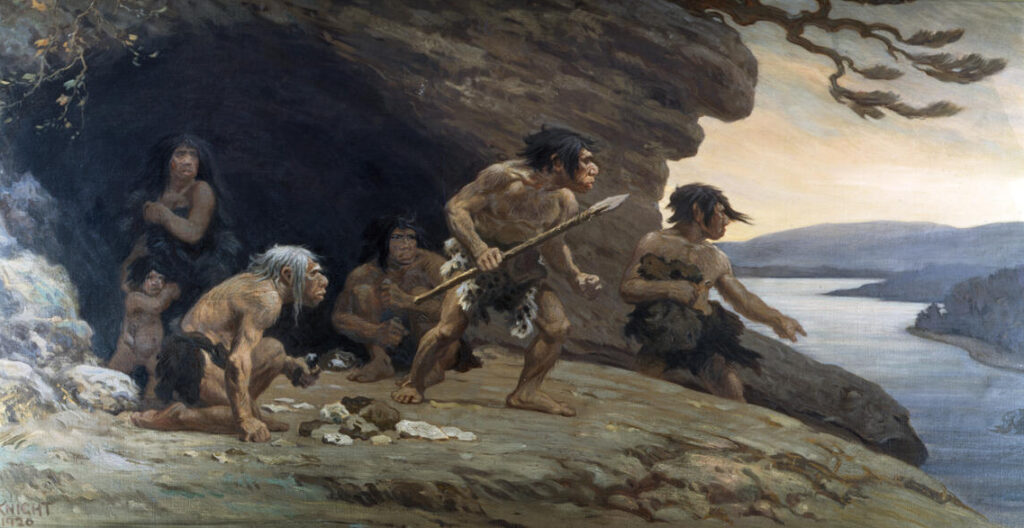
Most people picture Neanderthals as grunting, club-swinging cavemen who lost the evolutionary race to smarter, more “modern” humans. That story is basically dead. Over the last two decades, archaeologists have quietly dismantled almost every stereotype we grew up with, one lab result at a time.
Every time new evidence surfaced, the same embarrassing pattern played out: researchers scoffed, published rebuttals, and demanded more proof – only to eventually admit they were wrong. Thirteen of those reversals are lined up below, and they get stranger, and more human, the further you read.
#13 – They Planned Ahead and Hunted Small, Clever Prey
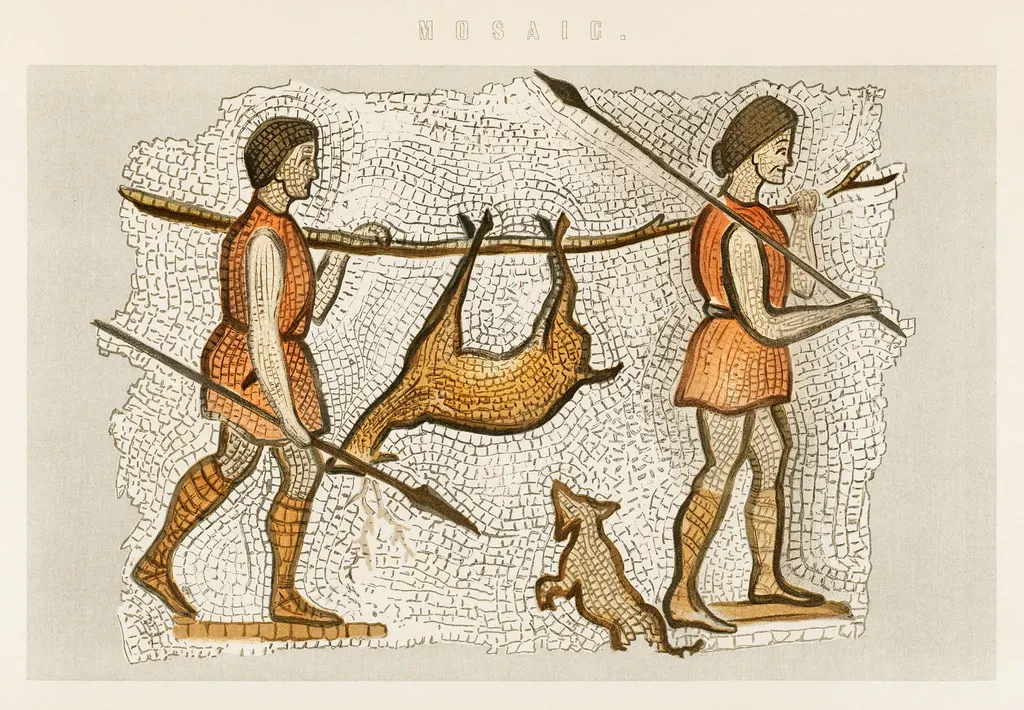
Neanderthals weren’t just brute-force mammoth killers who charged the biggest animal in sight.
At the Abric Pizarro site in Spain, researchers found something nobody expected from a species long dismissed as one-trick hunters. The animal bones recovered show they were exploiting the surrounding fauna hard – hunting red deer, horses, and bison, but also catching freshwater turtles and rabbits. That’s not opportunistic scavenging. That’s a strategy.
Catching a fast-moving rabbit or a defensive turtle takes patience, timing, and coordination, not just brute strength. This directly challenges the old belief that Neanderthals only hunted large animals, exclusively targeting horses and rhinoceroses.
Fast Facts
- Neanderthals existed for roughly 400,000 years, dying out around 40,000 years ago.
- Their range stretched across Europe and into parts of western Asia.
- Small-game remains like turtles and rabbits are now documented at multiple sites, not just one.
- Diet breadth this wide was once considered exclusive to modern humans.
Scientists had built entire theories about Neanderthal extinction around the idea that they were dietary one-trick ponies. But that’s nothing compared to what we found about #12…
#12 – They Built Mysterious Ring Structures Deep Inside a Pitch-Black Cave
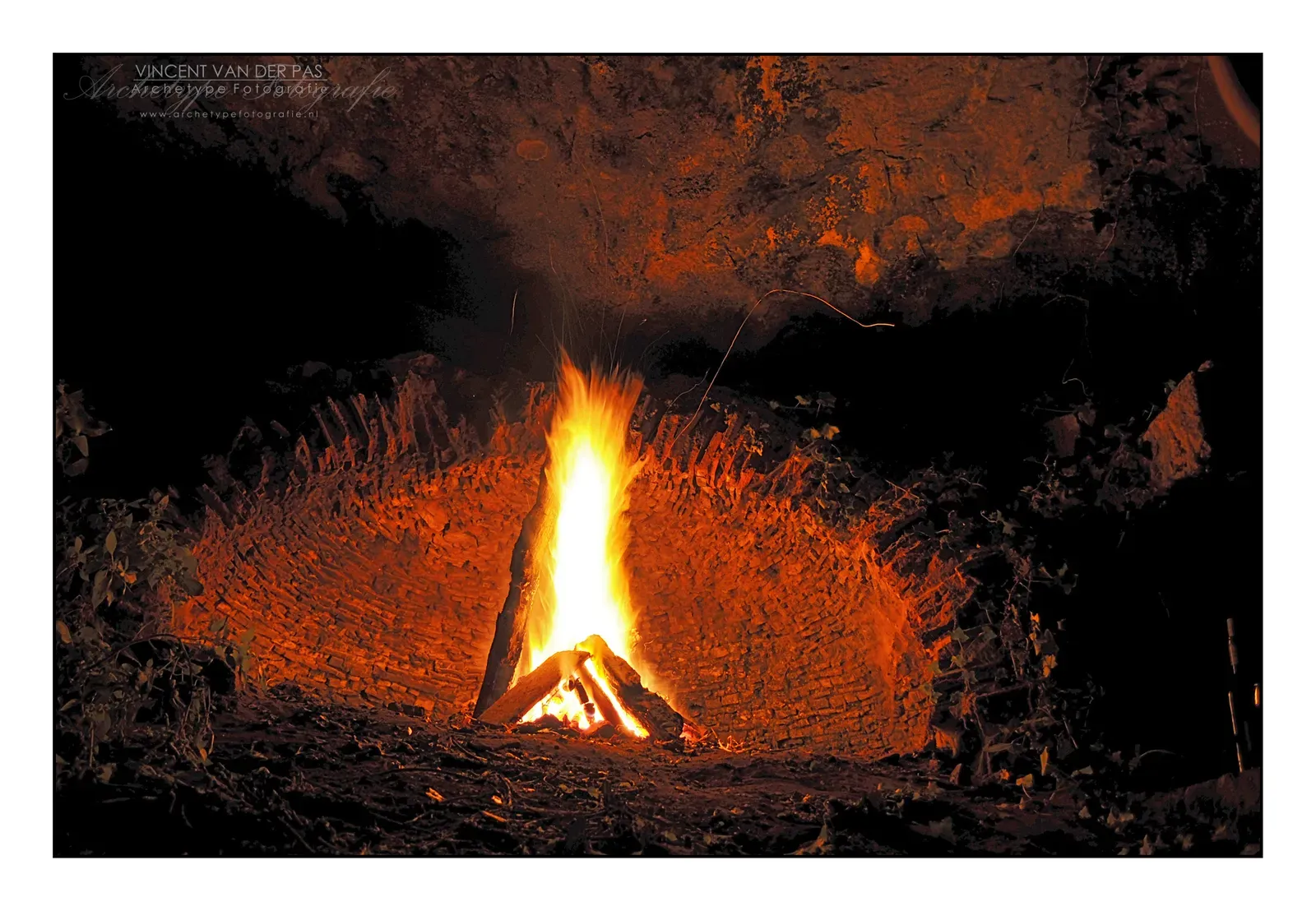
Deep inside a French cave, hundreds of meters from daylight, Neanderthals built something that looks disturbingly deliberate.
At Bruniquel Cave, researchers discovered broken stalagmites arranged into circular structures far below the surface – a place no Neanderthal would have wandered into by accident. Assembling broken speleothems into an oval and kindling fire on top of them suggests planning, teamwork, and symbolic or ritualized behavior. Scientists initially resisted calling this “ritual,” because that word implies a level of abstract thought Neanderthals supposedly didn’t have.
Getting deep underground in total darkness required fire, navigation, and group cooperation – none of which fits the old “dumb caveman” narrative. This wasn’t a home. It wasn’t a hunting site.
It served no obvious survival purpose, which is exactly why it took so long for mainstream researchers to accept it as intentional. But that’s nothing compared to what we found about #11…
#11 – They Collected Animal Skulls and Horns for No Practical Reason
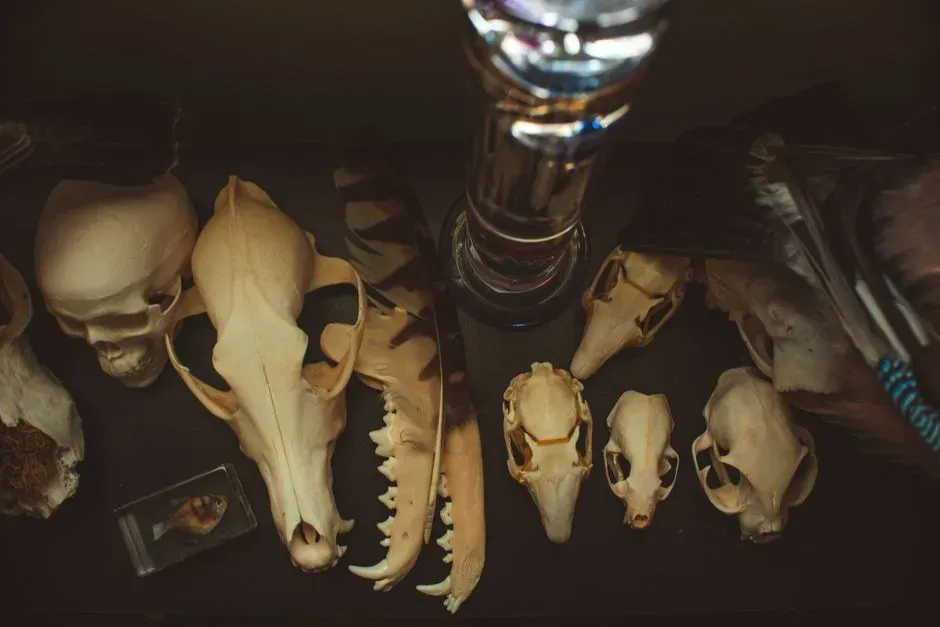
Imagine finding a prehistoric trophy room, and having no idea what to call it.
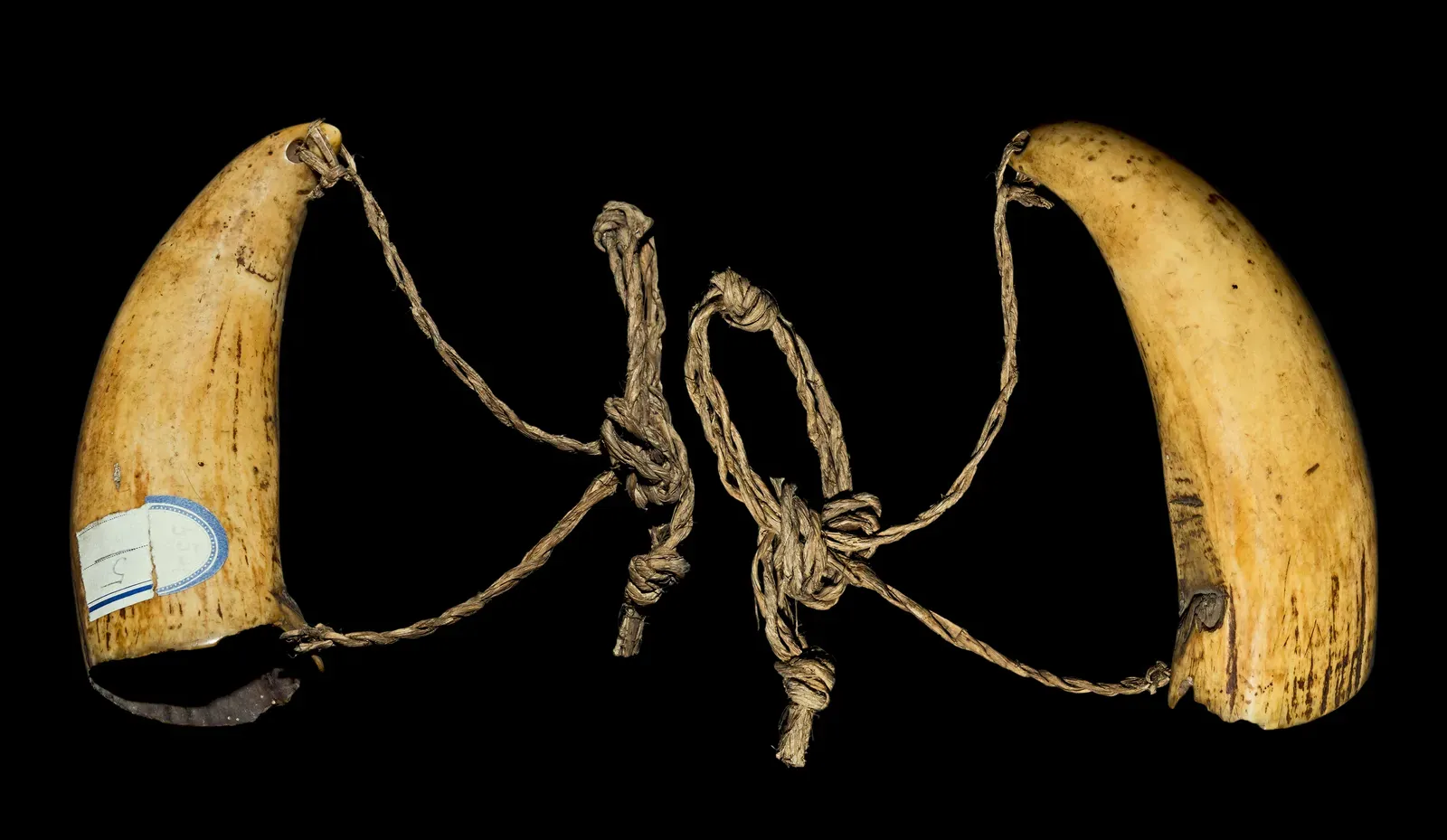
At a Spanish site called Des-Cubierta, researchers uncovered a strange concentration of animal skulls and horns with no clear butchering or tool-making purpose. “They were doing strange things, very strange things,” says paleoanthropologist Juan Luis Arsuaga, one of the lead investigators of the site. The horns weren’t randomly scattered – they’d been deliberately gathered.
Scientists are still cautious about calling it symbolic, and for good reason. Zooarchaeologist Rosa Huguet notes that when you think about behavior, you can make mistakes in both directions: over-interpreting past behavior from a modern point of view, or assuming that Homo sapiens are the only species capable of symbolic behavior.
That admission alone is a massive shift from decades of flatly denying Neanderthals had any symbolic capacity at all. But that’s nothing compared to what we found about #10…
#10 – They Cared for the Sick, Injured, and Disabled Like Family

Here’s a fact that quietly wrecks the “survival of the fittest, no mercy” caveman myth.
One of the most famous Neanderthal skeletons ever found, known as Shanidar 1, tells a story of long-term survival despite severe disability. The bones of his right shoulder and upper arm appeared shriveled, most likely from a trauma that led to the amputation of his right forearm, and his right foot and lower right leg had also been broken. This man lived for years after his injuries – he couldn’t have hunted, fought, or fully fended for himself alone.
Someone fed him, protected him, and helped him survive for years with a missing arm. That’s not instinct. That’s sustained, intentional caregiving.
Researchers summarizing the broader fossil record now openly acknowledge Neanderthals buried the dead, cared for the sick, hunted large animals in their prime, harvested seafood, and communicated with spoken language. But that’s nothing compared to what we found about #9…
#9 – They Buried Their Dead on Purpose
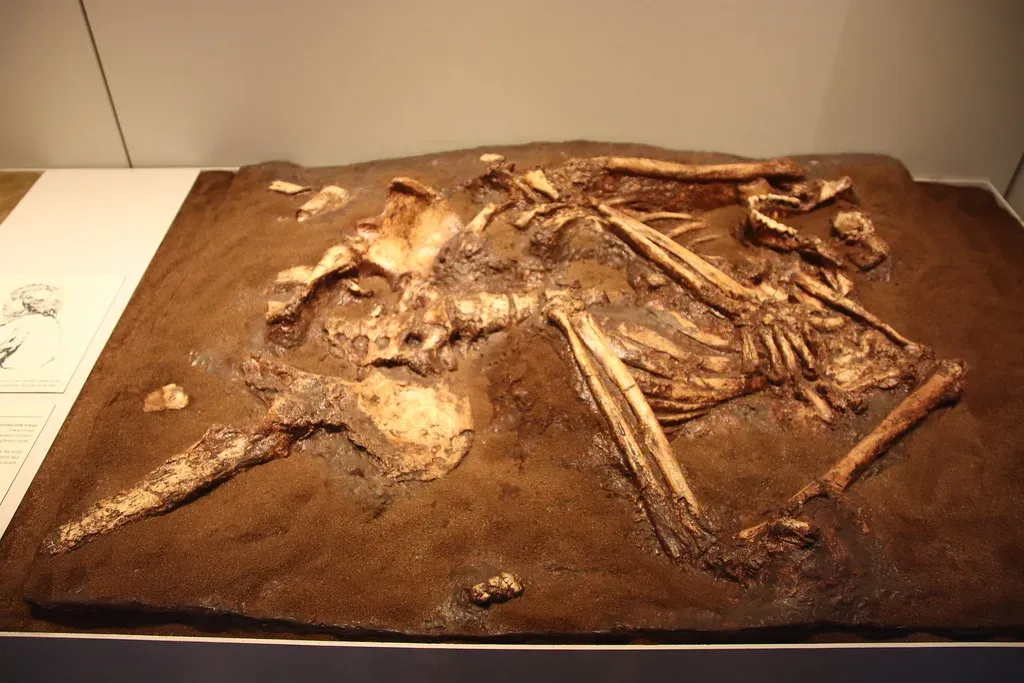
For decades, the idea that Neanderthals buried their dead was treated as fringe speculation, not fact.
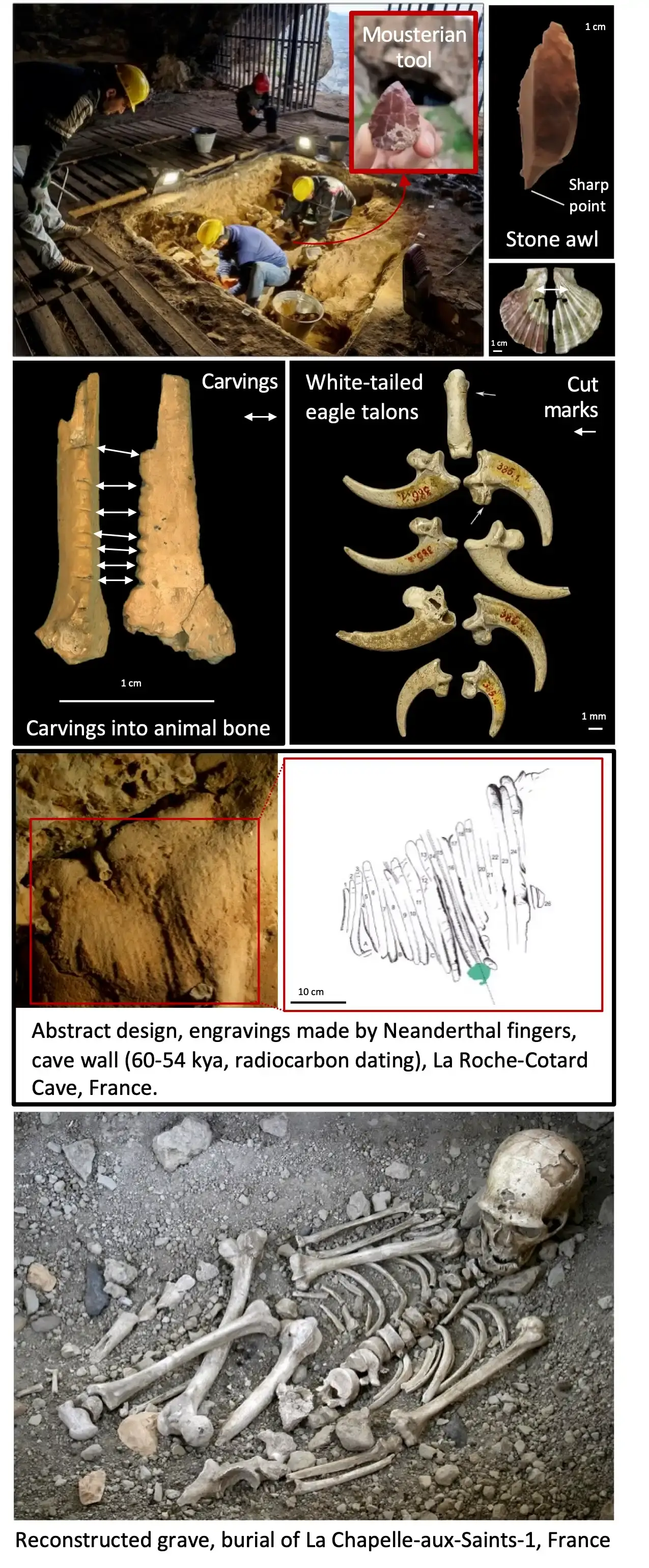
Skeptics argued that any skeleton found in a “burial-like” position was simply the result of an accidental cave collapse or natural sediment burial. That argument has aged badly. Researchers have since found that Neanderthals buried their dead, adorned themselves with black and red pigments, wore shell and feather jewelry, and cared for the elderly and infirm – all evidence of complex thought.
Intentional burial implies something most people never associate with Neanderthals: the concept of death as meaningful, not just a body to be discarded. Multiple sites across Europe now show bodies placed in deliberate positions, sometimes with objects nearby.
This single behavior alone forced a full rewrite of textbooks that once claimed only Homo sapiens understood mortality in a symbolic way. But that’s nothing compared to what we found about #8…
#8 – They Cooked and Ate Crabs by the Fire
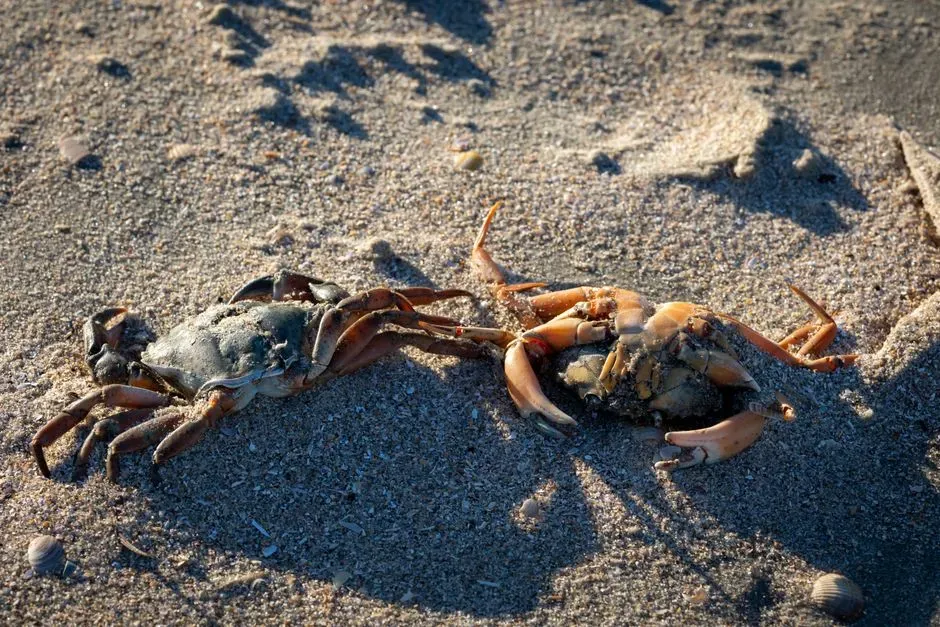
Nothing says “unsophisticated caveman” less than a Neanderthal enjoying a seafood dinner by the fire.
At Gruta da Figueira Brava in Portugal, researchers found direct evidence that Neanderthals weren’t just eating meat from land animals. They were harvesting shellfish, including brown crabs, and they preferred larger specimens, which they cooked in fires. They weren’t grabbing whatever washed ashore. They were selecting bigger, better crabs.
This discovery mattered for a much bigger reason than snack preferences. Archaeologists say it disproves the idea that eating marine foods gave early modern humans a unique competitive brain advantage.
Quick Compare
- Old assumption: only modern humans exploited marine resources for brain-boosting nutrients.
- New evidence: Neanderthals selectively cooked larger crabs at Figueira Brava.
- Old assumption: Neanderthal diets were essentially land-locked.
- New evidence: coastal shellfish harvesting is now confirmed at several European sites.
The theory that seafood diets uniquely fueled human brain evolution just lost its biggest supporting argument. If Neanderthals were doing the same thing, that “special sauce” wasn’t so special after all. But that’s nothing compared to what we found about #7…
#7 – They Freedove Into the Mediterranean for the Perfect Shells

Neanderthals holding their breath and diving underwater sounds like fiction. It isn’t.
Researchers analyzing 171 ancient clam shells from an Italian cave called Grotta dei Moscerini found something nobody expected. The Neanderthals didn’t just collect shells lying out on the beach – they appear to have held their breath and dived for the perfect shells to meet their needs. Some were shiny and unweathered, meaning they’d been pulled live from the seafloor, not scavenged from dry sand.
It’s quite possible that the Neanderthals were collecting shells as far down as two to four meters.
Paola Villa, lead researcher
That’s roughly 6 to 13 feet underwater, with zero equipment, in cold Mediterranean water. Even stranger, studies on Neanderthal ear bones show unusually high rates of bony growths linked to repeated cold-water exposure – physical proof they were doing this often. But that’s nothing compared to what we found about #6…
#6 – They Twisted Plant Fibers Into Actual String
String seems too simple to be revolutionary. In prehistoric terms, it absolutely is.
Scientists examining a stone tool from a French Neanderthal site noticed something odd stuck to the underside. A microscope showed it was a bunch of fibers twisted around each other – the first direct evidence that Neanderthals could make string. This wasn’t an accident of nature. Twisted, multi-ply fiber doesn’t happen randomly.
Making cordage requires understanding math and material science most people never credit Neanderthals with. The find implies our evolutionary cousins had some grasp of numbers and of the trees that furnished the raw material.
Why It Stands Out
- Twisting fibers into multi-ply cordage requires basic spatial and numerical reasoning.
- String is the building block for nets, snares, clothing, and hafted tools.
- This fiber evidence predates comparable finds once credited only to modern humans.
- It hints at an entire “invisible” technology of perishable materials that rarely survives to be found.
String leads to nets, snares, clothing, and hafted tools – an entire technological ecosystem scientists assumed belonged only to modern humans. But that’s nothing compared to what we found about #5…
#5 – They Engineered Multi-Ingredient Glue From Scratch

Making adhesive sounds simple until you realize what it actually requires.
Tools from the Le Moustier site in France reveal that Neanderthals weren’t just melting sap and calling it a day. These tools, used about 40,000 years ago during the Middle Palaeolithic, show real thought went into the production process – researchers at New York University found the stone pieces were held together by a multi-component adhesive. A multi-component recipe means combining separate ingredients in the correct ratio, at the correct temperature, to get a usable result.
That’s chemistry, not luck. Getting the formula wrong means a tool that falls apart mid-hunt.
Scientists who once assumed adhesive technology was a modern human innovation have had to walk that assumption back entirely, because the evidence points to deliberate, repeated experimentation. But that’s nothing compared to what we found about #4…
#4 – They Self-Medicated With Plant-Based Aspirin and Penicillin
This is the discovery that made even skeptical researchers pause.
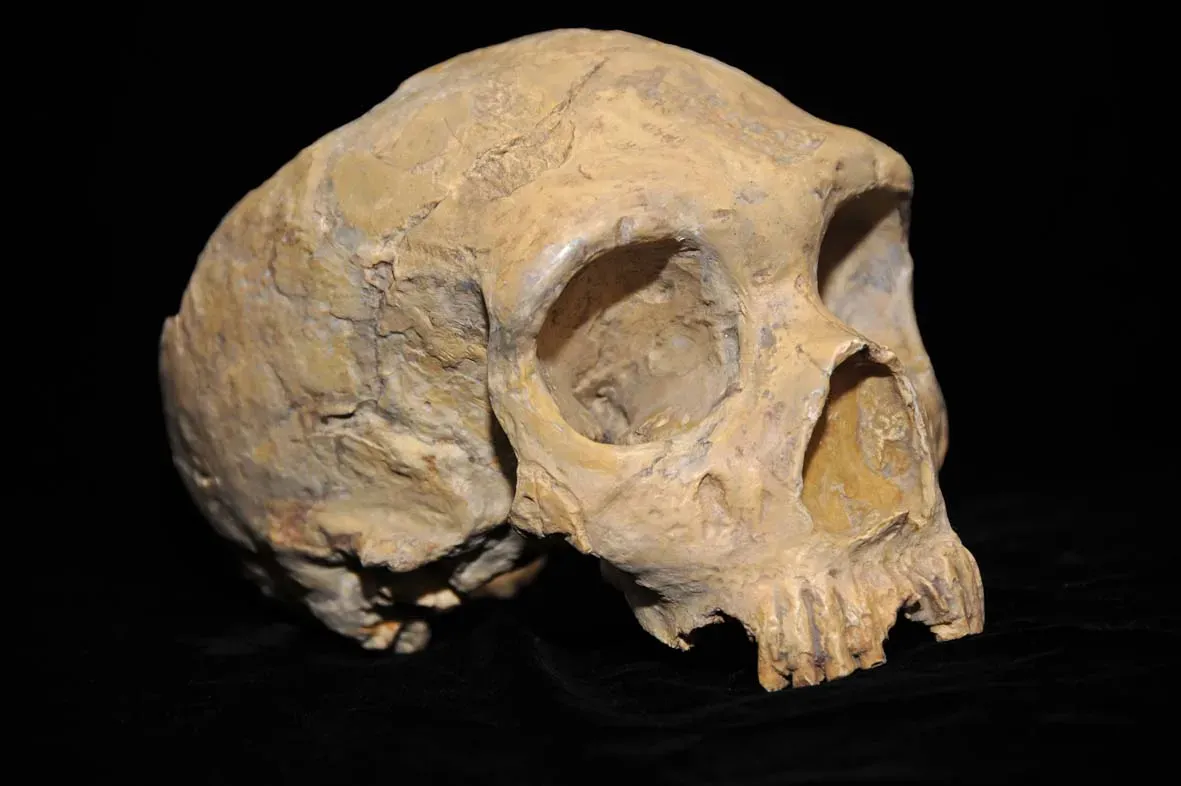
Scientists analyzing ancient dental plaque from a sick Neanderthal at El Sidron in Spain found something nobody was looking for. The man had a dental abscess on his jawbone and signs he suffered from an intestinal parasite. His teeth showed traces of poplar, which contains salicylic acid, the active ingredient in aspirin, along with Penicillium, a natural antibiotic mold. He was in obvious pain, and his diet shifted specifically toward pain-relieving, infection-fighting plants.
One residue was from the poplar tree where doctors would later get a key ingredient in aspirin, and the other was from mold that had a version of the antibiotic penicillin – the primitive penicillin was a surprise.
Alan Cooper, lead researcher
He essentially self-treated an infection 40,000 years before Alexander Fleming discovered penicillin. But that’s nothing compared to what we found about #3…
#3 – They Wore Jewelry Tens of Thousands of Years Before Modern Humans Arrived
Jewelry feels like a distinctly “human” invention. The dates say otherwise.
At Spain’s Cueva de los Aviones, archaeologists found pigment-covered, deliberately perforated seashells that predate any comparable modern human ornamentation by a staggering margin. The shells, estimated to be 115,000 to 120,000 years old, are regarded as one of the oldest examples of jewelry, believed to have served as body ornamentation for Neanderthals. No Homo sapiens had reached that part of Europe yet.
For years, the default explanation was that Neanderthals must have copied modern humans. But the jewelry at Cueva de los Aviones is older than anything similar made by modern humans anywhere.
At a Glance
- Cueva de los Aviones shells: dated to roughly 115,000-120,000 years old.
- Comparable modern human ornamentation appears tens of thousands of years later.
- Modern humans hadn’t yet reached that region of Europe.
- Similar color-selected feather use has since turned up at other Neanderthal sites.
That timeline completely destroys the “copycat” theory. You can’t copy a species that hasn’t shown up yet. Elsewhere, researchers even found feathers deliberately selected from birds, and only in one specific color. But that’s nothing compared to what we found about #2…
#2 – They Painted the Walls of Deep Caves With Abstract Art
This is the discovery that forced the scientific community into open, public disagreement.
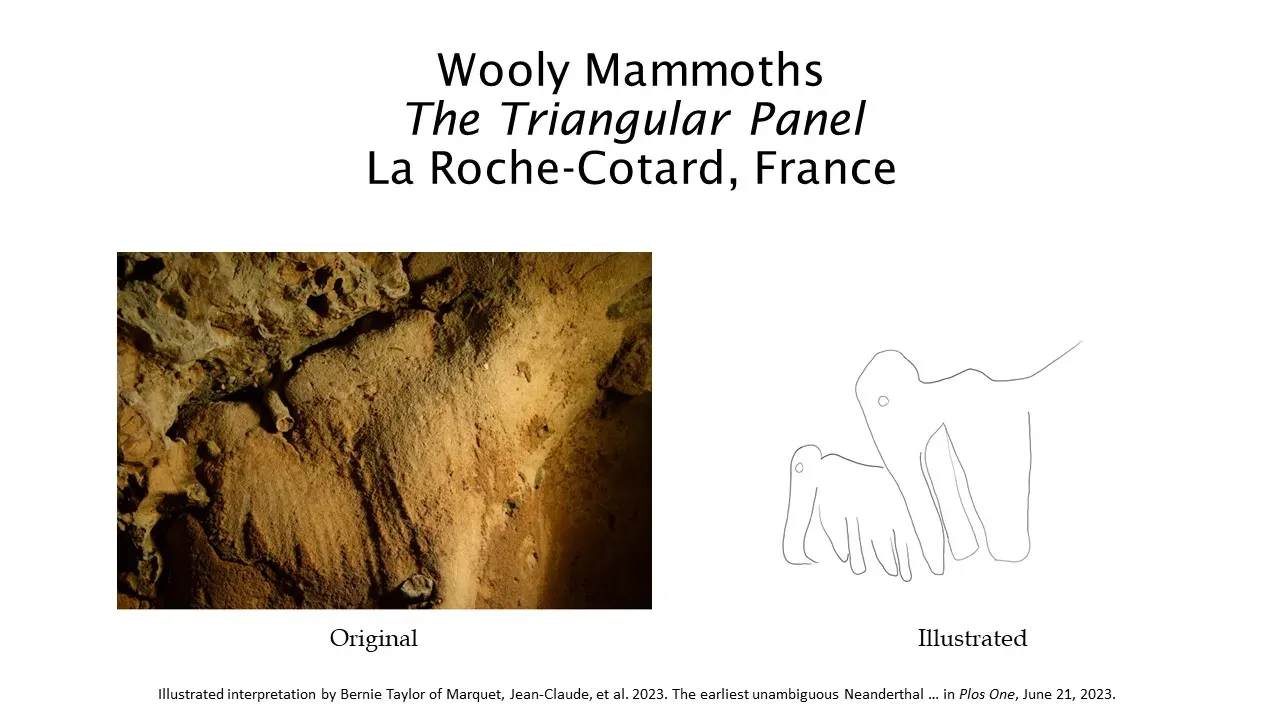
Researchers dating cave paintings in three separate Spanish caves found results that seemed almost impossible to accept at first. Dated to 65,000 years ago, the paintings and shell beads are the earliest known works of art – based on old assumptions, early European art wasn’t supposed to flourish until modern humans arrived on the continent 40,000 to 50,000 years ago. The math simply didn’t add up unless Neanderthals painted it themselves.
Not everyone accepted this quietly. The results were challenged on methodological grounds – a dispute over the movement of uranium in groundwater in the caves – and by the sheer conviction that only modern humans made art.
Some researchers rejected hard data purely because it conflicted with their assumptions about Neanderthal intelligence. Newer dating work has since confirmed it: even ardent skeptics now agree these caves show artistic activity that can only have been made by Neanderthals. But that’s nothing compared to what we found about #1…
#1 – They Interbred With Modern Humans and Live On Inside Us
This is the fact that changed everything, and most people still don’t fully grasp what it means.
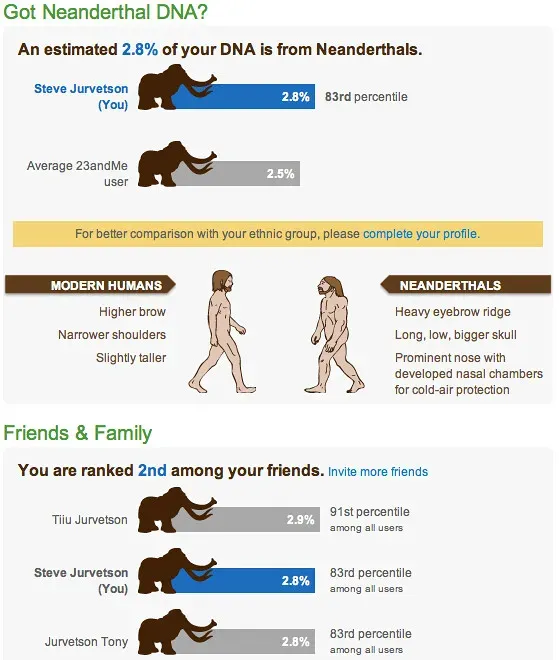
For most of the 20th century, the idea that Neanderthals and modern humans interbred was treated as fringe nonsense – two separate species with zero meaningful genetic overlap. Genome sequencing destroyed that assumption completely. Neanderthals were long portrayed as a brutish, hulking side branch of humanity, but modern research has shown they interbred with our ancestors, and that millions of people alive today carry their DNA.
If you have non-African ancestry, a small percentage of your genome likely came directly from Neanderthals. This isn’t a distant evolutionary relationship. It’s literal shared DNA, passed down through direct interbreeding tens of thousands of years ago.
Fast Facts
- Non-African populations today carry roughly 1-2% Neanderthal DNA on average.
- The first Neanderthal genome was sequenced in 2010, upending decades of assumptions.
- Some Asian and Oceanic populations also carry DNA from Denisovans, another archaic human group.
- DNA has now been pulled from more than a dozen Neanderthal fossils across Europe.
DNA has now been recovered from more than a dozen Neanderthal fossils across Europe through the ongoing Neanderthal Genome Project. Every stereotype about a separate, inferior “other” species collapses the moment you realize they’re partly you.
The Bottom Line

Neanderthals painted caves, wore jewelry, dove for shellfish, brewed adhesive, self-medicated with penicillin, and cared for their disabled – decades before scientists were willing to admit any of it. Every single one of these discoveries was initially dismissed, disputed, or ridiculed by mainstream researchers before the evidence forced a reversal.
The real story isn’t that Neanderthals were primitive. It’s that we were too arrogant to recognize sophistication when we found it. They didn’t lose to us because they were dumber – something else entirely wiped them out, and we still don’t fully know what.
Which of these thirteen facts genuinely shocked you the most? Drop it in the comments.