
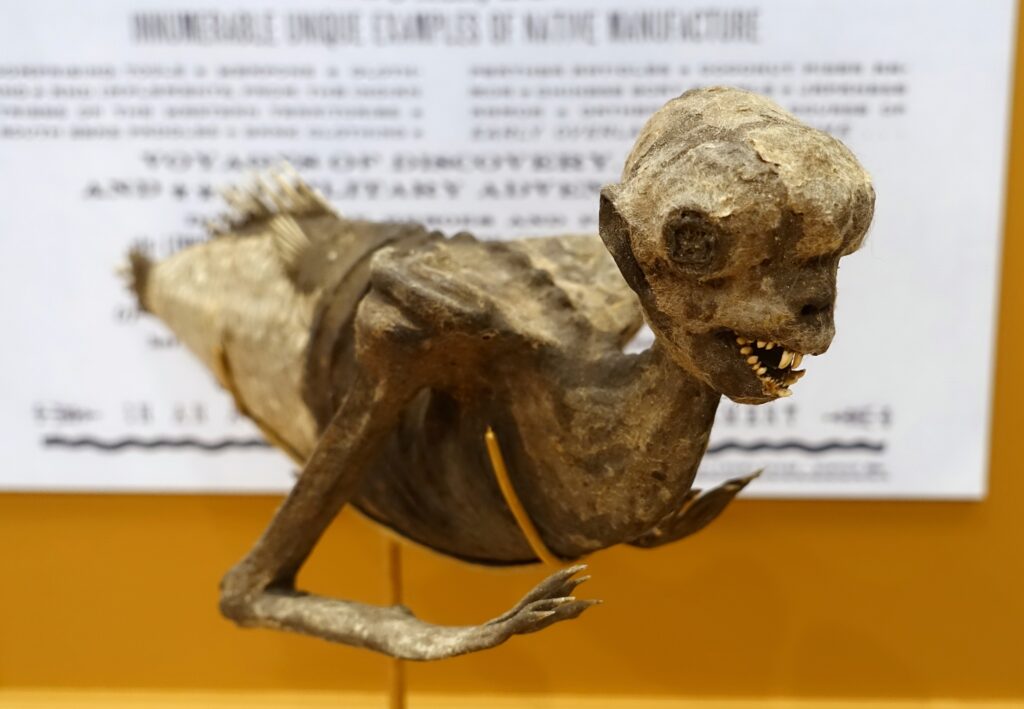
Walk into any museum and you assume the placard is telling you the truth: this claw belonged to this animal, this fossil is exactly what nature made. But dozens of history’s most celebrated “animal discoveries” turned out to be stitched-together fakes – and in a startling number of cases, the very people who found, funded, or promoted them eventually admitted it out loud.
From a National Geographic dinosaur glued together from 88 smuggled fossil fragments to a “mermaid” that fooled Buddhist monks for nearly 300 years, the pattern keeps repeating itself: hype first, headlines second, quiet confession years or centuries later. Here’s what the researchers, curators, and confessed hoaxers themselves actually had to say once the seams were finally found.
#12 – The Griffin Relics of Medieval Cathedral Treasuries
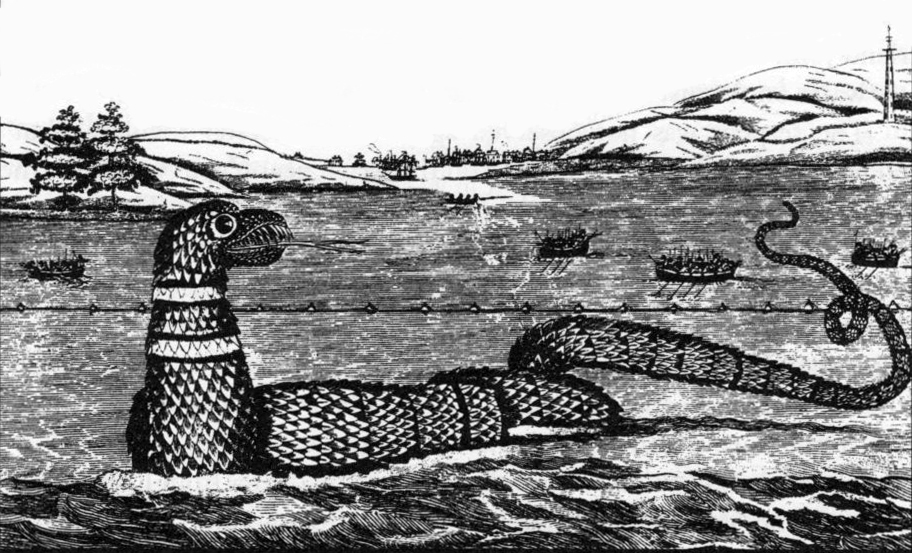
Medieval pilgrims paid good money to see the claws and eggs of actual griffins – the mythical lion-eagle hybrids said to guard hidden gold. Church treasuries across Europe proudly displayed enormous curved “griffin claws” mounted in silver and gold, alongside oversized “griffin eggs” kept as sacred relics.
Centuries later, naturalists and museum curators quietly identified the claws as ibex and wild goat horns, hollowed and polished to look like talons, while the “eggs” turned out to be ordinary ostrich eggs carried up ancient trade routes from Africa. Cathedral custodians in places like Bayonne and various German abbeys eventually cataloged the items honestly, and the metalwork mounts – often added centuries after the horn or egg was first acquired – reveal a slow-motion composite: one material dressed up as proof of a creature nobody ever actually caught. It’s a strange warm-up act for what’s coming at #11.
#11 – The Basilisks of Renaissance Cabinets of Curiosities
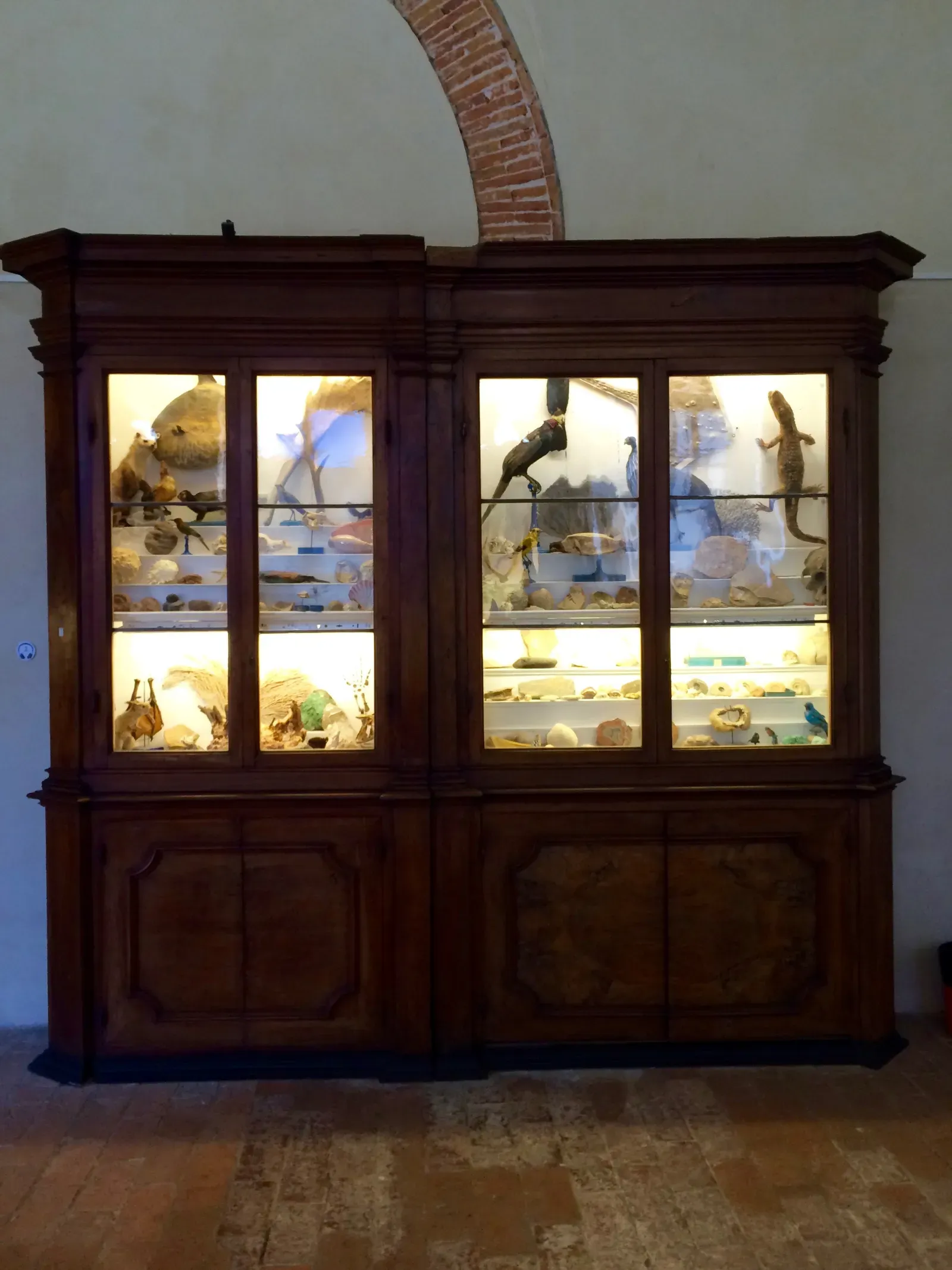
Wealthy collectors in the 1500s and 1600s wanted nothing more than a basilisk in their Wunderkammer, and taxidermists were happy to build one to order. These “cabinet of curiosities” basilisks combined a dried snake or lizard body with added wings, clawed feet, and sometimes a rooster’s comb, all stitched or wired onto a single mount to resemble the legendary serpent-king said to kill with a single glance.
Displayed proudly beside narwhal “unicorn horns” and dried mermaids, these basilisks convinced generations of visitors they were looking at a genuine, undiscovered species. Modern conservators who X-ray the old mounts routinely find several animal skeletons fused into one frame – a snake spine wired to bird wing bones – and most institutions now label the pieces plainly as “composite constructions.” The star exhibit of many a 17th-century collection, it turns out, was never a real animal at all. A fish tale even stranger is waiting two spots down.
#10 – The Jenny Hanivers Sold by Sailors
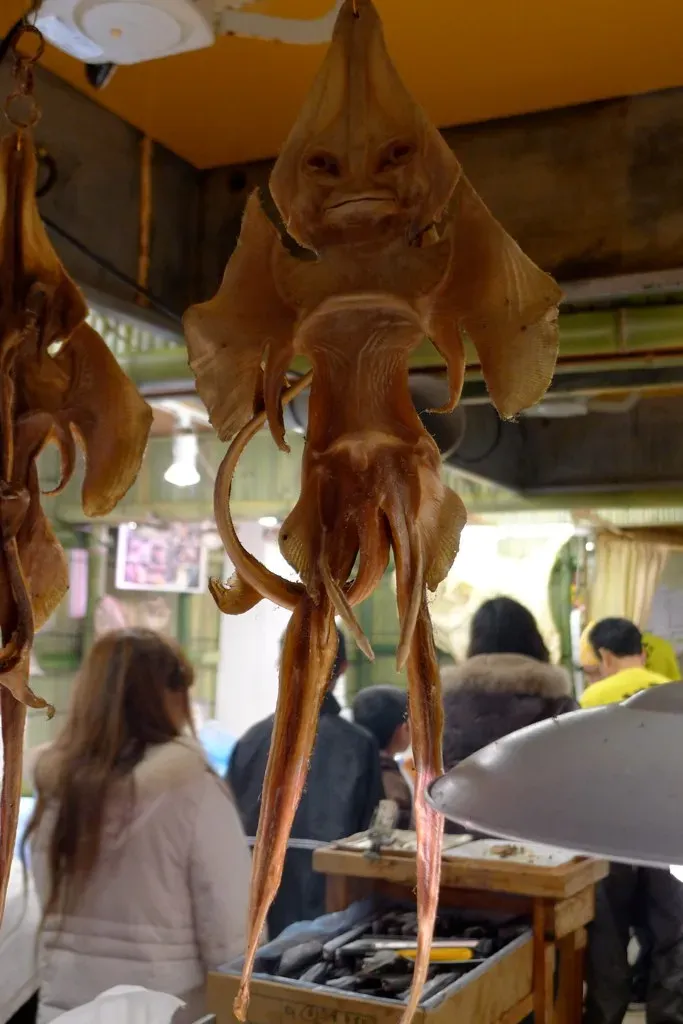
Sailors returning from long voyages had a profitable side hustle: carving dried rays and skates into pocket-sized dragons. Start with an ordinary ray or skate carcass, add a few careful cuts and some drying time, and the fins become wings, the body becomes a demonic torso, and the tail becomes a barbed devil’s tail.
The wings were never wings – they were pectoral fins reshaped with a knife. Sailors sold these as baby sea monsters or “flying devils” to curious buyers in port towns from the 1500s onward, and the name is believed to be a corruption of “Jeune d’Anvers,” a nod to the young Antwerp sailors who mastered the trade. Marine biology departments now openly teach Jenny Hanivers as a case study in how a single reshaped animal – no second species required – can still count as a deliberate composite illusion. A stone-cold confession is waiting at #9.
Fast Facts
- Base material: dried ray or skate carcass, hand-carved
- Marketed as: a “baby sea monster” or “flying devil”
- Trade era: widespread across port towns from the 1500s onward
- Name origin: likely a corruption of “Jeune d’Anvers” (young Antwerp sailor)
#9 – Beringer’s “Lying Stones” of Würzburg
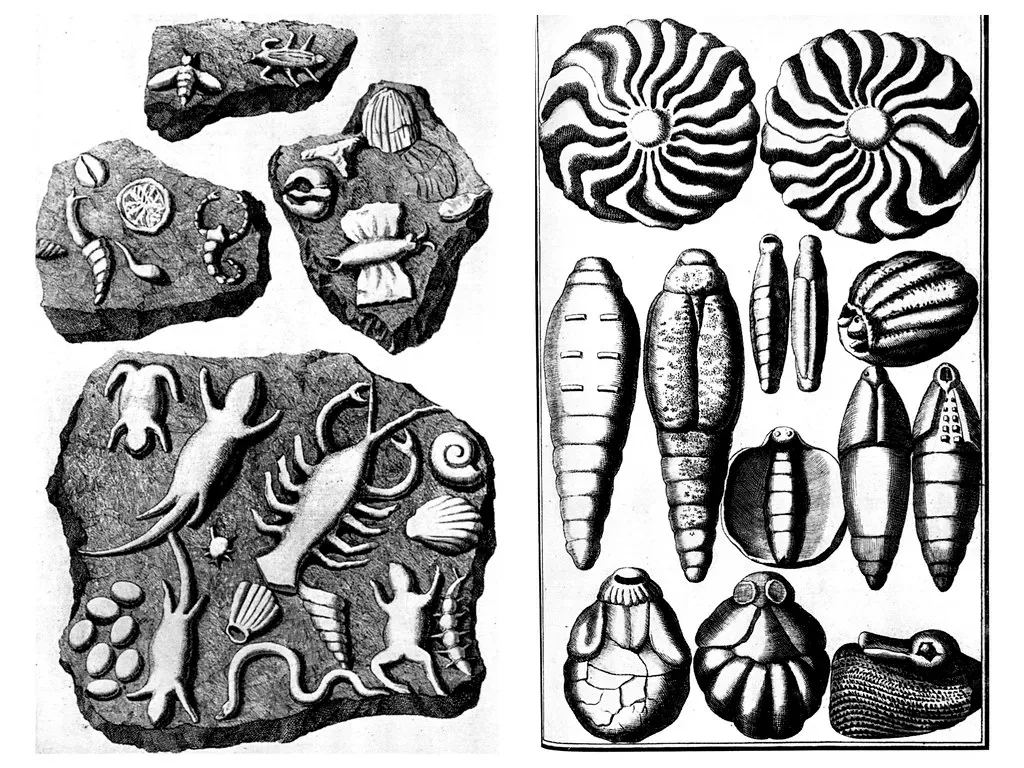
A German physician spent years authenticating fossils that turned out to be carved by his own university colleagues as revenge for his arrogance. In the 1720s, Dr. Johann Bartholomew Adam Beringer collected hundreds of strange stone “fossils” depicting frogs, spiders, comets, and Hebrew letters near Würzburg, then published an entire scholarly volume declaring them genuine relics of creation.
The stones were actually hand-carved by two colleagues who resented him and buried them in his usual dig site to embarrass him publicly. Beringer reportedly only caught on when he dug up a stone bearing his own name freshly carved into the surface – undeniable proof the “fossils” had been planted. He spent the rest of his career trying to buy back every copy of his own book, and paleontologists still cite the Lügensteine as the textbook warning against confirmation bias in fieldwork. The next entry involves a frozen “missing link” that fooled cryptozoologists for over a decade.
#8 – The Minnesota Iceman

A traveling carnival exhibit claimed to hold a real, ice-encased prehistoric hominid – and serious zoologists actually examined it before the truth came out. The “Minnesota Iceman” toured state fairs in a refrigerated coffin throughout the 1960s, marketed as a hairy, ape-like humanoid frozen solid, supposedly pulled from Siberian waters.
Two credentialed scientists, Bernard Heuvelmans and Ivan Sanderson, examined it and published detailed anatomical notes treating it as a legitimate biological specimen. When the Smithsonian requested access for formal study, the original specimen mysteriously vanished, replaced by a version its owner, showman Frank Hansen, eventually admitted was a manufactured latex-and-hair model built for the sideshow circuit. It’s still a favorite teaching case in cryptozoology courses, precisely because trained scientists were fooled before anyone quietly conceded the whole thing was rubber and glue. Up next: a “yeti” relic that Buddhist monks have kept sacred for generations.
Quick Compare
- Original specimen: examined by two credentialed zoologists, then vanished before the Smithsonian could study it
- Replacement specimen: a latex-and-hair model, later admitted to be manufactured
- Touring era: state fairs throughout the 1960s in a refrigerated coffin
- Owner: showman Frank Hansen
#7 – The Yeti Scalp Relics of Pangboche and Khumjung
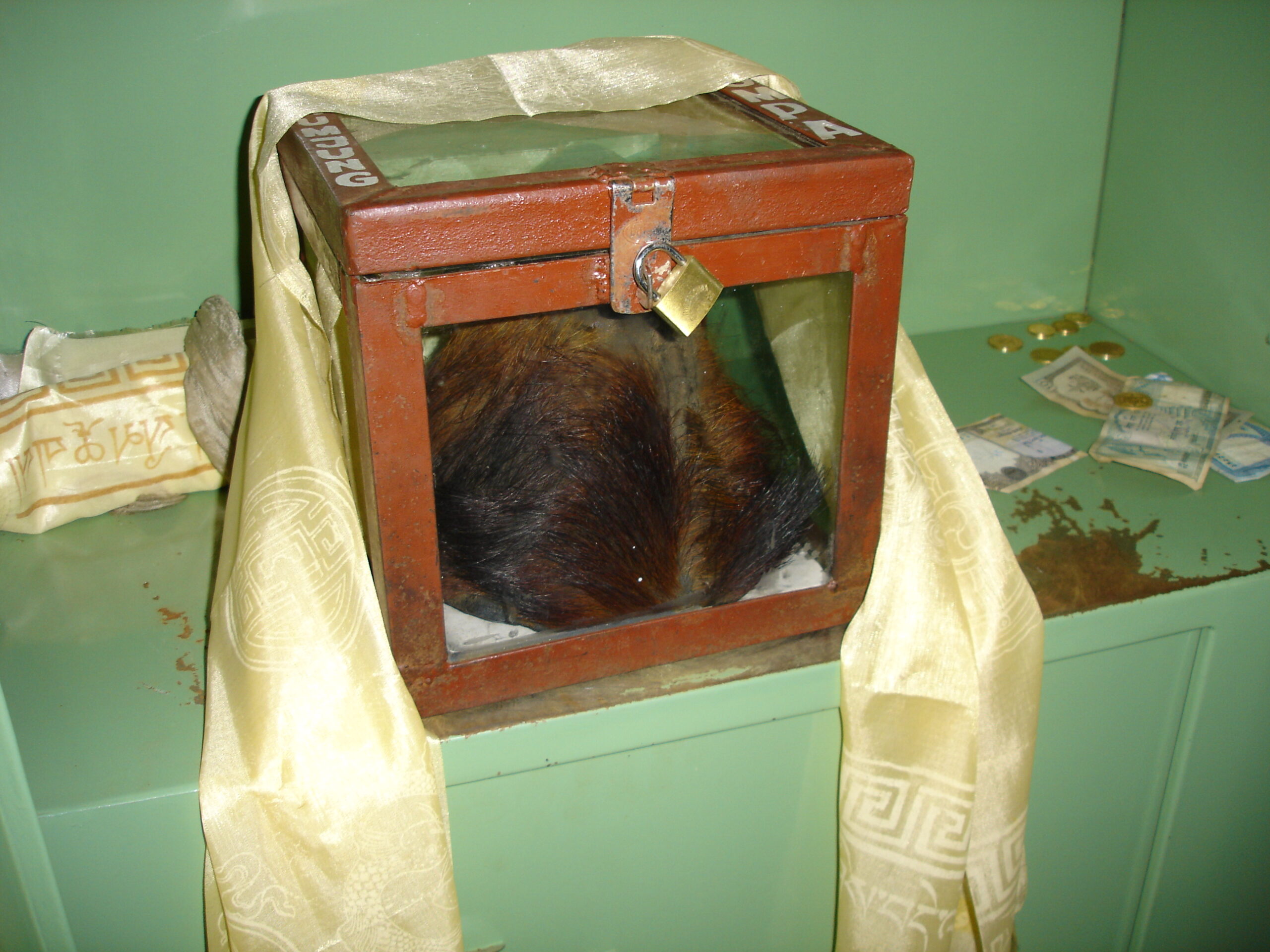
Two Himalayan monasteries have displayed sacred “yeti scalps” for centuries, and lab testing has repeatedly traced them back to an ordinary mountain goat. The conical, hair-covered “scalps” kept at Khumjung and Pangboche monasteries in Nepal were treated as genuine relics of the elusive yeti, drawn out for blessings and even shown to Sir Edmund Hillary’s 1960 expedition.
Multiple rounds of hair and tissue analysis – by British zoologists in the 1960s and again with modern DNA sequencing decades later – identified the scalps as shaped and molded skin from the serow, a goat-antelope native to the region, not any unknown primate. Monastery caretakers have acknowledged the science, though the relics remain on display for their cultural and spiritual weight rather than as zoological evidence. Now for a mermaid that traveled from Japan all the way to an Ohio museum basement.
#6 – The Clark County “Fiji Mermaid” of Ohio
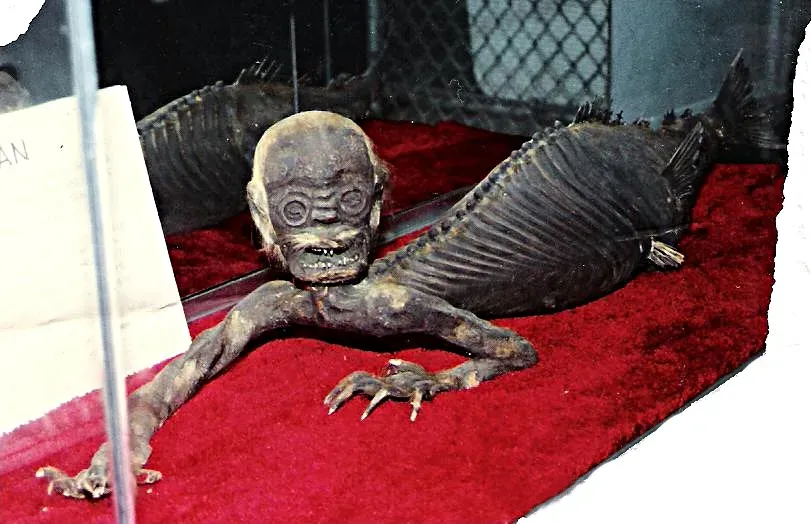
An American sailor brought home a souvenir “mermaid” in 1906, and it took until 2023 for anyone to properly look inside it. The mummified figure, donated to the Clark County Historical Society in Springfield, Ohio, features a grimacing face, oversized claws, a fish-like lower half, and a coat of grey hair that has unsettled museum visitors for generations.
When researchers finally ran CT and X-ray scans, radiologist Joseph Cress of Northern Kentucky University found something unexpected stitched into the fibers.
It seems to be a hodgepodge of at least three different species externally. The hands appear to be those of an amphibian, nearly like an alligator, crocodile, or lizard of some kind, but the head and body are those of a monkey. Then there is the fishtail, also of an unknown species.
Joseph Cress, Northern Kentucky University
The scans even revealed internal wooden stakes running from head to tail and across the shoulder blades, added purely to hold the composite together during construction. The historical society now displays the piece honestly, as a crafted curiosity rather than a biological specimen. That’s nothing compared to what a nearly identical mummy revealed at a Japanese temple.
#5 – The Enjuin Temple Ningyo Mermaid Mummy
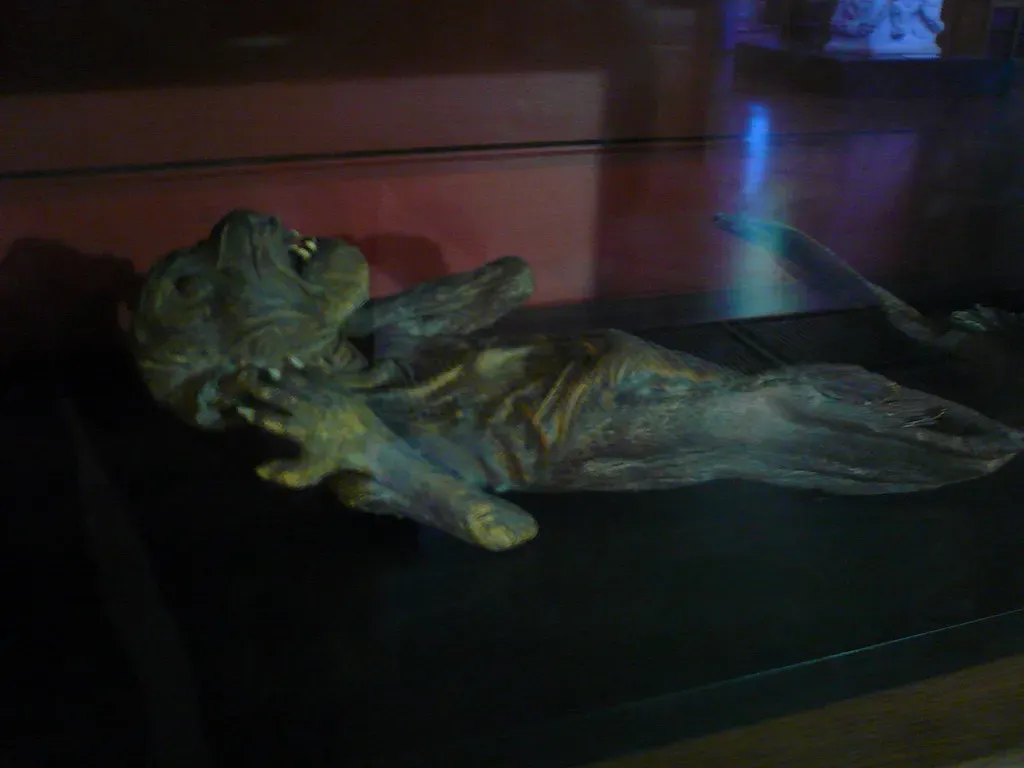
For nearly 300 years, a Japanese temple treated its “mermaid” as a source of immortality and good health – until scientists finally opened it up. Housed at Enjuin Temple in Asakuchi City, the roughly one-foot-long mummy features a hairy, monkey-like upper body and a scaled fish tail, and temple records claim “the creature was caught off the coast of modern day Kochi around 1740.”
A team from the Kurashiki University of Science and the Arts spent a year running surface observations, X-rays, and CT scans to determine whether any part of it was a real, unaltered animal. The results showed the creature had no skeleton at all beyond a single jawbone, and researchers found the upper body was coated in puffer fish skin while the lower tail was the skin of a croaker fish, all built around a core of paper, cloth, and cotton. The “mermaid” was never a preserved organism – it was sculpted from craft materials and dressed in real animal skins to sell the illusion, and temple priests have accepted the findings while keeping the object on display for its cultural value. But the granddaddy of all mermaid hoaxes came a century earlier, courtesy of America’s greatest showman.
At a Glance
- Length: roughly one foot long
- Upper body: coated in puffer fish skin
- Lower tail: made from croaker fish skin
- Core structure: paper, cloth, and cotton
- Skeleton found: none, aside from a single jawbone
#4 – P.T. Barnum’s Feejee Mermaid
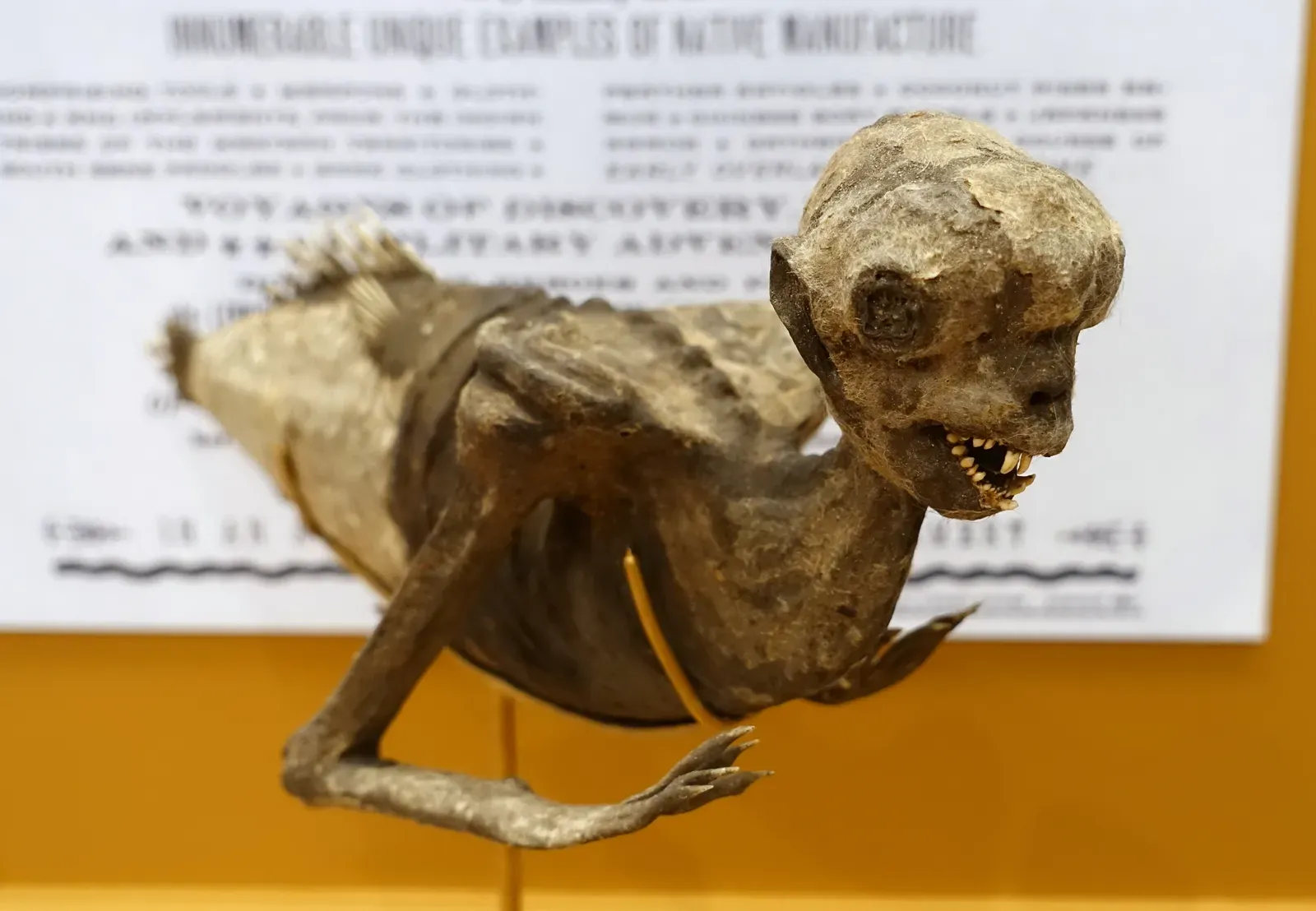
Long before Instagram hoaxes, P.T. Barnum built an empire partly on a dead monkey sewn to a fish, and audiences paid good money to believe it was real. The original Feejee Mermaid debuted in New York in 1842, marketed with an elaborate backstory about a South Pacific fisherman and a scientific naturalist who had supposedly verified its authenticity.
In reality, the exhibit was constructed by sewing the torso, head, and arms of a juvenile monkey onto the tail of a large fish, then drying and shellacking the whole assembly to hide the seams. Barnum’s genius wasn’t the object – craftsmen in Japan and China had produced similar composites for decades – it was the marketing machine he built around it, complete with planted newspaper stories and a fabricated scientific pedigree. Several replicas still tour today, openly labeled as historical hoax artifacts, and the phrase “Feejee Mermaid” is now shorthand in museum studies for any deliberately stitched biological fake. None of these mermaid stunts, though, compare to a fish that fooled an actual museum director into naming a brand-new species.
#3 – Ompax spatuloides, the Fish That Was Eaten Before It Was Studied
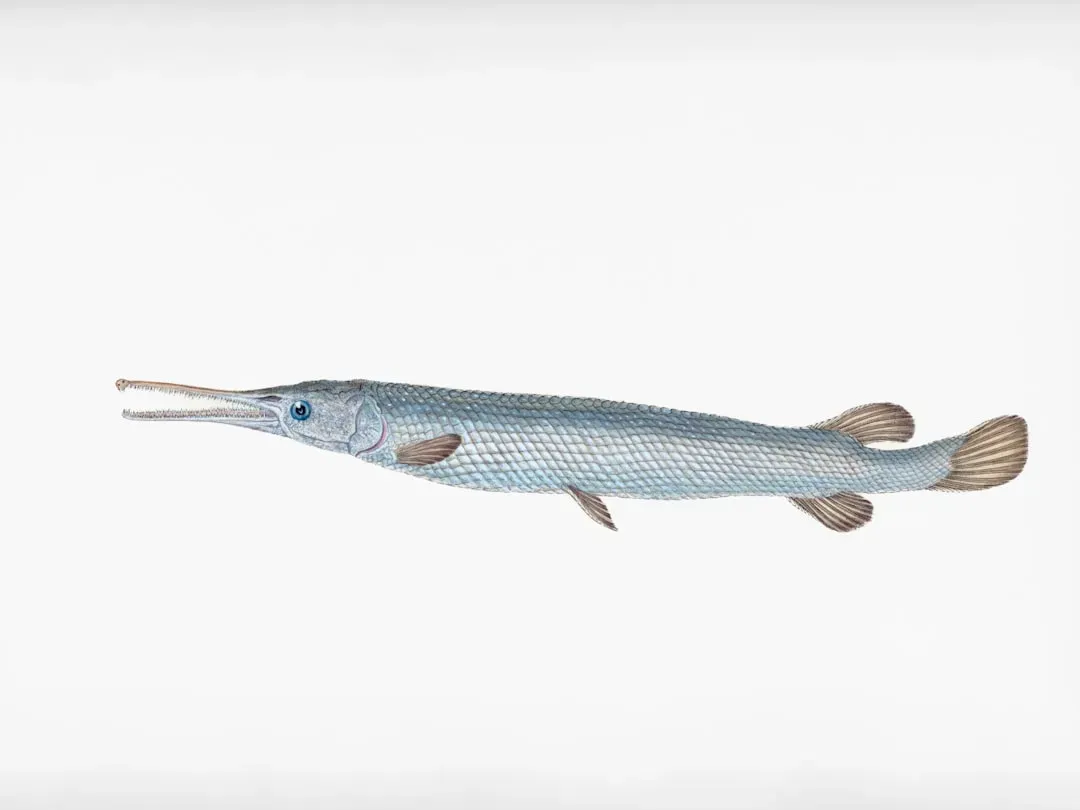
An Australian museum director once described a brand-new species of fish based on a sketch of his own breakfast, and it took over 50 years for anyone to confess the prank. In August 1872, Carl Theodore Staiger, director of the Brisbane Museum, was served an unusual duck-billed fish while visiting Gayndah station in Queensland – so unusual that he sketched it before eating it.
He sent that drawing to the eminent naturalist Count Castelnau, who formally described and named it Ompax spatuloides in 1879, and the species stayed on official Australian fish lists for decades. The entire “discovery” was based on a single drawing of a fish that had already been cooked and consumed, with no physical specimen ever preserved. The truth surfaced in 1930, when a writer to the Sydney Bulletin confessed that Gayndah locals had assembled the head of a lungfish, the body of a mullet, and the tail of an eel purely to fool the visiting museum man – three different animals stitched into one convincing dinner plate. Compare that folksy prank to the far more consequential fraud waiting at #2.
#2 – Piltdown Man
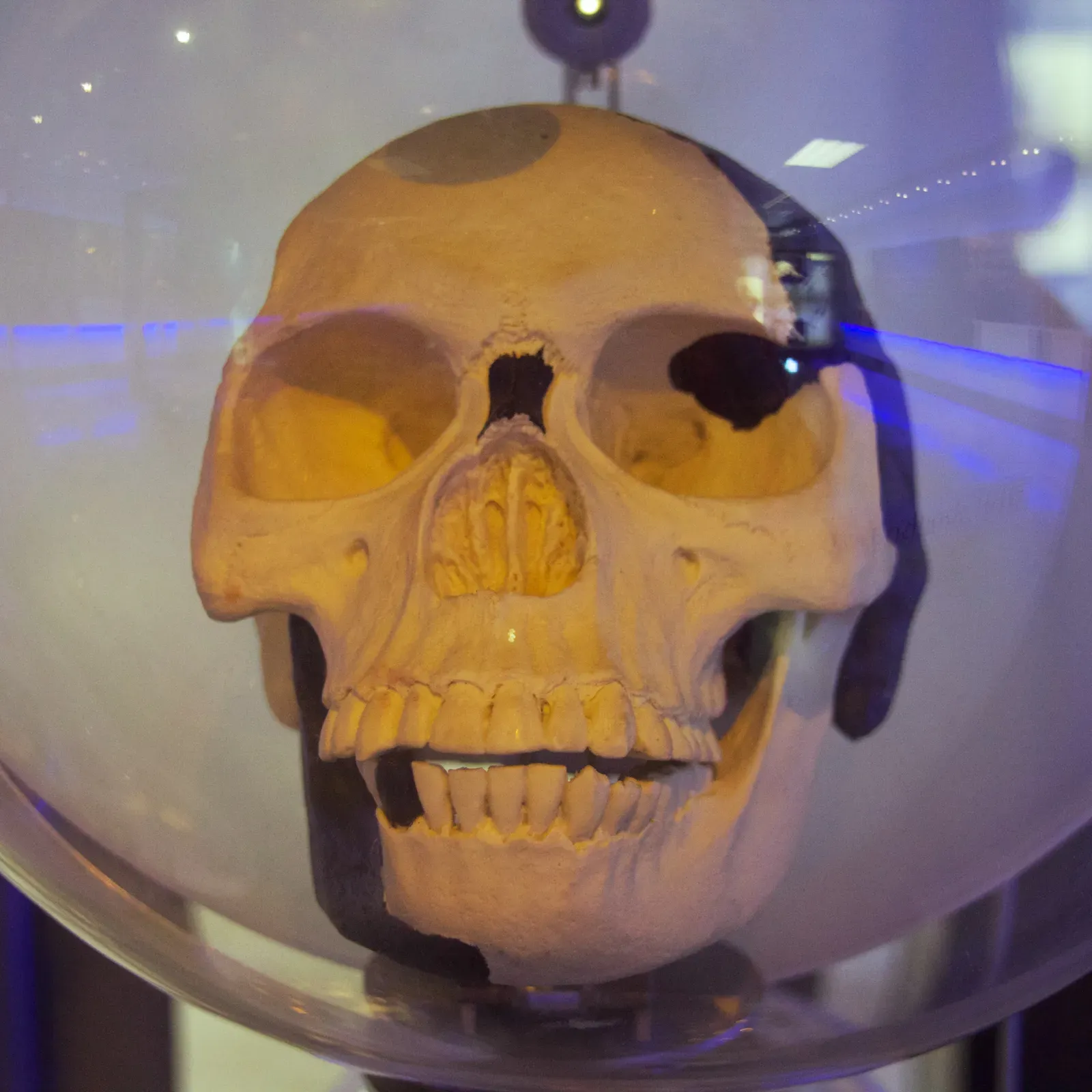
For 41 years, the “missing link” between apes and humans sat proudly in the British Museum, and it took modern chemistry to prove it was never a real fossil at all. Amateur archaeologist Charles Dawson announced in 1912 that he’d unearthed a humanlike skull alongside an apelike jawbone in a Sussex gravel pit, and the scientific establishment embraced it as Eoanthropus dawsoni – “Dawson’s Dawn Man.”
Fluorine dating tests in the late 1940s revealed the bones were far younger than claimed, and by 1953 researchers confirmed the specimen was an altered orangutan jaw deliberately combined with a modern human skull. Microscopic examination showed the teeth had been deliberately filed down to mimic human wear patterns, and the bones had been chemically stained to match the local gravel. A 2016 review using CT scans and DNA sequencing traced all the ape components to a single orangutan, pointing to one forger working alone.
All the specimens are connected together. They come from the same animal, so for us it’s the same forger. So the only one who could have really done it for us was the person who was there every time something was found.
Isabelle De Groote, researcher
It remains the longest-running composite fraud in scientific history, and arguably the most damaging one, since it shaped human evolution theory for four decades before anyone dared call it fake. Nothing compares, however, to the dinosaur hoax that fooled National Geographic itself.
#1 – Archaeoraptor liaoningensis
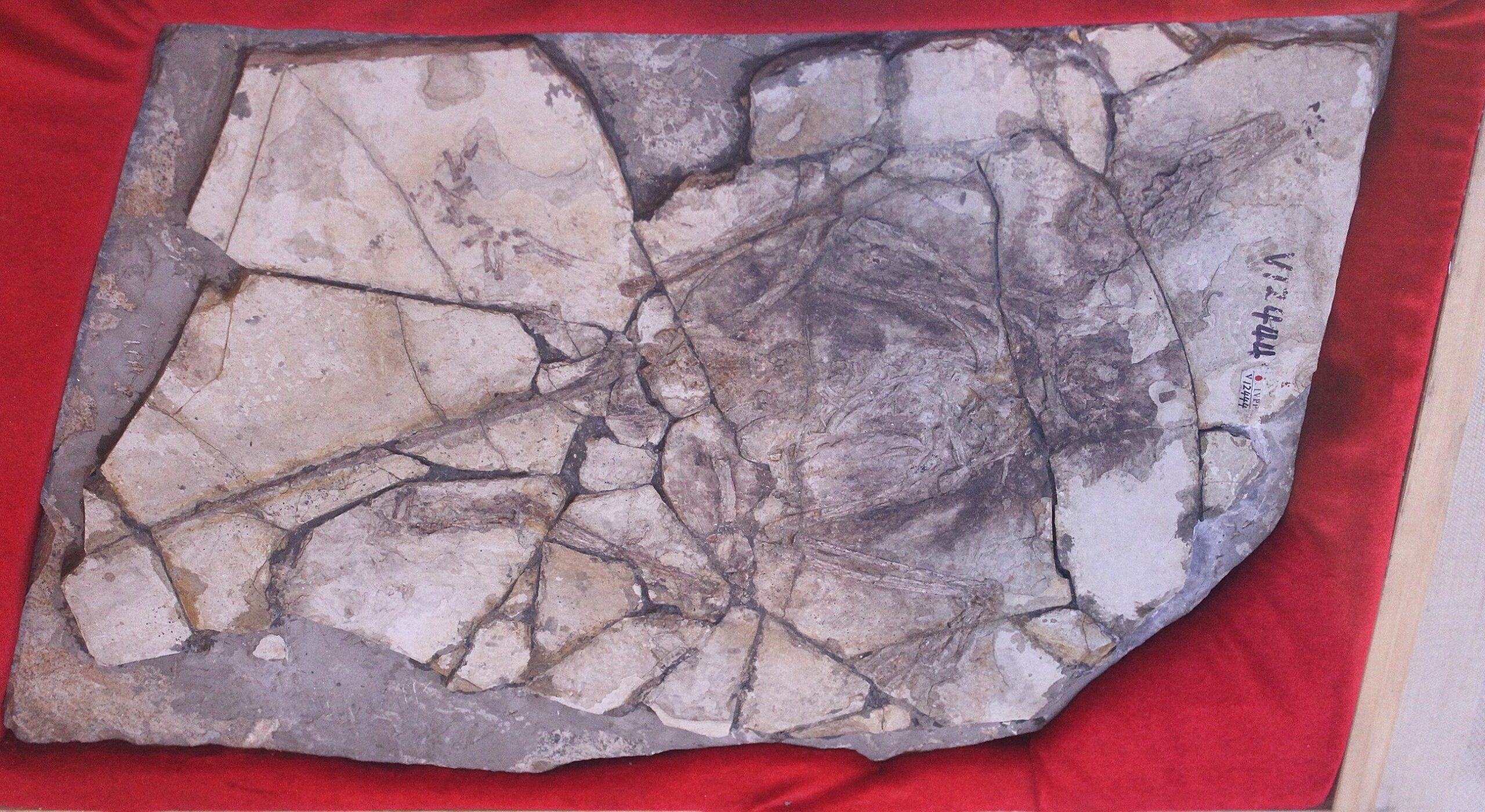
The world’s biggest science magazine unveiled what it called a genuine missing link between dinosaurs and birds, and within months its own investigators admitted the whole thing was glued together from smuggled fossil fragments. In October 1999, National Geographic held a press conference announcing Archaeoraptor liaoningensis, describing it as a “missing link between terrestrial dinosaurs and birds that could actually fly” and assigning it an informal scientific name ahead of peer review.
Curator Storrs Olson publicly denounced the move as a “nightmare,” and paleontologist Xu Xing soon discovered a matching counterslab fossil whose tail fit the specimen perfectly – proof it had been faked. The fossil turned out to be assembled from 88 separate fossil fragments, two of which were later identified as belonging to entirely new dinosaur species in their own right, Microraptor and Yanornis. National Geographic’s own internal investigation, published in October 2000, concluded the fossil was a composite and formally retracted the original article; the specimen had been smuggled out of China and sold to a private collector for $80,000 before scientific scrutiny caught up with it – a scandal researcher Mark Norell called an “unfortunate chapter” that exposed the industrial-scale fossil forgery trade in China.
Worth Knowing
- Fragment count: assembled from 88 separate fossil pieces
- Sale price: reportedly $80,000 to a private collector before scrutiny began
- Hidden discoveries: two fragments were later confirmed as new species, Microraptor and Yanornis
- Retraction: National Geographic’s internal investigation published October 2000
The Bottom Line
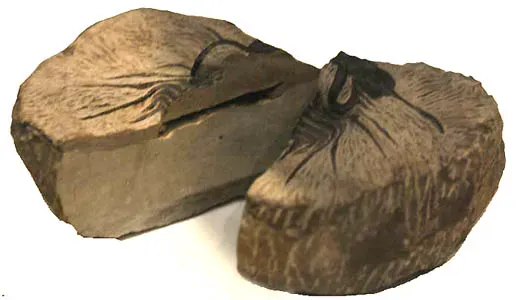
Twelve celebrated “discoveries,” zero actual new species. From glued dinosaur fragments to monkey-and-fish mermaids, the pattern never changes: excitement first, scrutiny second, confession dead last.
What’s genuinely unsettling isn’t that hoaxers fooled the public – it’s that trained scientists, museum directors, and even National Geographic’s own editors signed off before anyone checked the seams. Our take: institutional prestige is often the biggest enabler of these frauds, because nobody wants to be the person questioning a celebrated find. The next “missing link” headline deserves exactly the same skepticism as a carnival barker’s pitch – and honestly, probably more.