
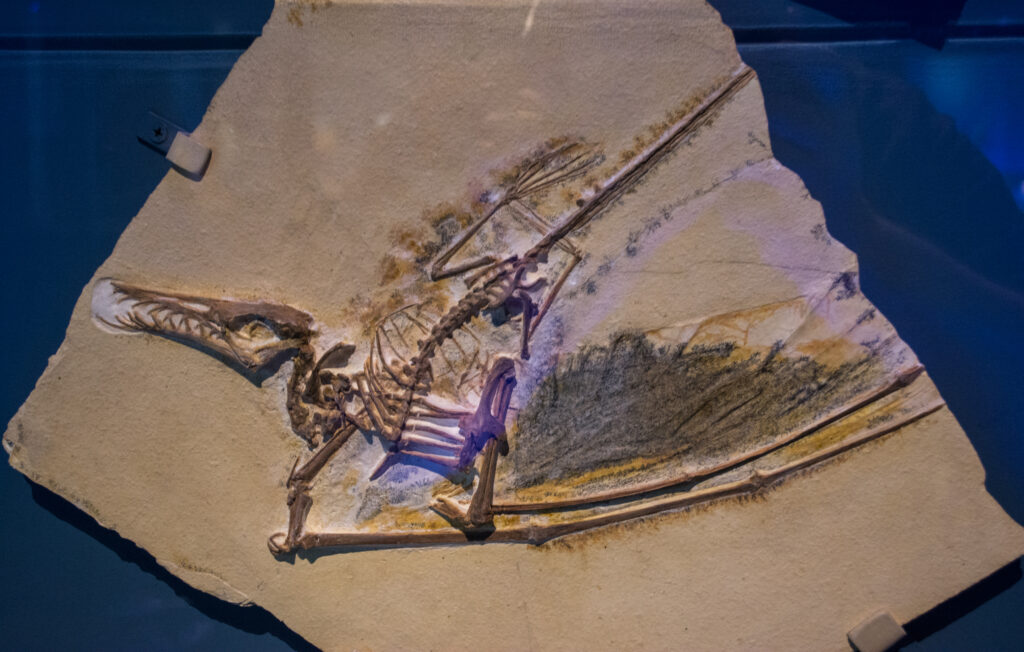
Every fossil is a message from deep time, but some are more like whispered hints while a rare few are full-blown, all-caps confessions. Most of the time, paleontologists are thrilled to get a partial skeleton or a single tooth to puzzle over. But every so often, nature goes overboard and locks away skin, feathers, stomach contents, or even microscopic cells that have no business surviving millions of years. Those are the fossils that don’t just fill gaps in our knowledge; they rip up the old diagrams and force everyone back to the drawing board.
What makes these extraordinary fossils so gripping is that they feel almost intrusive, like we’re seeing something we were never meant to witness. A dinosaur caught in its final heartbeat, a mammoth frozen mid-meal, a bird entombed in amber with every feather still in place – these finds collapse the distance between “then” and “now” in a way that’s almost unsettling. Let’s dig into seven fossils that preserved far more than anyone thought possible and see how they’ve reshaped what we know about life on Earth.
The Mongolian Dinosaur Locked in Its Final Fight
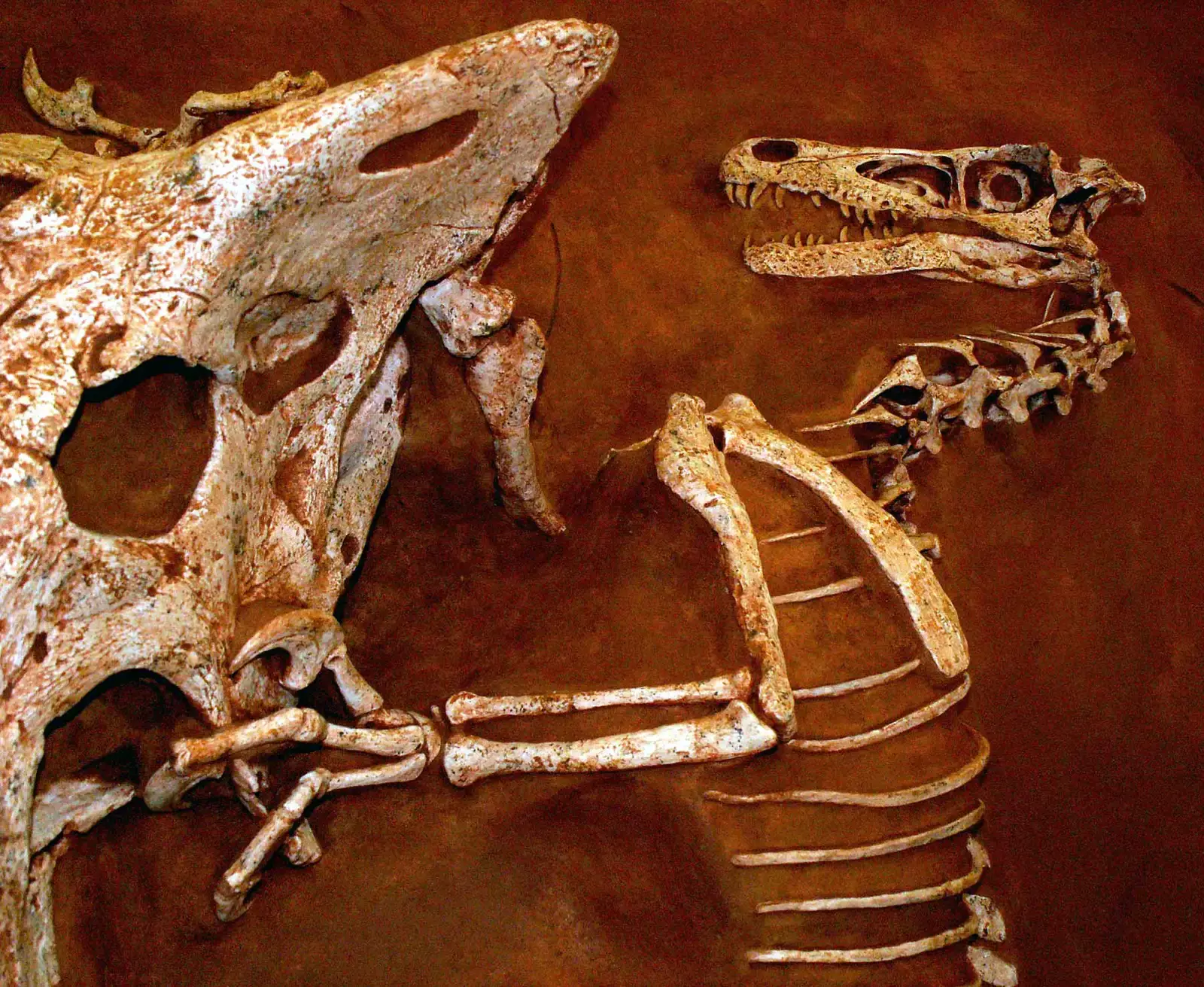
Imagine walking into a storm that never ended – that’s what the famous “fighting dinosaurs” fossil from Mongolia feels like. Preserved in three-dimensional detail, a Velociraptor and a Protoceratops are frozen mid-battle: one with its sickle-shaped claw buried into its opponent, the other clamping its beak around the predator’s arm. This isn’t just a pile of bones; it’s a snapshot of pure, desperate motion stopped in an instant, likely by a sudden sand collapse or storm in the Late Cretaceous desert.
What scientists never expected was how much behavioral detail would be locked into a single fossil. You can clearly read predation, defense, and the physical mechanics of the fight right in the bone positions, like a crime scene photograph rather than a static diagram in a textbook. Instead of theorizing abstractly about how Velociraptor hunted, paleontologists can point to a literal moment in time. To me, this fossil punches a hole straight through the cliché idea that dinosaurs are remote or unknowable; here they are, mid-struggle, just as messy and mortal as any animal today.
Dinosaur Feathers and Pigments Trapped in Amber
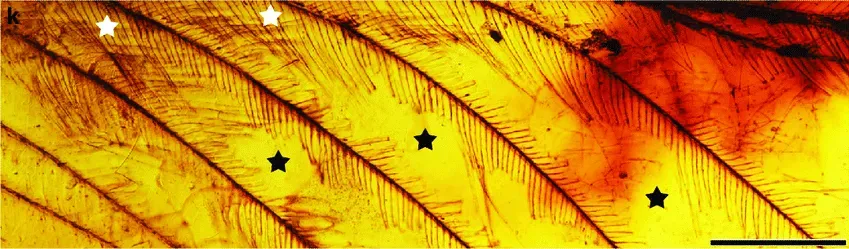
For decades, the idea of feathered dinosaurs sounded almost too cinematic, and many people pictured dinosaurs as scaly, drab reptiles. Then amber started giving up its secrets. In several pieces of Cretaceous amber, researchers have found delicate dinosaur feathers and even fully feathered tails, complete with barbs and barbules, the tiny structures that give modern bird feathers their form. These are not vague impressions in rock; they are three-dimensional, textured remains that you can shine light through and examine from every angle.
The real surprise was not just that feathers were present, but that hints of their original pigmentation and fine structure survived as well. Under microscopes, scientists can see microscopic bodies called melanosomes, whose shapes are tied to colors in living birds, letting them infer patterns like banding or iridescence. That means we can move from weird, gray guesswork to reasonably grounded reconstructions of dinosaur coloration. I remember the first time I saw a reconstruction based on these fossils; it felt like someone had finally adjusted the color setting on deep time from grainy black-and-white to something that almost glows.
Soft Tissues and Possible Blood Cells in Dinosaur Bones
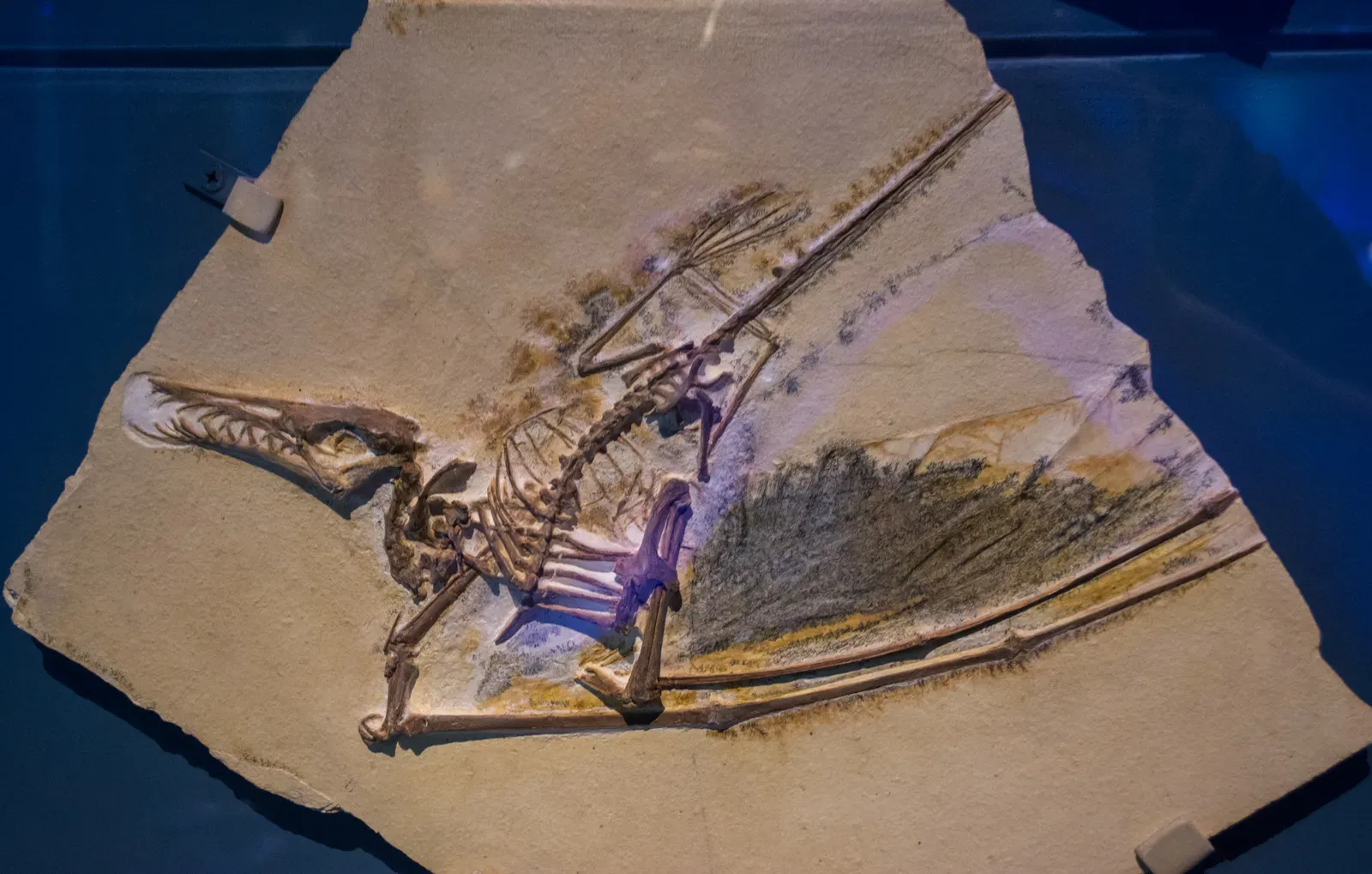
Ask most people what survives in fossils and they’ll say “the bones,” maybe “the teeth.” That’s why it was so shocking when researchers, dissolving certain dinosaur bones in acid to study their structure, reported stretchy, soft tissue remnants deep inside the mineralized matrix. In some specimens, translucent, vessel-like structures and cell-shaped forms were preserved, looking disturbingly similar to the blood vessels and cells you might see in a modern microscope slide from a lab.
To be clear, this area is still scientifically cautious territory: no one is reviving dinosaurs, and the material is altered, degraded, and chemically changed over tens of millions of years. But even the partial preservation of original organic components was far beyond what most scientists expected from Mesozoic bones. It forces a rethink of fossilization as a harsh either-or process and opens more nuanced questions: under the right conditions, just how much of an ancient body can linger on? To me, it’s both thrilling and a little eerie that microscopic traces of dinosaurs might still be there, almost like ghostly fingerprints in the rock.
The Nodosaur Mummy with Intact Armor and Skin Texture
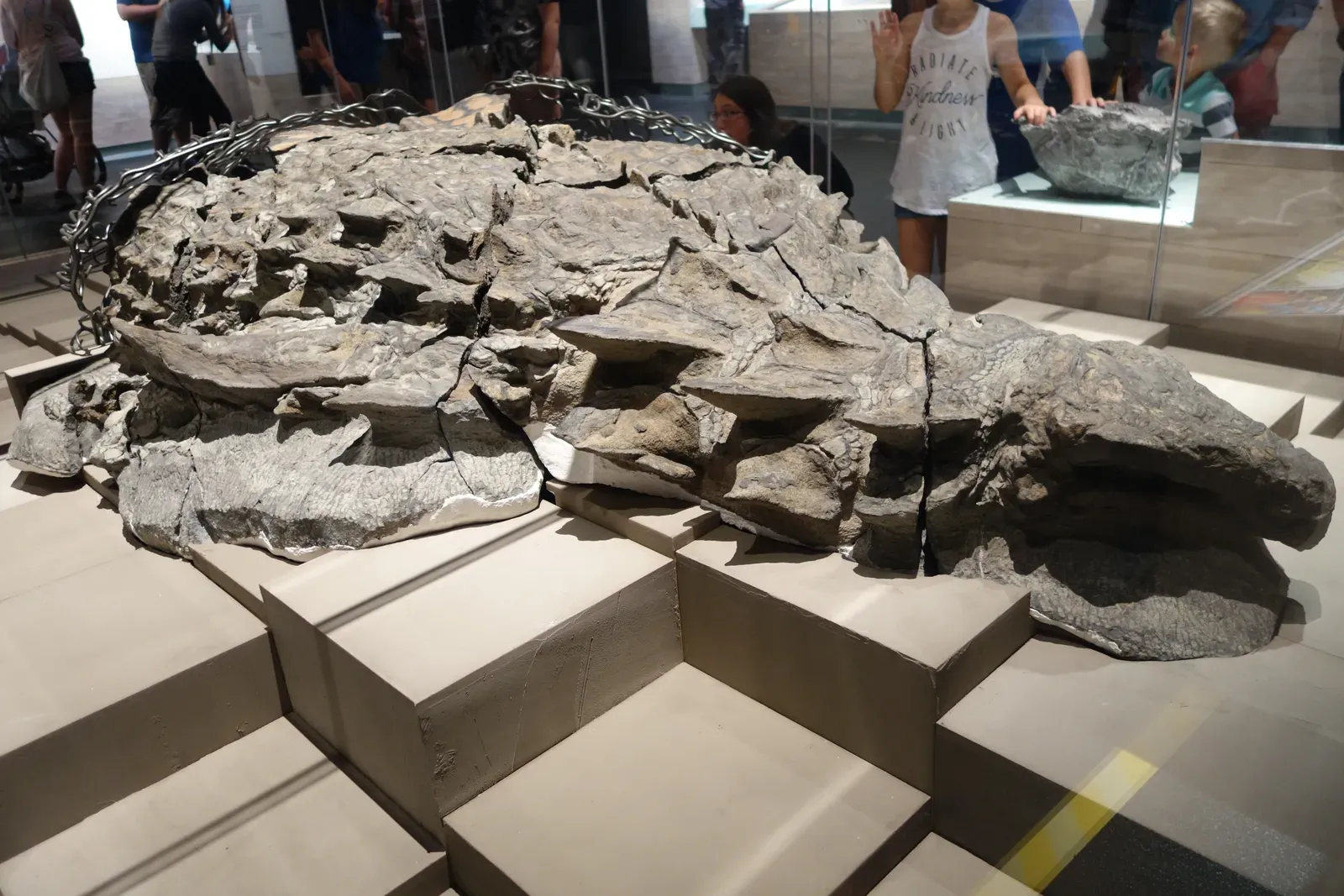
When an exceptionally preserved nodosaur – an armored herbivorous dinosaur – was unveiled from a Canadian mine, people joked that it looked like it might get up and walk away. The fossil did not just contain the skeleton; it preserved the body in lifelike three-dimensional form, with armor plates still in position, skin impressions wrapping around them, and the overall silhouette basically intact. Instead of disarticulated bones, you see a hulking, crocodile-meets-tank creature that looks like it lay down yesterday.
Even more surprising, researchers found traces of original biochemistry and evidence that the armor plates and skin had distinct colors and patterns in life, possibly for camouflage. That level of preservation is normally something you dream about and never actually expect to see in a dinosaur more than a hundred million years old. Fossils like this nodosaur blur the line between paleontology and taxidermy; they make you realize how much of our usual image of dinosaurs comes from incomplete, flattened material. Personally, I think this kind of fossil quietly demolishes the old stereotype of dinosaurs as vague, lumbering monsters and replaces it with something far more vivid and nuanced.
Dinosaur Stomach Contents Preserving the Last Meal
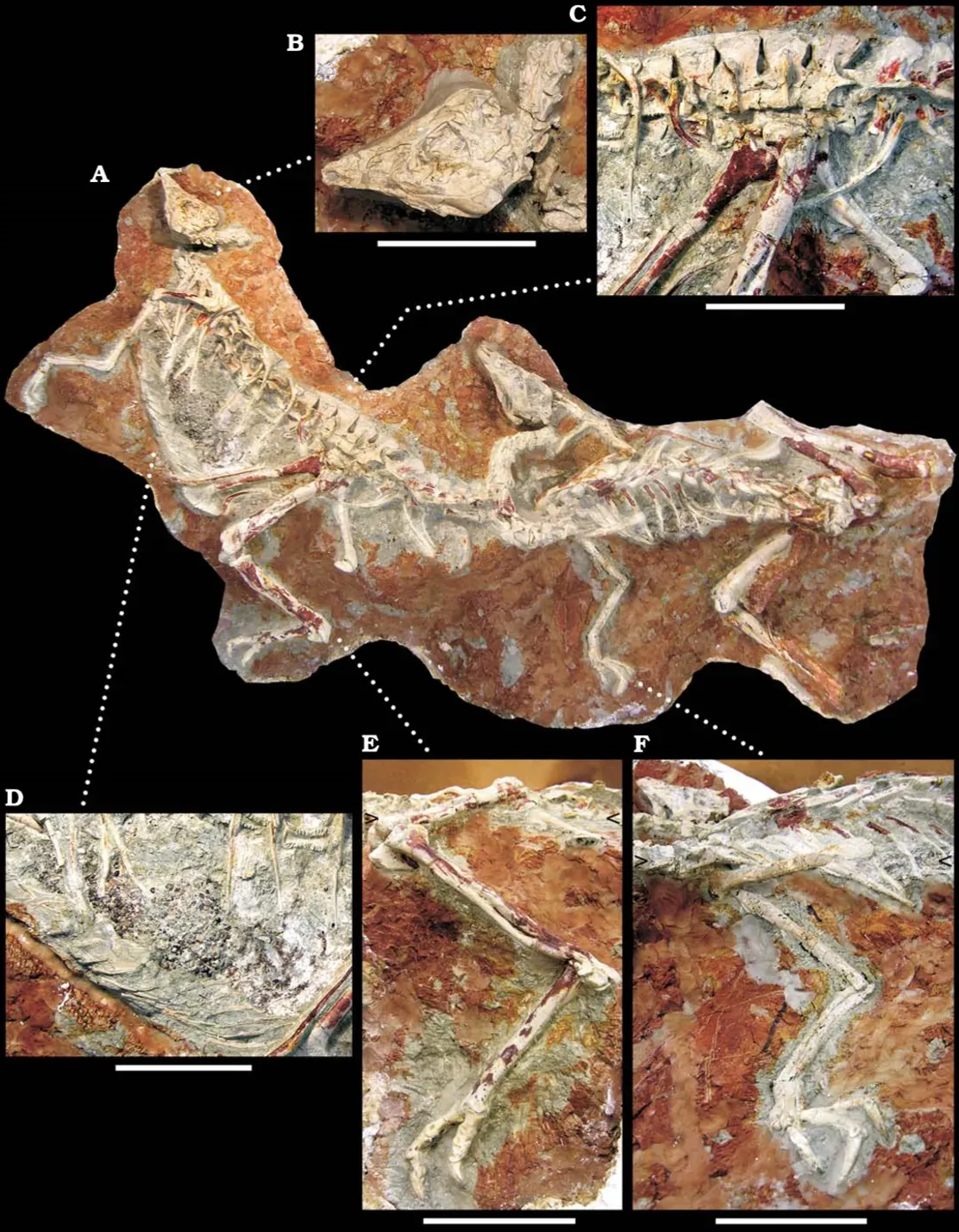
Most dinosaur skeletons leave you guessing what the animal ate beyond some general tooth shapes and gut proportions. But a handful of spectacular fossils preserve stomach contents – essentially the final lunch menu – in astonishing detail. In some herbivorous dinosaurs, you can see bits of leaves, twigs, and seeds compacted together, still distinct enough to identify plant types and even growth stages. It’s like flipping open a time-stamped food diary that was never meant to be read.
These “last meal” fossils do more than just confirm that plant-eaters, well, ate plants. They refine our understanding of dinosaur ecology: which plants were preferred, how finely they were chewed, and how food moved through the digestive system. In at least one case, evidence of selective feeding on particular conifer needles suggests picky eating habits that feel surprisingly relatable. For me, these fossils are some of the most intimate; they capture a routine, almost boring moment – eating – and turn it into a direct line of evidence about how these animals actually lived day to day, not just how they died.
Frozen Mammoths with Skin, Hair, and Full Stomachs
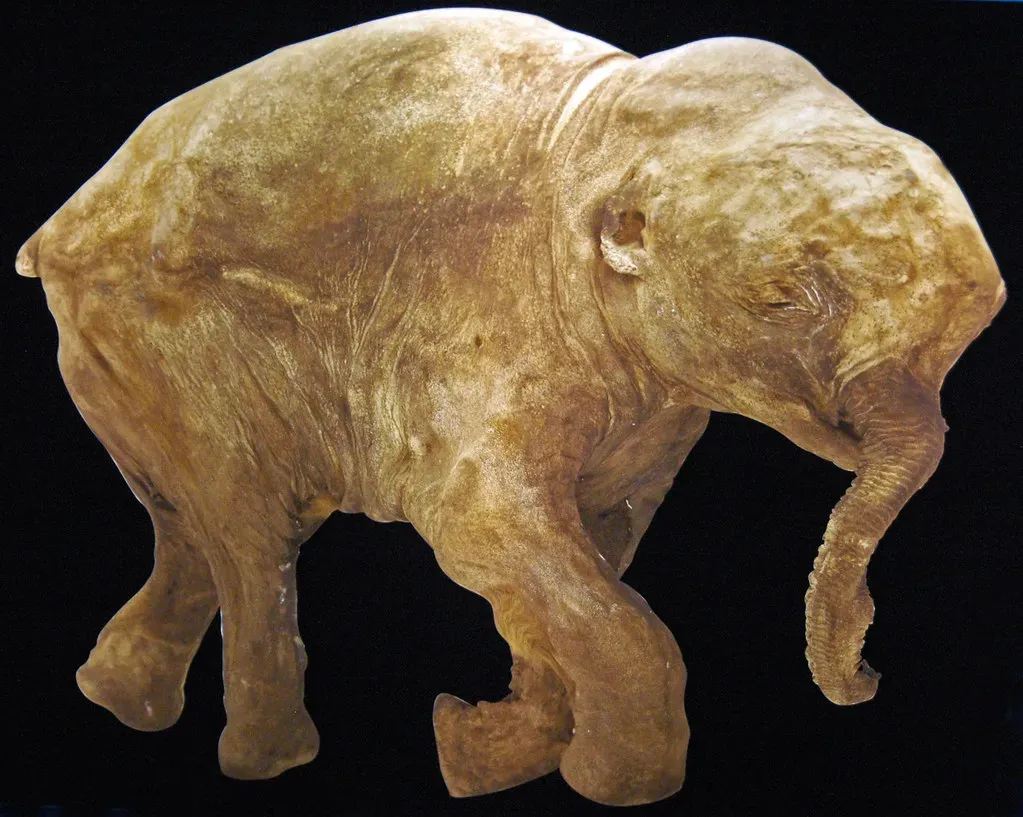
If dinosaur soft tissues are mind-bending, frozen mammoths are downright confrontational. In Siberian permafrost, entire mammoths have been unearthed with skin, hair, ears, trunks, and sometimes even their internal organs still recognizable. You can see the color and texture of the fur, the folds on the trunk, and in some cases, the contents of the stomach and intestines, packed with grasses and flowers that were growing on Ice Age tundra not that long ago in geological terms.
These mammoths preserved far more than anyone expected not because we doubted permafrost could be protective, but because the level of anatomical and ecological detail is almost overkill. Researchers can analyze isotopes in the hair to track seasonal movements, examine stomach contents to reconstruct ancient plant communities, and study wear patterns and injuries as if the animals had died last winter. It raises uncomfortable questions about extinction and climate as well, because the gap between us and them feels uncomfortably narrow. Standing in front of a well-preserved mammoth, you are not just looking at prehistory; you are staring into a mirror that reflects where our current ecosystems might be headed.
Amber Time Capsules: Lizards, Birds, and Insects in High Definition
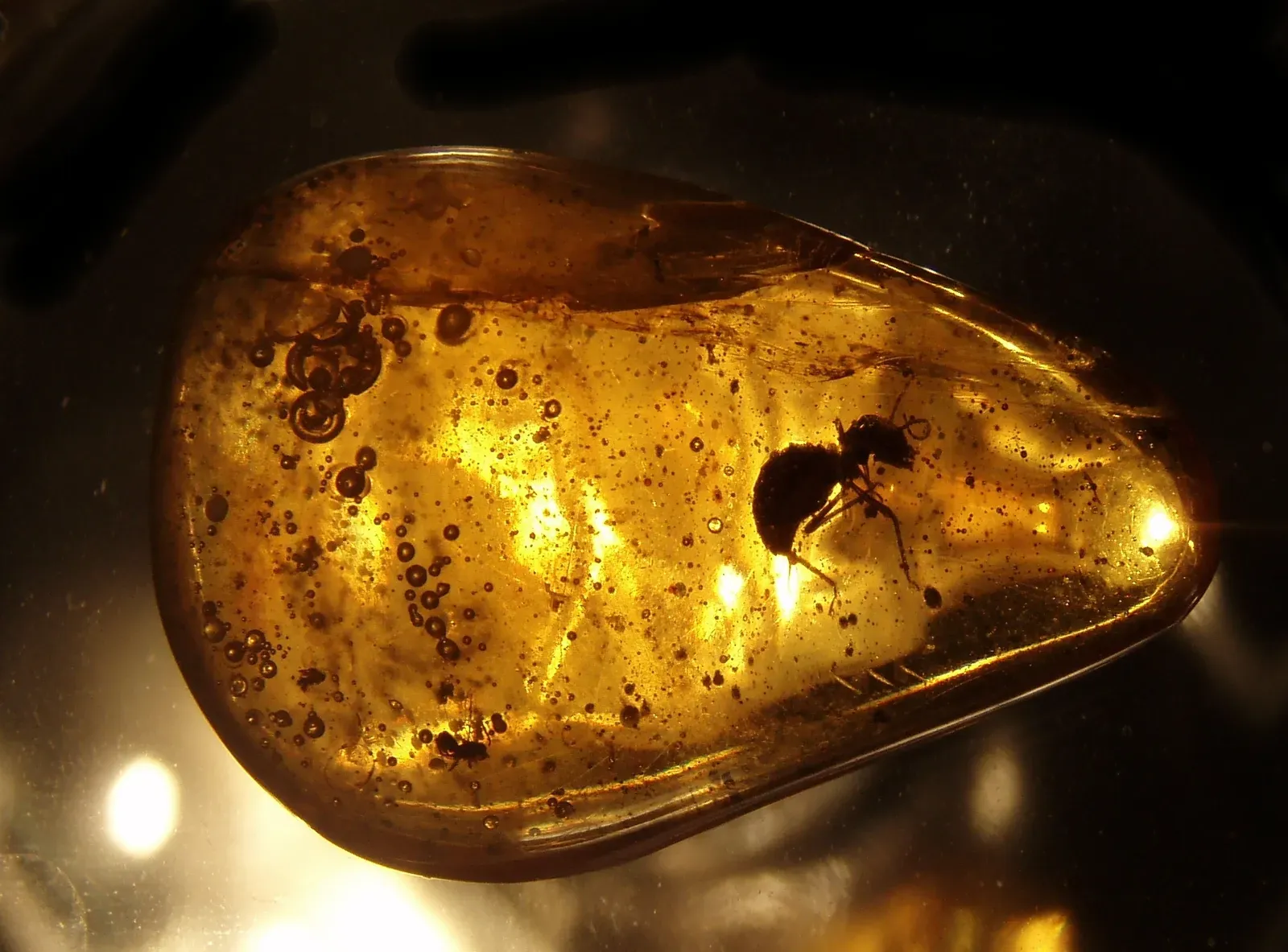
Most fossils force you to work from outlines and impressions, but amber is unapologetically extra. When small animals or plant parts were trapped in sticky tree resin millions of years ago, they were sealed away from decay, leaving behind three-dimensional “time capsules” with near-microscopic fidelity. Entire lizards with scales and soft tissues, tiny bird-like dinosaurs with wings and feathers, and insects down to their eye facets and hairs have been discovered suspended in these golden bubbles.
The surprise here is how deeply amber fossils cut through the usual fog of interpretation. You can see tiny muscles in insect legs, delicate membranes in wings, and the exact arrangement of feather barbs. Behavioral moments are preserved too: insects caught mid-molt, parasites clinging to their hosts, or plant material stuck alongside animals that interacted with it. In my view, amber is almost unfair compared with normal fossilization; it makes everything else look low resolution. And yet, without these almost unreasonably detailed fossils, our picture of ancient ecosystems – especially small, fragile creatures – would be mostly blank space.
Conclusion: When Fossils Refuse to Stay Quiet
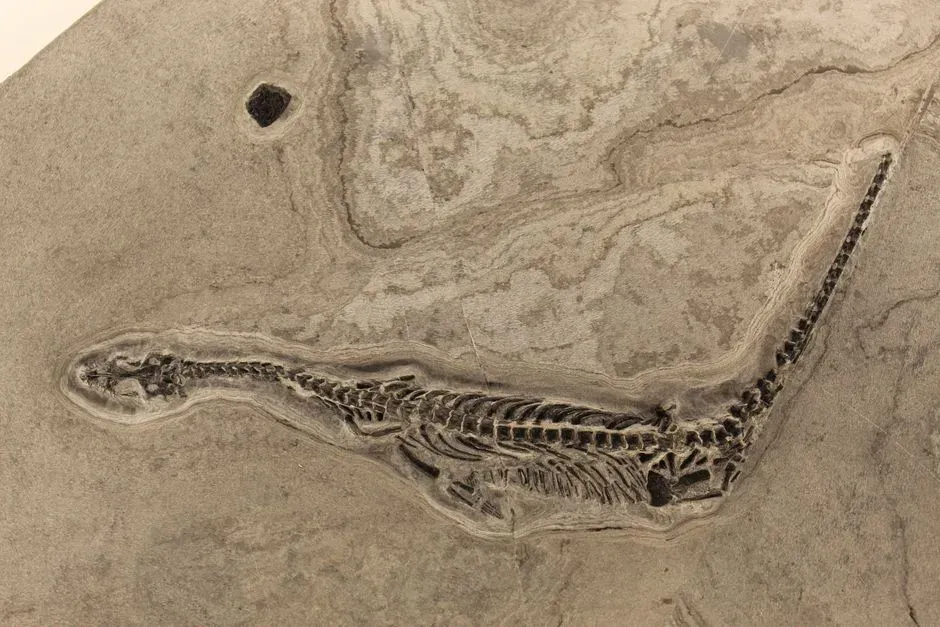
The fossils that really change the game are not always the biggest or the most dramatic at first glance; they are the ones that stubbornly preserve details everyone assumed time would erase. Feathers with pigment structures, soft tissues clinging to dinosaur bones, skin and armor arranged exactly as in life, or a mammoth’s last mouthful of flowers – these are the kinds of finds that call out lazy assumptions and force scientists to upgrade their imagination. They show that fossilization is not a simple on-or-off switch but a spectrum where, under rare conditions, nature hoards far more information than seems reasonable.
Personally, I think these extraordinary fossils are a quiet rebuke to the old idea that the distant past is forever blurred and unreachable. They suggest that the universe sometimes keeps receipts, even for events hundreds of millions of years old, and every now and then we get to read them. As techniques improve and more sites are explored, it feels less like we are running out of discoveries and more like we are just starting to ask the right questions. Which detail from deep time will ambush our expectations next – and how many of our current certainties are just waiting for the next impossible fossil to overturn them?