
You probably picture dinosaurs with teeth and claws first, but some of the most impressive ancient animals won the arms race in a different way: they turned their whole bodies into shields. Layered plates, bony spikes, and reinforced skulls turned these creatures into slow-moving tanks or surprisingly agile battering rams. When you look closely, you start to realize just how many times nature tried to reinvent armor long before humans ever forged metal.
As you explore these nine walking fortresses, you’ll see the same basic idea show up again and again in totally different groups: protect the soft parts, spread the weight, and make any attacker seriously regret the attempt. You won’t just meet dinosaurs, either. You’ll run into armored fish, ancient crocodile cousins, and mammals that looked like someone crossed a tank with a hairy boulder. By the end, you may find yourself rooting for the underdogs of prehistory – the ones who survived not by being fastest or fiercest, but by being almost impossible to kill.
Ankylosaurus: The Classic Living Tank of the Late Cretaceous
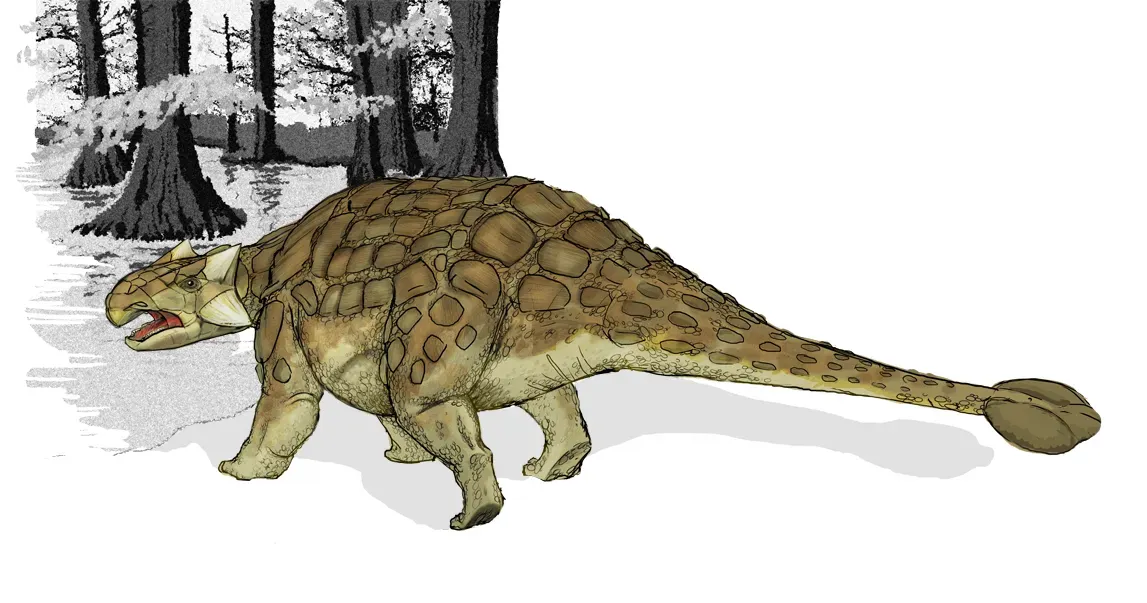
If you had to pick one fossil to represent the idea of a walking fortress, Ankylosaurus would probably be it. You can picture yourself looking at a low, broad animal, roughly the length of a bus, wrapped in thick bony plates with a massive club at the end of its tail. Instead of betting on speed or agility, this dinosaur doubled down on defense, turning its back and sides into a shield covered with heavy osteoderms – bony tiles that locked into its skin like a natural suit of armor.
When you imagine a big predator like Tyrannosaurus bearing down on it, you start to see why that design worked. To reach anything vulnerable, a hunter would have had to go for the belly or neck, but Ankylosaurus kept its body low and could swing that tail club hard enough to break bones. You can think of it like a medieval armored wagon with a wrecking ball attached – slow to get moving, but so dangerous to approach that even top predators had to be careful.
Stegosaurus: Plates, Spikes, and a Back That Looked Like a Fortress Wall
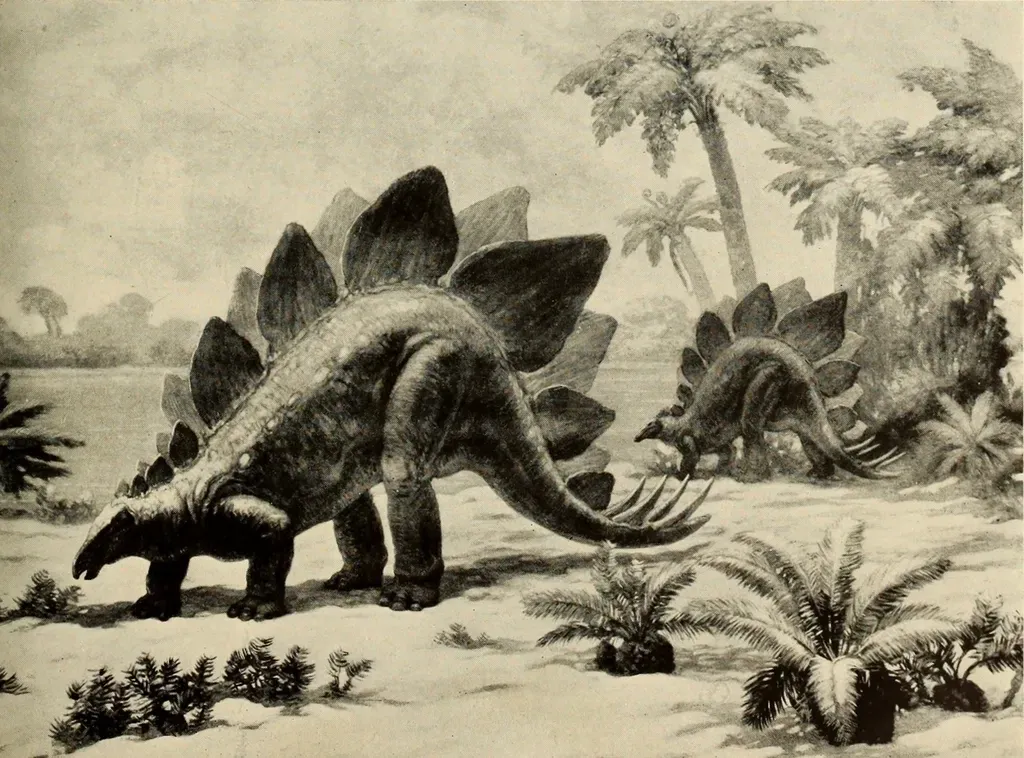
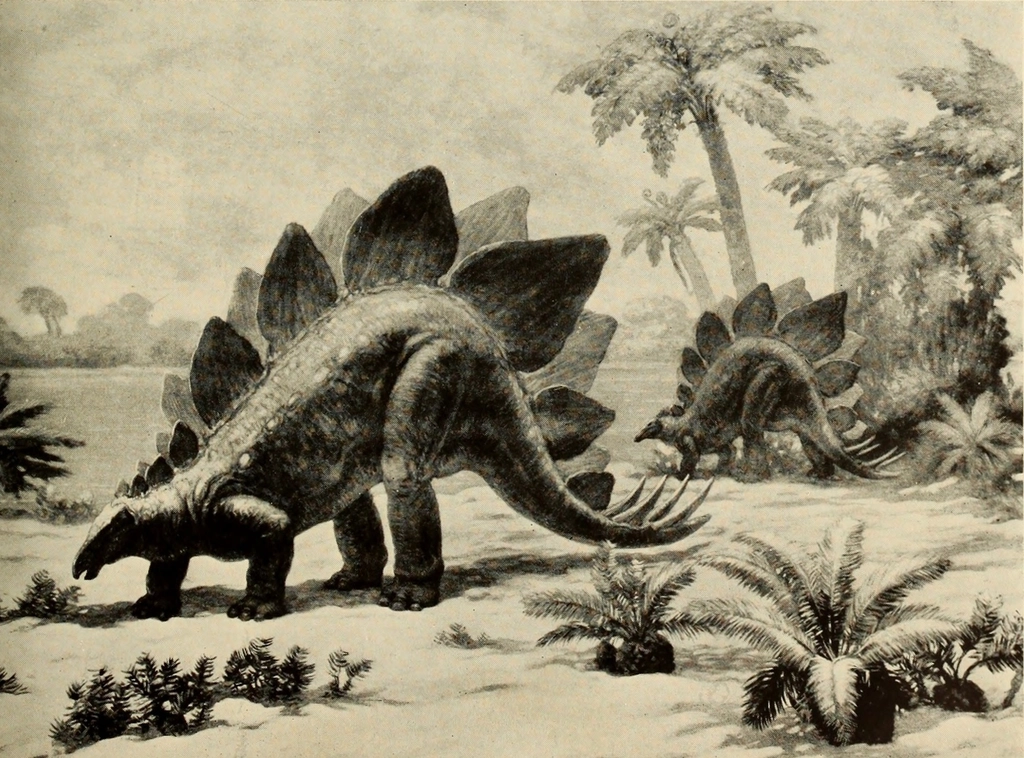
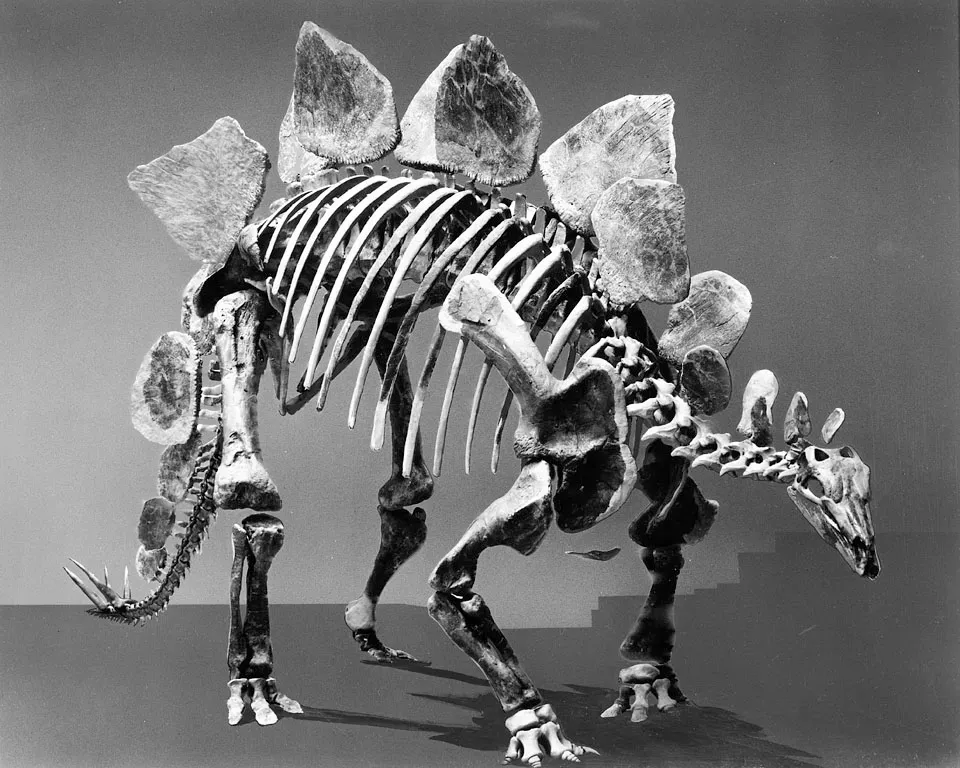
At first glance, Stegosaurus might not look armored in the same way as a tank-like ankylosaur, because those famous plates were probably more about display and temperature control than pure defense. But when you put yourself in the shoes of a Jurassic predator, you still see a walking problem: tall bony plates lined its back, and a tail ending in long spikes – the so-called “thagomizer” – could turn on a dime. Even if the plates didn’t act like full body armor, they made Stegosaurus look bigger, more intimidating, and harder to bite into cleanly.
You can imagine a hungry Allosaurus facing a Stegosaurus and realizing that the only way to win is to keep away from those swinging tail spikes that could easily pierce flesh and maybe fracture bone. Behind the plates and spikes, the body itself was barrel-shaped and low to the ground, making it hard to flip or topple. In a way, Stegosaurus wore partial armor and carried a built-in spiked mace, relying on a mix of passive defense and violent counterattacks to stay alive.
Glyptodon: The Armored Mammal That Was Basically a Giant Walking Shield
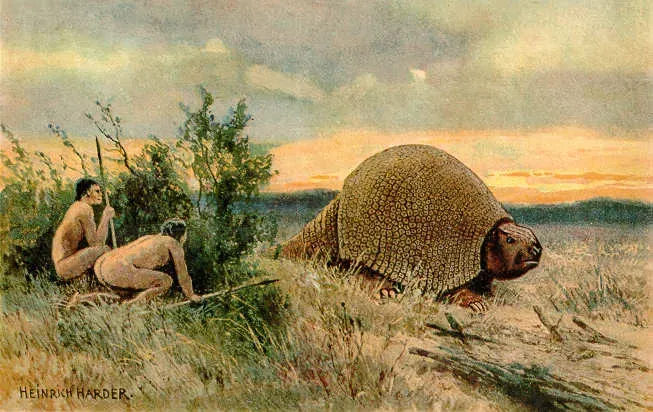
When you fast-forward from the age of dinosaurs to the Ice Age, you meet Glyptodon, a creature that looks uncannily like a car-sized armadillo made of stone. Instead of flexible bands like modern armadillos, it carried a solid dome of fused osteoderms over its back, forming something very close to a single armored shell. If you picture yourself standing next to one, you’d see a low, rounded body that predators would struggle to grip, puncture, or flip over.
Glyptodon’s tail was armored too, and some relatives carried a heavy, club-like tip reinforced with additional bony rings. You can imagine a hungry saber-toothed cat circling this living boulder, frustrated by the lack of a soft target. Only the underside and head were more vulnerable, and those could be protected by hugging the ground or tucking in. Seen in that light, Glyptodon really did function like a mobile shield on four legs: not fast, but so well protected that only the most determined or clever attackers got through.
Dunkleosteus: The Armored Fish With a Head Like a Metal Trap
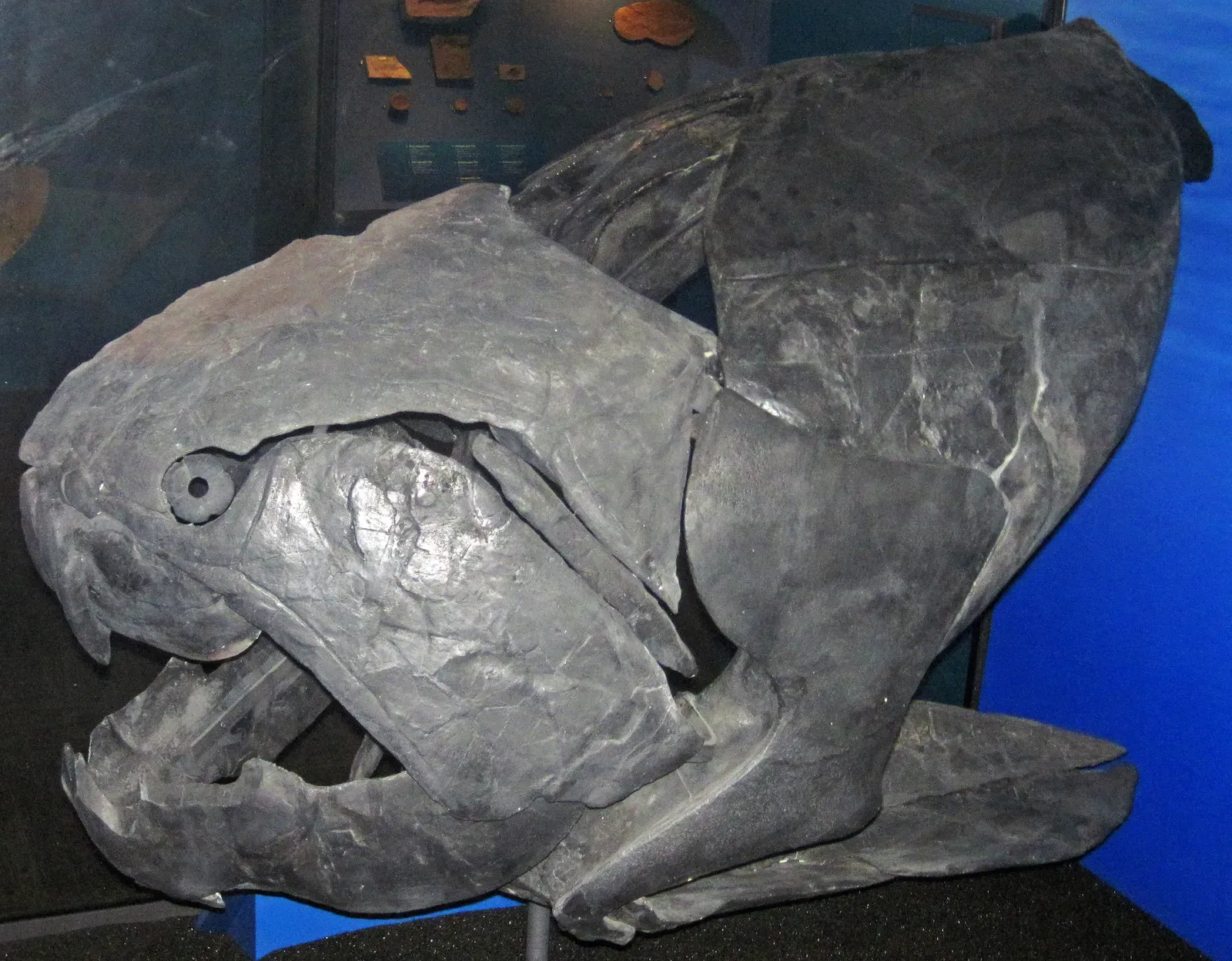
To find one of the earliest masters of body armor, you have to dive back into the Devonian seas and meet Dunkleosteus, a giant placoderm fish. Instead of scales, its head and front body were covered in thick, interlocking bony plates that formed something like a helmet and chest plate combined. When you visualize it, you see a front half that looked almost mechanical, like a submarine with a reinforced prow, built to smash through resistance and shrug off attacks.
What makes this creature especially wild is that the same armor that protected it also supported a terrifying biting system. Instead of true teeth, it had sharpened bony plates in its jaws, and the reinforced skull helped anchor powerful muscles. That let Dunkleosteus bite hard enough to crunch through the armor and shells of other ancient fish. You could think of it as an underwater siege engine – heavily armored, heavily armed, and dangerous from any angle.
Euoplocephalus: The Canadian Club-Tailed Fortress
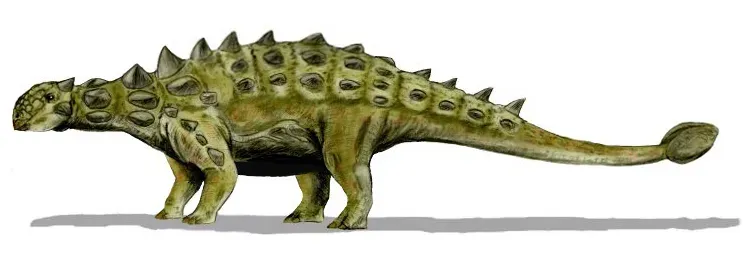
If Ankylosaurus is the armored superstar, Euoplocephalus is the rugged, slightly smaller cousin that still checked every box for a walking fortress. You can imagine this Late Cretaceous dinosaur trundling through what is now western North America, cloaked in bony nodules and plates that covered its back, flanks, and even parts of its cheeks. Unlike many animals, Euoplocephalus did not have to rely on running; its defense was literally built into its skin.
The real centerpiece, just like in Ankylosaurus, was the tail club – two large bony lumps at the tip, fused to the vertebrae and powered by strong muscles. If you picture yourself watching one swing, you can almost hear the crack it might have made when it connected with a predator’s leg. One well-placed hit could seriously injure or disable an attacker. All of that, combined with a low center of gravity and sturdy limbs, turned Euoplocephalus into a rolling, club-swinging barricade.
Desmatosuchus: The Croc Relative That Wore Spiked Shoulder Armor
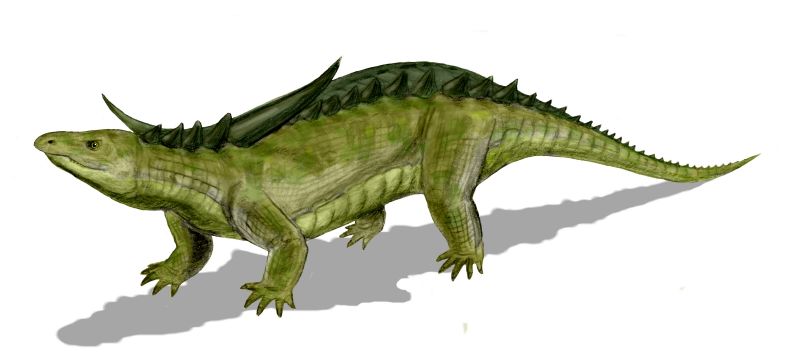
Long before modern crocodiles appeared, their distant relatives experimented with some dramatic armor designs, and Desmatosuchus is one of the flashiest examples. You can picture an animal shaped a bit like a crocodile mixed with an armadillo, its back covered in rows of bony plates. What really stands out are the enormous spikes projecting from its shoulders, curving outward like spears attached to a living shield.
If you imagine a predator trying to latch onto this creature’s back or neck, those shoulder spikes make everything awkward and dangerous. Even a glancing bite could be met with a face full of bone. At ground level, the rest of the body was plated too, meaning that Desmatosuchus, despite probably being a plant-eater, walked around as if it expected trouble. When you look at it this way, it feels like a prototype for later armored herbivores – a reminder that the idea of body armor has deep roots in reptile evolution.
Sauropelta: A Spiky Shield on Four Legs
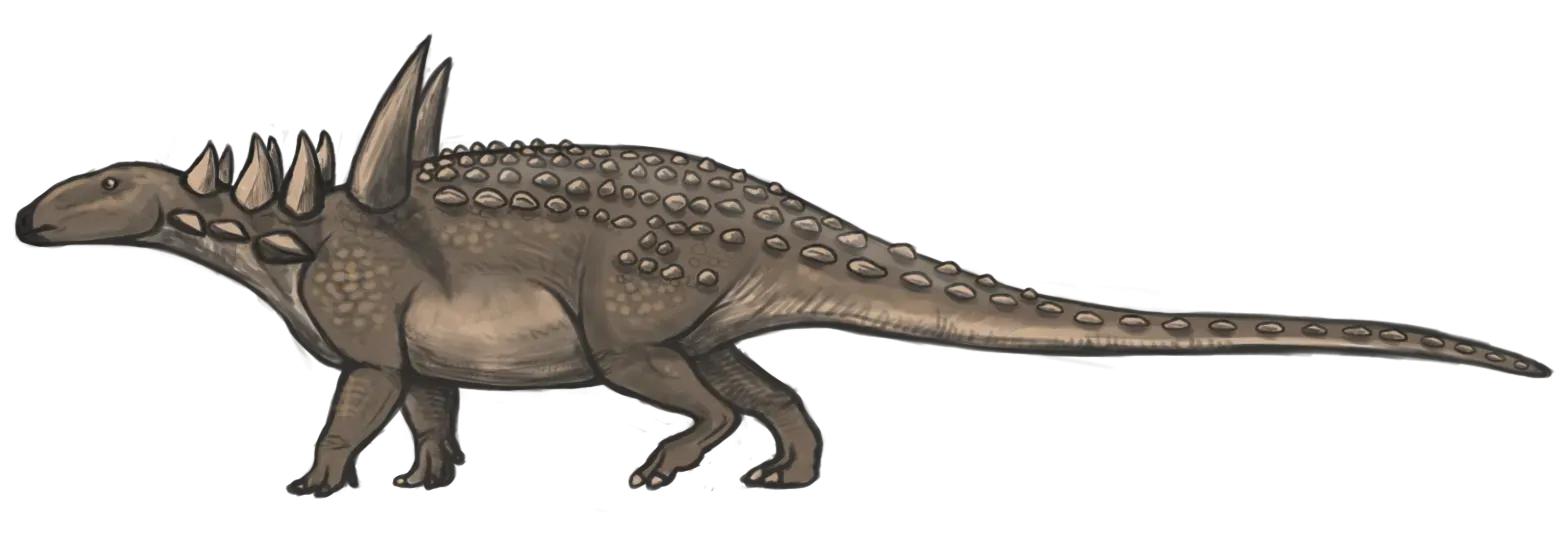
Sauropelta might not have the same name recognition as some dinosaurs, but once you see it, you don’t forget it. You can imagine a medium-sized, low-slung herbivore with a body draped in bony plates and a neck lined with long, sharp spines. Those neck spikes especially would have made its most vulnerable region incredibly hard to bite without taking serious damage in return.
Unlike some relatives with tail clubs, Sauropelta seems to have focused more on static defense – lots of plates and spikes rather than a single heavy weapon. In your mind’s eye, it becomes an armored barricade that moved just enough to reach fresh plants. Any predator that tried to flank it would have to deal with densely packed armor along its sides and shoulders. It is the kind of animal that survived not because it could win a fight offensively, but because starting that fight was such a bad idea.
Xenacanthus and Other Armored Ancient Sharks
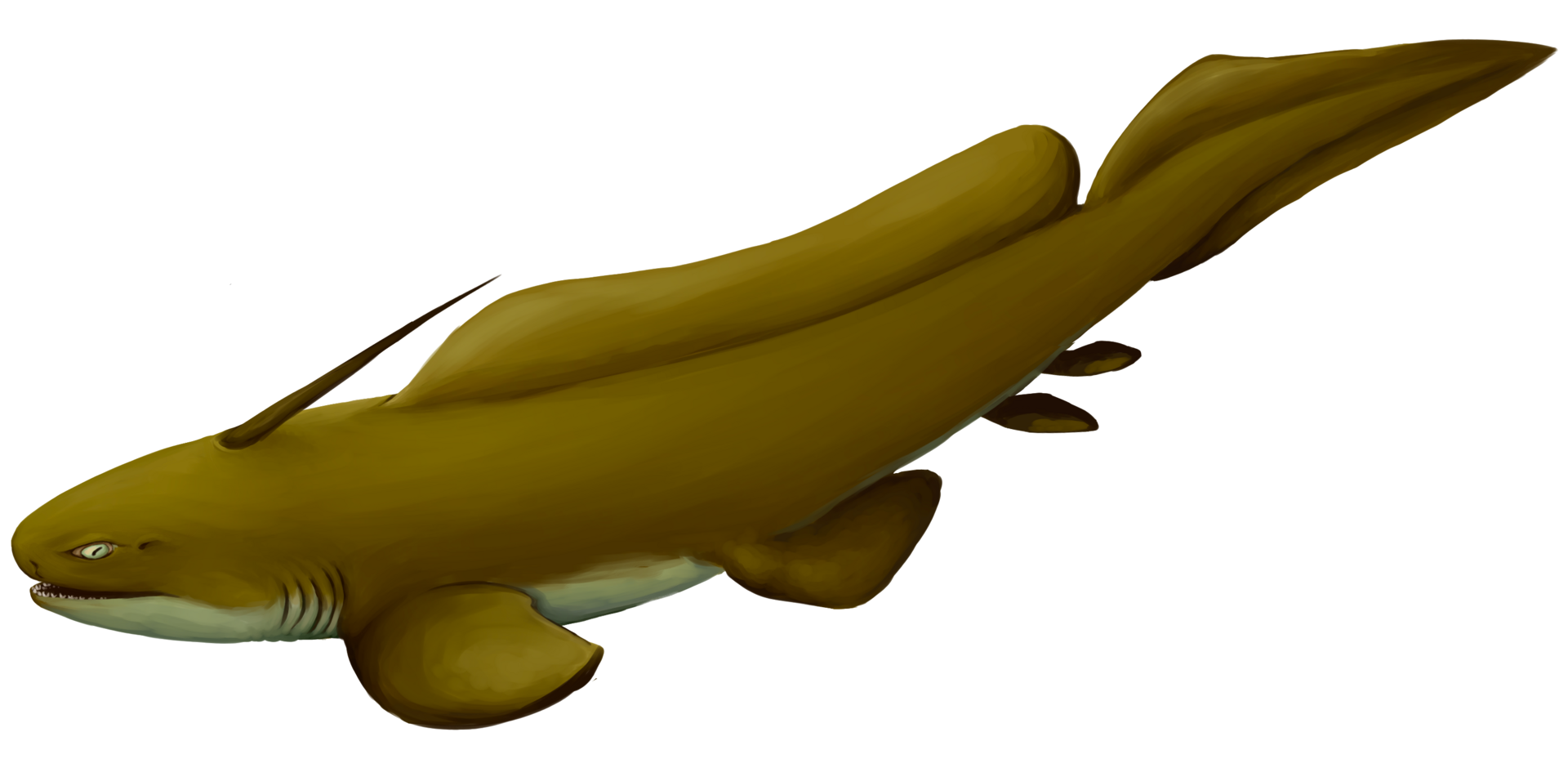
When you think of sharks, you probably imagine sleek, scaleless skin and speed, but some early sharks and shark-like fishes leaned more into armor. Xenacanthus, for example, was a long, eel-shaped freshwater shark from the Paleozoic that carried a distinctive spine projecting from the back of its head. Its body was covered in tough, diamond-shaped scales that functioned more like tiny armor plates than the flexible skin of modern open-ocean sharks.
If you picture yourself peering into a Carboniferous swamp, you might see Xenacanthus weaving through plants, relying on that thick skin and head spine both for defense and possibly for display. Many early shark relatives had similar dense, mineralized scales, turning their bodies into abrasive, protective coats. Compared to modern sharks, they traded a bit of flexibility for sturdiness, more like a knight wearing a mail shirt instead of just a swimsuit. It is a reminder that even in water, where agility is crucial, evolution still repeatedly tried out armored designs.
Placodonts: Shell-Crushing Reptiles That Turned Into Living Shields
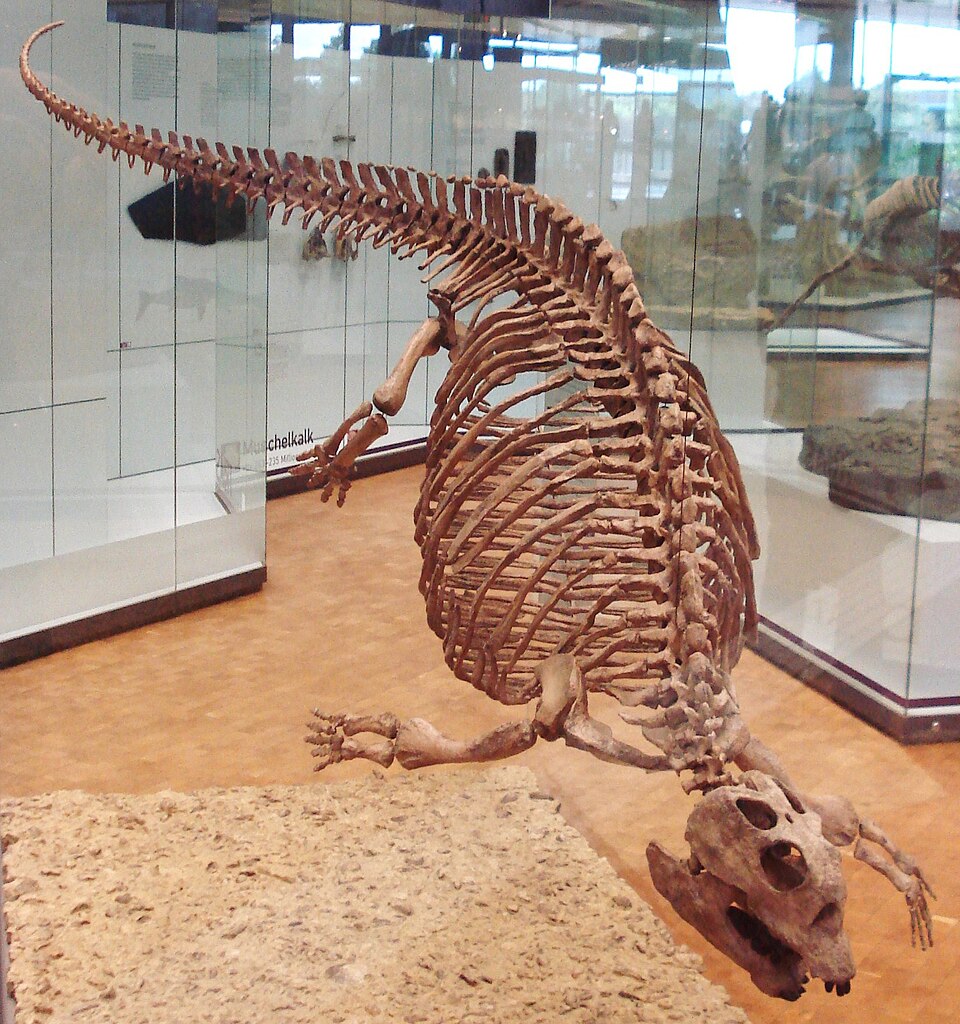
In the Triassic seas, you meet placodonts, marine reptiles that specialized in eating shellfish and eventually evolved bodies that looked surprisingly like armored rafts. Early forms were more lizard-like with thick teeth and some body armor, but as time went on, some species developed broad, flattened backs covered with large bony plates. By the time you reach the most heavily armored placodonts, you are basically looking at creatures that resembled a cross between a turtle and a paving stone.
You can imagine these animals spending much of their time near the seafloor, using their sturdy bodies and crushing teeth to pry up and grind hard-shelled prey. Any predator trying to take a bite from above would mostly get a mouthful of armor. The trade-off was clear: they were probably not the fastest swimmers, but they did not have to be. Their body armor turned them into slow, floating fortresses that could simply endure attacks long enough to outlast many would-be hunters.
Conclusion: Why Armor Kept Evolving Again and Again
When you step back and look at all these animals together, you start to notice the same patterns repeating across time and across completely different groups. Fish, reptiles, dinosaurs, and mammals all tried the armored strategy at various points in Earth’s history. That tells you something powerful and simple: in a dangerous world, turning your body into a shield is a solution evolution keeps rediscovering. Teeth and claws are impressive, but they only work if you can reach something soft.
If you imagine yourself wandering through these ancient landscapes, you might find that the creatures that feel most reassuring to stand beside are not the fastest or the biggest, but the ones that seem almost unbreakable. From dome-backed mammals to plate-headed fishes and spike-covered dinosaurs, each of these walking fortresses represents a different answer to the same question: how do you stay alive when everything around you wants a bite? The next time you see a turtle, armadillo, or even a pangolin, you might see them as the latest chapters in a very old story – one that started long before humans existed and will probably keep being rewritten as long as life faces danger.