

If you sometimes feel like your brain is wired for a different world than the one you live in, you’re probably right. Our minds evolved over hundreds of thousands of years in small groups, harsh environments, and constant uncertainty, not in cities with smartphones, notifications, and office jobs. In many ways, we’re running prehistoric hardware on a modern operating system.
When you look at daily life through that lens, a lot of our quirks start to make sense: anxiety, social comparison, overeating, even our obsession with status. They’re not random flaws; they’re echoes of survival pressures that once decided who lived long enough to pass on their genes. Let’s walk through eight of those ancient pressures and how they may still be shaping your thoughts, feelings, and choices today.
1. Escaping Predators and Spotting Threats
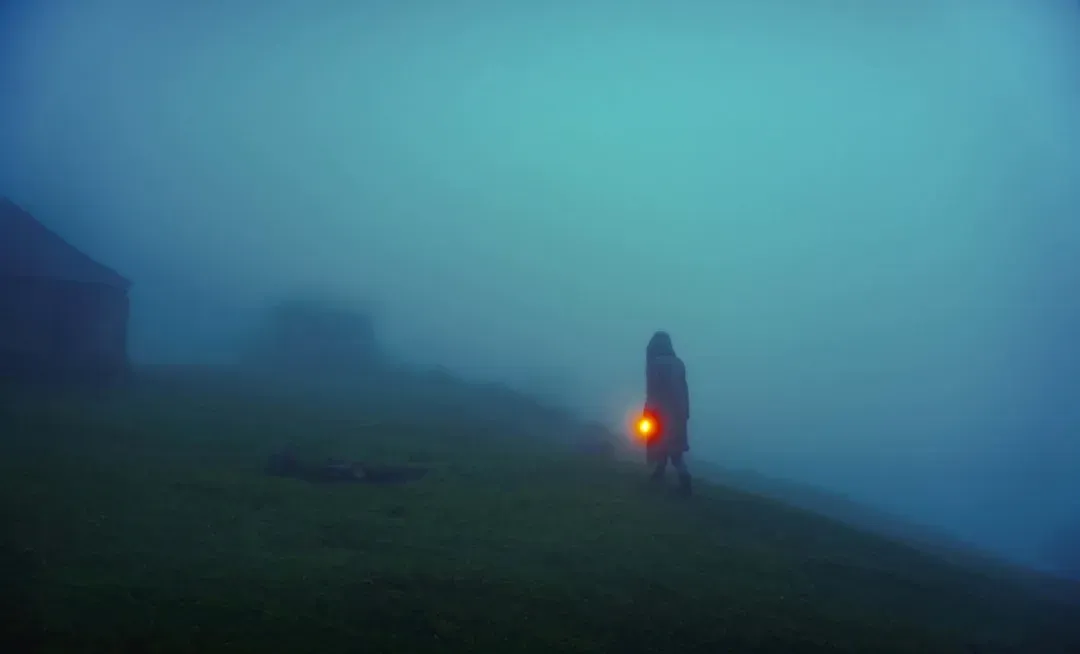
Imagine living your entire life knowing that a rustle in the bushes could mean death. For most of human history, predators were not just stories, they were a daily calculation: step here or there, linger or run, drink water now or wait and risk getting ambushed. In that kind of world, a brain that slightly overreacted to danger had a clear advantage over a brain that stayed relaxed and “rational.” Being jumpy was often the difference between your genes continuing and your story ending.
That legacy still lives in your nervous system. Our brains have a built‑in bias toward negative information and potential threats, and the emotional centers that detect danger can react in fractions of a second, long before our conscious reasoning kicks in. It’s why a loud noise can make your heart slam against your ribs, even when you immediately realize it was just a car backfiring. In my own life, I notice it when my body tenses for no good reason walking through a dark parking lot; intellectually I know it’s fine, but my ancient wiring would rather be wrong and alive than calm and dead.
2. Finding Enough Food in an Uncertain World

For our ancestors, the question was rarely “What do you feel like eating?” and more often “Will there be anything to eat at all next week?” Food supply was seasonal, unpredictable, and hard‑won through hunting, gathering, and long walks under a hot sun. In that environment, a brain that loved calorie‑dense, sweet, and fatty foods had an edge. Craving energy‑rich food was not a moral failing; it was an insurance policy against starvation.
Today, that same taste circuitry sits in a world where high‑calorie food is cheap, constant, and aggressively marketed. The drive that once pushed people to eat when food was available now collides with all‑you‑can‑eat buffets and snacks within arm’s reach. So when you find yourself on the couch mysteriously at the bottom of a bag of chips you swore you’d only “taste,” it’s less a lack of willpower and more an ancient survival program misfiring in a world of abundance. The mismatch is brutal: a brain tuned for famine trying to navigate a supermarket aisle.
3. Navigating Complex Social Groups

Humans did not survive alone; we survived as part of tightly knit groups where cooperation, trust, and alliances meant life or death. To function in those small bands, our ancestors needed to remember who helped them, who cheated them, who could be trusted, and which alliances could shift. That pressure favors brains with an enormous capacity for reading faces, tracking relationships, and understanding unspoken rules. Our social awareness is not a cute extra; it is a survival engine.
This is likely why social rejection or exclusion hurts so much even today, lighting up some of the same brain regions associated with physical pain. Being pushed out of the group in the past often meant losing protection, food access, and mates. In my own experience, the sting of feeling left out of a group chat or not being invited to something can feel wildly disproportionate to the actual event. But from the brain’s point of view, that discomfort is an old alarm bell: stay connected or risk being on your own in a very dangerous world.
4. Competing for Status, Mates, and Resources

In ancestral environments, status was not about likes, followers, or designer labels; it was about influence, access to resources, and mating opportunities. Those who were more respected, more competent in hunting or gathering, or more central in the group usually had better chances of survival and reproduction. As a result, our brains became acutely sensitive to hierarchy, attention, and what others think of us. Social status, in very practical terms, was a survival variable.
That sensitivity shows up today in some oddly modern ways: obsessing over how many people saw your post, feeling crushed when a colleague gets recognition you wanted, or comparing your life to others online and feeling behind. The emotional rush of praise and the sting of embarrassment are powered by the same ancient status circuitry that once tracked who was admired as a skilled hunter or a dependable ally. Personally, I sometimes catch myself caring way too much about tiny, symbolic wins, and I have to remind myself that my brain still reacts as if social rank could decide whether or not I get to eat.
5. Remembering the Past to Predict the Future

In a dangerous, changing environment, remembering details mattered: where the poisonous berries were, which water hole was safe in the dry season, which path led to an enemy camp. A brain that could store, organize, and replay memories had a serious advantage. But it wasn’t just raw memory; it was also about using those memories to predict what might happen next. The mind that could say, “Last time we saw these clouds, the river flooded,” was more likely to end up on higher ground.
That same machinery powers everything from your ability to cook a familiar recipe without thinking to your tendency to worry about future catastrophes based on past pain. It also helps explain why bad experiences often stick more strongly in memory than neutral or mildly positive ones. If a specific kind of plant once made you violently ill, you were better off never forgetting that. Today, that risk‑averse bias can turn into rumination, replaying awkward conversations or past failures long after they’re useful. It is your brain trying very hard not to let you repeat mistakes, even when the stakes are no longer life and death.
6. Caring for Vulnerable Offspring Over Many Years

Human babies are famously helpless. Compared to many other mammals, human offspring require a very long period of care, protection, and teaching before they can survive on their own. That long childhood appears tied to the growth and wiring of our large, flexible brains. But it also created intense selection pressure for adults who could form deep emotional bonds, read infant signals, coordinate with others in caregiving, and sacrifice short‑term comfort for long‑term offspring survival.
Those caregiving pressures ripple through modern life, shaping not just parenting but attachment and close relationships in general. Our brains are built to tune into cries, facial expressions, and subtle shifts in the mood of people we care about. That might be why you can instantly sense when a loved one is “off,” even if they insist they’re fine. I sometimes think of human attachment like an invisible web: our brains are wired to feel pulled by those connections, to worry when others are in danger, and to feel real physical distress when bonds are threatened. That sensitivity helped children survive; now it fuels both some of our greatest joys and our deepest heartbreaks.
7. Adapting to Harsh and Changing Environments

Our ancestors did not live in a gentle, stable world. Climate shifted, animal herds moved, plants bloomed and vanished, rival groups appeared, and disasters struck without warning. Surviving meant more than having a good strategy; it meant being able to change strategies when the old ones stopped working. That kind of flexibility favors brains that can learn quickly, experiment, imitate, and innovate, rather than follow a fixed script.
In modern terms, that ancient flexibility is the root of our creativity and problem‑solving. The same cognitive machinery that once figured out new hunting methods or ways to store food now designs software, writes novels, and finds clever shortcuts in spreadsheets. But there is a flip side: uncertainty still stresses us out. The brain that evolved to constantly scan a shifting horizon now does the same thing with economic news, career changes, or shifting social norms. I sometimes notice that change makes me anxious even when it’s obviously good, as if some part of me is bracing for a drought after every stretch of good weather.
8. Storytelling, Culture, and Shared Meaning

One of the most underrated survival pressures may have been the need to share knowledge across time and generations. Stories about where to find water, which plants heal or harm, which strangers to avoid, and which rituals keep the group united all boosted survival. A brain that loved stories, remembered myths, and paid attention to cultural traditions was better equipped to use the hard‑earned experience of ancestors rather than starting from scratch each generation.
That love of narrative is all over modern life: movies, gossip, memes, religions, conspiracy theories, and even brand stories are all tapping the same circuitry. We naturally look for heroes, villains, causes, and clear plots in a world that is often messy and random. For me, the most striking thing is how quickly I’ll turn a small event into a mini‑story about what it “means” about me or someone else. The ancient impulse to weave facts into meaning once tied clans together; now it can either deepen our understanding or trap us in comforting but misleading tales, depending on how we use it.
Conclusion: An Ancient Brain in a New World

When you see your mind as the product of these old survival pressures, everyday struggles feel a little less like personal failures and a little more like predictable side effects. A brain trained by predators, scarcity, status battles, long childhoods, shifting environments, and powerful stories is not automatically well‑suited to push notifications, processed food, and anonymous online crowds. In my opinion, a lot of modern suffering comes from pretending we are purely rational creatures, instead of admitting that most of our wiring was laid down in a world that would look almost alien to us now.
The challenge, and maybe the opportunity, is to stop fighting that ancient brain and start working with it. We can design environments that respect our biases instead of constantly exploiting them, build communities that acknowledge our need for connection, and cultivate habits that soothe an overactive threat system instead of shaming it. You are not broken; you are carrying a very old survival machine into a very new landscape. The real question is not whether that machine is flawed, but how wisely we choose to steer it from here – what do you want this ancient brain of yours to build next?